
Lupus erythematosus
Reading File
Now let me search the medical library for lupus erythematosus comprehensively.
Finding Sources
Searching PubMed
"lupus erythematosus"[MeSH Terms] AND ("treatment" OR "management")
Good. Let me now read the key sections from Harrison's (most comprehensive for internal medicine), Fitzpatrick's (dermatology/classification), Firestein Rheumatology, and Andrews' simultaneously.
Reading File
Reading File
Reading File
Now let me get the main Harrison's SLE content and Fitzpatrick's DLE/classification sections.
Reading File
Finding Sources
Finding Sources
Reading File
Reading File
Finding Sources
Finding Sources
Finding Sources
Reading File
Searching PubMed
"systemic lupus erythematosus"[MeSH Terms] AND "anifrolumab"[tiab]
I now have comprehensive content from Harrison's 22E, Fitzpatrick's, Andrews', Firestein's Rheumatology, and Cellular & Molecular Immunology. Let me fetch the key clinical images and get the treatment section.
Reading File
Loading Image
Loading Image
I now have comprehensive material to deliver a thorough response. Let me compile everything.
Lupus Erythematosus
Lupus erythematosus (LE) is a heterogeneous, chronic autoimmune disease characterized by immune dysregulation, production of pathogenic autoantibodies, and multisystem inflammation. It encompasses a spectrum from purely cutaneous forms to the severe multiorgan systemic disease (SLE).
Classification of LE
LE is broadly divided into cutaneous and systemic forms. Cutaneous LE (CLE) is further classified by the morphology and behavior of skin lesions:
| Type | Key Features |
|---|---|
| Acute CLE (ACLE) | Malar ("butterfly") rash; strongly associated with SLE activity |
| Subacute CLE (SCLE) | Photosensitive, nonscarring; papulosquamous or annular; anti-Ro/SSA positive |
| Chronic CLE (CCLE) | Discoid LE (most common); scarring; chilblain LE; LE profundus/panniculitis |
| Systemic LE (SLE) | Multiorgan involvement; meets SLICC/EULAR-ACR classification criteria |
- Harrison's Principles of Internal Medicine 22E, p. 458
Epidemiology
SLE affects predominantly young women of reproductive age; the female-to-male ratio is approximately 9:1. It is more common and more severe in patients of African, Hispanic, and Asian descent. Prevalence is estimated at 20-150 per 100,000 in Western populations.
Pathogenesis
The pathogenesis involves a failure of immune tolerance leading to production of autoantibodies, particularly against nuclear antigens.
Key mechanisms:
-
Genetic factors: HLA-DR2 and HLA-DR3 each confer an odds ratio of 2-3; combined, ~5. Deficiencies of classical complement proteins (C1q, C2, C4) impair clearance of immune complexes and apoptotic cells. Polymorphisms in FcγRIIB (an inhibitory Fc receptor) and PTPN22 (a phosphatase) are implicated. GWAS has revealed many additional susceptibility loci.
-
Environmental triggers: UV light induces apoptosis of skin cells, releasing nuclear antigens. Drugs (procainamide, hydralazine, minocycline, hydrochlorothiazide, PPIs, calcium channel blockers) can trigger drug-induced lupus.
-
IFN-α signature: Blood cells in SLE patients show a striking molecular signature indicating exposure to IFN-α, produced by plasmacytoid dendritic cells (DCs) in abnormally high amounts.
-
TLR activation: TLR9 (DNA-recognizing) and TLR7 (RNA-recognizing) in endosomes activate self-reactive B cells. Complexes of nuclear antigens and autoantibodies bind Fc receptors on DCs, are internalized, and stimulate further autoantibody production and IFN-α release - creating a self-amplifying cycle.
-
Net result: High-affinity autoantibodies (esp. anti-dsDNA, anti-Sm) are produced. Immune complex deposition in tissues (glomeruli, skin, joints) activates complement and drives inflammation.
- Cellular and Molecular Immunology, p. 1275-1276
Cutaneous Manifestations
Skin involvement occurs in ~80% of SLE patients and contributes 4 of the 11 ACR diagnostic criteria. - Andrews' Diseases of the Skin, p. 189
Acute Cutaneous LE (ACLE)
The classic malar ("butterfly") rash - erythema of the nose bridge and cheeks sparing the nasolabial folds - is the hallmark. It is sudden in onset, edematous, and correlates closely with systemic disease activity. Widespread involvement of the face, extensor surfaces of limbs, and upper chest can occur.
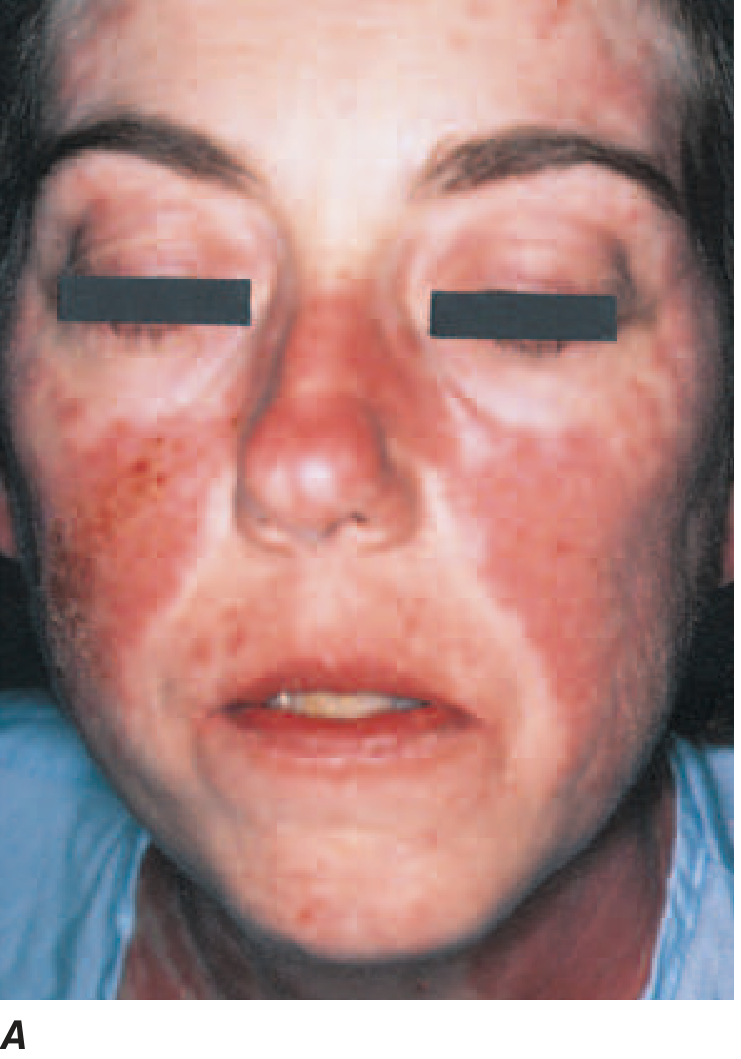
Histology: Hydropic degeneration of basal keratinocytes, dermal edema, sparse perivascular mononuclear infiltrate, dermal mucin. Direct immunofluorescence (DIF) shows IgG/complement deposits at the basement membrane zone (BMZ).
Subacute Cutaneous LE (SCLE)
Widespread, photosensitive, nonscarring eruption on the upper back, upper chest, shoulders, and extensor arms. Two forms:
- Papulosquamous: resembles psoriasis
- Annular/polycyclic: oval or ring-shaped erythematous lesions
SCLE is strongly associated with anti-Ro/SSA antibodies. It is frequently drug-induced (hydrochlorothiazide, calcium channel blockers, antifungals, PPIs). Renal and CNS involvement is usually mild or absent.
Chronic Cutaneous LE - Discoid LE (DLE)
The most common form of CCLE. Lesions are erythematous papules/plaques with thick, adherent scale and follicular plugging. On removing the scale, small "carpet tack" projections are seen - relatively specific for DLE. Long-standing lesions develop central atrophy, scarring, and hypopigmentation with raised, erythematous borders. Mainly face, scalp, external ears; rarely below the neck.
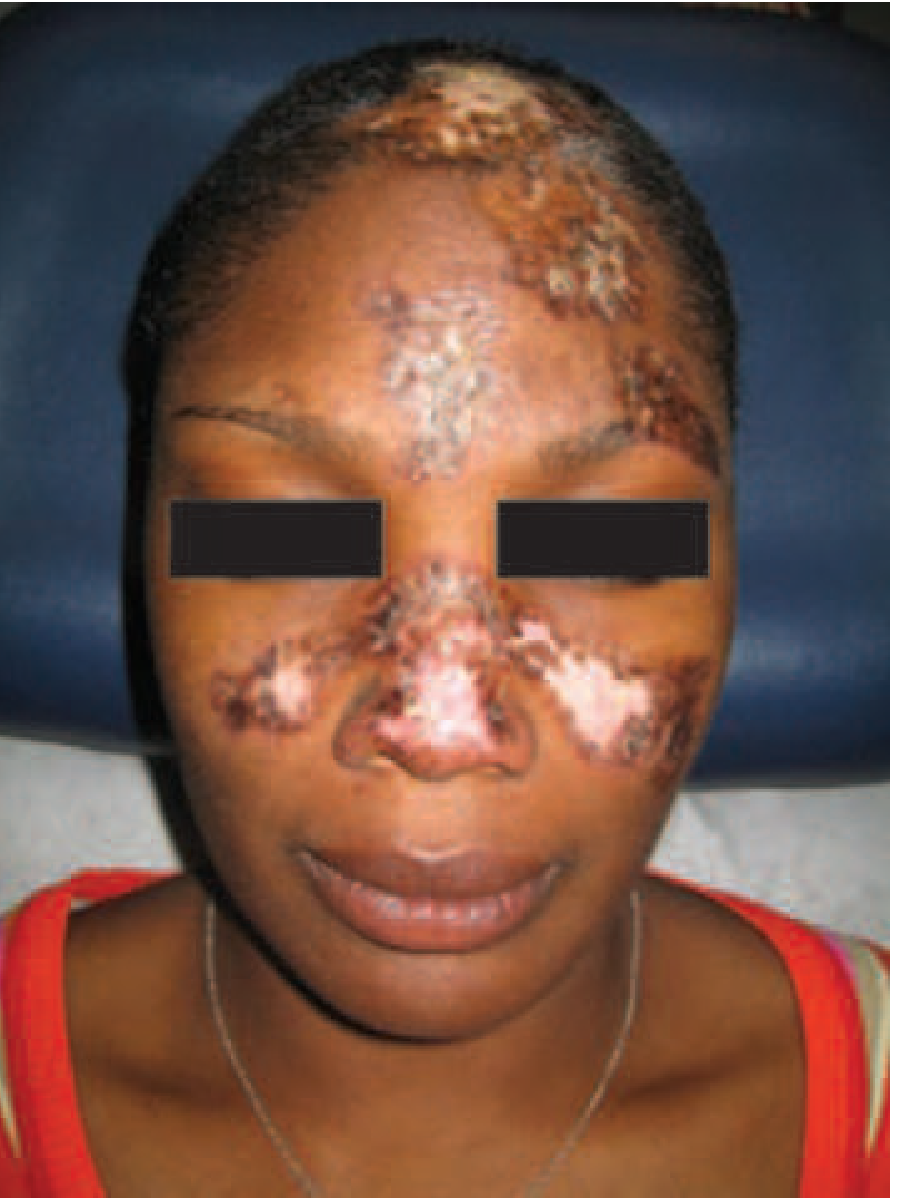
Up to 20% of DLE patients eventually meet ACR criteria for SLE. DIF of lesional skin shows immunoglobulin and complement at the BMZ in ~90% of DLE cases.
Other CCLE subtypes
- LE profundus/panniculitis: Firm subcutaneous nodules (1-3 cm) leaving deep saucerized depressions; ~50% have underlying SLE
- Chilblain LE: Purple-red acral papules/plaques precipitated by cold; associated with anti-Ro antibodies; ~20% progress to SLE
- LE tumidus: Urticarial plaques without surface changes; very photosensitive
Systemic Manifestations of SLE
From Harrison's 22E Table 368-1:
| System | Manifestations |
|---|---|
| Constitutional | Fatigue, malaise, fever, weight loss |
| Musculoskeletal | Arthralgia, polyarthritis (non-erosive), Jaccoud deformity, myalgia, avascular necrosis |
| Renal | Proteinuria, hematuria, casts; lupus nephritis (classes I-VI by ISN/RPS) |
| Neuropsychiatric | Seizures, psychosis, cognitive dysfunction, headaches, mononeuritis multiplex, stroke |
| Cardiovascular | Libman-Sacks endocarditis, pericarditis, myocarditis, accelerated atherosclerosis |
| Pulmonary | Pleuritis, pneumonitis, pulmonary hypertension, shrinking lung syndrome |
| Hematologic | Hemolytic anemia (Coombs+), leukopenia, lymphopenia, thrombocytopenia |
| GI | Nausea/vomiting, lupus peritonitis, mesenteric vasculitis, pancreatitis |
| Ocular | Keratoconjunctivitis sicca, retinal vasculitis, optic neuritis |
Diagnosis and Classification Criteria
ACR Criteria (1997) - 4 of 11 required:
- Malar rash
- Discoid rash
- Photosensitivity
- Oral ulcers
- Arthritis (non-erosive, ≥2 joints)
- Serositis (pleuritis or pericarditis)
- Renal disorder (proteinuria >0.5 g/day or cellular casts)
- Neurologic disorder (seizures or psychosis)
- Hematologic disorder (hemolytic anemia, leukopenia, thrombocytopenia)
- Immunologic disorder (anti-dsDNA, anti-Sm, aPL antibodies, false-positive VDRL)
- Positive ANA
SLICC Criteria (2012) - 4 criteria including ≥1 clinical + ≥1 immunologic, OR biopsy-proven lupus nephritis + ANA or anti-dsDNA
EULAR/ACR 2019 Criteria - Weighted scoring system; ANA (≥1:80) as entry criterion; score ≥10 = SLE
Autoantibodies
| Antibody | Prevalence in SLE | Specificity | Notes |
|---|---|---|---|
| ANA | ~95-99% | Low (~57%) | Best screening test; negative test makes SLE unlikely |
| anti-dsDNA | ~70% | High (>90%) | Correlates with disease activity; levels rise before flares; associated with nephritis |
| anti-Smith (anti-Sm) | ~30% | Very high (55-100%) | Highly specific; present even in inactive disease |
| anti-Ro/SSA | ~30% | Moderate | Associated with SCLE, neonatal lupus, photosensitivity |
| anti-La/SSB | ~20% | Moderate | Often with anti-Ro |
| antiphospholipid (aPL) | ~30-40% | Variable | Thrombosis, pregnancy loss, thrombocytopenia |
| Antihistone | ~70% | Low | Drug-induced lupus (near 100%) |
Both anti-dsDNA and anti-Sm are included in the EULAR/ACR classification criteria as the only ANA subtypes with sufficient specificity for SLE. - Harrison's 22E, p. 2875
Lupus Nephritis
The WHO/ISN-RPS classification of lupus nephritis (LN) has 6 classes:
- Class I: Minimal mesangial
- Class II: Mesangial proliferative
- Class III: Focal proliferative (<50% glomeruli affected) - active/chronic
- Class IV: Diffuse proliferative (≥50% glomeruli) - most severe
- Class V: Membranous
- Class VI: Advanced sclerosing (>90% globally sclerosed)
Classes III and IV carry the worst prognosis and require aggressive immunosuppression.
Treatment
Universal: Hydroxychloroquine (HCQ)
HCQ is recommended for all SLE patients regardless of disease severity due to its benefits: reduces flares, organ damage accrual, cardiovascular risk, thrombosis, and mortality. Dose ≤5 mg/kg/day (actual body weight) to reduce retinopathy risk. - Firestein & Kelley's Rheumatology
Stratified by Severity (2024 EULAR Guidelines):
Mild disease (constitutional symptoms, mild arthritis, rash <9% BSA, SLEDAI ≤6):
- HCQ + topical glucocorticoids (GC)
- Low-dose systemic GC (short course if needed)
- Add methotrexate (MTX), azathioprine (AZA), or mycophenolate mofetil (MMF) if insufficient response
Moderate disease (moderate arthritis, rash 9-18% BSA, serositis, PLTs 20-50 × 10⁹/L, SLEDAI 7-12):
- HCQ + GC (moderate dose)
- MTX, AZA, or MMF as steroid-sparing agents
- Belimumab (anti-BAFF) or anifrolumab (anti-IFN-α receptor) as add-on
Severe disease (major organ-threatening - cerebritis, myelitis, pneumonitis, mesenteric vasculitis, PLTs <20 × 10⁹/L, SLEDAI >12):
- High-dose GC ± IV methylprednisolone pulses
- Cyclophosphamide (CYC) - IV pulses preferred over daily oral
- Rituximab for refractory disease
- Belimumab/anifrolumab for severe extarenal skin/joint disease (not for severe neuropsychiatric SLE)
Lupus nephritis (Class III/IV/V):
-
Induction: MMF (2-3 g/day) + GC, or low-dose IV CYC (Euro-Lupus protocol) + GC
-
Belimumab is recommended as add-on to MMF for LN
-
Voclosporin (calcineurin inhibitor) + MMF + GC as triple therapy for LN
-
Maintenance: MMF or AZA + HCQ + low-dose GC
-
Harrison's 22E, Figs 368-4 and 368-5; Firestein & Kelley's Rheumatology, Key Points
Neonatal Lupus
A separate entity caused by transplacental passage of maternal IgG anti-Ro/SSA antibodies (and sometimes anti-La/SSB). Features include:
- Transient cutaneous lupus rash (resolves by ~6 months as maternal antibodies wane)
- Congenital complete heart block (permanent; most serious complication; mortality ~20%)
- Hepatobiliary disease
- Hematologic cytopenias
Neonatal lupus itself is not SLE in the infant. - Firestein & Kelley's Rheumatology
Drug-Induced Lupus
Common causative drugs: procainamide (highest risk), hydralazine, isoniazid, minocycline, anti-TNF agents. Features: anti-histone antibodies in ~70-90%; anti-dsDNA is rare (unlike idiopathic SLE); renal and CNS involvement uncommon; resolves on drug discontinuation.
Prognosis and Monitoring
- Disease activity measured by SLEDAI (SLE Disease Activity Index) and BILAG (British Isles Lupus Assessment Group) scores
- Treat-to-target: goal is remission or low disease activity state (LLDAS)
- Major causes of morbidity/mortality: renal failure, infection (including from immunosuppression), cardiovascular disease (accelerated atherosclerosis), neuropsychiatric complications
- HCQ retinal toxicity screening: baseline ophthalmology exam, then annual after 5 years of use
Key References:
- Harrison's Principles of Internal Medicine 22E (2025), Chapters 62, 368
- Andrews' Diseases of the Skin (E-Book), Chapter 8
- Fitzpatrick's Dermatology, Chapter 61
- Firestein & Kelley's Textbook of Rheumatology, Chapter on cutaneous lupus
- Cellular and Molecular Immunology, Chapter 19 - Pathogenesis of SLE, p. 1275
This is a shared conversation. Sign in to Orris to start your own chat.