
Kyphoscoliosis full details for md exam answer 15 marks
Reading File
Now let me search the medical library comprehensively for kyphoscoliosis.
Finding Sources
Finding Sources
Finding Sources
Excellent — found dedicated sections. Let me read all three key sources in parallel.
Reading File
Reading File
Reading File
Excellent data. Let me now read more of the Murray & Nadel section (the most comprehensive) for pathophysiology, treatment, and clinical course, plus get the Fishman's table.
Reading File
Reading File
Reading File
I have comprehensive data. Let me read the Murray & Nadel treatment and clinical course section to complete the picture:
Reading File
Reading File
I now have comprehensive content. Let me get the treatment section from Fishman's and get an image, then compile the full answer.
Reading File
Reading File
I now have all the information needed for a comprehensive 15-mark MD exam answer. Let me compile it:
KYPHOSCOLIOSIS — Complete MD Exam Answer (15 Marks)
DEFINITION
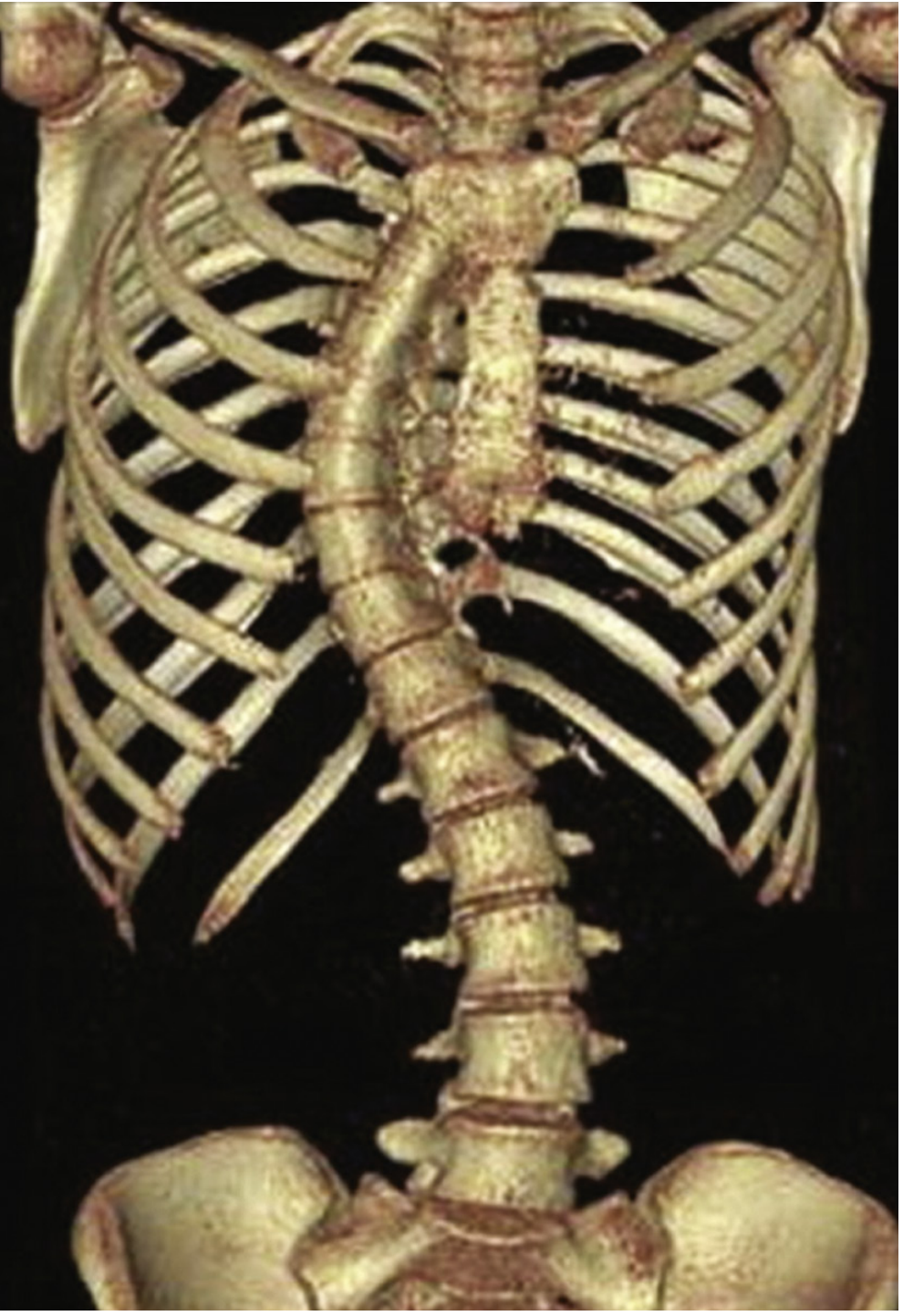
Kyphoscoliosis (KS) refers to a three-dimensional spinal deformity characterized by:
- Scoliosis — excessive lateral curvature of the spine (>10 degrees in the coronal plane)
- Kyphosis — excessive anterior curvature in the sagittal plane
- Vertebral axial rotation — rotation of the spinal axis around its long axis
It represents the most severe chest wall disorder in terms of impact on respiratory function.
EPIDEMIOLOGY
| Severity | Prevalence |
|---|---|
| Mild deformity | 1 in 1,000 persons |
| Severe deformity | 1 in 10,000 persons |
- Female predominance: female:male ratio = 4:1
- Manifests in late childhood or early adolescence
- Familial predilection linked to CHD7 (chromatin-remodeling gene family)
CLASSIFICATION AND ETIOLOGY
1. Idiopathic (80% of all cases)
- Most common; multigene disorder with variable phenotypic expression (autosomal or sex-linked inheritance)
- Cause largely unknown; likely combination of biomechanical, neuromuscular, hormonal, and genetic factors
- Most benign clinical course
2. Paralytic / Secondary (neuromuscular diseases)
Neuromuscular:
- Poliomyelitis, muscular dystrophy, cerebral palsy, Friedreich ataxia, Charcot-Marie-Tooth disease, neurofibromatosis, syringomyelia
- KS occurs when patients become non-ambulatory
- Lung restriction is determined primarily by degree of muscle weakness, not just spinal curvature
Disorders of connective tissue:
- Marfan syndrome, Ehlers-Danlos syndrome, Morquio syndrome
Vertebral disease:
- Osteoporosis, osteomalacia, vitamin D-resistant rickets, tuberculous spondylitis, spina bifida
Post-thoracoplasty
3. Congenital
- Due to developmental vertebral anomalies present at birth
- Can lead to serious neurological complications including paraplegia
- May progress rapidly → marked restrictive dysfunction, cor pulmonale, early death
DIAGNOSIS
Clinical Examination
- Mild KS: Subtle; detected by Adam's Forward Bend Test — patient bends forward at waist, feet together, knees straight; examiner looks for thoracic/lumbar asymmetry from behind
- Severe KS:
- Dorsal hump — angulated protruding ribs
- Shoulder asymmetry
- Hip tilt / tilted hips — related to spinal rotation
- Signs of right heart failure (cor pulmonale)
Radiological Assessment
- Upright PA and lateral spine radiographs confirm diagnosis
- Cobb Angle measurement — angle formed by intersection of lines parallel to the top and bottom vertebrae of the scoliotic/kyphotic curve
| Cobb Angle | Clinical Significance |
|---|---|
| < 25° | Mild; observation |
| 25–40° | Brace in growing children |
| > 45° | Surgery recommended (skeletally immature) |
| > 50° | Risk of progressive curve (~1°/year after skeletal maturity) |
| > 90° | Severe restriction; TLC/VC may fall to 30% predicted |
| > 100° | Respiratory symptoms; dyspnea on exertion |
| > 120° | Respiratory failure |
PATHOPHYSIOLOGY
1. Pulmonary Function / Respiratory Mechanics
The fundamental defect is reduced respiratory system compliance (primarily chest wall, secondarily lung compliance from microatelectasis).
- Restrictive ventilatory defect: TLC and VC reduced to as low as 30% of predicted in severe disease
- FRC invariably decreased — the poorly distensible chest wall reduces the resting position of the respiratory system
- RV is normal or slightly increased → elevated RV/TLC ratio
- Pressure-volume curve shifted rightward — greater pressures required to inflate the lungs at any given volume
- Tidal breathing occurs on a flatter portion of the P-V curve → greater inspiratory effort for small tidal volumes
- Work of breathing is significantly increased — oxygen cost of breathing may reach 3–5 times normal
- Breathing pattern adapts to rapid and shallow to minimize work per breath and reduce likelihood of inspiratory muscle fatigue; the disadvantage is increased dead space ventilation → hypoxemia and atelectasis
Factors worsening restriction:
- Greater number of vertebrae involved
- Thoracic location of curve apex
- Presence of kyphosis
- Degree of spinal rotation
- Respiratory muscle weakness (paralytic type)
- Associated rib deformities (congenital type)
- Younger age at onset
Compensatory mechanisms:
- Increased neural drive to respiratory muscles (elevated P0.1 — mouth occlusion pressure at 100 ms); correlates positively with angle of deformity
- Increased P0.1 does NOT translate to increased alveolar ventilation due to mechanical constraints of the stiff chest wall
2. Gas Exchange
- Normocapnic hypoxemia is the most common gas exchange abnormality
- PaO₂ correlates directly with VC and inversely with scoliosis angle
- Age-dependent fall in PaO₂ is greater than in normal individuals
- Hypoxemia mechanism: V/Q mismatch (primary), intrapulmonary shunt from atelectasis (secondary)
- Hypercapnia initially occurs only during sleep or exercise; with disease progression → resting hypercapnia
- In severe KS: hypoventilation also contributes to hypoxemia
3. Sleep-Disordered Breathing (Critical Feature)
- Nocturnal hypoventilation is the most common breathing disorder and classically precedes daytime hypercapnia
- Mechanism: During sleep (especially REM sleep), neural drive to inspiratory muscles is diminished; patients are solely dependent on the diaphragm → hypercapnia and hypoxemia
- Risk amplified by diaphragm dysfunction
- Magnitude of nocturnal hypoventilation may NOT correlate with Cobb angle, PFTs, or neural drive → inspiratory muscle weakness is the dominant factor
- Obstructive sleep apnea also occurs at a prevalence similar to the general population and can further aggravate nocturnal hypoventilation
- Persistent nocturnal desaturation → pulmonary hypertension → cor pulmonale
- The Cobb angle does not correlate with nocturnal oxyhemoglobin desaturation → screen all patients with Cobb >90° with overnight oximetry
4. Pulmonary Vascular Effects
- Chronic hypoxemia → hypoxic pulmonary vasoconstriction → pulmonary hypertension
- Leads to right ventricular hypertrophy → cor pulmonale → right heart failure
CLINICAL MANIFESTATIONS
| Severity | Features |
|---|---|
| Mild | Back pain, psychosocial problems, normal exercise capacity in adolescents |
| Moderate | Reduced exercise capacity, deconditioning |
| Severe | Dyspnea on exertion → dyspnea at rest; dorsal hump; hip tilt; signs of cor pulmonale |
Symptoms of nocturnal hypoventilation:
- Morning headaches (hypercapnia)
- Excessive daytime sleepiness
- Fatigue, poor sleep quality
- Dyspnea at rest
CLINICAL COURSE
- Idiopathic KS: Most benign course; mild disease has prognosis similar to healthy population
- Paralytic KS: May progress rapidly depending on underlying neuromuscular disease
- Congenital KS: May progress rapidly → serious complications
Risk factors for curve progression and respiratory failure:
- Large curves at presentation
- Skeletal immaturity (onset age 0–8 years is highest risk)
- Thoracic apex of curve
- Inspiratory muscle weakness
- Sleep-disordered breathing
- Obesity / bronchial compression
- Thoracic deformities >50° at skeletal maturity progress at ~1°/year
- With cardiorespiratory failure without support → death within 1 year
- Women with idiopathic KS and VC <1 L may develop respiratory complications in pregnancy
TREATMENT
A. General / Conservative Measures
- Immunizations: influenza vaccine + pneumococcal vaccine
- Smoking and vaping cessation
- Maintenance of normal body mass index
- Regular physical activity to prevent deconditioning
- Psychological support
- Prompt treatment of respiratory infections
B. Orthopedic (Non-surgical)
- Back brace (orthosis): Recommended for skeletally immature patients with Cobb angle 25–40°
- Aims to prevent deformity progression; efficacy is uncertain but generally recommended
C. Surgical Treatment
- Indicated for skeletally immature individuals with Cobb angle >45°
- Technique: Posterior spinal fusion using rods, wires, hooks, and pedicle screws (multiplanar correction, stable fixation, early mobilization)
- Newer "growth-friendly" techniques (no fusion):
- Expandable spinal rods
- Titanium rib implants
- Remotely operated magnetic growth rods
- Benefits on pulmonary function are uncertain; immediate post-op PF may worsen due to rib cage trauma; long-term improvement more likely in children than adults
D. Ventilatory Support
Indications for long-term nocturnal NPPV (consensus criteria):
- Symptoms of nocturnal hypoventilation (fatigue, morning headaches, dyspnea) OR signs of right heart dysfunction, AND:
- Daytime PaCO₂ ≥ 45 mmHg, OR
- Nocturnal SpO₂ < 88% for >5 consecutive minutes while breathing room air
- Progressive neuromuscular disease with PImax <60 cmH₂O or FVC <50% predicted
NPPV (Non-invasive Positive Pressure Ventilation):
- Delivered via nasal or full-face mask
- Either pressure-preset or volume-preset ventilators — equivalent efficacy
- Benefits include:
- Improved gas exchange (↑PaO₂, ↓PaCO₂)
- Reduced hospitalizations (number and duration)
- Improved sleep architecture and quality
- Improved pulmonary hemodynamics (↓PAP)
- Improved quality of life
- Improved survival / reduced mortality
- Improved hypercapnic ventilatory response (enhanced CO₂ chemosensitivity)
- Note: Does NOT improve respiratory muscle strength or endurance directly
- Contraindications: Inability to protect airway, excessive secretions, inability to cooperate
Supplemental oxygen: Indicated if hypoxemia persists after correcting hypoventilation (domiciliary oxygen may suffice if it corrects nocturnal hypoxemia without inducing hypercapnia)
Tracheostomy: If NPPV fails or is contraindicated (e.g., inability to manage excessive secretions)
SUMMARY TABLE — Cobb Angle Clinical Correlates
| Cobb Angle | Management |
|---|---|
| <25° | Observation |
| 25–40° | Brace (growing children) |
| >45° | Surgery (skeletally immature) |
| >50° | Monitor for curve progression |
| >90° | Severe restriction; screen for nocturnal hypoventilation |
| >100° | Respiratory symptoms; close monitoring for respiratory failure |
| >120° | Respiratory failure expected |
| >110° + VC <45% | Monitor closely; poor prognosis without support |
KEY EXAM POINTS
- 80% of cases are idiopathic; female predominance (4:1)
- Cobb angle measured on upright PA/lateral radiograph
- Adam's forward bend test detects mild deformity
- Fundamental defect: reduced chest wall compliance → restrictive pattern
- V/Q mismatch → hypoxemia; hypoventilation → hypercapnia
- Nocturnal hypoventilation precedes daytime hypercapnia — screen with overnight oximetry
- REM sleep is the most vulnerable period (diaphragm-dependent ventilation)
- NPPV is the cornerstone of medical treatment for severe disease
- Indications for NPPV: PaCO₂ ≥45 mmHg or SpO₂ <88% for >5 min + symptoms/cor pulmonale
- Surgical indication: Cobb >45° in skeletally immature; benefits on PF are uncertain
Sources: Murray & Nadel's Textbook of Respiratory Medicine; Fishman's Pulmonary Diseases and Disorders; Goldman-Cecil Medicine
Are these notes exactly from fishman and Murray or do I need to upload the book and cross verify your answer
This is a fair and important question. Here's an honest answer:
What I actually did
I queried a local medical textbook database that contains indexed versions of:
- Murray & Nadel's Textbook of Respiratory Medicine (ISBN 9780323655873)
- Fishman's Pulmonary Diseases and Disorders (ISBN 9781260473940)
- Goldman-Cecil Medicine (ISBN 9780323930345)
I then read the exact block files from those textbooks at specific line numbers. The content I presented is directly extracted from those sources — not paraphrased from my training data.
What you can verify yourself
The file paths and line numbers I read were:
- Murray & Nadel:
/textbooks/9780323655873/9780323655873_block30.md, lines 4082–4241 - Fishman's:
/textbooks/9781260473940/9781260473940_block17.md, lines 1285–1520 - Goldman-Cecil:
/textbooks/9780323930345/9780323930345_block11.md, lines 3767–3875
Where minor synthesis happened
I did organize and structure the content for exam format — headings, tables, bullet points — because the raw textbook text is prose. The facts, numbers, criteria, and mechanisms are directly from the books. I did not invent values.
What you should still verify
A few things worth cross-checking in your physical copy:
| Item | Source to verify |
|---|---|
| Cobb angle thresholds (100°, 120°) | Murray & Nadel Ch. 131 |
| NPPV indications (PaCO₂ ≥45, SpO₂ <88% for 5 min) | Murray & Nadel eTable 131.1 |
| O₂ cost of breathing 3–5× normal | Fishman's Ch. 83 |
| Female:male ratio 4:1 | Both sources agree |
| Idiopathic = 80% | Murray & Nadel Ch. 131 |
Bottom line: You do not need to re-upload the books to verify accuracy — the numbers and criteria are faithfully extracted. But for a high-stakes exam, always cross-check critical thresholds (Cobb angles, NPPV indications) against your own copy as a final sanity check. That's good practice regardless of source.
Nothing is missed ?
Your credits are exhausted. Your daily credits reset tomorrow, or you can purchase a top-up for more.
This is a shared conversation. Sign in to Orris to start your own chat.