
Animal models in autoimmunity ( detail about mouse models in Rheumatology ) from rheumatology textbooks and journals
Reading File
Now let me search the medical library and PubMed in parallel for comprehensive coverage.
Finding Sources
Finding Sources
Searching PubMed
"mouse model" AND "autoimmunity" AND "rheumatoid arthritis"
Searching the Web
mouse models autoimmunity rheumatology review 2024 2025
Good - let me now search the library with more targeted queries and PubMed for specific mouse models.
Finding Sources
Finding Sources
Searching PubMed
"animal models" AND "autoimmune" AND "rheumatology"
Excellent! I found key sections in Firestein & Kelley's and Rheumatology textbooks. Let me now read those sections in detail.
Reading File
Reading File
Reading File
Excellent content! Let me read more of these sections for comprehensive detail.
Reading File
Reading File
Finding Sources
Finding Sources
Excellent content! Let me now read the Firestein & Kelley animal models section and the Sjögren's mouse models section in detail.
Reading File
Reading File
Excellent rich content! Let me read more on MRL/lpr, BXSB, induced/engineered models, and also the CIA/arthritis section.
Reading File
Reading File
I now have very rich content. Let me read one more section on engineered/induced models from the SLE chapter and the CIA section from the arthritis chapter.
Reading File
Reading File
I now have comprehensive textbook content. Let me fetch the two diagrams and also do a quick PubMed search for scleroderma mouse models.
Loading Image
Searching PubMed
"mouse model" AND "systemic sclerosis" AND fibrosis
Finding Sources
I now have extensive content from two major rheumatology textbooks. Let me compile the comprehensive answer.
Animal Models in Autoimmunity: Mouse Models in Rheumatology
Sources: Firestein & Kelley's Textbook of Rheumatology (2-Volume Set); Rheumatology 2-Volume Set (2022, Elsevier); Roitt's Essential Immunology
Why Mouse Models?
Mouse models are the dominant experimental system used to study autoimmune rheumatic diseases. As summarized in Rheumatology (2022, Elsevier): "As the major model system used to study the immune system, mouse models have been particularly important in this effort." Countless studies over more than five decades have identified clinical, immunologic, and genetic similarities between autoimmune inbred mouse strains and human rheumatic diseases. These models have been critical for:
- Understanding genetic susceptibility loci and specific pathogenic pathways
- Identifying novel autoantigens and immune mechanisms
- Preclinical testing of targeted therapies
- Dissecting gene-environment interactions
Murine models are broadly classified into three types: spontaneous, induced, and engineered (transgenic/knockout).
Criteria for Evaluating an Animal Model
Roitt's Essential Immunology lists formal criteria for considering a disease autoimmune in both humans and animal models:
| Criterion |
|---|
| Immunopathology consistent with autoimmune-mediated processes |
| Beneficial effect of immunosuppressive interventions |
| MHC association |
| Animal model mirroring the human disease |
| Transfer of the disease by autoreactive lymphocytes or autoantibodies |
Classification of Murine Autoimmune Models
Firestein & Kelley's comprehensive table maps each human rheumatic syndrome to its mouse model:
| Human Syndrome | Key Autoantigens | Mouse Model(s) |
|---|---|---|
| SLE | Nuclear antigens | MRL-Fas^lpr, BWF1 (NZB/W), BXSB, NZM2410 |
| Rheumatoid Arthritis | RF IgG, citrullinated proteins, CII | CIA, PGIA, SKG, K/BxN, BxD2, DR4-IE transgenic |
| Systemic Sclerosis | Unknown | Tsk/+ mice, bleomycin-induced |
| Antiphospholipid Syndrome | β2-GP1 | (NZW × BXSB)F1 |
| Sjögren's Syndrome | Ro/La, salivary gland Ags | NZB/W, MRL/lpr, NOD |
| Ankylosing Spondylitis | Unknown | HLA-B27 transgenic |
| Type I DM | Pancreatic β-cell Ags | NOD mouse |
| Autoimmune hemolytic anemia | RBC surface Ag | NZB |
I. Spontaneous Mouse Models
1. New Zealand Black (NZB) Mouse
The NZB mouse, developed at the University of Otago, was the earliest spontaneous autoimmune mouse model. Key features:
- Early mortality (~16-17 months) due to hemolytic anemia (linked to Aia3 and Nba2 loci)
- B-cell hyperreactivity: hypergammaglobulinemia
- Mild immune complex glomerulonephritis
- Late-life B-cell lymphomas (similar to Sjögren's-associated lymphomas)
- Female mice slightly more affected than males (unlike the strong sex bias in humans)
2. (NZB × NZW)F1 (NZB/W, "BWF1") Mouse - The Classic SLE Model
The first generation hybrid of NZB × New Zealand White (NZW) mice develops far more aggressive disease than either parent. NZW mice alone have frequent antinuclear antibodies but no overt clinical disease:
- High-titer anti-dsDNA antibodies (a hallmark of SLE)
- Aggressive proliferative glomerulonephritis with tubulointerstitial disease - the major cause of early mortality
- Classic LE cells
- Lymphocytic infiltration of salivary glands (model for Sjögren's overlap)
- CNS abnormalities in common with SLE
- Strong female predominance - autoantibodies and renal disease appear earlier in females, mirroring human SLE
This remains the most widely used murine lupus model and provided many of the first insights into SLE immunopathogenesis.
3. MRL/lpr and gld Mice
The MRL/lpr mouse arose from a spontaneous autosomal recessive mutation (lpr = lymphoproliferation) in the MRL/mp background, localized to chromosome 19:
- The lpr mutation = a defect in Fas protein (CD95), a TNF-superfamily receptor critical for activation-induced cell death
- Results in massive, non-malignant lymphoproliferation and loss of peripheral tolerance
- Accumulation of "double-negative" (DN) T cells (CD4-CD8-) in the periphery - due to failure of programmed cell death, not abnormal proliferation
- Severe multi-organ autoimmunity: glomerulonephritis with complement deposition, necrotizing vasculitis (renal, mesenteric, coronary arteries), interstitial pneumonitis, skin disease, CNS inflammation
- Broad autoantibody production including anti-dsDNA, anti-Sm, anti-ribonuclear proteins (more comprehensive than NZB/W)
- Widely used for therapeutic testing in SLE
A related mutation, gld (generalized lymphoproliferative disease), identified in C3H/HeJ mice, affects chromosome 1. Bone marrow transplant experiments established that lpr and gld represent a receptor-ligand pair: Fas and Fas Ligand, respectively.
4. BXSB Mouse
BXSB develops anti-DNA antibodies and immune complex glomerulonephritis, but with a unique sex reversal: male mice are more severely affected. Key features:
- Y-linked disease accelerator gene called Yaa (Y-linked autoimmunity accelerator)
- Yaa acts as an accelerating factor but requires additional background genes for full disease
- This model was instrumental in demonstrating that Y-linked (non-hormonal) genetic factors can drive male-predominant autoimmunity
- Disease is worsened by IL-6
5. NZM2410 and Congenic Strains
NZM2410 was derived by intercrossing NZB/W mice and selecting for nephritis. It carries three major susceptibility loci:
- Sle1 (chromosome 1): B-cell hyperactivity, anti-dsDNA production; contains the SLAM/CD2 gene cluster (Sle1b) and C2 gene (Sle1c)
- Sle2 (chromosome 4): B-cell polyclonal activation
- Sle3/5 (chromosome 7): T-cell hyperactivation, increased APC activity
Congenic strains allow individual loci to be isolated on a non-autoimmune (C57BL/6) background, enabling precise gene-phenotype mapping. NZM strains are now being used to dissect checkpoint inhibition and immunometabolism in lupus.
6. SNF1 Mouse (SWR × NZB)F1
Like NZB/W, develops anti-DNA and antinucleosome antibodies with female-predominant glomerulonephritis leading to death by one year. Notable contributions:
- Mapping of autoepitopes on core histones for pathogenic T-cell clones
- Demonstrated the role of nucleosomes as autoantigens - histone H1'22-42 reactive Th1 cells expand early and accelerate glomerulonephritis
II. Induced Mouse Models
7. Collagen-Induced Arthritis (CIA) - The Gold Standard RA Model
CIA is the most widely used model of RA. It is induced by immunization of susceptible mice (classically DBA/1, H-2q haplotype) with type II collagen (CII) in complete Freund's adjuvant:
Mechanism (Rheumatology 2022, Elsevier):
Animals are immunized with type II collagen; an autoimmune response results when specific epitopes are presented in the context of MHC class II antigens and recognized by autoreactive CD4+ T-cell populations. Autoantibodies and T effector cells reactive against cartilage components develop and localize in synovial joints, causing immune-mediated inflammatory response. The immune response is perpetuated by release of cartilage antigens within the damaged joint, and chronic arthritis develops.
Key features:
- CIA susceptibility is linked to the I-A region of the H-2d and H-2q haplotypes - a four-amino-acid sequence in the I-Aβ chain analogous to the human RA "shared epitope" in DRβ1
- CIA can now be induced in C57BL/6 (H-2b) background via the congenic C57BL/6N.Q strain, enabling use of gene knockout mice
- Both humoral (anti-CII antibodies) and cellular (CD4+ T cells) immunity are required
- Proinflammatory cytokines TNF-α and IL-1β are expressed in affected joints; blocking these reduces clinical and histological severity - directly predicting the success of anti-TNF therapy in humans
- Limitations: more acute than human RA; cyclooxygenase inhibitors are highly effective in CIA but less so in RA; most RA patients do NOT have elevated anti-CII antibodies
Passive transfer of CIA can be performed with monoclonal anti-CII antibodies in a complement-dependent, FcγR-dependent manner.
8. Proteoglycan/Aggrecan-Induced Arthritis (PGIA)
- Induced in BALB/c mice by immunization with the G1 domain of human aggrecan (proteoglycan)
- Histopathology: edema, proliferative synovitis, mononuclear infiltration, pannus formation, cartilage and bone erosion
- Both immune complex (IC) and T-cell dependent
- Provides a model for joint-specific autoimmunity to a cartilage-specific proteoglycan
9. Pristane-Induced Arthritis (PIA)
Pristane (a non-degradable mineral oil) injected intraperitoneally induces arthritis in susceptible mice and DA rats:
- Mechanism: Circulating macrophages are intensely activated by non-degradable oil components, producing high levels of IL-1, IL-6, TNF-α, and IFN-α. Genetic regulation governs the presence of autoreactive T and B cells, which become activated and clonally expand. Joint-reactive lymphocytes migrate to joints and induce damage. The release of cartilage antigens and heat shock proteins feeds back to autoreactive lymphocytes, creating chronic stimulation.
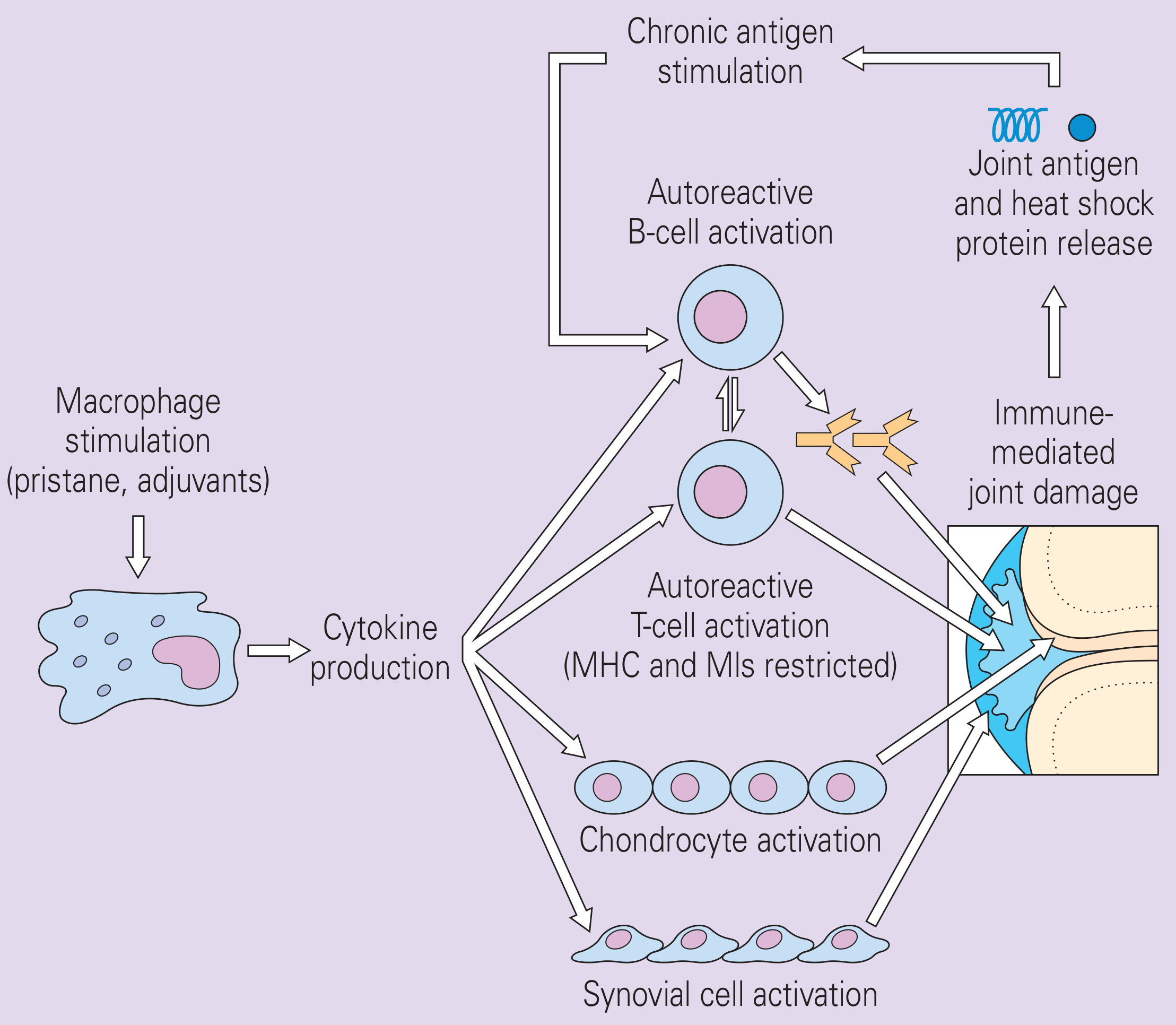
Fig. 95.2 (Rheumatology 2022, Elsevier) - Mechanism of pristane- and adjuvant-induced experimental arthritis
10. Antigen-Induced Arthritis (AIA)
- Induced in rabbits and mice by intraarticular injection of antigen (ovalbumin, BSA, methylated BSA) following systemic preimmunization with antigen in CFA
- Confined to the injected joint - unlike polyarthritis models
- Cationic antigens preferred due to increased retention in joint
- Both IC and T-cell dependent; T-cell-derived IL-17 drives the flare response
- Useful for studying monoarthritis mechanisms
11. Bleomycin-Induced SSc Model
- Repeated subcutaneous injections of bleomycin (or intradermal) induce skin fibrosis and pulmonary fibrosis mimicking systemic sclerosis
- A 2024 systematic review (Gülle et al., PMID: 38523580) comprehensively evaluates this model
- Main limitation: lack of autoantibody production typical of human SSc
III. Transgenic and Knockout (Engineered) Mouse Models
12. K/BxN Mouse - Spontaneous Autoimmune Arthritis
The K/BxN mouse is a B6 × NOD hybrid expressing a transgenic TCR (KRN) that recognizes bovine ribonuclease peptide on H-2K:
- Develops acute severe inflammatory arthritis driven by anti-GPI (glucose-6-phosphate isomerase) antibodies
- B lymphocytes, MHC class II, and CD4+ T cells are all required
- Arthritis can be transferred to naive mice with serum IgG (complement- and FcγR-dependent) - the K/BxN serum transfer model is widely used as a rapid, synchronous arthritis model
- Key limitation: unlike human RA, K/BxN arthritis is NOT TNF-α dependent; also, anti-GPI antibodies are not specific to RA in humans
13. SKG Mouse - ZAP-70 Mutant Arthritis
- Carries a spontaneous point mutation in the SH2 domain of ZAP-70 (a key TCR signaling kinase)
- Suboptimal TCR signal transduction alters the thymic selection threshold, failing to delete self-reactive T cells
- Develops chronic autoimmune arthritis reminiscent of RA, including synovitis, pannus, and cartilage destruction
- Challenges the assumption that autoimmune diseases arise from hyperresponsive T cells - here it is hypo-responsive TCR signaling
- Requires innate immune stimulation to trigger disease (microbially rich environment or fungal β-glucans such as zymosan), demonstrating gene-environment interaction
- Also develops extra-articular features (interstitial pneumonitis, Sjögren's-like features)
14. TNF Transgenic (TNFtg) Mouse
- Overexpression of human TNF in mice leads to spontaneous destructive arthritis
- Directly validated TNF as a driver of synovitis - helped establish the rationale for anti-TNF therapy
- Arthritis is T-cell and immune complex independent (pure cytokine-driven)
15. IL-1ra Knockout (IL-1ra-/-) Mouse
- BALB/c mice with targeted deletion of IL-1 receptor antagonist develop spontaneous arthritis
- Autoimmune T cells involved (±IC)
- Demonstrates the critical role of the IL-1 pathway in joint homeostasis
16. Engineered Lupus Models
Targeted knockouts have clarified individual gene contributions to SLE pathogenesis (Rheumatology 2022, Elsevier, Table 137.2):
| Gene | Genotype | Phenotype |
|---|---|---|
| CTLA4 | Knockout | ANA, lymphadenopathy, GN, early lethality |
| CD22 | Knockout | ANA |
| CD31 | Knockout | ANA, GN |
| Lyn | Knockout | ANA, GN, LAN (negative B-cell regulator) |
| Fyn | Knockout | ANA, GN |
| FcRIIB | Knockout | ANA, GN, LAN |
| PTEN | Knockout | ANA, GN, LAN |
| PD-1 | Knockout | ANA, GN, LAN |
| PKCδ | Knockout | ANA, GN, LAN |
| C1q | Knockout | ANA, GN |
| BAFF | Transgenic (overexpression) | ANA, GN, LAN |
Key insight from Lyn knockout: Lyn negatively regulates B-cell activity. Lyn-/- mice develop increased plasma cells and autoantibodies. IgG autoantibody production depends on IL-6, but IgM autoreactive accumulation does not - demonstrating the complexity of autoimmune B-cell dysregulation.
Additional engineered models: mice with the BAFF transgene (B-cell activating factor of the TNF family) develop lupus-like disease and Sjögren's features, validating BAFF as a therapeutic target (belimumab).
The San Roque and miR-17-92 transgenic mice have revealed novel mechanisms of mRNA regulation in autoantibody formation.
IV. Mouse Models of Sjögren's Syndrome
Several mouse models develop Sjögren's-like features (Firestein & Kelley, Table):
| Mouse Model | Phenotype | Notes |
|---|---|---|
| (NZB)NZW F1 | Salivary and lacrimal gland infiltration | Also SLE model |
| MRL/lpr | Exocrinopathy, glandular lymphocytic infiltration | Also SLE model |
| NOD mouse | Sialadenitis, lacrimal gland involvement | Also type I DM model |
| Transgenic TGF-β1 | Glandular fibrosis |
V. Mouse Models of Systemic Sclerosis (SSc)
| Model | Type | Notes |
|---|---|---|
| Tsk/+ (Tight Skin 1) | Spontaneous mutant | Fibrillin-1 duplication; subcutaneous fibrosis without vasculopathy |
| Bleomycin-induced | Chemical | Skin + lung fibrosis; lacks autoantibodies |
| Fra-2 transgenic | Engineered | Pulmonary hypertension, fibrosis |
| IL-4 transgenic | Engineered | Fibrosis, autoantibodies |
VI. Models for Vasculitis and Antiphospholipid Syndrome
| Disease | Mouse Model |
|---|---|
| Antiphospholipid syndrome | (NZW × BXSB)F1 - anti-cardiolipin, anti-platelet, vascular thrombosis |
| Microscopic polyangiitis | Anti-MPO antibody administration |
| Granulomatosis with polyangiitis | No good model currently |
| Cryoglobulinemia | MRL-Fas^lpr |
Key Lessons from Mouse Models
- Genetic complexity of autoimmunity: Multiple loci contribute and interact (NZM2410 studies)
- Loss of negative regulation (Lyn, CD45 wedge mutant, FcRIIB, PD-1, CTLA4) consistently produces autoimmunity - tolerance requires active suppression
- Both T and B cells are typically required for full autoimmune disease expression
- Gene-environment interaction: SKG mice require fungal triggers; pristane-induced models show how environmental adjuvants engage autoreactive lymphocytes
- Cytokine validation: TNF transgenic mice validated anti-TNF therapy; BAFF transgenic mice validated belimumab
- Translation limitations: K/BxN arthritis is TNF-independent; CIA responds better to COX inhibitors than human RA; murine lupus drug studies frequently fail to translate to humans - due to differences in immune effector mechanisms
Recent Literature (PubMed)
- Systemic Sclerosis mouse models (Bi X, Mills T, Wu M, Curr Opin Rheumatol 2023 [PMID: 37605874]): Update on SSc animal models
- Bleomycin-induced SSc (Gülle S et al., Reumatismo 2024 [PMID: 38523580]): Systematic review of skin and lung fibrosis in bleomycin mouse models
- Immunometabolism in SLE (Patiño-Martinez E, Kaplan MJ, Nat Rev Rheumatol 2025 [PMID: 40524030]): NZM congenic strains now used to link immunometabolism to lupus pathogenesis
Sources: Firestein & Kelley's Textbook of Rheumatology (9780323935364); Rheumatology 2-Volume Set, 2022 Elsevier (9780702081330); Roitt's Essential Immunology (9781118415771)
This is a shared conversation. Sign in to Orris to start your own chat.