
Thyroid embryology, surgical anatomy include artery,venous, lymphatic drainage,signs and symptoms, type of conditions investigations,preop prep types of surgeries,post OP complications
Reading File
Searching sources...
Finding Sources
Finding Sources
Finding Sources
Excellent - Sabiston has a dedicated section on thyroid embryology and anatomy. Now let me read the key blocks in parallel.
Reading File
Finding Sources
Finding Sources
Refer from Bailey and love
Searching sources...
Finding Sources
Found it. Now let me search for all thyroid-related headings in Bailey and Love.
Finding Sources
All thyroid content is in block7. Now let me read the key sections in parallel - embryology/anatomy first, then investigations, then operations and complications.
Reading File
Reading File
Good start. Now let me read more sections - anatomy continues, thyroid enlargement, conditions, operations, and complications.
Reading File
Reading File
Excellent content coming through. Let me now read the signs/symptoms, investigations, preop prep, surgical operations and postop complications sections.
Reading File
Reading File
Now let me read the thyroid operations section and the postoperative complications section.
Reading File
Reading File
Now reading the postop complications and preop prep sections.
Reading File
Reading File
Now let me read the preoperative preparation and postoperative complications sections specifically.
Reading File
Reading File
Excellent - I now have all the core material. Let me also read the signs/symptoms for hypothyroidism, hyperthyroidism sections and preop prep for thyrotoxicosis.
Reading File
Reading File
Now let me quickly fetch the key diagrams and get the signs/symptoms of hypo and hyperthyroid from the text.
Reading File
Reading File
Now let me fetch the key anatomy images and read the signs/symptoms sections.
Loading Image
Loading Image
Loading Image
Reading File
I now have comprehensive material from Bailey and Love. Let me update the todos and write the full answer.Here is the complete, comprehensive thyroid chapter summary drawn directly from Bailey and Love's Short Practice of Surgery, 28th Edition (Chapter 55).
THYROID GLAND - Bailey and Love's Short Practice of Surgery (28th Ed.)
1. EMBRYOLOGY
The thyroid originates from median and lateral anlages which follow separate embryological paths before fusing.
- The thyroglossal duct develops from the median bud of the pharynx
- The foramen caecum (junction of anterior 2/3 and posterior 1/3 of the tongue) is the vestigial remnant of this duct
- This initially hollow structure migrates caudally, passing in close continuity with - and sometimes through - the developing hyoid cartilage
- The parathyroid glands develop from the 3rd and 4th pharyngeal pouches
- The thymus also arises from the 3rd pouch - as it descends, it takes the inferior parathyroid with it. This is why the inferior parathyroid (from 3rd pouch) lies inferior to the superior gland - but can be found anywhere along this line of descent
- The developing thyroid lobes amalgamate with structures from the 4th pharyngeal pouch: the superior parathyroid and ultimobranchial body
- Parafollicular C cells from the neural crest reach the thyroid via the ultimobranchial body - they produce calcitonin
Figure 55.1 - Thyroid and Parathyroid Embryology:
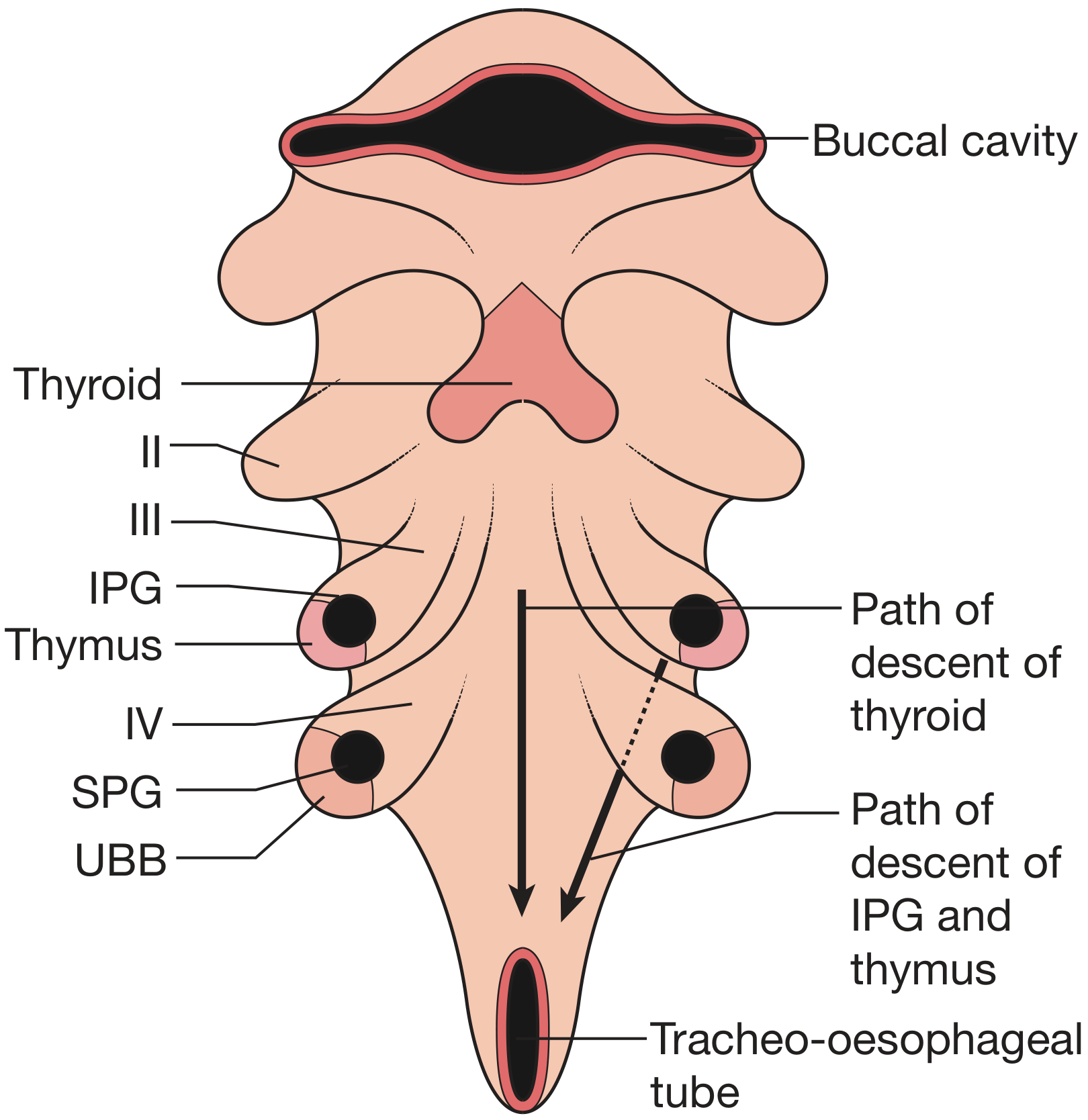
Clinical relevance: This embryology explains:
- Thyroglossal cysts (anywhere from foramen caecum to isthmus)
- Lingual thyroid
- Pyramidal lobe (most common embryological variant)
- Ectopic parathyroid positions
2. SURGICAL ANATOMY
Gross Anatomy
- Normal weight: 20-25 g
- The functioning unit is the lobe supplied by a single arteriole, consisting of 24-40 follicles lined with cuboidal epithelium
- The follicle contains colloid in which thyroglobulin is stored
- Covered by a true capsule and surrounded by pretracheal fascia
Arterial Supply
The arterial supply is rich with extensive anastomoses between the main thyroid arteries and branches of the tracheal and oesophageal arteries.
| Artery | Origin | Notes |
|---|---|---|
| Superior thyroid artery | First branch of external carotid artery | Runs with external branch of superior laryngeal nerve |
| Inferior thyroid artery | Thyrocervical trunk (subclavian artery) | Closely related to RLN at Berry's ligament |
| Thyroidea ima (inconstant) | Arch of aorta or brachiocephalic trunk | Present in ~3%, runs up midline |
Venous Drainage
| Vein | Drains to |
|---|---|
| Superior thyroid vein | Internal jugular vein |
| Middle thyroid vein | Internal jugular vein |
| Inferior thyroid vein | Left brachiocephalic vein |
Lymphatic Drainage
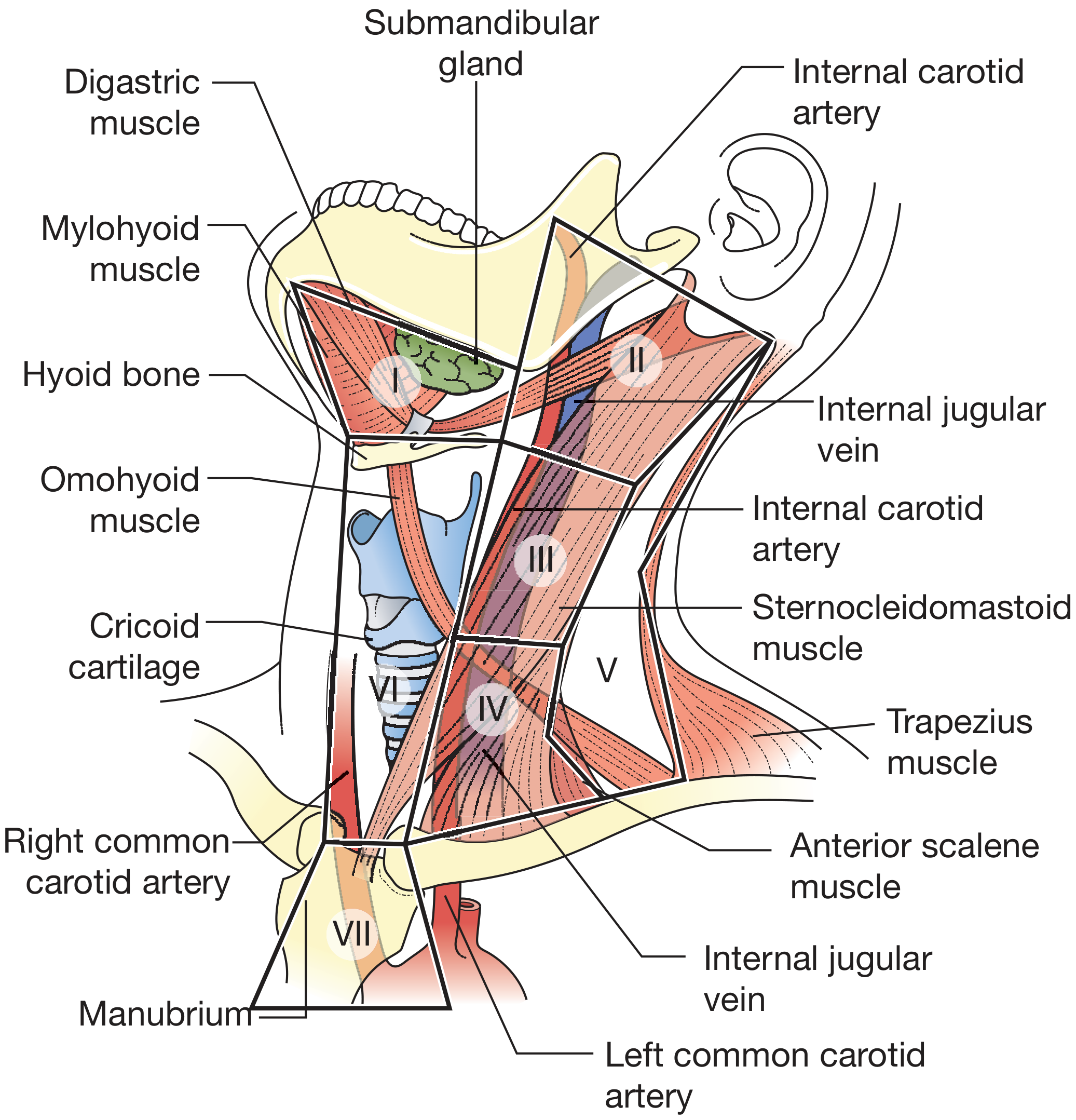
The subcapsular plexus drains principally to the central compartment (Level VI):
- Juxtathyroid "Delphian" nodes (pretracheal)
- Paratracheal nodes
- Nodes on superior and inferior thyroid veins
From there drainage goes to:
- Deep cervical nodes (Levels II, III, IV, V)
- Mediastinal nodes (Level VII)
Figure 55.3 - Thyroid gland from behind, showing key vascular and nerve relations:
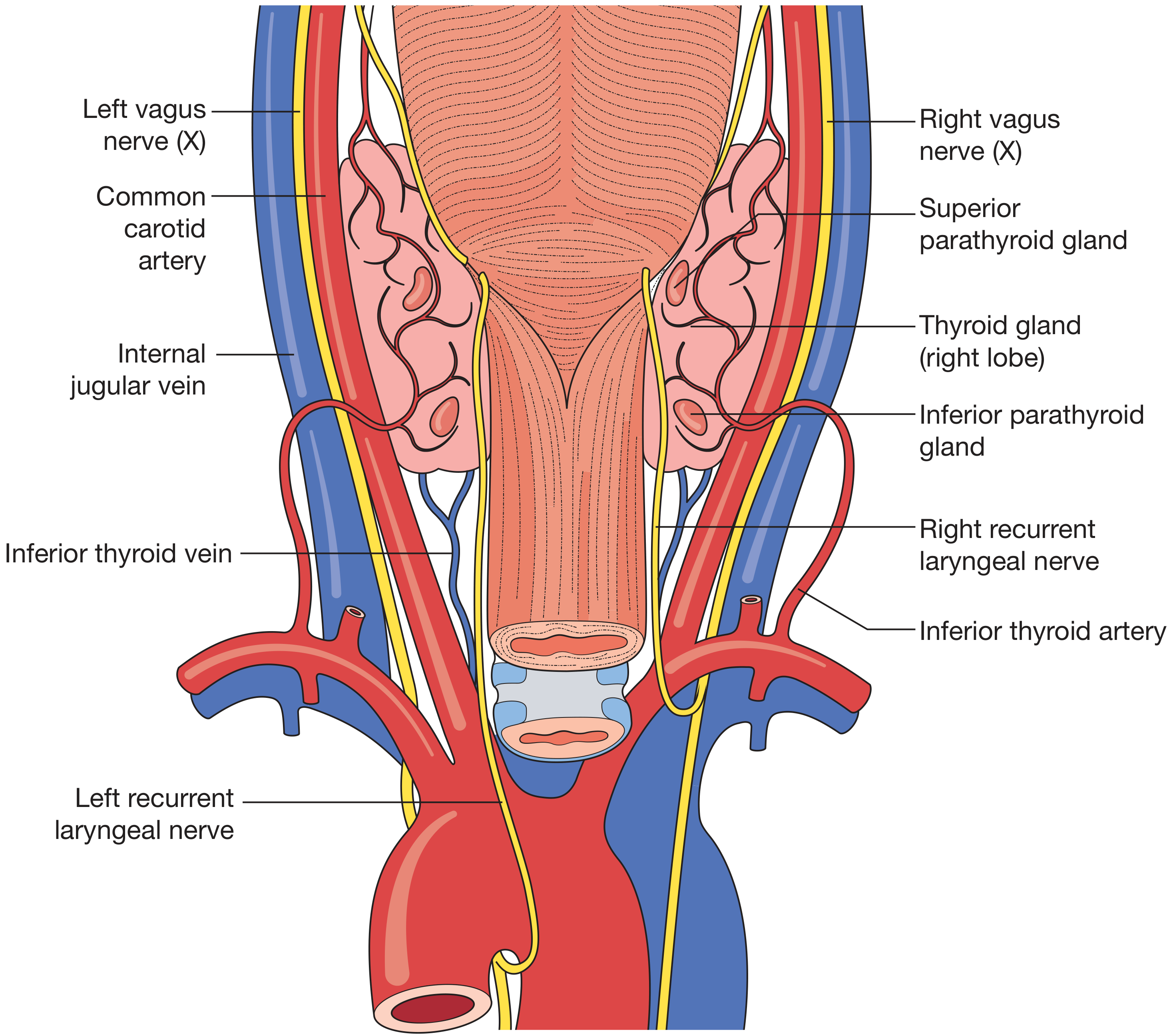
Figure 55.4 - Cervical lymph node levels:
Recurrent Laryngeal Nerve (RLN) - Of Supreme Surgical Importance
- Branch of the vagus nerve
- Left RLN: recurs around the arch of the aorta → runs in a more medial plane in the tracheo-oesophageal groove (longer course = more medial)
- Right RLN: recurs around the subclavian artery → runs more obliquely to reach the tracheo-oesophageal groove
- ~2% of nerves on the right are non-recurrent - these enter the larynx from above (associated with aberrant right subclavian artery)
- Enters larynx at the cricothyroid joint
- Located in the tracheo-oesophageal groove where it forms one side of Behr's triangle (sides: carotid artery, inferior thyroid artery, RLN)
- Found under the Tubercle of Zuckerkandl (posterolateral portion of the thyroid lobe) during mobilisation
- At greatest risk at Berry's ligament (condensation of pretracheal fascia binding thyroid to trachea)
External Branch of Superior Laryngeal Nerve (EBSLN)
- Runs with the superior thyroid artery close to the upper pole
- Injury causes loss of tension in the vocal cord → diminished power and range (particularly affects singers and professional voice users)
3. PHYSIOLOGY (Brief)
- T3 and T4 are bound to thyroglobulin within colloid
- Synthesis steps: iodide trapping → oxidation → binding with tyrosine → coupling to form T3/T4
- T3 is the more important physiological hormone; produced in periphery by conversion from T4
- T3 is quick-acting (hours); T4 acts more slowly (4-14 days)
- Free T3: 3.5-7.5 μmol/L; Free T4: 10-30 nmol/L; TSH: 0.3-3.3 mU/L
- Negative feedback via hypothalamus-pituitary-thyroid (HPT) axis with TRH and TSH
4. CLASSIFICATION OF THYROID CONDITIONS
Table 55.3 - Classification of Thyroid Swellings:
| Category | Type | Examples |
|---|---|---|
| Simple goitre (euthyroid) | Diffuse hyperplastic | Physiological, pubertal, pregnancy |
| Multinodular goitre | ||
| Toxic | Diffuse | Graves' disease |
| Multinodular | Toxic MNG | |
| Toxic adenoma | Plummer's disease | |
| Inflammatory | Autoimmune (Hashimoto's), Subacute (de Quervain's), Riedel's, Suppurative | |
| Neoplastic | Benign | Follicular adenoma |
| Malignant | Papillary (80%), Follicular (10%), Anaplastic (5%), Medullary (2.5%), Lymphoma (2.5%) |
5. SIGNS AND SYMPTOMS
Features Common to All Thyroid Swellings
- Swelling in anterior neck that moves on swallowing (key sign)
- Thyroglossal cyst also moves on protrusion of tongue
- Pressure symptoms: dysphagia, dyspnoea, stridor, SVC obstruction (retrosternal)
- Hoarseness (RLN involvement - suggests malignancy)
Symptoms of Hypothyroidism
- Weight gain, cold intolerance, constipation
- Fatigue, lethargy, slowed mentation
- Dry skin, hair loss, bradycardia
- Menorrhagia, infertility
- Periorbital oedema, hoarse voice
- Hyporeflexia, myopathy
Symptoms of Hyperthyroidism (Thyrotoxicosis)
- Weight loss despite increased appetite
- Heat intolerance, sweating
- Palpitations, tachycardia, AF
- Tremor, anxiety, irritability
- Diarrhoea, oligomenorrhoea
- Proximal myopathy
Graves' Disease - Specific Signs
- Exophthalmos (proptosis) / ophthalmopathy (Figure 55.17)
- Lid lag, lid retraction
- Pretibial myxoedema
- Thyroid acropachy (clubbing)
- Diffuse vascular goitre with bruit
Features Suggesting Malignancy
- Age extremes (teenager or elderly)
- Male sex
- Hard, irregular texture
- Apparent fixity
- RLN palsy (hoarseness + non-occlusive cough, confirmed by laryngoscopy - "almost pathognomonic")
- Cervical lymphadenopathy along internal jugular vein (almost diagnostic of PTC)
- Rapid enlargement / painful nodule (usually haemorrhage but malignancy must be excluded)
6. INVESTIGATIONS
Biochemical
- Serum TSH (immunochemiluminometric assay) - most sensitive initial test
- Free T3 and Free T4
- Thyroid autoantibodies: Anti-TPO (>25 units/mL significant) and antithyroglobulin (>1:100 significant) - for autoimmune disease
- TSH receptor antibodies (TRAb) - in Graves' disease
- Calcitonin - for suspected medullary thyroid carcinoma
Table 55.1 - TFT Interpretation:
| State | TSH | Free T4 | Free T3 |
|---|---|---|---|
| Euthyroid | Normal | Normal | Normal |
| Florid thyroid failure | Very raised | Low | Low |
| Incipient failure | Raised | Low-normal | Low-normal |
| Thyrotoxicosis | Suppressed | Raised | Raised |
Imaging
- Ultrasonography - gold standard for evaluation of thyroid nodules; performed by trained operator; identifies nodule characteristics, guides FNAC
- Nuclear scintigraphy (Technetium/Iodine scan) - identifies hot/cold nodules; used in suspected toxic adenoma
- CT/MRI - for retrosternal extension, tracheal compression assessment; CT if swallowing/breathing symptoms
- PET scan - reserved for specific oncological scenarios
Cytology
- FNAC (Fine-needle aspiration cytology) - performed under ultrasound guidance
Table 55.2 - Thy Classification of FNAC:
| Grade | Meaning |
|---|---|
| Thy1 | Non-diagnostic |
| Thy1c | Non-diagnostic cystic |
| Thy2 | Non-neoplastic (benign) |
| Thy3 | Follicular lesion |
| Thy4 | Suspicious of malignancy |
| Thy5 | Malignant |
Note: FNA cannot distinguish follicular adenoma from follicular carcinoma - this requires histological assessment of capsular/vascular invasion. All Thy3-5 require surgery.
Other
- Laryngoscopy - to assess vocal cord function preoperatively (especially if hoarse, or prior thyroid surgery)
- CT chest - for retrosternal goitre (assess extent, tracheal deviation/compression)
7. INDICATIONS FOR SURGERY (Table 55.4)
| Indication | Details |
|---|---|
| Neoplasia | FNAC Thy3-5; clinical suspicion (age, male sex, hard texture, fixity, RLN palsy, lymphadenopathy, recurrent cyst) |
| Toxic adenoma | Autonomous toxic nodule |
| Pressure symptoms | Dysphagia, dyspnoea, stridor |
| Cosmesis | Large visible goitre |
| Patient's wishes | Preference for definitive surgery over medication |
8. PREOPERATIVE PREPARATION
For Thyrotoxic Patients (Mandatory - prevent thyroid storm)
Method 1 - Antithyroid Drugs:
- Carbimazole or propylthiouracil - restore to euthyroid state over weeks
- Given to achieve euthyroid state before surgery
Method 2 - Beta-Adrenergic Blockade:
- Propranolol 40 mg three times daily (up to 80 mg TDS or nadolol 320 mg OD if needed)
- Also inhibits peripheral conversion of T4 to T3
- Rapid clinical response - patient euthyroid in days, not weeks
- Critical: Must continue for 7 days postoperatively (hormone levels remain high for some days after surgery)
Iodine (Lugol's solution):
- Given for 10 days before operation, with carbimazole or beta-blocker
- Produces transient remission, reduces vascularity of the gland
- Gives additional safety if morning beta-blocker dose missed on day of surgery
- Not universal in use
For All Thyroid Surgery
- Assessment of vocal cord function (laryngoscopy) pre-op
- Cross-sectional imaging for retrosternal goitre
- Calcium and PTH levels (baseline)
- Nerve monitor endotracheal tube (intraoperative neurophysiology monitoring)
- Patient positioning: supine, arms at side, head on ring, neck extended with shoulder roll, reverse Trendelenburg
9. TYPES OF THYROID OPERATIONS
All thyroid operations are assembled from three basic elements:
- Total lobectomy
- Isthmusectomy
- Subtotal lobectomy
The combinations:
- Total thyroidectomy = 2 × total lobectomy + isthmusectomy
- Subtotal thyroidectomy = 2 × subtotal lobectomy + isthmusectomy
- Near-total thyroidectomy (Dunhill procedure) = total lobectomy + isthmusectomy + subtotal lobectomy
- Lobectomy = total lobectomy + isthmusectomy
Selecting the Procedure
| Condition | Preferred Operation |
|---|---|
| Graves' disease | Total/near-total thyroidectomy (remnant preserves risk of recurrence) |
| Toxic MNG - bilateral | Total thyroidectomy |
| Toxic MNG - asymmetric | Total lobectomy on affected side ± Dunhill |
| Solitary toxic nodule | Lobectomy or hemithyroidectomy |
| Follicular lesion (Thy3) | Total lobectomy (histology pending) |
| Differentiated thyroid cancer | Total thyroidectomy ± central neck dissection |
| Retrosternal goitre | Transcervical in >95%; sternotomy if posterior, large, or malignant |
Graves' disease principle: "Thyroid failure should not be regarded as a failure of treatment, but recurrent toxicity is." (Table 55.5 - Total thyroidectomy eliminates recurrence risk but causes 100% thyroid failure; subtotal has up to 5% recurrence and lifelong failure risk up to 100% at 30 years)
Surgical Technique of Thyroidectomy (Key Steps)
- Incision: Kocher's (collar) incision - 2 finger-breadths above clavicle, in skin crease
- Subplatysmal flaps raised; strap muscles divided in midline
- Superior pole vessels divided close to thyroid (to protect EBSLN)
- RLN identified and traced throughout its course
- Parathyroids identified and preserved with their blood supply
- Berry's ligament divided - highest risk point for RLN
- Haemostasis; drain optional (not shown to prevent haematoma)
- Strap muscles approximated (not watertight closure to allow haematoma escape)
New Technology
- Intraoperative nerve monitoring (IONM) - nerve monitor ETT/electrode wrap
- Harmonic scalpel / LigaSure for haemostasis
- Remote-access approaches (robotic, transoral endoscopic thyroidectomy vestibular approach - TOETVA)
10. POSTOPERATIVE COMPLICATIONS
Early
1. Haemorrhage (most frequent life-threatening complication)
- ~1 in 50 patients develop haematoma
- Almost all within first 24 hours
- Arterial bleed → rising tension → venous oedema of larynx → airway obstruction → death
- Management: Remove skin sutures immediately → secure airway (endotracheal intubation) → evacuate haematoma → control bleeding point
2. RLN Palsy
- Unilateral or bilateral; transient or permanent
- BAETS audit: RLN palsy rate 1.8% at 1 month, declining to 0.5% at 3 months for first operations
- Permanent paralysis is rare if nerve identified at operation
- If transected ends identified: reanastomose immediately
- If segment excised (malignancy): ansa cervicalis anastomosis (maintains muscle innervation, improves voice quality)
- Permanent: speech therapy; medialization procedures if unacceptable voice
- Bilateral injury: respiratory obstruction requiring tracheostomy
3. External Branch of Superior Laryngeal Nerve Injury
- Loss of tension in the vocal cord
- Diminished power and range - particularly problematic for professional voice users
- Often subtle on routine assessment
4. Thyroid Insufficiency
- Required after total thyroidectomy (100%)
- ~1 in 3 patients after lobectomy require supplementation
- Higher rates with positive thyroid autoantibodies
- Thyroxine replacement started day 1 postoperatively after total thyroidectomy
5. Parathyroid Insufficiency / Hypocalcaemia
- Due to removal or ischaemia of parathyroid glands (vascular injury more important than inadvertent removal)
- Permanent hypoparathyroidism should be <1%
- Presents 2-5 days postoperatively (rarely delayed 2-3 weeks)
- Symptoms: paraesthesia of fingers, toes or around mouth; tetany; Chvostek's/Trousseau's signs
- Highest risk: total thyroidectomy + central neck dissection
- Management: calcium monitoring; oral/IV calcium; calcitriol
6. Thyrotoxic Crisis (Thyroid Storm)
- Acute exacerbation of hyperthyroidism
- Occurs if thyrotoxic patient inadequately prepared for thyroidectomy - now extremely rare with proper preop
- Treatment:
- Supportive: IV fluids, ice packs (cooling), O2, diuretics, digoxin (for AF), sedation, IV hydrocortisone
- Specific: Carbimazole 10-20 mg 6-hourly; Lugol's iodine 10 drops 8-hourly or sodium iodide 1 g IV; Propranolol IV (1-2 mg) or oral (40 mg 6-hourly)
Late
7. Wound Infection
- Cellulitis more common than appreciated
- Significant subcutaneous or deep infection possible
8. Stitch Granuloma
- With or without sinus formation
- Seen with non-absorbable (especially silk) sutures
- Prevention: use absorbable ligatures and sutures throughout
9. Hypothyroidism (late)
- Even after subtotal resection - up to 100% at 30 years in Graves' disease
- Risk of remnant regrowth requiring difficult revision surgery
10. Keloid/Hypertrophic Scar
- Young women particularly affected cosmetically
11. POSTOPERATIVE CARE
- Recovery room, then overnight ward observation
- Vigilance for haematoma (first 24 hours critical)
- Post total thyroidectomy: serial calcium monitoring; patient educated about hypocalcaemia signs
- Thyroxine replacement started day 1 post total thyroidectomy
- Clinic review: histology, wound inspection, laryngoscopy for vocal cord function, TFTs and calcium if required
QUICK SUMMARY TABLE
| Topic | Key Point (Bailey & Love) |
|---|---|
| Origin | Median bud of pharynx (thyroglossal duct) + lateral anlages |
| C cells | From neural crest via ultimobranchial body |
| Weight | 20-25 g |
| Blood supply | Superior thyroid a. (ECA) + Inferior thyroid a. (thyrocervical trunk) ± thyroidea ima |
| Lymph drainage | Level VI → II, III, IV, V, VII |
| RLN non-recurrent | ~2% on right side |
| RLN risk point | Berry's ligament |
| Most common cancer | Papillary (80%) |
| Deadliest postop complication | Haematoma → airway obstruction |
| Preop thyrotoxicosis | Carbimazole/propranolol + Lugol's iodine 10 days pre-op |
| Hypoparathyroidism | <1% permanent; presents day 2-5 |
| Thyroid storm Rx | Carbimazole + Lugol's + propranolol + hydrocortisone |
*All content referenced from: Bailey and Love's Short Practice of Surgery, 28th Edition, Chapter 55.*Here is the complete thyroid surgery notes from Bailey and Love's Short Practice of Surgery, 28th Edition, Chapter 55, covering every topic you requested:
THYROID - Bailey & Love (28th Ed.) Chapter 55
1. EMBRYOLOGY
- The thyroid originates from the median bud of the pharynx (thyroglossal duct)
- The foramen caecum (junction of anterior 2/3 and posterior 1/3 of tongue) is the vestigial remnant
- The duct migrates caudally, passing through or adjacent to the developing hyoid cartilage
- Parathyroids develop from the 3rd and 4th pharyngeal pouches
- The thymus also arises from the 3rd pouch - as it descends it drags the inferior parathyroid with it, which is why the inferior parathyroid lies below the superior (but can be found anywhere along this line of descent)
- Parafollicular C cells (calcitonin-secreting) reach the thyroid from neural crest cells via the ultimobranchial body
2. SURGICAL ANATOMY
Normal gland: 20-25 g. Functioning unit = a lobe supplied by a single arteriole, containing 24-40 follicles lined with cuboidal epithelium; follicles contain colloid (thyroglobulin stored here).
Arterial Supply
| Artery | Origin |
|---|---|
| Superior thyroid artery | First branch of external carotid artery |
| Inferior thyroid artery | Thyrocervical trunk (subclavian artery) |
| Thyroidea ima (~3%, inconstant) | Arch of aorta or brachiocephalic trunk |
Extensive anastomoses occur between main thyroid arteries and branches of tracheal and oesophageal arteries.
Venous Drainage
| Vein | Drains into |
|---|---|
| Superior thyroid vein | Internal jugular vein |
| Middle thyroid vein | Internal jugular vein |
| Inferior thyroid vein | Left brachiocephalic vein |
Lymphatic Drainage
The subcapsular plexus drains principally to the central compartment (Level VI):
- Delphian nodes (juxtathyroid/pretracheal)
- Paratracheal nodes
- Nodes on superior and inferior thyroid veins
Then onward to:
- Deep cervical nodes (Levels II, III, IV, V)
- Mediastinal nodes (Level VII)
Recurrent Laryngeal Nerve (RLN) - Surgically Critical
- Branch of the vagus nerve
- Left RLN: recurs around the arch of aorta → runs more medially in the tracheo-oesophageal groove
- Right RLN: recurs around the subclavian artery → runs more obliquely
- ~2% on the right are non-recurrent (enter larynx from above - associated with aberrant right subclavian artery)
- Located in the tracheo-oesophageal groove, forms one side of Behr's triangle (carotid artery + inferior thyroid artery + RLN)
- Found under the Tubercle of Zuckerkandl during lateral lobe mobilisation
- Greatest risk at Berry's ligament (pretracheal fascia binding thyroid to trachea at cricothyroid joint)
External Branch of Superior Laryngeal Nerve (EBSLN)
Runs with the superior thyroid artery near the upper pole. Injury → loss of vocal cord tension → diminished power and pitch range.
3. CONDITIONS / CLASSIFICATION
Table 55.3 - Classification of Thyroid Swellings:
| Category | Sub-type |
|---|---|
| Simple goitre (euthyroid) | Diffuse hyperplastic (physiological, pubertal, pregnancy); Multinodular |
| Toxic | Graves' disease (diffuse); Toxic MNG; Toxic adenoma (Plummer's) |
| Inflammatory | Autoimmune (Hashimoto's); Subacute (de Quervain's); Riedel's; Suppurative |
| Neoplastic - Benign | Follicular adenoma |
| Neoplastic - Malignant | Papillary 80%, Follicular 10%, Anaplastic 5%, Medullary 2.5%, Lymphoma 2.5% |
4. SIGNS AND SYMPTOMS
All Thyroid Swellings
- Anterior neck swelling moving on swallowing (hallmark)
- Pressure symptoms: dysphagia, dyspnoea, stridor (retrosternal extension)
- Superior vena cava obstruction (large retrosternal goitre)
Hypothyroidism
- Weight gain, cold intolerance, constipation, fatigue, bradycardia
- Dry skin, hair loss, periorbital oedema, hoarse voice
- Menorrhagia, hyporeflexia
Hyperthyroidism (Thyrotoxicosis)
- Weight loss with good appetite, heat intolerance, sweating
- Palpitations, tachycardia, atrial fibrillation
- Tremor, anxiety, diarrhoea, oligomenorrhoea
- Proximal myopathy
Graves' Disease (additional)
- Exophthalmos, lid lag, lid retraction, chemosis
- Pretibial myxoedema
- Thyroid acropachy (clubbing)
- Thyroid bruit (very vascular gland)
Features Suggesting Malignancy
- Extremes of age, male sex
- Hard, irregular, fixed swelling
- Hoarseness + non-occlusive cough = RLN palsy (almost pathognomonic)
- Cervical lymphadenopathy along internal jugular vein (almost diagnostic of PTC)
- Rapid growth or sudden pain (usually haemorrhage, but exclude malignancy)
5. INVESTIGATIONS
Biochemical
- Serum TSH - most sensitive test (immunochemiluminometric assay; can detect very low values)
- Free T3 and Free T4 - interpreted with TSH
- Thyroid autoantibodies: Anti-TPO (>25 U/mL significant), antithyroglobulin (>1:100 significant)
- TRAb (TSH receptor antibodies) - for Graves' disease
- Calcitonin - for suspected medullary carcinoma
| State | TSH | FT4 | FT3 |
|---|---|---|---|
| Euthyroid | Normal | Normal | Normal |
| Florid failure | Very raised | Low | Low |
| Incipient failure | Raised | Low-normal | Low-normal |
| Thyrotoxicosis | Suppressed | Raised | Raised |
Imaging
- Ultrasound - gold standard for nodule evaluation; guides FNAC
- Scintigraphy (Tc99m or I123) - hot vs cold nodules; toxic adenoma
- CT/MRI - retrosternal extension, tracheal compression (arms-down position preferred)
- PET - selected oncology cases
Cytology - FNAC (Thy Classification)
| Grade | Meaning |
|---|---|
| Thy1 | Non-diagnostic |
| Thy1c | Non-diagnostic, cystic |
| Thy2 | Non-neoplastic (benign) |
| Thy3 | Follicular lesion (adenoma vs carcinoma cannot be distinguished cytologically) |
| Thy4 | Suspicious of malignancy |
| Thy5 | Malignant |
Thy3-5 → Surgery indicated. Follicular adenoma vs carcinoma requires histological assessment of capsular/vascular invasion.
Other
- Laryngoscopy - preop vocal cord assessment (especially if hoarse or previous neck surgery)
6. PREOPERATIVE PREPARATION
For All Thyroid Patients
- Vocal cord assessment (laryngoscopy)
- Baseline TFTs and calcium/PTH
- Cross-sectional imaging if retrosternal/large goitre
- Intraoperative nerve monitoring (IONM) setup if planned
Mandatory for Thyrotoxic Patients (to prevent thyroid storm)
Option 1 - Antithyroid Drugs
- Carbimazole or propylthiouracil
- Restore to euthyroid state; takes weeks
Option 2 - Beta-Adrenergic Blockade (faster)
- Propranolol 40 mg TDS (up to 80 mg TDS; or Nadolol 320 mg OD)
- Also blocks peripheral T4 → T3 conversion
- Patient euthyroid in days
- Must continue for 7 days postoperatively (thyroid hormone levels remain elevated for days after surgery)
Lugol's Iodine (10 days preop)
- Given with carbimazole or beta-blocker
- Reduces gland vascularity
- Adds safety if beta-blocker dose is missed on the day of operation
- Not universally used
7. TYPES OF THYROID OPERATIONS
All operations are built from three basic elements:
- Total lobectomy
- Isthmusectomy
- Subtotal lobectomy
| Operation | Components |
|---|---|
| Total thyroidectomy | Total lobectomy (×2) + isthmusectomy |
| Subtotal thyroidectomy | Subtotal lobectomy (×2) + isthmusectomy |
| Near-total (Dunhill) | Total lobectomy + isthmusectomy + subtotal lobectomy |
| Hemithyroidectomy | Total lobectomy + isthmusectomy |
Procedure Selection by Indication
| Condition | Choice |
|---|---|
| Graves' disease | Total/near-total thyroidectomy (residual tissue = risk of recurrence) |
| Bilateral toxic MNG | Total thyroidectomy |
| Asymmetric MNG | Total lobectomy on affected side ± Dunhill |
| Toxic adenoma | Lobectomy or hemithyroidectomy |
| Follicular lesion | Lobectomy (histology required) |
| Differentiated thyroid cancer | Total thyroidectomy ± central neck dissection |
| Retrosternal goitre | Transcervical approach (>95%); sternotomy if posterior mediastinum, malignant, or diameter exceeds thoracic inlet |
Bailey's dictum on Graves': "Thyroid failure should not be regarded as a failure of treatment, but recurrent toxicity is."
Surgical Technique (Key Steps)
- Patient position: Supine, neck extended, shoulder roll, reverse Trendelenburg
- Incision: Kocher's collar incision 2 finger-breadths above clavicle in skin crease
- Subplatysmal flaps, strap muscles divided in midline
- Superior pole: vessels ligated close to thyroid (protect EBSLN)
- RLN identified and traced throughout its course throughout the case
- Parathyroids identified and preserved with vascular pedicles
- Berry's ligament divided carefully
- Haemostasis; strap muscles not closed watertight (allows haematoma to escape subcutaneously)
- Drain: not proven to prevent haematoma
8. POSTOPERATIVE COMPLICATIONS
A. Early, Life-Threatening
1. Haematoma / Haemorrhage
- Most frequent life-threatening complication (~1 in 50 patients)
- Almost all develop within first 24 hours
- Mechanism: arterial bleed → rising central compartment pressure → exceeds venous pressure → laryngeal venous oedema → airway obstruction → death
- Management: Immediately remove skin sutures (releases pressure), call senior, secure airway with ETT, evacuate haematoma, control bleeding point
- Wound drains do NOT have a protective effect
2. Bilateral RLN Injury
- Immediate respiratory obstruction
- Requires emergency tracheostomy
B. Early, Non-Life-Threatening
3. Unilateral RLN Palsy
- BAETS audit: 1.8% at 1 month, declining to 0.5% at 3 months for first operations
- Transient more common than permanent
- Permanent paralysis rare if nerve identified intraoperatively
- If transected → reanastomose immediately; if segment excised → ansa cervicalis anastomosis
- Long-term: speech therapy, medialization procedures
4. EBSLN Injury
- Loss of vocal tension → diminished power and pitch range
- Often subtle; critical for professional voice users
5. Hypocalcaemia / Parathyroid Insufficiency
- Ischaemia of parathyroids (vascular injury) more important than inadvertent removal
- Permanent hypoparathyroidism < 1%
- Onset: typically 2-5 days postop (rarely 2-3 weeks)
- Symptoms: paraesthesia of fingers, toes, perioral; tetany; Chvostek's sign; Trousseau's sign
- Highest risk: total thyroidectomy + central neck dissection
- Management: serial calcium monitoring, oral/IV calcium, calcitriol
6. Thyroid Storm (Thyrotoxic Crisis)
- Occurs in inadequately prepared thyrotoxic patient - now very rare with proper preop
- Supportive: IV fluids, ice packs, O2, diuretics, digoxin (for AF), sedation, IV hydrocortisone
- Specific: Carbimazole 10-20 mg 6-hourly, Lugol's iodine 10 drops 8-hourly (or sodium iodide 1 g IV), Propranolol IV 1-2 mg or oral 40 mg 6-hourly
7. Thyroid Insufficiency
- 100% after total thyroidectomy
- ~1 in 3 patients after lobectomy
- Higher with positive thyroid autoantibodies
- Thyroxine started day 1 postoperatively after total thyroidectomy
C. Late
8. Wound Infection - cellulitis, occasionally deep infection
9. Stitch Granuloma - from non-absorbable (especially silk) sutures; use absorbable sutures throughout
10. Recurrent Goitre - after subtotal resection; reoperation is more difficult and hazardous
11. Keloid Scar - young women particularly affected
9. POSTOPERATIVE CARE (Summary)
- Overnight inpatient observation (UK standard - haematoma risk)
- Hourly wound observations for haematoma in first 24 hours; staff must know to remove sutures if swelling develops
- Serial calcium levels after total thyroidectomy; educate patient on symptoms of hypocalcaemia
- Start thyroxine day 1 (total thyroidectomy)
- 4-week follow-up: histology review, wound check, laryngoscopy, TFTs, calcium
Source: Bailey and Love's Short Practice of Surgery, 28th Edition, Chapter 55 - Thyroid Gland
This is a shared conversation. Sign in to Orris to start your own chat.