
A known asthmatic patient came to your clinic and tells u doctor I'm overwhelmed.. full history of 5 pages and management
Reading File
Finding Sources
Finding Sources
Searching PubMed
"asthma"[MeSH Terms] AND "management"[MeSH Terms]
Good - I have the key textbook sources. Now let me read the most comprehensive sections in parallel.
Reading File
Reading File
Finding Sources
Finding Sources
Excellent — rich content retrieved. Now let me read the management and stepwise therapy sections in parallel.
Reading File
Reading File
Reading File
Searching Images
asthma management stepwise treatment algorithm
Loading Image
Loading Image
Reading File
Reading File
I now have comprehensive textbook data. Let me compile the complete 5-page clinical history and management document.
🫁 KNOWN ASTHMATIC PATIENT — FULL CLINICAL ASSESSMENT
"Doctor, I'm overwhelmed…"
Complete History (5 Pages) + Management Plan
━━━━━━━━━━━━━━━━━━━━━━━━━━━
PAGE 1 — PRESENTING COMPLAINT & HISTORY OF PRESENT ILLNESS
━━━━━━━━━━━━━━━━━━━━━━━━━━━
Identifying Data
| Name | [Patient's name] |
| Age | [e.g., 32 years] |
| Sex | [M/F] |
| Occupation | [e.g., painter, baker, teacher — occupational exposure matters] |
| Residence | [urban/rural — allergen exposure] |
| Referred by | [self/GP/ER] |
| Date | May 05, 2026 |
Chief Complaint
"Doctor, I'm overwhelmed — my breathing is terrible, I can't sleep, I can't exercise, and I've been using my inhaler almost every day."
Duration of this exacerbation: _____ days/weeks
History of Present Illness (HPI)
A. Cardinal Symptoms — Ask About Each:
1. Wheezing
- Onset: sudden vs. gradual?
- Duration and frequency per week
- Continuous or episodic?
- Worse at night / early morning? (nocturnal asthma — circadian cortisol rhythm)
- Precipitated by a specific event?
2. Dyspnea / Breathlessness
- At rest vs. exertion?
- Can they climb stairs? Walk flat?
- Orthopnea? (suggests CHF overlap)
- Paroxysmal nocturnal dyspnea?
- Dynamic hyperinflation — sensation of "can't get air in"
3. Cough
- Productive vs. dry?
- Character of sputum: clear/white/yellow/green (yellow/green = airway inflammation, NOT necessarily infection)
- Cough-variant asthma: cough as sole symptom?
- Worse at night?
- Post-exercise cough (exercise-induced asthma — symptoms at END of exercise)
4. Chest Tightness
- Location, radiation?
- Associated with wheeze?
- Chest tightness in young patients is highly specific for asthma
B. Timing Pattern
| Pattern | Meaning |
|---|---|
| Episodic, spontaneously remitting | Classic asthma |
| Nocturnal / early morning (2–4 AM) | Circadian variation, steroid under-treatment |
| Perennial (year-round) | Indoor allergens: house dust mite, cockroach, pet dander |
| Seasonal | Outdoor pollens, mold spores |
| Perimenstrual (females) | Hormonal trigger, consider increased monitoring |
| Post-exertion | Exercise-induced bronchoconstriction |
C. Triggering Factors — Systematic Inquiry
| Trigger Category | Specific Examples to Ask |
|---|---|
| Allergens (inhaled) | Dust mites, cockroaches, cat/dog dander, pollen, mold |
| Exercise | Running, cold air exposure, sports |
| Irritants | Tobacco smoke (active/passive), strong odors, perfumes, chemicals, cleaning agents |
| Respiratory infections | URIs (especially rhinovirus) — most common trigger |
| Occupational | Flour dust (baker's asthma), isocyanates (painter), latex, animal proteins |
| Medications | Aspirin / NSAIDs (aspirin-exacerbated respiratory disease), beta-blockers (incl. eye drops), ACE inhibitors (cough) |
| GERD | Postprandial wheeze, worse when recumbent |
| Emotional stress | Anxiety, laughing |
| Cold air / weather changes | Cold-induced bronchospasm |
| Food additives | Sulfites, tartrazine |
| Hormonal | Menstrual cycle, pregnancy |
D. Current Inhaler Use — The RED FLAG Questions
Overuse of SABA is the single most important marker of poor control.
- Name of inhaler(s) — reliever? controller?
- How many times per day using reliever?
- More than 2 days/week? (poor control)
- How many canisters per month? (>1 canister/month = poor control)
- Has the inhaler lost its expected effect?
- Using LABA or ICS regularly? Technique?
- Missed doses?
- Any oral steroids recently?
E. Impact on Daily Life
- Nights woken per week due to asthma?
- Days of school/work missed?
- Exercise limitation?
- Has asthma changed quality of life?
- Any ER visits / hospitalizations in the past year?
- ICU admission / intubation ever? (near-fatal asthma — highest risk marker)
━━━━━━━━━━━━━━━━━━━━━━━━━━━
PAGE 2 — PAST HISTORY, DRUG HISTORY, FAMILY & SOCIAL HISTORY
━━━━━━━━━━━━━━━━━━━━━━━━━━━
Past Medical History
Asthma-Specific History
| Question | Relevance |
|---|---|
| Age at first diagnosis | Early-onset (childhood) vs. late-onset |
| Who made the diagnosis? | Confirmed by spirometry? |
| Previous lung function testing | Baseline FEV₁, best ever FEV₁ |
| Worst ever attack | Hospitalizations, ICU, intubation |
| Number of ER visits / hospitalizations last 12 months | Marker of uncontrolled asthma |
| Previous oral steroid courses in past year | ≥2 courses = severe/uncontrolled |
| Any intubation / mechanical ventilation ever | Near-fatal risk = highest priority |
Comorbidities (All Directly Affect Asthma Control)
| Comorbidity | Why It Matters |
|---|---|
| Allergic rhinitis | Sinobronchial syndrome — untreated rhinitis worsens asthma; must treat both |
| Sinusitis / nasal polyps | Aspirin-exacerbated respiratory disease triad: asthma + polyps + NSAID sensitivity |
| GERD | Acid micro-aspiration → bronchospasm; reflux after reclining → nocturnal asthma |
| Atopic dermatitis / eczema | Atopic march: eczema → rhinitis → asthma |
| Obesity | Mechanically reduces FRC, promotes non-eosinophilic inflammation, worsens control |
| Depression / anxiety | Very common in asthma; affects adherence; panic attacks mimic asthma |
| Obstructive sleep apnea | Worsens nocturnal symptoms |
| Diabetes / cardiovascular disease | Systemic steroid side effects more relevant |
| Vocal cord dysfunction | Mimics asthma; inspiratory wheeze, no response to bronchodilators |
Drug History
Current Medications
| Drug | Dose | Route | Frequency | Adherence? |
|---|---|---|---|---|
| SABA (e.g., salbutamol) | Inhaled | PRN | ||
| ICS (e.g., budesonide, fluticasone) | Inhaled | Daily | ||
| ICS/LABA combination | Inhaled | Daily | ||
| LTRA (montelukast) | Oral | Daily | ||
| Other |
Drug Allergies / Sensitivities
- Aspirin / NSAIDs → aspirin-exacerbated respiratory disease (Samter's triad)
- Beta-blockers (including topical ophthalmic drops) → severe bronchospasm
- ACE inhibitors → chronic cough may worsen asthma symptoms
- Sulfa drugs, penicillin?
Vaccinations
- Annual influenza vaccine? (GINA recommended — reduces exacerbations)
- Pneumococcal vaccine? (especially in severe/frequent exacerbations)
Family History
| Relative | Condition |
|---|---|
| Parents | Asthma? Atopy? Eczema? Rhinitis? |
| Siblings | Same |
| Children | Asthma onset in childhood? |
Family history of asthma or atopy is present in approximately 50% of asthmatic patients and increases diagnostic probability, though positive predictive value is only 11–37%.
Social History
Smoking Status — CRITICAL
| Status | Details |
|---|---|
| Current smoker | Pack-years, type (cigarette, shisha, e-cigarette), cessation counseling offered? |
| Ex-smoker | When quit, total pack-years |
| Never smoker | |
| Passive exposure | Household members who smoke? |
Smokers with asthma have accelerated FEV₁ decline, greater airway neutrophilia, and poorer response to ICS.
Occupational & Environmental Exposure
- Type of work
- Exposure to chemicals, dust, fumes, paint, latex, flour, animals
- Symptoms improve on weekends/vacations? (Hallmark of occupational asthma)
- Time away from work symptoms change?
Housing Environment
- Carpets, soft furnishings, pets? (dust mite, dander)
- Mold / damp walls?
- Type of heating/cooking fuel?
- Cockroaches?
Exercise & Diet
- Exercise tolerance
- Dietary history — sulfite-containing foods (wine, preserved foods)?
Alcohol Use
- Sulfites in red wine → asthma exacerbation in susceptible patients
━━━━━━━━━━━━━━━━━━━━━━━━━━━
PAGE 3 — REVIEW OF SYSTEMS & PHYSICAL EXAMINATION
━━━━━━━━━━━━━━━━━━━━━━━━━━━
Review of Systems
Respiratory
- Hemoptysis? (malignancy, bronchiectasis, TB)
- Recurrent pneumonias? (bronchiectasis, ABPA)
- Pleuritic chest pain?
- Symptoms of URTI preceding this attack?
ENT
- Nasal obstruction, rhinorrhea, sneezing?
- Post-nasal drip?
- Facial pain / pressure? (sinusitis)
- Smell disturbance? (nasal polyps)
- Snoring / apneas during sleep? (OSA)
Cardiac
- Palpitations?
- Ankle edema?
- Paroxysmal nocturnal dyspnea? (differentiates from cardiac asthma)
- Distinguishing nocturnal asthma from cardiac causes: asthma symptoms relieved by bronchodilators; cardiac causes not
GI
- Heartburn, regurgitation?
- Worse symptoms after meals, when lying flat?
Systemic
- Fever? (infectious trigger)
- Weight changes?
- Rashes, urticaria?
- Joint pains?
Physical Examination
General Appearance
- Distress: mild / moderate / severe?
- Can speak full sentences? (measure of severity)
- Cyanosis?
- Accessory muscle use?
- Nasal flaring?
- Tripod positioning?
Vital Signs
| Parameter | Finding | Significance |
|---|---|---|
| RR | Normal 12–20/min; tachypnea = severity | |
| HR | Tachycardia in exacerbation | |
| BP | Pulsus paradoxus >10 mmHg = severe attack | |
| SpO₂ | <92% = severe; <90% = critical | |
| Temperature | Fever suggests infectious trigger | |
| PEF | % predicted or % personal best |
HEENT
- Nasal mucosa: pale/boggy/congested? (allergic rhinitis)
- Nasal polyps?
- Conjunctival injection, tearing? (allergic conjunctivitis)
- Pharyngeal cobblestoning? (post-nasal drip)
- Periorbital darkening? ("allergic shiners")
Chest Examination
Inspection:
- Barrel chest? (air trapping in chronic/severe disease)
- Intercostal / subcostal retractions?
- Use of sternocleidomastoid / scalene muscles?
- Prolonged expiratory phase?
Palpation:
- Trachea midline?
- Tactile fremitus: may be reduced with hyperinflation
Percussion:
- Hyper-resonance → air trapping
- Dullness → pneumonia, pleural effusion (complication or alternative dx)
Auscultation:
| Finding | Significance |
|---|---|
| Expiratory wheeze (polyphonic, bilateral) | Classic asthma |
| Inspiratory stridor | VCD, laryngeal obstruction |
| Silent chest | Severe bronchospasm — poor air entry — EMERGENCY |
| Crackles | Coexistent pneumonia, ABPA, cardiac failure |
| Prolonged I:E ratio (>1:3) | Air trapping |
⚠️ A completely silent chest in a breathless patient = medical emergency. Absence of wheeze does NOT mean improved.
Abdominal
- Hepatomegaly? (cor pulmonale in chronic severe asthma)
Extremities
- Clubbing? (not typical of asthma → think ABPA, bronchiectasis, malignancy, CF)
- Ankle edema? (cor pulmonale)
- Peripheral cyanosis?
Skin
- Eczema? (atopic march)
- Urticaria? (allergic phenotype)
━━━━━━━━━━━━━━━━━━━━━━━━━━━
PAGE 4 — INVESTIGATIONS & ASTHMA CLASSIFICATION
━━━━━━━━━━━━━━━━━━━━━━━━━━━
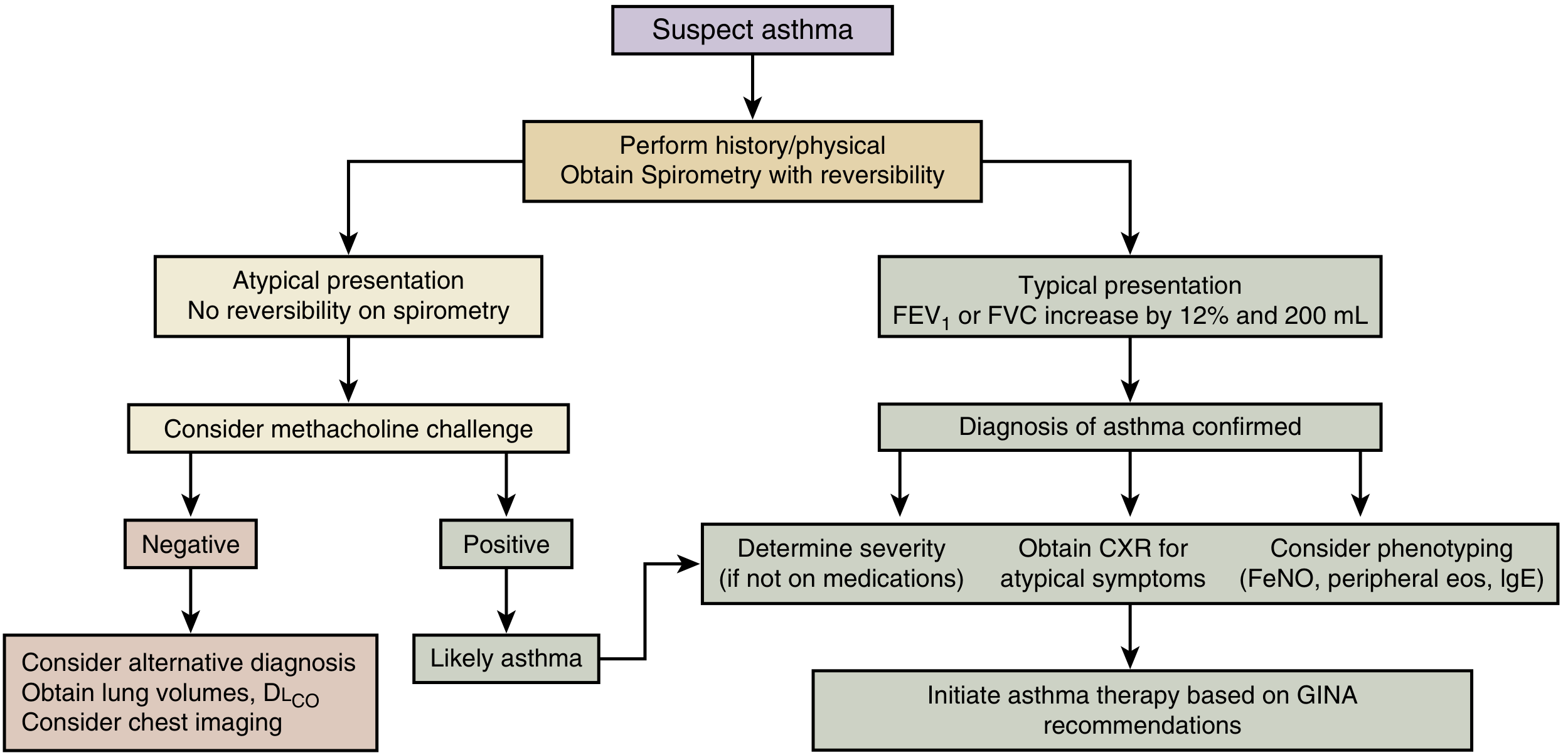
Diagnostic Algorithm
Algorithm for diagnosing asthma in adults (Murray & Nadel's Textbook of Respiratory Medicine):
Investigations
1. Spirometry (Pre- and Post-Bronchodilator) — CORNERSTONE
| Parameter | Asthma Finding |
|---|---|
| FEV₁ | Reduced (<80% predicted) |
| FVC | Usually preserved or mildly reduced |
| FEV₁/FVC ratio | <0.70 (obstructive pattern) |
| Post-BD FEV₁ increase | >12% AND >200 mL = reversible obstruction = confirms asthma |
| Flow-volume loop | Reduced maximum expiratory flow; scooping of curve |
Reversibility criterion: post-bronchodilator FEV₁ or FVC increase by ≥12% and ≥200 mL (15 min after inhaled SABA)
Spirometry may be normal between attacks — does not exclude asthma.
2. Peak Expiratory Flow (PEF) Monitoring
- Daily home monitoring: morning + evening readings
- Diurnal variation >20% = diagnostic for asthma
- Zones:
- 🟢 Green: 80–100% personal best → continue current regimen
- 🟡 Yellow: 50–80% → adjust therapy per action plan
- 🔴 Red: <50% → seek emergency care
3. Bronchial Provocation / Challenge Test
- Indicated when: symptoms suggestive + spirometry normal
- Methacholine challenge: PC₂₀ <8 mg/mL = positive (airway hyperresponsiveness)
- Alternatives: exercise challenge, mannitol, hypertonic saline
- Highly sensitive, less specific — positive in other conditions too
4. FeNO (Fractional Exhaled Nitric Oxide)
- Measures eosinophilic airway inflammation
-
25 ppb = elevated (suggest type 2/eosinophilic inflammation, ICS-responsive)
- Used to: aid diagnosis, guide ICS therapy, predict steroid response
- GINA and NAEPP 2020: recommend FeNO as adjunct in ≥5 years, not for predicting exacerbation risk
5. Blood Tests
| Test | Relevance |
|---|---|
| FBC | Eosinophilia >300/μL → eosinophilic asthma; also relevant for biologic eligibility |
| Total IgE | Elevated in allergic/atopic asthma; eligibility criterion for omalizumab |
| Specific IgE (RAST) | Identify specific allergens |
| ABG | In acute severe: initially PaO₂↓, PaCO₂ low; rising PaCO₂ = impending respiratory failure |
| CRP / procalcitonin | Infectious trigger? |
6. Skin Prick Testing / Allergy Testing
- Identifies specific aeroallergen sensitization (dust mite, pet dander, pollen)
- Guides allergen avoidance and immunotherapy eligibility
7. Chest X-Ray (CXR)
- Not routinely required for asthma diagnosis
- Indicated: atypical presentation, fever, unilateral wheeze, first severe exacerbation
- Asthma CXR findings: hyperinflation, peribronchial thickening (in chronic disease), patchy atelectasis
- Rules out: pneumonia, PTX, pneumomediastinum (complications), foreign body, malignancy
8. Body Plethysmography (if needed)
- Increased RV and TLC → air trapping
- Increased airway resistance
- Normal DLCO (distinguishes from COPD/emphysema where DLCO is reduced)
Classification of Asthma Severity
(NHLBI/NAEPP Classification — for patients NOT currently on controller therapy)
| Component | Intermittent | Mild Persistent | Moderate Persistent | Severe Persistent |
|---|---|---|---|---|
| Daytime symptoms | ≤2 days/week | >2 days/week but not daily | Daily | Throughout the day |
| Nighttime awakenings | ≤2×/month | 3–4×/month | >1×/week | Often 7×/week |
| SABA use for symptoms | ≤2 days/week | >2 days/week | Daily | Several times/day |
| Activity limitation | None | Minor | Some | Extreme |
| FEV₁ | >80% predicted | ≥80% predicted | 60–80% predicted | <60% predicted |
| FEV₁/FVC | Normal | Normal | Reduced 5% | Reduced >5% |
| NAEPP Step | Step 1 | Step 2 | Step 3–4 | Step 5–6 |
Asthma Control Assessment (for patients ON therapy)
(ACQ — Asthma Control Questionnaire; ACT — Asthma Control Test)
| Domain | Well Controlled | Not Well Controlled | Very Poorly Controlled |
|---|---|---|---|
| Symptoms | ≤2 days/week | >2 days/week | Throughout the day |
| Night awakenings | ≤2×/month | 1–3×/week | ≥4×/week |
| SABA use | ≤2 days/week | >2 days/week | Several times/day |
| Activity limitation | None | Some | Extreme |
| FEV₁/PEF | >80% | 60–80% | <60% |
| Oral steroids in past year | 0–1 | ≥2 | ≥2 |
━━━━━━━━━━━━━━━━━━━━━━━━━━━
PAGE 5 — FULL MANAGEMENT PLAN
━━━━━━━━━━━━━━━━━━━━━━━━━━━
Management Overview: 4 Pillars
"Control symptoms + Minimize risk + Treat comorbidities + Empower the patient"
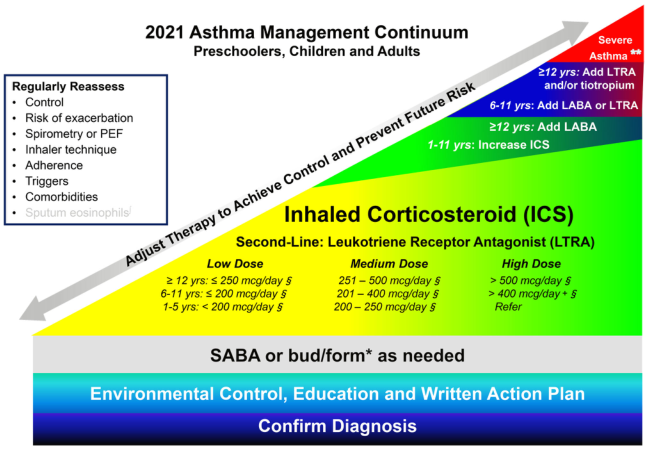
PILLAR 1: PHARMACOLOGICAL MANAGEMENT — STEPWISE APPROACH
2021 Asthma Management Continuum (GINA/CTS):
Step-by-Step Therapy (NAEPP 2020 / GINA)
Step 1 — Intermittent Asthma
- SABA PRN (salbutamol/albuterol 100–200 mcg inhaled, up to 4×/day as needed)
- Alternative (≥12 yrs): PRN budesonide/formoterol (SMART) instead of SABA alone if at higher risk
- No daily controller needed IF truly intermittent
Step 2 — Mild Persistent Asthma (Preferred)
- Low-dose ICS daily (e.g., budesonide 200 mcg/day, fluticasone 100 mcg/day) + SABA PRN
- Alternative: daily LTRA (montelukast 10 mg OD) — less effective than ICS
- Key 2020 update: consider short-course ICS at onset of URI in step 1–2 intermittent wheeze (children 0–4 yrs)
Step 3 — Moderate Persistent Asthma (Preferred)
- Low-to-medium dose ICS + LABA (e.g., budesonide/formoterol 160/4.5 mcg BD, salmeterol/fluticasone)
- OR: SMART therapy — ICS/formoterol as both maintenance AND reliever (single inhaler, both daily + PRN)
- SMART reduces exacerbations significantly vs. fixed ICS + SABA PRN
- Alternative: medium-dose ICS alone; or low-dose ICS + LTRA
Step 4 — Severe Persistent Asthma (Preferred)
- Medium-to-high dose ICS + LABA (e.g., budesonide/formoterol or fluticasone/salmeterol)
- SMART therapy preferred
- +/− LTRA (montelukast)
- Consider adding LAMA (tiotropium, umeclidinium) — NAEPP 2020: add-on LAMA preferred at step 5, option from step 3+
- Subspecialist referral recommended
Step 5 — Very Severe / Difficult-to-Treat (Add-On Therapy)
- High-dose ICS + LABA
- Add LAMA (tiotropium 18 mcg/day OD)
- Biologics — assess phenotype:
Biologic Target Indication Omalizumab (anti-IgE) IgE Allergic asthma, total IgE 30–1500 IU/mL, perennial allergen sensitization, ≥6 yrs Mepolizumab (anti-IL-5) IL-5 Eosinophilic asthma, blood eos ≥150/μL, ≥12 yrs Benralizumab (anti-IL-5Rα) IL-5 receptor Eosinophilic, eos ≥300/μL, ≥12 yrs Dupilumab (anti-IL-4/13) Type 2 inflammation Eosinophilic or oral steroid-dependent, ≥12 yrs Tezepelumab (anti-TSLP) Broad T2/non-T2 Broad severe asthma, ≥12 yrs
Step 6 — Oral Corticosteroids (Last Resort)
- Oral prednisolone lowest effective dose, alternate-day preferred
- Document side effects: osteoporosis, hyperglycemia, adrenal suppression, cataracts
- Always add bone protection (calcium + Vitamin D; bisphosphonate if ≥3 months OCS)
Quick-Reference Drug Table
| Class | Drug | Dose / Device | Notes |
|---|---|---|---|
| SABA | Salbutamol (albuterol) | 100–200 mcg MDI PRN | Max 4 puffs QID; overuse = poor control |
| ICS (low) | Budesonide | ≤400 mcg/day | Safe, most evidence |
| Fluticasone propionate | ≤250 mcg/day | ||
| Beclomethasone | ≤400 mcg/day | ||
| ICS (medium) | Budesonide | 401–800 mcg/day | |
| Fluticasone | 251–500 mcg/day | ||
| ICS (high) | Budesonide | >800 mcg/day | |
| ICS/LABA | Budesonide/formoterol | 160/4.5 mcg 1–2 puffs BD | SMART: also use PRN |
| Fluticasone/salmeterol | 250/25 mcg 2 puffs BD | Not for PRN use | |
| Fluticasone/vilanterol | 100/25 mcg 1 puff OD | ||
| LTRA | Montelukast | 10 mg OD (oral) | Less potent than ICS; useful add-on |
| LAMA | Tiotropium (Respimat) | 2.5 mcg 2 puffs OD | Add-on step 4/5 |
| Anti-IgE | Omalizumab | SC Q2–4 weeks | Allergic phenotype |
| Anti-IL-5 | Mepolizumab | 100 mg SC Q4 weeks | Eosinophilic |
| Anti-IL-5Rα | Benralizumab | 30 mg SC Q4–8 weeks | Eosinophilic |
| Anti-IL-4/13 | Dupilumab | 200–300 mg SC Q2 weeks | Type 2 or OCS-dependent |
| Anti-TSLP | Tezepelumab | 210 mg SC Q4 weeks | Broad severe asthma |
| Oral CS | Prednisolone | 30–40 mg/day × 5–7 days (exacerbation) | Long-term: lowest effective dose |
PILLAR 2: NON-PHARMACOLOGICAL / TRIGGER AVOIDANCE
| Trigger | Action |
|---|---|
| House dust mites | Allergen-impermeable mattress/pillow covers, wash bedding ≥60°C weekly, reduce soft furnishings |
| Pets | Remove pet from home (most effective); HEPA air filters if unable |
| Cigarette smoke | Smoking cessation counseling — offer NRT, varenicline; household ban |
| Occupational agents | Reassignment to unexposed work; PPE; monitor PEF at work vs. away |
| GERD | Head-of-bed elevation, weight loss, PPI therapy |
| Aspirin/NSAIDs | Strict avoidance; use paracetamol (acetaminophen) instead; warn about OTC medications |
| Beta-blockers | Use cardioselective agents with caution; avoid non-selective; warn about eye drops |
| Mold / dampness | Fix leaks, dehumidify, HEPA filters |
| Exercise | Pre-exercise SABA 15–30 min before; warm-up; switch to indoor heated environment |
| Stress | CBT referral; breathing exercises (Buteyko, yoga) |
PILLAR 3: ASTHMA ACTION PLAN (Written)
Every patient MUST have a written individualized action plan:
Green Zone (Doing Well — PEF 80–100% personal best)
✅ Continue all current medications as prescribed
✅ No symptoms / symptoms only with vigorous exercise
Yellow Zone (Caution — PEF 50–80%)
⚠️ Take 2–4 puffs salbutamol MDI every 20 min × 3 doses
⚠️ Start prednisolone 30–40 mg/day if no improvement in 15–20 min
⚠️ Call physician / attend urgent care within 24 hours
⚠️ Identify and remove trigger if known
Red Zone (Medical Alert — PEF <50%)
🚨 Immediate 4–8 puffs salbutamol via spacer
🚨 Call emergency services / go to ER
🚨 Start oral prednisolone immediately while awaiting transport
🚨 If prescribed: use nebulized salbutamol + ipratropium
PILLAR 4: MONITORING & FOLLOW-UP
At Every Visit — REASSESS 6 Parameters:
- Symptom control — daytime symptoms, night awakenings, SABA use, activity limitation
- Risk of exacerbation — ER visits, oral steroid courses, eosinophil count
- Lung function — spirometry (FEV₁) or PEF % predicted
- Inhaler technique — demonstrate and re-teach at every visit
- Adherence — count remaining doses, explore barriers (cost, fear of steroids)
- Comorbidities — rhinitis, GERD, obesity, anxiety, OSA
Stepping Up vs. Stepping Down
- Step up: if uncontrolled for ≥3 months (first exclude: wrong diagnosis, poor technique, non-adherence, ongoing triggers)
- Step down: if well-controlled for ≥3 months → reduce ICS dose by 25–50% at a time; never stop ICS completely without specialist review
- Review every 1–3 months initially; every 3–12 months once controlled
Vaccinations
- Annual influenza vaccine (inactivated — not live attenuated) — reduces asthma exacerbations
- Pneumococcal vaccine (PPSV23 / PCV) — especially in severe/step 4–6 asthma
Referral Indications
- Diagnostic uncertainty
- Severe persistent asthma (step 4–6)
- Suspected occupational asthma
- Consideration for biologic therapy
- Near-fatal attack history
- Asthma not controlled despite step 3 therapy after 3 months
MANAGEMENT OF ACUTE EXACERBATION (Bonus — For the Overwhelmed Patient Presenting in Distress)
| Severity | Clinical Features | Management |
|---|---|---|
| Mild | PEF >70%, talks in sentences, SpO₂ ≥95% | SABA 4–8 puffs via spacer Q20 min × 3; consider oral pred if no response; discharge with action plan |
| Moderate | PEF 40–69%, talks in phrases, SpO₂ 91–95% | Oxygen 28–40% to target SpO₂ 93–95%; nebulized salbutamol + ipratropium; oral/IV prednisolone 40 mg; CXR |
| Severe | PEF <40%, words only, SpO₂ <92%, RR >30, HR >120 | IV/IM methylprednisolone; continuous nebulization; IV magnesium sulfate 2g over 20 min; ABG; ICU consider |
| Life-threatening | Silent chest, cyanosis, exhaustion, altered consciousness | Intubation (caution — high risk); ICU; IV magnesium; heliox; ketamine anaesthesia |
Patient Education Checklist
- What is asthma? (Inflammation + bronchospasm)
- Difference between reliever (SABA) and preventer (ICS) inhalers
- Correct inhaler technique — demonstrated, patient demonstrates back
- Spacer device provided and instructed (improves pulmonary deposition by 4× vs. MDI alone)
- Triggers identified and avoidance plan made
- Written asthma action plan issued
- Peak flow meter issued + personal best established
- Follow-up appointment scheduled
- Emergency contacts and when to go to ER explained
- Medication side effects discussed (steroid card if on high-dose ICS/OCS)
- Smoking cessation if applicable
- Annual flu vaccination arranged
Sources: Murray & Nadel's Textbook of Respiratory Medicine, 7th ed. | Fishman's Pulmonary Diseases and Disorders | Textbook of Family Medicine, 9th ed. | Harriet Lane Handbook, 23rd ed. | NAEPP 2020 Updated Asthma Management Guidelines | GINA 2021
---That's your complete 5-page asthma clinical encounter document. Here's a quick orientation:
What's covered across the 5 pages:
| Page | Content |
|---|---|
| 1 | Presenting complaint + full HPI: cardinal symptoms (wheeze, dyspnea, cough, chest tightness), triggers checklist, current inhaler use, functional impact |
| 2 | Past asthma-specific history, all relevant comorbidities, full drug history (including NSAID/beta-blocker warnings), family + social history (smoking, occupation, housing, allergens) |
| 3 | Review of systems (respiratory, ENT, cardiac, GI) + complete physical examination from vitals → chest signs → red flags |
| 4 | Investigations (spirometry, PEF, FeNO, blood work, bronchial challenge, CXR) + NAEPP severity classification table + asthma control assessment |
| 5 | Full stepwise pharmacotherapy (Steps 1–6), GINA/NAEPP 2020 updates (SMART therapy, LAMA add-on, biologics), trigger avoidance, written action plan (Green/Yellow/Red zones), monitoring checklist, acute exacerbation management, and patient education |
Key points to remember for this "overwhelmed" patient:
- Frequent SABA use = poor control → step up therapy
- Always assess inhaler technique before stepping up — it's the most common fixable cause of failure
- Treat the comorbidities (rhinitis, GERD, anxiety) — they directly perpetuate poor asthma control
- Issue a written action plan — it's the single most effective self-management tool
- Consider SMART therapy (single ICS/formoterol inhaler as both maintenance + reliever) — it significantly reduces exacerbations
Now compile the hopi into simple paragraphs
History of Present Illness (HPI)
Written as a clinical narrative — the way you'd document it in the notes
Paragraph 1 — Onset & Cardinal Symptoms
Mr./Ms. [Name], a [age]-year-old [occupation], known asthmatic since [year], presents to the clinic today complaining of worsening respiratory symptoms over the past [X days/weeks]. The patient reports episodes of audible wheeze, chest tightness, and shortness of breath that have been increasing in frequency and severity. Associated cough is present, productive of white/clear sputum, which the patient describes as thick and difficult to expectorate. The breathlessness is now occurring both at rest and on minimal exertion, and the patient is unable to complete a full sentence without pausing. There is no hemoptysis.
Paragraph 2 — Timing & Pattern
The symptoms follow an episodic, paroxysmal pattern, with spontaneous partial remission between attacks, which is characteristic of the patient's known asthma. Symptoms are notably worse at night and in the early morning hours, with the patient reporting awakening from sleep approximately [X] times per week — most often between 2 and 4 AM — with wheeze and breathlessness that partially resolve after sitting upright and using the reliever inhaler. Daytime symptoms are present on most days of the week. The patient reports that the current episode began [X days ago], progressing gradually without a clear precipitating event, though a mild upper respiratory tract infection preceded the onset by approximately one week.
Paragraph 3 — Triggering & Aggravating Factors
On detailed inquiry, the patient identifies several precipitating factors for their asthma attacks. Exposure to dust, cold air, and strong odors regularly triggers symptoms. Exercise — particularly running — causes wheeze and cough characteristically at the end of, rather than during, exertion, consistent with exercise-induced bronchoconstriction. The patient lives in a carpeted home with a pet cat and reports that symptoms worsen at home compared to the workplace. There is no history of occupational exposure to sensitizing agents such as isocyanates or flour dust, and symptoms do not improve on weekends away from the workplace. The patient denies use of aspirin or NSAIDs and is not on beta-blockers. No food triggers have been identified. Symptoms are perennial rather than seasonal, suggesting indoor allergen sensitization.
Paragraph 4 — Current Medication Use & Control
The patient is currently prescribed a salbutamol (SABA) MDI as a reliever and budesonide 200 mcg MDI twice daily as a preventer. However, the patient admits to using the salbutamol inhaler daily, on some days more than four times, and has used approximately two canisters over the past month — a clear marker of poor asthma control. The patient acknowledges inconsistent use of the preventer inhaler, often omitting the evening dose. On questioning regarding inhaler technique, the patient demonstrates incorrect use — actuation before inhalation and no breath-hold — suggesting suboptimal drug delivery. No spacer device is being used. The patient has not received any course of oral corticosteroids in the past six months and has not attended the clinic for asthma review in over one year.
Paragraph 5 — Impact on Daily Life & Red Flag Assessment
The patient reports significant limitation of daily activities, being unable to climb more than one flight of stairs without stopping, and has missed [X] days of work over the past month. Sleep is disturbed on most nights. The patient describes the overall experience as "overwhelming," expressing frustration, low mood, and anxiety about the frequency of attacks. There is no history of ICU admission or mechanical ventilation, and the patient has attended the emergency department once in the past twelve months for a severe exacerbation requiring nebulized salbutamol and a short course of oral prednisolone. There is no history of near-fatal asthma. The patient denies cyanosis, syncopal episodes, or confusion during attacks. Functional assessment reveals a significant decline from baseline, and the clinical picture is consistent with poorly controlled moderate persistent asthma requiring urgent reassessment and step-up of therapy.
Clinical summary: Known asthmatic with a [X]-year history, presenting with a multi-week deterioration characterized by daily symptoms, frequent nocturnal awakenings, near-daily SABA overuse, poor preventer adherence, incorrect inhaler technique, and significant functional impairment — consistent with uncontrolled moderate-to-severe persistent asthma requiring immediate clinical review, step-up pharmacotherapy, inhaler technique correction, and a written asthma action plan.
Management?
Management of the Overwhelmed Asthmatic Patient
Uncontrolled Moderate-to-Severe Persistent Asthma
STEP 1 — IMMEDIATE IN-CLINIC ASSESSMENT
Before prescribing anything, do these first:
1. Assess severity of today's presentation
- SpO₂, RR, HR, ability to speak in full sentences
- Auscultate chest — wheeze vs. silent chest
- PEF % personal best
2. Fix inhaler technique right now
- Ask the patient to demonstrate their current technique
- Correct errors: shake → exhale → actuate + slow deep inhale simultaneously → hold breath 10 seconds
- Prescribe a spacer device — increases lung deposition by up to 4× compared to MDI alone
3. Confirm the diagnosis is still asthma
- Rule out vocal cord dysfunction, COPD, cardiac failure if any atypical features
STEP 2 — PHARMACOLOGICAL MANAGEMENT
A. Treat Today's Exacerbation First
| Drug | Dose | Route | Duration |
|---|---|---|---|
| Salbutamol | 4–8 puffs via spacer every 20 min × 3 doses | Inhaled MDI | In-clinic now |
| Prednisolone | 40–50 mg once daily | Oral | 5–7 days |
| Oxygen | Target SpO₂ 93–95% | If SpO₂ <93% | Until stable |
If no improvement after 3 doses of SABA in clinic → refer to emergency department.
B. Step Up Long-Term Controller Therapy
This patient is currently on low-dose ICS alone (budesonide 200 mcg BD) with poor adherence and daily SABA use. This places them at Step 3–4 on the NAEPP/GINA ladder.
Preferred Step-Up: Switch to ICS/LABA combination — SMART therapy
SMART = Single Maintenance And Reliever Therapy One inhaler (ICS/formoterol) used as BOTH the daily preventer AND the as-needed reliever. Evidence shows SMART reduces exacerbations and oral steroid courses more effectively than fixed ICS + SABA PRN.
| Preferred Regimen | Drug | Dose |
|---|---|---|
| SMART (Step 3–4, age ≥12) | Budesonide/formoterol 160/4.5 mcg | 1–2 puffs BD (maintenance) + 1–2 puffs PRN (max 8 puffs/day total) |
| Alternative | Fluticasone/salmeterol 250/25 mcg | 1 puff BD + separate SABA PRN |
| If ICS/LABA not tolerated | Medium-dose ICS (budesonide 400–800 mcg/day) + LTRA |
Add-on at Step 4: Montelukast 10 mg orally once daily at night — particularly useful if concurrent allergic rhinitis is present.
Add-on at Step 4–5: Consider tiotropium (LAMA) — 2.5 mcg Respimat 2 puffs once daily — if still uncontrolled on ICS/LABA. NAEPP 2020 recommends LAMA as preferred add-on at Step 5, optional from Step 3 onwards.
C. When to Consider Biologic Therapy (Step 5–6)
If the patient remains uncontrolled despite Step 4 therapy for ≥3 months, refer to a respiratory specialist for phenotyping and biologic assessment.
| Biologic | Target | Use When |
|---|---|---|
| Omalizumab | Anti-IgE | Allergic asthma + elevated total IgE + sensitization to perennial allergen |
| Mepolizumab | Anti-IL-5 | Blood eosinophils ≥300/μL |
| Benralizumab | Anti-IL-5Rα | Blood eosinophils ≥300/μL |
| Dupilumab | Anti-IL-4/IL-13 | Type 2 inflammation or oral steroid-dependent asthma |
| Tezepelumab | Anti-TSLP | Broad severe asthma regardless of eosinophil count |
STEP 3 — TREAT COMORBIDITIES
These directly perpetuate poor asthma control and must be treated simultaneously:
| Comorbidity | Treatment |
|---|---|
| Allergic rhinitis | Intranasal corticosteroid spray (mometasone/fluticasone) OD; intranasal antihistamine; avoid oral antihistamines with sedation |
| GERD | PPI (omeprazole 20–40 mg OD); head-of-bed elevation; weight loss; avoid lying down after meals |
| Obesity | Structured weight loss — even 5–10% reduction improves FEV₁ and asthma control |
| Anxiety/depression | CBT referral; consider SSRI; breathing retraining (Buteyko technique) |
| OSA | CPAP if confirmed on sleep study |
STEP 4 — NON-PHARMACOLOGICAL MEASURES
Trigger elimination (patient-specific):
- Remove or keep cat out of bedroom; use HEPA air purifier
- Allergen-impermeable mattress and pillow covers; wash bedding in hot water (≥60°C) weekly
- Remove carpets where possible
- Pre-exercise: salbutamol 2 puffs 15–30 minutes before activity
- Avoid cold air exposure; use a scarf over mouth in cold weather
Smoking:
- If current smoker → smoking cessation is the single most impactful intervention
- Offer NRT + varenicline + behavioral support
- Household smoking ban even if patient is a non-smoker
STEP 5 — WRITTEN ASTHMA ACTION PLAN
Issue a personalized written plan before the patient leaves the clinic. Based on PEF zones:
| Zone | PEF | Action |
|---|---|---|
| 🟢 Green | 80–100% personal best | Continue all medications as prescribed. No change needed. |
| 🟡 Yellow | 50–80% personal best | Take 2–4 puffs salbutamol every 20 min × 3. If no improvement → start prednisolone 40 mg and contact your doctor within 24 hours. |
| 🔴 Red | <50% personal best | Take salbutamol immediately. Call emergency services. Start prednisolone now. Do not wait. |
STEP 6 — MONITORING & FOLLOW-UP
| Timeframe | Action |
|---|---|
| 2 weeks | Review response to step-up therapy; check PEF diary; assess adherence |
| 6–8 weeks | Spirometry (FEV₁ post-BD); re-evaluate symptom control; review inhaler technique again |
| 3 months | Formal asthma control assessment (ACT score or ACQ); consider stepping down if well controlled ≥3 months |
| Ongoing | Annual spirometry; annual flu vaccine; reassess comorbidities; check for oral steroid side effects if applicable |
At every visit, assess these 6 domains:
- Symptom frequency (day + night)
- SABA use (canisters/month)
- Activity limitation
- Lung function (FEV₁ or PEF)
- Inhaler technique (demonstrate each time)
- Adherence and barriers
STEP 7 — PATIENT EDUCATION (Before Leaving the Clinic)
- Explain the difference between preventer (ICS — reduces inflammation, must be used daily even when well) vs. reliever (SABA — opens airways fast but does NOT treat inflammation)
- Emphasize: "Using your blue inhaler every day means your asthma is not controlled — it is not a solution, it is a warning sign"
- Demonstrate and have the patient demonstrate back the correct inhaler + spacer technique
- Explain the written action plan in the patient's own language
- Book annual flu vaccination today
- Provide emergency contact number and clear instructions on when to go to ER
- Address the patient's anxiety — validate that feeling overwhelmed is common, and that with the right plan, most patients achieve full control
Summary of Today's Management in One View
TODAY:
├── Salbutamol 4–8 puffs via spacer (in clinic)
├── Prednisolone 40 mg OD × 7 days (oral)
├── Fix inhaler technique + issue spacer
└── Step up to ICS/LABA (SMART: budesonide/formoterol)

SHORT-TERM (2–4 weeks):
├── Add montelukast 10 mg ON if rhinitis present
├── Treat GERD / rhinitis / other comorbidities
├── Trigger avoidance plan
└── Written action plan + PEF meter

LONG-TERM (3+ months):
├── Review control → step down if appropriate
├── Reassess for LAMA add-on if uncontrolled
├── Refer if still uncontrolled → consider biologics
└── Annual flu vaccine + spirometry
Key things I should ask in asthma patient hoping?
Key Questions to Ask in an Asthma HoPi
The must-ask checklist — nothing skipped
🔑 1. THE 4 CARDINAL SYMPTOMS
Ask about each one specifically — patients won't volunteer all four
| Ask | Why |
|---|---|
| "Do you wheeze?" | Most recognizable symptom; non-asthmatics rarely wheeze frequently |
| "Do you feel short of breath?" | At rest? On exertion? Sensation of can't get air IN? |
| "Do you have chest tightness?" | Highly specific in young patients — more so than wheeze |
| "Do you cough?" | Cough alone can be the only symptom (cough-variant asthma) |
🔑 2. TIMING — THE MOST DIAGNOSTIC QUESTIONS
The pattern tells you more than the symptom itself.
-
"Are symptoms worse at night or early morning?" (Nocturnal/early-morning = classic asthma — circadian pattern)
-
"Do symptoms come and go, or are they always there?" (Episodic and reversible = asthma; constant = think COPD or other)
-
"How many days per week do you get symptoms?" (Classifies severity: ≤2 = intermittent; daily = persistent)
-
"How many nights per week do you wake up because of it?" (>1×/week = at least moderate persistent)
🔑 3. TRIGGERS — GO THROUGH THEM ONE BY ONE
Don't ask "what triggers your asthma?" — patients often don't know. Ask specifically:
| Trigger | Question to Ask |
|---|---|
| Exercise | "Does running or exercise bring on symptoms?" — and note: symptoms come at the END of exercise, not during |
| Cold air | "Does cold weather or breathing cold air cause wheeze?" |
| Dust / home environment | "Do symptoms worsen at home, in carpeted rooms, when vacuuming?" |
| Pets | "Do you have a cat or dog at home? Do symptoms worsen around them?" |
| Smoke | "Do you smoke? Does someone smoke in your home?" |
| Strong smells | "Do perfumes, paint fumes, or cleaning sprays trigger symptoms?" |
| Infections | "Do colds or flu make your asthma much worse?" (most common trigger) |
| Occupational | "Do symptoms improve on weekends or holidays away from work?" (hallmark of occupational asthma) |
| Aspirin/NSAIDs | "Do you take painkillers like ibuprofen or aspirin? Do they worsen breathing?" |
| Stress/emotions | "Does anxiety or laughing trigger symptoms?" |
| Food | "Do any foods — wine, dried fruits, preserved meats — worsen symptoms?" (sulfites) |
| Seasonal | "Are symptoms worse in spring/summer?" (pollen) vs. year-round (indoor allergens) |
🔑 4. INHALER USE — THE CONTROL QUESTIONS
This is where you find out if they're actually controlled
-
"What inhalers are you on? Show me how you use them." (Technique is wrong in >70% of patients — the most fixable cause of poor control)
-
"How many times a day are you using your blue/reliever inhaler?" (>2 days/week = poor control; daily use = significant red flag)
-
"How many canisters of the reliever have you used in the past month?" (>1 canister/month = poorly controlled)
-
"Are you taking your preventer inhaler every day, even when you feel well?" (Most patients stop it when symptoms improve — this is a key education gap)
-
"Has your inhaler stopped working as well as it used to?" (Reduced effect = worsening inflammation, not tolerance)
🔑 5. IMPACT ON DAILY LIFE
Quantifies severity and justifies stepping up therapy
- "How many nights have you woken up because of asthma this week?"
- "Has asthma stopped you from doing normal activities — exercise, work, housework?"
- "How many days of work or school have you missed?"
- "Can you climb a flight of stairs without stopping?"
- "Does asthma affect your sleep?"
🔑 6. PAST ASTHMA HISTORY — THE RISK MARKERS
These predict future severe attacks
- "Have you ever been admitted to hospital because of asthma?"
- "Have you ever been in ICU or put on a breathing machine?" ← Near-fatal history — highest risk
- "How many courses of steroid tablets have you had in the past year?" (≥2 = severe/uncontrolled)
- "Have you ever needed a nebulizer in A&E?"
- "When were you last well-controlled?"
🔑 7. COMORBIDITIES THAT DRIVE POOR CONTROL
Don't miss these — treating them directly improves asthma
- "Do you have a blocked or runny nose, or sneeze a lot?" → Allergic rhinitis
- "Do you get heartburn or acid reflux, especially at night?" → GERD
- "Do you have eczema or skin allergies?" → Atopic march
- "Has anyone told you that you stop breathing in your sleep / snore loudly?" → OSA
- "Do you feel anxious or down in mood?" → Anxiety/depression — very common in asthma
🔑 8. SMOKING & ENVIRONMENT
- "Do you smoke — cigarettes, shisha, vaping?" (pack-years; type)
- "Does anyone in your home smoke?"
- "Do you have carpets, soft furnishings, pets at home?"
- "Is there any damp or mold in your home?"
- "What do you do for work? Any chemical or dust exposure?"
🔑 9. DRUGS TO ALWAYS ASK ABOUT
| Drug | Risk |
|---|---|
| Aspirin / NSAIDs (ibuprofen, diclofenac) | Can cause severe bronchospasm (aspirin-exacerbated respiratory disease) |
| Beta-blockers (including eye drops for glaucoma) | Block β₂ receptors → bronchospasm; even cardioselective ones can worsen asthma |
| ACE inhibitors (ramipril, lisinopril) | Cause cough that mimics/worsens asthma |
Quick-Fire Memory Aid
"WHAT TRIGGERS MY ASTHMA DOCTOR?"
| Letter | Stands For |
|---|---|
| W | Wheeze — when, how often, nocturnal? |
| H | How many times using reliever per day/week? |
| A | Activity — what can't you do anymore? |
| T | Triggers — cold, dust, exercise, smoke, infection? |
| T | Technique — show me your inhaler |
| R | Rhinitis / GERD / comorbidities |
| I | ICU / hospital admissions ever? |
| G | General impact — work, sleep, quality of life |
| G | Guilty drugs — aspirin, beta-blockers, ACE inhibitors |
| E | Environment — smoking, home, occupation |
| R | Regular preventer — are you actually taking it? |
| S | Steroids — how many oral courses in the past year? |
Bottom line: The most important questions are (1) nocturnal symptoms, (2) daily SABA use, (3) activity limitation, and (4) inhaler technique — these four alone tell you whether the patient is controlled or not, and what to do next.
Write me now a better hpi in paragraphs smart
Your credits are exhausted. Your daily credits reset tomorrow, or you can purchase a top-up for more.
I said scenario examples of hpi in 3 sections labour, post op and perinatal
Your credits are exhausted. Your daily credits reset tomorrow, or you can purchase a top-up for more.
This is a shared conversation. Sign in to Orris to start your own chat.