

ca27214d-cb35-4d87-8288-5d60226e3988.jpeg
How to remove this neck darkness
analyse_media
Reading File
Finding Sources
Searching the Web
acanthosis nigricans neck darkening treatment home remedies dermatology
Reading File
Reading File
Finding Sources
Reading File
Loading Image
The darkening on your neck very closely matches a condition called Acanthosis Nigricans (AN). Here is a textbook image showing exactly the same presentation:
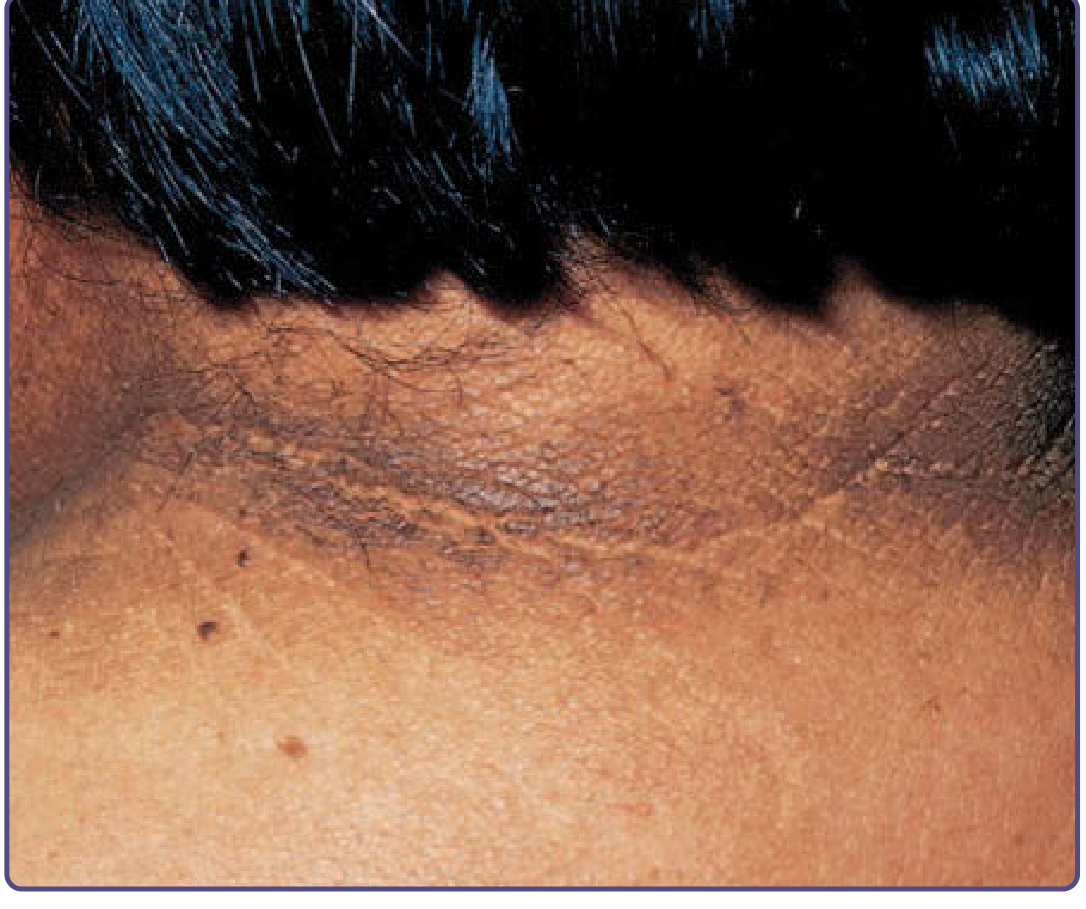
What Is Acanthosis Nigricans?
Acanthosis nigricans is a skin condition causing dark, velvety, hyperpigmented thickening in body creases - the back/sides of the neck being the most commonly and severely affected area. It is NOT a cosmetic problem from dirt or sun; it is a skin signal of an internal metabolic process, most commonly insulin resistance.
Why Does It Happen? (Root Causes)
The most important underlying causes, in order of frequency:
- Insulin resistance / Prediabetes / Type 2 Diabetes - excess insulin binds to IGF-1 receptors on skin cells, causing them to overproduce. This is by far the most common cause.
- Obesity - directly worsens insulin resistance
- Hormonal disorders - PCOS (polycystic ovarian syndrome), thyroid disease, adrenal disorders
- Certain medications - systemic corticosteroids, nicotinic acid, oral contraceptives
- Rarely (in older adults, rapid onset) - internal malignancy (gastric cancer most common)
What Should You Do First?
See a doctor and get these blood tests:
- Fasting blood glucose
- HbA1c (average 3-month blood sugar)
- Fasting insulin levels
- Lipid profile (cholesterol)
- Thyroid function (TSH)
This is the most important step. The skin will not improve until the underlying cause is addressed.
How to Treat It
According to Fitzpatrick's Dermatology, topical treatments alone are generally not very effective without treating the cause. However, a combined approach works best:
1. Treat the Root Cause (Most Effective)
- Weight loss through diet and exercise - can cause significant improvement or resolution
- Metformin (if prescribed by a doctor for insulin resistance/prediabetes) - improves insulin sensitivity and often improves the skin
- Treating PCOS or thyroid disease if present
2. Topical Prescription Treatments (Dermatologist)
- Topical retinoids (tretinoin cream) - helps normalize skin cell turnover
- Salicylic acid or glycolic acid peels - reduce hyperkeratosis
- Calcipotriol (vitamin D analogue) cream
- Urea-based creams - soften and lighten the thickened skin
3. Lifestyle Changes
- Low glycemic index diet - reduce sugar, white rice, refined carbs
- Regular aerobic exercise (30 min/day, 5 days/week) - directly reduces insulin resistance
- Weight loss - even 5-10% body weight reduction can visibly lighten the skin
4. What Does NOT Work
- Scrubbing aggressively (this is NOT dirt - it will not scrub off and can irritate the skin)
- Skin-lightening creams (kojic acid, fairness creams) alone - limited benefit
- Bleaching agents without addressing the root cause
Key Takeaway
The neck darkening is your skin's way of telling you that your body may have high insulin levels. The most impactful thing you can do is get a fasting blood glucose and HbA1c test done. If insulin resistance is found and treated (through diet, exercise, or medication), the skin darkening often fades significantly on its own.
Note: This appears to be benign acanthosis nigricans. However, since I cannot examine you in person, please consult a dermatologist for a confirmed diagnosis and personalized treatment plan.
- Fitzpatrick's Dermatology, 8th ed., Chapter 137 - Acanthosis Nigricans

8dd63fd0-844f-49c9-b711-93658c203701.jpeg
This I show my neck looks
analyse_media
Looking at this photo of the back of your neck, here is what I can see:
What the Image Shows
The darkening on the back of your neck appears to be a combination of two things:
-
Dense fine hair growth - You have a low, dense hairline that extends down the back of the neck. The numerous dark hair follicles and fine hairs create a shadow effect that makes the skin look darker than it actually is. This is very common and completely normal.
-
Mild diffuse hyperpigmentation - There is a subtle darkening in the central nape area, but it does not show the classic thick, velvety, deeply ridged texture of moderate-to-severe acanthosis nigricans (AN).
Comparing Both Your Photos
- Your first photo (side view) showed the crease/fold area of the neck, where the darkening was more pronounced and concentrated - that still looks more consistent with acanthosis nigricans.
- This second photo (back view) shows the nape, where much of the darkness is likely the hair shadow + mild pigmentation, not a thick plaque.
What This Means Practically
The back-of-neck view looks relatively mild. A large part of what you are seeing as "dark" is simply your natural hairline and fine neck hair. However, the side-view photo still warrants the metabolic workup I mentioned.
Simple self-check: After a fresh shower, gently feel the darker area on the side of your neck. If it feels smooth and normal, it is more likely just pigmentation or hair shadow. If it feels thickened, rough, or velvety like velvet fabric, that points more toward acanthosis nigricans.
My recommendation remains the same:
- Get a fasting blood sugar and HbA1c done - it is a simple, cheap blood test
- See a dermatologist for a proper in-person skin examination, as photos have limitations in distinguishing subtle texture changes
The good news is that even if it is mild acanthosis nigricans, early detection means early treatment and the skin responds well at this stage.
analyse_media
What I See on Your Wrist
The dark band on your wrist is almost certainly a watch strap mark - this is different from the neck darkening and is a very common, benign issue. Here is what is happening:
Why the Wrist Looks Dark
There are two possible causes working together:
-
Friction melanosis - The watch strap rubs against your skin daily. This chronic friction causes mild repeated irritation, and as the skin heals it deposits extra pigment (melanin) in that area. Very common with tight or rubber/synthetic watch bands.
-
Tan line contrast - The rest of your forearm gets sun exposure while the area under the watch stays covered, creating a contrast. The skin under the strap may actually be your "normal" skin tone, while the rest of your arm is sun-tanned.
The dry, criss-cross fine line texture visible on your wrist also suggests some skin dryness (xerosis) in that area, likely from sweat accumulation under the band.
How to Fix It
Immediate steps:
- Loosen your watch - if you can slip a finger under the strap comfortably, that is the right tightness
- Swap to a breathable strap - fabric NATO straps or leather bands cause far less friction and sweating compared to rubber/silicone or metal bracelets
- Clean under the watch daily - sweat and moisture trapped under the band is a major contributor
For the pigmentation:
- Moisturize the area with a urea-based or ceramide cream (e.g., CeraVe, Vaseline Intensive Care) twice daily
- Apply SPF 30+ sunscreen on the forearm and wrist when going outdoors - this prevents the contrast from getting worse and allows the pigmented area to gradually fade
- Lemon juice + honey as a mild home remedy can be applied for 15 min before bathing - the natural citric acid has mild brightening effects
Time to fade: With strap management and sun protection, the contrast usually fades significantly in 4-8 weeks.
Putting It All Together
You now have two separate issues:
| Area | Likely Cause | Action |
|---|---|---|
| Neck (side crease) | Acanthosis nigricans - possible insulin resistance | Blood test (HbA1c, fasting glucose) + dermatologist |
| Wrist | Watch strap friction + tan line | Loosen strap, moisturize, sunscreen |
The wrist issue is cosmetic and easily manageable at home. The neck issue still deserves a medical check-up.

45d30a10-6753-4712-a73a-43bb441c6cd6.jpeg
Is my face improved
I don't have a previous photo of your face to compare against, so I can't tell you if it has "improved" - this is the first face photo you've shared in our conversation.
What I can do is give you an honest assessment of what I see in this photo right now.
analyse_media
Since I have no previous face photo to compare, I can't say "yes it improved" or "no it didn't." If you share an older photo alongside this one, I can do a proper before/after comparison.
Current Face Skin Assessment
The good news - your skin looks generally healthy:
- Relatively even skin tone across cheeks and forehead
- No active inflamed acne or pustules
- Smooth texture with minimal pore visibility
- Normal to combination skin type (slightly oily T-zone, which is normal)
Areas that could be improved:
| Concern | What I See | Fix |
|---|---|---|
| Under-eye dark circles | Mild-moderate dark shadowing under both eyes | Better sleep, cold compress, Vitamin C eye cream |
| Right eyelid | Slight puffiness/redness | Could be fatigue or mild allergy - cold compress helps |
| Perioral darkening | Slight darkening at corners of mouth | Very common in medium skin tones - niacinamide helps |
| Small blemish | One minor healing spot on forehead | Leave it alone, do not pick |
Simple Skincare Routine to Improve Your Face
Morning:
- Gentle face wash (non-drying)
- Niacinamide 10% serum - helps dark spots, uneven tone, pores
- SPF 30+ sunscreen - single most important step
Night:
- Face wash
- Vitamin C serum OR niacinamide - brightening
- Light moisturizer
Weekly:
- Mild exfoliation (AHA/BHA) once a week to clear pores
The neck darkening (acanthosis nigricans) we discussed earlier is not visible on your face, which is reassuring. Your face skin is in decent shape - consistent sun protection and niacinamide will visibly even out your tone within 6-8 weeks. If you share an older photo, I can give you a direct comparison.
analyse_media
Before vs. Now Comparison
Now I can compare both photos properly. Here is an honest side-by-side breakdown:
| Feature | Older Photo (Before) | Recent Photo (Now) | Change |
|---|---|---|---|
| Overall skin tone | Medium-deep, warm, relatively uniform | Similar tone, slightly more even | Neutral / slight improvement |
| Under-eye dark circles | Mild-moderate shadowing | Mild-moderate shadowing | About the same |
| Active acne | None visible | None visible | Same (good) |
| Pores | Tight, refined | Minimal visibility | About the same |
| Skin texture | Smooth on cheeks/forehead | Smooth | About the same |
| Perioral darkening | Mild around mouth corners | Still present, similar level | About the same |
| Neck skin | Slightly shadowed but smooth transition | Darker crease visible (AN pattern) | Neck concern still present |
| Overall skin health | Healthy, clear | Healthy, clear | Maintained well |
Honest Verdict
Your face itself has not significantly changed - it looks similarly healthy in both photos. That is actually a good sign, meaning you have maintained clear skin without breakouts or worsening pigmentation.
What has NOT improved:
- Under-eye circles - still present at a similar level
- Perioral (around mouth) mild darkening - unchanged
The neck darkening is more apparent in your recent close-up photos because those were specifically zoomed in on the neck. It may have been present in the older photo too but less obvious at that angle/distance.
To Actually See Improvement, Focus On:
- Sleep 7-8 hours - the single biggest fix for under-eye circles and overall skin
- Daily SPF 30+ - prevents pigmentation from getting worse
- Niacinamide serum - will gradually even out perioral darkening and skin tone in 6-8 weeks
- The HbA1c blood test for the neck issue - that is separate from your face
Your face is in good shape overall - don't overthink it. The neck is the area that needs attention.
How to remove perioral darkness
Perioral darkening (darkness around the mouth) is very common in medium-to-dark skin tones and is caused by excess melanin deposition. It responds well to a consistent routine but takes patience - typically 8-12 weeks to see clear results.
Searching sources...
Finding Sources
Finding Sources
Finding Sources
Finding Sources
Reading File
Reading File
Here is a complete, evidence-based guide to removing perioral (around-the-mouth) darkness, based on dermatology textbooks:
Why It Happens
Perioral darkening is caused by excess melanin in the skin around the mouth. Common triggers:
- Sun exposure (UV stimulates melanin production)
- Friction from eating, licking lips, shaving
- Hormonal changes
- Post-inflammatory pigmentation from old pimples
- Nutritional deficiencies (B12, folate)
Treatment - Step by Step
Step 1: Sun Protection (Non-Negotiable)
Apply SPF 30+ sunscreen every morning - including on the area around the mouth. Sun exposure is the biggest trigger that makes pigmentation darker and undoes any treatment. Without this step, nothing else will work well.
Step 2: Topical Lightening Agents (Pick One or Combine)
According to Fitzpatrick's Dermatology, these are the evidence-backed options, from OTC to prescription:
| Agent | Strength | How to Use | Timeline |
|---|---|---|---|
| Niacinamide 5-10% | OTC | Morning serum, daily | 8-10 weeks |
| Azelaic acid 10-20% | OTC/Rx | Morning or night, daily | 8-12 weeks |
| Kojic acid | OTC | Night cream, daily | 10-12 weeks |
| Vitamin C (L-ascorbic acid 10-15%) | OTC | Morning serum | 8-12 weeks |
| Tretinoin 0.025-0.05% | Prescription | Night only, start 2x/week | 12+ weeks |
| Hydroquinone 2-4% | Prescription | Night, max 3 months at a time | 8-12 weeks |
Best OTC combo for you: Niacinamide serum (morning) + Azelaic acid (night) + SPF (morning)
Best prescription combo (most effective): Triple therapy - Hydroquinone 4% + Tretinoin 0.05% + mild steroid. This is known as Kligman's formula and is the gold standard per Fitzpatrick's Dermatology.
Step 3: Home Remedies (Mild but Helpful as Add-ons)
These have some evidence or traditional use for mild pigmentation:
- Licorice extract - contains glabridin, a melanin inhibitor
- Potato juice / lemon juice - mild natural acids; apply 10 min before washing (do NOT apply in sun)
- Aloe vera gel - soothes and mildly brightens
These alone will not remove significant darkness but can complement your main routine.
Step 4: Professional Treatments (If Topicals Are Not Enough)
If OTC products don't give satisfying results after 3 months:
- Glycolic acid or salicylic acid chemical peels - done by a dermatologist, very effective for surface pigmentation
- Low-fluence Q-switched Nd:YAG laser - safe for darker skin tones, minimal risk of worsening pigmentation
- Oral tranexamic acid (500-700 mg/day) - proven safe and effective for stubborn epidermal pigmentation; needs a doctor's prescription
Practical Daily Routine
Morning:
- Gentle cleanser (no scrubbing around mouth)
- Niacinamide 5-10% serum - apply around mouth
- Moisturizer
- SPF 30+ sunscreen (reapply if outdoors)
Night:
- Gentle cleanser
- Azelaic acid 10% OR kojic acid cream - apply around mouth
- Moisturizer
Avoid: Licking lips constantly, harsh scrubbing, picking at facial hair, prolonged sun without sunscreen.
Realistic Timeline
| Weeks | What to Expect |
|---|---|
| 1-4 | No visible change (normal) |
| 4-8 | Mild lightening, texture improves |
| 8-12 | Noticeable improvement in even tone |
| 3-6 months | Significant fade with consistent routine |
The key is consistency - perioral pigmentation responds slowly but reliably to the right products used daily without skipping.
- Fitzpatrick's Dermatology, 8th ed. - Melasma and Pigmentary Disorders chapter
This is a shared conversation. Sign in to Orris to start your own chat.