
easy histological figure of thyroid,parotid,pituitary
Reading File
Now let me search for histological images of all three glands simultaneously.
Finding Sources
Finding Sources
Finding Sources
Reading File
Finding Sources
Finding Sources
Reading File
Reading File
Finding Sources
Reading File
Finding Sources
Reading File
Reading File
Now let me get the thyroid image and the pituitary section with image, and look for pituitary and thyroid images:
Reading File
Reading File
I now have all the images and content needed. Let me fetch them all in parallel.
Loading Image
Loading Image
Loading Image
Loading Image
Here are clear histological figures for all three glands, drawn directly from Junqueira's Basic Histology and Histology: A Text and Atlas.
1. Thyroid Gland
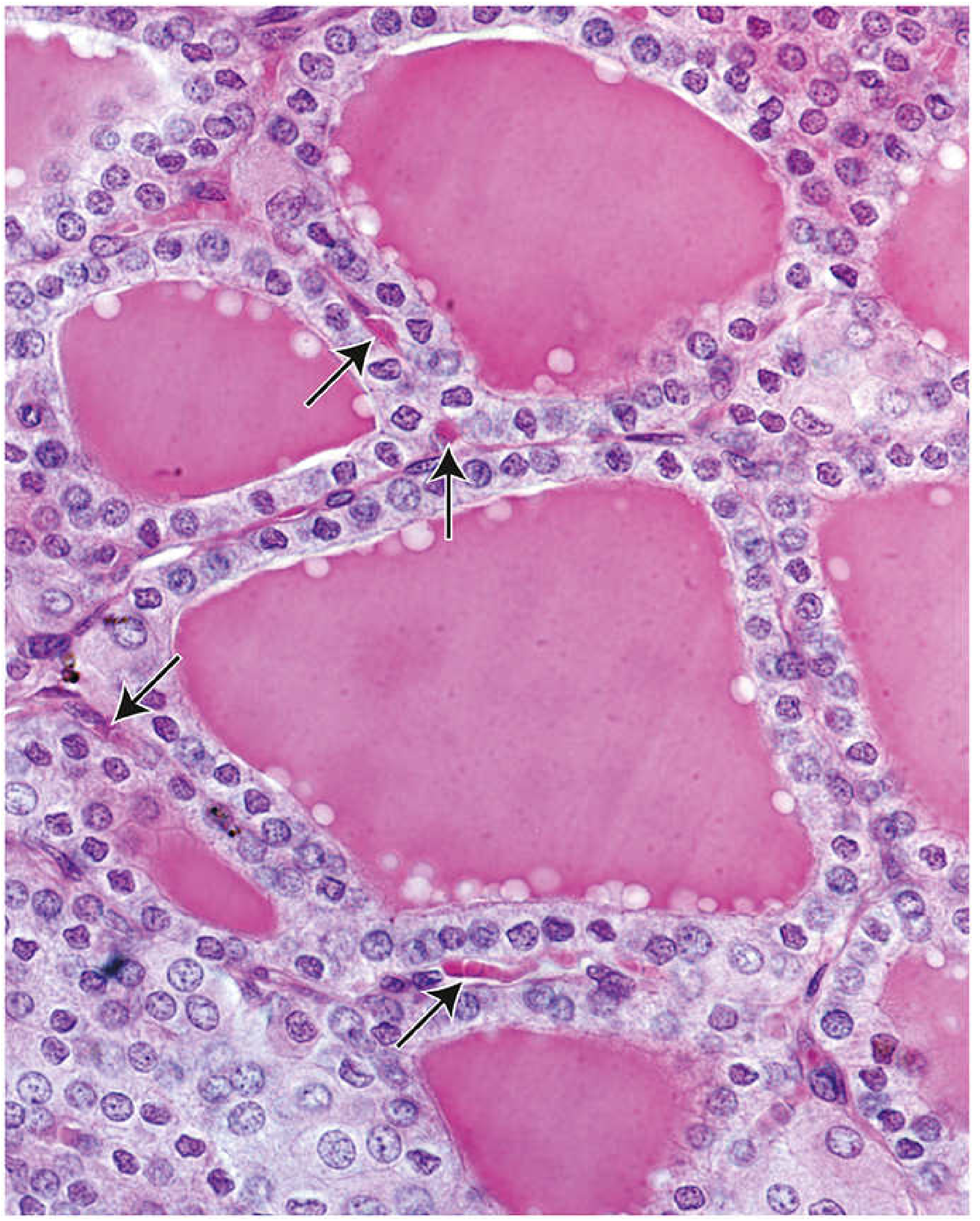
Key features (H&E, x500):
- Follicles - the structural and functional unit; spherical cyst-like compartments ranging 0.2-1.0 mm in diameter
- Colloid - pale pink, gel-like material filling the follicle lumen; composed mainly of thyroglobulin (inactive T4/T3 storage)
- Follicular cells (principal cells) - single layer of cuboidal to low-columnar epithelium lining each follicle; produce T3 and T4. Cell height varies with activity (tall = active/hyperplastic; flat = inactive)
- Parafollicular cells (C-cells) - scattered within the follicular wall or between follicles; larger, pale, and produce calcitonin
- Arrows point to blood capillaries running between follicles
- Abundant vascularity reflects the high hormonal output of the gland
2. Parotid Gland
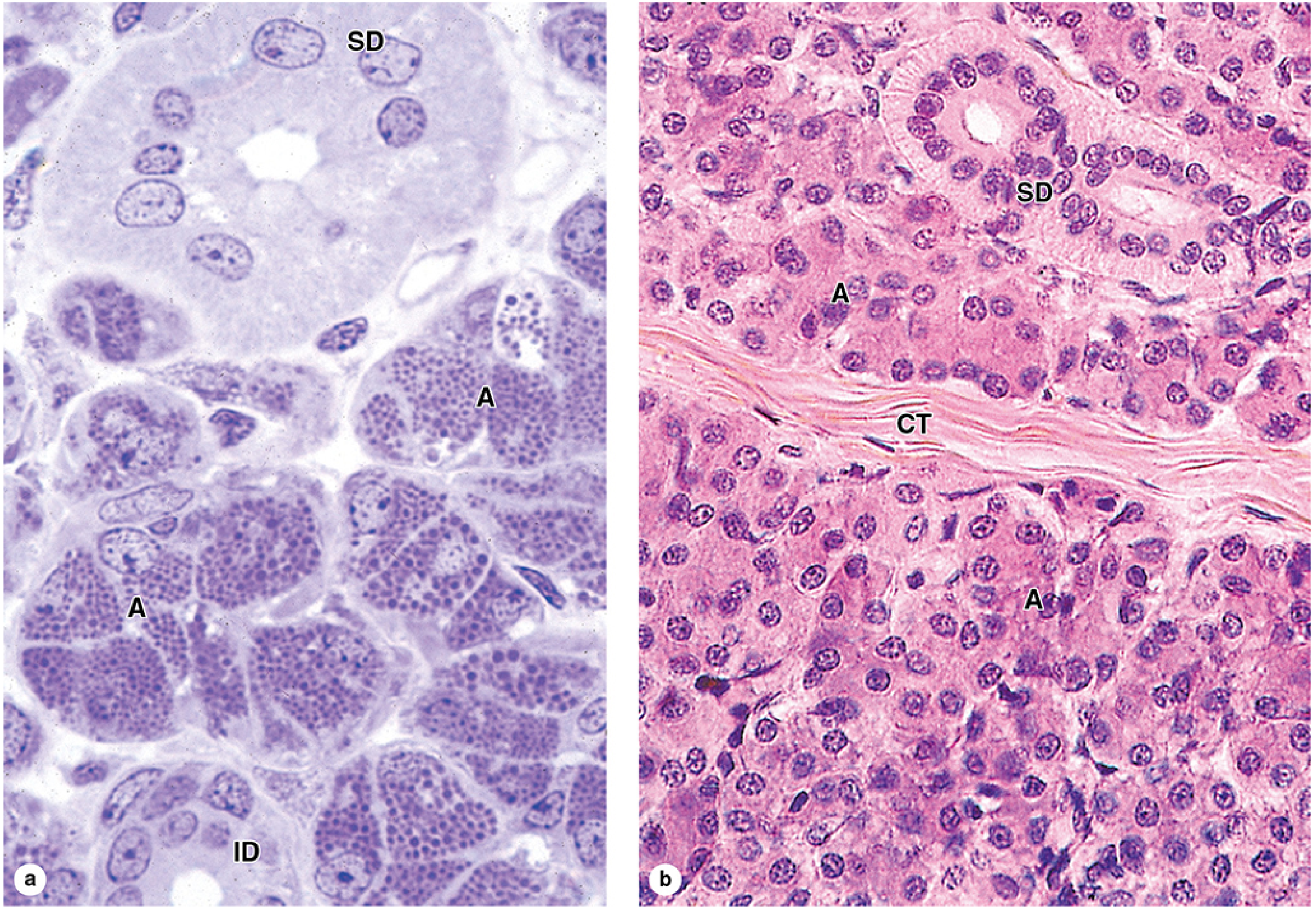
Key features (H&E and PT stains, x200-400):
- Pure serous acini (A) - the most important distinguishing feature; no mucous cells. Cells are pyramidal with round, basally located nuclei and apical secretory granules containing amylase
- Intercalated ducts (ID) - long, narrow, lined by low cuboidal epithelium; more extensive than in other major salivary glands
- Striated ducts (SD) - lined by tall columnar cells with basal membrane infoldings + mitochondria (responsible for ion transport/saliva modification); prominent and easily seen
- Connective tissue septa (CT) - divide the gland into lobules
- Adipose tissue - characteristic feature of the parotid; fat cells are scattered throughout the parenchyma and increase with age
- The facial nerve (CN VII) runs through the gland - nerve cross-sections may appear in sections
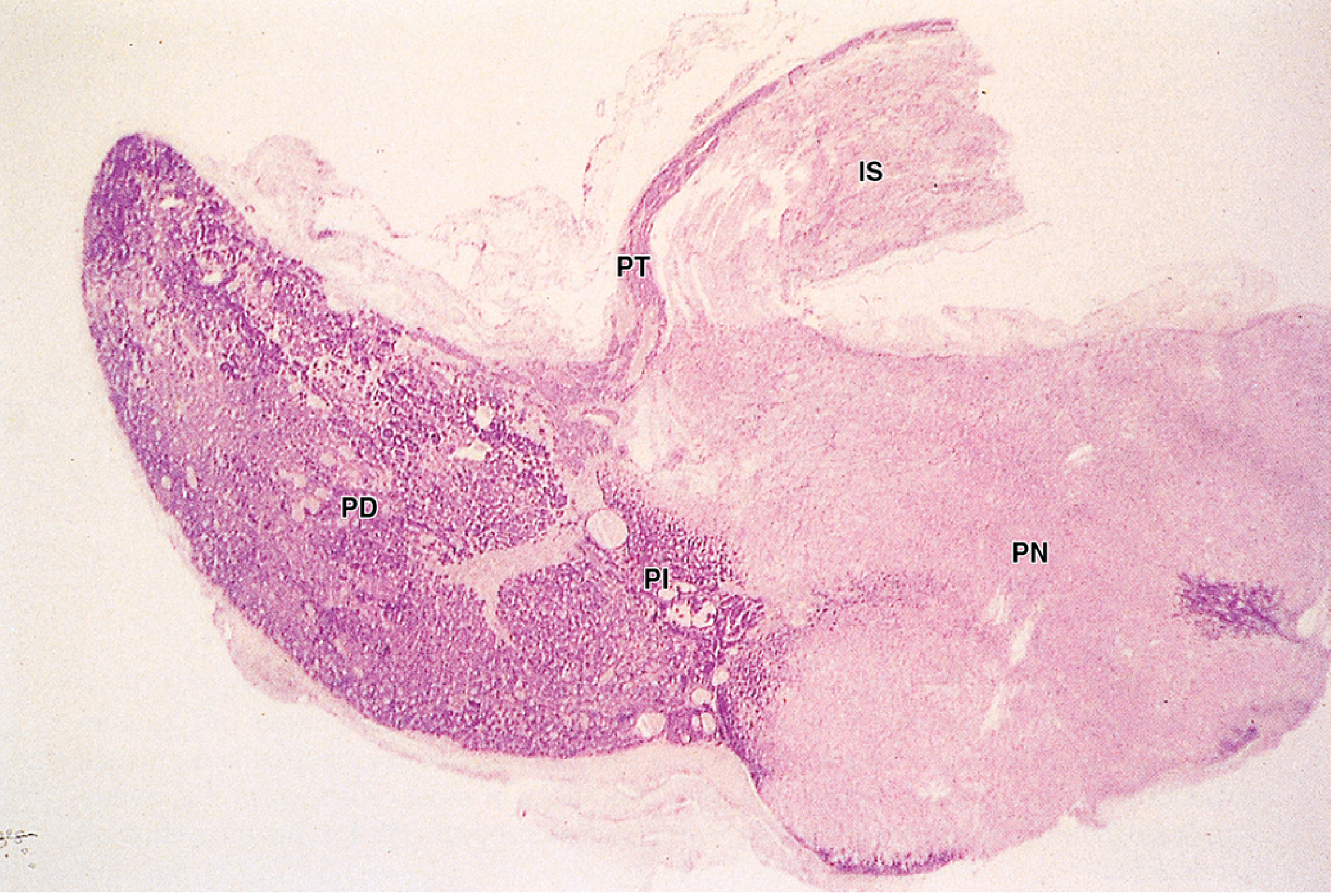
3. Pituitary Gland (Hypophysis)
Low power - whole gland overview (H&E, x30):
High power - pars distalis cell types (Gomori trichrome, x400):
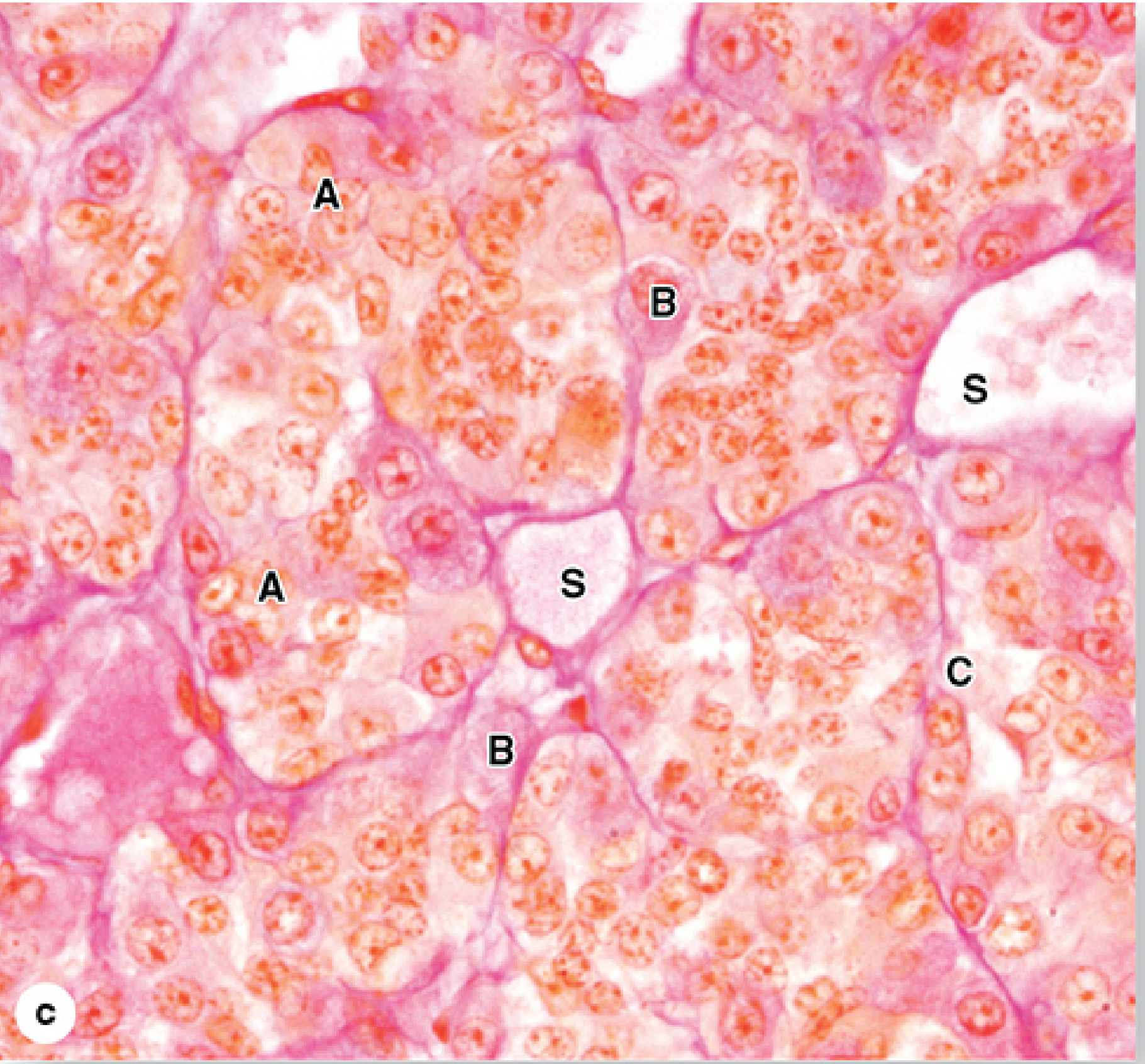
Key features:
Adenohypophysis (anterior lobe, ~75% of gland mass):
- Pars distalis (PD) - the main secretory portion; cells arranged in cords around fenestrated sinusoids
- Acidophils (A) - orange on Gomori trichrome; include somatotrophs (GH, ~50% of cells) and lactotrophs (prolactin)
- Basophils (B) - violet/purple; include thyrotrophs (TSH), gonadotrophs (FSH/LH), and corticotrophs (ACTH)
- Chromophobes (C) - pale/unstained; degranulated cells or stem cells
- Pars tuberalis (PT) - wraps around the infundibular stalk; gonadotrophs predominate
- Pars intermedia (PI) - thin zone between anterior and posterior lobes; contains follicle-like cysts in humans
Neurohypophysis (posterior lobe):
- Pars nervosa (PN) - pale pink, resembles CNS tissue; contains axon terminals of hypothalamic neurons (supraoptic + paraventricular nuclei) that store ADH and oxytocin
- Infundibular stalk (IS) - connects to the hypothalamus; carries the hypothalamic-hypophyseal tract
Sources: Junqueira's Basic Histology, 17e | Histology: A Text and Atlas (Pawlina & Ross), 9e
This is a shared conversation. Sign in to Orris to start your own chat.