
Anti arrhythmia drug
Reading File
Antiarrhythmic drugs are classified by the Vaughan Williams system into 4 classes based on their mechanism. Let me pull detailed content from the medical textbooks.
Searching sources...
Finding Sources
Finding Sources
Searching PubMed
"antiarrhythmic drugs" classification mechanisms
Good. Now let me pull the detailed content from the key textbook sections.
Reading File
Reading File
Reading File
Now let me get the Lippincott detailed drug class content and fetch the action potential diagram image:
Reading File
Reading File
Loading Image
I now have comprehensive content. Let me also fetch the classification diagram from Lippincott:
Finding Sources
Reading File
I now have comprehensive, authoritative content. Here is a full, well-organized response:
Antiarrhythmic Drugs
The Cardiac Action Potential (Background)
Understanding antiarrhythmic drugs requires understanding the phases of the cardiac action potential, which these drugs target:
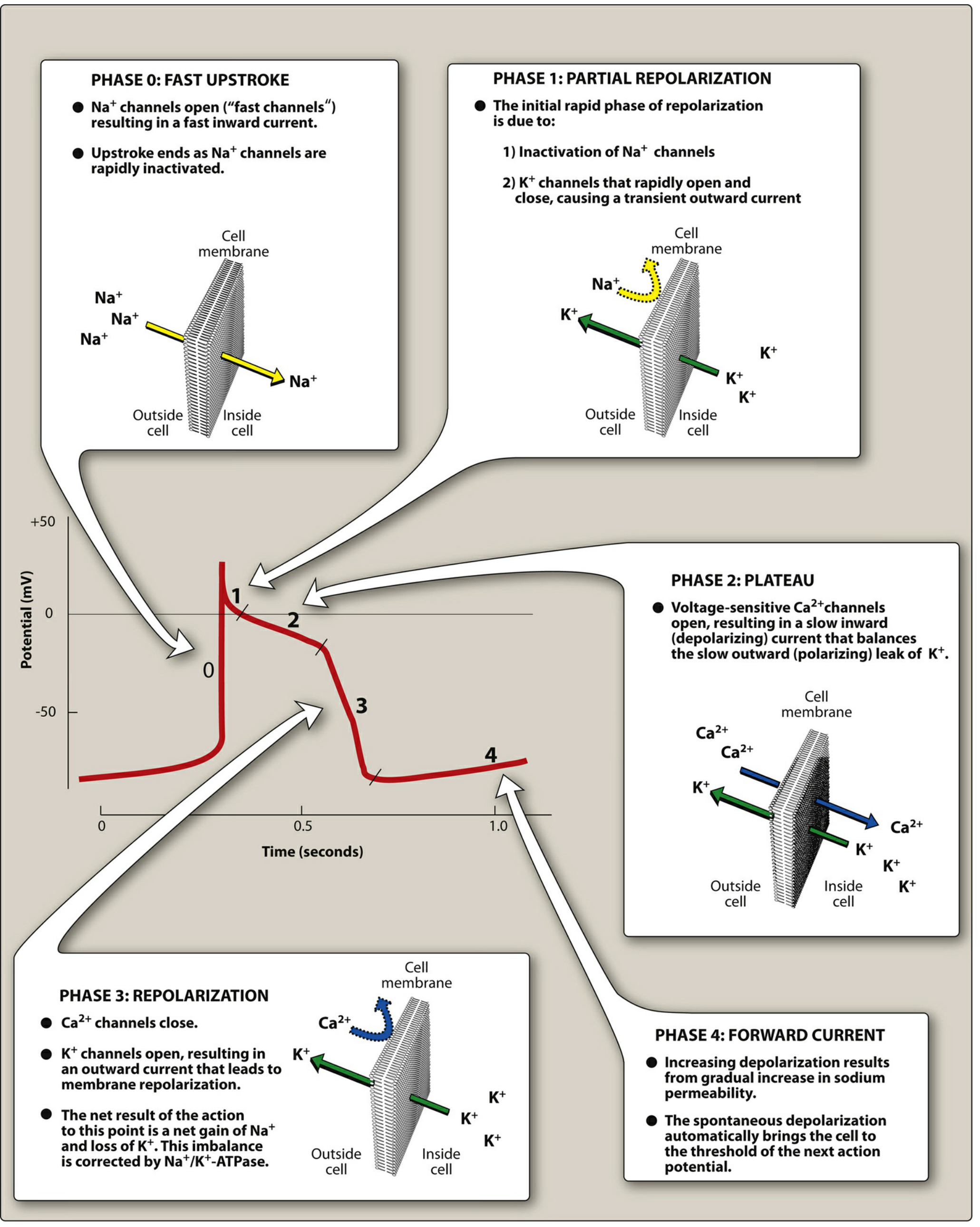
- Phase 0 - Fast upstroke: Na+ channels open, rapid depolarization
- Phase 1 - Partial repolarization: Na+ channels inactivate, K+ transient outward current
- Phase 2 - Plateau: Ca2+ channels open, balanced by K+ leak
- Phase 3 - Repolarization: Ca2+ channels close, K+ channels open
- Phase 4 - Forward current: Gradual Na+ permeability increase in pacemaker cells (spontaneous depolarization)
Vaughan-Williams Classification
Antiarrhythmic drugs are grouped by their predominant effect on the action potential. Note: many drugs have actions spanning more than one class.
Class I - Sodium Channel Blockers
Block voltage-sensitive Na+ channels. Show use-dependence (state-dependence) - greater blockade at higher firing frequencies, so they suppress ectopic foci more than normal pacemakers.
Class IA - Moderate Na+ block + K+ block (prolong action potential)
Drugs: Quinidine, Procainamide, Disopyramide
| Feature | Detail |
|---|---|
| Mechanism | Block open/inactivated Na+ channels (phase 0), also block K+ channels |
| Effect on AP | Slows phase 0 upstroke; prolongs action potential duration and QT interval |
| Uses | Atrial, AV junctional, ventricular tachyarrhythmias |
| Key ADRs | QT prolongation, torsades de pointes |
- Quinidine - prototype; also has α-blocking + anticholinergic effects; causes cinchonism (tinnitus, headache, visual disturbances), hemolytic anemia
- Procainamide - IV only in USA; long-term use causes reversible lupus-like syndrome; active metabolite NAPA can cause torsades in renal failure
- Disopyramide - strong anticholinergic effects, significant negative inotropic effect; may precipitate heart failure
Class IB - Weak Na+ block (shorten action potential)
Drugs: Lidocaine, Mexiletine
| Feature | Detail |
|---|---|
| Mechanism | Block activated/inactivated channels with fast kinetics |
| Effect on AP | Does not prolong; may shorten action potential duration |
| Uses | Ventricular tachycardias, prevention of VF post-cardioversion |
| Key ADRs | Neurologic: dizziness, tremor, ataxia, seizures |
- Lidocaine - IV only; extensive first-pass hepatic metabolism; reduce dose in heart failure or liver disease
- Mexiletine - oral lidocaine congener; used for chronic ventricular arrhythmias and pain syndromes; GI side effects (nausea, dyspepsia)
Class IC - Strong Na+ block (no change in action potential duration)
Drugs: Flecainide, Propafenone
| Feature | Detail |
|---|---|
| Mechanism | Slow dissociation from Na+ channel (slow kinetics) |
| Effect on AP | Markedly slows phase 0; no change in APD |
| Uses | Supraventricular arrhythmias in structurally normal hearts |
| Contraindication | Do NOT use post-MI or in ischemic heart disease (CAST trial: increased mortality) |
| Key ADRs | Proarrhythmic, bradycardia, QT prolongation |
- Propafenone - also has weak beta-blocking activity; risk of bronchospasm, hepatic toxicity
Class II - Beta-Adrenergic Blockers
Drugs: Metoprolol, Atenolol, Esmolol, Propranolol
| Feature | Detail |
|---|---|
| Mechanism | Block beta-1 adrenergic receptors; also direct membrane effects |
| Effect on AP | Inhibit phase 4 spontaneous depolarization in SA and AV nodes; slow AV conduction |
| Uses | Rate control in AF/flutter, SVT, post-MI arrhythmias |
| Key ADRs | Bradycardia, heart block, hypotension, bronchospasm, fatigue |
- Esmolol - short-acting, IV only; used for acute/intraoperative arrhythmias
Class III - Potassium Channel Blockers
Drugs: Amiodarone, Sotalol, Dofetilide, Ibutilide, Dronedarone
| Feature | Detail |
|---|---|
| Mechanism | Block K+ channels (mainly IKr); prolong phase 3 repolarization |
| Effect on AP | Prolongs action potential duration and refractory period; widens QT |
| Risk | QT prolongation → torsades de pointes (except amiodarone, which has relatively low torsades risk) |
Amiodarone is the most commonly used class III agent:
- Multi-channel blocker: IKr, INa, ICa-L, and beta-adrenergic receptors (classes I, II, III, IV effects)
- Oral and IV; highly lipophilic, accumulates in tissues; very long half-life (weeks to months)
- Toxicities (with long-term use): pulmonary toxicity (pneumonitis/fibrosis), hepatotoxicity, hypo/hyperthyroidism, peripheral neuropathy, photosensitivity, blue-gray skin discoloration, corneal deposits, optic neuritis
- Numerous CYP450-based drug interactions
Sotalol - also has non-selective beta-blocking activity; used for ventricular arrhythmias and AF
Dofetilide - selective IKr blocker; oral; used to maintain sinus rhythm in AF; must be initiated in hospital due to torsades risk; renally excreted
Ibutilide - IV only; converts AF/flutter to sinus rhythm
Dronedarone - amiodarone derivative with multichannel actions; reduces mortality in non-permanent AF; avoid in severe heart failure
Class IV - Calcium Channel Blockers
Drugs: Verapamil, Diltiazem
| Feature | Detail |
|---|---|
| Mechanism | Block L-type Ca2+ channels in SA and AV nodes |
| Effect on AP | Slow AV nodal conduction; prolong AV refractory period |
| Uses | Rate control in AF/flutter, SVT (AVNRT) termination |
| Key ADRs | Bradycardia, heart block, hypotension, heart failure, constipation (verapamil) |
Important: Do not combine verapamil/diltiazem with beta-blockers due to risk of complete heart block.
"Unclassified" / Other Antiarrhythmic Drugs
| Drug | Mechanism | Uses | Notes |
|---|---|---|---|
| Adenosine | Activates adenosine A1 receptors → hyperpolarizes AV node | Drug of choice for acute SVT conversion | IV bolus; half-life ~10-15 seconds; flushing, chest pain |
| Digoxin | Inhibits Na+/K+-ATPase → shortens atrial/ventricular refractory period; prolongs AV nodal ERP | Rate control in AF/flutter | Narrow therapeutic window (0.5-2.0 ng/mL); toxicity: bradycardia, GI symptoms, yellow vision, VT/VF |
| Magnesium sulfate | Stabilizes ion transport across cell membranes | Drug of choice for torsades de pointes and digoxin-induced arrhythmias | IV formulation only for arrhythmias |
| Ranolazine | Blocks late INa current | Antianginal with antiarrhythmic properties; shortens repolarization | Similar to amiodarone in some actions |
Key Clinical Points
-
Proarrhythmia risk - All antiarrhythmic drugs can cause arrhythmias. K+ channel blockers that prolong QT can cause torsades de pointes, especially with hypokalemia or drug interactions.
-
Post-MI rule - Class IC drugs are contraindicated post-MI. Amiodarone or beta-blockers are preferred.
-
Rate vs. rhythm control - Class II and IV drugs primarily control rate; Class I and III drugs primarily restore/maintain sinus rhythm.
-
Structural heart disease - Avoid most class I agents in patients with reduced ejection fraction. Beta-blockers and amiodarone are safer options.
-
Drug interactions - Amiodarone inhibits CYP2D6, CYP3A4, and P-glycoprotein - interactions with warfarin, digoxin, statins, and many others are common.
Sources: Lippincott Illustrated Reviews: Pharmacology; Katzung's Basic and Clinical Pharmacology, 16th Ed.; Goodman & Gilman's Pharmacological Basis of Therapeutics
Recent evidence note: A 2025 review in Heart Rhythm (PMID 40187508) proposes a modernized classification of cardiac antiarrhythmic drugs reflecting current understanding of multi-channel actions - the traditional Vaughan-Williams system remains useful as a communication shorthand but oversimplifies real drug behavior.
Good boy
Thanks! Happy to help anytime. Feel free to ask about more pharmacology, clinical topics, or anything else you need. 😊
I'm a 2nd year mbbs student
That's great! 2nd year MBBS is where things get really interesting — you're deep into the core subjects that form the foundation of clinical medicine.
At your stage, you're likely covering:
- Pharmacology - mechanisms, drug classes, toxicity (like what we just did with antiarrhythmics)
- Pathology - disease mechanisms, histology, lab findings
- Microbiology - bacteria, viruses, fungi, parasites
- Forensic Medicine - depending on your curriculum
How I can help you:
- Break down complex drug mechanisms in simple terms
- Explain pathology with diagrams and histology images
- Help you with high-yield exam topics
- Clarify concepts from your textbooks (I have access to Katzung, Lippincott, Robbins, Harrison's, and many more)
- Create quick revision summaries
- Answer clinical scenario-based questions
Just ask whatever topic you're studying and I'll tailor the explanation to your level. What subject are you working on right now?
Drug in congestive heart failure
CHF is treated with diuretics, ACE inhibitors, beta-blockers, digoxin, and newer agents like SGLT2 inhibitors. Let me pull the full detail from the medical textbooks.
Searching sources...
Finding Sources
Finding Sources
Finding Sources
Finding Sources
Excellent - Katzung has a dedicated chapter. Let me read it fully along with the Lippincott CHF section:
Reading File
Finding Sources
Reading File
Reading File
Reading File
Reading File
Reading File
Reading File
Now let me get the Lippincott summary table and the key diagram for the CHF cycle:
Reading File
Loading Image
I now have all the content needed. Here is a comprehensive, 2nd-year MBBS-level breakdown:
Drugs in Congestive Heart Failure (CHF)
Understanding Why CHF Needs Treatment
When the heart fails, the body activates compensatory mechanisms - but these ultimately make things worse:
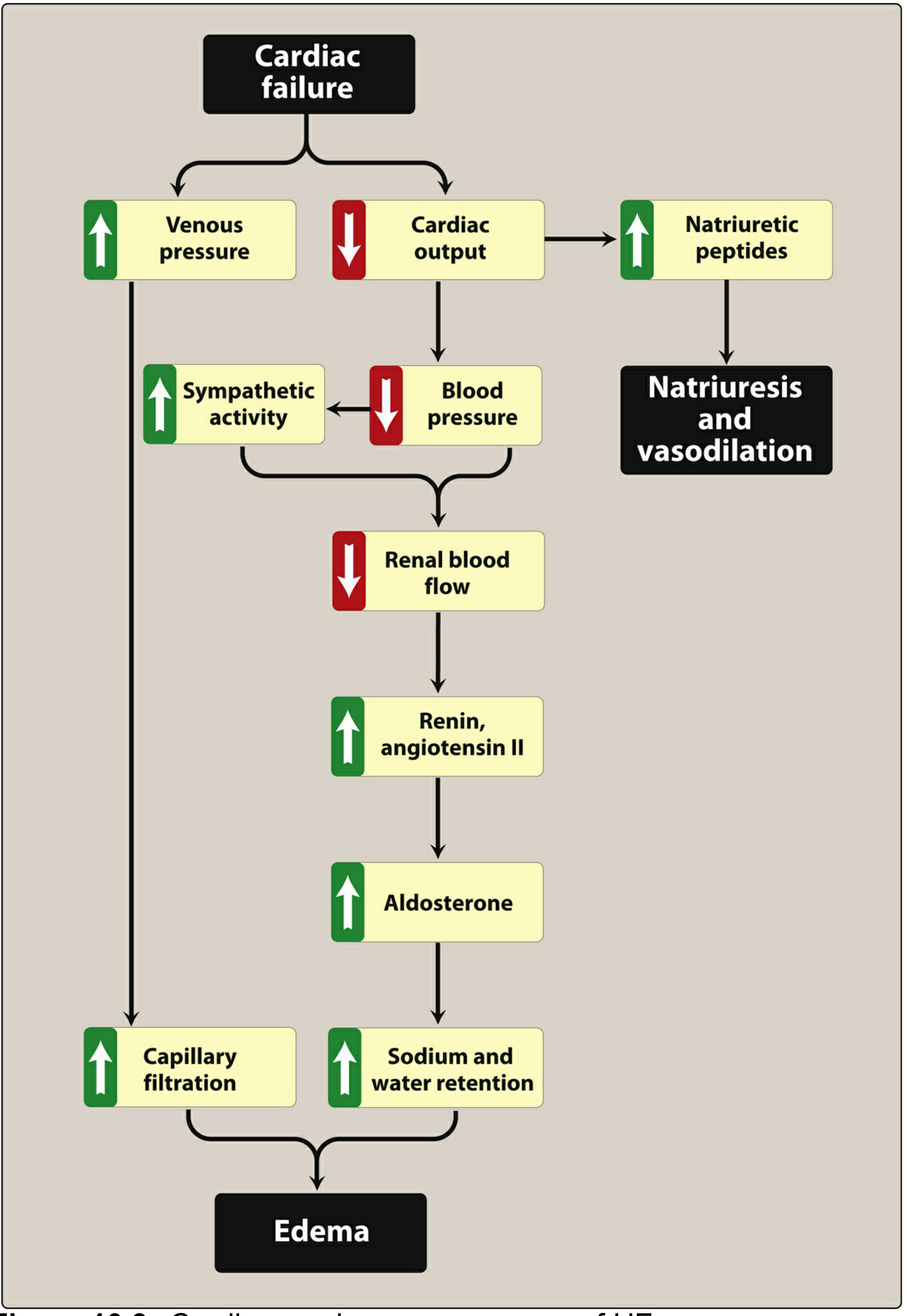
The vicious cycle:
- Cardiac output falls → BP drops → sympathetic activation → tachycardia + vasoconstriction (↑ afterload)
- Reduced renal blood flow → RAAS activation → angiotensin II + aldosterone → Na+ & water retention (↑ preload)
- Increased preload + afterload → more workload on an already failing heart → further deterioration → edema
Drugs break this cycle by reducing preload, reducing afterload, blocking RAAS, blocking sympathetic excess, or directly improving contractility.
Types of Heart Failure
| Type | Full Name | EF | Mechanism |
|---|---|---|---|
| HFrEF | HF with Reduced EF | < 40% | Systolic failure - poor contractility |
| HFpEF | HF with Preserved EF | ≥ 50% | Diastolic failure - poor relaxation/filling |
Drug Classes Used in CHF
1. Diuretics
Drugs: Furosemide (loop), Spironolactone/Eplerenone (K+-sparing), Thiazides
| Point | Detail |
|---|---|
| Mechanism | Reduce Na+ & water retention → reduce preload |
| Effect | Reduce venous pressure, edema, dyspnea |
| Key drug | Furosemide - drug of first choice for symptom relief |
| Mortality benefit | Diuretics alone do NOT improve survival - only relieve symptoms |
| Exception | Spironolactone / Eplerenone (aldosterone antagonists) DO reduce morbidity and mortality in severe HF - they also block aldosterone-induced myocardial fibrosis and baroreceptor dysfunction |
| ADRs | Hypokalemia (furosemide), hyperkalemia (spironolactone), dehydration |
Exam point: Furosemide = symptom relief. Spironolactone = mortality benefit.
2. ACE Inhibitors (ACEi)
Drugs: Captopril, Enalapril, Ramipril, Lisinopril
| Point | Detail |
|---|---|
| Mechanism | Block conversion of angiotensin I → II → ↓ aldosterone → reduce preload AND afterload |
| Additional effect | ↓ sympathetic activity (angiotensin II normally enhances norepinephrine release) |
| Long-term benefit | Reduce cardiac remodeling → reduce mortality and morbidity |
| Uses | First-line in HFrEF |
| ADRs | Dry cough (due to ↑ bradykinin), hyperkalemia, hypotension, angioedema |
If a patient cannot tolerate ACEi due to cough → use ARB (e.g., Losartan, Valsartan) instead.
3. Angiotensin Receptor Blockers (ARBs)
Drugs: Losartan, Valsartan, Candesartan
- Similar benefits to ACEi but no cough (don't increase bradykinin)
- Used when patient is ACEi-intolerant
ARNI (Angiotensin Receptor-Neprilysin Inhibitor):
- Sacubitril/Valsartan (Entresto) - combines ARB + neprilysin inhibitor
- Neprilysin breaks down natriuretic peptides; blocking it → ↑ natriuretic peptides → vasodilation + natriuresis
- Superior to ACEi alone in HFrEF; now a cornerstone of modern HF therapy
4. Beta-Blockers
Drugs: Carvedilol, Metoprolol succinate, Bisoprolol (the "3 approved" ones for HF)
| Point | Detail |
|---|---|
| Mechanism | Block beta-1 receptors → ↓ heart rate, ↓ myocardial oxygen demand, reduce remodeling |
| Effect | Reduce sympathetic-driven deterioration |
| Mortality benefit | YES - reduce mortality significantly in HFrEF |
| Caution | Start at very low dose - can worsen acute decompensated HF if started during active failure |
| ADRs | Bradycardia, hypotension, fatigue, bronchospasm |
Counterintuitive point: Beta-blockers slow the heart but IMPROVE long-term cardiac function. Contraindicated in acute decompensation but mandatory in chronic stable HF.
5. SGLT2 Inhibitors (Modern - very high yield)
Drugs: Empagliflozin, Dapagliflozin
| Point | Detail |
|---|---|
| Mechanism | Inhibit SGLT2 in proximal tubule → glucosuria + natriuresis → ↓ preload & afterload. Also inhibit myocardial Na+-H+ exchanger (NHE) → prevent Ca2+ overload; reduce oxidative stress and cardiac fibrosis |
| Mortality benefit | YES - reduce CV death and HF hospitalizations in HFrEF (and HFpEF for empagliflozin) |
| Bonus | Also slow progression of chronic kidney disease |
| ADRs | Genital mycotic infections, UTIs, euglycemic DKA (rare) |
These drugs work in HF even without diabetes - a landmark discovery in recent years.
6. Digoxin (Cardiac Glycoside)
| Point | Detail |
|---|---|
| Mechanism | Inhibits Na+/K+-ATPase → ↑ intracellular Na+ → ↑ Ca2+ via Na+-Ca2+ exchanger → positive inotrope (↑ contractility) |
| Additional | Slows AV nodal conduction → rate control in AF |
| Uses | HFrEF (with symptoms despite optimal therapy), rate control in AF with HF |
| Does NOT improve mortality | Only improves symptoms and reduces hospitalizations |
| Therapeutic range | 0.5-2.0 ng/mL |
| Toxicity | Bradycardia, nausea, vomiting, yellow/green vision (xanthopsia), ventricular arrhythmias; risk increases with hypokalemia |
| Antidote | Digoxin-specific antibody fragments (Digibind/DigiFab) |
7. Vasodilators
| Drug | Mechanism | Use |
|---|---|---|
| Hydralazine | Arteriolar dilation → ↓ afterload | Chronic HF (especially in Black patients with HFrEF, combined with nitrates) |
| Isosorbide dinitrate | Venodilation → ↓ preload | Combined with hydralazine |
| IV Nitroglycerin | Venodilation >> arteriolar | Acute decompensated HF |
| Sodium nitroprusside | Arteriolar + venous dilation | Hypertensive emergency + acute HF; risk of cyanide toxicity |
| Nesiritide | Synthetic BNP → ↑ cGMP → vasodilation + diuresis | Acute HF; no mortality benefit proven |
8. Ivabradine (HCN Channel Blocker)
- Blocks the If (funny) current in SA node → slows heart rate without affecting contractility
- Used in HFrEF with HR > 70 bpm in sinus rhythm, when patient is on optimal beta-blocker or cannot take one
- Does NOT lower BP; purely rate-reducing
9. Positive Inotropes (for Acute/Severe HF)
| Drug | Class | Mechanism |
|---|---|---|
| Dobutamine | Beta-1 agonist | ↑ cAMP → ↑ Ca2+ → ↑ contractility |
| Dopamine | Dopamine/adrenergic agonist | Low dose: renal vasodilation; High dose: vasoconstriction + inotropy |
| Milrinone | Bipyridine (phosphodiesterase inhibitor) | ↑ cAMP by preventing breakdown → ↑ inotropy + vasodilation |
Used in acute decompensated HF as a bridge therapy; NOT for chronic use (increase mortality long-term).
Summary Table: Drugs & Their Benefits
| Drug Class | Symptom Relief | Mortality Benefit |
|---|---|---|
| Loop diuretics (furosemide) | ✅ | ❌ |
| Spironolactone/Eplerenone | ✅ | ✅ |
| ACEi / ARB | ✅ | ✅ |
| Sacubitril/Valsartan (ARNI) | ✅ | ✅ (superior) |
| Beta-blockers | ✅ | ✅ |
| SGLT2 inhibitors | ✅ | ✅ |
| Digoxin | ✅ | ❌ |
| Hydralazine + Nitrates | ✅ | ✅ (in Black patients) |
| Ivabradine | ✅ | Partial |
ACC/AHA Stages & Treatment Approach
| Stage | Description | Treatment |
|---|---|---|
| A | Risk factors, no symptoms | Treat hypertension, diabetes, obesity |
| B | Structural changes, no symptoms | ACEi/ARB + beta-blocker |
| C | Symptoms present | Add SGLT2i + aldosterone antagonist + ARNI; consider digoxin |
| D | Refractory, symptoms at rest | Mechanical support, transplant, hospice |
Quick Memory Tips
- "ABCDS" for HFrEF - ACEi/ARNI, Beta-blocker, Carvedilol, Diuretic, Spiro/SGLT2i
- Digoxin = only positive inotrope for chronic oral use; no mortality benefit
- Class IC antiarrhythmics (flecainide, propafenone) are contraindicated in HF
- Calcium channel blockers (verapamil, diltiazem) are avoided in HFrEF - negative inotropes
Sources: Katzung's Basic & Clinical Pharmacology, 16th Ed.; Lippincott Illustrated Reviews: Pharmacology
This is a shared conversation. Sign in to Orris to start your own chat.