
how many time of suction in a day can be considered for tt removal
Reading File
Quick answer: For tracheostomy tube (TT) removal (decannulation), one commonly used criterion is that the patient should require suctioning no more than 2-3 times per day (some sources say every 4-8 hours or fewer). Frequent suctioning (e.g., more than 3-4 times/day) typically indicates ongoing secretion burden that makes decannulation unsafe.
Searching sources...
Finding Sources
Searching the Web
tracheostomy tube removal decannulation criteria suctioning frequency per day
Reading File
Here is a clear, evidence-based answer:
Suction Frequency as a Criterion for Tracheostomy Tube (TT) Removal (Decannulation)
The threshold varies slightly by patient population, but the most widely cited figures are:
Adults (ICU / general patients)
Fewer than 4 suctions in the previous 24 hours is the standard criterion used in published decannulation protocols and systematic reviews.
- A 2017 systematic review on tracheostomy decannulation (Journal of Intensive Care) states: "frequency of suctioning should be less than 4 in the previous 24 hours" as part of the decannulation screening checklist.
- Some protocols phrase this as suction frequency less than once every 4 hours (i.e., no more than 6 times/day), with the stricter cutoff of <4/day being preferred.
Pediatric patients
Fewer than 1 suction per day - a much stricter threshold used in children's decannulation algorithms (Fishman's Pulmonary Diseases, citing a CCHS pediatric protocol).
Full Decannulation Criteria (suction is just one component)
Suctioning frequency is assessed alongside other criteria:
| Criterion | Requirement |
|---|---|
| Consciousness/orientation | Alert, oriented, cooperative |
| Secretion management | Thin/easy-to-handle secretions; suction <4 times/day |
| Cough strength | Adequate cough; PEFR >160 L/min |
| Swallowing | Can swallow liquids/semi-solids without aspiration |
| Airway patency | No obstruction on bronchoscopy |
| Respiratory stability | Off or minimal ventilatory support; SpO₂ >92% on room air |
| No sedation | Patient not requiring continuous sedation |
Key takeaway
<4 suctions in 24 hours is the accepted threshold for adult patients being considered for TT removal. If a patient still requires suctioning 4 or more times per day, it suggests they cannot independently manage secretions, and decannulation is premature.
Sources: Fishman's Pulmonary Diseases, p. 2961; Systematic Review - Journal of Intensive Care, 2017
how to measure cough strength
Quick answer: Cough strength is measured primarily by Peak Cough Flow (PCF) using a peak flow meter or pneumotachograph. A PCF ≥160 L/min is the minimum threshold for effective secretion clearance, and ≥270 L/min is considered normal/adequate for decannulation. It can also be assessed clinically (subjective grading) or by measuring Maximum Expiratory Pressure (MEP).
Searching sources...
Finding Sources
Searching the Web
how to measure cough strength peak cough flow PCF clinical assessment methods
Finding Sources
Finding Sources
Reading File
Reading File
Reading File
Loading Image
Loading Image
Here is a complete, evidence-based answer on measuring cough strength:
How to Measure Cough Strength
Cough strength can be measured by objective (instrumental) methods and surrogate pressure-based methods.
1. Peak Cough Flow (PCF) - Gold Standard
PCF is the highest flow recorded during a vigorous cough. It is the most widely used and recommended method.
Equipment:
- A standard asthma peak flow meter connected to a face mask (most practical, low-cost, portable)
- OR a pneumotachograph (more accurate, used in respiratory labs)
- OR a digital/electronic peak flow meter
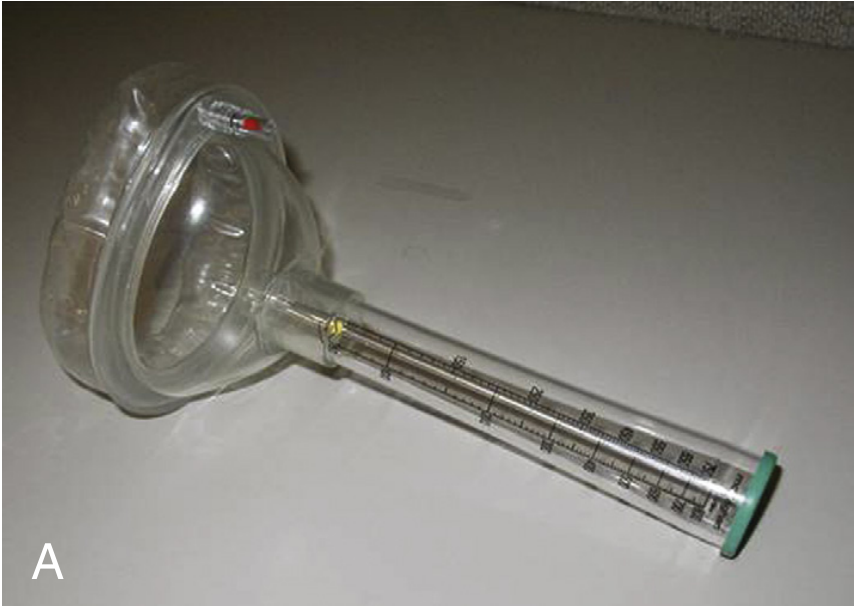
Technique:
- Seat the patient upright in a comfortable position
- Apply the face mask firmly over nose and mouth (ensure a tight seal)
- Instruct the patient to take a deep breath in (as deep as possible)
- Then cough hard - "as if something went down the wrong pipe"
- Record the highest value from 4-7 trials; the best result is used
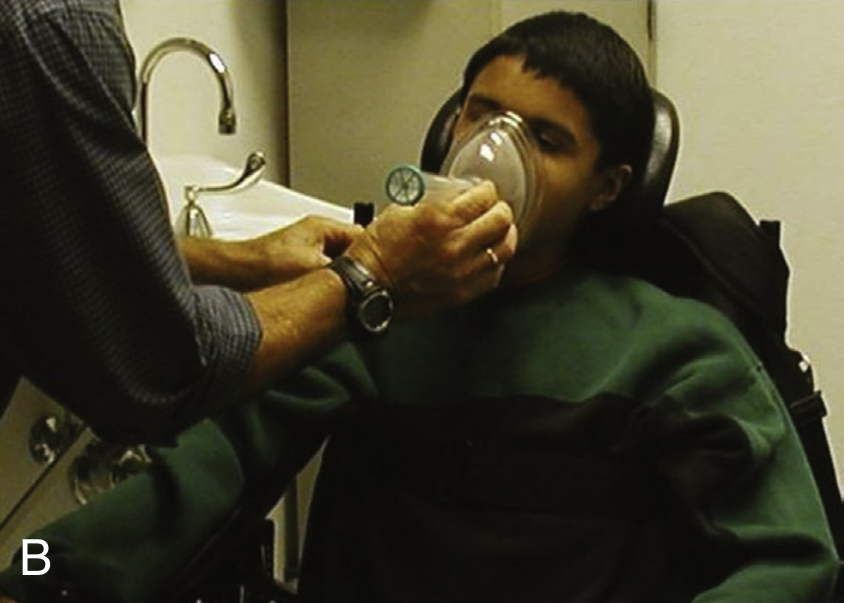
(Murray & Nadel's Textbook of Respiratory Medicine, Figure 130.6)
In tracheostomy patients: The cuff is deflated, the tube is capped, and PCF is measured through the mouth. Alternatively, an electronic peak flow meter can be connected directly to the tracheostomy tube to measure endotracheal cough PEF.
2. Interpreting PCF Values
| PCF Value | Clinical Meaning |
|---|---|
| ≥270 L/min | Normal/adequate; independent secretion clearance |
| 160-269 L/min | Borderline; assisted coughing should be considered |
| <160 L/min | Ineffective cough; cannot clear secretions; mechanical assist-cough (MI-E) indicated |
| >160 L/min at mouth | Suggested minimum for decannulation readiness |
| >60 L/min via tracheal tube | Minimum threshold when measured directly through the TT |
- For TT decannulation: PCF >160 L/min is the accepted minimum threshold (Pulmonology, 2015)
- Cough support (e.g., MI-E) should be considered when PCF <270 L/min in patients with neuromuscular disease - Murray & Nadel's Textbook of Respiratory Medicine
3. Surrogate / Pressure-Based Methods
When PCF cannot be measured directly, these alternatives are used:
a) Maximum Expiratory Pressure (MEP)
- Patient exhales forcefully against a briefly occluded mouthpiece from near TLC
- Reflects expiratory muscle strength - a surrogate for cough strength
- Normal: typically >80 cmH₂O in adults; MEP >50 cmH₂O used as a decannulation/weaning criterion in some protocols
- Measured with a respiratory pressure meter (RMS device)
b) Peak Expiratory Flow Rate (PEFR)
- Simpler and more widely available than PCF
- PEFR >160 L/min is commonly used as a decannulation criterion
- Less specific than PCF because it measures normal exhalation, not cough effort
c) Qualitative/Clinical Assessment
- Bedside subjective grading (weak/moderate/strong) by the clinician
- Used when instruments are unavailable
- Harrison's Principles notes: "Cough strength is generally assessed qualitatively; peak expiratory flow or maximal expiratory pressure at the mouth can be used as a surrogate marker for cough strength" - Harrison's Principles of Internal Medicine, 22nd Ed.
4. Assisted Cough PCF (Augmented PCF)
In patients with weak cough, lung volume recruitment (LVR) can be used before measuring PCF:
- Stack breaths using a manual resuscitation bag (breath stacking) to maximize inspiratory volume
- Then cough - the resulting "assisted PCF" or "LVR-PCF" gives a better estimate of potential cough efficacy with mechanical assistance
- This helps decide if MI-E (mechanical insufflation-exsufflation) would benefit the patient
Summary Table
| Method | Device | Measures | Best Used For |
|---|---|---|---|
| PCF (via face mask) | Peak flow meter + mask | L/min | Most patients, bedside |
| PCF (via TT) | Electronic peak flow meter | L/min | Tracheostomy patients |
| PCF (via pneumotach) | Spirometer lab | L/min | Precise/research |
| MEP | Respiratory pressure meter | cmH₂O | Neuromuscular disease |
| PEFR | Standard peak flow meter | L/min | Quick surrogate |
| Clinical grading | None | Qualitative | Bedside when no device |
patient cought out secreation trough TT when cough is deflated
Quick answer: When a patient coughs out secretions through the tracheostomy tube (TT) with the cuff deflated, this is actually a positive and encouraging sign - it indicates the patient has sufficient expiratory muscle strength and airflow to propel secretions upward and out. This is one of the key indicators that the patient may be ready for decannulation.
Searching sources...
Finding Sources
Searching the Web
tracheostomy cuff deflated patient coughs secretions through tube decannulation readiness significance
Finding Sources
Finding Sources
Finding Sources
Finding Sources
Reading File
Here is a clear clinical explanation of what this finding means:
Patient Coughing Out Secretions Through the TT with Cuff Deflated - Clinical Significance
What is Happening Physiologically?
When the cuff is deflated, the seal between the tracheostomy tube and the tracheal wall is broken. This means:
- Air can now flow past the tube and up through the upper airway (larynx, pharynx, nose/mouth)
- During a cough, the expiratory airflow is restored to a more normal path
- If the patient generates enough force to expel secretions out through the TT, it shows the lower airway secretions are being propelled upward and out
What Does This Sign Tell You?
This is a positive clinical finding with several important implications:
| What It Indicates | Clinical Meaning |
|---|---|
| Adequate cough strength | Patient can generate sufficient expiratory force to move secretions |
| Intact cough reflex | Sensory and motor pathways for cough are functional |
| Airway is not severely obstructed | Airflow is sufficient to carry secretions out |
| Patient can manage secretions | They are not entirely dependent on suctioning |
| Favorable decannulation sign | One of the key criteria pointing toward readiness for TT removal |
Where Does This Fit in Decannulation Readiness?
This finding satisfies two of the core decannulation criteria simultaneously:
- Cough strength is present - the patient can generate expulsive force
- Secretion management is adequate - patient can clear secretions without suctioning
The decannulation readiness checklist requires:
- Patent upper airway
- Ability to clear secretions (cuff deflation trial + active cough)
- Adequate consciousness
- Adequate spontaneous ventilation
Why Cuff Deflation is Necessary for This Assessment
When the cuff is inflated:
- Air is trapped below the cuff - no upper airway flow
- Even a strong cough only expels air out the TT opening
- Secretions above the cuff accumulate (subglottic pooling) - aspiration risk
- Cough cannot be properly assessed
When the cuff is deflated:
- Airflow is restored through the upper airway
- Cough can move secretions upward and out
- Glottic function and laryngeal sensation can be assessed
- Voice returns (air through vocal cords)
- This is a necessary step before any decannulation attempt
What to Do Next After This Finding
Since the patient is coughing out secretions through the TT with cuff deflated, the next steps in the decannulation pathway are:
- Continue cuff-deflated trials - extend duration progressively (hours to days)
- Monitor suctioning frequency - aim for <4 suctions/24 hours
- Assess swallowing - speech pathology evaluation (FEES or bedside swallow assessment) to rule out aspiration
- Capping trial - place a cap/speaking valve over the TT with cuff fully deflated; ensure SpO₂ stays >92%
- Confirm upper airway patency - laryngoscopy to visualize the airway above the tube
- Proceed to decannulation if all criteria are met (conscious, no respiratory distress, cough adequate, swallowing safe)
Key Point
A patient who coughs secretions out spontaneously through the TT with the cuff deflated is demonstrating active secretion management. This is a green flag for progressing the decannulation protocol - it means the patient is doing the work of clearance themselves, which is exactly what is required after the tube is removed.
when cuff is delated and speaking valve is on he cough out secreation to much
Quick answer: When a patient coughs out excessive secretions through the TT with the cuff deflated and a speaking valve (like Passy-Muir Valve) in place, this is a known and expected phenomenon. The speaking valve restores positive expiratory pressure through the upper airway, which actually improves the cough mechanism and helps mobilize secretions that were previously pooled above the cuff or in the subglottic space. It is generally a positive sign, but excessive secretions need to be assessed for cause and managed appropriately.
Searching sources...
Finding Sources
Searching the Web
speaking valve Passy Muir tracheostomy cuff deflated excessive coughing secretions why management
Here is a thorough clinical explanation:
Excessive Coughing/Secretions with Cuff Deflated + Speaking Valve (PMV) - Why It Happens & What to Do
Why Does This Happen? (The Mechanism)
This is a very common and expected event - especially at the first few sessions of speaking valve use. There are two main reasons:
1. Release of Pooled Subglottic Secretions ("Above-Cuff Secretions")
When the cuff is inflated for a long period:
- Secretions pool above the cuff (in the subglottis and pharynx)
- They cannot go up (blocked by the larynx) or down (blocked by the inflated cuff)
- They just accumulate silently
When the cuff is deflated and the PMV is placed:
- The pooled secretions suddenly drop into the trachea
- This triggers an immediate, vigorous cough reflex
- The patient coughs out large amounts of secretions - which looks alarming but is actually the airway protecting itself
2. PMV Restores Subglottic Pressure = Stronger Cough
The Passy-Muir Valve is a one-way valve (opens on inspiration, closes on expiration):
- All expired air is redirected up through the upper airway (larynx, mouth, nose)
- This rebuilds subglottic pressure - the pressure needed to generate an effective cough
- Subglottic pressure was zero (or near zero) with an open/uncapped TT
- Now restored, the patient can generate a stronger, more effective cough - and expels secretions that were previously stuck
Is This Dangerous or a Problem?
| Situation | Interpretation |
|---|---|
| Coughing up secretions in first few minutes of PMV use | Normal and expected - subglottic secretion clearance |
| Coughing settles after a few minutes | Positive sign - airway is clearing |
| Coughing persists and causes respiratory distress | Remove the PMV immediately |
| Secretions are copious, thick, and block airflow | Contraindication - remove PMV, suction, improve humidification first |
| SpO2 drops, accessory muscle use, stridor | Remove PMV immediately |
Why the PMV Should NOT Be Used in Truly Copious Secretions
The Austin Health / TRAMS PMV protocol clearly states:
Do NOT place the PMV when: increased or copious secretions are present, or sub-optimal humidification exists.
This is because thick, copious secretions can partially or completely obstruct airflow around the TT when the PMV directs all expiratory air upward - and the patient may not be able to breathe out adequately.
What to Do - Step-by-Step Management
Before PMV placement (prepare the airway):
- Suction through the TT to clear lower airway secretions
- Suction the mouth/pharynx to clear above-cuff secretions before deflating
- Deflate the cuff slowly while suctioning (not all at once) - this minimizes the sudden dump of pooled secretions
- Suction again after cuff deflation
- Then place PMV
During PMV use (if excessive coughing occurs):
- Allow the coughing - it is productive and clears the airway
- Reassure the patient
- Provide suction if needed
- Monitor SpO2, respiratory rate, work of breathing
- If distress or O2 desaturation: remove PMV immediately
Long-term / ongoing management:
| Strategy | Rationale |
|---|---|
| Increase humidification | Thin secretions so they are easier to clear |
| Mucolytics (e.g., nebulized saline, N-acetylcysteine) | Loosen thick secretions |
| Postural drainage + chest physiotherapy | Mobilize secretions |
| Progress PMV tolerance gradually | Start with short sessions (15-20 min), build up |
| Earlier cuff deflation trials | The longer the cuff stays inflated, the more secretions pool - early deflation reduces the problem over time |
Key Clinical Principle
Coughing during speaking valve use is the airway doing its job. The PMV restores the normal cough mechanism. Excessive secretions on first use are usually a sign of how much had accumulated during prolonged cuff inflation - not a sign that the valve should be stopped. With consistent use, secretion burden decreases over time as laryngeal and pharyngeal sensation recovers, swallowing improves, and the patient clears secretions more efficiently.
As Passy-Muir's own guidance states: "The longer the tracheostomy cuff is kept inflated, the more secretions pool above the cuff... Early use of the PMV improves secretion management."
This is a shared conversation. Sign in to Orris to start your own chat.