
I an first year mbbs and after three days i have my msk module test , i am givibg u physio topic make me remember all imp things from guyton
Asking for Preferences
Which MSK physiology topic(s) from Guyton should I cover?
Hormones regualting calcium homeostasis
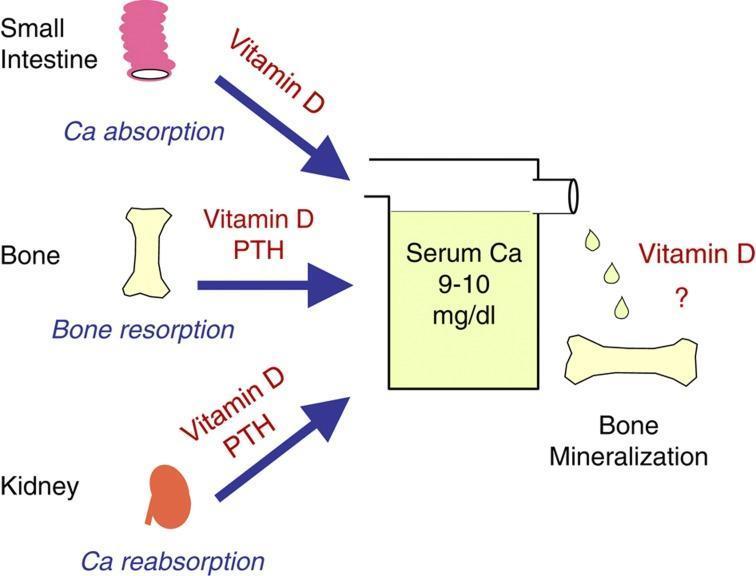
The three main hormones regulating calcium are PTH (raises Ca²+), Calcitonin (lowers Ca²+), and Vitamin D/Calcitriol (raises Ca²+). PTH acts on bone and kidney; Vitamin D acts mainly on gut, bone, and kidney; Calcitonin primarily inhibits osteoclasts.
Searching sources...
Reading File
Finding Sources
Finding Sources
Finding Sources
Finding Sources
Finding Sources
Finding Sources
Finding Sources
Now I have the exact Guyton sections. Let me read the most important ones in parallel.
Reading File
Excellent - that was a massive read with all the essential Guyton content. I now have everything needed for a comprehensive, exam-ready answer. Let me compile it.
🦴 Calcium Homeostasis - Hormonal Regulation (Guyton)
Normal serum calcium = 9.4 mg/dL (2.4 mmol/L) Only 0.1% of total body calcium is in ECF - bones are the giant reservoir (99%).
📊 Forms of Calcium in Plasma (Memorize This!)
| Form | % | Diffusible? | Active? |
|---|---|---|---|
| Ionized (Ca²+) | 50% | Yes | ✅ YES - the functional form |
| Complexed (citrate/phosphate) | 9% | Yes | No |
| Protein-bound (albumin) | 41% | No | No |
Key exam point: Ionized Ca²+ = 1.2 mmol/L = the only physiologically active form. Low albumin → low total Ca but normal ionized Ca (patient has no symptoms).
🔑 The Three Hormones - Quick Overview
| Hormone | Source | Effect on Ca²+ | Effect on PO4 |
|---|---|---|---|
| PTH | Parathyroid chief cells | ↑↑ | ↓ |
| Calcitriol (Vit D active) | Kidney (1α-hydroxylase) | ↑ | ↑ |
| Calcitonin | Thyroid C-cells | ↓ | ↓ |
1️⃣ PARATHYROID HORMONE (PTH) - The Most Important!
Stimulus for secretion: ↓ ionized Ca²+ (primary trigger) → rapidly increases PTH secretion within seconds.
PTH Actions - "BKG" (Bone, Kidney, Gut - indirect)
🦴 On BONE:
- Rapid phase (within minutes): Activates existing osteoclasts → pumps Ca²+ and HPO4 out of bone fluid into ECF
- Slow phase (days-weeks): Stimulates osteoclast proliferation (via osteoblast RANKL → activates osteoclasts) → massive bone resorption
- Net result: ↑ Ca²+ AND ↑ PO4 released from bone
🫘 On KIDNEY (most important for phosphate):
- ↑ Ca²+ reabsorption - in distal tubule and loop of Henle
- ↓ PO4 reabsorption - in proximal tubule (phosphaturic effect) → PTH LOWERS serum phosphate despite releasing it from bone
- ↑ 1α-hydroxylase activity → converts 25-OH Vit D → active Calcitriol (1,25-(OH)₂ D₃)
Net kidney effect: Ca²+ retained, PO4 excreted - so net serum result = ↑ Ca²+, ↓ PO4
Gut (INDIRECT):
- PTH → activates Vit D → Vit D ↑ intestinal Ca²+ absorption
Why PTH Lowers Phosphate Despite Bone Resorption:
PTH releases both Ca and PO4 from bone, BUT simultaneously causes massive PO4 dumping in urine → net serum PO4 ↓
2️⃣ VITAMIN D (Calcitriol) - The Gut Hormone
Activation Steps (must know!):
Dietary Vit D₃ / Skin UV
        ↓
Liver: 25-hydroxylase → 25-(OH) Vit D (calcidiol) [storage form]
        ↓ (rate-limiting step - stimulated by PTH and ↓PO4)
Kidney: 1α-hydroxylase → 1,25-(OH)₂ Vit D₃ (CALCITRIOL) [active form]
Calcitriol Actions:
| Site | Action |
|---|---|
| Intestine | ↑↑ Ca²+ absorption (via calbindin-D protein synthesis) - PRIMARY action |
| Intestine | ↑ PO4 absorption |
| Bone | Promotes Ca²+ mobilization (with PTH) + bone mineralization |
| Kidney | Minor ↑ Ca²+ and PO4 reabsorption |
Guyton key point: Vitamin D is the ONLY hormone that significantly increases intestinal calcium absorption. Without it, even high Ca diet won't get absorbed properly.
Regulation of Calcitriol synthesis:
- ↑ Production when: PTH ↑, low PO4, low Ca, growth hormone, estrogen
- ↓ Production when: high Calcitriol itself (negative feedback), high PO4
3️⃣ CALCITONIN - The "Emergency Brake"
Source: Parafollicular C-cells of thyroid
Stimulus: ↑ serum Ca²+ (acute hypercalcemia)
Actions:
- Bone: ↓ osteoclast activity → ↓ bone resorption → ↓ Ca²+ and PO4 release
- Kidney: Minor ↑ Ca²+ and PO4 excretion
Guyton's view: Calcitonin is much less important than PTH in long-term calcium regulation. It mainly acts as a short-term "emergency" response after a large calcium meal. In adults, even removal of the thyroid (losing calcitonin) causes minimal calcium disturbance. PTH is the dominant long-term controller.
🔄 The Feedback Loop (Master This Diagram Logic)
↓ Serum Ca²+
    ↓
PTH secretion ↑↑
    ↓ ────────────────────────────────────────────
    ├── BONE: osteoclasts activated → Ca²+ released
    ├── KIDNEY: Ca²+ reabsorbed, PO4 excreted
    └── KIDNEY: Activates Vit D
                    ↓
              INTESTINE: Ca²+ absorbed ↑
    ↓
Serum Ca²+ returns to normal
    ↓
PTH secretion ↓ (negative feedback)
⚡ Clinical Correlates (Exam Favourites)
| Condition | PTH | Ca²+ | PO4 | Cause |
|---|---|---|---|---|
| Hypoparathyroidism | ↓ | ↓ | ↑ | Post-thyroid surgery; tetany |
| Hyperparathyroidism (primary) | ↑↑ | ↑ | ↓ | Parathyroid adenoma |
| Vit D deficiency | ↑ (2° HPT) | ↓/normal | ↓ | Rickets/osteomalacia |
| Hypocalcemia | Response: ↑ PTH | - | - | Tetany, Chvostek's, Trousseau's signs |
| Hypercalcemia | Response: ↑ Calcitonin | - | - | CNS depression, "stones, bones, groans, psychic moans" |
🧠 High-Yield One-Liners for MCQs
- Only PTH causes hypercalcemia with hypophosphatemia
- Only PTH activates 1α-hydroxylase in kidney → activates Vit D
- Ionized calcium controls PTH secretion, NOT total calcium
- Albumin change: For every 1 g/dL drop in albumin, total Ca drops ~0.8 mg/dL (but ionized Ca unchanged)
- Bone has two calcium pools: Rapidly exchangeable (ECF-bone equilibrium, not hormone-dependent) and slowly exchangeable (hormone-dependent)
- Calcitonin is most important in children/young adults; less important in adults
- Phosphate and calcium have reciprocal relationship: Ca × PO4 = constant (if one goes up, other tends to fall)
🧪 Normal Values to Memorize
| Parameter | Normal Value |
|---|---|
| Total serum calcium | 9.4 mg/dL (8.5-10.5 mg/dL) |
| Ionized calcium | 1.2 mmol/L |
| Serum phosphate | 4 mg/dL (adult) |
| PTH | 10-65 pg/mL |
Based on Guyton and Hall Textbook of Medical Physiology (Chapter 80 - Parathyroid Hormone, Calcitonin, Calcium and Phosphate Metabolism, Vitamin D, Bone, and Teeth)
Quick 3-day revision tip: Master PTH first (it does the most - acts on 3 organs, activates Vit D, is the primary regulator). Then Vit D (gut absorption is key). Calcitonin is the easiest - just "opposes PTH acutely." The feedback loop MCQs almost always test: what happens step-by-step when Ca²+ drops. Good luck on your test! 🎯
This is a shared conversation. Sign in to Orris to start your own chat.