
Gaze stability exercise from book
Reading File
Finding Sources
Finding Sources
Reading File
Reading File
Reading File
Reading File
Searching PubMed
"gaze stability" AND vestibular rehabilitation
Gaze Stability Exercises (Vestibular Rehabilitation)
Gaze stability exercises are a core category of vestibular rehabilitation therapy (VRT), designed to improve visual stability during head movement. They are used mainly for patients with unilateral or bilateral vestibular hypofunction who have a measurable vestibulo-ocular reflex (VOR) deficit and symptoms provoked by head motion.
Goal
The principal goal is to improve the functional performance of the VOR and gaze stability in patients with an objective VOR deficit (e.g., asymmetric VOR on video head impulse test, caloric asymmetry on VNG, or abnormal gain/time constant on rotary chair testing), and whose dynamic visual acuity (DVA) testing shows they cannot clearly resolve a target while the head is moving - Cummings Otolaryngology Head and Neck Surgery, p. 3271.
Core techniques: X1 and X2 viewing
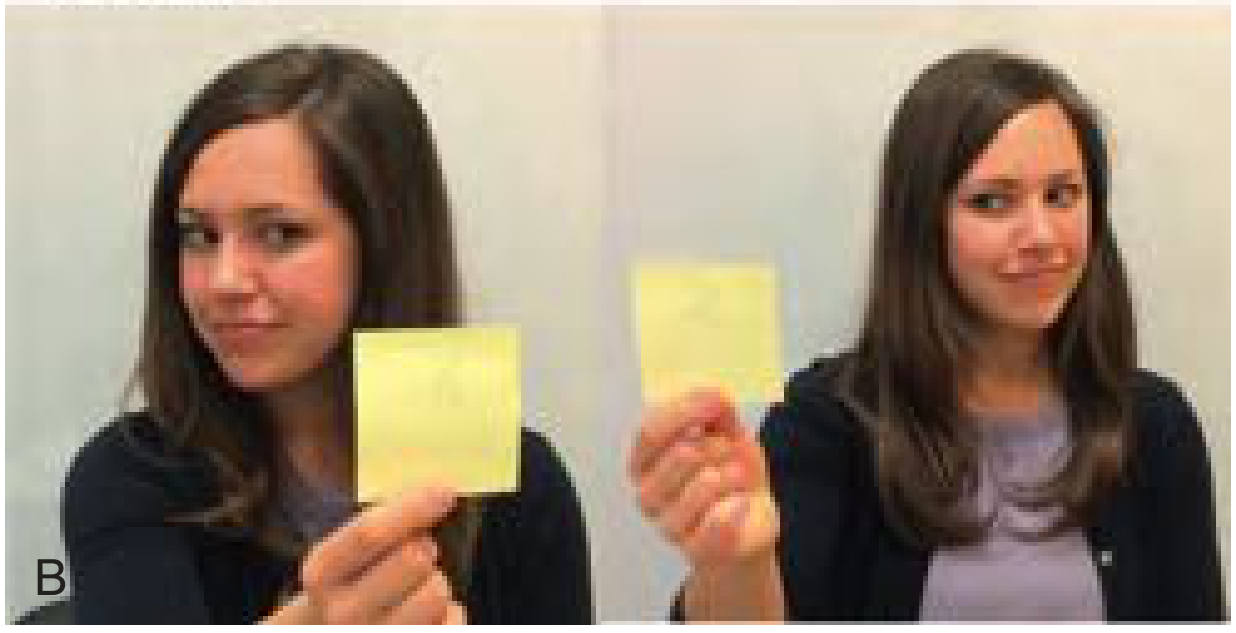
X1 (times 1) adaptation exercise
- Patient holds a target (classically a business card with a letter or word) at arm's length, stationary.
- While keeping the letter in clear focus, the patient oscillates the head horizontally (and vertically if appropriate) in a small arc, as fast as possible without letting the target blur.
- If the image blurs, the patient must slow the head movement - the target must stay clear at all times.
X2 (times 2) viewing exercise (progression)
- Same visual task, but now both the head and the target card move - in opposite directions (e.g., head moves right while the card moves left).
- This doubles the required eye movement velocity relative to head movement, making the VOR work harder.
Both paradigms are made progressively more difficult as the patient improves, by:
- Adding a distracting background (checkerboard pattern, venetian blinds)
- Varying target distance
- Increasing head movement speed
- Performing the exercise while standing or walking
(Cummings Otolaryngology Head and Neck Surgery, p. 3270-3271; Shambaugh Surgery of the Ear, p. 336)
Sensory substitution exercises (for poor/no vestibular function)
For patients with little to no residual vestibular function (e.g., bilateral vestibular hyporeactivity), gaze-shifting/remembered-target exercises substitute central strategies for the absent VOR:
- Patient fixates on a stationary target (marked "X"), then turns the head toward it while trying to keep the eyes on the target.
- Alternatively, the patient looks away from the target, keeping the head still, then tries to relocate the remembered target position with the eyes before the head catches up - training saccadic substitution rather than true VOR adaptation. (Cummings Otolaryngology, p. 3270, Fig. 170.2)
Why retinal slip matters
Vestibular adaptation exercises intentionally expose the patient to controlled "retinal slip" - the visual target's image moving off the fovea during head motion. Some retinal slip is the necessary error signal that drives the brain to increase VOR gain, but too much (from moving the head too fast) causes blurred vision and is counterproductive. The patient must self-titrate head velocity to keep the target just barely in focus. (Shambaugh Surgery of the Ear, p. 336)
Clinical context and expected course
- Used for acute uncompensated unilateral lesions (e.g., post-op vestibular neurectomy) as first-line, alongside gait/balance exercises.
- Used for stable uncompensated unilateral and bilateral vestibular hypofunction, combined with habituation and sensory substitution strategies.
- For unilateral vestibular hypofunction, average recovery time with consistent gaze/gait stability exercises is about 6-8 weeks; compliance is reinforced through regular encouragement and outcome feedback.
- Evidence shows gaze stability exercises increase VOR gain (more so with active, patient-initiated head thrusts than passive examiner-initiated thrusts) and increase compensatory saccade frequency - meaning improvement can come from true VOR adaptation, saccadic substitution, or both.
(Cummings Otolaryngology Head and Neck Surgery, p. 3269-3271)
Current evidence check
A recent systematic review (Yap et al., 2024, Physical Therapy, PMID 38982735) supports vestibular rehabilitation - including gaze stability exercises - for improving symptomatic and functional outcomes in vestibular schwannoma patients, consistent with the textbook guidance above. No contradicting recent evidence was found for the standard X1/X2 protocol described.
Search for recent clinical guidelines on vestibular rehabilitation protocols
Searching PubMed
"vestibular rehabilitation"[MeSH Terms] AND "practice guideline"[pt]
Searching PubMed
"vestibular rehabilitation" AND "clinical practice guideline"
Searching the Web
vestibular rehabilitation clinical practice guideline update APTA
Reading Article
PMID: 34864777
Reading Article
PMID: 38697883
Recent Clinical Practice Guidelines on Vestibular Rehabilitation
Primary guideline: APTA Academy of Neurologic Physical Therapy (2022 update)
The most authoritative and current guideline is the updated Clinical Practice Guideline (CPG) from the Academy of Neurologic Physical Therapy, American Physical Therapy Association (Hall CD, Herdman SJ, Whitney SL, et al., Journal of Neurologic Physical Therapy, 2021/2022), a revision of the 2016 CPG based on a systematic review of literature from 2015 through June 2020 (67 articles appraised). Key recommendations:
Who should get vestibular rehab (strong evidence):
- Offer vestibular rehabilitation to adults with unilateral or bilateral peripheral vestibular hypofunction who have impairments, activity limitations, or participation restrictions related to the deficit.
What NOT to do (strong evidence, harm > benefit):
- Do not use voluntary saccadic or smooth-pursuit eye movements in isolation (without head movement) to promote gaze stability - i.e., eye-only exercises without head motion are ineffective/counterproductive for gaze stabilization.
Specific technique selection (moderate-to-strong evidence):
- Targeted techniques such as virtual reality or augmented sensory feedback may be offered for specific activity limitations.
Supervision (strong evidence + patient preference):
- Supervised vestibular rehabilitation should be offered rather than unsupervised home programs alone.
Dosing (moderate-to-weak evidence) - this is the most clinically actionable update:
- Acute/subacute unilateral vestibular hypofunction: home gaze-stabilization exercises at least 3x/day, minimum 12 minutes/day total.
- Chronic unilateral vestibular hypofunction: gaze-stabilization exercises 3-5x/day, minimum 20 minutes/day, for 4-6 weeks.
- Bilateral vestibular hypofunction: gaze-stabilization exercises 3-5x/day, 20-40 minutes/day, for approximately 5-7 weeks.
- Balance exercises: minimum 20 minutes/day for at least 4-6 weeks (chronic unilateral) or 6-9 weeks (bilateral, expert opinion).
Stopping criteria (moderate evidence):
- Discontinue therapy upon achievement of primary goals, symptom resolution, normalized balance/vestibular function, or a plateau in progress.
Modifying factors to assess (moderate-to-strong evidence):
- Time since symptom onset, comorbidities, cognitive function, and medication use should be evaluated as they can affect rehabilitation outcomes.
Scope/limitation: This guideline applies specifically to peripheral vestibular hypofunction confirmed by objective vestibular function testing - it does not apply to central vestibular disorders or to patients with dizziness/imbalance symptoms without a confirmed hypofunction diagnosis.
Pediatric-specific guideline: French Society of Otorhinolaryngology (SFORL, 2024)
A newer 2024 guideline (Reynard P, et al., Archives de Pédiatrie) addresses vestibular rehabilitation specifically in children, based on a systematic review (1990-2021, 10 studies included), graded A/B/C/expert opinion:
- Vestibular assessment (VOR, otolithic function, postural control) is recommended before starting rehab.
- Early physiotherapy is recommended for pediatric vestibular dysfunction, targeting anticipatory and reactive postural adjustments.
- Rehab is recommended for children with functional disorders/vertigo symptoms, including post-head-trauma cases.
- Children with bilateral vestibular impairment should specifically receive gaze stabilization exercises for both adaptation and substitution (mirroring the adult approach).
- Optokinetic stimulation and virtual reality are not recommended in children/young adolescents (differs from the adult CPG, which allows VR as an option) - this is likely due to insufficient pediatric-specific evidence rather than demonstrated harm.
Supporting recent evidence
- A 2023 systematic review/meta-analysis (Kamo T, et al., Otology & Neurotology, PMID 37641214) found benefit for early initiation of vestibular rehabilitation in acute vestibular disorders, supporting the CPG's implicit emphasis on prompt referral.
- A 2024 Chinese expert consensus statement and a 2024 Russian interdisciplinary consensus also echo the APTA CPG's core structure (gaze stabilization, habituation, balance training), though these are lower-tier consensus documents rather than systematic guideline updates.
Bottom line
The APTA 2022 CPG (PMID 34864777) remains the standard reference for adult peripheral vestibular hypofunction and is what most current protocols (including the Cummings/Shambaugh textbook material discussed earlier) are built on. Its main practical additions over older material are the explicit minute/day and week duration dosing targets and the strong recommendation against isolated eye-only exercises. For pediatric patients, the 2024 SFORL guideline is the most relevant recent addition.
You can view the full APTA guideline text here:
https://pmc.ncbi.nlm.nih.gov/articles/PMC8920012/
This is a shared conversation. Sign in to Orris to start your own chat.