
Treatment of stye in adult and kids
Reading File
A stye (hordeolum) is a common eyelid infection. First-line treatment for both adults and children is warm compresses applied for 10-15 minutes, 3-4 times daily, which helps the stye drain naturally. Topical antibiotics (erythromycin or bacitracin ointment) are used if there are signs of spreading infection. Systemic antibiotics and incision/drainage are reserved for persistent or complicated cases.
Searching sources...
Finding Sources
Searching PubMed
hordeolum stye treatment
Searching the Web
stye hordeolum treatment adults children 2024 guidelines
Good, I have several textbook sources. Let me read the most relevant ones in parallel.
Reading File
Reading File
Reading File
Reading File
Let me get the Wills Eye Manual treatment section and Rosen's treatment section for completeness.
Reading File
Reading File
I now have comprehensive information from multiple authoritative textbooks. Let me compose the full answer.
Loading Image
Here is a full clinical summary of stye (hordeolum) treatment for both adults and children, drawn from multiple authoritative sources.
Stye (Hordeolum) - Treatment in Adults and Children
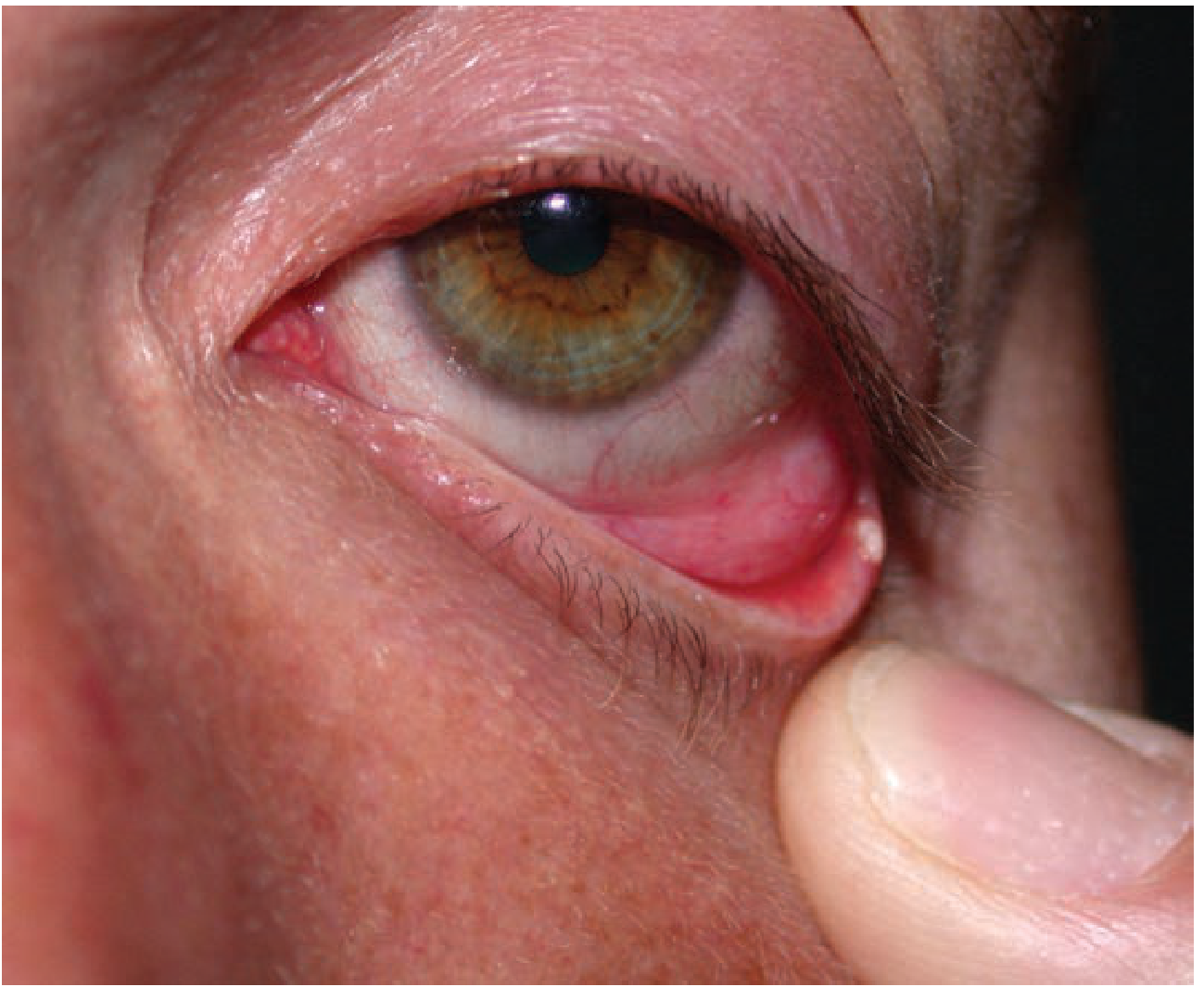
What is a Stye?
A stye (hordeolum) is an acute purulent bacterial infection of the eyelid glands, almost always caused by Staphylococcus aureus. There are two types:
- External hordeolum - abscess of a gland of Zeis (sebaceous) or Moll (sweat) gland at the eyelash margin; presents as a pustule at the lid margin
- Internal hordeolum - abscess of the meibomian gland; pustule points on the inner (conjunctival) surface of the eyelid
Symptoms: pain, swelling, redness, tenderness, and a visible or palpable nodule.
Treatment - Core Principles (Same in Adults and Children)
The treatment approach is essentially the same for both age groups. Most cases are self-limited and resolve with conservative care.
Step 1 - Warm Compresses (First-line for Everyone)
This is the cornerstone of treatment and is appropriate for all ages.
- Apply a warm, moist compress to the closed eyelid
- Duration: 10-20 minutes per session
- Frequency: 3-5 times per day
- One practical method: soak a clean washcloth in very hot water and replace as it cools, keeping it warm over 15-20 minutes
- Heat promotes drainage and spontaneous resolution
Most styes resolve within 1 week with warm compresses alone.
- Roberts and Hedges' Clinical Procedures in Emergency Medicine, p. 1511
- Rosen's Emergency Medicine, p. 893
Step 2 - Topical Antibiotics (Moderate/Persistent Cases)
Topical antibiotics are added when there is no improvement with compresses, or if there are early signs of spreading infection.
| Agent | Dosing |
|---|---|
| Erythromycin ophthalmic ointment | BID for 7-10 days (preferred, also suitable for children) |
| Bacitracin ointment | BID for 1-2 weeks |
| Tobramycin ointment | BID for 1-2 weeks |
| Topical antibiotic drops | Every 2 hours (acute phase) |
- Tintinalli's Emergency Medicine, p. 1581
- Wills Eye Manual, p. 382
Step 3 - Systemic (Oral) Antibiotics (Cellulitis or Severe Cases)
Oral antibiotics are reserved for cases with significant surrounding lid cellulitis or failure of topical therapy. The same agents are used in adults and children (with weight-adjusted dosing for kids).
-
Dicloxacillin (antistaphylococcal penicillin)
-
Cephalosporins (e.g., cephalexin)
-
Doxycycline 20-50 mg daily for adults with recurrent/multiple hordeola or associated ocular rosacea (note: doxycycline is generally avoided in children under 8 years)
-
Roberts and Hedges', p. 1511
Step 4 - Incision and Drainage (I&D) (Unresponsive Cases)
If a visible pustule is present at the lid margin, it can be nicked with a 25-gauge needle to express the pus - this produces a faster cure. For formal I&D, referral to an ophthalmologist is preferred.
-
Indications: Failure to respond to conservative therapy, large abscess
-
Internal stye: Evert the eyelid and nick the pustule on the inner conjunctival surface
-
External stye: Nick at the lid margin
-
More formal I&D may be performed by an ophthalmologist in resistant cases
-
Roberts and Hedges', p. 1511
-
Wills Eye Manual, p. 383
Special Notes for Children
- The treatment is the same as in adults - warm compresses are the primary approach
- Children's Hospital guidelines consistently recommend warm compresses + hygiene (daily face washing, no eye makeup during infection)
- Doxycycline should be avoided in children under 8 years due to tooth discoloration risk; use erythromycin or amoxicillin-clavulanate instead
- Children may be less cooperative with compresses - parents can use a warm, damp face cloth while the child watches TV to ensure adequate duration
- In children with pre-septal cellulitis complicating a stye, distinguishing pre-septal from post-septal (orbital) cellulitis is especially important, as the orbital septum is incompletely formed, making spread more likely and differentiation harder clinically - CT imaging and pediatric/ophthalmology consultation are indicated in uncertain cases
- Rosen's Emergency Medicine, p. 894
What NOT to Do
- Do not squeeze or pop a stye - this can spread infection
- Do not wear eye makeup until fully healed
- Do not wear contact lenses during an active infection
- Do not use topical corticosteroids alone for a hordeolum (reserved for chalazion, not active infection)
When to Refer to Ophthalmology
- No improvement after 3-4 weeks of medical therapy
- Worsening despite antibiotics (concern for preseptal cellulitis)
- Need for formal I&D
- Recurrent chalazia/hordeola in older patients (rule out sebaceous cell carcinoma)
- Proptosis, pain on eye movement, or restricted eye movement (suggests post-septal/orbital cellulitis - urgent referral)
Chalazion vs. Hordeolum - Quick Distinction
| Feature | Hordeolum (Stye) | Chalazion |
|---|---|---|
| Type | Acute bacterial infection | Chronic sterile granulomatous inflammation |
| Pain | Painful, tender | Usually painless |
| Location | At eyelid/lash margin | Within eyelid (not margin) |
| Treatment | Warm compresses + topical antibiotics | Warm compresses; intralesional steroid or I&C if persistent |
A chalazion may evolve from a hordeolum. Acute differentiation can be impossible, but the treatment starts the same way.
- Wills Eye Manual, p. 381; Tintinalli's Emergency Medicine, p. 1581
This is a shared conversation. Sign in to Orris to start your own chat.