
Calcium oxalate increase during lab reports
calcium oxalate crystals increased urine lab report causes significance
Calcium Oxalate Crystals - Increased on Urine Lab Report
What Are They?
- Calcium oxalate dihydrate (weddellite): Bipyramidal, envelope-shaped, colorless structures of variable size (Panel A in microscopy images above)
- Calcium oxalate monohydrate (whewellite): Ovoid, dumbbell-shaped, or biconcave disk forms (Panel C in the clinical pathology image)
Microscopic Appearance
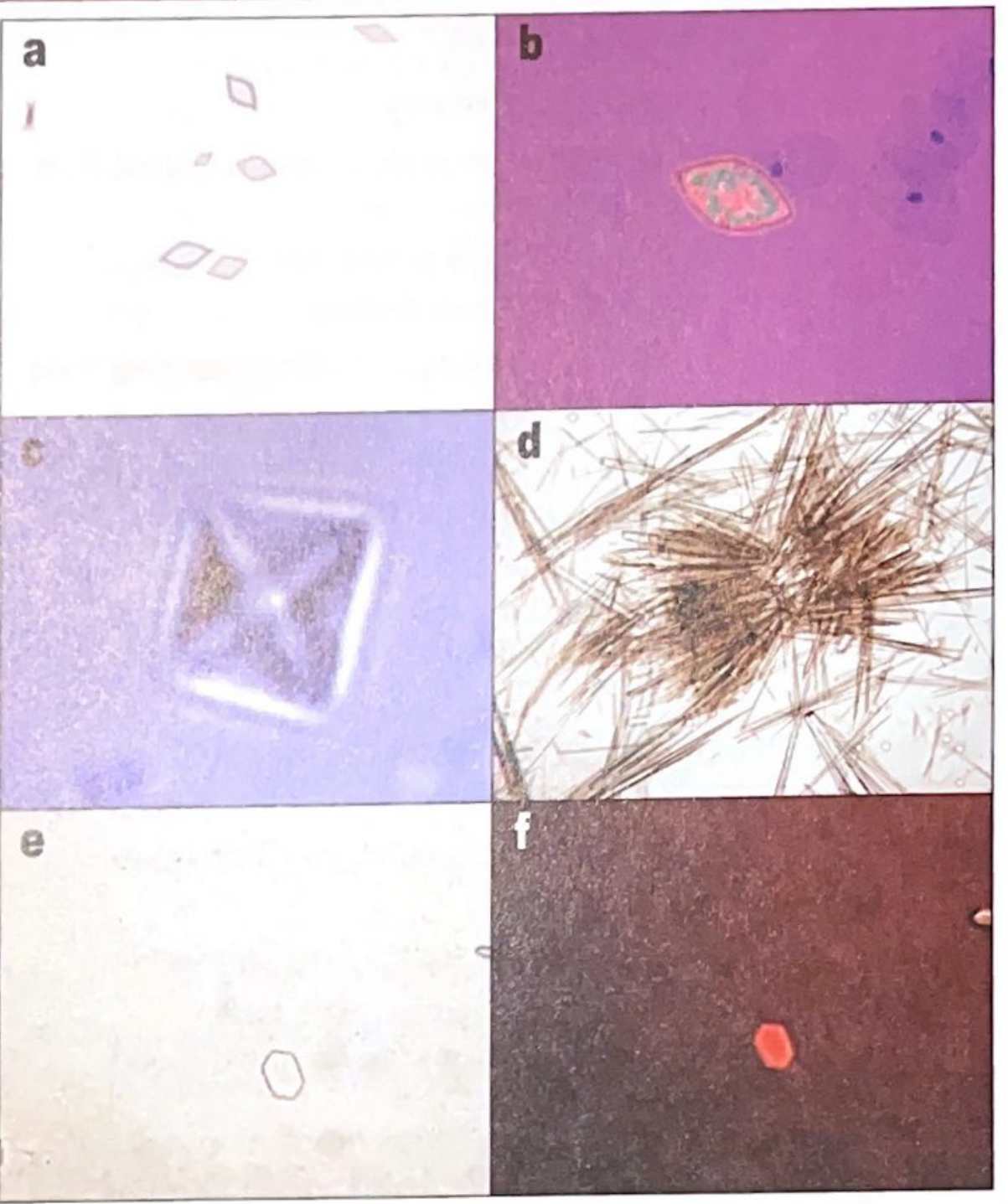
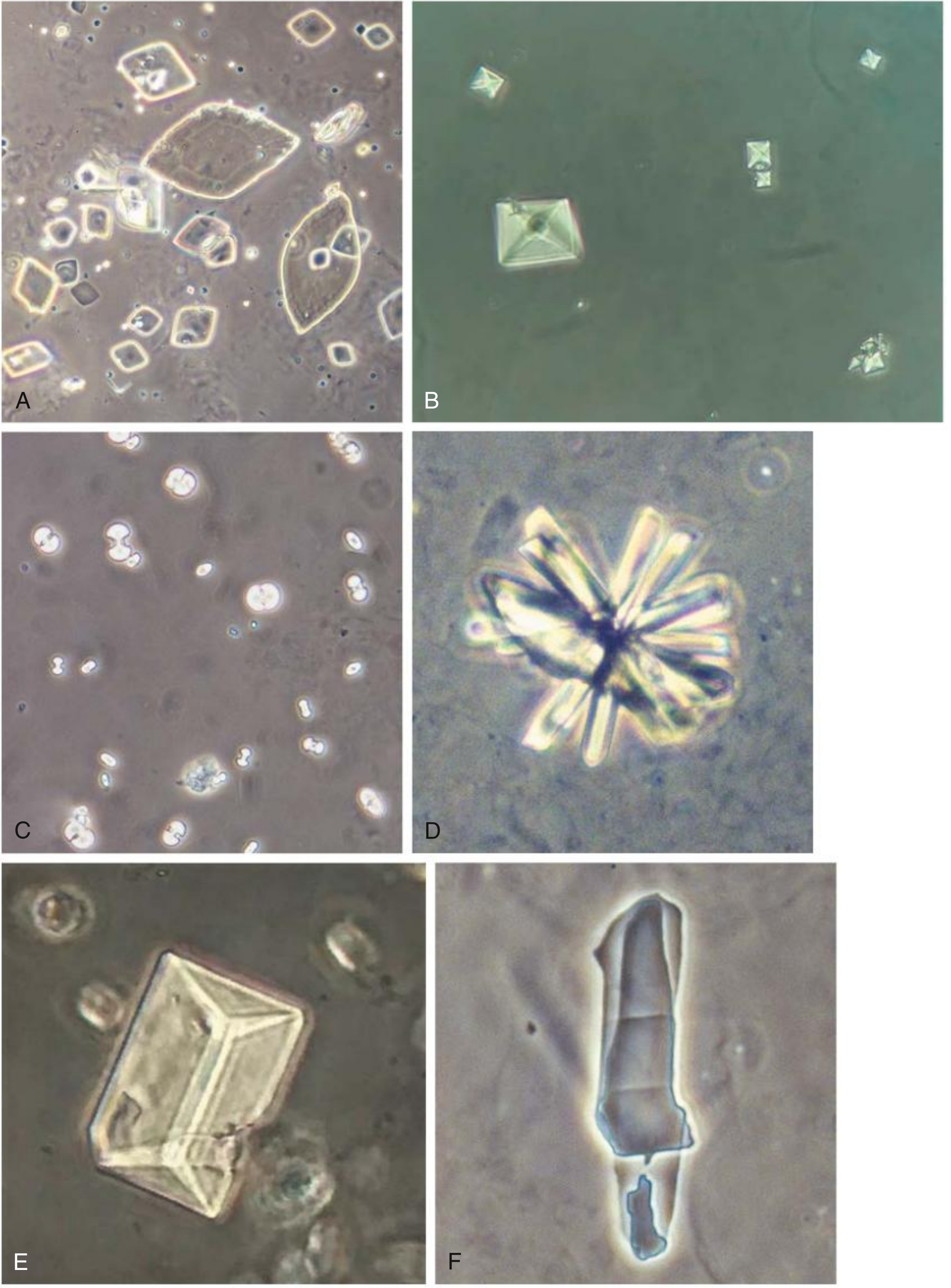
Common Causes of Increased Calcium Oxalate Crystals
1. Dietary - High Oxalate Intake
- Spinach, rhubarb, beets, nuts (especially almonds)
- Asparagus, cauliflower, peas, mushrooms
- Chocolate, tea, coffee in excess
- Vitamin C in high doses (ascorbic acid metabolizes to oxalate)
2. Concentrated / Dehydrated Urine
3. Small Bowel / Intestinal Disease (Enteric Hyperoxaluria)
- Crohn's disease, short bowel syndrome
- Chronic pancreatitis, celiac disease
- Bariatric surgery (especially Roux-en-Y gastric bypass - urinary oxalate levels rise significantly post-surgery and increase calcium oxalate supersaturation)
4. Primary Hyperoxaluria
5. Ethylene Glycol Poisoning
6. Renal Failure / Reduced Renal Clearance
7. Diabetes Mellitus
8. Acetazolamide Therapy
9. Hypercalciuria
Clinical Significance
| Finding | Significance |
|---|---|
| Few crystals in a concentrated urine sample | Often incidental / dietary |
| Persistent high crystal load | Risk factor for kidney stone formation |
| Large monohydrate crystals | More strongly associated with active stone disease |
| Crystals + hematuria | Suggests active stone passage |
| Crystals + acute kidney injury + history of toxic ingestion | Suspect ethylene glycol poisoning |
Recommended Follow-up Tests
- 24-hour urine collection: oxalate, calcium, citrate, creatinine, urine volume
- Serum: electrolytes, creatinine, calcium, phosphorus, uric acid
- Serum PTH (if calcium is high or high-normal)
- Serum potassium/bicarbonate (low values suggest distal renal tubular acidosis → hypocitraturia)
- Stone analysis if a stone is passed
Management / Prevention
- Increase fluid intake - target urine output >2 L/day (most important step)
- Limit high-oxalate foods - spinach, rhubarb, nuts, chocolate
- Adequate dietary calcium (do NOT restrict calcium - low calcium diets paradoxically increase oxalate absorption because less calcium is available in the gut to bind oxalate)
- Reduce dietary sodium and animal protein (both increase urinary calcium)
- Treat underlying cause - manage Crohn's, hyperparathyroidism, etc.
- Potassium citrate - in patients with hypocitraturia, citrate inhibits calcium oxalate crystal growth

Check this patient is suffering from early morning back side pain before pee after pee its disappeared
early morning back pain before urination relieved after voiding kidney stone symptoms calcium oxalate
Clinical Analysis - Urine Examination Report
Report Summary (What the Lab Shows)
| Parameter | Result | Significance |
|---|---|---|
| Colour | Pale yellow | Normal |
| Appearance | Clear | Normal |
| Reaction | Acidic | Favors calcium oxalate crystal formation |
| Albumin / Sugar | Nil | No kidney damage marker, no diabetes |
| Red Blood Cells | 2-4 /hpf | Microscopic hematuria - abnormal (normal: 0-2) |
| Pus Cells | 1-2 /hpf | Borderline - mild inflammation |
| Epithelial Cells | 2-4 /hpf | Mild - can be from urethral lining |
| Casts | Nil | No glomerular/tubular damage |
| Crystals | Cal-Oxal: + | Calcium oxalate crystals PRESENT |
Diagnosis - What Is Happening?
- Calcium oxalate crystals in urine
- Microscopic hematuria (RBC 2-4/hpf) - crystal and stone passage irritates the urinary tract lining, causing bleeding
- Acidic urine - the exact pH environment that promotes calcium oxalate crystallization (pH 5.4-6.7)
- Early morning back pain that disappears after urination
Why the Pain Is Worse in the Morning and Relieved After Urination
- During sleep, you are not drinking water and not urinating for 6-8 hours
- Urine becomes maximally concentrated overnight
- This concentrated, acidic urine promotes crystal aggregation and stone formation in the ureter/renal pelvis
- The collected urine causes back pressure (hydronephrosis effect) → flank/back pain
- When you urinate in the morning, the pressure is relieved and the pain disappears
- This is essentially a pattern of intermittent ureteral obstruction - the stone is small enough that some urine passes, but it builds pressure when urine volume is high
What This Patient Should Do
Immediate Steps
- Drink MORE water - minimum 2.5 to 3 liters per day. This is the single most important step. More urine flow flushes crystals before they aggregate into stones.
- See a urologist for ultrasound of kidneys/ureters to check for an actual stone and hydronephrosis
- Urine culture - the mild pus cells (1-2/hpf) should be checked to rule out a coexisting urinary infection
Dietary Changes
- Reduce: Spinach, beets, nuts (almonds), rhubarb, chocolate, strong tea (all high in oxalate)
- Do NOT restrict calcium - paradoxically, low calcium diet increases oxalate absorption in the gut
- Reduce salt and animal protein - both increase urinary calcium
- Avoid Vitamin C supplements in high doses (converts to oxalate)
Further Tests the Doctor May Order
- Ultrasound KUB (kidneys, ureters, bladder) - to visualize any stone
- 24-hour urine collection for oxalate, calcium, citrate levels
- Serum calcium, uric acid, creatinine
- If stone is passed, stone analysis
Medications (Doctor to Decide)
- Potassium citrate - increases urinary citrate which inhibits calcium oxalate crystal growth
- Pain relief - NSAIDs (like diclofenac) for episodes of colic
- Alpha-blockers (tamsulosin) - help relax the ureter to facilitate stone passage
Key Takeaway
This patient's early morning back pain + calcium oxalate crystals + RBCs in urine = calcium oxalate nephrolithiasis/crystalluria causing intermittent partial ureteral obstruction. The pain resolves after voiding because the back-pressure is released. This is treatable and largely preventable with hydration and dietary changes. A urologist visit and kidney ultrasound are strongly recommended.
Generate a patient-friendly diet sheet avoiding high-oxalate foods
ls /home/daytona/workspace/ 2>/dev/null || echo "workspace empty or missing"
mkdir -p /home/daytona/workspace/diet-sheet
~/diet-sheet/diet_sheet.js
const pptxgen = require("pptxgenjs");
const pres = new pptxgen();
pres.layout = 'LAYOUT_WIDE'; // 13.3" x 7.5"
// Color palette
const C = {
darkGreen: "1A5276",
midGreen: "1E8449",
lightGreen: "D5F5E3",
orange: "E67E22",
lightOrange: "FDEBD0",
red: "C0392B",
lightRed: "FADBD8",
white: "FFFFFF",
offWhite: "F8F9FA",
textDark: "1C2833",
textMid: "2C3E50",
yellow: "F9E79F",
yellowBg: "FEFCBF",
teal: "148F77",
lightTeal: "D1F2EB",
};
// ─── SLIDE 1: COVER ───────────────────────────────────────────────────────────
{
const s = pres.addSlide();
// Full dark background
s.addShape(pres.ShapeType.rect, { x: 0, y: 0, w: 13.3, h: 7.5, fill: { color: C.darkGreen } });
// Decorative accent bar
s.addShape(pres.ShapeType.rect, { x: 0, y: 0, w: 13.3, h: 0.12, fill: { color: C.midGreen } });
s.addShape(pres.ShapeType.rect, { x: 0, y: 7.38, w: 13.3, h: 0.12, fill: { color: C.midGreen } });
// Decorative side panel
s.addShape(pres.ShapeType.rect, { x: 9.5, y: 0, w: 3.8, h: 7.5, fill: { color: "154360", transparency: 0 } });
// Big icon placeholder with fruit/veg emoji text
s.addText("🥗", { x: 9.8, y: 1.5, w: 3.2, h: 3, fontSize: 110, align: "center" });
// Kidney icon
s.addText("🫘", { x: 10.2, y: 4.8, w: 2.4, h: 1.5, fontSize: 60, align: "center" });
// Headline
s.addText("LOW-OXALATE DIET PLAN", {
x: 0.5, y: 1.2, w: 8.7, h: 0.9,
fontSize: 38, bold: true, color: C.white,
fontFace: "Calibri", align: "left", margin: 0,
charSpacing: 3
});
// Subtitle
s.addText("For Patients with Calcium Oxalate Kidney Crystals & Stones", {
x: 0.5, y: 2.2, w: 8.7, h: 0.55,
fontSize: 18, bold: false, color: "A9DFBF",
fontFace: "Calibri", align: "left", margin: 0
});
// Divider line
s.addShape(pres.ShapeType.rect, { x: 0.5, y: 2.9, w: 5, h: 0.05, fill: { color: C.orange } });
// Body intro
s.addText(
"This guide shows you exactly what to eat, what to avoid, and how to stay hydrated to prevent stone formation and reduce pain.",
{
x: 0.5, y: 3.1, w: 8.5, h: 1.0,
fontSize: 15, color: "D6EAF8",
fontFace: "Calibri", align: "left", margin: 0
}
);
// Tag line chips
const tags = ["💧 Drink More Water", "🥦 Eat Smart", "🚫 Limit Oxalate", "💊 Follow Doctor's Advice"];
tags.forEach((t, i) => {
s.addShape(pres.ShapeType.roundRect, {
x: 0.5 + i * 2.15, y: 4.3, w: 2.0, h: 0.5,
fill: { color: C.teal }, line: { color: C.lightTeal, width: 1 },
rectRadius: 0.15
});
s.addText(t, {
x: 0.5 + i * 2.15, y: 4.3, w: 2.0, h: 0.5,
fontSize: 11, bold: true, color: C.white,
align: "center", valign: "middle", margin: 0
});
});
// Footer
s.addText("For educational purposes. Always follow your doctor's and dietitian's specific advice.", {
x: 0.5, y: 6.9, w: 9, h: 0.4,
fontSize: 10, color: "7DCEA0", italic: true, align: "left", margin: 0
});
}
// ─── SLIDE 2: FOODS TO AVOID (HIGH OXALATE) ──────────────────────────────────
{
const s = pres.addSlide();
s.addShape(pres.ShapeType.rect, { x: 0, y: 0, w: 13.3, h: 7.5, fill: { color: C.offWhite } });
// Header bar
s.addShape(pres.ShapeType.rect, { x: 0, y: 0, w: 13.3, h: 1.0, fill: { color: C.red } });
s.addText("🚫 FOODS TO AVOID — High Oxalate (Increases Stone Risk)", {
x: 0.3, y: 0, w: 12.7, h: 1.0,
fontSize: 24, bold: true, color: C.white,
align: "left", valign: "middle", margin: 0
});
// Categories
const avoidCategories = [
{
icon: "🥬", title: "Vegetables",
items: ["Spinach", "Beets & Beetroot", "Swiss chard", "Okra (Bhindi)", "Celery", "Leeks"],
x: 0.3, y: 1.2
},
{
icon: "🍫", title: "Sweets & Drinks",
items: ["Chocolate & Cocoa", "Strong tea (black/green)", "Cold drinks / Soda", "Ovaltine / Bournvita", "Tomato juice", "Carrot juice (excess)"],
x: 3.5, y: 1.2
},
{
icon: "🥜", title: "Nuts & Grains",
items: ["Almonds", "Cashews", "Peanuts", "Wheat bran", "Wheat germ", "Soy products"],
x: 6.7, y: 1.2
},
{
icon: "🍓", title: "Fruits",
items: ["Starfruit (very high!)", "Rhubarb", "Figs", "Kiwi fruit", "Raspberries (limit)", "Dried fruits (excess)"],
x: 9.9, y: 1.2
}
];
avoidCategories.forEach(cat => {
// Card background
s.addShape(pres.ShapeType.roundRect, {
x: cat.x, y: cat.y, w: 3.0, h: 5.7,
fill: { color: C.lightRed }, line: { color: C.red, width: 1.5 },
rectRadius: 0.18
});
// Icon + title
s.addText(cat.icon + " " + cat.title, {
x: cat.x + 0.1, y: cat.y + 0.1, w: 2.8, h: 0.6,
fontSize: 16, bold: true, color: C.red,
align: "center", valign: "middle", margin: 0
});
// Divider
s.addShape(pres.ShapeType.rect, { x: cat.x + 0.2, y: cat.y + 0.72, w: 2.6, h: 0.04, fill: { color: C.red } });
// Items
const itemTexts = cat.items.map(item => ({ text: "✗ " + item, options: { bullet: false, breakLine: true, color: C.textDark } }));
s.addText(itemTexts, {
x: cat.x + 0.15, y: cat.y + 0.85, w: 2.7, h: 4.6,
fontSize: 13, fontFace: "Calibri",
valign: "top", margin: 0, lineSpacingMultiple: 1.4
});
});
// Warning box
s.addShape(pres.ShapeType.roundRect, {
x: 0.3, y: 7.0, w: 12.7, h: 0.38,
fill: { color: "F9EBEA" }, line: { color: C.red, width: 1 }, rectRadius: 0.1
});
s.addText("⚠️ Even moderate amounts of these foods can raise oxalate levels. Don't eat them daily — occasional small portions may be okay with plenty of water.", {
x: 0.4, y: 7.0, w: 12.5, h: 0.38,
fontSize: 11, color: C.red, bold: true, align: "center", valign: "middle", margin: 0
});
}
// ─── SLIDE 3: FOODS TO EAT FREELY (SAFE / LOW OXALATE) ───────────────────────
{
const s = pres.addSlide();
s.addShape(pres.ShapeType.rect, { x: 0, y: 0, w: 13.3, h: 7.5, fill: { color: C.offWhite } });
// Header bar
s.addShape(pres.ShapeType.rect, { x: 0, y: 0, w: 13.3, h: 1.0, fill: { color: C.midGreen } });
s.addText("✅ SAFE FOODS — Low Oxalate (Eat Freely)", {
x: 0.3, y: 0, w: 12.7, h: 1.0,
fontSize: 24, bold: true, color: C.white,
align: "left", valign: "middle", margin: 0
});
const safeCategories = [
{
icon: "🥩", title: "Proteins",
items: ["Chicken", "Fish (all types)", "Eggs", "Lentils (moong dal)", "Kidney beans (rajma) - small portions", "Tofu (small amount)"],
x: 0.3, y: 1.2
},
{
icon: "🥛", title: "Dairy (Important!)",
items: ["Milk (cow/buffalo)", "Yogurt / Curd", "Paneer (cottage cheese)", "Buttermilk (chaas)", "Cheese (in moderation)", "Low-fat dairy preferred"],
x: 3.5, y: 1.2
},
{
icon: "🍚", title: "Grains & Staples",
items: ["White rice", "White bread / Roti", "Pasta / Noodles", "Corn / Maize", "Oats", "Poha (flattened rice)"],
x: 6.7, y: 1.2
},
{
icon: "🍎", title: "Fruits & Vegetables",
items: ["Apple, Banana, Mango", "Papaya, Guava, Melon", "Cauliflower, Cabbage", "Onion, Garlic", "Peas (in moderation)", "Cucumber, Bottle gourd"],
x: 9.9, y: 1.2
}
];
safeCategories.forEach(cat => {
s.addShape(pres.ShapeType.roundRect, {
x: cat.x, y: cat.y, w: 3.0, h: 5.7,
fill: { color: C.lightGreen }, line: { color: C.midGreen, width: 1.5 },
rectRadius: 0.18
});
s.addText(cat.icon + " " + cat.title, {
x: cat.x + 0.1, y: cat.y + 0.1, w: 2.8, h: 0.6,
fontSize: 16, bold: true, color: C.midGreen,
align: "center", valign: "middle", margin: 0
});
s.addShape(pres.ShapeType.rect, { x: cat.x + 0.2, y: cat.y + 0.72, w: 2.6, h: 0.04, fill: { color: C.midGreen } });
const itemTexts = cat.items.map(item => ({ text: "✓ " + item, options: { breakLine: true, color: C.textDark } }));
s.addText(itemTexts, {
x: cat.x + 0.15, y: cat.y + 0.85, w: 2.7, h: 4.6,
fontSize: 13, fontFace: "Calibri",
valign: "top", margin: 0, lineSpacingMultiple: 1.4
});
});
// Key tip: dairy with meals
s.addShape(pres.ShapeType.roundRect, {
x: 0.3, y: 7.0, w: 12.7, h: 0.38,
fill: { color: C.lightTeal }, line: { color: C.teal, width: 1 }, rectRadius: 0.1
});
s.addText("💡 TIP: Eat dairy (milk, curd) WITH your meals — calcium in dairy binds oxalate in the gut and prevents it from being absorbed into the blood.", {
x: 0.4, y: 7.0, w: 12.5, h: 0.38,
fontSize: 11, color: C.darkGreen, bold: true, align: "center", valign: "middle", margin: 0
});
}
// ─── SLIDE 4: SAMPLE DAY MEAL PLAN ────────────────────────────────────────────
{
const s = pres.addSlide();
s.addShape(pres.ShapeType.rect, { x: 0, y: 0, w: 13.3, h: 7.5, fill: { color: C.offWhite } });
// Header
s.addShape(pres.ShapeType.rect, { x: 0, y: 0, w: 13.3, h: 1.0, fill: { color: C.teal } });
s.addText("🍽️ SAMPLE ONE-DAY MEAL PLAN", {
x: 0.3, y: 0, w: 12.7, h: 1.0,
fontSize: 24, bold: true, color: C.white,
align: "left", valign: "middle", margin: 0
});
const meals = [
{
time: "Early Morning\n(6–7 AM)",
icon: "🌅",
meal: "2 glasses of warm water\n(Before anything else)",
color: C.lightTeal, border: C.teal
},
{
time: "Breakfast\n(8–9 AM)",
icon: "🥛",
meal: "Poha / Upma / Oats porridge\n+ 1 glass of milk\n+ 1 banana or apple",
color: C.lightGreen, border: C.midGreen
},
{
time: "Mid-Morning\n(11 AM)",
icon: "💧",
meal: "1–2 glasses of water\n+ Coconut water (optional)\n(No soda / cold drinks)",
color: "EBF5FB", border: "2E86C1"
},
{
time: "Lunch\n(1–2 PM)",
icon: "🍚",
meal: "Rice + Dal (moong/masoor)\n+ Sabzi (cauliflower/cabbage/peas)\n+ Curd (1 bowl)\n+ Salad: cucumber, onion",
color: C.lightGreen, border: C.midGreen
},
{
time: "Evening Snack\n(4–5 PM)",
icon: "🍎",
meal: "Seasonal fruit (apple/papaya/guava)\n+ 1 glass of buttermilk\n(Avoid nuts as snack)",
color: C.lightOrange, border: C.orange
},
{
time: "Dinner\n(7–8 PM)",
icon: "🍗",
meal: "2 Rotis + Chicken / Fish curry\n+ Bottle gourd / Lauki sabzi\n+ Small bowl of curd",
color: C.lightGreen, border: C.midGreen
},
{
time: "Bedtime\n(9–10 PM)",
icon: "🌙",
meal: "1 glass of warm milk\nor 1 glass of water\n(Helps dilute overnight urine)",
color: "F4ECF7", border: "7D3C98"
}
];
const cols = [0.2, 1.95, 3.7, 5.45, 7.2, 8.95, 10.7];
meals.forEach((m, i) => {
const x = cols[i];
const w = 1.65;
// Card
s.addShape(pres.ShapeType.roundRect, {
x, y: 1.1, w, h: 6.1,
fill: { color: m.color }, line: { color: m.border, width: 1.5 },
rectRadius: 0.15
});
// Time header
s.addShape(pres.ShapeType.roundRect, {
x: x + 0.05, y: 1.15, w: w - 0.1, h: 0.9,
fill: { color: m.border }, rectRadius: 0.12
});
s.addText(m.time, {
x: x + 0.05, y: 1.15, w: w - 0.1, h: 0.9,
fontSize: 10, bold: true, color: C.white,
align: "center", valign: "middle", margin: 0
});
// Icon
s.addText(m.icon, {
x: x + 0.1, y: 2.1, w: w - 0.2, h: 0.7,
fontSize: 30, align: "center", margin: 0
});
// Meal text
s.addText(m.meal, {
x: x + 0.1, y: 2.85, w: w - 0.2, h: 4.15,
fontSize: 10.5, color: C.textDark, fontFace: "Calibri",
align: "center", valign: "top", margin: 0, lineSpacingMultiple: 1.35
});
});
// Arrow connectors (decorative dots between meals)
for (let i = 0; i < 6; i++) {
s.addText("→", {
x: cols[i] + 1.6, y: 4.05, w: 0.35, h: 0.35,
fontSize: 14, bold: true, color: C.teal, align: "center", margin: 0
});
}
}
// ─── SLIDE 5: HYDRATION & GOLDEN RULES ────────────────────────────────────────
{
const s = pres.addSlide();
s.addShape(pres.ShapeType.rect, { x: 0, y: 0, w: 13.3, h: 7.5, fill: { color: "EAF2FF" } });
// Header
s.addShape(pres.ShapeType.rect, { x: 0, y: 0, w: 13.3, h: 1.0, fill: { color: "2E86C1" } });
s.addText("💧 HYDRATION GUIDE + GOLDEN RULES TO PREVENT STONES", {
x: 0.3, y: 0, w: 12.7, h: 1.0,
fontSize: 22, bold: true, color: C.white,
align: "left", valign: "middle", margin: 0
});
// Left: Hydration column
s.addShape(pres.ShapeType.roundRect, {
x: 0.3, y: 1.15, w: 5.8, h: 6.0,
fill: { color: "D6EAF8" }, line: { color: "2E86C1", width: 2 }, rectRadius: 0.2
});
s.addText("💧 DAILY WATER TARGET", {
x: 0.4, y: 1.2, w: 5.6, h: 0.55,
fontSize: 17, bold: true, color: "1A5276",
align: "center", valign: "middle", margin: 0
});
// Water glass visual
const glasses = ["🥤","🥤","🥤","🥤","🥤","🥤","🥤","🥤"];
s.addText(glasses.join(" "), {
x: 0.5, y: 1.85, w: 5.4, h: 0.8,
fontSize: 28, align: "center", margin: 0
});
s.addText("8 glasses = ~2.5 to 3 Litres per day", {
x: 0.5, y: 2.65, w: 5.4, h: 0.45,
fontSize: 16, bold: true, color: "1A5276", align: "center", margin: 0
});
s.addShape(pres.ShapeType.rect, { x: 0.6, y: 3.15, w: 5.0, h: 0.04, fill: { color: "2E86C1" } });
const hydrationTips = [
"🌅 2 glasses immediately on waking up",
"🍽️ 1 glass before each meal",
"🌙 1 glass before bedtime (key!)",
"💛 Urine should be pale yellow",
"🚫 Avoid sugary sodas & cold drinks",
"✅ Lemon water, coconut water are great",
"🌡️ Drink extra in summer / after exercise"
];
s.addText(hydrationTips.map((t, i) => ({ text: t, options: { breakLine: i < hydrationTips.length - 1 } })), {
x: 0.5, y: 3.3, w: 5.4, h: 3.6,
fontSize: 13, color: "1A5276", fontFace: "Calibri",
valign: "top", margin: 0, lineSpacingMultiple: 1.5
});
// Right: Golden rules
s.addShape(pres.ShapeType.roundRect, {
x: 6.5, y: 1.15, w: 6.5, h: 6.0,
fill: { color: C.lightGreen }, line: { color: C.midGreen, width: 2 }, rectRadius: 0.2
});
s.addText("🏆 GOLDEN RULES", {
x: 6.6, y: 1.2, w: 6.3, h: 0.55,
fontSize: 17, bold: true, color: C.darkGreen,
align: "center", valign: "middle", margin: 0
});
s.addShape(pres.ShapeType.rect, { x: 6.7, y: 1.8, w: 6.1, h: 0.04, fill: { color: C.midGreen } });
const rules = [
["1", "Drink 2.5–3 L of water EVERY day", C.teal],
["2", "Do NOT avoid dairy / calcium", C.midGreen],
["3", "Eat dairy WITH high-oxalate foods (binds oxalate in gut)", C.darkGreen],
["4", "Reduce salt intake — high salt = more calcium in urine", C.orange],
["5", "Limit animal protein (red meat, organ meat)", C.orange],
["6", "Avoid Vitamin C supplements > 500 mg/day", C.red],
["7", "Never hold urine for long — urinate regularly", C.teal],
["8", "Follow up with your doctor every 3–6 months", C.darkGreen],
];
rules.forEach((r, i) => {
const yPos = 1.95 + i * 0.58;
s.addShape(pres.ShapeType.ellipse, {
x: 6.7, y: yPos, w: 0.42, h: 0.42,
fill: { color: r[2] }
});
s.addText(r[0], {
x: 6.7, y: yPos, w: 0.42, h: 0.42,
fontSize: 13, bold: true, color: C.white,
align: "center", valign: "middle", margin: 0
});
s.addText(r[1], {
x: 7.2, y: yPos + 0.01, w: 5.6, h: 0.4,
fontSize: 13, color: C.textDark, fontFace: "Calibri",
valign: "middle", margin: 0
});
});
}
// ─── SLIDE 6: CLOSING / REMINDER ──────────────────────────────────────────────
{
const s = pres.addSlide();
s.addShape(pres.ShapeType.rect, { x: 0, y: 0, w: 13.3, h: 7.5, fill: { color: C.darkGreen } });
s.addShape(pres.ShapeType.rect, { x: 0, y: 0, w: 13.3, h: 0.12, fill: { color: C.orange } });
s.addShape(pres.ShapeType.rect, { x: 0, y: 7.38, w: 13.3, h: 0.12, fill: { color: C.orange } });
s.addText("🌿", { x: 0.3, y: 0.5, w: 2, h: 2, fontSize: 90, align: "center" });
s.addText("💊", { x: 10.8, y: 0.5, w: 2, h: 2, fontSize: 90, align: "center" });
s.addText("💧", { x: 0.3, y: 5.0, w: 2, h: 2, fontSize: 90, align: "center" });
s.addText("🫀", { x: 10.8, y: 5.0, w: 2, h: 2, fontSize: 90, align: "center" });
s.addText("Remember", {
x: 2.5, y: 0.8, w: 8.3, h: 0.7,
fontSize: 18, italic: true, color: "A9DFBF",
align: "center", margin: 0
});
s.addText("Your Kidneys Work Hard\nFor You — Help Them!", {
x: 2.5, y: 1.6, w: 8.3, h: 1.5,
fontSize: 36, bold: true, color: C.white,
align: "center", margin: 0, lineSpacingMultiple: 1.2
});
s.addShape(pres.ShapeType.rect, { x: 3.5, y: 3.25, w: 6.3, h: 0.06, fill: { color: C.orange } });
const reminders = [
"✅ Follow this low-oxalate diet every day",
"💧 Never skip your water intake",
"🏥 Get a kidney ultrasound done",
"🧪 Repeat urine test in 4–6 weeks",
"💬 Ask your doctor about potassium citrate"
];
s.addText(
reminders.map((r, i) => ({ text: r, options: { breakLine: i < reminders.length - 1 } })),
{
x: 2.8, y: 3.45, w: 7.7, h: 3.3,
fontSize: 17, color: "D6EAF8", fontFace: "Calibri",
align: "center", valign: "top", margin: 0, lineSpacingMultiple: 1.5
}
);
s.addText("This diet sheet is based on established nephrological guidelines. Consult your doctor or registered dietitian for personalized advice.", {
x: 1.5, y: 6.9, w: 10.3, h: 0.4,
fontSize: 10, italic: true, color: "7DCEA0",
align: "center", margin: 0
});
}
// ─── SAVE ─────────────────────────────────────────────────────────────────────
pres.writeFile({ fileName: "/home/daytona/workspace/diet-sheet/Low_Oxalate_Diet_Sheet.pptx" })
.then(() => console.log("SUCCESS: File saved."))
.catch(e => console.error("ERROR:", e));
cd /home/daytona/workspace/diet-sheet && node diet_sheet.js 2>&1
ls -lh /home/daytona/workspace/diet-sheet/Low_Oxalate_Diet_Sheet.pptx
Low Oxalate Diet Sheet
Presentation · PPTX
What's Inside (6 Slides)
| Slide | Content |
|---|---|
| 1 - Cover | Title slide with patient intro and key action tags |
| 2 - Foods to AVOID | 4 color-coded red cards: Vegetables, Sweets & Drinks, Nuts & Grains, Fruits - with ✗ marks |
| 3 - Safe Foods | 4 green cards: Proteins, Dairy, Grains & Staples, Fruits & Vegetables - with ✓ marks |
| 4 - Sample Day Meal Plan | 7-meal timeline from Early Morning to Bedtime with food suggestions |
| 5 - Hydration + Golden Rules | Water target (8 glasses / 2.5-3L), timing tips, and 8 golden rules |
| 6 - Closing Reminder | Motivational close with action checklist (follow-up, ultrasound, repeat urine test) |
Create a printable one-page quick reference card for the patient to carry
ls /home/daytona/workspace/diet-sheet/
~/diet-sheet/quick_ref_card.py
from reportlab.lib.pagesizes import A4
from reportlab.lib import colors
from reportlab.lib.units import mm, cm
from reportlab.pdfgen import canvas
from reportlab.lib.colors import HexColor
from reportlab.pdfbase import pdfmetrics
from reportlab.pdfbase.ttfonts import TTFont
import os
# ── Colours ──────────────────────────────────────────────────────────────────
DARK_GREEN = HexColor("#1A5276")
MID_GREEN = HexColor("#1E8449")
LIGHT_GREEN = HexColor("#D5F5E3")
RED = HexColor("#C0392B")
LIGHT_RED = HexColor("#FADBD8")
ORANGE = HexColor("#E67E22")
LIGHT_ORG = HexColor("#FDEBD0")
TEAL = HexColor("#148F77")
LIGHT_TEAL = HexColor("#D1F2EB")
BLUE = HexColor("#2E86C1")
LIGHT_BLUE = HexColor("#D6EAF8")
YELLOW = HexColor("#F9E79F")
WHITE = colors.white
BLACK = HexColor("#1C2833")
GREY = HexColor("#7F8C8D")
W, H = A4 # 595 x 842 pts (portrait)
M = 12 # margin pts
output = "/home/daytona/workspace/diet-sheet/Patient_QuickRef_Card.pdf"
c = canvas.Canvas(output, pagesize=A4)
# ── helpers ───────────────────────────────────────────────────────────────────
def rect(x, y, w, h, fill, radius=0, stroke_color=None, stroke_w=0.5):
c.setFillColor(fill)
if stroke_color:
c.setStrokeColor(stroke_color)
c.setLineWidth(stroke_w)
else:
c.setStrokeColor(fill)
c.setLineWidth(0)
c.roundRect(x, y, w, h, radius, fill=1, stroke=1 if stroke_color else 0)
def text(txt, x, y, size=9, color=BLACK, bold=False, align="left", max_width=None):
c.setFillColor(color)
face = "Helvetica-Bold" if bold else "Helvetica"
c.setFont(face, size)
if align == "center" and max_width:
tw = c.stringWidth(txt, face, size)
x = x + (max_width - tw) / 2
elif align == "right" and max_width:
tw = c.stringWidth(txt, face, size)
x = x + max_width - tw
c.drawString(x, y, txt)
def wrapped_text(txt, x, y, w, size=8.5, color=BLACK, bold=False, line_height=11):
"""Draw wrapped text within width w, returns y after last line."""
face = "Helvetica-Bold" if bold else "Helvetica"
c.setFont(face, size)
c.setFillColor(color)
words = txt.split()
line = ""
cy = y
for word in words:
test = (line + " " + word).strip()
if c.stringWidth(test, face, size) <= w:
line = test
else:
c.drawString(x, cy, line)
cy -= line_height
line = word
if line:
c.drawString(x, cy, line)
cy -= line_height
return cy
def bullet_list(items, x, y, w, size=8.5, color=BLACK, bullet_color=None, line_h=12, bullet="•"):
bc = bullet_color or color
face = "Helvetica"
bold_face = "Helvetica-Bold"
cy = y
for item in items:
c.setFillColor(bc)
c.setFont(bold_face, size)
bw = c.stringWidth(bullet + " ", bold_face, size)
c.drawString(x, cy, bullet)
c.setFillColor(color)
c.setFont(face, size)
# wrap rest
words = item.split()
line = ""
first = True
for word in words:
test = (line + " " + word).strip()
if c.stringWidth(test, face, size) <= (w - bw):
line = test
else:
c.drawString(x + bw, cy, line)
cy -= line_h
line = word
first = False
if line:
c.drawString(x + bw, cy, line)
cy -= line_h
return cy
# ═══════════════════════════════════════════════════════════════════════════════
# HEADER BAND
# ═══════════════════════════════════════════════════════════════════════════════
rect(0, H - 46, W, 46, DARK_GREEN)
# Accent stripe top
rect(0, H - 4, W, 4, MID_GREEN)
text("LOW-OXALATE DIET", M + 2, H - 22, size=17, color=WHITE, bold=True)
text("Quick Reference Card | Calcium Oxalate Kidney Crystals & Stones", M + 2, H - 38, size=9, color=HexColor("#A9DFBF"))
# Right side of header: tagline
text("💧 Drink More • 🥗 Eat Smart • 🚫 Limit Oxalate", W - 210, H - 28, size=8.5, color=HexColor("#D5F5E3"))
# ═══════════════════════════════════════════════════════════════════════════════
# ROW 1 (3 columns): Avoid | Safe | Water
# ═══════════════════════════════════════════════════════════════════════════════
COL_Y = H - 52 # top of row 1
COL_H = 185 # height of row 1 boxes
COL_GAP = 5
COL_W = (W - 2*M - 2*COL_GAP) / 3 # ≈ 185 pts each
col1_x = M
col2_x = M + COL_W + COL_GAP
col3_x = M + 2*(COL_W + COL_GAP)
row1_y = COL_Y - COL_H # bottom y of row 1
# ── Column 1: AVOID ──────────────────────────────────────────────────────────
rect(col1_x, row1_y, COL_W, COL_H, LIGHT_RED, radius=5, stroke_color=RED, stroke_w=1.2)
rect(col1_x, row1_y + COL_H - 20, COL_W, 20, RED, radius=5)
rect(col1_x, row1_y + COL_H - 20, COL_W, 10, RED) # square off bottom corners of header
text("🚫 FOODS TO AVOID", col1_x + 6, row1_y + COL_H - 14, size=9.5, color=WHITE, bold=True)
avoid_items = [
"Spinach, Beets, Okra (Bhindi)",
"Swiss chard, Celery, Leeks",
"Chocolate & Cocoa products",
"Strong black / green tea",
"Almonds, Cashews, Peanuts",
"Wheat bran, Wheat germ",
"Rhubarb, Starfruit (very high!)",
"Kiwi, Raspberries (excess)",
"Soy products, Tofu (large qty)",
"Cold drinks & Sugary soda",
"Vitamin C supplements > 500 mg",
]
bullet_list(avoid_items, col1_x + 6, row1_y + COL_H - 28, COL_W - 10,
size=8, color=HexColor("#7B241C"), bullet_color=RED, line_h=11, bullet="✗")
# ── Column 2: SAFE ───────────────────────────────────────────────────────────
rect(col2_x, row1_y, COL_W, COL_H, LIGHT_GREEN, radius=5, stroke_color=MID_GREEN, stroke_w=1.2)
rect(col2_x, row1_y + COL_H - 20, COL_W, 20, MID_GREEN, radius=5)
rect(col2_x, row1_y + COL_H - 20, COL_W, 10, MID_GREEN)
text("✅ SAFE FOODS (Eat Freely)", col2_x + 6, row1_y + COL_H - 14, size=9.5, color=WHITE, bold=True)
safe_items = [
"Chicken, Fish, Eggs",
"Milk, Curd, Paneer, Buttermilk",
"White rice, Roti, Bread, Oats",
"Apple, Banana, Mango, Papaya",
"Guava, Watermelon, Cucumber",
"Cauliflower, Cabbage, Peas",
"Onion, Garlic, Bottle gourd",
"Moong dal, Masoor dal",
"Corn / Poha / Pasta",
"Coconut water (excellent!)",
"Lemon water (very helpful)",
]
bullet_list(safe_items, col2_x + 6, row1_y + COL_H - 28, COL_W - 10,
size=8, color=HexColor("#1D6A3A"), bullet_color=MID_GREEN, line_h=11, bullet="✓")
# ── Column 3: WATER ──────────────────────────────────────────────────────────
rect(col3_x, row1_y, COL_W, COL_H, LIGHT_BLUE, radius=5, stroke_color=BLUE, stroke_w=1.2)
rect(col3_x, row1_y + COL_H - 20, COL_W, 20, BLUE, radius=5)
rect(col3_x, row1_y + COL_H - 20, COL_W, 10, BLUE)
text("💧 HYDRATION RULES", col3_x + 6, row1_y + COL_H - 14, size=9.5, color=WHITE, bold=True)
water_items = [
"Drink 2.5 – 3 Litres per day",
"2 glasses on waking (before tea!)",
"1 glass before every meal",
"1 glass before going to bed",
"Urine must be pale yellow",
"Never hold urine for long",
"Extra water in summer / exercise",
"Lemon juice in water is great",
"Avoid soda & energy drinks",
]
bullet_list(water_items, col3_x + 6, row1_y + COL_H - 28, COL_W - 10,
size=8, color=HexColor("#154360"), bullet_color=BLUE, line_h=11, bullet="💧")
# ═══════════════════════════════════════════════════════════════════════════════
# ROW 2 (2 panels): Sample Meal Plan | Golden Rules
# ═══════════════════════════════════════════════════════════════════════════════
ROW2_Y = row1_y - 8
ROW2_H = 210
row2_bottom = ROW2_Y - ROW2_H
MEAL_W = (W - 2*M - COL_GAP) * 0.53
RULE_W = (W - 2*M - COL_GAP) * 0.47
meal_x = M
rule_x = M + MEAL_W + COL_GAP
# ── Panel A: Meal Plan ────────────────────────────────────────────────────────
rect(meal_x, row2_bottom, MEAL_W, ROW2_H, HexColor("#F0FFF4"), radius=5, stroke_color=TEAL, stroke_w=1.2)
rect(meal_x, row2_bottom + ROW2_H - 20, MEAL_W, 20, TEAL, radius=5)
rect(meal_x, row2_bottom + ROW2_H - 20, MEAL_W, 10, TEAL)
text("🍽️ SAMPLE ONE-DAY MEAL PLAN", meal_x + 6, row2_bottom + ROW2_H - 14, size=9.5, color=WHITE, bold=True)
meals = [
("🌅 6–7 AM", "2 glasses warm water (before anything)"),
("☕ 8–9 AM", "Poha / Upma / Oats + Milk + Apple or Banana"),
("🕙 11 AM", "Water or Coconut water (NO soda)"),
("🍚 1–2 PM", "Rice + Dal + Sabzi (cauliflower/cabbage) + Curd + Salad"),
("🍎 4–5 PM", "Seasonal fruit (apple/papaya) + Buttermilk"),
("🍗 7–8 PM", "Roti + Chicken/Fish or Dal + Lauki sabzi + Curd"),
("🌙 9–10 PM", "Warm milk or 1 glass water (dilutes overnight urine)"),
]
cy = row2_bottom + ROW2_H - 30
for (time_lbl, meal_desc) in meals:
# time chip
rect(meal_x + 5, cy - 9, 60, 14, TEAL, radius=3)
text(time_lbl, meal_x + 7, cy - 3, size=7.5, color=WHITE, bold=True)
# meal text
c.setFont("Helvetica", 8.5)
c.setFillColor(BLACK)
c.drawString(meal_x + 70, cy - 3, meal_desc)
cy -= 26
# ── Panel B: Golden Rules ─────────────────────────────────────────────────────
rect(rule_x, row2_bottom, RULE_W, ROW2_H, YELLOW, radius=5, stroke_color=ORANGE, stroke_w=1.2)
rect(rule_x, row2_bottom + ROW2_H - 20, RULE_W, 20, ORANGE, radius=5)
rect(rule_x, row2_bottom + ROW2_H - 20, RULE_W, 10, ORANGE)
text("🏆 GOLDEN RULES", rule_x + 6, row2_bottom + ROW2_H - 14, size=9.5, color=WHITE, bold=True)
rules = [
("1", "Drink 2.5–3 L water every single day", TEAL),
("2", "Do NOT avoid dairy or calcium foods", MID_GREEN),
("3", "Eat curd/milk WITH your meals (binds oxalate in gut)",DARK_GREEN),
("4", "Reduce salt — high salt = more calcium in urine", ORANGE),
("5", "Limit red meat & organ meat", ORANGE),
("6", "No Vitamin C supplements > 500 mg/day", RED),
("7", "Get a kidney ultrasound done", BLUE),
("8", "Repeat urine test in 4–6 weeks", BLUE),
("9", "Ask doctor about Potassium Citrate", DARK_GREEN),
]
ry = row2_bottom + ROW2_H - 28
for num, rule_text, chip_col in rules:
# number circle (simulated with small rounded rect)
rect(rule_x + 5, ry - 9, 14, 14, chip_col, radius=3)
text(num, rule_x + 7 if len(num)==1 else rule_x+5, ry - 2, size=8, color=WHITE, bold=True)
c.setFont("Helvetica", 8.5)
c.setFillColor(BLACK)
c.drawString(rule_x + 24, ry - 2, rule_text)
ry -= 20
# ═══════════════════════════════════════════════════════════════════════════════
# ROW 3: IMPORTANT REMINDERS STRIP
# ═══════════════════════════════════════════════════════════════════════════════
REM_Y = row2_bottom - 6
REM_H = 38
rect(M, REM_Y - REM_H, W - 2*M, REM_H, LIGHT_TEAL, radius=5, stroke_color=TEAL, stroke_w=1)
text("⚠️ IMPORTANT REMINDERS", M + 8, REM_Y - 12, size=9, color=TEAL, bold=True)
reminders = [
"Always eat dairy WITH meals — never restrict calcium",
"Urine should be pale yellow, not dark — dark = drink more",
"Starfruit is extremely high in oxalate — NEVER eat it",
"If pain returns, see a doctor immediately — don't wait",
]
rx_start = M + 8
ry_start = REM_Y - 24
for i, rem in enumerate(reminders):
rx = rx_start + i * (W - 2*M - 16) / 4
c.setFillColor(TEAL)
c.setFont("Helvetica-Bold", 8)
c.drawString(rx, ry_start, "• " + rem)
# ═══════════════════════════════════════════════════════════════════════════════
# FOOTER
# ═══════════════════════════════════════════════════════════════════════════════
FOOT_H = 22
rect(0, 0, W, FOOT_H, DARK_GREEN)
rect(0, FOOT_H - 3, W, 3, MID_GREEN)
text("For Calcium Oxalate Kidney Stone / Crystal Patients | Based on established nephrological dietary guidelines",
M, 8, size=7.5, color=HexColor("#A9DFBF"))
text("Consult your doctor or dietitian for personalised advice. This card is for general guidance only.",
W - M, 8, size=7, color=HexColor("#7DCEA0"), align="right", max_width=0)
# right-align disclaimer
c.setFillColor(HexColor("#7DCEA0"))
c.setFont("Helvetica", 7)
disclaimer = "Consult your doctor or dietitian for personalised advice."
c.drawRightString(W - M, 8, disclaimer)
# ── Save ──────────────────────────────────────────────────────────────────────
c.save()
print(f"PDF saved: {output}")
cd /home/daytona/workspace/diet-sheet && python quick_ref_card.py 2>&1
ls -lh /home/daytona/workspace/diet-sheet/Patient_QuickRef_Card.pdf
Patient QuickRef Card
PDF Document · PDF
What's on the Card (Single A4 Page)
| Zone | Content |
|---|---|
| Header | Title banner with patient name of condition |
| Top Row (3 columns) | 🚫 Foods to Avoid (red) · ✅ Safe Foods (green) · 💧 Hydration Rules (blue) |
| Middle Row (2 panels) | 🍽️ Sample One-Day Meal Plan with time chips · 🏆 9 Golden Rules with numbered badges |
| Reminder Strip | 4 critical alerts (dairy with meals, urine color, starfruit warning, when to see a doctor) |
| Footer | Disclaimer and guideline reference |

How to consume this
Cital disodium hydrogen citrate liquid dosage how to consume kidney stones
http://annapurnapharmacy.com/drug/3446-cital-syrup
Cital - Disodium Hydrogen Citrate Liquid
What Is This Medicine?
How It Works
- Prevents new crystals from forming
- Helps dissolve existing small crystals
- Reduces the burning/discomfort when passing urine
- Reduces the morning back pain caused by concentrated acidic overnight urine
How to Take It
Standard Adult Dose
| Detail | Instruction |
|---|---|
| Dose | 15 ml to 30 ml per dose (as directed by doctor) |
| Frequency | 3 times a day (after meals) |
| How to take | Dilute in a full glass of water (150-200 ml) before drinking - do NOT drink it neat |
| When | After breakfast, after lunch, after dinner |
| Duration | As prescribed - usually continued until symptoms resolve and urine test normalises |
The label on your bottle says "Dosage: As directed by the physician" - so follow exactly what your doctor prescribed. The typical standard dose is 15 ml three times a day mixed in water.
Step-by-Step Instructions
- Shake the bottle gently before each use
- Measure the dose using the measuring cap or a 5 ml spoon (3 spoons = 15 ml)
- Mix into a full glass of water (do not take neat or concentrated)
- Drink immediately after mixing
- Take after food - reduces stomach discomfort
- Drink extra water throughout the day alongside this medicine
Best Time to Take (for This Patient)
- After dinner (before bed) helps alkalinize overnight urine
- After breakfast (morning dose) quickly relieves morning symptoms
- After lunch (afternoon dose) maintains urine pH throughout the day
Important Precautions
| Precaution | Details |
|---|---|
| Always dilute | Never take undiluted - can cause stomach irritation |
| Drink extra water | Minimum 2.5-3 litres of water per day alongside this medicine |
| With food | Take after meals to reduce nausea or stomach upset |
| Kidney disease | Use with caution if severe kidney disease - dose adjustment needed |
| Hypertension / Heart failure | Contains sodium - caution in patients on low-sodium diet |
| Diabetes | This version is sugar-free (with sucralose) - safe for diabetics |
| Alcohol | Avoid alcohol while on this medicine |
Possible Side Effects
- Mild stomach discomfort or nausea (take with food to prevent)
- Loose stools or diarrhoea at high doses
- Rarely: headache or dizziness
Why This Medicine + The Diet Together Works Best
| Cital Does | Low-Oxalate Diet Does |
|---|---|
| Alkalinizes urine (prevents crystal formation) | Reduces oxalate load entering urine |
| Raises urine pH above 6.5 | Reduces the raw material for crystal formation |
| Acts like potassium citrate - inhibits crystal growth | Reduces dietary triggers |
| Relieves pain and burning | Prevents recurrence long-term |
⚠️ Important: This bottle says "Dosage as directed by the physician" - always follow your doctor's specific dose. Do not increase the dose on your own. If you were not given a specific dose instruction, contact your prescribing doctor before starting.
Ashwagandha and safed musli 1 table spoon in 1 cup of milk ?
ashwagandha safed musli milk benefits dosage side effects kidney
ashwagandha safed musli kidney stones oxalate interaction concern
Ashwagandha + Safed Musli in Milk
What Are These?
| Herb | Also Known As | Traditional Use |
|---|---|---|
| Ashwagandha | Withania somnifera, Indian Ginseng | Adaptogen - stress, stamina, testosterone, immunity |
| Safed Musli | Chlorophytum borivilianum, "White Gold" | Vitality, sexual health, stamina, immunity |
How to Consume - Correct Method
Standard Preparation
| Step | Instructions |
|---|---|
| Dose | 1/2 teaspoon (2-3 g) each - NOT a full tablespoon |
| Milk | 1 cup (200-250 ml) of warm cow/buffalo milk |
| Sweetener | Add 1 tsp honey or jaggery (optional, after milk cools slightly) |
| When | Before bedtime (30 minutes before sleep) OR after dinner |
| Frequency | Once daily |
| Duration | Typically 1-3 months, then a break |
Step by Step
- Warm 1 cup of milk (do not boil)
- Add 1/2 tsp ashwagandha powder + 1/2 tsp safed musli powder
- Stir well for 1-2 minutes until dissolved
- Drink warm
⚠️ IMPORTANT WARNING for THIS Patient (Calcium Oxalate Crystals)
Safed musli root contains calcium - consuming it in high doses (above 5-10 g/day) has been flagged as a potential concern for those prone to calcium oxalate stones, as it can raise calcium load in the urine.
| Herb | Kidney Concern |
|---|---|
| Ashwagandha | Generally safe for kidneys at normal doses. Avoid if severe kidney failure. |
| Safed Musli | Avoid high doses if prone to oxalate stones. Moderate doses (2-3 g/day) are likely safe. |
Practical Advice for This Patient:
- Use 1/2 teaspoon (approx. 2 g) of each - NOT a full tablespoon (a tablespoon = ~10-15 g, which is too much)
- A full tablespoon of safed musli daily is too high for someone with calcium oxalate crystals
- Drink extra water after taking this preparation
- Continue Cital (the alkaliser) as prescribed - it will counteract the mild urine acidification effect
- Inform your doctor that you are taking these herbs alongside the prescribed medicines
Benefits at Correct Dose
- Stress reduction - ashwagandha lowers cortisol (the stress hormone) - well supported by clinical trials at 300-600 mg extract/day (Kaplan & Sadock's Comprehensive Textbook of Psychiatry)
- Improved stamina and energy - both herbs together are classic for this
- Better sleep quality - bedtime milk with ashwagandha is particularly effective
- Immune strengthening
- General vitality - safed musli is especially known for this in men and women
Side Effects to Watch
| Side Effect | Which Herb | What to Do |
|---|---|---|
| Stomach discomfort, loose stools | Both | Take after food, reduce dose |
| Drowsiness | Ashwagandha | Normal at bedtime; avoid driving after |
| Nausea | Both at high doses | Reduce to 1/4 tsp each |
| Avoid during pregnancy | Ashwagandha especially | Can cause miscarriage |
Summary for This Patient
| ✅ Okay to take | ⚠️ Conditions |
|---|---|
| Yes, can take ashwagandha + safed musli in milk | Use 1/2 teaspoon each maximum, not 1 full tablespoon |
| Good for energy and stamina | Drink extra water after |
| Bedtime is the best time | Continue prescribed Cital medicine |
| Warm milk combination is the traditional correct way | Inform your doctor about these herbs |