
Haemolytic anaemia in detail its types and pathology Strictly acc to robbins pathology
Reading File
Now let me search the medical library for haemolytic anaemia in Robbins Pathology.
Finding Sources
Finding Sources
I have both Robbins books. Let me now search for the detailed haemolytic anaemia content in both. I'll also look for specific subtypes.
Finding Sources
Finding Sources
Excellent. Now I'll read the main haemolytic anaemia sections from Robbins (Basic Pathology) in parallel.
Reading File
Reading File
Excellent content is loading. Let me now read the specific subtypes - Hereditary Spherocytosis, Sickle Cell, Thalassemia, G6PD, PNH, Immunohemolytic, in parallel batches.
Reading File
Reading File
Getting great content. Let me now read the Sickle Cell, Thalassemia, G6PD, PNH sections, and also grab the images.
Reading File
Reading File
I have comprehensive content. Let me now read the remaining sections - Thalassemia, G6PD, PNH, and fetch the key images.
Reading File
Reading File
Now let me get the G6PD and PNH sections, and the key images from the text.
Reading File
I now have all the content I need. Let me fetch the key images to include in the response.
Loading Image
Loading Image
Let me also grab the sickle cell and spherocytosis images from the text.
Finding Sources
I have the full URL for the spherocytosis image. Let me fetch it alongside the sickle cell image.
Loading Image
Finding Sources
I have all the content I need. Now I'll compose the comprehensive answer strictly from Robbins & Kumar Basic Pathology (and Robbins, Cotran & Kumar Pathologic Basis of Disease where relevant).
Haemolytic Anaemia - Strictly According to Robbins Pathology
Robbins & Kumar Basic Pathology (Robbins Pathology), 10th ed., ISBN 9780323790185
Definition and Overview
Haemolytic anaemias are a diverse group of disorders sharing a common feature - accelerated red cell destruction. The red cell lifespan is shortened to less than its normal 120 days, often markedly so. The resulting anaemia and low tissue O₂ stimulate erythropoietin release, leading to:
- Marrow erythroid hyperplasia
- Peripheral blood reticulocytosis (hallmarks of haemolytic anaemia)
- In severe cases: extramedullary haematopoiesis in liver, spleen, and lymph nodes
Classification
Robbins provides two principal ways to classify haemolytic anaemias:
1. By Origin of Defect
| Category | Description | Examples |
|---|---|---|
| Intrinsic (intracorpuscular) | Defect within the red cell itself | Hereditary spherocytosis, Sickle cell, Thalassemia, G6PD deficiency, PNH |
| Extrinsic (extracorpuscular) | External factor causes destruction | Immunohemolytic anaemia, Mechanical haemolysis, Malaria |
2. By Site of Haemolysis (Clinically more useful)
Extravascular Haemolysis
Caused by defects that increase destruction of red cells by phagocytes, particularly in the spleen. The spleen sequesters non-deformable or antibody-coated cells; macrophages in splenic cords phagocytose them.
Distinctive findings:
- Hyperbilirubinaemia and jaundice (from Hb degradation in macrophages)
- Splenomegaly (work hyperplasia of phagocytes)
- Cholelithiasis with pigment (bilirubin-rich) gallstones if long-standing
- Low serum haptoglobin (macrophages regurgitate enough Hb to deplete it)
- No iron deficiency (iron recycling by phagocytes is efficient)
Intravascular Haemolysis
Red cells burst within the circulation due to mechanical forces, complement fixation, or biochemical damage (clostridial toxins, heat).
Distinctive findings:
- Haemoglobinaemia - free Hb in plasma
- Haemoglobinuria - Hb passes into urine (Hb molecule is small enough)
- Haemosiderinuria - iron accumulation in renal tubular cells shed into urine
- Iron deficiency - iron is lost via urine rather than recycled
- Low serum haptoglobin (also seen in extravascular)
Types of Haemolytic Anaemia
1. Hereditary Spherocytosis
Transmission: Autosomal dominant (most common); rare severe autosomal recessive form.
Pathogenesis: Inherited defects in the membrane skeleton proteins that stabilize the lipid bilayer.
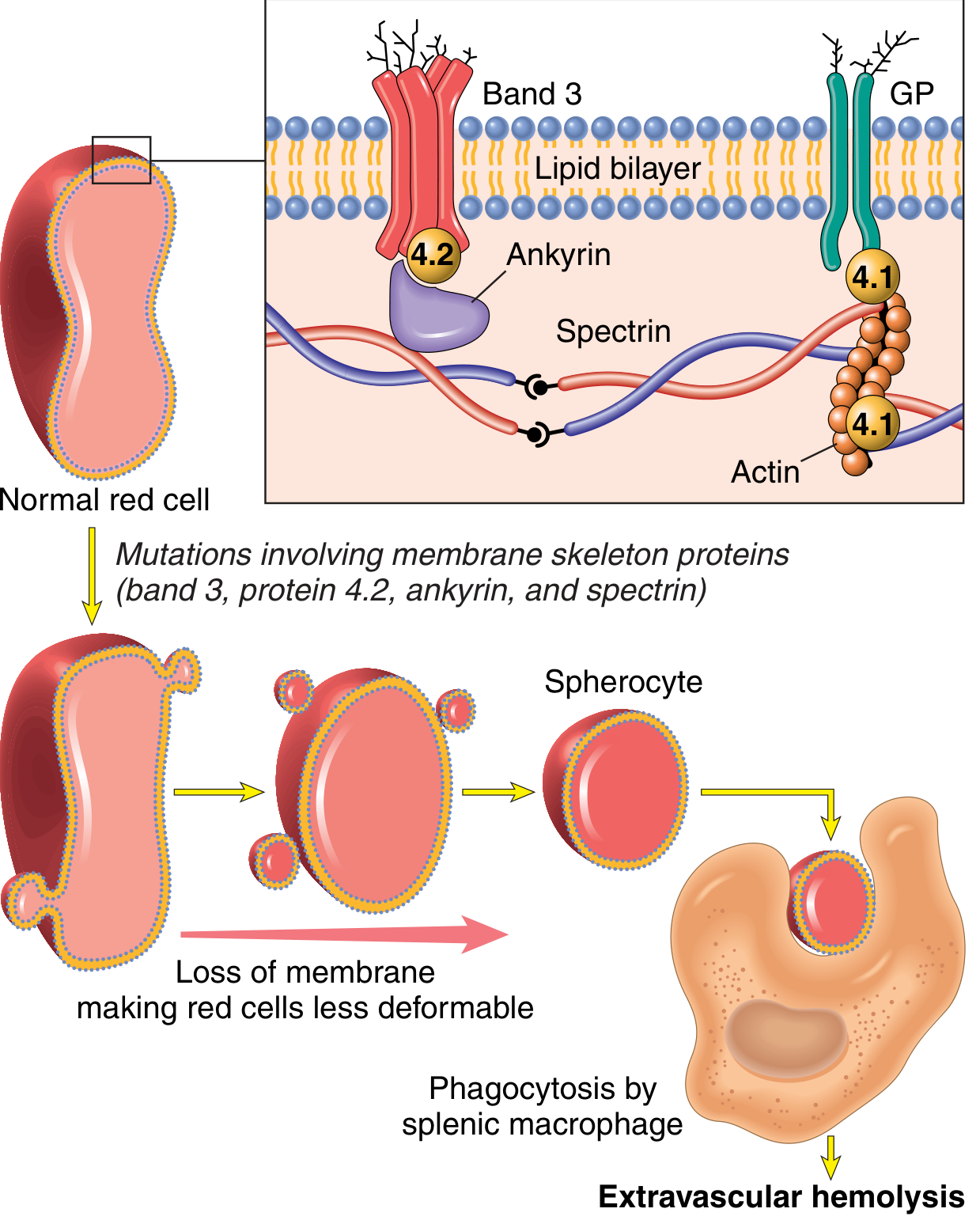
The membrane skeleton is a meshwork of:
- Spectrin (major protein) - long, flexible heterodimer
- Actin filaments
- Ankyrin and band 4.1 - linker proteins
- Connected to intrinsic membrane proteins band 3 and glycophorin
Mutations weaken interactions between the membrane skeleton and intrinsic membrane proteins → lipid bilayer destabilizes → red cells shed membrane vesicles → surface area-to-volume ratio decreases → spherocytes form.
Mechanism of haemolysis: Spherocytes have limited deformability → sequestered in splenic cords → destroyed by resident macrophages (extravascular haemolysis). Splenectomy corrects the anaemia despite persistence of spherocytes.
Morphology:
- Peripheral smear: spherocytes are dark red and lack central pallor
- Compensatory marrow erythroid hyperplasia + reticulocytosis
- Splenomegaly (most prominent of all haemolytic anaemias) - splenic weight 500-1000 g (normal 150-200 g)
- Marked congestion of splenic cords, increased macrophages
- Cholelithiasis in 40-50% of patients
Treatment: Splenectomy corrects the anaemia; must weigh against infection risk from encapsulated bacteria (especially in children).
2. Sickle Cell Anaemia
The prototypic haemoglobinopathy. Most common familial haemolytic anaemia.
Genetics: Single amino acid substitution in β-globin - valine replaces glutamate at the 6th position. HbS allele is prevalent where falciparum malaria was endemic (equatorial Africa, India, southern Europe, Middle East). In the USA, ~8% of African-descent individuals are HbS carriers; ~1 in 600 have sickle cell anaemia.
Pathogenesis:
- HbS differs from HbA: valine instead of glutamate at β-globin position 6
- On deoxygenation, HbS molecules undergo conformational change → polymers form via intermolecular contacts involving the abnormal valine → red cells assume elongated crescentic (sickle) shape
- Sickling is initially reversible on reoxygenation; with repeated episodes → membrane damage (calcium influx, K⁺ and water loss) → irreversibly sickled cells → haemolysis
Three factors governing sickling:
- Intracellular levels of non-HbS Hb - HbA retards HbS polymerization greatly → HbS heterozygotes (sickle cell trait) have little sickling in vivo. HbF also retards polymerization → newborns asymptomatic until HbF falls (~5-6 months). HbC (lysine instead of glutamate) interacts with HbS only moderately → compound heterozygotes have milder disease
- Intracellular Hb concentration - high MCHC favours polymerization; dehydration worsens sickling
- Length of time in deoxygenated state - slow blood flow prolongs deoxygenation
Morphology:
- Peripheral smear: sickle-shaped red cells, target cells, nucleated red cells
- Vaso-occlusive crises - hallmark; microinfarcts in bones, spleen, liver, brain, lungs, penis
- Spleen: initially enlarged by red pulp congestion with sickled cells; progressive splenic infarction leads to autosplenectomy (fibrotic, shrunken spleen by adulthood)
- Severe splenomegaly can occur in compound heterozygotes (HbSC)
- Bone marrow hyperplasia → cortical bone thinning, "crew cut" appearance on skull X-ray
- Increased risk of aplastic crisis (Parvovirus B19), sequestration crisis, infections by encapsulated bacteria (functional asplenia)
Treatment: Hydroxyurea reduces crises by:
- Increasing HbF levels
- Anti-inflammatory effect (inhibits WBC production)
- Increases red cell size, lowering intracellular Hb concentration
- Metabolizes to NO (vasodilator, inhibits platelet aggregation)
3. Thalassemia
Thalassemias are inherited disorders caused by mutations in globin genes that decrease the synthesis of α- or β-globin. Deficiency of Hb + intracellular precipitates from excess unpaired normal chain → red cell damage and haemolysis. Prevalent in Mediterranean, African, and Asian regions (protection against falciparum malaria).
Genetics: Autosomal codominant. α-globin: 2 genes on chromosome 16. β-globin: single gene on chromosome 11.
β-Thalassemia
| Type | Genotype | Clinical Features |
|---|---|---|
| β-Thalassemia major | Homozygous | Severe anaemia; requires regular transfusions |
| β-Thalassemia intermedia | Variable | Moderately severe; transfusions not always required |
| β-Thalassemia minor | Heterozygous | Mild microcytic anaemia; usually asymptomatic |
Pathogenesis:
- Point mutations impair transcription, splicing, or translation of β-globin mRNA
- Excess α-globin chains form insoluble precipitates → damage red cell membranes → ineffective erythropoiesis (destruction of erythroid precursors in marrow) + haemolysis
- Both extravascular haemolysis and ineffective erythropoiesis contribute to anaemia
Morphology (β-Thalassemia major):
- Marked microcytosis, hypochromia, poikilocytosis, anisocytosis, nucleated red cells (normoblasts)
- Target cells (increased surface area-to-volume ratio)
- Striking erythroid hyperplasia filling intramedullary space → cortical bone thinning, impaired growth, skeletal deformities
- Extramedullary haematopoiesis → prominent splenomegaly, hepatomegaly, lymphadenopathy
- Growth retardation and cachexia
- Severe haemosiderosis from iron overload (transfusions + increased gut iron absorption due to suppressed hepcidin from expanded erythropoiesis)
Clinical features:
- β-Thalassemia minor/trait: asymptomatic, normal life expectancy; mild microcytic hypochromic anaemia
- β-Thalassemia major: manifests postnatally as HbF diminishes; growth retardation from infancy; survival into 2nd-3rd decade with transfusions, but iron overload develops; chelation therapy (deferoxamine) + bone marrow transplant can be curative
α-Thalassemia
- Caused by deletion of α-globin genes (usually entire genes deleted)
- Severity depends on number of genes deleted (0-4):
- 1 gene deleted: silent carrier state
- 2 genes deleted: α-thalassemia trait - mild microcytic anaemia
- 3 genes deleted: HbH disease - excess β-chains form β₄ tetramers (HbH); relatively stable but high O₂ affinity (poor O₂ delivery)
- 4 genes deleted: Hydrops fetalis - lethal in utero; excess γ-chains form γ₄ (Hb Bart); near-zero O₂ delivery capacity
4. Glucose-6-Phosphate Dehydrogenase (G6PD) Deficiency
Gene: X chromosome (X-linked). >400 G6PD variants identified; few associated with disease.
Pathogenesis: Red cells are constantly exposed to oxidants, normally inactivated by reduced glutathione (GSH). G6PD is essential for GSH synthesis. In G6PD deficiency:
- Oxidant stress (from drugs, infections, foods) overwhelms deficient GSH
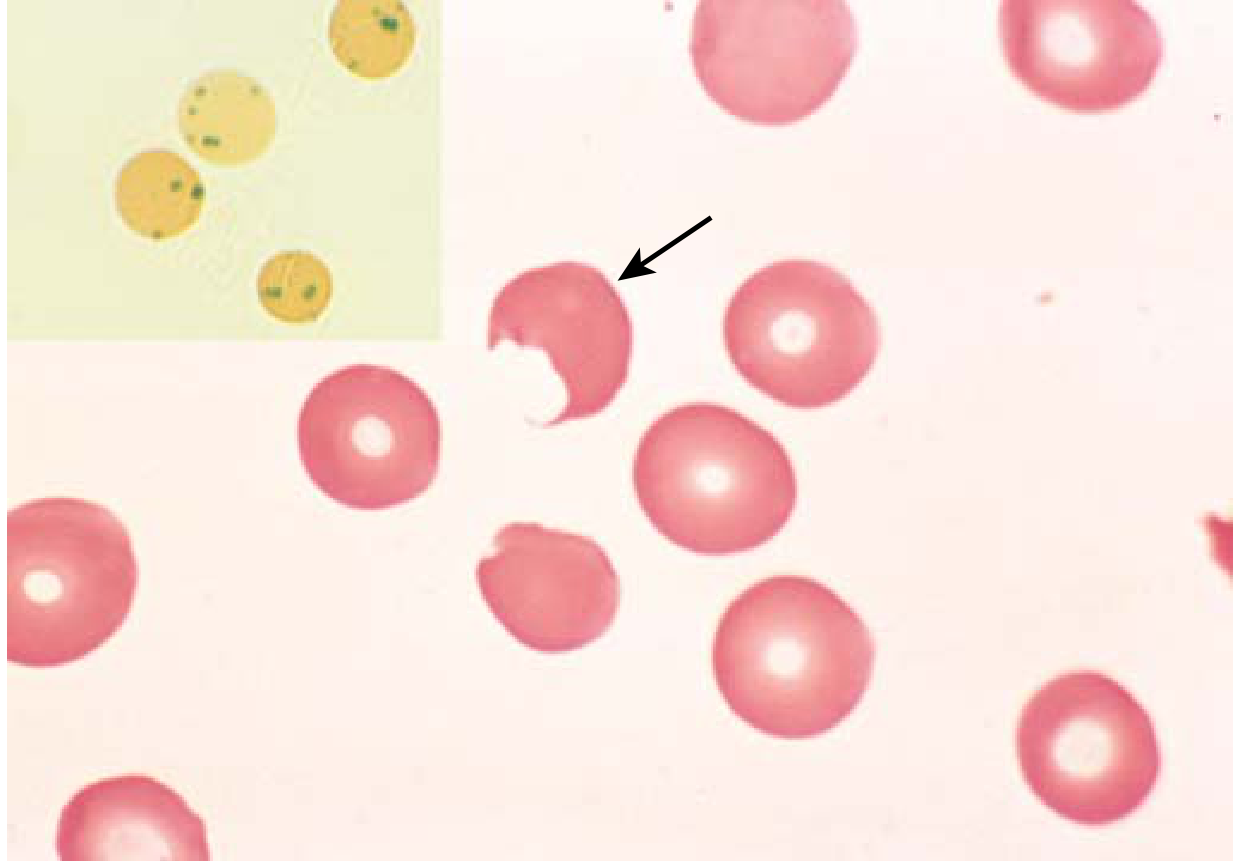
- Oxidants attack globin chains → oxidized haemoglobin denatures → precipitates as Heinz bodies (intracellular inclusions)
- Heinz bodies damage the red cell membrane → intravascular haemolysis
- Cells with less damage lose deformability; splenic macrophages "pluck out" Heinz bodies → bite cells (Fig. 10.6) → trapped and destroyed in spleen
Trigger agents:
- Antimalarials (primaquine), sulfonamides, nitrofurantoin, phenacetin, high-dose aspirin, vitamin K derivatives
- Fava beans (favism)
- Infections (most common trigger - phagocytes generate oxidants as host response)
Clinical features:
- Haemolysis 2-3 days after drug exposure; variable severity
- Males uniformly affected (X-linked)
- Heterozygous females: two RBC populations due to lyonization; most unaffected unless "unfavorable lyonization" (large proportion of deficient cells)
- G6PD A- variant (Africa): only older red cells lysed (modest enzyme decrease); haemolysis self-limited as marrow replaces with new cells with adequate G6PD
- G6PD Mediterranean (Middle East): more marked deficiency; more severe haemolysis
5. Paroxysmal Nocturnal Haemoglobinuria (PNH)
Pathogenesis: Acquired mutation in PIG-A gene (encodes an enzyme required for synthesis of GPI anchors) in a haematopoietic stem cell → clonal expansion → red cells, WBCs, and platelets lacking GPI-anchored proteins, including CD55 (decay-accelerating factor) and CD59 (protectin). These proteins normally inhibit complement on self-cell surfaces. Their absence → unregulated complement activation → intravascular haemolysis via membrane attack complex (C5b-C9).
Clinical features:
- Classic (but uncommon) presentation: nocturnal haemolysis (sleep-related CO₂ retention → decreased pH → enhanced complement fixation)
- Most present with chronic anaemia and iron deficiency from chronic intravascular haemolysis
- Association with aplastic anaemia (may precede or follow PNH)
- Most feared complication: thrombosis in abdominal vessels (portal vein, hepatic vein) - related to excessive complement activity
Treatment - Eculizumab: Anti-C5 antibody that inhibits MAC assembly → lessens intravascular haemolysis and thrombosis dramatically. However:
- Does NOT affect early complement fixation → C3b continues to deposit → continuing extravascular haemolysis
- Blocks C5b-C9 → risk of Neisseria (meningococcal) infections → all patients must be vaccinated against N. meningococcus
6. Immunohemolytic Anaemia
Caused by antibodies binding to antigens on red cell membranes. May arise spontaneously or be drug-induced.
Diagnosis: Direct Coombs test - patient's red cells + anti-human Ig/complement antibodies → agglutination indicates Ig/complement coating.
Warm Antibody Type
- IgG (rarely IgA) antibodies active at 37°C
-
60% idiopathic; 25% in immunologic disorders (SLE) or drug-induced
- Mechanism: IgG-coated cells phagocytosed in spleen; also "nibbling" by macrophages removes membrane → spherocytes → rapid splenic destruction (same as hereditary spherocytosis)
- Drug mechanisms:
- α-methyldopa: induces autoantibodies against Rh blood group antigens
- Penicillin: binds covalently to red cell membrane proteins → neoantigens → antibody response
- Some drugs form immune complexes that deposit on red cells → fix complement or act as opsonins
Cold Antibody Type
Classification of Immunohemolytic Anaemias (Table 10.4):
| Warm Antibody Type | Cold Antibody Type |
|---|---|
| Primary (idiopathic) | Acute: Mycoplasma pneumonia, infectious mononucleosis |
| Secondary: B-cell neoplasms (CLL), autoimmune (SLE), drugs (α-methyldopa, penicillin, quinidine) | Chronic: idiopathic, B-cell lymphoid neoplasms (lymphoplasmacytic lymphoma) |
- Low-affinity IgM antibodies binding at temperatures <30°C (e.g., distal extremities in cold)
- Transient forms: Mycoplasma pneumonia, infectious mononucleosis (mild, clinically unimportant)
- Chronic forms: B-cell neoplasms or idiopathic
- Pathogenesis: IgM initiates complement fixation; later steps inefficient at <37°C → cells coated with C3b and C3d but not lysed. In warm areas, IgM released but C3b/C3d remain → phagocytosis by macrophages (mainly spleen and liver) → mostly extravascular haemolysis
- IgM pentavalency → crosslinks red cells → agglutination → sludging in capillaries → Raynaud phenomenon
7. Mechanical Haemolysis
Two major settings:
-
Traumatic (macroangiopathic) haemolysis:
- Dysfunctional cardiac valve prostheses - turbulence creates "blender effect"
- Repeated physical pounding (marathon racing, karate, bongo drumming)
-
Microangiopathic haemolytic anaemia (MAHA):
- Small vessels partially obstructed by fibrin strands, platelet thrombi, or other lesions → passing red cells are sheared into schistocytes (helmet cells, triangular cells)
- Causes: DIC (most common - fibrin deposition), severe hypertension, thrombotic thrombocytopenic purpura (TTP), haemolytic-uraemic syndrome (HUS)
8. Malaria
- Haemolysis caused by Plasmodium parasites invading and destroying red cells
- P. falciparum is the most severe form; protective pressure explains why HbS, G6PD deficiency, and thalassemia mutations are prevalent in malaria-endemic areas
- Haemolysis is both intravascular (rupture of parasitized cells) and extravascular (phagocytosis of parasitized cells)
Summary Table
| Type | Mechanism | Intrinsic/Extrinsic | Site of Haemolysis | Key Morphology |
|---|---|---|---|---|
| Hereditary Spherocytosis | Membrane skeleton defect (spectrin, ankyrin, band 3) | Intrinsic | Extravascular (spleen) | Spherocytes, no central pallor |
| Sickle Cell | HbS polymerization on deoxygenation | Intrinsic | Extra + intravascular | Sickle cells, target cells |
| β-Thalassemia major | Excess α-chain precipitation, ineffective erythropoiesis | Intrinsic | Mainly extravascular | Microcytes, hypochromia, poikilocytosis, nucleated RBCs |
| G6PD Deficiency | Oxidant-induced Heinz body formation | Intrinsic | Extra + intravascular | Heinz bodies, bite cells |
| PNH | Absence of CD55/CD59, complement MAC | Intrinsic (acquired) | Intravascular | No characteristic RBC morphology |
| Warm Antibody IHA | IgG opsonization, spherocyte formation | Extrinsic | Extravascular (spleen) | Spherocytes, + Coombs |
| Cold Antibody IHA | IgM + C3b opsonization | Extrinsic | Mainly extravascular | Agglutination, Raynaud phenomenon |
| MAHA | Physical shearing by fibrin/platelet thrombi | Extrinsic | Intravascular | Schistocytes (helmet cells) |
| Malaria | Parasite invasion/rupture | Extrinsic | Extra + intravascular | Parasitized RBCs |
All content strictly from: Robbins & Kumar Basic Pathology (Robbins Pathology), 10th ed. (ISBN 9780323790185), Chapter 10 - Red Cell Disorders, pp. 347-356.
Megaloblastic anemia in detail
Finding Sources
Finding Sources
Finding Sources
Now I'll read all the relevant sections from both Robbins books in parallel.
Reading File
Reading File
Excellent content. Now let me read the continuation of both texts - folate deficiency, B12/pernicious anemia sections.
Reading File
Reading File
Rich content from both books. Now let me read the pernicious anemia (B12 deficiency) and the neurologic sections in both books in parallel.
Reading File
Reading File
Excellent - comprehensive biochemistry from Robbins PBD. Let me continue reading the pernicious anemia clinical features, neurologic changes, and subacute combined degeneration section.
Reading File
Reading File
Now let me get the detailed pernicious anemia section from Robbins PBD (the comprehensive B12 section with pathology, neurologic changes etc.), plus the key images.
Reading File
Loading Image
Now let me fetch the bone marrow megaloblast image and the B12 absorption/metabolic pathway diagrams.
Loading Image
Loading Image
I now have all the content and images needed. Let me also get the pernicious anemia morphology and clinical details from Robbins PBD for completeness.
Reading File
I now have everything needed. Let me compile the comprehensive detailed answer.
Megaloblastic Anaemia - Strictly According to Robbins Pathology
Primary source: Robbins & Kumar Basic Pathology (Robbins Pathology), 10th ed. (ISBN 9780323790185); supplemented by Robbins, Cotran & Kumar Pathologic Basis of Disease (ISBN 9780443264528)
Definition
The two principal causes of megaloblastic anaemia are folate deficiency and vitamin B12 deficiency. Both vitamins are required for DNA synthesis, and the effects of their deficiency on haematopoiesis are identical. However, the causes and consequences of folate and vitamin B12 deficiency differ in important ways.
Pathogenesis (Common to All Megaloblastic Anaemias)
Megaloblastic anaemia stems from metabolic defects that lead to inadequate biosynthesis of thymidine (dTMP), one of the building blocks of DNA. Folate and vitamin B12 are both essential for thymidine synthesis, which is required for DNA replication.
Core mechanism:
- Thymidine deficiency causes abnormalities in rapidly dividing cells throughout the body, but the haematopoietic marrow is most severely affected
- Synthesis of RNA and cytoplasmic elements proceeds at a relatively normal rate and outpaces that of DNA
- This creates nuclear-cytoplasmic asynchrony in haematopoietic precursors
Consequences of the maturational derangement:
- DNA synthesis is so defective in many red cell progenitors that a DNA damage response is triggered → apoptosis (ineffective haematopoiesis)
- Other progenitors mature into red cells but do so after fewer cell divisions, further diminishing output
- Granulocyte and platelet precursors are also affected (though less severely)
- Most patients present with pancytopenia (anaemia + thrombocytopenia + granulocytopenia)
Morphology (Common Features)
Bone Marrow
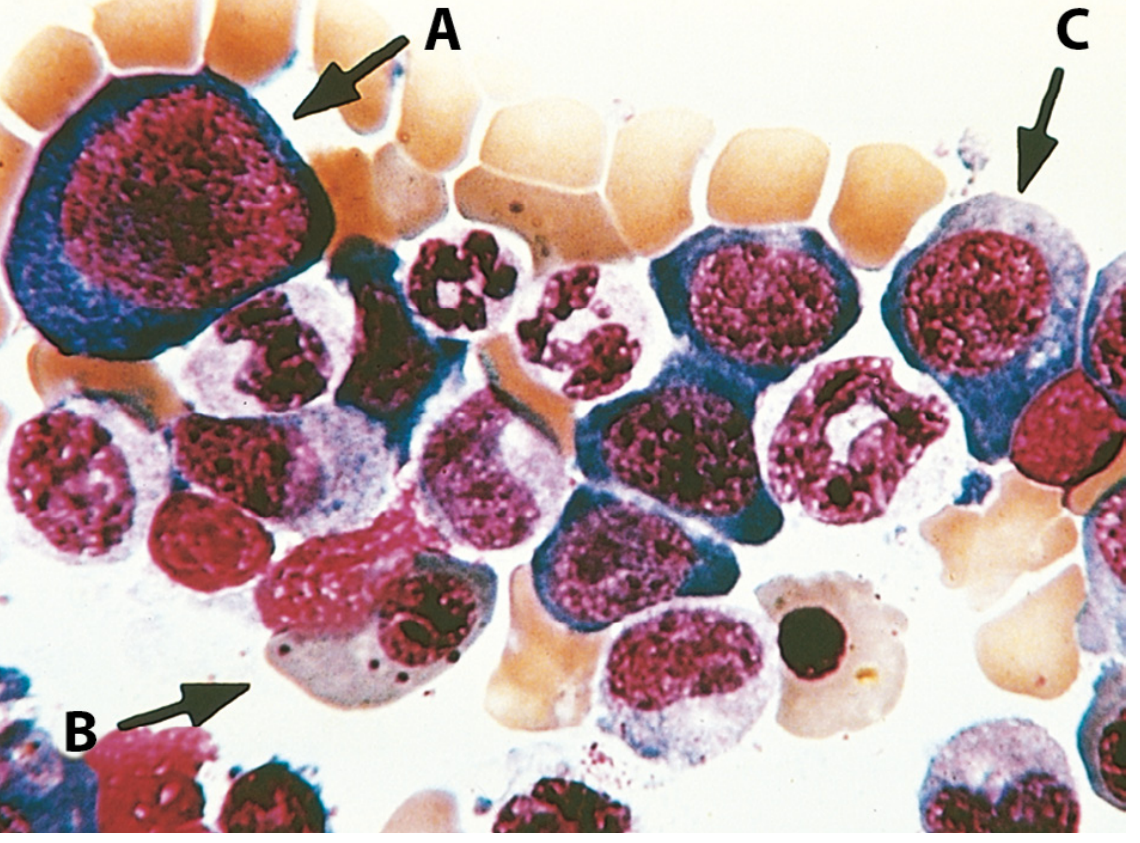
- Markedly hypercellular with numerous megaloblastic erythroid progenitors
- Megaloblasts are larger than normal normoblasts and have delicate, finely reticulated nuclear chromatin (indicative of nuclear immaturity)
- As megaloblasts acquire haemoglobin, the nucleus retains its finely distributed chromatin and fails to undergo chromatin clumping typical of normoblasts - classic nuclear-cytoplasmic asynchrony
- Granulocytic precursors show asynchrony → giant metamyelocytes and giant band forms
- Megakaryocytes may be abnormally large with bizarre multilobed nuclei
Peripheral Blood
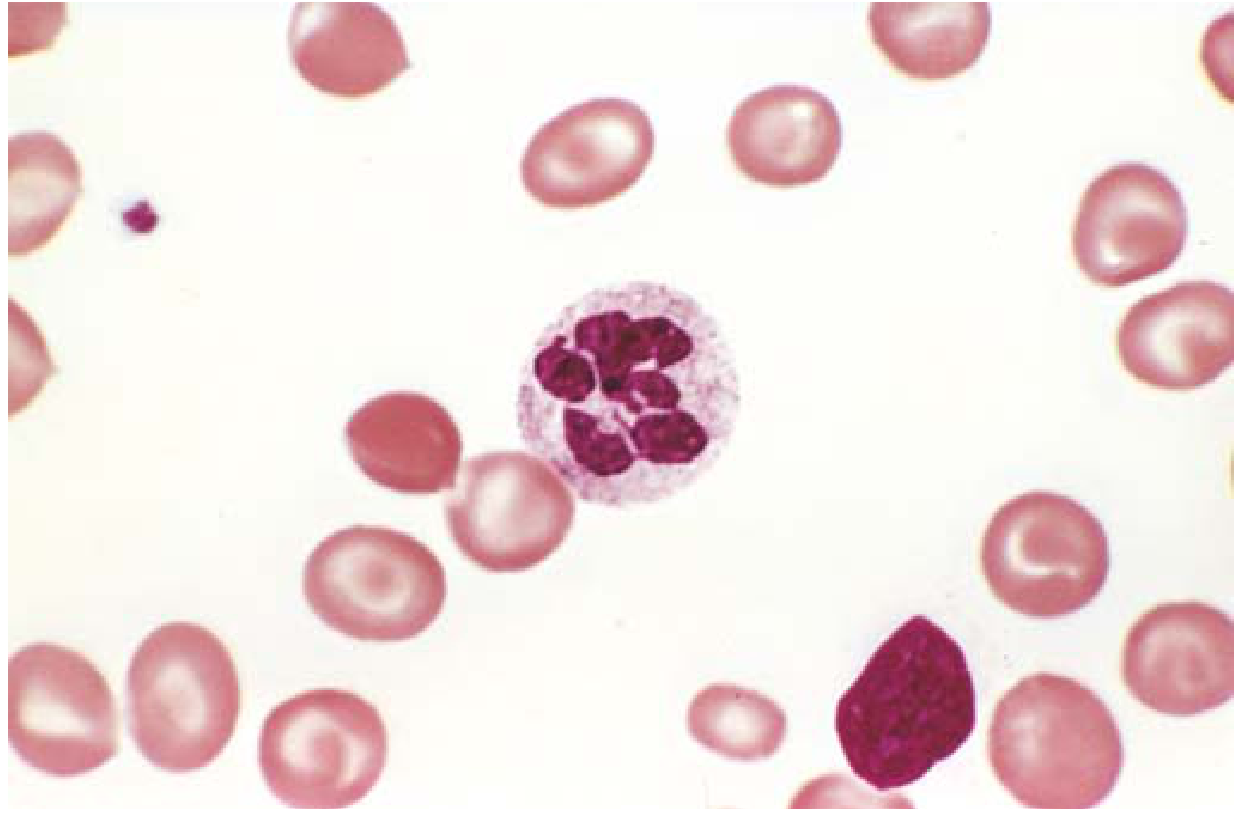
- Earliest change: Appearance of hypersegmented neutrophils (before onset of anaemia)
- Normal neutrophils: 3-4 nuclear lobes
- Megaloblastic anaemia: 5 or more lobes (hypersegmentation)
- Red cells: large oval-shaped macroovalocytes
- MCV often >110 fL (normal 78-98 fL)
- Though macroovalocytes appear hyperchromic, their haemoglobin concentration is actually normal (apparent hyperchromia due to larger cell size)
- Marked anisocytosis and poikilocytosis
- Reticulocyte count is LOW (despite marrow hyperplasia - due to ineffective erythropoiesis)
- Large, misshapen platelets may be seen
- Nucleated red cell progenitors may appear in circulation when anaemia is severe
Causes of Megaloblastic Anaemia (Robbins PBD Table 14.5)
| Vitamin B12 Deficiency | Folic Acid Deficiency |
|---|---|
| Decreased intake: vegetarianism, inadequate diet | Decreased intake: inadequate diet, alcoholism, infancy |
| Impaired absorption: Intrinsic factor deficiency (pernicious anaemia, gastrectomy); malabsorption (diffuse intestinal disease, systemic sclerosis); ileal resection/ileitis | Impaired absorption: malabsorption states; anticonvulsants, oral contraceptives |
| Competitive parasitic uptake: fish tapeworm, bacterial overgrowth in blind loops | Increased loss: haemodialysis |
| Increased requirement: pregnancy, infancy, disseminated cancer, markedly increased haematopoiesis | |
| Impaired utilization: folic acid antagonists (methotrexate) | |
| Unresponsive to B12 or folate: metabolic inhibitors of DNA synthesis (e.g., methotrexate, hydroxyurea) |
Type 1: Folate (Folic Acid) Deficiency Anaemia
Aetiology
Folate deficiency is usually the result of inadequate dietary intake, sometimes complicated by increased metabolic demands.
- Folate is present in nearly all foods but is destroyed by 10-15 minutes of cooking → stores are marginal in many healthy persons
- Highest risk groups: food insecurity, elderly, pregnant women, patients with chronic haemolytic anaemias (e.g., sickle cell disease)
- Absorption problems: Food folates are predominantly in polyglutamate form and must be split into monoglutamates for absorption; this conversion is inhibited by:
- Acidic foods
- Substances in beans and other legumes
- Phenytoin (interferes with folate absorption)
- Methotrexate (inhibits folate metabolism)
- Malabsorptive disorders affecting the upper third of the small intestine (e.g., coeliac disease, environmental enteropathy) impair folate uptake
Pathogenesis
Tetrahydrofolate (FH₄) acts as an acceptor and donor of one-carbon units in reactions required for synthesis of deoxythymidine monophosphate (dTMP) for DNA synthesis.
Key step: Conversion within cells from dihydrofolate to tetrahydrofolate by dihydrofolate reductase (DHFR) - this is the enzyme targeted by methotrexate.
If intracellular folate stores fall → insufficient dTMP synthesized → DNA replication blocked → megaloblastic anaemia.
Clinical Features
- Onset is insidious with nonspecific symptoms: weakness, easy fatigability
- May be complicated by coexistent deficiency of other vitamins (especially in alcohol use disorder)
- GI epithelium (rapidly turning over cells) also affected → sore tongue (glossitis)
- NO neurologic abnormalities (key distinction from B12 deficiency)
Type 2: Vitamin B12 (Cobalamin) Deficiency Anaemia
Normal Vitamin B12 Metabolism
- B12 is widely present in animal products (meat, fish, milk, eggs); daily requirement 2-3 μg; resistant to cooking
- Body handles B12 efficiently - stored in the liver with reserves for 5-20 years → clinical presentation typically follows years of unrecognised malabsorption
Absorption pathway (Fig. 10.12 / Fig. 14.17):
- Pepsin in stomach frees B12 from food binding proteins
- B12 binds to salivary protein haptocorrin
- In duodenum, pancreatic proteases release B12 from haptocorrin
- B12 associates with intrinsic factor (IF) secreted by parietal cells of fundic mucosa
- IF-B12 complex travels to ileum → endocytosed by ileal enterocytes via cubilin receptor
- Within ileal cells, B12 associates with transcobalamin II → secreted into plasma
- Transcobalamin II delivers B12 to liver and other tissues
Biochemical Functions of Vitamin B12 (Robbins PBD)
Only two reactions in humans require vitamin B12:
Reaction 1 - Methionine synthesis:
Methylcobalamin (methyl-Cbl) serves as cofactor for methionine synthase in the conversion of homocysteine to methionine. In the process, methylcobalamin recovers a methyl group from N⁵-methyltetrahydrofolic acid (N⁵-methyl FH₄), which is then converted to tetrahydrofolic acid (FH₄).

FH₄ is crucial because it is required (through its derivative N⁵,¹⁰-methylene FH₄) for the conversion of deoxyuridine monophosphate (dUMP) to deoxythymidine monophosphate (dTMP) by thymidylate synthetase - a building block for DNA.
The "methylfolate trap" in B12 deficiency:
- B12 deficiency → methionine synthase impaired → folate remains trapped as N⁵-methyl FH₄ → cannot be converted to FH₄
- Deprives thymidylate synthetase of its folate coenzyme → impaired DNA synthesis
- This is why folate administration reverses the anaemia of B12 deficiency (it bypasses the trap)
Reaction 2 - Methylmalonyl-CoA isomerisation:
Adenosylcobalamin serves as cofactor for methylmalonyl-CoA mutase, which converts methylmalonyl-CoA to succinyl-CoA.
- B12 deficiency → methylmalonate and propionate accumulate in plasma and urine
- Elevated methylmalonic acid in urine = specific marker for B12 deficiency (vs folate)
- Abnormal fatty acids may be incorporated into neuronal lipids → myelin breakdown → subacute combined degeneration of the spinal cord
- The neurologic complications are not improved by folate (and may be worsened)
Pernicious Anaemia (Most Important Cause)
The most frequent cause of vitamin B12 deficiency.
Definition: Pernicious anaemia results from an autoimmune attack on the gastric mucosa that suppresses production of intrinsic factor.
Epidemiology: More prevalent in Scandinavian/Northern European populations; occurs in all groups including African and Hispanic descent; disease of older adults - median age at diagnosis 60 years, rare under 30.
Autoantibodies (Three Types - Robbins PBD):
| Type | Frequency | Target |
|---|---|---|
| Type I | ~75% | Blocks binding of vitamin B12 to intrinsic factor |
| Type II | Large proportion | Blocks binding of IF-B12 complex to cubilin (prevents intestinal absorption) |
| Type III | 85-90% | Against α and β subunits of gastric proton pump (H⁺/K⁺-ATPase); NOT specific - found in 50% of older adults with idiopathic chronic gastritis |
Pathogenesis of gastric injury:
- Autoreactive T-cell response initiates gastric mucosal injury → triggers autoantibody formation
- Autoantibodies are diagnostically useful but are not the primary cause of gastric pathology
- Associated with other autoimmune disorders: autoimmune thyroiditis and adrenalitis (shared predisposition to autoimmunity)
Other Causes of Vitamin B12 Malabsorption
- Gastrectomy → loss of intrinsic factor-producing parietal cells
- Ileal resection → loss of IF-B12 complex-absorbing cells
- Crohn disease, Whipple disease, environmental enteropathy → disruption of distal ileum
- Achlorhydria/gastric atrophy (especially in older persons) → cannot release B12 from food
- Exocrine pancreatic insufficiency → cannot release B12 from haptocorrin
- Fish tapeworm (Diphyllobothrium latum) - competitive uptake
- Bacterial overgrowth in blind loops
- Nitrous oxide (recreational use) → oxidises and inactivates B12
- Increased demand: pregnancy, hyperthyroidism, disseminated cancer
Morphology of Pernicious Anaemia
Blood and bone marrow: Same megaloblastic changes as all other forms (described above).
Stomach (Robbins PBD):
- Diffuse chronic gastritis with fundic gland atrophy affecting both chief cells and parietal cells (parietal cells virtually absent)
- Glandular epithelium replaced by mucus-secreting goblet cells resembling large intestine → intestinalization (intestinal metaplasia)
- Affected cells and their nuclei may be twice normal size ("megaloblastic" change in mucosal epithelium - analogous to marrow changes)
- These gastric/metaplastic changes are due to autoimmunity and persist after parenteral B12 treatment (in contrast to the marrow and gut "megaloblastic" changes which are readily reversible)
Tongue: Shiny, glazed, "beefy" appearance → atrophic glossitis
Nervous system (subacute combined degeneration - Robbins PBD):
- Central nervous system lesions found in ~75% of florid pernicious anaemia cases; can occur even without overt haematologic findings
- Demyelination of dorsal and lateral spinal tracts (posterolateral columns)
- Begins: symmetric numbness, tingling, burning in feet or hands
- Progresses to: unsteadiness of gait, loss of position sense (particularly in toes)
- Anaemia responds dramatically to parenteral B12, but neurologic manifestations often fail to resolve
- Mechanism: abnormal fatty acid incorporation into neuronal lipids from methylmalonyl-CoA accumulation → myelin breakdown
Increased risk of gastric carcinoma in pernicious anaemia patients (intestinal metaplasia is a precancerous change).
Diagnosis
Findings supporting megaloblastic anaemia:
- MCV >110 fL
- Hypersegmented neutrophils (≥5 lobes)
- Macroovalocytes
- Low reticulocyte count
- Bone marrow hypercellularity with megaloblasts and giant metamyelocytes
- Pancytopenia
To distinguish B12 deficiency from folate deficiency:
| Feature | B12 Deficiency | Folate Deficiency |
|---|---|---|
| Serum B12 | Low | Normal/elevated |
| Serum folate | Normal/elevated | Low |
| Methylmalonic acid (urine) | Elevated (specific) | Normal |
| Homocysteine | Elevated | Elevated |
| Neurologic symptoms | Present (subacute combined degeneration) | Absent |
| Anti-IF antibodies | Present (in pernicious anaemia) | Absent |
| Reticulocyte response to B12 | Dramatic rise in 2-3 days | No response |
| Reticulocyte response to folate | Responds (but neurologic disease may worsen) | Responds |
Diagnosis of pernicious anaemia specifically requires: all megaloblastic anaemia findings PLUS serum antibodies against intrinsic factor.
Key Summary Points
| Feature | Mechanism | Anaemia Type | Unique Feature |
|---|---|---|---|
| Common pathogenesis | Thymidine deficiency → DNA synthesis block | Megaloblastic (ineffective erythropoiesis) | Nuclear-cytoplasmic asynchrony |
| Folate deficiency | FH₄ depletion → dTMP synthesis blocked | Megaloblastic | No neurological involvement |
| B12 deficiency | Methylfolate trap + methylmalonyl-CoA accumulation | Megaloblastic | Subacute combined degeneration of spinal cord |
| Pernicious anaemia | Autoimmune gastric atrophy → loss of IF | Megaloblastic | Fundic atrophy + intestinalisation + anti-IF antibodies |
"Although the anemia responds dramatically to parenteral vitamin B12, the neurologic manifestations often fail to resolve." - Robbins & Kumar Basic Pathology, p. 397
All content strictly from: Robbins & Kumar Basic Pathology (Robbins Pathology), 10th ed., Ch. 10, pp. 395-397, and Robbins, Cotran & Kumar Pathologic Basis of Disease, Ch. 14, pp. 608-612.
This is a shared conversation. Sign in to Orris to start your own chat.