
Individual suture material and it details usage with images
Reading File
Now let me search the medical library for suture materials and simultaneously do a web search for images.
Finding Sources
Searching the Web
suture materials types classification absorbable non-absorbable detailed chart
Now let me read the most comprehensive textbook sections in parallel:
Reading File
Reading File
Reading File
Loading Image
Now let me get the Roberts & Hedges Emergency section (very detailed on individual suture materials) and fetch more images in parallel:
Reading File
Loading Image
Loading Image
Excellent - I now have very rich textbook content. Let me fetch more specific suture images and continue reading:
Reading File
Loading Image
Searching the Web
individual suture materials vicryl PDS prolene silk catgut nylon images properties
Now let me fetch a few more useful images and the Roberts & Hedges table content:
Loading Image
Loading Image
Loading Image
I now have comprehensive information from multiple authoritative textbooks. Let me compile the full, detailed answer.
Suture Materials - Complete Guide
Classification Overview
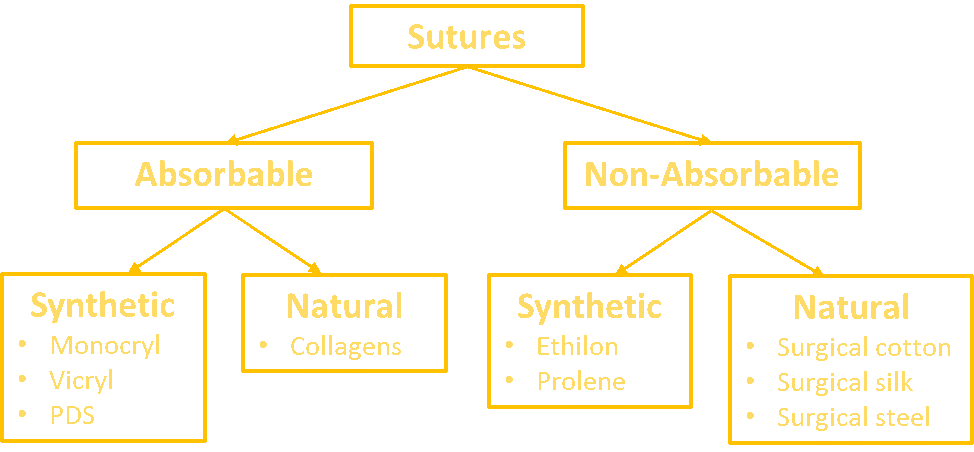

Sutures are classified along three axes:
- Absorbability - absorbable vs. non-absorbable
- Origin - natural vs. synthetic
- Structure - monofilament vs. multifilament (braided)
PART 1 - ABSORBABLE SUTURES
Absorbable sutures lose most of their tensile strength within 60 days. They are degraded either by enzymatic proteolysis (natural gut) or hydrolysis (synthetic polymers). Hydrolysis causes far less tissue reaction than enzymatic degradation.
After losing ~75% of strength, sutures will break. Strength is lost before complete absorption occurs.
- Fischer's Mastery of Surgery, 8th ed.
A. NATURAL ABSORBABLE SUTURES
1. Plain Catgut (Plain Gut)
| Property | Detail |
|---|---|
| Source | Sheep submucosa or beef serosa (collagen) |
| Structure | Twisted multifilament (monofilament appearance) |
| Tensile strength retained | ~7-10 days |
| Absorbed | 70 days (enzymatic) |
| Tissue reaction | HIGH - provokes strong inflammatory response |
| Knot security | Poor - slips easily |
- Uses: Rapidly healing tissues - mucosal closures, ligating small vessels, oral mucosa, episiotomy
- Avoid in: Infected wounds, tissues requiring prolonged support, skin (leaves marks)
- Note: Sterilized by irradiation or ethylene oxide. Unpredictable absorption rate. Absorbed faster in infected or ischemic tissue.
2. Chromic Catgut (Chromic Gut)
| Property | Detail |
|---|---|
| Source | Same as plain gut, treated with chromic salts |
| Structure | Twisted multifilament |
| Tensile strength retained | ~21 days |
| Absorbed | 90 days |
| Tissue reaction | Moderate (less than plain gut) |
| Knot security | Moderate |
- Uses: Subcutaneous tissue, oral mucosa, scalp, episiotomy, gynecological procedures, circumcision
- Advantage over plain gut: Chromic salt treatment slows enzymatic digestion, extends strength retention
- Brands: Chromic (Ethicon), Chromic (Medtronic)
- Note: Brown/tan colored. Wet the suture before use for better pliability.
B. SYNTHETIC ABSORBABLE SUTURES
3. Polyglycolic Acid (PGA) - Dexon
| Property | Detail |
|---|---|
| Material | Polyglycolic acid (PGA) polymer |
| Structure | Braided multifilament |
| Tensile strength retained | 50% at 3 weeks; 25% at 4 weeks |
| Absorbed | 60-90 days (hydrolysis) |
| Tissue reaction | Low |
| Knot security | Good |
- Brand: Dexon (Medtronic)
- Uses: Deep tissue closure, subcutaneous, abdominal wall, ligatures, urological procedures
- Advantage: Predictable, uniform absorption. Less tissue reaction than gut.
- Coating: Dexon Plus is coated with poloxamer 188 to reduce drag
4. Polyglactin 910 - Vicryl
| Property | Detail |
|---|---|
| Material | Copolymer of glycolide (90%) and lactide (10%) |
| Structure | Braided multifilament (also available as monofilament: Vicryl Rapide) |
| Tensile strength retained | 75% at 2 weeks; 50% at 3 weeks; 25% at 4 weeks (half-life ~3 weeks) |
| Absorbed | 56-70 days (standard); 42 days (Rapide) |
| Tissue reaction | Very low |
| Knot security | Excellent |
- Brands: Vicryl, Coated Vicryl, Vicryl Rapide (all Ethicon Inc.)
- Uses: Deep fascial closure, subcutaneous tissue, subcuticular skin closure, ophthalmology, bowel anastomosis, gynecology
- Vicryl Rapide: Fast-absorbing version used for skin closure (epidermal only) - falls off naturally ~7-10 days, avoids suture removal
- Coating: Polyglactin 370 + calcium stearate = smooth passage through tissue
- Note: Most widely used absorbable suture worldwide. Violet or undyed (white).

5. Polydioxanone (PDS / PDS II)
| Property | Detail |
|---|---|
| Material | Polydioxanone polymer |
| Structure | Monofilament |
| Tensile strength retained | 70% at 2 weeks; 50% at 4 weeks; 25% at 6 weeks (half-life ~6 weeks) |
| Absorbed | 180-210 days (6 months) |
| Tissue reaction | Very low (lowest among absorbable) |
| Knot security | Moderate (requires extra throws due to stiffness) |
- Brand: PDS II (Ethicon)
- Uses: Abdominal wall/fascial closure (preferred slow-absorbing suture), cardiovascular surgery, pediatric surgery, tendon repair, orthopedics
- Key advantage: Monofilament = acapillary (does not wick bacteria), longest strength retention among absorbable sutures
- Note: Purple colored. Stiff handling - requires extra knot throws (4-5). The MOST RECOMMENDED suture for laparotomy fascial closure per multiple surgical societies.
"PDS has an advantage over polyglactin with a longer strength retention profile and absorption time; it is also a monofilament that may resist infection to a greater degree than braided suture." - Sabiston Textbook of Surgery
6. Poliglecaprone 25 - Monocryl
| Property | Detail |
|---|---|
| Material | Copolymer of glycolide and epsilon-caprolactone |
| Structure | Monofilament |
| Tensile strength retained | 50-60% at 1 week; 20-30% at 2 weeks; lost by 3 weeks |
| Absorbed | 91-119 days |
| Tissue reaction | Minimal |
| Knot security | Moderate (extra throws needed) |
- Brand: Monocryl (Ethicon)
- Uses: Subcuticular skin closure, soft tissue approximation, plastic surgery
- Advantage: Extremely smooth, pliable monofilament. Excellent cosmetic results for skin.
- Note: Undyed or violet. Loses strength faster than PDS but absorbs more predictably.
7. Polyglyconate - Maxon
| Property | Detail |
|---|---|
| Material | Polyglycolide-co-trimethylene carbonate |
| Structure | Monofilament |
| Tensile strength retained | 70% at 2 weeks; 55% at 4 weeks; >50% at 6 weeks |
| Absorbed | 180 days |
| Tissue reaction | Very low |
- Brand: Maxon (Medtronic)
- Uses: Similar to PDS - fascial closure, abdominal wall, cardiovascular
- Note: Maintains better strength over 28 days compared to PDS in some studies.
8. Glycomer 631 - Biosyn
| Property | Detail |
|---|---|
| Material | Glycolide (60%), dioxanone (14%), trimethylene carbonate (26%) |
| Structure | Monofilament |
| Tensile strength retained | 75% at 2 weeks; 40% at 4 weeks |
| Absorbed | 90-110 days |
- Brand: Biosyn (Medtronic)
- Uses: Soft tissue approximation, subcutaneous closure, alternative to Monocryl/PDS
PART 2 - NON-ABSORBABLE SUTURES
These retain tensile strength indefinitely (or very long-term). Must be removed from skin after healing, or left permanently in deep tissues.
A. NATURAL NON-ABSORBABLE SUTURES
9. Surgical Silk
| Property | Detail |
|---|---|
| Material | Braided protein fibers from silkworm (Bombyx mori) |
| Structure | Braided multifilament |
| Tensile strength | Loses ~50% in 1 year; most by 2 years |
| Tissue reaction | MODERATE-HIGH (most reactive among non-absorbable) |
| Knot security | EXCELLENT - the gold standard for knot tying |
| Handling | BEST of all sutures |
- Brand: Silk (Ethicon), Ti-cron (coated)
- Uses: Oral/dental surgery, cardiovascular (vessel ties), ophthalmic surgery, gastrointestinal surgery (for ties/ligatures), skin closure where excellent handling needed
- Note: Black. The standard against which all other sutures are compared for handling and knot security. Classified as non-absorbable but DOES lose strength over years - technically a "slowly degradable" natural material.
- Avoid: Infected wounds (wicks bacteria due to braided structure), permanent implantation
10. Surgical Cotton
| Property | Detail |
|---|---|
| Material | Twisted cotton fibers |
| Structure | Twisted multifilament |
| Tissue reaction | Moderate |
| Knot security | Good |
- Uses: Ligatures, rarely used in modern surgery
- Note: Gains tensile strength when wet. Largely replaced by synthetic sutures.
B. SYNTHETIC NON-ABSORBABLE SUTURES
11. Nylon (Polyamide)
| Property | Detail |
|---|---|
| Material | Polyamide polymer |
| Structure | Monofilament OR braided |
| Tensile strength | ~20% loss per year (slow hydrolysis); relatively permanent |
| Tissue reaction | Low |
| Knot security | POOR (monofilament) - requires 3-4 extra throws |
| Memory | HIGH - tends to spring back to original shape |
- Brands: Ethilon (monofilament, Ethicon), Dermalon (monofilament, Medtronic), Nurolon (braided, Ethicon), Surgilon (braided, Medtronic)
- Uses: Skin closure (most commonly used non-absorbable skin suture), plastic surgery, ophthalmology, neurosurgery, microsurgery (fine gauge), retention sutures
- Note: Black (most common) or clear. High memory makes handling difficult. Loses ~15-20% tensile strength/year via slow hydrolysis - not truly permanent.
"Closure of a simple finger laceration with interrupted Ethilon sutures" - Geeky Medics (clinical photo)
12. Polypropylene (Prolene, Surgipro)
| Property | Detail |
|---|---|
| Material | Isotactic crystalline polypropylene |
| Structure | Monofilament |
| Tensile strength | TRUE permanent - does not degrade in tissues |
| Tissue reaction | LOWEST of all sutures |
| Knot security | Poor - requires 4-5 throws |
| Memory | Very high - difficult to handle |
| Elasticity | Some - can stretch with edema, then return |
- Brands: Prolene (Ethicon), Surgipro (Medtronic), Surgilene (Medtronic)
- Uses: Cardiovascular surgery (vascular anastomoses, heart valve repair), hernia repair, plastic surgery (continuous subcuticular skin closure), abdominal wall, fascia, tendon repair
- Key properties: Truly permanent, acapillary, inert. The blue color makes it highly visible intraoperatively. The elasticity accommodates tissue swelling.
- Note: Requires careful handling due to high memory. Used for vascular anastomoses because it does not induce thrombosis. Non-absorbable abdominal closure associated with increased pain and sinus tracts.
13. Polyester (Dacron/Mersilene/Ti-Cron/Ethibond)
| Property | Detail |
|---|---|
| Material | Polyethylene terephthalate (polyester) |
| Structure | Braided multifilament |
| Tensile strength | TRUE permanent - does not lose strength over time |
| Tissue reaction | Low |
| Knot security | Excellent |
| Handling | Excellent (braided) |
- Brands: Mersilene (uncoated, Ethicon), Ethibond (coated with polybutylate, Ethicon), Ti-Cron (coated, Medtronic), Ticron, FiberWire, Dacron
- Uses: Cardiac surgery (valve replacement, annuloplasty rings), vascular surgery (prosthetic grafts), orthopedic ligament repair, tendon repair, hernia mesh fixation
- Coated versions (Ethibond): Coating reduces tissue drag and improves handling without changing absorption
- Note: Among the strongest non-absorbable sutures. Uniform permanent strength makes it ideal for cardiac applications where permanent support is required.
14. Polybutester - Novafil
| Property | Detail |
|---|---|
| Material | Polyglycol terephthalate + polybutylene terephthalate |
| Structure | Monofilament |
| Tissue reaction | Low |
| Elasticity | Superior elasticity (unique property) |
- Brand: Novafil (Medtronic)
- Uses: Skin closure, vascular anastomosis (elasticity accommodates pulsatile flow)
- Advantage: Greater elasticity than nylon or polypropylene; useful where tissue swelling anticipated
15. Stainless Steel Wire
| Property | Detail |
|---|---|
| Material | 316L stainless steel |
| Structure | Monofilament or twisted multifilament |
| Tensile strength | HIGHEST of all suture materials |
| Tissue reaction | Low |
| Knot security | Good once secured |
| Handling | WORST - difficult, can kink, fragmentation risk |
- Uses: Sternal closure after cardiac surgery, orthopedic fixation (cerclage wires), tendon repair (distal forearm), infected wounds where other sutures fail
- Disadvantages: Difficult to handle, can cut through tissue, creates large knots, fragments can cause injury, makes a large knot. MRI compatibility issues at high-gauge sizes.
- Note: Rarely used in ED or soft tissue surgery due to handling difficulty.
16. Barbed Sutures (e.g., V-Loc, Stratafix, Quill)
| Property | Detail |
|---|---|
| Material | Polydioxanone (absorbable) OR polypropylene (non-absorbable) |
| Structure | Monofilament with helical barbs cut into surface |
| Mechanism | Barbs anchor tissue with forward pass, resist backslide - no knot needed |
- Brands: V-Loc (Medtronic), Stratafix (Ethicon), Quill (Surgical Specialties)
- Uses: Laparoscopic fascial closure, bowel anastomosis, plastic surgery, bariatric surgery, abdominal wall closure, TKR/THR capsule closure
- Advantages: Eliminates knot (weakest point of suture line), evenly distributes tension, faster placement
- Disadvantages: Barbs reduce core tensile strength by ~25-30%; difficult to remove if needed; cutting barbs into monofilament weakens the material
- Note: RCT data shows superiority vs. regular monofilament for SSI reduction in some series.
PART 3 - SUTURE SIZE (USP System)
| USP Size | Metric Size | Common Use |
|---|---|---|
| 10-0 | 0.2 | Microsurgery, ophthalmology, microsurgical anastomosis |
| 9-0 | 0.3 | Microsurgery, corneal |
| 8-0 | 0.4 | Microsurgery, ophthalmic |
| 7-0 | 0.5 | Neurosurgery, ophthalmic, vascular |
| 6-0 | 0.7 | Facial skin closure, plastic surgery, pediatric skin |
| 5-0 | 1.0 | Face, plastic surgery, ophthalmic |
| 4-0 | 1.5 | Scalp, hand, extremity skin, subcuticular |
| 3-0 | 2.0 | Subcutaneous closure, most body skin |
| 2-0 | 3.0 | Deep fascial closure, abdominal wall |
| 0 | 3.5 | Abdominal fascia, orthopaedics |
| 1 | 4.0 | Heavy fascial closure, sternum |
| 2 | 5.0 | Sternal closure, orthopaedics |
- Rule: Larger number = smaller diameter (0, 00/2-0, 000/3-0, etc. = increasingly thin)
- Rule: A 3-0 suture is ~52% stronger than 4-0; a 4-0 is ~66% stronger than 5-0.
- Campbell's Operative Orthopaedics, 15th ed.
PART 4 - SITE-SPECIFIC SUTURE SELECTION GUIDE
| Site | Deep Layer | Surface Layer | Size |
|---|---|---|---|
| Skin (general) | Vicryl / Monocryl | Nylon / Prolene / Vicryl Rapide | 3-0 to 4-0 |
| Face/cosmetic | Vicryl 4-0 deep | Prolene / Nylon / Vicryl Rapide | 5-0 to 6-0 |
| Abdominal fascia | PDS / Maxon (slow absorb) or PDS loop | - | 0 or 1 |
| Bowel anastomosis | Vicryl / PDS | - | 3-0 to 4-0 |
| Vascular anastomosis | - | Prolene | 5-0 to 7-0 |
| Cardiac (valve/pericardium) | - | Polyester (Ethibond) | 2-0 to 4-0 |
| Sternal closure | - | Stainless steel wire | #5 wire |
| Tendon repair (finger) | Braided polyester (FiberWire) | Nylon/Prolene epitendinous | 3-0 to 4-0 core; 5-0 to 6-0 epitendinous |
| Urological (bladder/ureter) | Vicryl / PDS | Chromic catgut | 3-0 to 4-0 |
| Scalp | Chromic catgut deep | Nylon / staples | 3-0 to 4-0 |
| Oral mucosa | Chromic catgut / Vicryl Rapide | - | 3-0 to 4-0 |
| Subcutaneous tissue | Vicryl / Monocryl | - | 3-0 to 4-0 |
PART 5 - KEY COMPARISON TABLE
| Suture | Absorbable? | Structure | Strength Duration | Tissue Reaction | Knot Security | Best Use |
|---|---|---|---|---|---|---|
| Plain catgut | Yes (natural) | Mono-like twisted | 7-10 days | High | Poor | Mucosal, oral |
| Chromic catgut | Yes (natural) | Twisted | 21 days | Moderate | Moderate | Subcutaneous, oral |
| Dexon (PGA) | Yes (synthetic) | Braided | 3-4 weeks | Low | Good | Deep tissue |
| Vicryl | Yes (synthetic) | Braided | 3-4 weeks | Very low | Excellent | Universal deep tissue |
| Vicryl Rapide | Yes (synthetic) | Braided | 7-10 days | Very low | Good | Epidermal skin |
| Monocryl | Yes (synthetic) | Monofilament | 2-3 weeks | Minimal | Moderate | Subcuticular skin |
| PDS | Yes (synthetic) | Monofilament | 6 weeks (half-life) | Minimal | Moderate | Fascia, abdominal wall |
| Maxon | Yes (synthetic) | Monofilament | 6+ weeks | Very low | Moderate | Fascia (alternative to PDS) |
| Silk | No (natural) | Braided | ~2 years (loses) | Moderate-high | BEST | Oral, cardiac ties, ligatures |
| Nylon (Ethilon) | No (synthetic) | Monofilament | Permanent (-20%/yr) | Low | Poor | Skin closure (most common) |
| Prolene | No (synthetic) | Monofilament | TRUE permanent | LOWEST | Poor | Vascular, cardiac, hernia |
| Polyester (Ethibond) | No (synthetic) | Braided | TRUE permanent | Low | Excellent | Cardiac, orthopaedic |
| Steel wire | No | Mono/twisted | TRUE permanent | Low | Good | Sternum, orthopaedic |
| Barbed (V-Loc) | Variable | Monofilament + barbs | Variable | Low | N/A (knotless) | Laparoscopic fascia, bowel |
Key Principles to Remember
- Monofilament = acapillary (does not wick bacteria) - preferred in contaminated fields
- Braided = better handling and knot security - preferred where ease of use matters
- PDS is the recommended suture for laparotomy closure - slow absorption, monofilament, resists infection
- Vicryl is the most widely used absorbable suture worldwide for deep tissue closure
- Prolene is the only truly permanent monofilament - no strength loss over time
- Silk has the best handling/knot security but provokes the highest tissue reaction among non-absorbables
- Faster absorption = more tissue reaction (natural > synthetic; enzymatic > hydrolytic)
- Barbed sutures eliminate the knot - distributing tension evenly but weakening the core material
- Smaller suture size = less tissue trauma - use the smallest suture that will hold the wound
- Suture-to-wound length ratio for fascia = 4:1 (traditional); smaller 5mm bites with 5mm spacing is now preferred to reduce hernia risk
Sources: Roberts and Hedges' Clinical Procedures in Emergency Medicine, Sabiston Textbook of Surgery, Fischer's Mastery of Surgery 8th ed., Campbell's Operative Orthopaedics 15th ed.
Also add images
Let me fetch high-quality images for each individual suture material in parallel.
Searching the Web
plain catgut chromic gut suture images clinical
Searching the Web
vicryl polyglactin PDS polydioxanone monocryl suture material images
Searching the Web
prolene nylon ethilon silk stainless steel suture images clinical use
Now let me fetch all these images in parallel:
Loading Image
Loading Image
Loading Image
Loading Image
Loading Image
Loading Image
Loading Image
Loading Image
Now let me get the remaining important images - Vicryl, Prolene, Silk, and Nylon:
Loading Image
Searching the Web
vicryl suture package image prolene silk surgical suture package real photo
Loading Image
I now have all the images needed. Here is the complete guide with images embedded throughout:
Suture Materials - Complete Guide with Images
Classification Overview
Sutures are classified along three axes:
- Absorbability - absorbable vs. non-absorbable
- Origin - natural vs. synthetic
- Structure - monofilament vs. multifilament (braided)
PART 1 - ABSORBABLE SUTURES
Synthetic absorbable sutures degrade by hydrolysis (water cleaves the polymer chain) - more predictable, less tissue reaction. Natural absorbable sutures degrade by enzymatic proteolysis - faster, less predictable, higher inflammatory response.
A. NATURAL ABSORBABLE
1. Plain Catgut (Plain Gut)
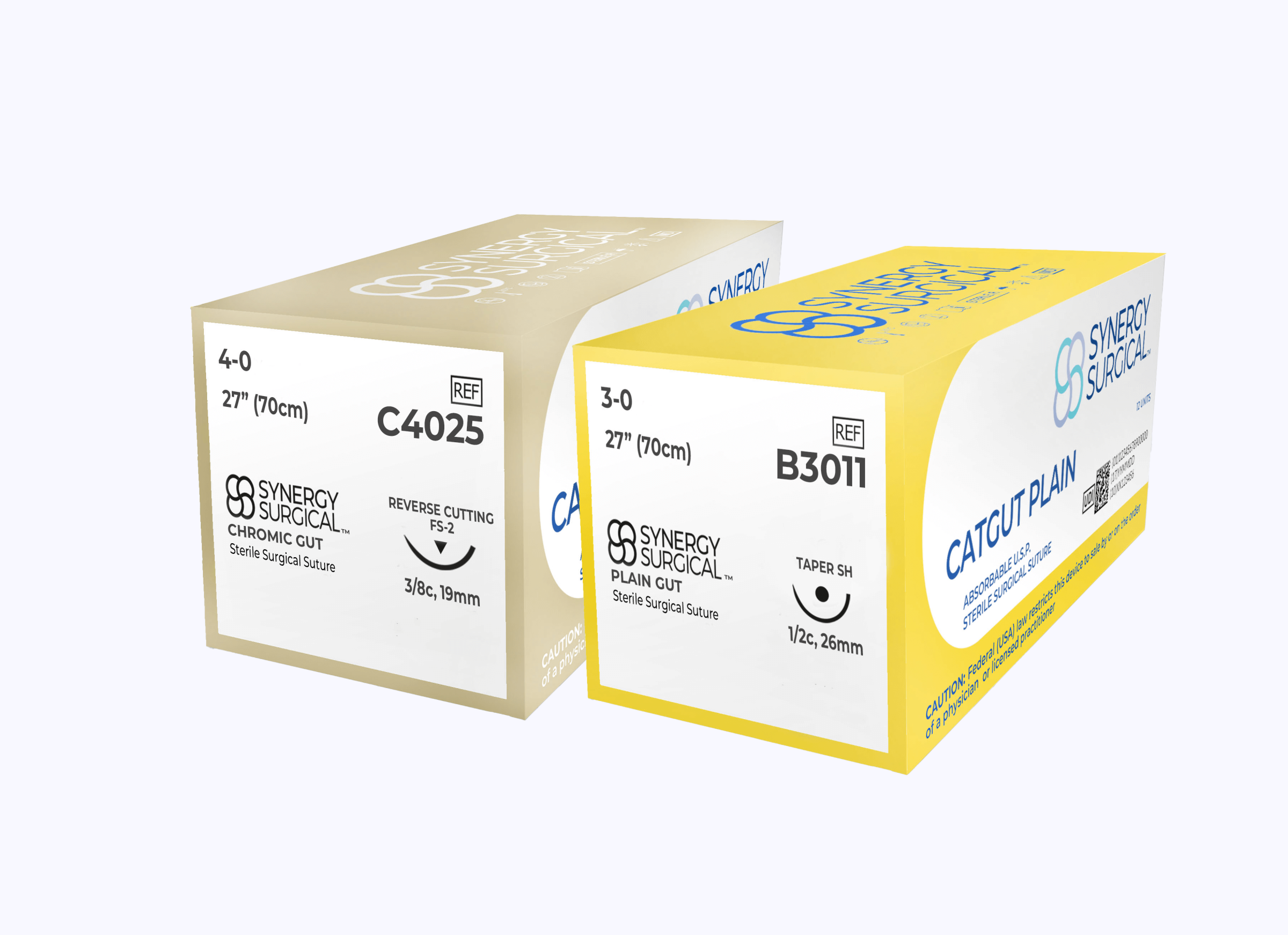
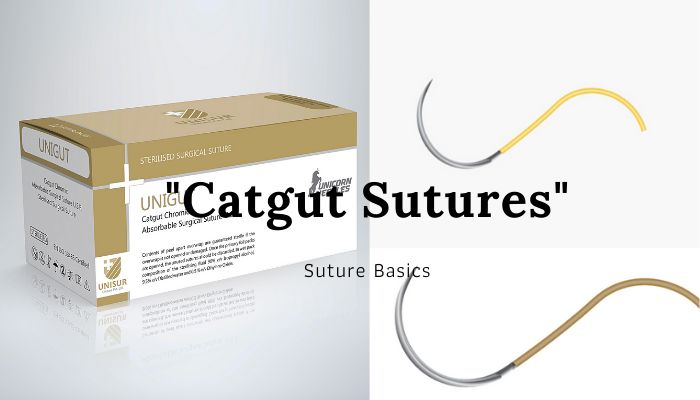
| Property | Detail |
|---|---|
| Source | Sheep submucosa or beef serosa (purified collagen) |
| Structure | Twisted multifilament (tan/yellow colored) |
| Tensile strength | Lasts 7-10 days |
| Absorbed | ~70 days (enzymatic proteolysis) |
| Tissue reaction | HIGH |
| Knot security | Poor |
- Uses: Rapidly healing tissues - oral mucosa, small vessel ligatures, episiotomy, perineal repair, scalp deep layer
- Note: Absorbed faster in infected, ischemic, or highly vascularized tissue. Wet before use for better pliability. Yellow/tan color.
- Avoid: Any wound requiring support beyond 10 days, contaminated wounds
2. Chromic Catgut (Chromic Gut)

| Property | Detail |
|---|---|
| Source | Same as plain gut + chromic salt treatment |
| Structure | Twisted multifilament (brown/dark tan color) |
| Tensile strength | Lasts ~21 days |
| Absorbed | ~90 days |
| Tissue reaction | Moderate (chromic treatment slows enzymatic digestion) |
| Knot security | Moderate |
- Uses: Subcutaneous tissue, oral mucosa, scalp, episiotomy, gynecological procedures, circumcision, bladder
- Advantage over plain gut: Chromic salt cross-links collagen, slowing absorption and extending strength retention
- Brands: Chromic (Ethicon), Chromic (Medtronic)
- Color: Brown/dark tan. Distinguished from plain gut (yellow) by darker color.
B. SYNTHETIC ABSORBABLE
3. Polyglycolic Acid - Dexon (PGA)
| Property | Detail |
|---|---|
| Material | Polyglycolic acid polymer |
| Structure | Braided multifilament |
| Tensile strength | 50% at 3 weeks; 25% at 4 weeks |
| Absorbed | 60-90 days (hydrolysis) |
| Tissue reaction | Low |
| Knot security | Good |
- Brand: Dexon, Dexon Plus (coated - Medtronic)
- Uses: Deep tissue closure, subcutaneous, abdominal wall, ligatures, urological procedures
- Color: Undyed (off-white) or green
- Note: The original synthetic absorbable suture. Dexon Plus has poloxamer 188 coating to reduce tissue drag.
4. Polyglactin 910 - Vicryl

| Property | Detail |
|---|---|
| Material | Copolymer of glycolide (90%) + lactide (10%) |
| Structure | Braided multifilament |
| Tensile strength | 75% at 2 wks; 50% at 3 wks; 25% at 4 wks (half-life ~3 weeks) |
| Absorbed | 56-70 days (standard); 42 days (Rapide) |
| Tissue reaction | Very low |
| Knot security | Excellent |
- Brands: Coated Vicryl, Vicryl Rapide (Ethicon)
- Uses: Deep fascial closure, subcutaneous tissue, subcuticular skin, ophthalmology, bowel anastomosis, gynecology
- Vicryl Rapide: Fast-absorbing version for epidermal skin closure only - naturally falls off at ~7-10 days, eliminating the need for suture removal
- Color: Violet or undyed (white)
- Coating: Polyglactin 370 + calcium stearate = smooth passage through tissue
- Note: The most widely used absorbable suture in the world.
5. Polydioxanone - PDS II


| Property | Detail |
|---|---|
| Material | Polydioxanone polymer |
| Structure | Monofilament |
| Tensile strength | 70% at 2 wks; 50% at 4 wks; 25% at 6 wks (half-life ~6 weeks) |
| Absorbed | 180-210 days (~6 months) |
| Tissue reaction | Minimal (lowest of all absorbable sutures) |
| Knot security | Moderate (requires 4-5 throws due to memory/stiffness) |
- Brand: PDS II, PDS Plus Antibacterial (Ethicon)
- Uses: Abdominal wall/fascial closure (the recommended choice), cardiovascular surgery, pediatric surgery, tendon repair, urological repair
- Color: Violet (most common) or clear
- Key advantage: Monofilament = acapillary, does not wick bacteria. Longest strength retention of any absorbable suture.
"PDS has an advantage over polyglactin with a longer strength retention profile and absorption time; it is also a monofilament that may resist infection to a greater degree than braided suture." - Sabiston Textbook of Surgery
6. Poliglecaprone 25 - Monocryl
| Property | Detail |
|---|---|
| Material | Copolymer of glycolide + epsilon-caprolactone |
| Structure | Monofilament |
| Tensile strength | 50-60% at 1 week; 20-30% at 2 weeks; lost by 3 weeks |
| Absorbed | 91-119 days |
| Tissue reaction | Minimal |
| Knot security | Moderate (needs extra throws) |
- Brand: Monocryl, Monocryl Plus Antibacterial (Ethicon)
- Uses: Subcuticular skin closure (excellent cosmetic result), soft tissue approximation, plastic surgery, facial wounds
- Color: Undyed (clear) or violet
- Note: Extremely smooth and pliable - the smoothest of all absorbable monofilaments. Loses strength faster than PDS but very cosmetically forgiving on skin.
7. Polyglyconate - Maxon
| Property | Detail |
|---|---|
| Material | Polyglycolide-co-trimethylene carbonate |
| Structure | Monofilament |
| Tensile strength | 70% at 2 wks; 55% at 4 wks; >50% at 6 wks |
| Absorbed | ~180 days |
| Tissue reaction | Very low |
| Knot security | Moderate |
- Brand: Maxon (Medtronic/Covidien)
- Uses: Fascial closure, abdominal wall, cardiovascular, alternative to PDS
- Color: Green
- Note: Maintains better strength at 28 days vs. PDS in some comparative studies.
8. Glycomer 631 - Biosyn
| Property | Detail |
|---|---|
| Material | Glycolide (60%) + dioxanone (14%) + trimethylene carbonate (26%) |
| Structure | Monofilament |
| Tensile strength | 75% at 2 wks; 40% at 4 wks |
| Absorbed | 90-110 days |
| Tissue reaction | Very low |
- Brand: Biosyn (Medtronic)
- Uses: Soft tissue approximation, subcutaneous closure, alternative to Monocryl or PDS
- Color: Violet or undyed
PART 2 - NON-ABSORBABLE SUTURES
Must be removed from skin after healing, or left permanently in deep tissues.
A. NATURAL NON-ABSORBABLE
9. Surgical Silk
| Property | Detail |
|---|---|
| Material | Braided protein fibers from silkworm (Bombyx mori) |
| Structure | Braided multifilament |
| Tensile strength | Loses ~50% in 1 year; most by 2 years (slowly degrades) |
| Tissue reaction | MODERATE-HIGH (most reactive non-absorbable) |
| Knot security | EXCELLENT - gold standard |
| Handling | BEST of all sutures |
- Brand: Perma-Hand Silk (Ethicon), Sofsilk (Medtronic)
- Uses: Oral/dental surgery, cardiovascular ligatures, ophthalmic surgery, GI ligatures, vessel ties, skin closure where excellent handling matters
- Color: Black (most common) or white
- Note: The standard against which all sutures are compared for handling and knot tying. Technically "slowly biodegradable" - not truly permanent. Braided structure wicks bacteria - avoid in contaminated/infected wounds or where permanent implantation intended.
B. SYNTHETIC NON-ABSORBABLE
10. Nylon (Polyamide) - Ethilon / Dermalon

| Property | Detail |
|---|---|
| Material | Polyamide polymer |
| Structure | Monofilament (Ethilon, Dermalon) OR braided (Nurolon, Surgilon) |
| Tensile strength | ~15-20% loss per year via slow hydrolysis |
| Tissue reaction | Low |
| Knot security | POOR (monofilament) - requires 3-4 extra throws |
| Memory | HIGH - springs back to coiled shape |
- Brands: Ethilon (monofilament, Ethicon), Dermalon (monofilament, Medtronic), Nurolon (braided, Ethicon), Surgilon (braided, Medtronic)
- Uses: Skin closure (the most commonly used non-absorbable skin suture), plastic surgery, ophthalmology, neurosurgery, microsurgery (fine gauges 8-0 to 10-0), retention sutures
- Color: Black (most common), clear, or blue
- Note: High memory makes handling tricky. Not truly permanent - loses strength slowly via hydrolysis over years.
11. Polypropylene - Prolene / Surgipro
| Property | Detail |
|---|---|
| Material | Isotactic crystalline polypropylene |
| Structure | Monofilament |
| Tensile strength | TRUE permanent - does not degrade in tissues |
| Tissue reaction | LOWEST of all sutures |
| Knot security | Poor - requires 4-5 throws minimum |
| Memory | Very high - difficult to handle, springs back |
| Elasticity | Slight - accommodates tissue edema |
- Brands: Prolene (Ethicon), Surgipro / Surgilene (Medtronic)
- Uses: Vascular anastomoses, cardiac surgery (valve repair/replacement), hernia repair, subcuticular skin closure (cosmetic), abdominal wall, tendon repair, retention sutures
- Color: Blue (highly visible intraoperatively) or clear
- Note: The only truly permanent monofilament. Acapillary, inert, non-thrombogenic = ideal for cardiovascular use. Blue color is deliberately chosen for visibility. Prolene's slight elasticity allows it to give with post-op tissue swelling and return to normal tension.
12. Polyester - Ethibond / Mersilene / Ti-Cron
| Property | Detail |
|---|---|
| Material | Polyethylene terephthalate (PET) |
| Structure | Braided multifilament |
| Tensile strength | TRUE permanent - does not lose strength over time |
| Tissue reaction | Low |
| Knot security | Excellent |
| Handling | Excellent (braided) |
- Brands: Mersilene (uncoated, Ethicon), Ethibond Excel (coated with polybutylate, Ethicon), Ti-Cron (coated, Medtronic), FiberWire (Arthrex - for orthopaedic)
- Uses: Cardiac surgery (valve replacement/repair, annuloplasty rings), vascular surgery, orthopaedic tendon/ligament repair, hernia mesh fixation
- Color: Green, white, or multi-colored (FiberWire)
- Note: Among the strongest non-absorbable sutures. Uniform permanent strength makes it the go-to for cardiac valve procedures. Ethibond coating reduces tissue drag without affecting absorption.
13. Polybutester - Novafil
| Property | Detail |
|---|---|
| Material | Block copolymer of polyglycol terephthalate + polybutylene terephthalate |
| Structure | Monofilament |
| Tissue reaction | Low |
| Elasticity | Superior elasticity (unique among non-absorbables) |
- Brand: Novafil (Medtronic)
- Uses: Skin closure where swelling anticipated, vascular anastomosis (elasticity accommodates pulsatile vessel movement)
- Color: Blue
- Note: More elastic than both nylon and polypropylene. Accommodates post-op swelling, then returns to normal tension as edema resolves.
14. Stainless Steel Wire
| Property | Detail |
|---|---|
| Material | 316L stainless steel |
| Structure | Monofilament OR twisted multifilament |
| Tensile strength | HIGHEST of all suture materials |
| Tissue reaction | Low |
| Knot security | Good once secured |
| Handling | WORST - kinks, cuts gloves, fragments |
- Uses: Sternal closure after cardiac surgery (primary indication), orthopaedic cerclage wires, tendon repair (distal forearm), infected wounds where other materials fail
- Color: Silver/metallic
- Note: Difficult to handle, can cut through soft tissue, creates bulky knots. Twist instead of throw for knot security. MRI compatibility issues at higher gauges.
15. Barbed Sutures - V-Loc / Stratafix / Quill
| Property | Detail |
|---|---|
| Material | PDS (absorbable) or polypropylene/PVDF (non-absorbable) |
| Structure | Monofilament + helical barbs cut into surface |
| Mechanism | Forward purchase allowed; backslide resisted - NO knot needed |
| Tensile strength | Reduced ~25-30% vs. parent material (barbs weaken core) |
- Brands: V-Loc (Medtronic), Stratafix (Ethicon), Quill (Surgical Specialties)
- Uses: Laparoscopic/robotic fascial closure, bowel anastomosis, plastic surgery, total joint capsule closure, abdominal wall, vaginal cuff closure
- Advantages:
- Eliminates knot (the weakest point of any suture line)
- Distributes tension evenly along wound length
- Faster placement in laparoscopic settings
- Disadvantages: Weakens the suture core, difficult to remove if needed, limited data on long-term hernia formation
PART 3 - SUTURE SIZE (USP System)
| USP Size | Metric | Common Use |
|---|---|---|
| 10-0 | 0.2 | Microsurgery, corneal, ophthalmic |
| 9-0 | 0.3 | Microsurgery |
| 8-0 | 0.4 | Microsurgery, ophthalmic |
| 7-0 | 0.5 | Neurosurgery, fine vascular, ophthalmic |
| 6-0 | 0.7 | Facial skin, plastic surgery, pediatric skin |
| 5-0 | 1.0 | Face, plastic surgery, hand |
| 4-0 | 1.5 | Scalp, hand, extremity skin, subcuticular |
| 3-0 | 2.0 | Subcutaneous closure, body skin, tendon |
| 2-0 | 3.0 | Deep fascial closure, abdominal wall |
| 0 | 3.5 | Abdominal fascia, orthopaedics |
| 1 | 4.0 | Heavy fascial closure |
| 2 | 5.0 | Sternum, orthopaedics |
Remember: Larger number = smaller diameter. A 3-0 is ~52% stronger than 4-0; 4-0 is ~66% stronger than 5-0. - Campbell's Operative Orthopaedics 15th ed.
PART 4 - SITE-SPECIFIC QUICK SELECTION
| Site | Preferred Suture | Size |
|---|---|---|
| Facial skin | Nylon (Ethilon) or Prolene | 5-0 to 6-0 |
| Scalp skin | Nylon or staples | 3-0 to 4-0 |
| Body skin | Nylon (Ethilon) | 3-0 to 4-0 |
| Subcutaneous fat | Vicryl or Monocryl | 3-0 to 4-0 |
| Subcuticular | Monocryl or Vicryl Rapide | 4-0 to 5-0 |
| Abdominal fascia | PDS (slow-absorbing) | 0 or loop |
| Bowel anastomosis | Vicryl or PDS | 3-0 to 4-0 |
| Vascular anastomosis | Prolene | 5-0 to 7-0 |
| Cardiac valve/annulus | Ethibond (polyester) | 2-0 to 3-0 |
| Sternal closure | Stainless steel wire | #5 gauge |
| Tendon (core) | FiberWire / braided polyester | 3-0 to 4-0 |
| Tendon (epitendinous) | Prolene or Nylon | 5-0 to 6-0 |
| Oral mucosa | Chromic catgut or Vicryl Rapide | 3-0 to 4-0 |
| Bladder / ureter | Vicryl or PDS | 3-0 to 4-0 |
| Ophthalmic | Vicryl or Nylon | 8-0 to 10-0 |
PART 5 - MASTER COMPARISON TABLE
| Suture | Absorbable? | Type | Strength Duration | Reaction | Knot Security | Handling | Best For |
|---|---|---|---|---|---|---|---|
| Plain Catgut | Yes (natural) | Twisted mono-like | 7-10 days | HIGH | Poor | Moderate | Oral mucosa, ligatures |
| Chromic Catgut | Yes (natural) | Twisted | 21 days | Moderate | Moderate | Moderate | Subcutaneous, oral, perineum |
| Dexon (PGA) | Yes (synthetic) | Braided | 3-4 weeks | Low | Good | Good | Deep tissue, ligatures |
| Vicryl | Yes (synthetic) | Braided | 3-4 weeks | Very low | Excellent | Very good | Universal deep closure |
| Vicryl Rapide | Yes (synthetic) | Braided | 7-10 days | Very low | Good | Good | Epidermal skin only |
| Monocryl | Yes (synthetic) | Monofilament | 2-3 weeks | Minimal | Moderate | Excellent (soft) | Subcuticular skin |
| PDS II | Yes (synthetic) | Monofilament | 6 wks half-life | Minimal | Moderate | Stiff | Abdominal fascia |
| Maxon | Yes (synthetic) | Monofilament | 6+ weeks | Very low | Moderate | Moderate | Fascia (PDS alternative) |
| Silk | No (natural) | Braided | ~2 yrs (degrades) | Moderate-HIGH | BEST | BEST | Oral, cardiac ties |
| Cotton | No (natural) | Twisted | Moderate | Moderate | Good | Good | Ligatures (rarely used) |
| Nylon (Ethilon) | No (synthetic) | Monofilament | ~20%/yr loss | Low | Poor | Fair (high memory) | Skin closure |
| Prolene | No (synthetic) | Monofilament | TRUE permanent | LOWEST | Poor | Difficult (memory) | Vascular, cardiac |
| Polyester (Ethibond) | No (synthetic) | Braided | TRUE permanent | Low | Excellent | Very good | Cardiac valves, ortho |
| Novafil | No (synthetic) | Monofilament | Near permanent | Low | Moderate | Good | Skin, vascular |
| Steel Wire | No (metal) | Mono/twisted | TRUE permanent | Low | Good | WORST | Sternum, orthopaedic |
| Barbed (V-Loc) | Variable | Monofilament + barbs | Variable | Low | None (knotless) | Moderate | Laparoscopic fascia, bowel |
10 Golden Rules
- Monofilament = acapillary - will not wick bacteria - preferred in contaminated fields
- Braided = better handling and knot security - easier to work with
- PDS is the standard for laparotomy fascial closure - slow absorption, monofilament, resists infection
- Vicryl is the world's most used absorbable suture for deep tissue
- Prolene is the only truly permanent monofilament - zero strength loss over time
- Silk has the best handling and knot security but causes the most tissue reaction
- Natural sutures degrade faster and cause more inflammation than synthetic
- Barbed sutures eliminate the knot - the weakest point in any suture line
- Smaller suture size = less tissue trauma - use the smallest that will hold the tissue
- Absorbable sutures lose strength before they are fully absorbed - plan support duration accordingly
Sources: Roberts & Hedges' Clinical Procedures in Emergency Medicine; Sabiston Textbook of Surgery; Fischer's Mastery of Surgery 8th ed.; Campbell's Operative Orthopaedics 15th ed.
This is a shared conversation. Sign in to Orris to start your own chat.