
Pph
Asking for Preferences
What would you like to know about PPH?
Asking for Preferences
What aspect of postpartum hemorrhage do you need?
I'll do a full comprehensive review of postpartum hemorrhage.
Reading File
Finding Sources
Searching PubMed
"postpartum hemorrhage"[MeSH Terms] AND management
Reading File
Reading File
Finding Sources
Reading File
Reading File
Finding Sources
Reading File
Reading File
Reading File
Searching Images
postpartum hemorrhage uterine atony management bimanual compression
I now have comprehensive information to compile a thorough review of PPH. Let me synthesize everything.
Postpartum Hemorrhage (PPH) — Comprehensive Review
Definition
PPH is traditionally defined as blood loss >500 mL after vaginal delivery or >1000 mL after cesarean delivery. However, because uncomplicated deliveries often exceed 500 mL without hemodynamic compromise, a broader clinical definition is widely adopted:
Any bleeding causing signs/symptoms of hemodynamic instability, or that would cause instability if untreated.
- Primary (early) PPH: blood loss within the first 24 hours of delivery
- Secondary (late) PPH: blood loss from 24 hours to 6 weeks postpartum
Tintinalli's Emergency Medicine notes that a 10% drop in hematocrit, need for PRBC transfusion, or hypovolemic symptoms are also operational definitions.
Epidemiology
PPH is the leading cause of maternal mortality worldwide and its incidence is rising. Physiologic changes of pregnancy (plasma volume ↑40%, RBC volume ↑25%) can mask early hemorrhage — up to 30% of total blood volume may be lost before blood pressure drops, with tachycardia often being the first sign. — Miller's Anesthesia, 10e
Causes — The "4 Ts"
| T | Cause | Approx. Contribution |
|---|---|---|
| Tone | Uterine atony | ~70–80% |
| Tissue | Retained placental fragments, placenta accreta | ~10% |
| Trauma | Cervical, vaginal, perineal lacerations; uterine rupture; inversion | ~20% |
| Thrombin | Coagulopathy (DIC, hereditary) | Uncommon |
Primary PPH Causes
- Uterine atony (most common)
- Cervical/vaginal/perineal lacerations
- Retained placental fragments or abnormal implantation (placenta accreta spectrum)
- Uterine rupture or inversion
- Hereditary coagulopathy
Secondary PPH Causes (24 h – 6 weeks)
- Placental site subinvolution
- Retained placental tissue
- Genital tract wounds
- Uterogenital infection — Tintinalli's; Textbook of Family Medicine 9e; Creasy & Resnik's MFM
Risk Factors
For uterine atony:
- Uterine overdistention (hydramnios, multiple gestation, macrosomia)
- Prolonged or rapid labor
- Chorioamnionitis / intraamniotic infection
- High parity (multiparity)
- Oxytocin use during labor; tocolytics (magnesium sulfate, terbutaline)
- Volatile anesthetic agents
- Retained placenta
For hemorrhage at cesarean delivery:
- Preeclampsia
- Obesity
- Previous postpartum hemorrhage
- General anesthesia
- Disorders of active labor
For uterine rupture:
- Previous uterine surgery (cesarean, myomectomy)
- Obstructed labor, abnormal fetal lie, high parity, multiple gestations
Initial Assessment & Resuscitation
- Monitor vital signs frequently; early tachycardia is often the first sign
- Access: Establish at least two large-bore IV lines
- Fluids: Start lactated Ringer's; prepare for transfusion
- Labs: CBC with platelets, fibrinogen, fibrin split products, PT/PTT, blood type and crossmatch
- Oxygen: Supplement O₂ to enhance cellular delivery
- Identify the source: Uterine atony? Laceration? Retained placenta? Coagulopathy? Uterine inversion?
- Real-time ultrasound is helpful to identify retained placenta or blood clots — Creasy & Resnik's MFM; Textbook of Family Medicine 9e
Management
Step 1 — Active Management of Third Stage of Labor (Prevention)
- Early administration of oxytocin after delivery
- Early cord clamping
- Controlled cord traction → Reduces PPH by approximately two-thirds — Textbook of Family Medicine 9e
Step 2 — Medical (Uterotonic) Management
| Drug | Dose/Route | Notes |
|---|---|---|
| Oxytocin (1st line) | 20–30 units in 1 L IV fluid, ≤100 mU/min | Never bolus IV (hypotension risk). Fluid overload risk with large amounts. |
| Methylergonovine (ergot) | 0.2 mg IM q2–4h | Contraindicated in hypertension, cardiac disease. Causes vasoconstriction, coronary artery spasm, pulmonary HTN. Never IV. |
| Carboprost (15-methyl PGF2α) | 0.25 mg IM q15–90 min (max 8 doses) | Contraindicated/caution in asthma (bronchospasm), cardiovascular disease. Monitor O₂ sat. |
| Misoprostol (PGE1 analogue) | 600–1000 µg oral/sublingual/vaginal/rectal | Useful when oxytocin fails or is unavailable; effective in desensitized patients. |
Tranexamic acid: An antifibrinolytic with a landmark RCT (WOMAN trial, n=20,060) showing it reduced death due to bleeding when given within 3 hours of PPH diagnosis (RR 0.69; 95% CI 0.52–0.91; p=0.008) with no increase in thromboembolic events. ACOG recommends considering it when initial medical therapy fails. Administer after cord clamping (crosses placenta). Prophylactic use does not reduce PPH risk (per a multicenter RCT of 4,079 women). — Miller's Anesthesia, 10e
Step 3 — Bimanual Uterine Massage & Compression
Place a fist in the anterior fornix and compress the uterine fundus against the suprapubic hand simultaneously while oxytocin is infusing. This is the first physical intervention for uterine atony.
Step 4 — Evaluation for Non-Atony Causes
If the fundus is firm but bleeding continues:
- Laceration: Inspect cervix, vagina, and perineum with adequate lighting and exposure; repair directly
- Retained placenta: Manual uterine exploration → curettage if confirmed
- Uterine inversion: Manual replacement (push the fundus up through the vagina and into the abdominal cavity); IV hydration; magnesium sulfate or tocolytics to relax the uterus may assist; can be extremely painful and may require general anesthesia
- Coagulopathy: Evidence of bleeding at venipuncture sites → check fibrinogen, DIC panel
- Hematomas: Vulvar/vaginal mass; <4 cm stable → observation + ice; larger/expanding → incise, irrigate, pack, ligate vessels
Step 5 — Mechanical Tamponade (Before Surgery)
- Bakri balloon / Foley catheter: Uterine cavity tamponade — particularly effective at low placental implantation sites
- Jada System (intrauterine vacuum-induced device): >90% success rate at median 3 minutes in a recent trial
- Uterine packing with sterile gauze: retrospective evidence supports efficacy
- Non-pneumatic antishock garments: Useful in remote settings or delayed transport
Step 6 — Interventional & Surgical Options
If all medical/mechanical measures fail → Laparotomy (place patient in semilithotomy position):
- Selective pelvic vessel embolization (interventional radiology) — ~85–90% success (same as other invasive options per systematic review)
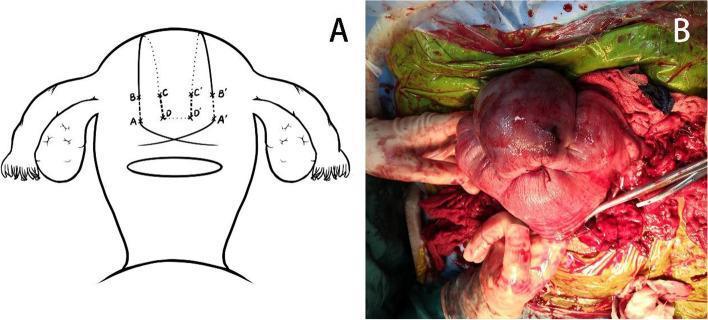
- Compression sutures (e.g., B-Lynch sutures) — mechanical compression of atonic uterus
- Arterial ligation: uterine artery ligation, ovarian artery ligation, internal iliac ligation
- Peripartum hysterectomy: definitive last resort; common indications include uterine atony unresponsive to all measures, placenta accreta, uterine rupture
No single invasive option is superior; all have ~85–90% success rates. — Miller's Anesthesia, 10e; Creasy & Resnik's MFM
Massive Obstetric Hemorrhage Protocol
- Multidisciplinary activation: Anesthesiology, Obstetrics, OR nurses, Neonatology, Interventional Radiology, Gynecologic Surgery, Blood Bank
- Massive transfusion protocol (MTP): Early blood product administration with FFP:PRBC ratios (specific obstetric ratios debated — not simply extrapolated from trauma)
- Viscoelastic hemostatic tests (TEG/ROTEM): Guide diagnosis of coagulopathy, predict PPH, monitor fibrinolysis
- Cryoprecipitate / fibrinogen concentrate: Give early — fibrinogen is likely depleted
- Recombinant activated Factor VIIa: Not universally recommended; multiple adverse events reported with off-label use
- Cell salvage: Effective and cost-effective in massive obstetric hemorrhage; use leukocyte reduction filter; if Rh-negative, give anti-D Ig + Kleihauer–Betke testing — Miller's Anesthesia, 10e
Key Contraindications Summary
| Drug | Contraindication |
|---|---|
| Methylergonovine | Hypertension, cardiac disease (IV route absolutely contraindicated) |
| Carboprost (PGF2α) | Asthma, cardiovascular disease |
| Misoprostol | Relatively fewer contraindications; preferred when others are CI |
Recent Evidence (2024–2025)
A 2025 Cochrane network meta-analysis (PMID 40237648) updated comparative effectiveness of uterotonic agents for preventing PPH, providing the most current ranking of agents. A separate 2025 Cochrane review (PMID 39911088) assessed blood/blood product transfusion strategies in PPH management — these may update your local protocols.
Sources
- Creasy & Resnik's Maternal-Fetal Medicine: Principles and Practice
- Miller's Anesthesia, 10e
- Tintinalli's Emergency Medicine: A Comprehensive Study
- Textbook of Family Medicine, 9e
- WOMAN Trial (PMID 40237648 / 39911088 for updated Cochrane reviews)
This is a shared conversation. Sign in to Orris to start your own chat.