
Benzodiazepines explain in detail
Reading File
Now let me search the medical library for comprehensive benzodiazepine content across multiple aspects simultaneously.
Finding Sources
Finding Sources
Searching PubMed
benzodiazepines pharmacology clinical use
Good. Now let me read the key benzodiazepine sections from Katzung, Goodman & Gilman, Kaplan & Sadock, and Lippincott simultaneously.
Reading File
Reading File
Reading File
Excellent. Let me now read the full benzodiazepine sections from Katzung and Lippincott in parallel for pharmacokinetics, clinical uses, and adverse effects.
Reading File
Reading File
Let me get more content on pharmacokinetics, clinical uses, adverse effects, and withdrawal from both texts in parallel.
Reading File
Reading File
Now let me get the pharmacokinetics details and the section on clinical uses, withdrawal from Katzung, and also fetch the GABA receptor diagram image.
Reading File
Loading Image
Loading Image
I now have rich content from Katzung and Lippincott. Let me get the clinical uses (pharmacokinetics table) and the Kaplan & Sadock section on indications and withdrawal in parallel.
Reading File
Reading File
I now have very rich content from multiple authoritative sources. I have enough to write a comprehensive, detailed answer. Let me compile everything.
Benzodiazepines - A Comprehensive Overview
1. Introduction and Chemical Structure
Benzodiazepines (BZDs) are a class of psychoactive drugs that act as positive allosteric modulators of the GABA-A receptor. The name derives from their core chemical structure: a benzene ring fused to a 1,4-diazepine ring (a seven-membered ring containing two nitrogen atoms). A phenyl ring is attached at the 5-position, and substitutions at positions R1, R2, R3, R7, and R2' determine the specific properties of each drug.
Core structure with variable R-group positions:
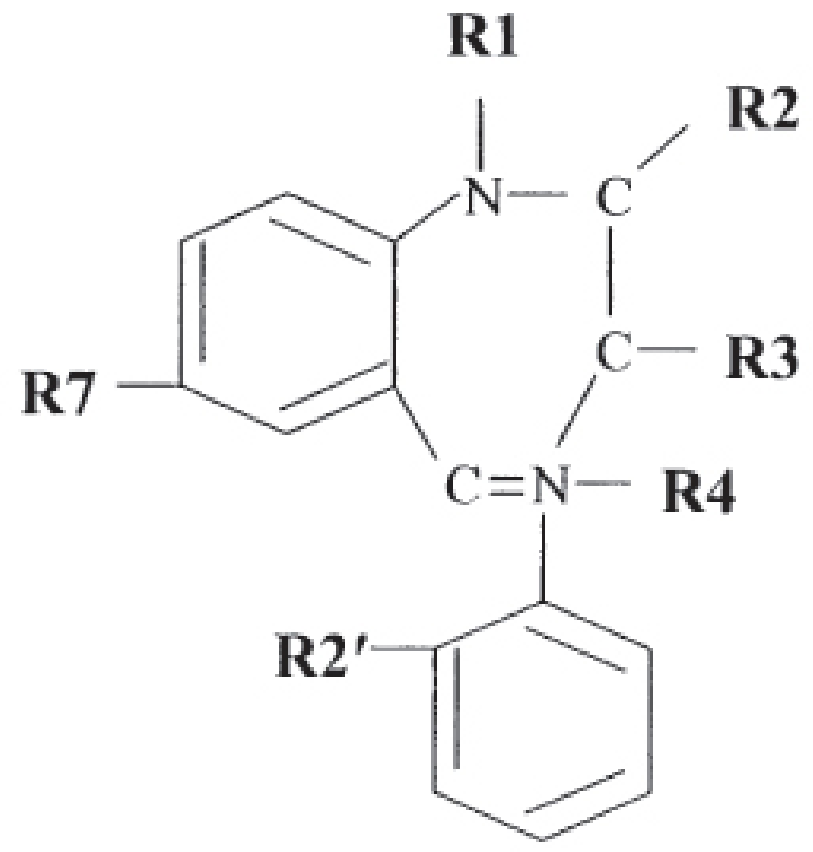
Examples with their substitutions (from Kaplan & Sadock):
| Drug | R1 | R2 | R3 | R7 | R2' |
|---|---|---|---|---|---|
| Alprazolam | - | Fused triazolo ring | -H | -Cl | -H |
| Diazepam | -CH₃ | =O | -H | -Cl | -H |
| Lorazepam | -H | =O | -OH | -Cl | -Cl |
| Clonazepam | -H | =O | -H | -NO₂ | -Cl |
| Midazolam | - | Fused imidazo ring | -H | -Cl | -F |
2. Mechanism of Action
GABA-A Receptor Complex
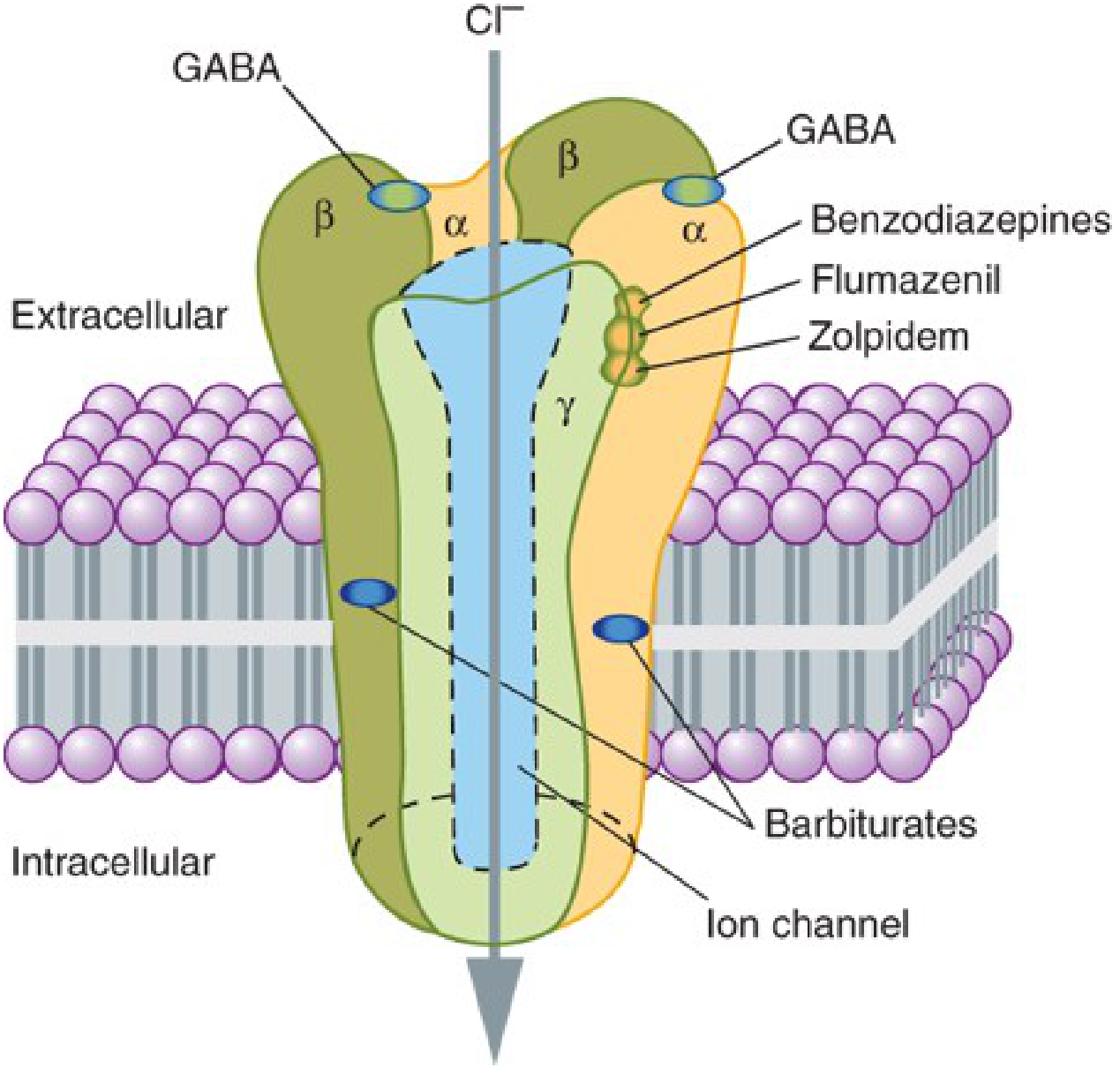
Benzodiazepines exert their effects by binding to the GABA-A receptor, which is a ligand-gated chloride ion channel. The receptor is a hetero-oligomeric glycoprotein composed of five membrane-spanning subunits, typically arranged as 2α + 2β + 1γ in the most common brain isoform.
GABA-A Receptor - Benzodiazepine binding site:
Key points about the mechanism:
- GABA binding sites are located between adjacent α and β subunits (two sites per receptor). When GABA binds, it triggers chloride channel opening, causing membrane hyperpolarization.
- Benzodiazepine binding site (the "BZ site") is located at the interface between an α and a γ subunit - a distinct site from both the GABA and barbiturate binding sites.
- Benzodiazepines do NOT directly open chloride channels. Instead, they act as positive allosteric modulators - they increase the frequency of chloride channel opening events in response to GABA. This is in contrast to barbiturates, which increase the duration of channel opening and can also directly activate the channel at high concentrations.
- Because BZDs require GABA to be present, they have a ceiling effect and a much higher therapeutic index than barbiturates.
Source: Katzung's Basic and Clinical Pharmacology, 16th Edition - "The enhancement in chloride ion conductance induced by the interaction of benzodiazepines with GABA takes the form of an increase in the frequency of channel-opening events."
GABA-A Receptor Subunit Selectivity and Pharmacologic Effects
Benzodiazepines bind to GABA-A receptor isoforms containing α1, α2, α3, and α5 subunits (those with a conserved histidine residue in the N-terminal domain). Genetic knockout studies in mice have revealed that specific subunits mediate different pharmacologic actions:
| α Subunit | Pharmacologic Effects Mediated |
|---|---|
| α1 | Sedation, amnesia, ataxia, hypnosis |
| α2, α3 | Anxiolytic and muscle-relaxing effects |
| α5 | Memory impairment (hippocampal) |
This explains why no single BZD is purely anxiolytic - they all activate all four subunit types, producing a combined profile of sedation + anxiolysis + muscle relaxation + anticonvulsant activity.
Receptor Ligand Types
Five types of compounds can bind the BZ site:
- Nonselective full agonists (e.g., all benzodiazepines) - increase GABA receptor affinity at all BZ-sensitive receptor subtypes → increase chloride channel opening frequency
- Selective full agonists (e.g., zolpidem, zaleplon) - same effect but selective for α1-containing receptors (BZ1 subtype) → primarily sedative-hypnotic with less anxiolytic/muscle relaxant effect
- Partial agonists - less efficacious than full agonists; may have fewer side effects
- Inverse agonists (e.g., β-carbolines like β-CCB) - reduce GABA receptor affinity → decrease chloride channel opening → CNS excitation, anxiety, and seizures
- Antagonists (e.g., flumazenil) - occupy the BZ site without affecting receptor signaling; block both agonists and inverse agonists
Source: Kaplan & Sadock's Comprehensive Textbook of Psychiatry
3. Classification by Duration of Action
This is one of the most clinically important ways to classify benzodiazepines:
Ultra-Short Acting (t½ < 6 hours)
- Triazolam (t½ ~4 h) - hypnotic; risk of inter-dose withdrawal and daytime anxiety
Short Acting (t½ 6–12 hours)
- Oxazepam - no active metabolites; safe in liver disease/elderly
- Lorazepam (t½ ~12 h) - no active metabolites; preferred IV/IM agent
- Alprazolam - potent; high abuse potential
Intermediate Acting
- Temazepam - hypnotic
- Estazolam - hypnotic
Long Acting (t½ > 24 hours)
- Diazepam (t½ 20–100 h; active metabolite desmethyldiazepam t½ up to 200 h) - first-line for alcohol withdrawal, status epilepticus
- Chlordiazepoxide - alcohol withdrawal
- Clonazepam - antiepileptic; panic disorder
- Flurazepam - hypnotic; long-acting metabolite causes daytime sedation
- Clorazepate - pro-drug; converted to desmethyldiazepam in GI tract
The long-acting drugs accomplish gradual self-tapering as they are slowly eliminated, making withdrawal symptoms milder. Short-acting drugs carry more risk of inter-dose withdrawal and more intense discontinuation syndromes.
4. Pharmacokinetics
Absorption
Most BZDs are well absorbed orally. Diazepam and clorazepate have the fastest absorption (fastest onset). IM absorption is erratic for most BZDs except lorazepam and midazolam. IV route gives the most predictable pharmacokinetics.
Distribution
Benzodiazepines are highly lipophilic and have large volumes of distribution. They cross the blood-brain barrier rapidly. Diazepam, being highly lipophilic, has a rapid CNS onset but also redistributes quickly, explaining its short duration of action despite a long terminal half-life.
Metabolism
Most BZDs undergo hepatic metabolism via CYP3A4 (and CYP2C19 for diazepam). Three important pathways:
- Phase I (oxidation/N-dealkylation) → often produces active metabolites. Diazepam → desmethyldiazepam (active) → oxazepam → glucuronide (inactive). This greatly prolongs effective duration.
- Conjugation only (no Phase I) - Lorazepam, oxazepam, and temazepam undergo direct glucuronidation ("LOT" rule - Lorazepam, Oxazepam, Temazepam). These are safer in liver disease, elderly, and neonates because they do not accumulate.
- Prodrug activation - Clorazepate is decarboxylated in the stomach to desmethyldiazepam before absorption.
Protein Binding
BZDs are highly protein bound (80-99%). This can lead to drug interactions when co-administered with other highly protein-bound drugs.
Elimination
Half-lives vary enormously (see classification above). In the elderly and in liver disease, Phase I metabolism is impaired → avoid long-acting BZDs with active metabolites; prefer LOT agents.
5. Pharmacological Effects (Organ-Level)
CNS Effects
- Anxiolysis - reduction of anxiety without marked sedation at low doses (mediated via α2/α3)
- Sedation/Hypnosis - at higher doses; promote sleep by reducing sleep-onset latency and nocturnal awakenings (mediated via α1); reduce deep sleep (NREM stages 3-4) and suppress REM sleep
- Anterograde amnesia - impairs formation of new memories; clinically useful for procedural sedation
- Anticonvulsant effects - elevate seizure threshold; used for acute seizure termination (status epilepticus) and chronic epilepsy (clonazepam)
- Muscle relaxation (central) - reduce polysynaptic reflexes at spinal cord level; used in spasticity and tetanus
- Disinhibition - paradoxical excitement, talkativeness, emotional lability can occur (more likely at high doses or in certain personality types)
Respiratory Effects
Unlike barbiturates, benzodiazepines produce minimal respiratory depression at therapeutic doses because:
- They are indirect modulators (require GABA to be present)
- They are localized to BZ-sensitive receptor subtypes, sparing respiratory control centers
- However, respiratory depression CAN occur at high doses or when combined with opioids, alcohol, or other CNS depressants
Cardiovascular Effects
Minimal at therapeutic doses. IV diazepam may cause mild decrease in BP and heart rate. Midazolam IV can cause significant cardiovascular depression.
6. Clinical Uses
| Indication | Preferred Agent(s) |
|---|---|
| Generalized anxiety disorder | Short-term: alprazolam, lorazepam, diazepam |
| Panic disorder | Alprazolam, clonazepam |
| Social anxiety disorder | Clonazepam |
| Insomnia | Triazolam (short-term), temazepam, flurazepam |
| Status epilepticus (acute) | IV lorazepam (first choice), IV diazepam |
| Epilepsy (chronic) | Clonazepam, clobazam |
| Alcohol withdrawal | Diazepam, chlordiazepoxide (long-acting preferred) |
| Procedural sedation/anesthesia | Midazolam IV (short-acting, potent amnestic) |
| Muscle spasm | Diazepam |
| Pre-operative anxiety | Midazolam, lorazepam |
| Acute agitation | Lorazepam IM |
| Tetanus | Diazepam (large doses) |
| Febrile seizures | Rectal or buccal diazepam |
Important prescribing note: SSRIs/SNRIs are now the first-line treatment for anxiety disorders. BZDs are often used as adjunct therapy during the 4-6 week delay before antidepressants take full effect, then tapered. Long-term BZD use for anxiety is generally discouraged due to dependence risk. - Lippincott Illustrated Reviews: Pharmacology
7. Adverse Effects
Common
- Sedation and drowsiness - most common; impairs psychomotor function
- Anterograde amnesia - dose-dependent
- Ataxia and incoordination - risk of falls in elderly
- Cognitive impairment - affects concentration and memory
- Paradoxical reactions - excitement, agitation, aggression (especially in children, elderly, personality disorders, brain damage)
- Dependence - physical and psychological; develops with regular use > 2-4 weeks
CNS-Specific
- "Hangover" effect - residual sedation next day (especially long-acting drugs: flurazepam, quazepam)
- Rebound insomnia - on discontinuation of short-acting hypnotics
- Behavioral disinhibition - particularly reported with triazolam; may occur with any BZD at high doses or in predisposed patients
Serious/Potentially Dangerous
- Respiratory depression - risk is greatly amplified with concurrent use of opioids, alcohol, or other CNS depressants; this combination is responsible for a significant number of overdose deaths
- Tolerance - develops to sedative and amnestic effects faster than to anxiolytic effects
Pregnancy and Neonates
Benzodiazepines cross the placenta readily. Based on multiple meta-analyses from Kaplan & Sadock:
- Association with preterm birth (OR 1.96), low birth weight (OR 2.24), NICU admission (OR 2.61)
- Spontaneous abortion risk elevated (OR 1.86)
- Risk of congenital malformations is not clearly established; concurrent use with antidepressants in the first trimester may increase malformation risk (OR 1.40)
- Neonates of mothers who take BZDs near delivery may show respiratory depression, hypothermia, and withdrawal symptoms ("floppy infant syndrome")
- Most BZDs are FDA Category D; they are NOT absolutely contraindicated but require careful risk-benefit analysis
8. Drug Interactions
| Interaction | Result |
|---|---|
| + Opioids | Profound CNS/respiratory depression (major risk) |
| + Alcohol | Enhanced CNS depression |
| + Other CNS depressants (antihistamines, barbiturates, general anesthetics) | Additive depression |
| + CYP3A4 inhibitors (ketoconazole, erythromycin, ritonavir) | Increased BZD levels → toxicity |
| + CYP3A4 inducers (rifampicin, carbamazepine) | Decreased BZD levels → reduced efficacy |
9. Tolerance and Dependence
Tolerance
- Develops particularly to sedative, hypnotic, and amnestic effects with repeated exposure
- Mechanism: prolonged BZD receptor occupancy → downstream calcium signaling cascade → receptor downregulation (pharmacodynamic tolerance)
- Metabolic tolerance (induction of CYP enzymes) plays a minor role, mainly with barbiturates
- Cross-tolerance exists among all sedative-hypnotics and alcohol
- Tolerance to anticonvulsant effects also develops, limiting long-term antiepileptic use
Physiologic Dependence
Develops with long-term regular use. Abrupt cessation leads to a withdrawal syndrome that can be life-threatening with high-dose, long-term use:
Mild-moderate withdrawal: anxiety, insomnia, restlessness, irritability, sweating, tremors, palpitations, nausea
Severe withdrawal: seizures (grand mal), delirium, psychosis, hallucinations
Severity of withdrawal depends on:
- Dose used (higher dose → more severe withdrawal)
- Duration of use
- Half-life of the drug - short-acting BZDs cause more intense but shorter withdrawal; long-acting BZDs cause delayed, milder withdrawal due to gradual self-tapering
Protracted Withdrawal Syndrome
Some patients experience prolonged low-grade withdrawal symptoms (anxiety, insomnia, sensory hypersensitivity) lasting months after discontinuation - especially after long-term, high-dose use. This is well documented in the Maudsley Deprescribing Guidelines.
Management of Dependence/Withdrawal
- Gradual dose tapering (typically over weeks to months)
- Can switch to long-acting BZD (e.g., diazepam) to smooth out the taper
- Adjuncts: propranolol (autonomic symptoms), carbamazepine (anticonvulsant), clonidine
10. Overdose and Reversal
Benzodiazepine Overdose
- BZDs alone are rarely fatal because of their ceiling effect and high therapeutic index
- However, combined with opioids, alcohol, or other CNS depressants, the combination can be fatal through respiratory depression
- Management: supportive care (airway, breathing, circulation), observation
Flumazenil (BZD Antagonist)
Flumazenil is a competitive antagonist at the BZ binding site. It reverses BZD sedation but use is controversial:
| Feature | Detail |
|---|---|
| Route | IV only |
| Onset | Rapid (~2 min) |
| Half-life | ~1 hour (brain t½ ~30 min) |
| Duration | Short - may need repeated doses for long-acting BZD overdose |
| Reversals | Reverses BZDs, zolpidem, zaleplon, eszopiclone |
| Does NOT reverse | Barbiturates, opioids, ethanol, other CNS depressants |
| Risks | Precipitates acute withdrawal in dependent patients; may precipitate seizures if BZD was controlling them or if co-ingestion with TCAs/antipsychotics |
The short duration of flumazenil relative to long-acting BZDs means re-sedation can occur; patients must be monitored. Routine use in overdose remains controversial.
11. Specific BZDs - Summary Table
| Drug | t½ (h) | Active Metabolites | Key Uses | Notes |
|---|---|---|---|---|
| Diazepam | 20-100 | Yes (desmethyldiazepam, t½ 200h) | Anxiety, alcohol withdrawal, status epilepticus, muscle spasm | Fastest oral absorption; IV for seizures |
| Lorazepam | 10-20 | No | Acute seizures, agitation, pre-op, alcohol withdrawal | LOT; preferred IM; IV |
| Alprazolam | 6-12 | Minimal | Panic disorder, GAD | High potency; high abuse potential |
| Clonazepam | 18-50 | No | Epilepsy, panic disorder, akathisia | Long-acting; slow onset |
| Midazolam | 1-4 | Minor | Procedural sedation, anesthesia induction, status epilepticus | Water-soluble; potent amnestic; IV/IM/IN |
| Oxazepam | 4-15 | No | Anxiety in elderly/liver disease | LOT; slowest oral absorption |
| Triazolam | 2-5 | No | Insomnia (short-term) | Risk of rebound; behavioral effects |
| Chlordiazepoxide | 5-30 | Yes | Alcohol withdrawal | Prototype BZD; first synthesized |
| Temazepam | 8-20 | No | Insomnia | LOT |
| Flurazepam | 1-4 | Yes (active t½ 47-100h) | Insomnia | Long residual effect; hangover |
| Clorazepate | - | Yes (prodrug → desmethyldiazepam) | Anxiety, partial seizures | Converted in GI tract |
12. Comparison: BZDs vs Barbiturates vs Z-drugs
| Feature | Benzodiazepines | Barbiturates | Z-drugs (zolpidem etc.) |
|---|---|---|---|
| Mechanism | Increase Cl⁻ channel frequency | Increase Cl⁻ channel duration; also direct activation at high doses | Same as BZDs but α1-selective |
| Receptor selectivity | α1, α2, α3, α5 (BZ1+BZ2) | Less selective; also AMPA antagonism | α1 only (BZ1) |
| Ceiling effect | Yes (requires GABA) | No (can act without GABA) | Yes |
| Safety in overdose | Relatively safe (alone) | Low therapeutic index; fatal easily | Relatively safe |
| Addiction potential | Moderate | High | Lower but present |
| Reversed by flumazenil | Yes | No | Yes |
| Clinical uses | Anxiety, seizures, muscle relaxation, sedation | Anesthesia, epilepsy (phenobarbital) | Insomnia |
13. Endogenous BZD Receptor Ligands
The existence of the BZ binding site implies the presence of endogenous ligands. Indeed, endozepines have been discovered - the most important being diazepam-binding inhibitor (DBI), also called acyl-CoA-binding protein (ACBP). DBI is an 86-amino acid peptide synthesized in astroglial cells and peripheral organs. Counterintuitively, it acts as a BZ inverse agonist - it promotes arousal by reducing GABA-A receptor affinity. DBI appears to fine-tune the arousal set-point in conjunction with other endogenous substances. - Kaplan & Sadock's Comprehensive Textbook of Psychiatry
14. Special Considerations
Elderly
- Increased sensitivity to CNS effects (falls, fractures, cognitive impairment)
- Impaired Phase I metabolism → accumulate long-acting drugs and their active metabolites
- Use LOT drugs (lorazepam, oxazepam, temazepam) that undergo only conjugation
- Included in the Beers Criteria as inappropriate for elderly
Hepatic Impairment
- Phase I metabolism impaired → use LOT drugs
- Avoid diazepam, chlordiazepoxide, flurazepam (extensive active metabolites)
Pregnancy
- Avoid if possible, especially in the first trimester
- If essential (e.g., status epilepticus), risks must be weighed against benefits
- Neonatal surveillance required if used near term
Alcohol Use Disorder
- Long-acting BZDs (diazepam, chlordiazepoxide) preferred for alcohol withdrawal to exploit self-tapering
- Never combine BZDs with active alcohol consumption
Sources:
- Katzung's Basic and Clinical Pharmacology, 16th Edition, pp. 605-614
- Lippincott Illustrated Reviews: Pharmacology - Chapter 16: Anxiolytic and Hypnotic Drugs
- Kaplan & Sadock's Comprehensive Textbook of Psychiatry - Benzodiazepine Receptor Ligands; GABA-A Receptors
- The Maudsley Deprescribing Guidelines - Protracted benzodiazepine withdrawal
- The Maudsley Prescribing Guidelines in Psychiatry, 15th Ed - Benzodiazepine misuse
This is a shared conversation. Sign in to Orris to start your own chat.