
Bell’s palsy treatment in emergency
Reading File
Bell's palsy in the ED is treated primarily with early corticosteroids (prednisone 60mg/day x 5 days, then taper) started within 72 hours of onset, plus antiviral agents (valacyclovir or acyclovir) in moderate-severe cases, and eye protection for incomplete eyelid closure.
Searching sources...
Finding Sources
Searching PubMed
"Bell palsy" AND treatment
Good. I have Tintinalli's (ED-specific), Harrison's, Adams and Victor's, Goldman-Cecil, and Bradley/Daroff. Reading the most relevant ones in parallel.
Reading File
Reading File
Reading File
Good content from Tintinalli's and Adams & Victor's. The Tintinalli text was truncated. Let me get the treatment section specifically from Tintinalli (the ED reference) and Harrison's treatment section.
Reading File
Reading File
Reading File
I now have excellent content from Tintinalli's Emergency Medicine, Harrison's, and Adams & Victor's. I have all I need for a thorough, well-cited answer.
Loading Image
I have all the information needed for a comprehensive emergency medicine-focused answer on Bell's palsy.
Bell's Palsy: Emergency Department Management
Background
Bell's palsy is the most common cause of unilateral facial paralysis, with an incidence of 23-25 per 100,000 annually (approximately 1 in 60 persons over a lifetime). It affects men and women equally. HSV-1 reactivation in the geniculate ganglion is the predominant cause; VZV accounts for up to one-third of cases. Risk factors include pregnancy (particularly the third trimester) and diabetes mellitus.
Step 1: Rule Out Dangerous Mimics
Before treating as Bell's palsy, exclude:
| Feature | Suggests Alternative Diagnosis |
|---|---|
| Forehead sparing | Central lesion - stroke (MCA territory) |
| Ipsilateral gaze palsy | Brainstem stroke (CN VII wraps around CN VI nucleus) |
| Vesicles in ear/palate | Ramsay Hunt syndrome (herpes zoster oticus) |
| Bilateral facial palsy | Lyme disease, sarcoidosis, Guillain-Barre |
| Ear pain + discharge + tender mastoid | Malignant otitis externa, mastoiditis |
| Gradual onset (>3 weeks) | Parotid/mass lesion |
Key exam point: Always test extraocular movements. Any forehead-sparing palsy or inability to abduct an eye requires urgent neuroimaging. - Tintinalli's Emergency Medicine, p. 1202
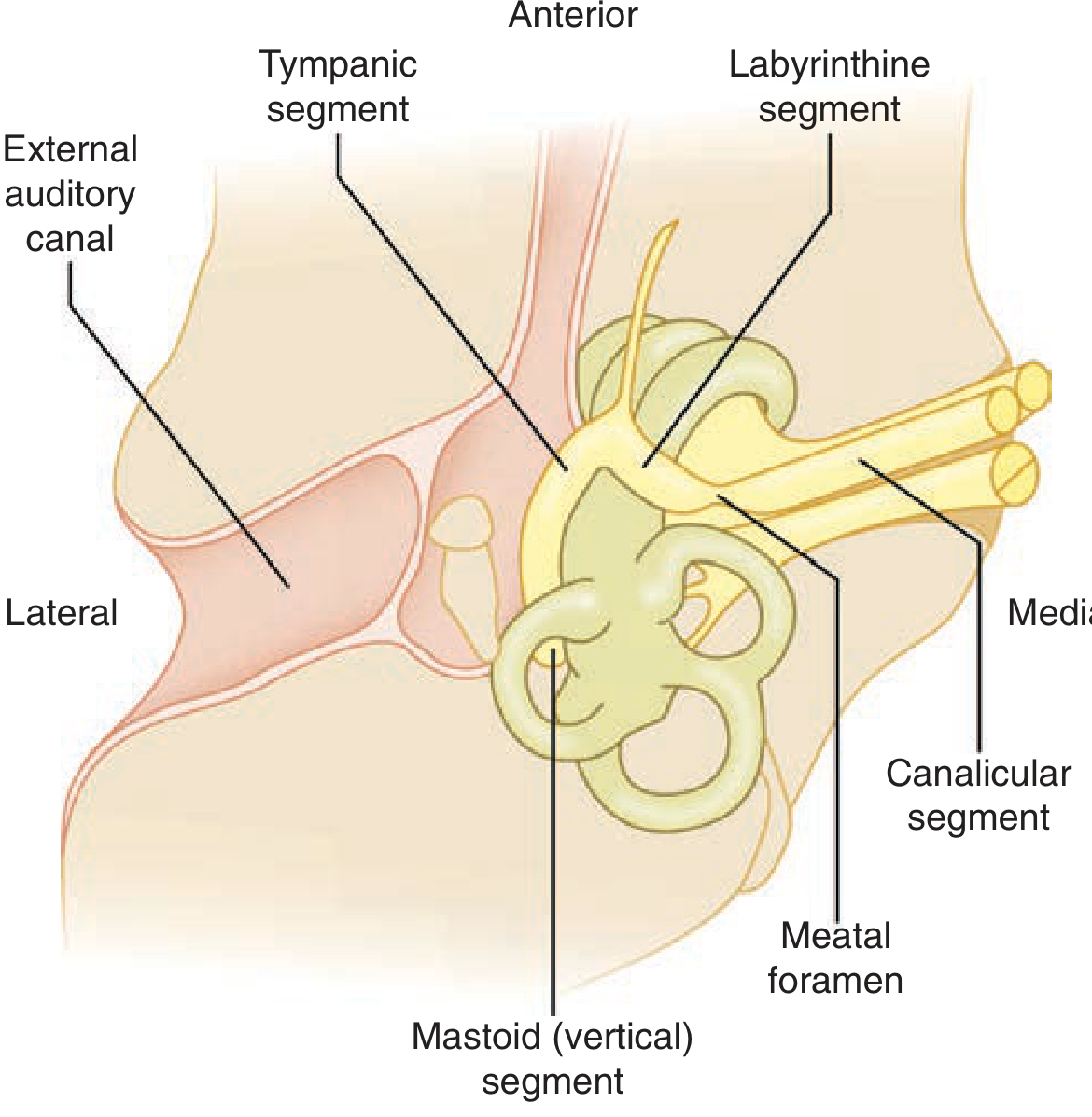
Step 2: Confirm Bell's Palsy
Classic features:
- Acute onset - maximal weakness by 48-72 hours
- Unilateral peripheral CN VII palsy - forehead INVOLVED (upper and lower face both affected)
- Pain behind the ear (may precede palsy by 1-2 days)
- Loss of taste (anterior 2/3 tongue), hyperacusis, eye dryness
- No vesicles
Step 3: Treatment
A. Corticosteroids (First-line, Mandatory)
Start within 72 hours of onset - the earlier, the better.
- Prednisone 60-80 mg/day for the first 5 days, then taper over the next 5 days
- Mechanism: reduces nerve swelling within the tight facial canal, decreasing risk of permanent paralysis
- Evidence: Multiple RCTs confirm benefit in shortening recovery and improving functional outcome - Harrison's Principles, 22nd Ed, p. 3598; Adams and Victor's Neurology, 12th Ed, p. 1371
B. Antivirals
There is some debate in the literature, but ED practice leans toward combination therapy:
- Valacyclovir 1000 mg orally TID x 7 days (preferred - better bioavailability)
- OR Acyclovir 400 mg 5x/day x 10 days
- Tintinalli's recommends prescribing antivirals in conjunction with steroids, noting evidence of benefit in combination vs. steroids alone and reduced sequelae, with no significant increase in adverse events - Tintinalli's Emergency Medicine, p. 1202
- Harrison's notes large RCTs found no added antiviral benefit over steroids alone, but recommends antivirals if vesicular lesions are seen (suggesting Ramsay Hunt) - Harrison's, p. 3598
Bottom line for the ED: Give both. The risk-benefit ratio favors combination therapy, especially in moderate-to-severe palsy.
C. Eye Protection (Critical - Do Not Omit)
Incomplete eyelid closure causes corneal exposure, risking abrasion and keratitis:
- Artificial tears (lubricating eye drops) during the day
- Lubricating eye ointment at night
- Eye patch or tape to close the eye during sleep
- Refer urgently to ophthalmology if significant corneal involvement
Step 4: Special Situations
Ramsay Hunt Syndrome
Vesicles in the external auditory canal, pinna, or palate + facial palsy = herpes zoster oticus. Treat aggressively with both steroids AND antivirals (same doses). Prognosis is worse than classic Bell's palsy.
Lyme Disease
Consider in endemic areas or with history of tick bite, erythema migrans, or arthritis (up to 10% of facial palsies in endemic areas are Lyme).
- Treatment: Doxycycline 100 mg PO BID x 21-28 days (1 month for facial nerve palsy, representing secondary stage Lyme)
- Tintinalli's Emergency Medicine, p. 1202
Pregnancy
Bell's palsy is more common in the third trimester and early postpartum. Steroids can be used; coordinate with obstetrics if possible.
Step 5: Disposition
- Discharge most patients - Bell's palsy is rarely an admission indication
- Follow-up within 7 days with primary care physician or otolaryngologist
- Counsel patient: ~80-85% recover fully within weeks to months; ~15% have permanent sequelae
- Favorable prognostic signs: Incomplete paralysis in the first week; early return of taste (within the first week)
- Unfavorable sign: EMG showing denervation after 10 days - indicates axonal degeneration and prolonged recovery (3+ months)
Quick Reference Summary
| Intervention | Drug / Dose | Duration |
|---|---|---|
| Steroid | Prednisone 60-80 mg/day | 5 days, then taper over 5 days |
| Antiviral | Valacyclovir 1000 mg TID | 7 days |
| Eye drops | Artificial tears | Until recovery |
| Eye ointment | Lubricating ointment | At night |
| Eye protection | Tape/patch | At night |
Do NOT delay steroids. Treatment started after 72 hours from symptom onset has significantly reduced benefit. - Tintinalli's Emergency Medicine; Harrison's 22E
Sources: Tintinalli's Emergency Medicine (Comprehensive Study Guide), p. 1202 | Harrison's Principles of Internal Medicine, 22E, p. 3598 | Adams and Victor's Principles of Neurology, 12th Ed, p. 1371
This is a shared conversation. Sign in to Orris to start your own chat.