
i need a notes on systemic pathology from guyton and hall
Systemic pathology is a very broad topic. Which systems or areas would you like notes on? · What level of depth do you need?
Systemic Pathology - Guyton and Hall Notes
PART I: CARDIOVASCULAR SYSTEM PATHOLOGY
1. Heart Failure
1.1 Circulatory Dynamics in Heart Failure
- Reduced cardiac output
- Damming of blood in the veins - causing elevated venous pressure
1.2 Acute Effects of Heart Failure
- Cardiac output drops from the normal 5 L/min to ~2 L/min (about two-fifths of normal)
- Right atrial pressure rises to +4 mm Hg (blood dams up)
- Symptoms: dizziness/fainting, fatigue, shortness of breath on exertion
- Baroreceptor reflex activates; chemoreceptor and CNS ischemic responses also contribute
- Parasympathetic signals to the heart are simultaneously inhibited
- Effects:
- Strengthens damaged ventricular musculature
- Increases heart rate
- Increases venous tone, raising mean systemic filling pressure from ~7 mm Hg to 12-14 mm Hg (nearly 100% above normal)
- Increases venous return
1.3 Compensated vs. Decompensated Heart Failure
- Increased venous pressure
- Edema
- Reduced exercise tolerance
- Progressive fluid retention further dilates and weakens the heart
- A "vicious cycle" ensues: more fluid retention → more cardiac distension → weaker pumping → more fluid retention
- Ultimately leads to pulmonary edema and death if untreated
- Excessive cardiac dilation stretches sarcomeres beyond optimal length, reducing force of contraction
- Edema of the heart muscle reduces efficiency
- Fibrosis replaces functional myocardium
1.4 Unilateral Left Heart Failure
- Left atrial pressure rises markedly
- Pulmonary capillary pressure rises, often causing pulmonary edema
- Right side continues to pump blood into the lungs
- Result: fluid accumulates in the pulmonary interstitium and alveoli
- This is the pathological basis of cardiac asthma (paroxysmal nocturnal dyspnea)
1.5 Low-Output Cardiac Failure
- Myocardial infarction
- Cardiomyopathy
- Severe valvular disease
1.6 High-Output Heart Failure
- Causes: severe anemia, thyrotoxicosis, beriberi (thiamine deficiency), arteriovenous fistulas
- The heart works harder than normal but still cannot maintain adequate tissue oxygen delivery relative to demand
1.7 Heart Failure with Preserved Ejection Fraction (HFpEF)
- EF is normal (≥50%) but the heart is stiff and cannot fill properly (diastolic dysfunction)
- The ventricle fills at abnormally high pressures
- Results in elevated left atrial and pulmonary venous pressures → pulmonary congestion
- Common in hypertension, diabetes, obesity, and the elderly
- Pathology: myocardial fibrosis, impaired calcium re-uptake in cardiomyocytes, decreased compliance of the LV
1.8 Cardiogenic Shock
- Survival rate is often less than 30% even with appropriate medical care
- The vicious cycle: low BP → reduced coronary perfusion → further myocardial damage → even lower BP
- In healthy hearts, this cycle begins at BP <45 mm Hg
- In hearts with already-blocked coronary vessels, the cycle starts at BP 80-90 mm Hg - hence even mild hypotension is dangerous in MI patients
- Positive inotropes (increase contractile strength)
- Vasopressors (raise arterial pressure)
- Mechanical circulatory support:
- Intra-aortic balloon pump (IABP) - inflates in diastole (increases coronary flow), deflates in systole (reduces afterload)
- Ventricular assist devices (VADs) - left ventricle pumps blood through a cannula into the aorta
- Revascularization:
- Coronary angioplasty (PTCA) to restore coronary flow
- Thrombolytic therapy to dissolve clots
2. Hypertension
2.1 Renal Artery Stenosis and Two-Kidney Hypertension
- The ischemic kidney secretes excess renin → angiotensin II → aldosterone
- The contralateral (normal) kidney is exposed to high arterial pressure from angiotensin II
- It responds by pressure natriuresis, attempting to normalize BP
- A state of elevated renin-dependent hypertension results
- Known as renovascular hypertension or Goldblatt hypertension
PART II: RESPIRATORY SYSTEM PATHOLOGY
3. Respiratory Insufficiency - Principles of Diagnosis
- Inadequate ventilation
- Abnormalities of diffusion across the pulmonary membrane
- Abnormal blood transport of gases
- Blood gas analysis (PO2, PCO2, pH)
- Blood pH measured by glass electrode (Henderson-Hasselbalch principle)
- Blood CO2 measured via bicarbonate equilibrium: pH = 6.1 + log (HCO3⁻/CO2)
- Blood PO2 measured by polarography (platinum electrode, current proportional to O2 concentration)
- Pulmonary function tests: vital capacity, tidal volume, FRC, dead space, physiological shunt
4. Chronic Pulmonary Emphysema
- Chronic infection - irritants in smoke cause:
- Partial paralysis, then destruction of respiratory cilia
- Excess mucus secretion
- Inhibition of alveolar macrophages → reduced infection defense
- Infection + mucus + inflammatory edema → chronic obstruction of small airways
- Obstruction causes air trapping (especially on expiration) → alveolar overdistension → destruction of up to 50-80% of alveolar walls
- Increased airway resistance → greatly increased work of breathing; expiration especially difficult (bronchioles collapse during expiratory effort)
- Loss of alveolar walls → reduced diffusing capacity → impaired O2 uptake and CO2 removal
- Ventilation-perfusion (V/Q) mismatch:
- Low V/Q zones → physiological shunt → poor blood oxygenation
- High V/Q zones → physiological dead space → wasted ventilation
- Loss of alveolar walls = loss of pulmonary capillaries → pulmonary hypertension → right heart overload → cor pulmonale (right heart failure)
5. Bronchial Asthma
- Contractile hypersensitivity of bronchioles to foreign substances
- ~70% of patients under 30: allergic (extrinsic) asthma - sensitivity to pollens, dust mites
- Older patients: hypersensitivity to non-allergenic irritants in smog (intrinsic/non-allergic asthma)
- Person forms excess IgE antibodies against specific allergens
- IgE attaches to mast cells in lung interstitium near bronchioles and small bronchi
- On allergen exposure, antigen-IgE reaction triggers mast cell degranulation, releasing:
- Histamine
- Slow-reacting substance of anaphylaxis (SRSA) - mixture of leukotrienes (LTC4, LTD4, LTE4)
- Eosinophilic chemotactic factor
- Bradykinin
- Combined effects → (a) localized edema in bronchiolar walls + thick mucus secretion; (b) bronchial smooth muscle spasm
- Greatly increased airway resistance
- Expiration more affected than inspiration (external pressure collapses already-narrowed bronchioles)
- Markedly reduced maximum expiratory flow rate and reduced timed expiratory volume (FEV1)
- Dyspnea (air hunger)
- Increased FRC and residual volume (air trapping)
- Chronic: permanent "barrel chest" with chronically elevated FRC and residual volume
6. Tuberculosis
- Tissue invasion by macrophages
- Granuloma formation (tubercle) - fibrous tissue walls off the lesion, limiting spread
- Extensive fibrosis → increased work of breathing, reduced vital capacity and breathing capacity
- Reduced total respiratory membrane surface area → impaired gas diffusion
- V/Q mismatch from irregular fibrosis
- If severe: hypoxemia, pulmonary hypertension, right heart failure
7. Pulmonary Edema
- Pulmonary capillary hydrostatic pressure exceeds plasma oncotic pressure (normal capillary pressure ~7 mm Hg)
- In left heart failure: pulmonary capillary pressure may rise to 30-40 mm Hg
- Once capillary pressure exceeds ~28-30 mm Hg, rapid flooding of alveoli occurs
PART III: RENAL AND URINARY SYSTEM PATHOLOGY
8. Overview of Kidney Diseases
- Acute Kidney Injury (AKI) - abrupt loss of function within days
- Chronic Kidney Disease (CKD) - progressive loss of nephron function
9. Acute Kidney Injury (AKI)
9.1 Classification
| Category | Cause | Examples |
|---|---|---|
| Prerenal AKI | Decreased blood supply to kidneys (origin outside kidneys) | Heart failure, hemorrhage, severe dehydration |
| Intrarenal AKI | Abnormalities within the kidney | Glomerulonephritis, tubular necrosis, interstitial nephritis |
| Postrenal AKI | Obstruction of urinary collecting system | Kidney stones (calcium, urate, cystine), bladder outlet obstruction |
9.2 Prerenal AKI
- Kidneys normally receive 1100 mL/min (~20-25% of cardiac output)
- Reduced blood flow → reduced GFR → oliguria (urine output below fluid intake)
- Complete cessation of urine = anuria
- As long as renal blood flow does not fall below ~20-25% of normal, AKI can be reversed if cause is corrected before cell damage occurs
- Key protective mechanism: as GFR falls, less sodium chloride is filtered → less needs to be reabsorbed → less O2 consumed by tubules
- If blood flow falls below the basal metabolic requirement of tubular cells (usually <20-25% of normal), tubular cells become hypoxic and may die
- Prolonged ischemia → transition to intrarenal AKI (tubular necrosis)
9.3 Intrarenal AKI
- Conditions damaging glomerular capillaries/small vessels
- Conditions damaging renal tubular epithelium (acute tubular necrosis - ATN)
- Conditions damaging renal interstitium
9.4 AKI Caused by Acute Glomerulonephritis
- Most common type of intrarenal AKI caused by immune injury to glomeruli
- In ~95% of cases: immune-mediated damage occurs 1-3 weeks after infection elsewhere in the body (commonly streptococcal throat infection - "post-streptococcal GN")
- Mechanism: Antigen-antibody complexes deposit in glomerular membrane → activate complement → inflammatory cell infiltration → membrane thickening and damage
- Results in: protein in urine (proteinuria), red cells in urine (hematuria), reduced GFR, fluid retention, hypertension
- Most patients recover (especially children)
- ~1% progress to rapidly progressive (crescentic) GN → chronic renal failure
9.5 Chronic Kidney Disease (CKD)
- Progressive nephron loss, with remaining nephrons hypertrophying to compensate
- CKD is classified in stages by GFR (Stage 1-5, where Stage 5 = GFR <15 mL/min = kidney failure requiring dialysis or transplant)
- Uremia (accumulation of urea, creatinine, other nitrogenous wastes)
- Fluid and electrolyte imbalances (hyperkalemia, metabolic acidosis, fluid overload)
- Renal anemia (reduced erythropoietin production)
- Renal osteodystrophy (impaired vitamin D activation → hypocalcemia → secondary hyperparathyroidism → bone disease)
- Hypertension (RAAS activation, fluid retention)
- Cardiovascular disease (accelerated atherosclerosis)
9.6 Glomerular Injury as a Cause of Chronic Renal Disease
- Repeated episodes of glomerular injury or progressive glomerulosclerosis → irreversible reduction in GFR
- The podocyte (visceral epithelial cell of the glomerular capillary) is key - podocyte loss = permanent glomerular scarring
- Even after the initial insult resolves, secondary hyperfiltration in remaining nephrons accelerates further damage
PART IV: GASTROINTESTINAL AND LIVER PATHOLOGY
10. Peptic Ulcer Disease
- Within a few centimeters of the pylorus (most common)
- Lesser curvature of the antral stomach
- Lower esophagus (acid reflux zone)
- Marginal ulcers after gastrojejunostomy
- Mucous barrier - mucus from gastric glands, mucous neck cells, pyloric glands, Brunner glands of duodenum
- Alkaline duodenal secretions:
- Pancreatic sodium bicarbonate neutralizes HCl and inactivates pepsin
- Bile and Brunner gland secretions
- Feedback control:
- Acid in duodenum inhibits gastric secretion and peristalsis (neural + hormonal)
- Acid releases secretin → pancreatic bicarbonate secretion (additional neutralization)
- Acid/pepsin secretion (aggressive factors), AND
- Mucosal protective mechanisms (defensive factors)
- Gram-negative bacterium colonizes the mucous layer of gastric mucosa
- Produces urease → splits urea into NH3 + CO2 → locally destroys the mucous barrier
- Also produces cytotoxins directly damaging mucosal cells
- H. pylori infection is found in ~70-85% of gastric ulcer patients and ~95% of duodenal ulcer patients
- Eradication with antibiotics heals ulcers and dramatically reduces recurrence
- Zollinger-Ellison syndrome: gastrin-secreting tumors (gastrinomas) in pancreas or duodenum → massively elevated acid secretion → multiple, refractory peptic ulcers
- NSAIDs inhibit cyclooxygenase (COX-1) → reduced prostaglandin synthesis
- Prostaglandins normally maintain mucosal blood flow, stimulate mucus and bicarbonate secretion, and inhibit acid secretion
- Their reduction impairs mucosal defenses
11. Gastrointestinal Obstruction
- Obstruction of the pylorus or small intestine leads to projectile vomiting and progressive distension
- Intestinal obstruction → bacterial overgrowth → translocation of bacteria → sepsis
- Proximal dilation + increased intraluminal pressure → ischemia → necrosis → perforation
- Pyloric obstruction: metabolic alkalosis (loss of HCl in vomitus), hypokalemia
- Small intestinal obstruction: mixed metabolic disturbances, severe fluid and electrolyte loss
12. Malabsorption Syndromes
12.1 Celiac Disease (Non-Tropical Sprue)
- Autoimmune-mediated enteropathy triggered by gluten (protein in wheat, rye, barley)
- More common in women
- Mechanism: gluten elicits autoimmune reaction → inflammation → destruction of intestinal enterocytes
- Mild form: only microvilli destroyed → 2-fold reduction in absorptive surface area
- Severe form: villi completely blunted or absent → severe malabsorption
- Steatorrhea (fat malabsorption - fat appears in stools as fatty acid salts)
- Protein-energy malnutrition with severe bodily wasting
- Osteomalacia - bone demineralization (calcium malabsorption)
- Impaired coagulation (vitamin K malabsorption)
- Macrocytic anemia - pernicious type (B12 and folic acid malabsorption)
12.2 Tropical Sprue
- Occurs in tropical regions
- Believed to be caused by intestinal bacterial infections causing mucosal inflammation
- Treated with antibacterial agents
13. Large Intestine Disorders
13.1 Constipation
- Slow movement of feces through the large intestine
- Causes: excessive fluid absorption from feces, insufficient fluid intake, obstruction (tumors, adhesions, ulcers), voluntary suppression of defecation reflexes
- Chronic inhibition of defecation reflexes eventually leads to loss of reflex sensitivity
13.2 Diarrhea
- Rapid movement of feces
- Causes: intestinal infection, inflammation, osmotic agents, increased motility
- Risks: dehydration, electrolyte loss (hypokalemia, metabolic acidosis)
SUMMARY TABLE - Key Pathological Mechanisms
| System | Condition | Core Mechanism |
|---|---|---|
| Cardiovascular | Acute Heart Failure | Sudden pump failure → sympathetic activation → compensation |
| Cardiovascular | Cardiogenic Shock | Cardiac output insufficient for survival; vicious cycle of hypotension-ischemia |
| Cardiovascular | HFpEF | Diastolic dysfunction; stiff LV, elevated filling pressures |
| Cardiovascular | Cardiomegaly | Chronic volume/pressure overload → myocardial stretching + fibrosis |
| Respiratory | Emphysema | Alveolar wall destruction → reduced diffusion, air trapping, cor pulmonale |
| Respiratory | Asthma | IgE-mediated mast cell degranulation → bronchospasm + mucosal edema |
| Respiratory | Tuberculosis | Granuloma formation; late fibrosis → restrictive pattern + V/Q mismatch |
| Renal | Prerenal AKI | Reduced renal perfusion → oliguria/anuria; reversible if corrected early |
| Renal | Glomerulonephritis | Immune complex deposition → glomerular inflammation and damage |
| Renal | CKD | Progressive nephron loss → uremia, electrolyte disturbance, renal anemia |
| GI | Peptic Ulcer | H. pylori / excess acid vs. mucosal defense imbalance |
| GI | Celiac Disease | Autoimmune gluten-mediated villous atrophy → malabsorption |
| GI | GI Obstruction | Mechanical blockage → distension, ischemia, potential necrosis |
- Cardiovascular: Heart failure (acute, compensated, decompensated, HFpEF, high-output), cardiogenic shock with treatment, renovascular hypertension
- Respiratory: Emphysema pathogenesis and physiology, asthma (IgE/mast cell mechanism), tuberculosis, pulmonary edema
- Renal: AKI classification (pre/intra/post-renal), glomerulonephritis mechanism, CKD consequences
- GI: Peptic ulcer (H. pylori, NSAIDs, Zollinger-Ellison), celiac disease, GI obstruction, diarrhea/constipation
give me notes from robins text as of now for systemic pathology include every detail and stains used
SYSTEMIC PATHOLOGY - ROBBINS & KUMAR
(Pathologic Basis of Disease, Latest Edition)
PART I: CARDIOVASCULAR PATHOLOGY
1. ISCHEMIC HEART DISEASE (IHD)
-
90% due to obstructive atherosclerotic lesions in epicardial coronary arteries (CAD)
- Other causes: coronary emboli, vasculitis, vascular spasm, severe demand states (hypertrophy, tachycardia, shock)
- Note: Tachycardia is doubly harmful - increases O2 demand AND reduces coronary perfusion time (diastole shortened)
- Myocardial infarction (MI) - ischemic necrosis
- Angina pectoris - ischemia without infarction
- Chronic IHD with heart failure
- Sudden cardiac death (SCD)
1A. Myocardial Infarction (MI)
- STEMI (transmural) - complete occlusion, usually plaque rupture + thrombosis
- NSTEMI/UA (subendocardial) - incomplete occlusion, or demand > supply
- Chronic atherosclerotic plaque builds up over decades
- Plaque disruption (rupture or erosion) exposes subintimal collagen/lipid core
- Platelet aggregation + thrombus formation → acute occlusion
- Ischemia → necrosis within 20-40 minutes if flow not restored
| Time | Gross | Microscopy | Key Stains |
|---|---|---|---|
| 0-30 min | Normal | Normal (wavy fibers) | Electron microscopy shows mitochondrial swelling |
| 1-3 hr | Normal | Waviness of fibers at border | H&E |
| 4-12 hr | Dark mottling (occasional) | Early coagulation necrosis; edema; hemorrhage; contraction bands | H&E - eosinophilic cytoplasm, nuclear changes (pyknosis) |
| 12-24 hr | Dark mottling | Ongoing coagulation necrosis; pyknosis; early neutrophil infiltration | H&E |
| 1-3 days | Tan/yellow center; hyperemic border | Heavy neutrophil infiltration; nuclear debris; cytolysis | H&E (neutrophils prominent) |
| 3-7 days | Hyperemic border; central yellow-tan softening | Macrophages appear; dead neutrophils; phagocytosis begins | H&E |
| 1-2 weeks | Yellow-tan; depressed, soft | Granulation tissue at margins; macrophages, capillaries, fibroblasts | H&E |
| Weeks-months | Gray-white scar | Progressive fibrosis; scarring complete | Masson Trichrome (collagen = blue) |
- Triphenyltetrazolium chloride (TTC) - infarcted tissue fails to take up stain (remains pale/white), viable tissue stains brick-red
- Nitroblue tetrazolium (NBT) - similar principle; dead tissue pale
- Arrhythmias (most common cause of death in first 24 hrs)
- Cardiogenic shock
- Cardiac rupture - free wall (days 3-7; hemopericardium, tamponade), interventricular septum (VSD), papillary muscle (mitral regurgitation)
- Ventricular aneurysm (late complication)
- Fibrinous pericarditis (Dressler syndrome - weeks later, immune mediated)
- Mural thrombus → systemic embolism
- Heart failure
2. VALVULAR HEART DISEASE
- Stenosis - failure to open completely; virtually always chronic (fibrosis/calcification)
- Insufficiency (regurgitation) - failure to close; can be acute or chronic
| Lesion | Most Common Cause |
|---|---|
| Aortic stenosis | Calcification of normal or bicuspid aortic valve |
| Aortic insufficiency | Dilation of ascending aorta (hypertension, aging) |
| Mitral stenosis | Rheumatic heart disease |
| Mitral insufficiency | Myxomatous degeneration (MVP) or LV dilation |
- Stenosis → pressure overload → concentric hypertrophy
- Insufficiency → volume overload → eccentric hypertrophy → both eventually → heart failure
2A. Calcific Aortic Stenosis
- Heaped-up calcified masses on outflow surface of aortic cusps
- Cusps remain mobile but calcification protrudes into sinuses, preventing opening
- Stain: Von Kossa stain (calcium deposits appear black), H&E (calcification appears as dark blue/basophilic)
2B. Rheumatic Heart Disease (Mitral Stenosis)
- Aschoff bodies - pathognomonic; foci of fibrinoid necrosis with lymphocytes, plasma cells, and Aschoff cells (plump macrophages with "owl-eye" nuclei and "caterpillar" chromatin)
- Anitschkow cells (caterpillar cells) - activated macrophages, pathognomonic for rheumatic carditis
- Pancarditis: pericarditis, myocarditis, endocarditis
- McCallum plaques on posterior left atrial wall
- Fibrinous pericarditis ("bread-and-butter" pericarditis)
- Vegetations: small, warty vegetations along line of valve closure
- Stain: H&E shows Aschoff bodies well
- Leaflet thickening and retraction
- Commissural fusion (classic "fish-mouth" or "buttonhole" orifice of mitral valve)
- Chordal thickening and fusion
- Stain: H&E shows dense fibrosis and calcification
3. CARDIOMYOPATHY
3A. Dilated Cardiomyopathy (DCM) - 90% of cardiomyopathies
- Pathophysiology: Systolic (contractile) dysfunction
- Causes:
- Up to 50%: autosomal dominant loss-of-function mutations in cytoskeletal/sarcolemmal/nuclear envelope genes; titin (TTN) truncations account for ~20%
- Myocarditis (viral - especially coxsackievirus B)
- Toxic (alcohol, doxorubicin/anthracyclines, cocaine)
- Peripartum cardiomyopathy
- Hemochromatosis, thiamine deficiency
- Morphology:
- Massive 4-chamber dilation; weight >900 g (normal ~300 g)
- Thin ventricular walls
- Mural thrombi common (especially in LV apex)
- Histology: myocyte hypertrophy, increased interstitial fibrosis, only scattered myocyte necrosis
- Stains: H&E (myocyte changes), Masson Trichrome (fibrosis = blue)
3B. Hypertrophic Cardiomyopathy (HCM)
- Pathophysiology: Diastolic (relaxation) dysfunction
- Genetics: Autosomal dominant gain-of-function mutations in sarcomeric proteins; most common: beta-myosin heavy chain and myosin-binding protein C
- Morphology:
- Massive cardiac hypertrophy (often asymmetric - especially septum: ASH - asymmetric septal hypertrophy)
- Banana-shaped LV cavity
- Histology - PATHOGNOMONIC: myocyte hypertrophy + myofiber disarray (chaotic, haphazard arrangement of myocytes and myofibrils within cells) + interstitial fibrosis
- Stain: H&E shows myofiber disarray; Masson Trichrome shows fibrosis
3C. Restrictive Cardiomyopathy
- Pathophysiology: Stiff, noncompliant myocardium; diastolic dysfunction
- Causes:
- Amyloid deposition - most common
- Radiation-induced fibrosis
- Endomyocardial fibrosis (tropical; eosinophilia)
- Sarcoidosis
- Hemochromatosis
- Amyloid (Cardiac):
- Stain: Congo Red - salmon-pink on H&E, apple-green birefringence under polarized light (pathognomonic)
- Grossly: stiff, rubbery myocardium; "waxy" appearance
3D. Myocarditis
- Causes: Viral (coxsackievirus B, HIV, parvovirus B19), bacterial, parasitic (T. cruzi - Chagas), autoimmune
- Morphology:
- Active myocarditis (Dallas criteria): interstitial lymphocytic inflammatory infiltrate + adjacent myocyte necrosis/damage
- Giant cell myocarditis: multinucleated giant cells with lymphocytes, eosinophils - poor prognosis
- Stain: H&E is key; immunohistochemistry for T-cell markers
4. PERICARDIAL DISEASE
- Pericardial Effusion: Normal <50 mL; >200-300 mL rapid accumulation → cardiac tamponade
- Hemopericardium: Blood in pericardium; causes: MI wall rupture, aortic dissection
- Fibrinous Pericarditis:
- Causes: uremia, MI (Dressler syndrome), rheumatic fever
- Gross: "bread-and-butter" pericarditis (shaggy fibrinous exudate)
- Stain: H&E shows fibrin; PTAH (phosphotungstic acid-hematoxylin) stains fibrin blue
- Constrictive Pericarditis: Fibrous obliteration of pericardial sac → cardiac compression; causes: TB, pyogenic
PART II: RESPIRATORY PATHOLOGY
5. EMPHYSEMA
| Type | Location of Destruction | Main Cause | Notes |
|---|---|---|---|
| Centriacinar (centrilobular) | Proximal acinus (respiratory bronchioles); distal alveoli spared | Cigarette smoking (>95% of cases) | Upper lobe predominant; apical segments |
| Panacinar (panlobular) | Entire acinus uniformly | Alpha-1 antitrypsin (AAT) deficiency; also smoking | Lower lobe predominant; bases |
| Paraseptal (distal acinar) | Distal acinus; near pleura/septa | Cause of spontaneous pneumothorax in young adults | - |
| Irregular | Around scars | Post-inflammatory scarring | Not clinically significant |
- Smoking/irritants → chronic inflammation → neutrophils/macrophages release elastase, metalloproteinases
- Normally countered by alpha-1 antitrypsin (AAT) and other antiproteases
- Protease-antiprotease imbalance → elastin breakdown in alveolar walls → destruction
- In AAT deficiency: genetic; severe, early-onset panacinar emphysema; AAT gene = SERPINA1 (chromosome 14)
- Smoking also causes oxidative stress directly damaging antiproteases
- Gross: Voluminous, pale lungs; do not collapse; bullae (large air spaces) especially in paraseptal type; barrel chest on CXR
- Microscopy:
- Enlarged airspaces with thin, delicate walls
- Loss of alveolar septa
- Reduced capillary bed
- No significant fibrosis (distinguishes from fibrosis)
- Stains: H&E (loss of septa seen); Elastic-van Gieson (EVG) - highlights elastin loss in alveolar walls (elastin = black/dark purple); Verhoeff-van Gieson (VVG)
6. CHRONIC BRONCHITIS
- Gross: Hyperemia, edema, mucosal secretions; thickened bronchial wall
- Microscopy:
- Hypertrophy and hyperplasia of mucous glands (submucosal) in trachea/bronchi
- Goblet cell metaplasia in small airways (normally no goblet cells there)
- Reid index = (mucous gland thickness)/(total bronchial wall thickness) - normally <0.4; in chronic bronchitis >0.5
- Inflammatory infiltrate (lymphocytes, macrophages); neutrophils in acute exacerbations
- Squamous metaplasia of bronchial epithelium
- Stains: H&E for Reid index measurement; Alcian blue/PAS for mucus
7. BRONCHIAL ASTHMA
- Atopic (extrinsic/allergic) asthma - most common; IgE-mediated; type I hypersensitivity; begins in childhood
- Non-atopic (intrinsic) asthma - non-immune; triggered by respiratory infections, irritants, cold, exercise
- Drug-induced asthma - especially aspirin (aspirin-sensitive asthma); blocks COX → leukotrienes > prostaglandins; no IgE involvement
- Occupational asthma - fumes, organic/chemical dusts
- Prior sensitization → production of IgE antibodies against allergen
- IgE binds to mast cells in bronchial submucosa
- Re-exposure: allergen cross-links IgE → mast cell degranulation
- Early phase (minutes): histamine, prostaglandins, leukotrienes (LTC4, LTD4, LTE4) → bronchoconstriction, mucus secretion, vasodilation
- Late phase (4-8 hrs): eosinophil/neutrophil recruitment → eosinophilic inflammation → epithelial damage; major basic protein (MBP) from eosinophils → further injury
- Gross: Lungs overinflated; airways plugged with thick, viscid mucus
- Microscopy:
- Curschmann spirals - mucous plugs with epithelial cells (shed in sputum)
- Charcot-Leyden crystals - eosinophil membrane protein (elongated, double-pointed) in sputum
- Subepithelial fibrosis (airway remodeling)
- Basement membrane thickening ("subepithelial collagen deposition")
- Goblet cell hyperplasia
- Smooth muscle hypertrophy/hyperplasia
- Eosinophilic infiltrate (hallmark)
- Mucous gland hyperplasia
- Edema and vascular congestion
- Stains: H&E (eosinophils - bright pink granules; mast cells); Congo Red or Luna stain for eosinophils; PAS for mucus; Alcian blue for acidic mucins
8. PNEUMONIA
8A. Acute (Bacterial) Lobar Pneumonia
- Congestion (1-2 days): congested, heavy lung; serous exudate; numerous bacteria; few neutrophils - Stain: H&E shows vascular congestion
- Red hepatization (2-4 days): lung red, firm, airless (like liver); alveoli filled with neutrophils, red cells, fibrin - Stain: H&E (pink fibrinous exudate with neutrophils)
- Gray hepatization (4-8 days): gray-brown color; RBCs lysed; fibrinopurulent exudate persists; macrophages appear - Stain: H&E
- Resolution (8+ days): exudate enzymatically digested; macrophages clear debris; normal architecture restored
8B. Bronchopneumonia (Lobular Pneumonia)
- Patchy consolidation of multiple lobules
- Associated with H. influenzae, S. aureus, K. pneumoniae, P. aeruginosa
- Histology: neutrophilic infiltration centered on bronchioles/bronchi, spreading to alveoli
- Bacterial pneumonia: intraalveolar neutrophilic inflammation
- Viral pneumonia: interstitial lymphocytic inflammation
8C. Atypical (Interstitial) Pneumonia
- "Walking pneumonia" - mild symptoms despite radiographic infiltrates
- Causes: Mycoplasma pneumoniae, Chlamydophila pneumoniae, Legionella, viruses (influenza, COVID-19)
- Histology: interstitial inflammation (lymphocytes, macrophages); alveolar walls thickened; no intraalveolar exudate
- Legionella: silver stain (Warthin-Starry or Dieterle stain) to visualize organisms
8D. Aspiration Pneumonia
- Debilitated patients; gastric content aspiration
- Chemical + bacterial (mixed aerobic/anaerobic oral flora)
- Necrotizing pneumonia → lung abscess
- Microaspiration: non-necrotizing granulomas with multinucleated foreign body giant cells
8E. Lung Abscess
- Local suppurative necrosis of lung tissue
- Most common cause: aspiration (~60% are anaerobic organisms - Bacteroides, Fusobacterium, Peptococcus)
- Morphology: cavity filled with pus, fibrous wall
- Stains: H&E (necrosis + neutrophils); culture of organism required
9. INTERSTITIAL LUNG DISEASES
9A. Pulmonary Fibrosis (UIP/IPF)
- Usual Interstitial Pneumonia (UIP) is the histologic pattern of Idiopathic Pulmonary Fibrosis (IPF)
- Morphology:
- Temporal heterogeneity (old and new fibrosis coexist) - pathognomonic
- Dense subpleural fibrosis
- Honeycombing (cystic spaces lined by bronchiolar epithelium)
- Fibroblastic foci (active fibrosis - key diagnostic feature)
- Relatively mild inflammation
- Stains: H&E; Masson Trichrome (fibrosis = blue/green); EVG for elastic fibers
9B. Sarcoidosis
- Non-caseating granulomas involving lungs (and other organs)
- Morphology:
- Non-caseating granulomas: epithelioid macrophages + Langhans giant cells + lymphocytes; NO necrosis
- Schaumann bodies - laminated concentric calcified inclusions inside giant cells
- Asteroid bodies - stellate inclusions inside giant cells
- Stains: H&E (granulomas); ZN (Ziehl-Neelsen) or Fite used to exclude TB (negative in sarcoidosis); PAS or Grocott to exclude fungi
9C. Malignant Mesothelioma
- Aggressive tumor of pleural mesothelium; linked to asbestos exposure (latency 25-45 years)
- Morphology:
- Grows as sheets/nodules encasing lung; tumor "rind" on pleura
- Three histologic subtypes: epithelioid (most common; best prognosis), sarcomatoid, biphasic
- Epithelioid: tubular/papillary structures resembling adenocarcinoma
- Key stains to distinguish from adenocarcinoma:
- Positive in mesothelioma: calretinin (nuclear + cytoplasmic), WT-1, CK5/6, D2-40 (podoplanin), mesothelin
- Negative in mesothelioma (positive in adenocarcinoma): CEA, TTF-1, CD15, MOC-31, BerEP4
- PASD (PAS with diastase) - neutral mucin positive in adenocarcinoma; negative in mesothelioma
PART III: RENAL / URINARY PATHOLOGY
10. GLOMERULAR DISEASES
- Glomerular filtration barrier: fenestrated endothelium + GBM (collagen IV, laminin, heparan sulfate) + podocyte foot processes
- Charge barrier (anionic heparan sulfate in GBM) prevents albumin passage
- Mesangial cells: phagocytic, structural, contractile
| Syndrome | Features |
|---|---|
| Nephritic syndrome | Hematuria, RBC casts, proteinuria <3.5 g/day, hypertension, oliguria, azotemia |
| Nephrotic syndrome | Proteinuria >3.5 g/day, hypoalbuminemia, edema, hyperlipidemia, lipiduria |
| Rapidly progressive GN | Acute nephritis + rapid loss of renal function (weeks to months) |
| Chronic GN | End-stage glomerular disease |
| Asymptomatic hematuria/proteinuria | IgA nephropathy, thin basement membrane disease |
10A. Acute Proliferative (Post-Streptococcal) Glomerulonephritis
- Light microscopy: Enlarged, hypercellular glomeruli (diffuse proliferative); hypercellularity due to: (1) infiltrating leukocytes (neutrophils + monocytes); (2) proliferation of endothelial and mesangial cells; (3) in severe cases, crescents
- Immunofluorescence (IF): Granular ("lumpy-bumpy") deposits of IgG and C3 along GBM and mesangium - "starry sky" pattern
- Electron microscopy (EM): Subepithelial electron-dense "humps" (immune complex deposits)
- Children: hematuria ("smoky/cola urine"), periorbital edema, hypertension, oliguria; 1-2 weeks post-sore throat
- Labs: elevated ASO titer, low C3, RBC casts in urine
-
95% children recover; adults have worse prognosis
10B. Rapidly Progressive (Crescentic) Glomerulonephritis (RPGN)
| Type | Mechanism | IF Pattern | Example |
|---|---|---|---|
| Type I (Anti-GBM) | Linear IgG against GBM (collagen IV alpha-3 chain) | Linear IgG along GBM | Goodpasture syndrome (lung + kidney) |
| Type II (Immune complex) | Granular IF deposits | Granular deposits | Post-streptococcal GN, lupus, IgA |
| Type III (Pauci-immune) | No IF deposits; ANCA-mediated | No deposits | GPA (c-ANCA/PR3), MPA (p-ANCA/MPO) |
- Crescents = proliferating parietal epithelial cells + infiltrating monocytes/macrophages filling Bowman space
- Fibrin deposition within crescents
- Stain: H&E (crescents); PAS (Bowman capsule highlighted); Fibrin stain (PTAH or MSB) shows fibrin in crescents
10C. Nephrotic Syndrome - Major Causes
- Deranged glomerular permeability → protein leakage
- Massive proteinuria (>3.5 g/day) → hypoalbuminemia → decreased oncotic pressure → edema + sodium retention
- Compensatory hepatic lipoprotein synthesis → hyperlipidemia → lipiduria
- Loss of immunoglobulins → susceptibility to infections (especially pneumococcus, staphylococcus)
- Loss of antithrombin III + protein C/S → hypercoagulability → renal vein thrombosis, DVT, PE
- Oval fat bodies (lipoproteins reabsorbed by tubular cells) - Maltese cross pattern under polarized light
- Fatty casts
- Stain: Oil Red O or Sudan IV for fat in urine/tissue
10D. Minimal Change Disease (MCD) / Lipoid Nephrosis
- Dysfunction of T-cells → circulating "permeability factor" → podocyte injury
- Loss of slit diaphragm proteins (nephrin, podocin)
- Selective proteinuria (mainly albumin loss)
- Associated with atopy, Hodgkin lymphoma (paraneoplastic)
- Light microscopy: NORMAL glomeruli (hence "minimal change")
- IF: NEGATIVE (no immune deposits)
- EM: DIFFUSE EFFACEMENT (fusion) of podocyte foot processes - pathognomonic
- Stains: H&E (normal LM); EM is essential for diagnosis
- Excellent response to corticosteroids
10E. Focal Segmental Glomerulosclerosis (FSGS)
- Primary (idiopathic) - podocyte injury
- Secondary: HIV (HIVAN), heroin, sickle cell, obesity, congenital nephron loss
- Light microscopy: Focal (some glomeruli) and segmental (part of each glomerulus) sclerosis - collapse of capillary loops with increased matrix; hyalinosis; foam cells
- Perihilar variant (most common), tip variant (best prognosis), collapsing variant (worst prognosis; HIVAN)
- IF: Nonspecific IgM and C3 in sclerotic segments
- EM: Diffuse foot process effacement (like MCD) + focal basement membrane thickening
- Stains: PAS (sclerosis highlighted by PAS-positive matrix increase); JMS/PASM (Jones methenamine silver) (silver stains GBM black; sclerotic areas show collapse)
10F. Membranous Nephropathy
- Most cases (~70-80%): anti-phospholipase A2 receptor (PLA2R) antibodies → subepithelial immune complex deposits
- Secondary: SLE, hepatitis B, drugs (penicillamine, gold), malignancy
- LM: Diffuse thickening of GBM; "spikes" projecting from GBM around subepithelial deposits
- IF: Granular IgG (and C3) along GBM in a subepithelial pattern (characteristic)
- EM: Subepithelial electron-dense deposits; GBM spikes between deposits
- Stain: JMS (Jones Silver) - GBM black; deposits appear as "spikes" and "holes" (holes = where deposits were, spikes = new GBM around deposits); PAS highlights thickened GBM
10G. Membranoproliferative GN (MPGN)
- Type I: Immune complex mediated (subendothelial deposits; Hep B, Hep C, cryoglobulinemia)
- Type II (Dense Deposit Disease - DDD): Complement dysregulation; C3 nephritic factor
- LM: Mesangial cell proliferation + GBM thickening; "lobular" appearance; "tram-track" or "double-contour" GBM (pathognomonic) - due to mesangial interposition between endothelium and GBM
- IF: Granular C3 ± IgG (Type I); C3 alone (Type II/DDD)
- EM: Type I - subendothelial deposits; Type II - dense deposits within GBM (ribbon-like)
- Stain: PAS and JMS - tram-tracking of GBM highlighted; Masson Trichrome - deposits appear fuchsinophilic
10H. IgA Nephropathy (Berger Disease)
- Aberrant glycosylation of IgA1 (deficient O-linked galactosylation in hinge region)
- Aberrantly glycosylated IgA is deposited in mesangium
- Alternative complement pathway activation (C3 present; C1q and C4 absent)
- Associated with celiac disease, liver disease, HSP (systemic form)
- LM: Mesangial proliferation and increased matrix; mesangioproliferative pattern
- IF: IgA (dominant), often with IgG, IgM, C3 in mesangium - pathognomonic
- EM: Electron-dense mesangial deposits
- Stains: H&E (mesangial expansion); PAS (matrix increase); IF is diagnostic
10I. Lupus Nephritis
- Class III (focal proliferative) and Class IV (diffuse proliferative) - most severe
- Class V (membranous) - nephrotic syndrome
- Diffuse endocapillary and mesangial proliferation
- "Wire-loop" lesions: subendothelial deposits create thickened GBM
- IF: "Full house" pattern - IgG, IgA, IgM, C3, C1q all positive (characteristic of lupus)
- EM: Subendothelial deposits (wire loops), mesangial deposits, "fingerprint" deposits (tubuloreticular inclusions) in endothelial cells (due to IFN-alpha)
- Stains: H&E, PAS, JMS, Trichrome - all used; IF critical
11. TUBULAR AND INTERSTITIAL DISEASES
11A. Acute Tubular Injury (ATI) / Acute Tubular Necrosis (ATN)
- Ischemic ATN: prolonged hypoperfusion (shock, sepsis, severe hemorrhage)
- Nephrotoxic ATN: aminoglycosides, contrast agents, cisplatin, heavy metals, myoglobin (rhabdomyolysis), hemoglobin
- Ischemic ATN: focal tubular necrosis with skip lesions; most severe at corticomedullary junction (where straight proximal tubule and thick ascending limb are hypoxia-sensitive); tubular rupture (tubulorrhexis); casts in distal tubules; vascular congestion
- Nephrotoxic ATN: uniform proximal tubular damage; intact tubular basement membrane (no tubulorrhexis)
- Stains: H&E (tubular cell loss, nuclear necrosis); PAS (loss of brush border in proximal tubules)
PART IV: GASTROINTESTINAL PATHOLOGY
12. ESOPHAGUS
12A. Barrett Esophagus
- Gross: Red, velvety "tongues" extending upward from GEJ; alternates with pale squamous mucosa
- Microscopy:
- Intestinal-type metaplasia: goblet cells with mucus vacuoles that stain pale blue (conspicuous among gastric-type foveolar cells)
- Goblet cells are diagnostic - classic wine-goblet shape with pale cytoplasm
- Low-grade vs. high-grade dysplasia: nuclear hyperchromasia, increased N:C ratio, failure of maturation
- High-grade dysplasia: atypical mitoses, gland budding/irregularity, cellular crowding
- Stains: H&E (goblet cells identified by their pale blue mucin); Alcian blue (pH 2.5) - goblet cell mucin = bright blue (intestinal-type mucin); PAS - foveolar cell mucin = magenta
13. STOMACH
13A. Gastritis
- NSAIDs: inhibit COX-1 → ↓ prostaglandins (PGE2, PGI2) → ↓ mucus, bicarbonate, mucosal blood flow → mucosal erosion
- Alcohol, bile, stress: disrupt tight junctions + increase acid back-diffusion
- Morphology (H&E): erosion (loss of surface epithelium), neutrophils in lamina propria, vascular congestion
| Feature | Type A (Autoimmune) | Type B (H. pylori) |
|---|---|---|
| Location | Fundus/body | Antrum |
| Cause | Anti-parietal cell antibodies; anti-intrinsic factor | H. pylori infection |
| Association | Pernicious anemia, other autoimmune diseases | Peptic ulcer, gastric cancer, MALT lymphoma |
| Parietal cells | Lost | Relatively preserved |
- H&E: Dense lymphoplasmacytic infiltrate in lamina propria + neutrophils in epithelium and gland lumina ("active" chronic gastritis); lymphoid follicle formation
- Warthin-Starry stain or Giemsa stain - demonstrates H. pylori organisms (curved gram-negative rods) in mucous layer
- Modified Giemsa stain - most commonly used in clinical practice for H. pylori
- Urease test (CLO test): rapid bedside test (H. pylori produces urease → converts urea to ammonia → pH rise → color change)
14. SMALL INTESTINE AND COLON
14A. Inflammatory Bowel Disease (IBD)
| Feature | Crohn Disease (CD) | Ulcerative Colitis (UC) |
|---|---|---|
| Location | Anywhere from mouth to anus; ileum most common | Colon only; rectum always involved; contiguous |
| Distribution | Skip lesions (transmural) | Continuous (mucosal/submucosal) |
| Depth | Transmural inflammation | Mucosal + submucosal |
| Ulcers | Linear, "cobblestone" | Broad, superficial; pseudopolyps |
| Wall | Thickened, rubbery "hose-pipe" | Thin; dilated (toxic megacolon) |
| Granulomas | Yes - NON-CASEATING granulomas (~50%) | NO granulomas |
| Fistulae/Strictures | Common | Rare |
| Cancer risk | Slightly increased | Greatly increased (colitis-associated dysplasia) |
| Serology | Anti-Saccharomyces cerevisiae antibodies (ASCA) | p-ANCA |
- Transmural inflammation with all wall layers involved
- Non-caseating granulomas (50%; even in normal-looking areas outside bowel)
- Linear, deep "knife-like" ulcers
- Cobblestone mucosa (islands of intact mucosa surrounded by ulcers)
- Fissures and fistulae
- Fat wrapping (creeping fat over serosal surface)
- Stains: H&E (granulomas - epithelioid macrophages + Langhans giant cells); ZN stain to exclude TB (negative in CD)
- Mucosal and submucosal inflammation only
- Crypt abscesses (neutrophils filling crypts) - hallmark
- Cryptitis (neutrophils invading crypt epithelium)
- Goblet cell depletion (mucus depletion)
- Pseudopolyps (islands of regenerating mucosa)
- No granulomas
- Paneth cell metaplasia in left colon
- Stains: H&E (crypt abscesses + goblet cell depletion); PAS/Alcian blue for mucus depletion; Movat pentachrome for wall layers
15. LIVER
15A. Cirrhosis
- Chronic viral hepatitis (B and C) - worldwide leading cause
- Alcohol-associated liver disease
- Metabolic dysfunction-associated steatotic liver disease (MASLD/MAFLD - formerly NASH)
- Autoimmune hepatitis
- Primary biliary cholangitis (PBC)
- Primary sclerosing cholangitis (PSC)
- Metabolic (hemochromatosis, Wilson disease, AAT deficiency)
- Gross: Bumpy, nodular liver surface; nodules separated by fibrous bands; late stage: shrunken liver
- Microscopy:
- Parenchymal nodules (regenerative; lack central veins) surrounded by dense fibrous bands
- Two types: micronodular (<3 mm - alcohol-related) and macronodular (>3 mm - viral hepatitis)
- Mixed pattern in advanced disease
- Stains:
- H&E - baseline; shows hepatocyte changes
- Masson Trichrome - fibrosis/collagen = blue (key stain for staging fibrosis)
- Sirius Red - fibrosis red (quantitative; used in research)
- Reticulin (Gordon-Sweet silver) - normal lobular architecture highlighted; loss of reticulin in nodules shows regeneration
- PAS with diastase (PASD) - Mallory-Denk bodies in alcohol-related cirrhosis; PAS-positive diastase-resistant granules in AAT deficiency (stored AAT globules in hepatocytes)
- Prussian Blue (Perls stain) - iron = blue (hemochromatosis)
- Rhodanine or Rubeanic acid stain - copper = orange-red (Wilson disease)
- Orcein or Victoria Blue stain - HBsAg-containing hepatocytes; AAT globules
- Portal hypertension → esophageal varices, splenomegaly, caput medusae, ascites
- Hepatic failure → coagulopathy, jaundice, encephalopathy, hypoalbuminemia
- Hepatorenal syndrome
- Increased risk of hepatocellular carcinoma (HCC) - especially Hep B + C
15B. Viral Hepatitis
- Hepatocyte ballooning degeneration
- Acidophil (Councilman/Mallory) bodies - pyknotic shrunken hepatocytes
- Lobular disarray with necrosis
- Kupffer cell hyperplasia
- Portal and lobular inflammation (lymphocytes)
- Stains: H&E (ballooning, necrosis, inflammation); Immunohistochemistry (IHC) for HBsAg, HBcAg (chronic HBV)
- Portal and periportal inflammation (lymphocytes, plasma cells)
- Interface hepatitis (piecemeal necrosis of hepatocytes at portal-parenchymal interface) - marker of activity
- Bridging necrosis (portal to portal or portal to central necrosis) - severe disease
- Stains: H&E; Masson Trichrome for fibrosis staging; Orcein/Victoria Blue for ground-glass hepatocytes (HBsAg)
15C. Alcoholic Liver Disease
- Hepatic steatosis (fatty liver) - reversible; >5% hepatocytes contain fat
- Alcoholic hepatitis - acute; can be fatal
- Alcoholic cirrhosis - irreversible end-stage
- Macrovesicular steatosis (large fat vacuoles displacing nucleus to periphery)
- Mallory-Denk bodies (Mallory hyaline) - tangled intermediate filaments (cytokeratin 8/18) in hepatocyte cytoplasm; eosinophilic, irregular, rope-like inclusions - key finding
- Neutrophilic (not lymphocytic) lobular inflammation
- Hepatocyte ballooning degeneration
- Pericellular/perisinusoidal fibrosis ("chicken wire" fibrosis)
- Stains: H&E (Mallory-Denk bodies = eosinophilic); Masson Trichrome (pericellular fibrosis = blue); Ubiquitin immunostain (Mallory-Denk bodies = positive)
PART V: SPECIAL STAINS MASTER TABLE
| Stain | What it Shows | Color | Used In |
|---|---|---|---|
| H&E | Routine tissue; nuclei/cytoplasm | Blue/pink | All diagnoses |
| PAS (Periodic Acid-Schiff) | Glycogen, glycoproteins, basement membranes, fungi, mucins | Magenta/purple | GBM in GN, mucus, fungi (Aspergillus, Mucor), glycogen storage |
| PASD (PAS + diastase) | Same as PAS but glycogen removed; AAT globules remain | Magenta | AAT deficiency (PAS+ diastase-resistant) |
| Masson Trichrome | Collagen/fibrosis | Blue/green | Fibrosis staging (liver, heart, kidney) |
| Sirius Red | Collagen | Red | Fibrosis (quantitative) |
| Jones Methenamine Silver (JMS/PASM) | GBM (black); highlights holes/spikes | Black GBM | Membranous nephropathy, MPGN, FSGS |
| Congo Red | Amyloid | Salmon-pink (H&E); apple-green birefringence under polarized light | Amyloidosis (all types) |
| Prussian Blue (Perls) | Iron/hemosiderin | Blue | Hemochromatosis, hemosiderosis |
| Rhodanine / Rubeanic acid | Copper | Orange-red | Wilson disease |
| Orcein / Victoria Blue | HBsAg; elastic fibers; AAT | Brown/dark | Chronic HBV, AAT deficiency, vasculature |
| Reticulin (Gordon-Sweet) | Reticular fibers/Type III collagen | Black | Liver architecture, lymphoma, tumors |
| Masson-Fontana | Melanin; argentaffin granules | Black | Melanoma, carcinoid tumors |
| Ziehl-Neelsen (ZN/AFB) | Acid-fast bacteria | Red on blue | TB, MAC infection |
| Giemsa / Modified Giemsa | H. pylori; mast cells; parasites | Blue/purple | H. pylori gastritis, malaria |
| Warthin-Starry | Spirochetes; H. pylori; Legionella | Black | H. pylori, Bartonella, syphilis |
| Gram stain | Gram+/- bacteria | Blue/red | Pneumonia organisms, endocarditis |
| Grocott Methenamine Silver (GMS) | Fungi | Black | Aspergillus, Candida, Mucor, PJP |
| Alcian blue | Acid mucins (pH 2.5) | Bright blue | Barrett goblet cells; Crohn mucin |
| Oil Red O / Sudan IV | Neutral fats/lipids | Red | Fatty liver, fatty embolism, oval fat bodies |
| Von Kossa | Calcium (phosphate) | Black | Calcification (aortic stenosis, metastatic calcification) |
| Alizarin Red | Calcium (carbonate) | Red-orange | Calcification |
| Elastic-Van Gieson (EVG) / Verhoeff-van Gieson (VVG) | Elastic fibers | Black | Emphysema, vasculature, aneurysm |
| Toluidine Blue / Luna stain | Mast cells; eosinophils | Metachromatic (purple-red for mast cells) | Asthma, carcinoid, mastocytosis |
| Immunofluorescence (IF) | IgG, IgA, IgM, C3, C1q (glomeruli) | Green fluorescence | All GN classification |
| Ubiquitin IHC | Mallory-Denk bodies; Lewy bodies | Brown | Alcoholic hepatitis |
| PTAH (phosphotungstic acid-hematoxylin) | Fibrin; striations | Blue | Fibrin in crescents, pericarditis |
- Every major disease and its pathogenesis
- Gross and microscopic morphology for each condition
- Every special stain with colors and diagnostic context
- Clinical features and syndrome correlations
- Immunofluorescence patterns for all major glomerular diseases
- Detailed cardiomyopathy genetics and histology
- Complete GI spectrum from Barrett esophagus to IBD to cirrhosis
Search for high-resolution microscopy images of key pathologic findings (emphysema, glomerulonephritis, cirrhosis) and also include chapters 8 14 15 16 17 18 19 20 21 22 notes
ROBBINS & KUMAR - PATHOLOGIC BASIS OF DISEASE
Chapters 8, 14–22 | Systemic Pathology with Stains & Microscopy Images
CHAPTER 8 - NEOPLASIA
Key Concepts: Benign vs. Malignant Tumors
| Feature | Benign | Malignant |
|---|---|---|
| Differentiation | Well differentiated; resembles tissue of origin | Poorly differentiated to anaplastic |
| Function | Often retains normal function | May acquire unexpected functions |
| Growth rate | Slow | Generally faster |
| Border | Circumscribed; usually encapsulated | Poorly circumscribed; invasive |
| Spread | Remains localized | Metastasizes to distant sites |
| Route of spread | - | Carcinomas → lymphatics; Sarcomas → hematogenous |
Epidemiology of Cancer (2023 US Data)
- Estimated cancer deaths worldwide (2020): 9.9 million (~1 in 6 deaths)
- Projected to reach 13.2 million by 2030
- Males: prostate, lung, colon/rectum
- Females: breast, lung, colon/rectum
- These four cancers = >50% of US diagnoses and deaths
Molecular Basis of Cancer
- Proto-oncogene mutations → gain-of-function (RAS, MYC, HER2)
- Tumor suppressor gene loss → loss-of-function (TP53, RB1, APC, BRCA1/2)
- DNA repair gene mutations → microsatellite instability (MLH1, MSH2 - Lynch syndrome)
- Telomerase activation → immortality
- Epigenetic alterations → methylation silencing of tumor suppressors
- Self-sufficiency in growth signals
- Insensitivity to growth inhibitors
- Evasion of apoptosis
- Limitless replicative potential
- Sustained angiogenesis
- Tissue invasion and metastasis
- Reprogramming of energy metabolism
- Evading immune destruction
Grading and Staging
- Grade: Degree of differentiation (I - well differentiated to IV - anaplastic)
- Stage: Extent of spread (TNM: Tumor size, Node status, Metastasis)
- Staging is more clinically important for prognosis
CHAPTER 14 - BLOOD VESSELS
Atherosclerosis
| Nonmodifiable | Modifiable |
|---|---|
| Genetic variation / family history | Hyperlipidemia (LDL most important) |
| Increasing age | Hypertension |
| Male sex | Smoking |
| Diabetes/insulin resistance | |
| Obesity | |
| Physical inactivity | |
| Elevated CRP (inflammation) |
- Endothelial injury/dysfunction (from hyperlipidemia, HTN, smoking, toxins)
- Endothelial dysfunction → increased permeability + VCAM-1/ICAM-1 expression → monocyte recruitment
- Monocytes enter intima → become macrophages → ingest oxidized LDL → foam cells
- Smooth muscle cells (SMCs) migrate from media to intima, proliferate, produce ECM → fibrous cap
- Lipid core accumulates with foam cell death, cholesterol crystals, calcification
- Plaque grows → luminal stenosis OR plaque rupture → thrombosis
- Stable plaque: dense fibrous cap, minimal lipid, little inflammation - produces chronic ischemia
- Vulnerable/unstable plaque: thin cap, large lipid core, dense macrophage infiltrate - prone to rupture → acute MI/stroke
- Gross: fatty streaks (earliest lesion, reversible) → raised yellow-white plaques → ulcerated/calcified plaques
- LM: intimal thickening, foam cells (lipid-laden macrophages), fibrous cap (collagen, SMCs), necrotic core
- Stains: H&E (foam cells); Masson Trichrome (fibrous cap = blue collagen); Oil Red O/Sudan on frozen sections (lipid = red); Von Kossa (calcification = black); EVG (elastic lamina disruption)
Aneurysms
- True aneurysm: involves all layers of intact (but thinned) wall (atherosclerotic, congenital, post-MI ventricular)
- False aneurysm (pseudoaneurysm): wall defect → extravascular hematoma communicating with lumen (post-MI rupture contained by pericardium; graft anastomosis leak)
- Dissection: blood enters a wall defect and tunnels through medial planes; can occur without aneurysm
- Most >55 years; M>F; strongly linked to smoking and atherosclerosis
-
90% below renal arteries
- Risk of rupture increases with size (>5.5 cm = surgical repair threshold)
- Morphology: atherosclerosis with thinned, focally destroyed media; aneurysm lined by mural thrombus
- Stain: EVG - elastic fiber fragmentation in media
- Causes: hypertension, Marfan syndrome (fibrillin-1 mutation), Ehlers-Danlos, bicuspid aortic valve
- Cystic medial degeneration - loss of elastic tissue and SMCs in aortic media (medial degeneration)
- Stain: EVG or Movat pentachrome - elastic fiber fragmentation + mucoid/cystic spaces in media
Vasculitis
-
Giant cell (temporal) arteritis:
- Chronic granulomatous inflammation of large-to-medium arteries
- Affects temporal, ophthalmic, vertebral arteries; almost always in >50 yr
- Granulomas with Langhans giant cells; involvement of internal elastic lamina
- Risk: blindness from ophthalmic artery involvement
- Stain: H&E (granulomas + giant cells); EVG (fragmented internal elastic lamina)
-
Takayasu arteritis:
- Granulomatous vasculitis affecting aorta and its main branches
- Young Asian women (<40); "pulseless disease"
- Irregular thickening of aortic wall with intimal hyperplasia; narrowing of branch ostia
- Stain: H&E (granulomas, giant cells); EVG (elastic fiber disruption)
- Polyarteritis nodosa (PAN):
- Necrotizing vasculitis of medium-sized muscular arteries; spares pulmonary vasculature
- Associated with Hep B in ~30%
- Nodular thickening at branch points; aneurysmal dilation; NOT associated with ANCA
- Stain: H&E (fibrinoid necrosis of vessel wall, acute and chronic inflammation); Elastic stain (disruption of elastica)
-
Granulomatosis with Polyangiitis (GPA, formerly Wegener):
- Triad: upper respiratory necrotizing granulomas + lower respiratory granulomatous vasculitis + glomerulonephritis
- c-ANCA (PR3-ANCA) positive ~90%
- Saddle-nose deformity (cartilage destruction)
-
Microscopic Polyangiitis (MPA):
- Necrotizing vasculitis without granulomas; p-ANCA (MPO-ANCA) positive
- Pulmonary-renal syndrome (like GPA but no granulomas)
-
Eosinophilic Granulomatosis with Polyangiitis (EGPA/Churg-Strauss):
- Asthma + eosinophilia + granulomatous vasculitis
- p-ANCA positive in ~40%
CHAPTER 15 - THE HEART (see previous detailed notes from Chapter 12)
Additional: Congenital Heart Disease
| Defect | % |
|---|---|
| Ventricular septal defect (VSD) | 42% |
| Atrial septal defect (ASD) | 10% |
| Pulmonary stenosis | 8% |
| Patent ductus arteriosus (PDA) | 7% |
| Tetralogy of Fallot | 5% |
| Coarctation of aorta | 5% |
- Initially acyanotic; over time: pulmonary hypertension → reversal → Eisenmenger syndrome (right-to-left shunt → cyanosis)
- Tetralogy of Fallot (most common cyanotic CHD): VSD + overriding aorta + pulmonary stenosis + RVH
- Transposition of great arteries
CHAPTER 16 - RED CELLS, BLEEDING DISORDERS, LYMPHOID & MYELOID NEOPLASMS
Lymphoid Neoplasms
- Precursor B-cell neoplasms (immature B cells)
- Peripheral B-cell neoplasms (mature B cells)
- Precursor T-cell neoplasms
- Peripheral T-cell/NK-cell neoplasms
- Hodgkin lymphoma
- Leukemias: widespread bone marrow + peripheral blood involvement
- Lymphomas: discrete tissue masses (usually lymph nodes)
- These are a continuum - many "lymphomas" can evolve to "leukemic" presentation
Key Lymphoid Neoplasms:
- Pathognomonic cell: Reed-Sternberg (RS) cell - large, bilobed or multinucleated, "owl-eye" nucleoli; derived from germinal center B cells
- Stain: H&E (RS cells); CD30+ and CD15+ (immunohistochemistry); PAX5+ (weak B-cell marker)
- Four subtypes: nodular sclerosis (most common, young women, mediastinum) > mixed cellularity > lymphocyte-rich > lymphocyte-depleted
- Most common adult NHL (~30%)
- Large lymphoid cells with vesicular nuclei, multiple nucleoli
- CD20+, CD79a+; Germinal center B-cell type (GCB) vs. activated B-cell type (ABC)
- Stain: H&E (diffuse large cells); IHC panel: CD20, BCL-6, MUM-1, Ki-67
- Indolent; t(14;18)(q32;q21) - BCL-2/IgH translocation → BCL-2 overexpression → apoptosis block
- Morphology: follicular (nodular) pattern throughout lymph node; cells in follicles are centrocytes (small, cleaved) + centroblasts (large)
- Stain: H&E (follicular pattern); IHC: CD10+, BCL-6+, BCL-2+, CD20+
- Highly aggressive; associated with EBV and HIV
- "Starry sky" pattern (macrophages ingesting apoptotic cells among sea of lymphoma cells)
- t(8;14) MYC/IgH translocation → MYC overexpression
- Stain: H&E (starry sky); IHC: CD20+, CD10+, BCL-6+, BCL-2-, Ki-67 ~100%
- Plasma cell neoplasm; monoclonal Ig production (M spike on SPEP)
- "Fried-egg" or "clock-face" chromatin in malignant plasma cells
- Lytic bone lesions, hypercalcemia, renal failure (light chain cast nephropathy), anemia, infections
- Stain: H&E (plasma cells); IHC: CD138+, MUM-1+, CD38+; kappa or lambda light chain restriction by IHC or ISH
CHAPTER 17 - GASTROINTESTINAL TRACT
Esophagus
Stomach
- NSAIDs → inhibit COX-1 → ↓ PGE2, PGI2 → ↓ mucus, bicarbonate, mucosal blood flow → erosion
- Alcohol, bile, stress: disrupt tight junctions
- Morphology (H&E): erosion, mucosal congestion, neutrophilic infiltrate
- Curved gram-negative rods in mucous layer
- Dense lymphoplasmacytic lamina propria infiltrate + neutrophils in glands (active gastritis)
- Lymphoid follicle formation
- Stains: Modified Giemsa (organisms = blue, curved rods); Warthin-Starry (organisms = black); H&E (active chronic gastritis); CLO test (urease-based rapid test)
- Disrupted mucosal barrier → acid injury → ulcer
- Gross: sharply punched-out, smooth edges (benign), ~95% in duodenal bulb or gastric antrum
- Compare malignant ulcer: irregular heaped-up edges
- Histology (H&E): fibrinopurulent exudate → granulation tissue → fibrosis
- Two types:
- Intestinal type (Lauren): gland-forming, arises in intestinal metaplasia (H. pylori → chronic gastritis → metaplasia → dysplasia → carcinoma); hematogenous spread; better prognosis
- Diffuse type (Lauren): no gland formation; signet-ring cells (mucin pushes nucleus to periphery); linitis plastica (leather-bottle stomach); peritoneal dissemination; worse prognosis
- Stains: H&E (both types); PAS/Alcian blue (mucin in signet-ring cells); IHC: CK7, CK20, CDX2 (intestinal type)
Small Intestine and Colon
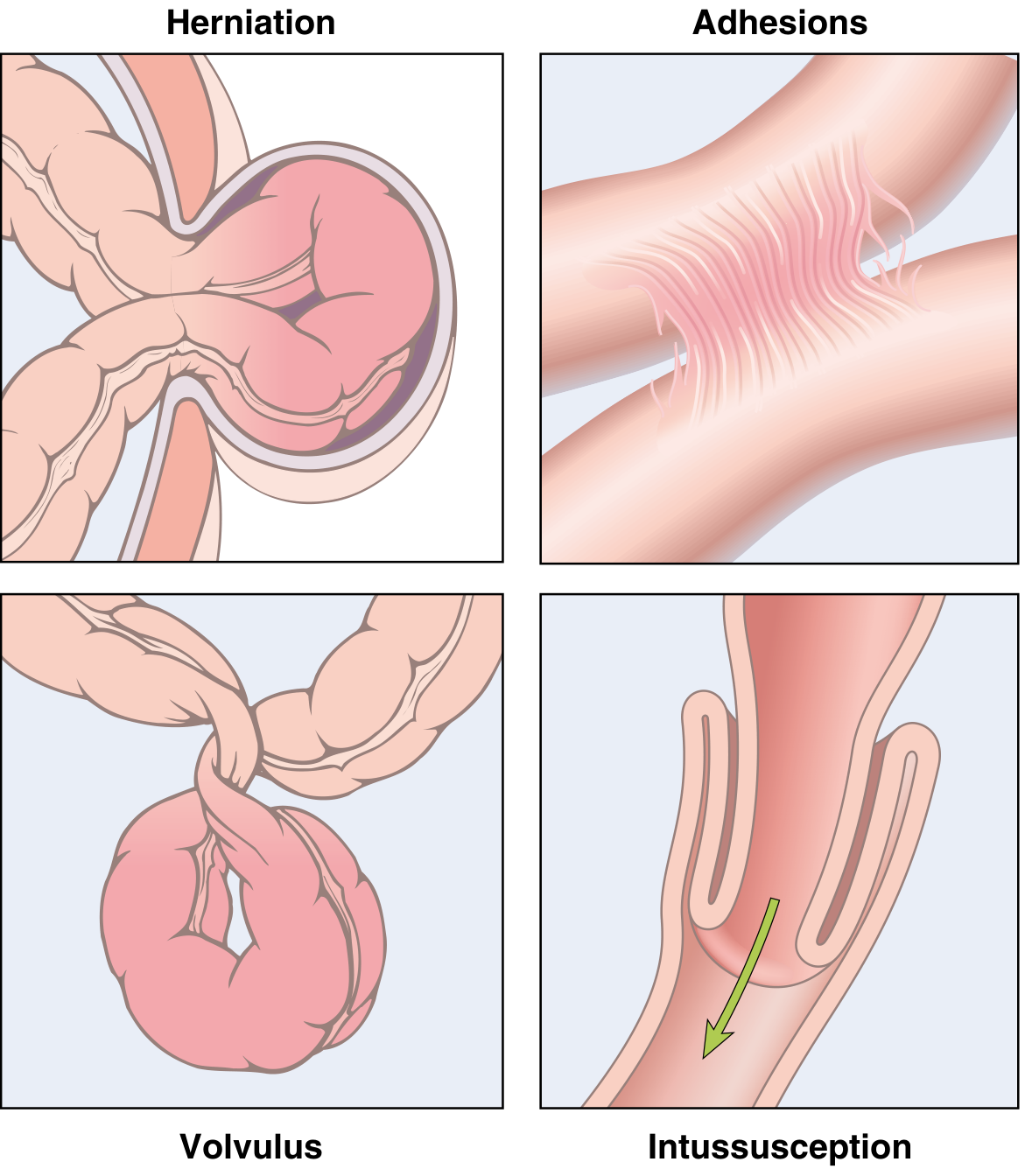
- Hernia - inguinal/femoral/umbilical (3% most common cause worldwide)
- Adhesions - post-surgical/inflammatory fibrous bridges
- Volvulus - loop twists on mesenteric axis; sigmoid or cecum most common
- Intussusception - telescoping; ileum into cecum most common; in children = lead point is Meckel's; adults = neoplasm
- Most common GI malignancy in Western nations
- Two pathways:
- APC/beta-catenin pathway (80%): APC tumor suppressor loss → Wnt pathway activation → polyp → carcinoma (adenoma-carcinoma sequence, FAP)
- Microsatellite instability (MSI) pathway (15-20%): MLH1/MSH2 loss → Lynch syndrome or sporadic (MLH1 methylation)
- Gross: polypoid (right colon) vs. annular "napkin ring" constricting (left colon)
- Stains: H&E (gland-forming adenocarcinoma with necrotic luminal debris); IHC: CK20+, CDX2+, CK7- (colorectal pattern); MMR protein IHC (MLH1, MSH2, MSH6, PMS2 - loss of nuclear staining indicates MSI)
CHAPTER 18 - LIVER, GALLBLADDER, AND BILIARY TRACT
Cirrhosis
- 40% asymptomatic until advanced disease
- Cause of death: hepatic encephalopathy, variceal bleeding, infections, HCC
- Hyperestrogenemia → spider angiomas, palmar erythema, gynecomastia (males)
- Hypoalbuminemia → ascites, edema
- Pruritus from bile salt deposition
Alcoholic Liver Disease
- Hepatic steatosis: >5% hepatocytes with fat; macrovesicular (large fat vacuole displacing nucleus); Oil Red O (fat = red); reversible
- Alcoholic hepatitis: macrovesicular steatosis + Mallory-Denk bodies + neutrophilic lobular inflammation + ballooning degeneration + satellite necrosis + pericellular "chicken wire" fibrosis
- Alcoholic cirrhosis: irreversible; micronodular initially; Masson Trichrome for fibrosis
- Tangled cytokeratin 8/18 intermediate filaments
- H&E: eosinophilic, rope-like cytoplasmic inclusions in balloned hepatocytes
- Ubiquitin IHC - positive (Mallory-Denk bodies are ubiquitinated)
- p62 IHC - also positive
Viral Hepatitis
| Virus | Transmission | Acute/Chronic | HCC risk | Serology |
|---|---|---|---|---|
| HAV | Fecal-oral | Acute only | No | Anti-HAV IgM (acute); IgG (past/immune) |
| HBV | Blood/sexual/perinatal | Both | High | HBsAg, HBeAg, HBcAg; anti-HBs (recovery/vaccine) |
| HCV | Blood | Both (chronic 80%) | High | Anti-HCV; HCV RNA |
| HDV | Co/superinfection with HBV | Both | - | Anti-HDV; requires HBV |
| HEV | Fecal-oral | Acute only (except immunocompromised) | No | Anti-HEV IgM |
- Cytoplasm packed with smooth ER containing HBsAg
- H&E: finely granular, pale, ground-glass cytoplasm
- Orcein stain / Victoria Blue: HBsAg = brown
- IHC: HBsAg (cytoplasmic); HBcAg (nuclear or cytoplasmic in high replication)
- Periportal hepatocytes destroyed at interface with portal tract
- Indicates active disease and progressive fibrosis
Hepatocellular Carcinoma (HCC)
- Most common primary liver malignancy worldwide
- Strongly linked to: chronic HBV, chronic HCV, alcoholic cirrhosis, hemochromatosis, MASLD/NASH
- AFP (alpha-fetoprotein) elevated in ~75%
- Gross: single or multinodular; hemorrhagic/necrotic; portal vein invasion
- Morphology:
- Trabecular pattern most common (hepatocytes in cords separated by sinusoids)
- Pseudoglandular (acinar) pattern
- Scirrhous (fibrous stroma) pattern
- Well-differentiated HCC: polygonal cells with prominent nucleoli; retain hepatocytic features
- Stains: H&E (trabecular pattern); Reticulin (thickened trabeculae; normal liver = 1-2 cells thick, HCC = 3+ cells thick); IHC: HepPar-1, Arginase-1, GPC3 (glypican-3 - strong positive in HCC); CK7-, CK20-; AFP+
Primary Biliary Cholangitis (PBC)
- Autoimmune destruction of small intrahepatic bile ducts
- Middle-aged women; anti-mitochondrial antibodies (AMA) >95% sensitive/specific
- Morphology: florid duct lesion - lymphocytic infiltrate destroying bile duct epithelium; non-caseating granulomas around bile ducts
- Progression: chronic cholestasis → ductopenia → cirrhosis
- Stains: H&E (duct destruction); CK7 or CK19 IHC (highlights bile ducts)
Primary Sclerosing Cholangitis (PSC)
- Fibro-obliterative inflammation of intra- and extrahepatic bile ducts
- Strongly associated with ulcerative colitis (70-80%)
- p-ANCA positive
- "Onion-skin" periductal fibrosis - pathognomonic - concentric rings of fibrosis around bile ducts
- Stains: H&E + Masson Trichrome (periductal fibrosis = blue)
- High risk of cholangiocarcinoma
CHAPTER 19 - PANCREAS
Pancreatitis
- Gallstones (most common, ~40%)
- Ethanol/alcohol (second most common, ~35%)
- Trauma
- Steroids
- Mumps (and other viruses)
- Autoimmune (IgG4-related)
- Scorpion venom
- Hyperlipidemia / Hypercalcemia
- ERCP (iatrogenic)
- Drugs (azathioprine, statins, GLP-1 agonists)
- PRSS1 gain-of-function (cationic trypsinogen) - prevents trypsin self-inactivation → hereditary pancreatitis
- SPINK1 loss-of-function - trypsin inhibitor gone
- CFTR loss-of-function - inspissated secretions, duct obstruction
- CASR mutations - calcium dysregulation
- Interstitial (edematous) pancreatitis: edema, slight parenchymal inflammation, no necrosis; mild, self-limited
- Necrotizing pancreatitis (severe):
- Fat necrosis: chalky-white areas of saponification (calcium soaps from lipase digestion of mesenteric/peripancreatic fat)
- Hemorrhage: red-black hemorrhagic areas
- Microvascular injury → parenchymal necrosis
- Inflammatory infiltrate (initially neutrophilic)
- Stains: H&E (fat necrosis - ghost outlines of adipocytes, basophilic calcium deposits); Von Kossa (calcium = black in fat necrosis areas)
- Pseudocyst formation (late): cyst lined by fibrous wall, no epithelial lining
- Recurrent or continuous inflammation → progressive fibrosis + destruction of acinar cells → exocrine insufficiency
- Causes: alcohol (most common in adults), hereditary, autoimmune, idiopathic
- Morphology: irregular fibrosis, acinar atrophy, ductal dilation and plugging with protein-rich secretions (calcifications in duct), relative preservation of islets
- Stains: H&E (fibrosis, acinar loss, preserved islets); Masson Trichrome (fibrosis = blue)
- Clinical: steatorrhea, malabsorption, diabetes (late - islet loss)
Pancreatic Carcinoma
- 4th leading cause of cancer death in US; 5-year survival <10%
-
90% = ductal adenocarcinoma
- Location: head of pancreas (60%) > body (15%) > tail (5%); 20% diffuse
- Precursor lesions: PanIN (Pancreatic Intraepithelial Neoplasia) 1→2→3 = carcinoma in situ; also IPMN, MCN
- KRAS mutation (>90%; earliest and most common; codon 12)
- p16/CDKN2A loss (>90%; telomere shortening, cell cycle dysregulation)
- SMAD4 (DPC4) loss (~55%; TGF-beta pathway; loss = poor prognosis marker)
- TP53 loss (~75%; late event)
- Gross: hard, gray-white scirrhous mass; head lesions obstruct CBD → obstructive jaundice (Courvoisier sign)
- LM: moderately differentiated gland-forming adenocarcinoma in dense desmoplastic stroma; perineural invasion (characteristic)
- Stains: H&E (glands in desmoplastic stroma); IHC: CK7+, CK20-, CA19-9+, CEA+; SMAD4 loss by IHC (absent nuclear staining)
CHAPTER 20 - KIDNEY AND URINARY TRACT
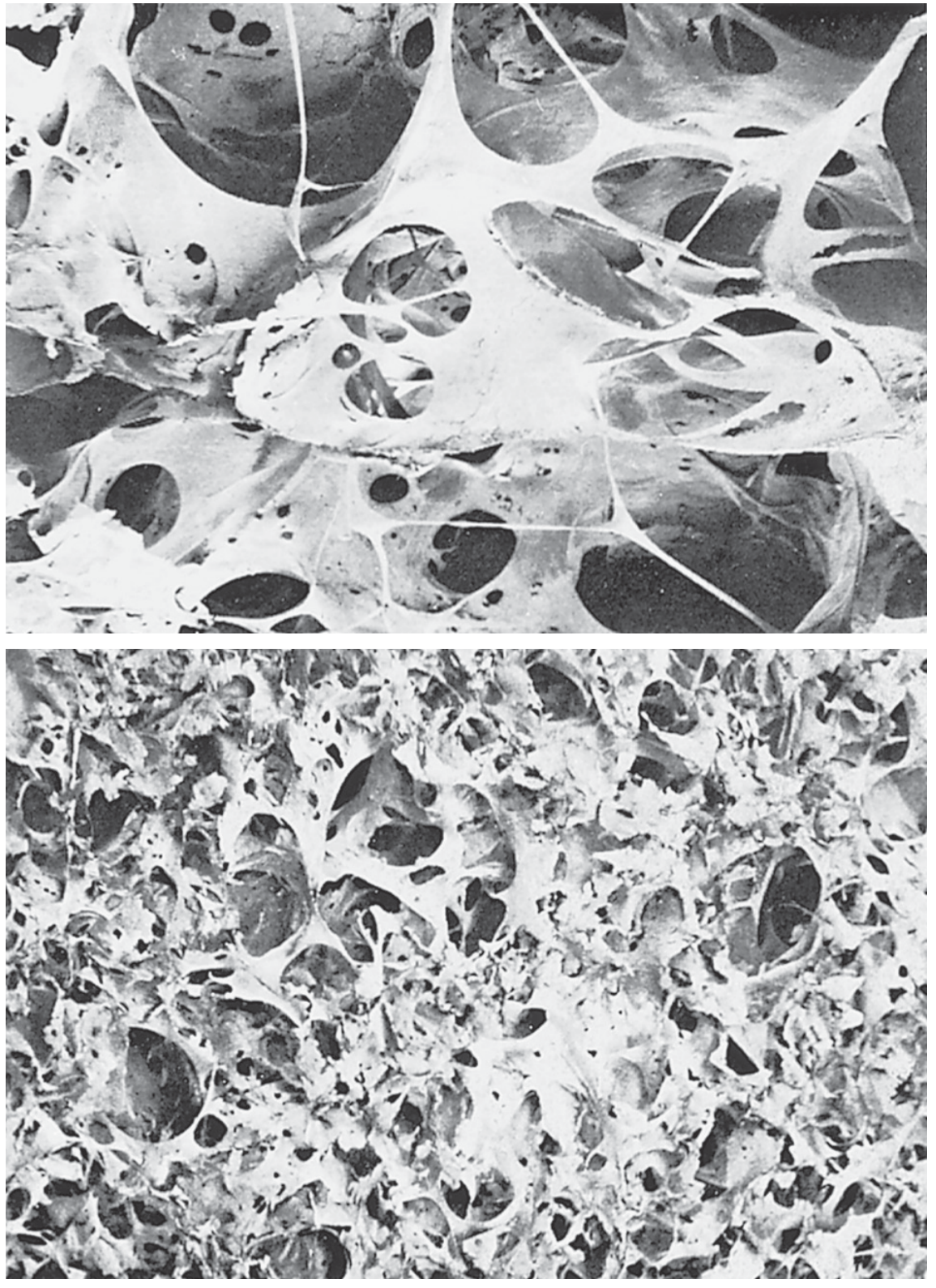
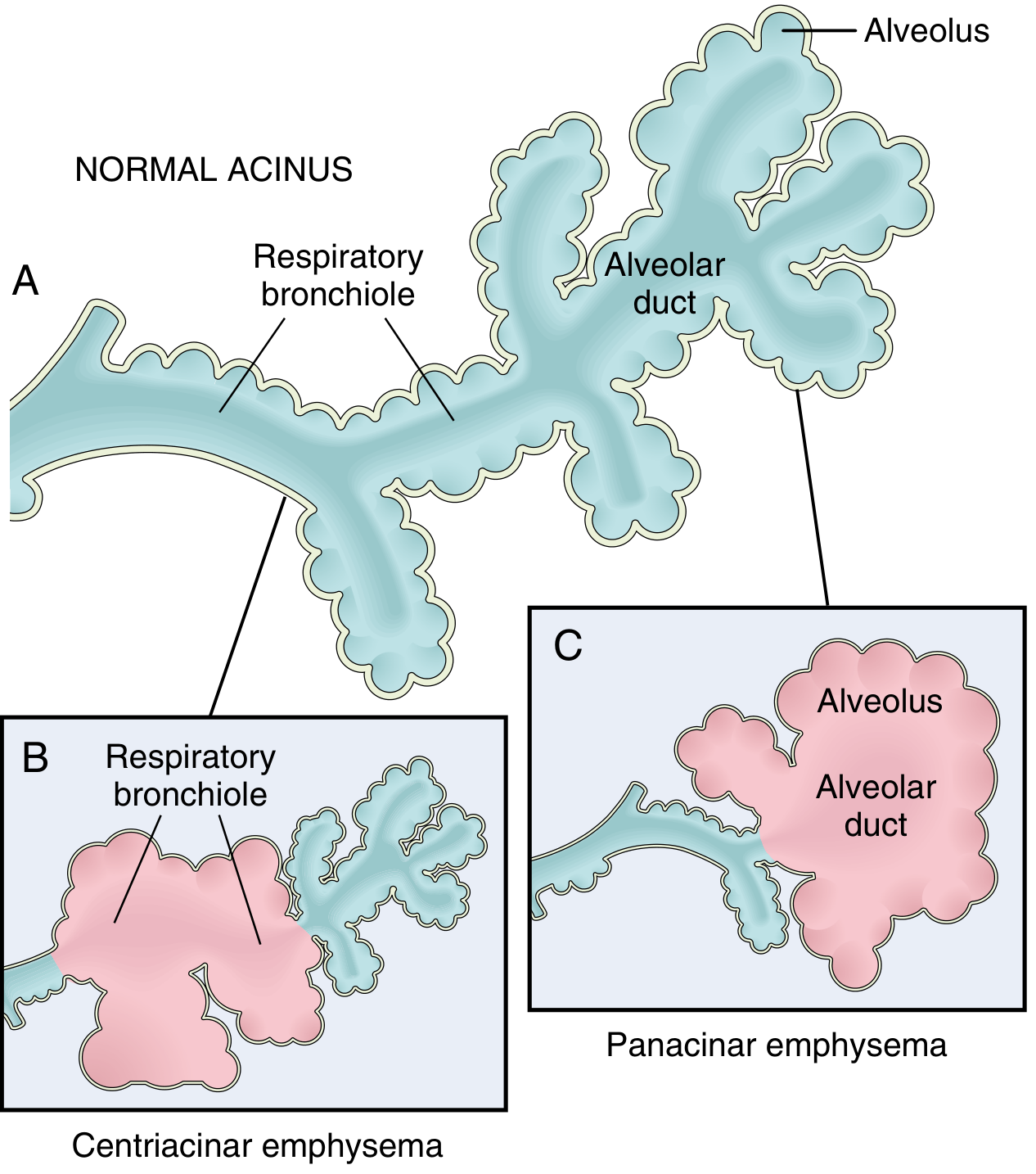
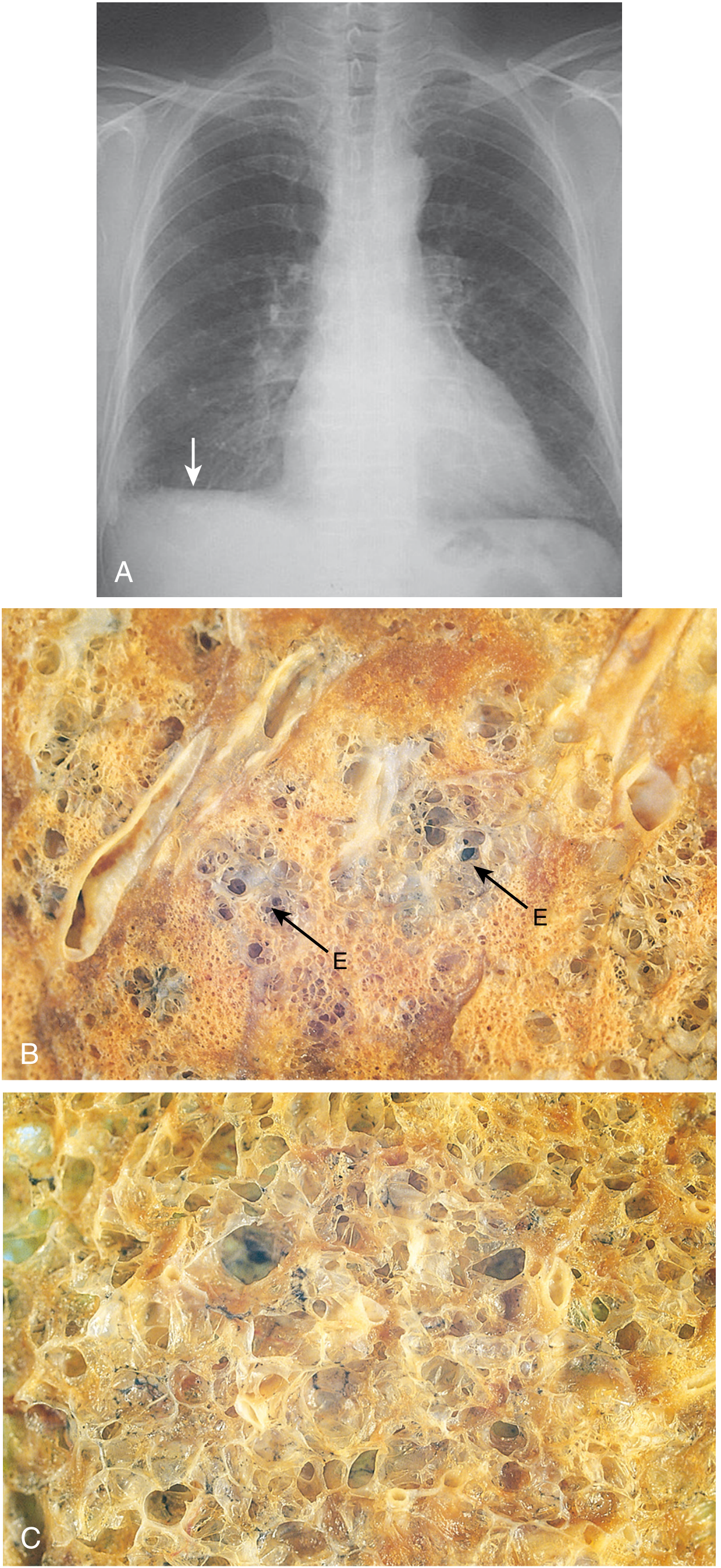
Emphysema - Microscopy Images from Robbins:
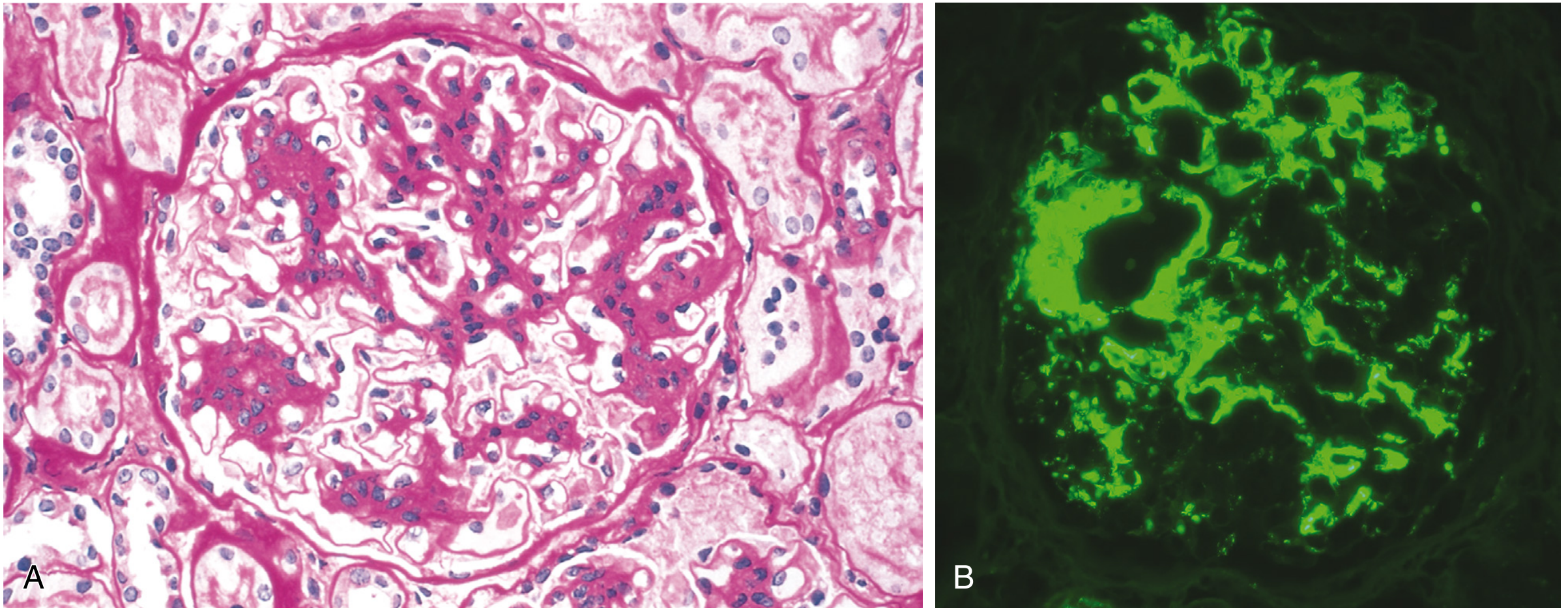
Post-Streptococcal GN - Microscopy Image from Robbins:
Glomerular Diseases (Chapter 20 - extended)
- Ascending route (most common): E. coli → colonizes urethra → bladder → kidney
- Predisposing: vesicoureteral reflux, obstruction, catheterization, female sex (short urethra)
- Hematogenous route: less common; septicemia, endocarditis; staphylococci, fungi
- Patchy suppurative inflammation; PMNs within tubular lumens and interstitium
- White cell casts (tubular leukocyte casts) - pathognomonic of pyelonephritis
- Abscesses in cortex and medulla
- Stain: H&E (suppurative inflammation, WBC casts); PAS (disrupted tubular BM)
- Coarse, irregular cortical scarring with underlying blunted, deformed calyx
- Microscopy: tubular atrophy, interstitial fibrosis; "thyroid-like" tubules (dilated tubules filled with eosinophilic casts resembling thyroid follicles) = characteristic
- Stain: H&E; Masson Trichrome for interstitial fibrosis
- Key stain: PAS - loss of brush border (proximal tubule)
- Ischemic ATN: tubular rupture (tubulorrhexis); skip lesions; worst at corticomedullary junction
- Nephrotoxic ATN: uniform proximal tubule involvement; intact BM
CHAPTER 21 - GENITAL TRACT (Male and Female)
Male Genital Tract
- Germ cell tumors (95%): Seminoma vs. Non-seminoma (NSGCT)
| Feature | Seminoma | NSGCT (Embryonal, Yolk sac, Choriocarcinoma, Teratoma) |
|---|---|---|
| Age | 30-40 | 20-30 |
| Gross | Homogeneous, cream-white | Variegated, hemorrhagic |
| Histology | Large cells with clear cytoplasm, central nuclei, "fried egg" appearance; lymphocytic stroma | Variable by type |
| Marker | PLAP, OCT3/4, D2-40 | AFP (yolk sac), hCG (choriocarcinoma), PLAP (some) |
| Radiosensitive | Yes | No |
- Seminoma stain: H&E (lymphocytic fibrous stroma, sheets of large clear cells); IHC: PLAP+, OCT3/4+, D2-40+, CD117+, AFP-, hCG-
- Yolk sac tumor (endodermal sinus tumor): Schiller-Duval bodies (glomeruloid structures); IHC AFP+
- Choriocarcinoma: syncytiotrophoblasts (multinucleated) + cytotrophoblasts; hCG+; most aggressive (hematogenous spread)
- Most common cancer in American males
- Peripheral zone (posterior lobe) - 70%; transition zone (anterior) - 20%
- Gleason grading (1-5 for predominant + secondary pattern = total score/Grade Group)
- Morphology: small, closely packed glands with prominent nucleoli; lacks basal cell layer; perineural invasion characteristic
- Stains: H&E (small glands, nucleoli); IHC: PSA+ (staining), p63-/HMWCK- (absent basal cells), AMACR (racemase, P504S) - positive in cancer, negative in benign; PIN4 cocktail (p63 + HMWCK + AMACR)
Female Genital Tract
- Most linked to HPV 16 and 18 (squamous carcinoma and adenocarcinoma)
- Progression: normal → HPV infection → LSIL (CIN1) → HSIL (CIN2/3) → invasive carcinoma
- Koilocytes (HPV cytopathic effect): squamous cells with perinuclear halo + wrinkled nucleus
- Stain: Pap smear (koilocytes, dysplastic cells); H&E (CIN grading, invasive carcinoma); p16 IHC (strong block positivity in HSIL/carcinoma - surrogate for high-risk HPV); Ki-67 (increased proliferation)
| Type | Type I (Endometrioid) | Type II (Serous/Clear cell) |
|---|---|---|
| Background | Endometrial hyperplasia, obesity, estrogen | Atrophic endometrium |
| Genetics | PTEN, MSI, KRAS, CTNNB1 | TP53 (most common) |
| Grade | Low | High |
| Prognosis | Better | Poor |
- Stain: H&E (glandular proliferation, back-to-back glands, endometrioid carcinoma); IHC: ER+, PR+ (type I); TP53 mutant-type staining (type II); MMR proteins for Lynch screening
-
Surface epithelial tumors (70%): serous (most common), mucinous, endometrioid, clear cell
-
Serous cystadenocarcinoma: Papillary architecture; psammoma bodies (concentric laminated calcifications) characteristic
-
Stain: H&E (papillary serous with psammoma bodies); IHC: PAX8+, WT-1+, CK7+, CA-125+; p53 aberrant staining (high-grade)
-
Germ cell tumors: Dermoid cyst (mature cystic teratoma) most common benign ovarian tumor; Dysgerminoma = malignant equivalent of seminoma
-
Sex cord-stromal tumors: Granulosa cell tumor (Call-Exner bodies = small follicle-like spaces with eosinophilic secretion in H&E; produces estrogen → precocious puberty or postmenopausal bleeding); Inhibin+ IHC
CHAPTER 22 - BREAST
Fibrocystic Changes
- Most common breast lesion in women 25-50 yr
- Non-proliferative: cysts, fibrosis, apocrine metaplasia - no increased cancer risk
- Proliferative without atypia: mild epithelial hyperplasia - slightly increased risk
- Atypical hyperplasia (ADH/ALH) - 4-5x increased cancer risk
Breast Carcinoma
- In situ carcinomas: DCIS (ductal), LCIS (lobular) - no invasion
- Invasive carcinomas: Invasive ductal NOS (most common), Invasive lobular, Medullary, Mucinous, Tubular
- Most common (75%); hard, gritty texture (desmoplastic stroma)
- Morphology: irregular nests/cords/glands; nuclear pleomorphism; mitotic figures
- Stain: H&E (infiltrative glands in desmoplastic stroma); IHC panels:
- ER/PR status (estrogen/progesterone receptors) - 70-80% positive
- HER2 (ERBB2) - amplified/overexpressed in 20%
- Ki-67 (proliferation index)
- Triple-negative (ER-/PR-/HER2-) - most aggressive; BRCA1 linked
- E-cadherin loss (CDH1 mutation) → cells don't form glands; grow as "single file/Indian file" pattern
- Dyscohesive cells in linear cords through stroma
- Stain: H&E (single file pattern); IHC: E-cadherin negative (diagnostic)
- Malignant cells confined to ductal system, no basement membrane breach
- Comedo type: central necrosis; calcifications ("malignant-type calcifications" on mammography)
- Stain: H&E (cells filling ducts, central necrosis + calcification); IHC: p63/HMWCK (absent myoepithelial layer distinguishes from benign lesions)
- Signet-ring cell morphology; dyscohesive; fills and distends acini
- IHC: E-cadherin negative
| Subtype | ER/PR | HER2 | Ki-67 | Prognosis |
|---|---|---|---|---|
| Luminal A | + | - | Low | Best |
| Luminal B | + | ± | High | Intermediate |
| HER2-enriched | - | + | High | Poor |
| Triple-negative/Basal | - | - | High | Worst |
MASTER IMAGE GALLERY - KEY Robbins Pathology Microscopy
1. Emphysema - Types Diagram (Robbins Fig. 15.6)
- (A) Normal acinus: respiratory bronchiole + alveolar duct + alveoli all clearly defined
- (B) Centriacinar: respiratory bronchioles (pink/dilated) destroyed proximally; distal alveoli (blue) spared
- (C) Panacinar: entire unit uniformly enlarged from bronchiole to alveolus
2. Emphysema - CXR and Gross Pathology (Robbins Fig. 15.7)
- (A) CXR: flattened diaphragm (arrow) - classic sign of hyperinflation
- (B) Centriacinar (centrilobular): central emphysematous spaces (E = holes) surrounded by preserved alveolar parenchyma
- (C) Panacinar: uniformly enlarged, thin-walled airspaces throughout; no preserved islands of parenchyma
3. IgA Nephropathy - H&E and Immunofluorescence (Robbins Fig. 20.18)
- (A) H&E: mesangial cell proliferation + increased mesangial matrix; capillary lumens narrowed
- (B) Immunofluorescence (FITC-labeled anti-IgA): bright green granular deposits exclusively in mesangium - diagnostic of IgA nephropathy (Berger disease)
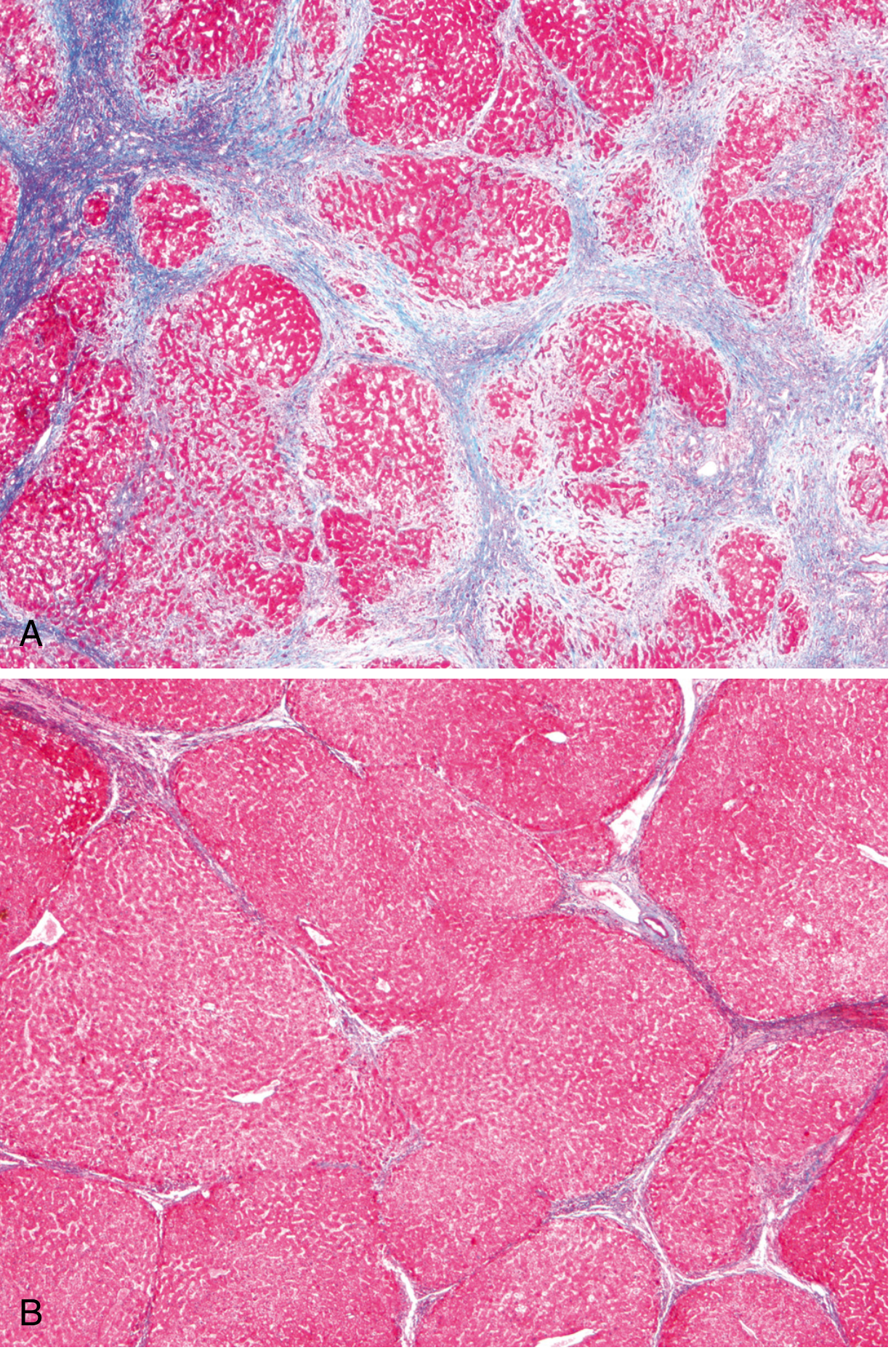
4. Cirrhosis - Masson Trichrome (Robbins Fig. 18.7)
- (A) Active cirrhosis: thick blue collagen bands (Masson Trichrome) surround and isolate rounded red hepatocyte regenerative nodules; complete fibrous septa; portal-to-central bridging
- (B) After 1 year abstinence: dramatic regression - only thin, incomplete blue fibers remain; nodular architecture partially restored; near-normal hepatic parenchyma visible
COMPREHENSIVE STAIN REFERENCE TABLE (Robbins Chapters 8-22)
| Stain | Color of Target | Diagnoses / Uses |
|---|---|---|
| H&E | Nuclei blue; cytoplasm pink | Universal baseline; all histopathology |
| Masson Trichrome | Collagen = blue/green; muscle = red | Cirrhosis, fibrosis staging, MI scar |
| PAS | Glycogen, GBM, fungi, mucins = magenta | GN (GBM), Barrett mucin, fungal infection |
| PASD | Same but glycogen digested; AAT globules stay | Alpha-1 antitrypsin deficiency |
| Jones Methenamine Silver (JMS) | GBM = black; deposits = holes/spikes | Membranous nephropathy, MPGN, FSGS |
| Congo Red (polarized) | Amyloid = apple-green birefringence | All amyloidosis (AL, AA, transthyretin) |
| Prussian Blue (Perls) | Iron = blue | Hemochromatosis, hemosiderosis |
| Rhodanine / Rubeanic acid | Copper = orange-red | Wilson disease |
| Orcein / Victoria Blue | HBsAg = brown; elastic fibers dark | Chronic HBV, AAT deficiency |
| Reticulin (Gordon-Sweet) | Reticulin fibers = black | Liver architecture, HCC (thick trabeculae), lymphoma |
| Alcian blue (pH 2.5) | Acid mucins = bright blue | Barrett goblet cells; intestinal metaplasia |
| Oil Red O / Sudan IV | Lipid/fat = red | Fatty liver (frozen section), foam cells |
| Modified Giemsa | H. pylori = dark blue curved rods | H. pylori gastritis |
| Warthin-Starry | Spirochetes, H. pylori, Legionella = black | H. pylori, Bartonella, syphilis |
| Ziehl-Neelsen (ZN) | Acid-fast bacteria (MTB, MAC) = red | TB, leprosy; negative in Crohn (vs. TB) |
| GMS / Grocott | Fungi = black | Aspergillus, Candida, Mucor, PCP |
| EVG / Verhoeff-van Gieson | Elastic fibers = black | Emphysema (elastic loss), aortic dissection, vasculitis |
| PTAH | Fibrin = blue; striations = blue | Fibrin in GN crescents, pericarditis |
| Von Kossa | Calcium phosphate = black | Metastatic calcification, fat necrosis in pancreatitis |
| Ubiquitin IHC | Mallory-Denk bodies, tau, TDP-43 = brown | Alcoholic hepatitis, neurodegeneration |
| p16 IHC | Strong diffuse block = brown | HSIL/cervical carcinoma (high-risk HPV surrogate) |
| AMACR (P504S) IHC | Cytoplasmic = brown | Prostate carcinoma (positive); absent in benign |
| E-cadherin IHC | Membrane = brown (positive) | Absent in lobular breast carcinoma; lost in diffuse gastric |
| WT-1 IHC | Nuclear = brown | Mesothelioma, serous ovarian Ca, nephroblastoma |
| Calretinin IHC | Nuclear + cytoplasmic = brown | Mesothelioma (vs. adenocarcinoma); granulosa cell tumor |
| CD30 / CD15 IHC | Membrane/Golgi = brown | Reed-Sternberg cells (Hodgkin lymphoma) |
| CD20 IHC | Membrane = brown | B-cell lymphomas (NHL) |
| GPC3 (glypican-3) IHC | Cytoplasmic = brown | HCC (positive); yolk sac tumor |
| HepPar-1 IHC | Cytoplasmic granular = brown | Hepatocellular differentiation (HCC) |
once check if you missed any details from the text robins
ROBBINS - SUPPLEMENTARY & MISSED DETAILS
Complete Gap-Fill Across Chapters 8, 14–22
CHAPTER 8 - NEOPLASIA (Missed Details)
Tumor Immune Evasion Mechanisms (from text)
- Tumors downregulate MHC class I → avoid CD8+ T-cell recognition
- Expression of PD-L1 (CD274) → inhibits T-cell activation via PD-1 on T cells (basis of anti-PD-1/PD-L1 immunotherapy)
- Secretion of TGF-β and IL-10 → suppress immune effectors
- FOXP3+ regulatory T cells (Tregs) infiltrate tumor microenvironment → suppress anti-tumor immunity
Tumor Antigens (missed)
- Tumor-specific antigens (neoantigens): products of mutated genes unique to cancer cells → key targets for immune checkpoint therapy
- Tumor-associated antigens: shared between cancer and normal tissues (AFP in HCC, PSA in prostate, CEA in colorectal - all used as tumor markers)
Paraneoplastic Syndromes (missed completely)
| Syndrome | Tumor | Mechanism |
|---|---|---|
| Hypercalcemia | Squamous cell carcinoma (lung, head/neck), breast, renal, myeloma | PTHrP secretion OR osteolysis |
| SIADH | Small cell lung carcinoma | Ectopic ADH |
| Cushing syndrome | Small cell lung carcinoma, carcinoid | Ectopic ACTH |
| Lambert-Eaton (myasthenic syndrome) | Small cell lung carcinoma | Abs against presynaptic Ca2+ channels |
| Trousseau syndrome (migratory thrombophlebitis) | Mucinous adenocarcinoma (pancreas, GI) | Procoagulant tumor-derived mucin |
| Polycythemia | Renal cell carcinoma, hemangioblastoma, HCC | Ectopic EPO |
| Carcinoid syndrome | Well-differentiated NETs with liver metastasis | Serotonin, bradykinin, histamine |
Grading vs. Staging (missed nuance)
- Grade = histologic degree of differentiation (WHO Grades 1-4 for most tumors; Gleason score for prostate)
- Stage = anatomic extent of spread; TNM system is universal; stage is the single most important prognostic determinant
CHAPTER 14 - BLOOD VESSELS (Missed Details)
Hypertension - Pathogenesis Expanded
- Primary (essential) hypertension (~95%): polygenic; increased renin-angiotensin activity, sodium retention, adrenergic drive, endothelial dysfunction; associated with obesity, insulin resistance, family history
- Secondary hypertension (~5%): identifiable cause:
- Renovascular (renal artery stenosis) - most common secondary cause
- Renal parenchymal disease (CKD)
- Primary hyperaldosteronism (Conn syndrome) - hypokalemia + HTN
- Pheochromocytoma (catecholamines)
- Coarctation of aorta
- Hypothyroidism/hyperthyroidism
- Hyaline arteriolosclerosis - plasma protein insudation into arteriolar walls; PAS-positive homogeneous pink hyaline thickening of arteriolar walls; common in benign hypertension and diabetes
- Hyperplastic arteriolosclerosis - "onion-skin" concentric thickening of arteriolar walls; smooth muscle cell lamination; seen in malignant hypertension (diastolic BP >120 mm Hg)
- Fibrinoid necrosis - acute arteriolar damage in malignant hypertension
- Stains: H&E (hyaline pink); PAS (hyaline = magenta); Masson Trichrome (fibrinoid necrosis = red/fuchsinophilic)
Vascular Tumors (missed entirely)
- Hemangioma: Most common vascular tumor; two types:
- Capillary hemangioma - lobular clusters of capillary-sized vessels lined by plump endothelium; in skin/subcutaneous tissue
- Cavernous hemangioma - large dilated thin-walled vascular channels (also most common benign liver tumor); can bleed; H&E: dilated channels with RBCs
- Pyogenic granuloma (lobular capillary hemangioma) - polypoid; skin/mucous membranes; associated with pregnancy; histology: lobular proliferation of capillaries in edematous stroma; H&E
- Lymphangioma - dilated lymphatic channels lined by endothelium; no RBCs in lumen; H&E + D2-40 IHC (marks lymphatic endothelium)
-
Angiosarcoma: Highly malignant tumor of endothelial cells
- Associated with: liver (vinyl chloride, arsenic, Thorotrast exposure), breast (post-radiation), lymphedema (Stewart-Treves syndrome)
- Morphology: irregular vascular channels lined by atypical pleomorphic endothelial cells; poorly differentiated areas appear as solid sheets
- Stains: H&E (vascular channels with malignant cells); IHC: CD31+ (most sensitive), CD34+, ERG+ (nuclear), FLI-1+ (nuclear); Factor VIII-related antigen
-
Kaposi Sarcoma (KS):
- Four clinical forms: classic (Mediterranean elderly men), African endemic, AIDS-related (most common), iatrogenic (immunosuppressed)
- All associated with HHV-8 (Kaposi sarcoma herpesvirus)
- Morphology: spindle-shaped cells forming vascular slits with RBC extravasation; hemosiderin deposition; "promontory sign" (vascular channels projecting into dilated spaces)
- Stains: H&E; IHC: HHV-8 latent nuclear antigen (LANA-1) - pathognomonic positive; CD31+, CD34+
CHAPTER 15 - HEART (Missed Details)
Infective Endocarditis (IE) - Detailed
| Setting | Most Common Organism |
|---|---|
| Previously abnormal valve | Streptococcus viridans (50-60%) |
| Overall most cases | Staphylococcus aureus |
| IV drug users | S. aureus (tricuspid valve) |
| Normal/abnormal valves | S. aureus |
| Prosthetic valve (early <2 months) | Staph epidermidis, S. aureus |
| Prosthetic valve (late >2 months) | Strep viridans |
| Colorectal cancer patient | Strep bovis/gallolyticus |
| HACEK organisms | H. influenzae, Actinobacillus, Cardiabacterium, Eikenella, Kingella |
- Large, irregular, destructive masses on valve cusps (can extend onto chordae)
- Composed of: thrombotic debris + organisms + fibrin
- Can cause: valve destruction/perforation, ring abscess, septic emboli
- Compare: Rheumatic = small warty; NBTE = small bland; Libman-Sacks = both sides of valve
- Acute IE: Bulky, destructive vegetations; underlying valve necrosis/perforation
- Subacute IE: Less destructive; may have healed areas
- Stain: H&E (fibrinous vegetation, organisms); Gram stain (bacteria); PAS (fungi); Warthin-Starry (some bacteria); Culture is essential
- Regurgitation → acute heart failure
- Perforation of valves
- Septic emboli → brain, kidney, spleen infarcts
- Mycotic aneurysms (infected emboli weaken vessel walls)
- Glomerulonephritis (immune complex deposition from chronic bacteremia)
Non-Bacterial Thrombotic Endocarditis (NBTE) / Marantic Endocarditis
- Small (1-5 mm) sterile, bland thrombi on line of valve closure
- No inflammation, no valve destruction
- Seen in: cancer (especially mucinous adenocarcinoma, Trousseau), DIC, hyperestrogenic states, debilitated/cachectic patients
- Complication: systemic emboli to brain/kidney (despite being sterile)
Libman-Sacks Endocarditis (SLE)
- Small-to-medium sterile vegetations on both surfaces of leaflets (unlike other endocarditides)
- Due to immune complex deposition + fibrinoid necrosis
- Can cause valvular scarring similar to RHD (late)
- Associated with antiphospholipid antibody syndrome too
Carcinoid Heart Disease (missed in previous notes)
- Occurs in ~50% of patients with carcinoid syndrome
- Requires liver metastases (liver normally degrades serotonin, bradykinin, etc.)
- Mediators: serotonin (5-HT), kallikrein, bradykinin, histamine, tachykinins; urinary 5-HIAA correlates with severity
- Right heart exclusively affected (pulmonary vasculature degrades mediators before reaching left heart; left heart involved if R-to-L shunt or primary pulmonary carcinoid)
- Morphology: fibrous intimal plaques (glistening white) on tricuspid and pulmonary valves/endocardium; valve leaflets become thick, stiff, resembling pearly plaques
- Tricuspid regurgitation and pulmonary stenosis are classic findings
- Stain: H&E (fibrosis of valve leaflets/endocardium); Masson Trichrome (fibrous plaques = blue)
Hypertensive Heart Disease (missed details)
-
Left-sided HHD:
- Diagnostic criteria: (1) LV hypertrophy (concentric, without other pathology) + (2) clinical/pathologic evidence of HTN elsewhere
- Heart weight can exceed 500 g; LV wall thickness >2.0 cm
- Microscopy: myocyte transverse diameter increase; perivascular + interstitial fibrosis
- AHA threshold: >130/80 mmHg; European: >140/90 mmHg
- Outcomes: (1) normal longevity, (2) IHD due to potentiated atherosclerosis + increased O2 demand, (3) renal/cerebrovascular damage, (4) CHF or SCD
-
Right-sided HHD (Cor Pulmonale):
- Isolated hypertrophy/dilation of RV due to pulmonary hypertension from primary lung disease
- Causes: COPD, pulmonary fibrosis, recurrent pulmonary emboli, primary pulmonary hypertension
- Acute cor pulmonale: rapid RV dilation (e.g., massive pulmonary embolism)
- Chronic cor pulmonale: RV hypertrophy + dilation
Sudden Cardiac Death (SCD) - Expanded
- Defined as unexpected cardiac death within 1 hour of symptom onset (or within 24 hrs of last being well)
- 325,000 individuals/year in US; 4-5 million worldwide
- Mechanism: almost always lethal arrhythmia (ventricular fibrillation or asystole)
- #1 cause: CAD (usually chronic severe fixed stenoses; acute plaque rupture found in only 10-20%)
- 80-90% of successfully resuscitated patients have NO evidence of acute MI by enzymes or ECG
- In young patients: HCM, congenital coronary anomalies, myocarditis, channelopathies (LQTS, Brugada), mitral valve prolapse, pulmonary hypertension
- Treatment: ICD (implantable cardioverter-defibrillator)
CHAPTER 16 - WHITE CELLS & LYMPHOID NEOPLASMS (Missed Details)
Immune Cell Antigen Reference Table (from Robbins Table 13.5)
| CD Marker | Normal Distribution | Tumor Use |
|---|---|---|
| CD1 | Thymocytes, Langerhans cells | - |
| CD3 | All T cells | T-cell marker |
| CD4 | Helper T cells | T-cell subset |
| CD5 | T cells + small subset of B cells | CLL/SLL (B-cells aberrantly positive) |
| CD8 | Cytotoxic T cells | T-cell subset |
| CD10 | Pre-B cells + germinal center B cells | B-ALL, follicular lymphoma, DLBCL |
| CD19 | Pre-B to mature B cells (not plasma cells) | B-cell marker |
| CD20 | Pre-B cells to mature B (not plasma cells) | B-cell lymphomas; target of rituximab |
| CD21 | Mature B cells (EBV receptor) | - |
| CD23 | Activated B cells | CLL/SLL (positive) |
| CD11c | Granulocytes, monocytes; hairy cell leukemia | Hairy cell leukemia |
| CD15 | Granulocytes; RS cells | Hodgkin lymphoma |
| CD30 | Activated lymphocytes; RS cells | Hodgkin lymphoma; ALCL |
| CD33 | Myeloid progenitors | AML |
| CD34 | Hematopoietic progenitors | Stem cell marker |
| CD56 | NK cells + subset of T cells | NK/T-cell lymphoma; myeloma |
| CD117 | Mast cells, hematopoietic progenitors, GISTs | Seminoma, AML, GIST |
| CD138 | Plasma cells | Myeloma |
ALL (Acute Lymphoblastic Leukemia/Lymphoma) - Expanded
- Most common cancer of children (peak age 3 years for B-ALL)
- 85% B-ALL; 15% T-ALL (adolescent males, presents as mediastinal/thymic mass)
- Key cytogenetics:
- t(12;21) ETV6::RUNX1 - most common translocation in childhood B-ALL; favorable prognosis
- t(9;22) BCR::ABL1 (Philadelphia chromosome) - in 25% of adult ALL; adverse prognosis; treated with TKIs (imatinib, dasatinib)
- Hyperploidy (>50 chromosomes) - favorable prognosis in children
- Hypoploidy - adverse prognosis
- KMT2A (MLL) rearrangements - infant ALL; poor prognosis
- NOTCH1 mutations - most T-ALLs
- Morphology: lymphoblasts with scant cytoplasm, fine chromatin, inconspicuous nucleoli, numerous mitoses; TdT+ (terminal deoxynucleotidyl transferase) - pathognomonic nuclear marker of lymphoblasts
- Stains: H&E; PAS (lymphoblasts show block positivity in B-ALL); IHC: TdT+ (nuclear), CD10+, CD19+, PAX5+ (B-ALL); CD3+, TdT+ (T-ALL)
CLL/SLL (Chronic Lymphocytic Leukemia / Small Lymphocytic Lymphoma)
- Most common leukemia of adults (Western countries)
- Indolent tumor of mature B cells
- Morphology: monotonous small lymphocytes + "prolymphocytes" + "smudge cells" on peripheral blood smear (characteristic)
- Proliferation centers (pseudofollicles) in lymph nodes - pathognomonic
- IHC: CD5+, CD23+, CD20+ (weak), CD19+, BCL-2+; CD10-; cyclin D1- (negative distinguishes from Mantle cell)
- Complications: hypogammaglobulinemia → infections; autoimmune hemolytic anemia (warm AIHA); Richter transformation → DLBCL (very aggressive)
Mantle Cell Lymphoma (MCL) - Missed
- Moderately aggressive; t(11;14) cyclin D1/IgH → cyclin D1 overexpression
- Morphology: monotonous small-to-medium lymphocytes; mantle zone growth pattern; "blastoid" variant = more aggressive
- IHC: CD5+, CD19+, CD20+, CD23-, CD10-, cyclin D1+ (pathognomonic), SOX11+
Marginal Zone Lymphoma (MALT Lymphoma) - Missed
- Indolent; arises at chronic inflammatory sites
- Gastric MALT lymphoma: driven by H. pylori infection - eradication of H. pylori can cure early-stage disease
- Other sites: salivary gland (Sjögren), thyroid (Hashimoto), lung
- Morphology: lymphoepithelial lesions - neoplastic B cells infiltrating and destroying epithelial glands; monocytoid B cells; plasma cell differentiation
- IHC: CD20+, CD19+; CD5-, CD23-, CD10-, cyclin D1-
- Stain: H&E (lymphoepithelial lesions); Giemsa (H. pylori in associated gastritis)
Hairy Cell Leukemia - Missed
- Very indolent; involves spleen and bone marrow predominantly
- BRAF V600E mutation in virtually all cases (diagnostic and therapeutic target)
- Morphology: medium-sized lymphocytes with oval/folded nuclei and abundant pale cytoplasm with "hairy" cytoplasmic projections (best seen on peripheral blood smear by phase contrast)
- Spleen: characteristic red pulp infiltration (not white pulp) → massive splenomegaly
- Marrow: classic "fried egg" appearance with surrounding halos and reticulin fibrosis → "dry tap" on aspiration
- IHC: CD11c+, CD25+, CD103+, CD123+, TRAP (tartrate-resistant acid phosphatase)+, cyclin D1+ (weak); Annexin A1+ (highly specific)
- TRAP stain (enzyme cytochemistry): positive in hairy cells (not done routinely now; IHC preferred)
Hodgkin Lymphoma - Full Subtype Table (Robbins Table 13.8)
| Subtype | Frequency | RS Cell Pattern | IF, Stains | EBV | Prognosis |
|---|---|---|---|---|---|
| Nodular Sclerosis | 65-70% (most common) | Lacunar cells in collagen bands; nodular | CD30+, CD15+, PAX5+ (weak) | 25% | Very good |
| Mixed Cellularity | 20-25% | Classic RS cells; mixed inflammatory background | CD30+, CD15+, PAX5+ (weak) | 70% | Good |
| Lymphocyte-Rich | 5% | RS cells; abundant lymphocytes | CD30+, CD15+, PAX5+ (weak) | 40% | Excellent |
| Lymphocyte-Depleted | <1% | Abundant RS cells; few lymphocytes | CD30+, CD15+ | 90% | Poor |
| Nodular Lymphocyte Predominant HL | 5% | LP cells ("popcorn cells") instead of RS cells | CD20+, CD79a+, BCL-6+; CD30-, CD15- | Rare | Excellent |
Multiple Myeloma - Expanded Morphology
- Bones: vertebrae, ribs, skull, pelvis, femur, clavicle, scapula (descending frequency)
- "Punched-out" lytic lesions on plain X-ray (1-4 cm); soft, gelatinous red tumor masses in bone
- Marrow: >30% plasma cells; eccentric nucleus, "clock-face" or "cartwheel" chromatin, perinuclear clearing (Golgi)
- Cytologic variants from abnormal Ig accumulation:
- Flame cells - fiery red cytoplasm
- Mott cells - multiple grapelike cytoplasmic droplets
- Russell bodies - cytoplasmic globular Ig inclusions
- Dutcher bodies - intranuclear Ig inclusions
- Amyloid (AL type) deposition in 10% → nephrotic syndrome, restrictive cardiomyopathy
- Stains: H&E (plasma cells); IHC: CD138+, CD38+, MUM-1+; kappa or lambda restriction (ISH or IHC); Congo Red if amyloid present
- CRAB criteria: Hypercalcemia, Renal failure, Anemia, Bone lesions
CHAPTER 17 - GI TRACT (Missed Details)
GI Neuroendocrine Tumors (Carcinoid Tumors) - Full Detail
-
Now termed: well-differentiated neuroendocrine tumors (WD-NETs); "carcinoid" still used colloquially
-
Location: >40% small intestine; then tracheobronchial tree/lung; gastric NETs
-
Gastric NETs associations: autoimmune atrophic gastritis, MEN1, Zollinger-Ellison syndrome; PPI therapy → ECL cell hyperplasia (minimal cancer risk)
-
Morphology:
- Yellow/tan, very firm (desmoplastic reaction); submucosal/intramural masses
- Histology: islands, trabeculae, glands, sheets of uniform cells with scant pink granular cytoplasm and "salt and pepper" chromatin (dispersed nuclear chromatin)
- Stains: H&E (uniform cells, salt-and-pepper nuclei); IHC: Synaptophysin+ and Chromogranin A+ (neuroendocrine markers); Ki-67 (grading: G1 <3%, G2 3-20%, G3 >20%)
- Poorly differentiated NETs = neuroendocrine carcinoma (NEC): high Ki-67, TP53 and RB mutations; small cell or large cell type
-
Carcinoid Syndrome (occurs <10% of patients):
- Requires liver metastases (first-pass portal metabolism bypassed)
- Symptoms: cutaneous flushing, sweating, bronchospasm, diarrhea, right-sided valvular fibrosis
- Marker: urine 5-HIAA (5-hydroxyindoleacetic acid, serotonin metabolite)
- Treatment: octreotide (somatostatin analogue)
Appendix (missed entirely)
-
Acute Appendicitis:
- Most common abdominal surgical emergency
- Pathogenesis: obstruction of lumen (fecalith, hyperplastic lymphoid tissue, tumor) → increased intraluminal pressure → mucosal ischemia → bacterial invasion
- Morphology: neutrophilic transmural inflammation; mucosal ulceration; periappendiceal fat inflammation (periappendicitis)
- Complications: perforation → peritonitis, pelvic abscess, pylephlebitis
- Stain: H&E (neutrophilic inflammation)
-
Carcinoid (NET) of Appendix:
- Most common appendiceal tumor; usually at the tip; <2 cm rarely metastasize
- Typical "carcinoid" morphology
-
Mucinous tumors of Appendix:
- Spectrum: mucinous adenoma → low-grade appendiceal mucinous neoplasm (LAMN) → mucinous adenocarcinoma
- Rupture of LAMN → pseudomyxoma peritonei (gelatinous mucinous ascites; "jelly belly")
- Stain: H&E + PAS (mucin = magenta); IHC: CK20+, CDX2+, CEA+
Anal Canal (missed entirely)
-
Squamous cell carcinoma of anus:
- Associated with HPV 16, 18 (same as cervical carcinoma)
- Risk factors: anal intercourse, HIV, immunosuppression
- Preceded by anal intraepithelial neoplasia (AIN) - analogous to CIN
- Stain: H&E; p16 IHC (positive - HPV surrogate)
- Treatment: Nigro protocol (chemoradiation - cisplatin + 5-FU + radiation) avoids surgery
-
Anorectal junction: transitional epithelium (cloacogenic); tumors here = basaloid/cloacogenic carcinoma (variant of squamous cell carcinoma)
CHAPTER 18 - LIVER (Missed Details)
Hepatic Adenoma - Expanded Molecular Subtypes (missed)
- HNF1A-inactivated (30-35%): Loss of HNF1A; female predominant; associated with MODY3; minimal HCC risk; steatosis prominent (Oil Red O positive)
- Inflammatory (35-50%): Activating mutations in gp130 (IL-6 coreceptor) → JAK-STAT activation; obesity/metabolic syndrome; elevated CRP/serum amyloid A; 10% have beta-catenin mutations → higher HCC risk; IHC: SAA (serum amyloid A) and CRP positive
- Beta-catenin-activated (15%): CTNNB1 (exon 3) mutations → nuclear beta-catenin; high HCC risk; males predominant; anabolic steroid use; IHC: nuclear beta-catenin positive, glutamine synthetase (GS) diffusely positive; exon 7/8 mutations = low activation = low HCC risk
- Sonic hedgehog (SHH): GLI1 fusion genes; high propensity for hemorrhage; bleeding risk even when small
Cavernous Hemangioma of Liver
- Most common benign liver tumor
- <2 cm; subcapsular; incidental finding on imaging
- Morphology: dilated thin-walled vascular channels with RBCs; separated by fibrous stroma
- Stain: H&E (dilated channels lined by flat endothelial cells, no atypia); IHC: CD31+, CD34+ (endothelial)
- Never biopsied (risk of catastrophic hemorrhage)
Metabolic Liver Diseases (missed in previous session)
- Hereditary: HFE gene mutation (C282Y most common, especially in Northern Europeans) → excessive intestinal iron absorption
- Iron deposits in: liver (periportal hepatocytes first), pancreas (diabetes), heart (DCM), skin (bronze discoloration), joints, pituitary/gonads
- Stain: Prussian Blue (Perls) - iron = bright blue in hepatocytes; Grades 1-4 by zonal distribution
- Grading: Grade 1 (periportal only) → Grade 4 (all zones + fibrous septa + bile duct epithelium)
- Autosomal recessive; ATP7B gene mutation → defective biliary copper excretion → copper accumulates in liver, brain (basal ganglia), eyes (Kayser-Fleischer rings)
- Stain: Rhodanine or Rubeanic acid - copper = orange-red granules in hepatocytes
- Orcein stain - copper-binding protein positive
- Also: liver biopsy copper quantification (>250 mcg/g dry weight = diagnostic)
- Histology: steatosis + Mallory-Denk bodies + glycogenated nuclei (in early disease)
- Autosomal recessive; SERPINA1 gene; Pi*ZZ phenotype most common (PiMZ = carrier)
- AAT accumulates in hepatocytes as misfolded protein (cannot be secreted)
- Stain: PASD (PAS with diastase) - PAS-positive, diastase-resistant globules in periportal hepatocytes - pathognomonic
- Orcein also highlights AAT globules
- IHC: anti-AAT antibody - cytoplasmic globular positivity
- Leads to neonatal hepatitis, childhood cirrhosis, and adult HCC even without cirrhosis
- Spectrum: steatosis → steatohepatitis (MASH) → fibrosis → cirrhosis → HCC
- Morphology of MASH (H&E):
- Macrovesicular steatosis (>5% hepatocytes)
- Lobular inflammation (lymphocytes, neutrophils)
- Hepatocyte ballooning degeneration (key feature)
- Perisinusoidal/pericellular "chicken wire" fibrosis (zone 3; Masson Trichrome = blue)
- Mallory-Denk bodies (less prominent than alcoholic)
- NAS (NAFLD Activity Score): steatosis + lobular inflammation + ballooning = scored 0-8; ≥5 = MASH
- SAF score (Steatosis, Activity, Fibrosis) - alternative
- Key stains: H&E (ballooning, steatosis, lobular inflammation); Masson Trichrome (pericellular zone 3 fibrosis); PASD, Prussian Blue to exclude other causes
CHAPTER 19 - PANCREAS (Missed Details)
Pancreatic Cystic Neoplasms
- Arises from main pancreatic duct or its branches; produces copious mucin
- Main duct IPMN: higher malignant potential (~70% have high-grade dysplasia or invasive carcinoma)
- Branch duct IPMN: lower risk; often "wait and watch" if <3 cm without worrisome features
- Morphology: papillary projections lined by mucinous columnar epithelium; mucin fills and dilates the duct
- Associated genetic changes: KRAS mutations most common; GNAS mutations (activating, codon 201) - seen in ~50%; characteristic of IPMN (not seen in MCN)
- Stain: H&E + PAS (mucin); IHC: MUC2, MUC5AC (intestinal and gastric foveolar subtypes)
- Almost exclusively in women; body/tail of pancreas
- Pathognomonic: ovarian-type stroma beneath mucinous epithelium
- No communication with pancreatic ductal system (unlike IPMN)
- All MCNs should be resected due to malignant potential
- Stains: H&E (ovarian stroma + mucinous lining); IHC: ER+, PR+ in ovarian stroma (confirming diagnosis); MUC5AC+ in epithelium
- Almost always benign (serous cystadenocarcinoma extremely rare)
- Von Hippel-Lindau (VHL) gene mutations in sporadic cases; associated with VHL syndrome
- Morphology: innumerable small cysts lined by glycogen-rich cuboidal epithelium; central stellate scar with calcification; "honeycomb" appearance
- Stains: H&E (small cysts, cuboidal clear cells); PAS (glycogen-rich cells = magenta); IHC: MUC6+
Pancreatic Neuroendocrine Neoplasms (PanNENs) - Missed
- Insulinoma - most common functioning PanNET; beta cells; hypoglycemia; Whipple triad (hypoglycemia symptoms + low blood glucose + relief with glucose); H&E: uniform cells; IHC: insulin+; usually benign (>90%)
- Gastrinoma - G-cell; causes Zollinger-Ellison syndrome (multiple refractory peptic ulcers, diarrhea); 25% associated with MEN1 (along with parathyroid and pituitary tumors); often malignant; IHC: gastrin+
- Glucagonoma - alpha cells; necrolytic migratory erythema + diabetes; IHC: glucagon+
- VIPoma - massive watery diarrhea (WDHA / Verner-Morrison syndrome); IHC: VIP+
- Non-functioning PanNETs - most common; present with mass effect; often large at diagnosis
- Amyloid deposition in insulinomas (islet amyloid polypeptide = IAPP); Congo Red positive
- Stains: H&E (salt-and-pepper chromatin, trabeculae/nests); IHC: Synaptophysin+, Chromogranin A+; Ki-67 for grading
CHAPTER 20 - KIDNEY (Missed Details)
Renal Cell Carcinoma (RCC) - Missed Entirely
| Type | % | Cell of origin | Genetics | Gross/Micro | Stains |
|---|---|---|---|---|---|
| Clear Cell RCC | 75% | Proximal tubule | VHL loss (3p25 deletion); also PBRM1, BAP1, SETD2 | Yellow, bright; clear cytoplasm (glycogen/lipid); compact nests/alveolar pattern; rich vasculature | H&E (clear cells); PAS (glycogen); CD10+, PAX8+, CA-IX+, CAIX+, CK7- (IHC) |
| Papillary RCC | 10-15% | Proximal tubule | Trisomies 7, 17; loss of Y; Type 2 papillary: CDKN2A loss, TFE3 fusions | Bilateral/multifocal; papillary architecture; foamy macrophages in papillary cores; hemosiderin; psammoma bodies | H&E; CK7+ (especially type 1), AMACR+, PAX8+, CD10+ |
| Chromophobe RCC | 5% | Intercalated cells of collecting duct | Multiple monosomies | Pale brown/tan; pale-staining cells with prominent cell membranes; "plant cell" appearance | H&E; Hale's colloidal iron (diffuse cytoplasmic staining); CK7+, CD117+, E-cadherin+; vimentin-; CD10- |
- Mahogany brown tumor; central stellate scar
- Large cells with abundant eosinophilic granular cytoplasm (packed mitochondria)
- IHC: CD117+, CK7- (negative in nests); Hale's colloidal iron negative/limited
- EM: packed mitochondria (confirms diagnosis)
- Most common renal tumor of children (peak age 3-4 years)
- Associated with: WT1 gene deletion (chromosome 11p13) - also in WAGR syndrome (Wilms + Aniridia + GU malformations + mental Retardation); WT2 - Beckwith-Wiedemann syndrome
- Classic triphasic histology: blastema (small blue cells) + epithelium (primitive tubules/glomeruli) + stroma (fibroblasts/muscle)
- Stains: H&E (triphasic pattern); IHC: WT1+ (nuclear); Blastemal cells CD56+
Diabetic Nephropathy (mentioned only briefly in text)
- Leading cause of chronic kidney failure in the US (40% of type 1 and type 2 diabetics develop advanced nephropathy)
- Pathology described in Chapter 24 (endocrine)
- Key morphologic features:
- Diffuse glomerulosclerosis - mesangial expansion + GBM thickening (most common)
- Nodular glomerulosclerosis (Kimmelstiel-Wilson nodules) - pathognomonic; nodular PAS-positive deposits in mesangium; associated with microaneurysms; "ball-and-plug" appearance
- "Capsular drop" lesion (homogeneous PAS-positive material between parietal epithelium and Bowman capsule)
- "Fibrin cap" lesion (homogeneous eosinophilic cap over glomerular capillaries)
- Arteriolar hyalinosis (both afferent AND efferent arterioles - efferent arteriolar hyalinosis = pathognomonic of diabetes)
- Stain: PAS (mesangial expansion, KW nodules = magenta); JMS (GBM thickening); H&E (all lesions)
Bladder Carcinoma (missed entirely)
- Urothelial (transitional cell) carcinoma (TCC) - ~90% of bladder tumors
- Risk factors: smoking (#1), aromatic amine exposure (aniline dyes), cyclophosphamide, Schistosoma haematobium (squamous cell type), chronic cystitis
- Two pathways:
- Low-grade papillary tumors: FGFR3 mutations → papillary low-grade, recurrent but rarely invasive
- High-grade/invasive carcinoma: TP53, RB mutations, CIS → flat high-grade → muscle-invasive
- CIS (carcinoma in situ) = flat, high-grade; appears red velvety; poor prognosis marker despite being non-invasive
- Morphology:
- Papillary: finger-like fronds with fibrovascular cores; lined by urothelium
- Flat CIS: full-thickness nuclear atypia; no papillary architecture; cells are dyscohesive
- Invasive: nests/cords/sheets infiltrating muscularis propria (detrusor muscle)
- Stains: H&E (grading, depth of invasion); IHC: CK7+, CK20+, GATA3+, p63+, uroplakin; p53 overexpression (high-grade); FISH for chromosome 3, 7, 9, 17 (UroVysion) - cytological detection in urine
SUPPLEMENTARY STAIN ADDITIONS (Missed from Chapter Content)
| Stain | Application | Color | Source |
|---|---|---|---|
| Hale's Colloidal Iron | Sialomucins in chromophobe RCC | Diffuse cytoplasmic blue-green | Renal Ch 20 |
| Tartrate-Resistant Acid Phosphatase (TRAP) | Hairy cell leukemia | Red (enzyme cytochemistry; now replaced by Annexin A1 IHC) | Ch 16 |
| Annexin A1 IHC | Hairy cell leukemia specific | Cytoplasmic brown | Ch 16 |
| LANA-1 (HHV-8) IHC | Kaposi sarcoma | Nuclear brown | Ch 14 |
| CA-IX (carbonic anhydrase IX) IHC | Clear cell RCC | Membrane brown | Ch 20 |
| GNAS mutation testing | IPMN (pancreas) | Molecular test | Ch 19 |
| Synaptophysin/Chromogranin IHC | Neuroendocrine tumors (any site) | Cytoplasmic brown | Ch 17,19 |
| 5-HIAA (urine) | Carcinoid syndrome | - (urine biochemical test) | Ch 17 |
| TdT IHC | B-ALL and T-ALL (lymphoblasts) | Nuclear brown | Ch 16 |
| MUC2, MUC5AC IHC | IPMN subtypes | Cytoplasmic brown | Ch 19 |
| ER/PR IHC in stroma | Mucinous cystic neoplasm of pancreas (ovarian stroma) | Nuclear brown | Ch 19 |
| Glutamine Synthetase (GS) IHC | Beta-catenin-activated hepatic adenoma | Diffuse cytoplasmic brown | Ch 18 |
| SAA/CRP IHC | Inflammatory hepatic adenoma | Cytoplasmic brown | Ch 18 |
SUMMARY OF ALL MAJOR GAPS NOW FILLED
| Chapter | What Was Missing |
|---|---|
| Ch 8 | Tumor immunity, PD-L1, paraneoplastic syndromes table, tumor markers |
| Ch 14 | Primary vs secondary HTN, vascular lesions (hyaline/hyperplastic arteriolosclerosis), all vascular tumors (hemangioma, angiosarcoma, Kaposi sarcoma with HHV-8/LANA-1) |
| Ch 15 (Heart) | Full IE (organisms, complications), NBTE/Libman-Sacks, Carcinoid heart disease, HHD (left and right/cor pulmonale), SCD full detail |
| Ch 16 | Full CD marker table, ALL cytogenetics (t(12;21), t(9;22), TdT), CLL/smudge cells/proliferation centers, Mantle cell lymphoma (cyclin D1), MALT/Marginal zone, Hairy cell (BRAF/Annexin A1/TRAP), HL subtype table with LP cells, Myeloma cytology (Flame/Mott/Russell/Dutcher bodies, CRAB) |
| Ch 17 | Full carcinoid/NET morphology + carcinoid syndrome (5-HIAA), Appendix (acute appendicitis, LAMN, pseudomyxoma peritonei), Anal canal (squamous Ca, HPV, AIN, Nigro protocol) |
| Ch 18 | Hepatic adenoma 4 molecular subtypes, Cavernous hemangioma of liver, Hemochromatosis (Prussian Blue grading), Wilson disease (Rhodanine), AAT deficiency (PASD globules), MASLD/NASH histology (NAS score, pericellular fibrosis) |
| Ch 19 | IPMN (KRAS+GNAS, main vs branch duct), MCN (ovarian stroma, ER/PR+), Serous cystadenoma (VHL, glycogen-rich cells, PAS), PanNETs (Insulinoma/Gastrinoma/Glucagonoma/VIPoma details) |
| Ch 20 | RCC (clear cell/VHL, papillary/trisomy 7&17, chromophobe/Hale's colloidal iron), Oncocytoma, Wilms tumor (triphasic/WT1), Diabetic nephropathy (Kimmelstiel-Wilson nodules/PAS), Bladder Ca (FGFR3 vs TP53, TCC pathways, GATA3 IHC) |
once check agin if anything missing then make the whole content in to 2 ppts without missing any information from strat to end
mkdir -p /home/daytona/workspace/robbins-pptx && ls /home/daytona/workspace/robbins-pptx
~/robbins-pptx/ppt1.js
const pptxgen = require("pptxgenjs");
const pres = new pptxgen();
pres.layout = "LAYOUT_WIDE";
pres.title = "Robbins Systemic Pathology - Part 1";

// ─── THEME COLORS ───────────────────────────────────────
const BG_DARK   = "0D1B2A";   // deep navy
const BG_MID    = "1B2B3B";   // slide body background
const ACCENT1   = "E63946";   // bright red accent
const ACCENT2   = "F4A261";   // amber
const ACCENT3   = "2EC4B6";   // teal
const WHITE     = "FFFFFF";
const LIGHT     = "E8EDF2";
const GREY      = "A8B5C4";

function titleSlide(title, subtitle) {
  const s = pres.addSlide();
  s.background = { color: BG_DARK };
  s.addShape(pres.ShapeType.rect, { x: 0, y: 0, w: 13.3, h: 0.08, fill: { color: ACCENT1 } });
  s.addShape(pres.ShapeType.rect, { x: 0, y: 7.42, w: 13.3, h: 0.08, fill: { color: ACCENT1 } });
  s.addText(title, { x: 0.6, y: 2.5, w: 12, h: 1.5, fontSize: 38, bold: true, color: WHITE, fontFace: "Calibri", align: "center" });
  s.addText(subtitle, { x: 0.6, y: 4.2, w: 12, h: 0.8, fontSize: 20, color: ACCENT2, fontFace: "Calibri", align: "center", italic: true });
  s.addText("Robbins, Cotran & Kumar — Pathologic Basis of Disease", { x: 0.6, y: 6.8, w: 12, h: 0.4, fontSize: 12, color: GREY, fontFace: "Calibri", align: "center" });
}

function chapterHeader(chNum, chTitle) {
  const s = pres.addSlide();
  s.background = { color: ACCENT1 };
  s.addShape(pres.ShapeType.rect, { x: 0, y: 0, w: 13.3, h: 7.5, fill: { color: ACCENT1 } });
  s.addShape(pres.ShapeType.rect, { x: 0.5, y: 3.2, w: 12.3, h: 0.06, fill: { color: WHITE } });
  s.addText(`CHAPTER ${chNum}`, { x: 0.5, y: 1.5, w: 12, h: 0.8, fontSize: 18, color: WHITE, fontFace: "Calibri", align: "center", bold: true, charSpacing: 8 });
  s.addText(chTitle, { x: 0.5, y: 2.5, w: 12, h: 1.2, fontSize: 36, color: WHITE, fontFace: "Calibri", align: "center", bold: true });
  s.addText("Robbins & Kumar", { x: 0.5, y: 6.5, w: 12, h: 0.5, fontSize: 14, color: WHITE, fontFace: "Calibri", align: "center", italic: true });
}

function contentSlide(heading, bullets, col2bullets) {
  const s = pres.addSlide();
  s.background = { color: BG_MID };
  s.addShape(pres.ShapeType.rect, { x: 0, y: 0, w: 13.3, h: 0.7, fill: { color: BG_DARK } });
  s.addShape(pres.ShapeType.rect, { x: 0, y: 0.7, w: 0.08, h: 6.8, fill: { color: ACCENT1 } });
  s.addText(heading, { x: 0.2, y: 0.1, w: 12.8, h: 0.5, fontSize: 18, bold: true, color: WHITE, fontFace: "Calibri", valign: "middle", margin: 0 });
  const makeBullets = (arr) => arr.map((b, i) => ({ text: b, options: { bullet: true, color: b.startsWith("  ") ? LIGHT : WHITE, fontSize: b.startsWith("  ") ? 13 : 14, fontFace: "Calibri", breakLine: true, indentLevel: b.startsWith("  ") ? 1 : 0 } }));
  if (!col2bullets) {
    const items = makeBullets(bullets);
    if (items.length) items[items.length - 1].options.breakLine = false;
    s.addText(items, { x: 0.25, y: 0.85, w: 12.7, h: 6.4, valign: "top", margin: 6 });
  } else {
    const items1 = makeBullets(bullets);
    if (items1.length) items1[items1.length - 1].options.breakLine = false;
    s.addText(items1, { x: 0.25, y: 0.85, w: 6.1, h: 6.4, valign: "top", margin: 6 });
    const items2 = makeBullets(col2bullets);
    if (items2.length) items2[items2.length - 1].options.breakLine = false;
    s.addShape(pres.ShapeType.rect, { x: 6.6, y: 0.85, w: 0.04, h: 6.2, fill: { color: ACCENT3 } });
    s.addText(items2, { x: 6.75, y: 0.85, w: 6.3, h: 6.4, valign: "top", margin: 6, color: WHITE, fontSize: 14, fontFace: "Calibri" });
  }
}

function tableSlide(heading, headers, rows) {
  const s = pres.addSlide();
  s.background = { color: BG_MID };
  s.addShape(pres.ShapeType.rect, { x: 0, y: 0, w: 13.3, h: 0.7, fill: { color: BG_DARK } });
  s.addShape(pres.ShapeType.rect, { x: 0, y: 0.7, w: 0.08, h: 6.8, fill: { color: ACCENT2 } });
  s.addText(heading, { x: 0.2, y: 0.1, w: 12.8, h: 0.5, fontSize: 18, bold: true, color: WHITE, fontFace: "Calibri", valign: "middle", margin: 0 });
  const tableRows = [
    headers.map(h => ({ text: h, options: { bold: true, color: WHITE, fill: BG_DARK, fontSize: 12, fontFace: "Calibri" } })),
    ...rows.map((row, ri) => row.map(cell => ({ text: cell, options: { color: WHITE, fill: ri % 2 === 0 ? "1F3347" : "162839", fontSize: 11, fontFace: "Calibri" } })))
  ];
  s.addTable(tableRows, { x: 0.25, y: 0.85, w: 12.8, colW: headers.map(() => 12.8 / headers.length), rowH: 0.35 });
}

// ═══════════════════════════════════════════════════════
// TITLE SLIDE
// ═══════════════════════════════════════════════════════
titleSlide(
  "ROBBINS SYSTEMIC PATHOLOGY",
  "Part 1: Neoplasia | Blood Vessels | Heart | White Cell Neoplasms\nChapters 8, 14, 15, 16"
);

// ═══════════════════════════════════════════════════════
// CHAPTER 8 – NEOPLASIA
// ═══════════════════════════════════════════════════════
chapterHeader("8", "NEOPLASIA");

contentSlide("Benign vs. Malignant Tumors", [
  "Differentiation: Benign = well-differentiated; Malignant = poorly differentiated to anaplastic",
  "Malignant may acquire unexpected functions due to dedifferentiation",
  "Growth: Benign = slow; Malignant = generally faster",
  "Border: Benign = circumscribed + capsulated; Malignant = invasive, no capsule",
  "Spread: Benign = localized; Malignant = metastasizes",
  "Route: Carcinomas → lymphatics; Sarcomas → hematogenous",
  "Grading: I (well diff) → IV (anaplastic) — degree of differentiation",
  "Staging: TNM (Tumor, Node, Metastasis) — most important prognostic factor"
]);

contentSlide("Epidemiology of Cancer (2023)", [
  "Global cancer deaths (2020): 9.9 million = ~1 in 6 deaths worldwide",
  "Projected 13.2 million deaths by 2030 (population growth + aging)",
  "Males: Prostate > Lung > Colon/Rectum",
  "Females: Breast > Lung > Colon/Rectum",
  "These 4 cancers = >50% of US diagnoses and deaths",
  "Smoking linked to lung cancer; high-fat/low-fiber diet linked to colorectal cancer",
  "Cancer incidence: rising in low-resource nations due to adoption of Western diet"
]);

contentSlide("Molecular Basis — Oncogenes & Tumor Suppressors", [
  "Proto-oncogenes → gain-of-function mutations → oncogenes",
  "  RAS (KRAS, NRAS, HRAS): GTPase; mutated in 30% of human cancers",
  "  MYC: transcription factor; amplified in neuroblastoma, Burkitt lymphoma",
  "  HER2/ERBB2: receptor tyrosine kinase; amplified in breast, gastric Ca",
  "  BCR-ABL: translocation t(9;22) → constitutive TK activity; CML",
  "Tumor suppressor genes → loss-of-function → cancer",
  "  RB1 (retinoblastoma): cell cycle brake; lost in retinoblastoma, osteosarcoma",
  "  TP53: 'guardian of genome'; mutated in >50% of human cancers",
  "  APC: Wnt pathway brake; lost in FAP and sporadic colorectal Ca",
  "  BRCA1/2: DNA repair; germline mutations → breast + ovarian cancer",
  "  CDKN2A (p16): CDK4 inhibitor; lost in many tumors",
  "DNA repair genes: MLH1, MSH2 (Lynch syndrome) → microsatellite instability"
]);

contentSlide("Hallmarks of Cancer (Hanahan & Weinberg)", [
  "Self-sufficiency in growth signals (oncogene activation)",
  "Insensitivity to growth inhibitors (tumor suppressor loss)",
  "Evasion of apoptosis (BCL-2 overexpression, TP53 loss)",
  "Limitless replicative potential (telomerase activation — hTERT)",
  "Sustained angiogenesis (VEGF overproduction)",
  "Tissue invasion and metastasis (E-cadherin loss, MMPs)",
  "Reprogramming of energy metabolism (Warburg effect — aerobic glycolysis)",
  "Evading immune destruction (PD-L1 upregulation, Treg infiltration)",
  "Tumor-promoting inflammation (macrophage/cytokine support)",
  "Genome instability (defective DNA repair, CIN)"
]);

contentSlide("Tumor Immunity & Immune Evasion", [
  "Anti-tumor immune surveillance: CD8+ cytotoxic T cells, NK cells, macrophages",
  "Tumor antigens: Neoantigens (mutant proteins unique to cancer) — best immunotherapy targets",
  "Tumor-associated antigens: AFP (HCC), PSA (prostate), CEA (colorectal), CA-125 (ovary)",
  "Immune evasion mechanisms:",
  "  MHC class I downregulation → escape from CD8+ T cell killing",
  "  PD-L1 (CD274) expression → binds PD-1 on T cells → T cell exhaustion",
  "  Secretion of TGF-β and IL-10 → suppress effector immune cells",
  "  FOXP3+ regulatory T cell (Treg) infiltration → suppress anti-tumor immunity",
  "Checkpoint inhibitors: anti-PD-1 (pembrolizumab), anti-PD-L1, anti-CTLA-4"
]);

tableSlide("Paraneoplastic Syndromes", ["Syndrome", "Tumor", "Mechanism"],
[
  ["Hypercalcemia", "SCC lung, breast, RCC, myeloma", "PTHrP secretion OR osteolysis"],
  ["SIADH", "Small cell lung Ca (SCLC)", "Ectopic ADH production"],
  ["Cushing syndrome", "SCLC, carcinoid", "Ectopic ACTH production"],
  ["Lambert-Eaton syndrome", "SCLC", "Anti-presynaptic Ca2+ channel Abs"],
  ["Trousseau (migratory thrombophlebitis)", "Mucinous adenocarcinoma (pancreas)", "Procoagulant tumor mucin"],
  ["Polycythemia", "RCC, hemangioblastoma, HCC", "Ectopic EPO secretion"],
  ["Carcinoid syndrome", "Well-diff NETs with liver metastases", "Serotonin, bradykinin, histamine"],
  ["Acanthosis nigricans", "Gastric, lung carcinoma", "EGF/insulin-like factor secretion"],
]);

// ═══════════════════════════════════════════════════════
// CHAPTER 14 – BLOOD VESSELS
// ═══════════════════════════════════════════════════════
chapterHeader("14", "BLOOD VESSELS");

contentSlide("Atherosclerosis — Overview & Risk Factors", [
  "Definition: Intimal lesion with fibrous cap + atheromatous core (lipid, foam cells, necrotic debris, calcification)",
  "Accounts for ~50% of all deaths in Western countries; #1 cause of MI, stroke, PVD",
  "Non-modifiable risk factors: genetics/family history, age, male sex",
  "Modifiable risk factors: hyperlipidemia (LDL most critical), hypertension, smoking,",
  "  diabetes/insulin resistance, obesity, physical inactivity, elevated CRP",
  "Plaque types:",
  "  Stable: dense fibrous cap, minimal lipid, little inflammation → chronic ischemia",
  "  Vulnerable: thin cap, large lipid core, dense macrophage infiltrate → rupture → acute MI/stroke",
  "Consequences: MI, cerebral infarct, aortic aneurysm, peripheral vascular disease"
], [
  "Pathogenesis (Response-to-Injury):",
  "  1. Endothelial dysfunction (HTN, LDL, smoking, toxins)",
  "  2. Monocyte recruitment; macrophage foam cell formation",
  "  3. SMC migration from media → intima; ECM production (fibrous cap)",
  "  4. Fatty streak → fibrous plaque → complicated plaque",
  "Morphology (H&E):",
  "  Intimal thickening; foam cells (lipid-laden macrophages)",
  "  Fibrous cap (collagen + SMCs); necrotic core",
  "  Cholesterol clefts; calcification; neovascularization",
  "Stains:",
  "  H&E: foam cells, necrotic core",
  "  Masson Trichrome: fibrous cap (blue collagen)",
  "  Oil Red O (frozen): lipid = red",
  "  Von Kossa: calcification = black",
  "  EVG: elastic lamina disruption"
]);

contentSlide("Hypertension — Types & Vascular Morphology", [
  "Primary (essential) HTN (~95%): polygenic; RAAS + sodium retention + adrenergic drive",
  "Secondary HTN (~5%):",
  "  Renovascular (renal artery stenosis) — most common secondary cause",
  "  Primary hyperaldosteronism (Conn) — hypokalemia + HTN",
  "  Pheochromocytoma — catecholamine excess",
  "  Renal parenchymal disease, coarctation of aorta",
  "AHA threshold: >130/80 mmHg; European: >140/90 mmHg",
  "Vascular lesions in hypertension:",
  "  Hyaline arteriolosclerosis: plasma protein insudation → homogeneous pink wall thickening",
  "    — seen in benign HTN + diabetes; PAS-positive",
  "  Hyperplastic arteriolosclerosis: 'onion-skin' laminated SMC thickening",
  "    — malignant HTN (diastolic >120 mmHg); fibrinoid necrosis of arterioles",
  "Stains: H&E (hyaline pink); PAS (hyaline magenta); Trichrome (fibrinoid necrosis red)"
]);

contentSlide("Aneurysms & Dissection", [
  "True aneurysm: all layers of wall intact (but thinned) — atheromatous, congenital, post-MI ventricular",
  "False aneurysm (pseudoaneurysm): wall defect → extravascular hematoma communicating with lumen",
  "Dissection: blood enters wall defect → tunnels through media",
  "AAA (Abdominal Aortic Aneurysm):",
  "  >90% below renal arteries; M>F; linked to smoking + atherosclerosis",
  "  Surgery threshold: >5.5 cm",
  "  Morphology: atherosclerosis + thinned media + mural thrombus",
  "Thoracic aneurysm / dissection:",
  "  Cystic medial degeneration (Erdheim): elastic fiber fragmentation + mucoid pools in media",
  "  Causes: Marfan (FBN1/fibrillin-1), Ehlers-Danlos, bicuspid aortic valve, HTN",
  "Stains: EVG/Movat pentachrome (elastic fiber loss + mucoid change in media)"
]);

contentSlide("Vasculitis — Classification", [
  "Large vessel vasculitis:",
  "  Giant Cell (Temporal) Arteritis: >50 yr; temporal/ophthalmic arteries; granulomatous",
  "    Langhans giant cells + fragmented internal elastic lamina; blindness risk",
  "    Stain: H&E (granulomas); EVG (elastic lamina destruction)",
  "  Takayasu Arteritis: <40 yr, Asian women; aorta + branches; 'pulseless disease'",
  "    Granulomatous; intimal hyperplasia; ostial narrowing",
  "Medium vessel vasculitis:",
  "  PAN (Polyarteritis Nodosa): necrotizing; spares pulmonary vasculature; Hep B (30%); NOT ANCA",
  "    Fibrinoid necrosis at branch points; aneurysmal dilation",
  "    Stain: H&E (fibrinoid necrosis + inflammation); Elastic stain (elastica disruption)",
  "Small vessel vasculitis (ANCA-associated):",
  "  GPA (c-ANCA/PR3 ~90%): upper + lower resp granulomas + GN; saddle-nose deformity",
  "  MPA (p-ANCA/MPO): necrotizing no granulomas; pulmonary-renal syndrome",
  "  EGPA/Churg-Strauss: asthma + eosinophilia + granulomatous vasculitis; p-ANCA 40%"
]);

contentSlide("Vascular Tumors", [
  "Hemangioma (benign):",
  "  Capillary hemangioma: lobular clusters of capillary-sized vessels; plump endothelium; skin/subcutis",
  "  Cavernous hemangioma: large dilated thin-walled channels; most common benign LIVER tumor",
  "    H&E: dilated channels filled with RBCs; flat endothelial lining",
  "Pyogenic granuloma (lobular capillary hemangioma): polypoid; skin/mucosa; associated with pregnancy",
  "Lymphangioma: dilated lymphatic channels; no RBCs; D2-40 IHC+ (lymphatic endothelium)",
  "Angiosarcoma (malignant):",
  "  Liver: vinyl chloride, arsenic, Thorotrast exposure",
  "  Breast: post-radiation (Stewart-Treves = post-lymphedema)",
  "  Histology: irregular vascular channels lined by atypical pleomorphic endothelium",
  "  IHC: CD31+ (most sensitive), CD34+, ERG+ (nuclear), FLI-1+, Factor VIII+",
  "Kaposi Sarcoma: HHV-8; spindle cells + vascular slits + RBC extravasation + hemosiderin",
  "  'Promontory sign'; forms: classic/African endemic/AIDS/iatrogenic",
  "  IHC: HHV-8 LANA-1+ (pathognomonic), CD31+, CD34+"
]);

// ═══════════════════════════════════════════════════════
// CHAPTER 15 – HEART (+ Respiratory additions)
// ═══════════════════════════════════════════════════════
chapterHeader("15", "THE HEART & RESPIRATORY SYSTEM");

contentSlide("Ischemic Heart Disease — Overview", [
  "IHD = group of entities from myocardial ischemia (supply < demand)",
  ">90% due to obstructive atherosclerotic CAD; starts in childhood/adolescence",
  "Single largest cause of global mortality: >15% of all deaths; ~9 million/yr in high-resource nations",
  "US: death rate fallen >50% since mid-1960s (statins, thrombolysis, angioplasty, CABG, ICD)",
  "Clinical presentations: MI, Angina pectoris, Chronic IHD with HF, Sudden Cardiac Death",
  "Tachycardia doubly harmful: ↑ O2 demand + ↓ coronary perfusion (shorter diastole)",
  "Pathogenesis: atherosclerotic plaque → rupture/erosion → platelet aggregation → thrombosis → occlusion"
]);

tableSlide("Myocardial Infarction — Time-Dependent Morphology", ["Time", "Gross", "Microscopy", "Key Stain"],
[
  ["0-30 min", "Normal", "Wavy fibers at border; mitochondrial swelling (EM)", "Electron microscopy"],
  ["1-12 hr", "Normal or dark mottling", "Coagulation necrosis begins; edema; contraction bands; pyknotic nuclei", "H&E (eosinophilic change)"],
  ["12-24 hr", "Dark mottling", "Ongoing coagulation necrosis; heavy neutrophil infiltration", "H&E (neutrophils)"],
  ["1-3 days", "Tan-yellow center, hyperemic border", "PMN degranulation; nuclear debris; cytolysis", "H&E (neutrophils peak)"],
  ["3-7 days", "Hyperemic border, central yellow-tan softening", "Macrophages appear; phagocytosis of necrotic debris", "H&E (macrophages)"],
  ["1-2 weeks", "Yellow-tan; soft; depressed", "Granulation tissue at margins; fibroblasts + capillaries", "H&E"],
  ["Weeks-months", "Gray-white scar", "Progressive collagen deposition; complete fibrosis", "Masson Trichrome (collagen blue)"],
  ["<12 hrs (autopsy)", "Pale/white zone", "No LM changes yet; infarcted = fails to stain", "TTC / NBT stain (dead = pale)"],
]);

contentSlide("MI Complications", [
  "Arrhythmias: most common cause of death in first 24 hrs (ventricular fibrillation)",
  "Cardiogenic shock: pump failure; <30% survival even with treatment",
  "Cardiac rupture (days 3-7 post-MI):",
  "  Free wall rupture → hemopericardium → tamponade",
  "  Interventricular septal rupture → VSD + acute heart failure",
  "  Papillary muscle rupture → acute severe mitral regurgitation",
  "Ventricular aneurysm (late): paradoxical wall motion; mural thrombus → systemic emboli",
  "Fibrinous pericarditis (within 1-3 days): 'bread-and-butter' friction rub; Stain: PTAH (fibrin blue)",
  "Dressler syndrome (weeks later): autoimmune pericarditis; fibrinous or serofibrinous",
  "Heart failure: left-sided (pulmonary edema) or right-sided (peripheral edema)"
]);

contentSlide("Valvular Heart Disease", [
  "Stenosis: failure to open; almost always chronic (calcification/scarring)",
  "Insufficiency: failure to close; can be acute (rupture) or chronic (scarring)",
  "Stenosis → pressure overload → concentric hypertrophy",
  "Insufficiency → volume overload → eccentric hypertrophy → both → HF",
  "Most frequent acquired lesions:",
  "  Aortic stenosis: calcification of normal or bicuspid valve",
  "  Aortic insufficiency: dilation of ascending aorta (HTN, aging, Marfan)",
  "  Mitral stenosis: rheumatic heart disease ('fish-mouth/buttonhole' orifice)",
  "  Mitral insufficiency: myxomatous degeneration (MVP) or LV dilation",
  "Calcific aortic stenosis: heaped-up calcified masses on outflow surface",
  "  Stain: Von Kossa (calcium = black); H&E (basophilic deposits)"
]);

contentSlide("Rheumatic Heart Disease & Endocarditis Types", [
  "RHD: molecular mimicry — Group A Strep M protein cross-reacts with cardiac proteins",
  "Acute RF: Aschoff bodies (fibrinoid necrosis + Anitschkow 'caterpillar cells') — pathognomonic",
  "  Pancarditis; McCallum plaques (posterior LA wall); small warty vegetations along line of closure",
  "  'Bread-and-butter' fibrinous pericarditis",
  "Chronic RHD: leaflet thickening + retraction; commissural fusion; chordal fusion",
  "Infective Endocarditis (IE):",
  "  Acute (S. aureus): normal valves; large, destructive, bulky vegetations; rapid course",
  "  Subacute (S. viridans 50-60%): damaged valves; indolent; less destructive",
  "  IV drug users: S. aureus; tricuspid valve",
  "  Prosthetic early (<2 mo): Staph epidermidis; late (>2 mo): Strep viridans",
  "  Complications: valve destruction; septic emboli → brain/kidney/spleen; mycotic aneurysms; GN"
], [
  "NBTE (Nonbacterial Thrombotic / Marantic Endocarditis):",
  "  1-5 mm sterile, bland thrombi on line of valve closure",
  "  No inflammation; no valve destruction",
  "  Seen in: cancer (esp. mucinous adenocarcinoma), DIC, cachexia",
  "  Risk: systemic embolism → brain/kidney infarcts",
  "Libman-Sacks Endocarditis (SLE):",
  "  Small-to-medium sterile vegetations on BOTH surfaces of leaflets",
  "  Immune complex deposition + fibrinoid necrosis of valve",
  "  Associated with antiphospholipid antibody syndrome",
  "Carcinoid Heart Disease:",
  "  50% of carcinoid syndrome patients; requires liver metastases",
  "  Right heart predominantly (serotonin degraded by lungs)",
  "  Tricuspid regurgitation + pulmonary stenosis",
  "  Mediator: serotonin (5-HT); marker: urine 5-HIAA",
  "  Morphology: fibrous pearly plaques on tricuspid/pulmonary valves",
  "  Stains: H&E; Masson Trichrome (fibrous plaques = blue)"
]);

contentSlide("Hypertensive Heart Disease & Sudden Cardiac Death", [
  "Systemic (Left-sided) HHD:",
  "  Criteria: LV concentric hypertrophy (no other pathology) + clinical HTN evidence",
  "  Heart weight >500 g; LV wall >2.0 cm",
  "  Microscopy: myocyte transverse diameter increase; perivascular + interstitial fibrosis",
  "  Outcomes: IHD (potentiated atherosclerosis + increased O2 demand), CHF, SCD, renal/cerebral damage",
  "Pulmonary (Right-sided) HHD — Cor Pulmonale:",
  "  RV hypertrophy/dilation from pulmonary HTN due to lung disease",
  "  Causes: COPD, pulmonary fibrosis, recurrent PE, primary pulmonary HTN",
  "  Acute cor pulmonale: RV dilation (e.g., massive PE)",
  "Sudden Cardiac Death (SCD):",
  "  Definition: unexpected cardiac death within 1 hr of symptom onset",
  "  325,000/yr in US; 4-5 million worldwide",
  "  Mechanism: lethal arrhythmia (VF or asystole) in 95%+",
  "  #1 cause: CAD; acute plaque rupture in only 10-20% (rest = chronic stenoses)",
  "  Young: HCM, congenital coronary anomalies, myocarditis, channelopathies (LQTS, Brugada)",
  "  Treatment: ICD implantation"
]);

contentSlide("Cardiomyopathies", [
  "Dilated (DCM): 90%; systolic dysfunction; 4-chamber dilation; weight >900g",
  "  Causes: titin (TTN) truncations (20%), other cytoskeletal mutations (50%),",
  "    myocarditis (coxsackievirus B), alcohol, anthracyclines, peripartum",
  "  Histology: myocyte hypertrophy; interstitial fibrosis; scattered necrosis",
  "  Stains: H&E + Masson Trichrome (fibrosis blue)",
  "Hypertrophic (HCM): diastolic dysfunction; autosomal dominant sarcomere mutations",
  "  Most common: beta-myosin heavy chain + myosin-binding protein C mutations",
  "  Asymmetric septal hypertrophy (ASH); banana-shaped LV cavity",
  "  PATHOGNOMONIC: myofiber disarray (chaotic arrangement); interstitial fibrosis",
  "  Stain: H&E (disarray); Masson Trichrome (fibrosis)",
  "Restrictive: stiff myocardium; diastolic dysfunction",
  "  Amyloid (most common) — Congo Red → apple-green birefringence under polarized light",
  "  Also: hemochromatosis, sarcoidosis, radiation fibrosis, endomyocardial fibrosis",
  "Myocarditis: Dallas criteria = interstitial lymphocytes + myocyte necrosis/damage",
  "  Giant cell myocarditis: multinucleated giant cells — poor prognosis",
  "  Causes: viral (coxsackievirus B, parvovirus B19), Chagas (T. cruzi), autoimmune"
]);

contentSlide("Congenital Heart Disease", [
  "~1% of live births (excluding trivial defects); ~12 disorders = 85% of cases",
  "Left-to-right shunts (acyanotic initially; Eisenmenger → cyanotic):",
  "  VSD (most common, 42%): systolic murmur",
  "  ASD (10%): wide fixed split S2",
  "  PDA (7%): continuous 'machinery' murmur",
  "Right-to-left shunts (cyanotic at birth):",
  "  Tetralogy of Fallot (most common cyanotic CHD, 5%):",
  "    VSD + overriding aorta + pulmonary stenosis + RVH",
  "    'Boot-shaped' heart on CXR; Tet spells relieved by squatting",
  "  Transposition of great arteries (4%): fatal unless mixing (PDA, ASD, VSD)",
  "Obstructive lesions:",
  "  Coarctation of aorta (5%): male predominant; Turner syndrome association",
  "    Bicuspid aortic valve association; upper extremity HTN + lower extremity hypotension",
  "    'Rib notching' on CXR (collateral circulation)",
  "  Pulmonary stenosis (8%): RV pressure overload"
]);

contentSlide("ARDS / Diffuse Alveolar Damage (DAD) — Missed Detail", [
  "Definition: Abrupt hypoxemia + bilateral non-cardiogenic pulmonary edema",
  "Histologic pattern: Diffuse Alveolar Damage (DAD)",
  "Top 4 causes (>50% of cases): sepsis, diffuse pulmonary infection, gastric aspiration, mechanical trauma",
  "Other: burns, near-drowning, fat embolism, oxygen toxicity, pancreatitis, uremia, DIC, drugs",
  "Pathogenesis: Endothelial activation (TNF, neutrophil adhesion) → neutrophil extravasation",
  "  → release of proteases, ROS, cytokines → capillary leak + type II pneumocyte necrosis",
  "  → protein-rich edema fluid + dead cell debris → HYALINE MEMBRANES (pathognomonic)",
  "  → V/Q mismatch → severe hypoxemia",
  "Resolution (if triggered inflammation abates):",
  "  Macrophages clear debris; TGF-β + PDGF → fibroblast proliferation + fibrosis",
  "  Type II pneumocytes proliferate to replace type I (reconstitute alveolar lining)",
  "Morphology: Exudative phase (0-7 days): hyaline membranes, edema, hemorrhage",
  "  Organizing phase (1-3 wk): fibroblastic proliferation; fibrosis of alveolar walls",
  "Stains: H&E (hyaline membranes = eosinophilic; type II pneumocyte hyperplasia)"
]);

contentSlide("Interstitial Lung Disease (ILD) & Pneumoconioses", [
  "ILD = restrictive pattern: ↓ lung compliance, ↓ FVC; FEV1/FVC = normal",
  "IPF/UIP (Usual Interstitial Pneumonia):",
  "  Temporal heterogeneity (old + new fibrosis coexist) — pathognomonic",
  "  Dense subpleural fibrosis; honeycombing; fibroblastic foci",
  "  Cause unknown; telomere shortening, abnormal mucin + TGF-β signaling",
  "  Stains: H&E; Masson Trichrome (fibrosis blue); EVG (elastic fiber loss)",
  "NSIP (Nonspecific Interstitial Pneumonia): uniform fibrosis; better prognosis; steroid responsive",
  "COP (Cryptogenic Organizing Pneumonia): Masson bodies in alveolar ducts; steroid responsive",
  "Pneumoconioses (occupational dust diseases):",
  "  Silicosis (silica): nodular fibrosis; progressive massive fibrosis; birefringent particles",
  "    Stain: H&E; polarized light (silica particles birefringent)",
  "  Asbestosis: lower lobe fibrosis; asbestos bodies (iron coating); pleural plaques",
  "    Mesothelioma + lung carcinoma risk; latency 25-45 yrs",
  "    Stain: H&E; Prussian Blue (asbestos bodies = golden-brown + iron stain blue)",
  "  Coal worker's pneumoconiosis: coal macules; Caplan syndrome (with RA)"
]);

// ═══════════════════════════════════════════════════════
// CHAPTER 16 – WHITE CELL NEOPLASMS
// ═══════════════════════════════════════════════════════
chapterHeader("16", "WHITE CELLS, LYMPH NODES & SPLEEN — NEOPLASMS");

contentSlide("Classification of Lymphoid Neoplasms", [
  "WHO Classification: 5 broad categories based on cell of origin:",
  "  1. Precursor B-cell neoplasms (immature B cells — B-ALL)",
  "  2. Peripheral B-cell neoplasms (mature B cells — CLL, FL, DLBCL, Burkitt, MCL, MALT, HCL)",
  "  3. Precursor T-cell neoplasms (immature T cells — T-ALL)",
  "  4. Peripheral T-cell/NK-cell neoplasms",
  "  5. Hodgkin lymphoma (Classic HL + Nodular Lymphocyte Predominant HL)",
  "Leukemia: bone marrow + blood involvement",
  "Lymphoma: discrete tissue masses (lymph nodes)",
  "This distinction is a continuum — many lymphomas can have leukemic presentation",
  "Plasma cell neoplasms (e.g., multiple myeloma): arise in bone marrow",
  "Antigen receptor gene rearrangement precedes transformation → all daughter cells monoclonal",
  "Monoclonality = proof of neoplasia (B cells: Ig rearrangement; T cells: TCR rearrangement)"
]);

tableSlide("Key CD Markers for Lymphoid Neoplasm Diagnosis", ["Marker", "Normal Distribution", "Tumor Use"],
[
  ["CD3", "All T cells", "T-cell lineage marker"],
  ["CD4", "Helper T cells", "T-cell subset; CD4:CD8 ratio in HIV"],
  ["CD5", "T cells + small subset B cells", "Aberrant B+ in CLL/SLL and Mantle Cell"],
  ["CD10", "Pre-B + germinal center B cells", "B-ALL, Follicular lymphoma, DLBCL (GCB)"],
  ["CD20", "Pre-B to mature B (not plasma cells)", "B-cell NHLs; target of rituximab"],
  ["CD23", "Activated B cells", "CLL/SLL positive; Mantle Cell negative"],
  ["CD30", "Activated lymphocytes; RS cells", "Hodgkin lymphoma; ALCL"],
  ["CD15", "Granulocytes; RS cells", "Hodgkin lymphoma (RS cells)"],
  ["CD56", "NK cells + T-cell subset", "NK/T-cell lymphoma; myeloma"],
  ["CD117 (c-KIT)", "Mast cells, hematopoietic progenitors", "Seminoma, AML, GIST"],
  ["CD138", "Plasma cells", "Multiple myeloma"],
  ["TdT", "Lymphoblasts (immature)", "B-ALL and T-ALL (nuclear)"],
]);

contentSlide("ALL (Acute Lymphoblastic Leukemia/Lymphoma)", [
  "Most common cancer of CHILDREN; 85% B-ALL; 15% T-ALL",
  "B-ALL peak age: 3 years; T-ALL peak: adolescent males (thymic mass)",
  "Morphology: lymphoblasts, scant cytoplasm, fine chromatin, inconspicuous nucleoli",
  "Key cytogenetics of B-ALL:",
  "  t(12;21) ETV6::RUNX1: most common in childhood ALL; FAVORABLE prognosis",
  "  t(9;22) BCR::ABL1 (Philadelphia chromosome): 25% adult ALL; ADVERSE → TKI therapy",
  "  Hyperploidy >50 chromosomes: favorable prognosis in children",
  "  Hypoploidy: adverse prognosis",
  "  KMT2A (MLL) rearrangements: infant ALL; very poor prognosis",
  "T-ALL: NOTCH1 mutations in most cases",
  "Stains: H&E (lymphoblasts); PAS (block positivity in B-ALL)",
  "IHC: TdT+ (nuclear — pathognomonic of lymphoblasts)",
  "  B-ALL: TdT+, CD10+, CD19+, PAX5+ (weak)",
  "  T-ALL: TdT+, CD3+, CD7+"
]);

contentSlide("CLL/SLL, Follicular Lymphoma & DLBCL", [
  "CLL/SLL — Most common adult leukemia in Western countries:",
  "  Indolent; mature B cells; bone marrow + blood + lymph nodes",
  "  Peripheral blood: 'smudge cells' (fragile cells crushed on smear) — characteristic",
  "  Lymph node: 'proliferation centers (pseudofollicles)' — pathognomonic",
  "  IHC: CD5+, CD23+, CD20+ (weak), CD19+; CD10-, cyclin D1-",
  "  Complications: hypogammaglobulinemia; warm AIHA; Richter transformation (→DLBCL)",
  "Follicular Lymphoma — Most common indolent adult NHL:",
  "  t(14;18)(q32;q21) BCL2/IgH → BCL-2 overexpression → apoptosis block",
  "  Morphology: follicular (nodular) pattern; centrocytes + centroblasts in follicles",
  "  IHC: CD10+, BCL-6+, BCL-2+, CD20+; CD5-",
  "DLBCL — Most common adult lymphoma (~30%):",
  "  Large lymphoid cells with vesicular nuclei + multiple nucleoli",
  "  BCL6 rearrangements; 1/3 have t(14;18)/BCL2; ~5% MYC translocations",
  "  GCB type (BCL-6+, CD10+): better prognosis vs ABC type (MUM-1+): worse",
  "  IHC: CD20+, CD79a+, BCL-6+/-, MUM-1+/-, Ki-67 high"
]);

contentSlide("Burkitt, Mantle Cell, MALT & Hairy Cell Lymphoma", [
  "Burkitt Lymphoma — Very aggressive; extranodal sites (jaw in African endemic):",
  "  t(8;14) MYC/IgH → MYC overexpression; all cases EBV-latent in African form",
  "  'Starry sky' pattern (macrophages ingesting apoptotic cells in sea of lymphoma)",
  "  IHC: CD20+, CD10+, BCL-6+, BCL-2 NEGATIVE, Ki-67 ~100%",
  "Mantle Cell Lymphoma (MCL):",
  "  t(11;14) cyclin D1/IgH → cyclin D1 overexpression (pathognomonic)",
  "  IHC: CD5+, CD20+, CD23-, CD10-, cyclin D1+, SOX11+",
  "  Blastoid variant = most aggressive",
  "Marginal Zone/MALT Lymphoma:",
  "  Chronic antigenic stimulation; H. pylori → gastric MALT (H. pylori eradication can cure!)",
  "  Sjögren → salivary gland MALT; Hashimoto → thyroid MALT",
  "  Lymphoepithelial lesions (neoplastic B cells invading/destroying glands)",
  "  IHC: CD20+, CD19+; CD5-, CD23-, CD10-, cyclin D1-",
  "Hairy Cell Leukemia (HCL) — Very indolent:",
  "  BRAF V600E mutation in virtually ALL cases (diagnostic + therapeutic target)",
  "  Hairy cytoplasmic projections; spleen RED PULP infiltration; 'dry tap' bone marrow",
  "  IHC: CD11c+, CD25+, CD103+, CD123+, Annexin A1+ (highly specific), cyclin D1+ (weak)"
]);

tableSlide("Hodgkin Lymphoma — Subtypes (Table 13.8)", ["Subtype", "Freq", "Key Morphology", "IHC", "EBV"],
[
  ["Nodular Sclerosis", "65-70%", "Lacunar cells; collagen bands (nodules); mediastinum; young women", "CD30+, CD15+, PAX5+ (weak), CD45-", "25%"],
  ["Mixed Cellularity", "20-25%", "Classic RS cells; mixed lymphocytes, eosinophils, plasma cells", "CD30+, CD15+, PAX5+ (weak)", "70%"],
  ["Lymphocyte-Rich", "5%", "RS cells rare; abundant small lymphocytes", "CD30+, CD15+, PAX5+ (weak)", "40%"],
  ["Lymphocyte-Depleted", "<1%", "Abundant RS; few lymphocytes; HIV/elderly; worst prognosis", "CD30+, CD15+", "90%"],
  ["Nodular LP HL", "5%", "LP cells ('popcorn cells') instead of RS; best prognosis", "CD20+, CD79a+, BCL-6+; CD30-, CD15-", "Rare"],
]);

contentSlide("Multiple Myeloma — Full Detail", [
  "Plasma cell neoplasm; 1% of cancer deaths in West; peak age 65-70 yrs; M>F; African descent",
  "Pathogenesis: IGH locus rearrangements; cyclin D1/D3; del17p (TP53); NF-κB mutations",
  "  IL-6 key growth factor (from tumor + marrow stroma); high IL-6 = poor prognosis",
  "  MIP1α (CCL3) → ↑ osteoclasts; Wnt pathway inhibitors → ↓ osteoblasts → bone resorption",
  "CRAB criteria: Hypercalcemia, Renal failure, Anemia, Bone lesions (lytic)",
  "Morphology — Bones: vertebral column, ribs, skull, pelvis, femur (descending freq)",
  "  Punched-out lytic lesions 1-4 cm (X-ray); soft, gelatinous, red marrow tumor masses",
  "  Marrow: >30% plasma cells; eccentric nucleus; clock-face/cartwheel chromatin; perinuclear clearing (Golgi)",
  "Cytologic variants from abnormal Ig accumulation:",
  "  Flame cells (fiery red cytoplasm); Mott cells (grapelike droplets)",
  "  Russell bodies (cytoplasmic globular Ig); Dutcher bodies (intranuclear Ig)",
  "Amyloid (AL) in 10% → nephrotic syndrome, restrictive cardiomyopathy",
  "Stains: H&E (plasma cells); IHC: CD138+, CD38+, MUM-1+; kappa or lambda restriction",
  "  Congo Red if amyloid present (apple-green birefringence)"
]);

// ─── WRITE FILE 1 ─────────────────────────────────────────────────────────────
pres.writeFile({ fileName: "/home/daytona/workspace/robbins-pptx/Robbins_Systemic_Pathology_Part1.pptx" });
console.log("PPT 1 written successfully.");
make a pdf combining whole matter
mkdir -p /home/daytona/workspace/robbins-pdf && ls /home/daytona/workspace/robbins-pptx/