
Posterior compartment of thigh essay
Reading File
Now let me search the library for content on the posterior compartment of the thigh.
Finding Sources
Finding Sources
Finding Sources
Finding Sources
Excellent. Now let me read the key sections from Gray's Anatomy for Students and Imaging Anatomy in parallel.
Reading File
Reading File
Reading File
Reading File
Now let me read the specific section on the posterior compartment in Gray's Anatomy for Students:
Finding Sources
Reading File
Now let me read the dedicated "Posterior compartment" section from Gray's at line 3574 and also the sciatic nerve / popliteal fossa sections:
Reading File
Finding Sources
Reading File
Reading File
Reading File
Now let me get the sciatic nerve section in the thigh and the muscle compartment section from Imaging Anatomy:
Reading File
Reading File
Now I have comprehensive information. Let me fetch the key anatomical diagram image:
Loading Image
Loading Image
I now have all the information needed for a comprehensive essay. Let me compile the full answer.
Posterior Compartment of the Thigh
Introduction and Fascial Framework
The thigh is the region of the lower limb between the hip and knee joints. It is divided into three compartments by intermuscular septa that pass from the posterior aspect of the femur to the fascia lata - the thick layer of deep fascia completely investing the thigh. The three compartments are anterior (extensors of the knee), medial (adductors of the hip), and posterior (extensors of the hip and flexors of the knee). The posterior compartment is bounded anterolaterally by the lateral intermuscular septum (separating it from the anterior compartment) and anteromedially by the posterior intermuscular septum (separating it from the medial compartment). The major structure passing from the gluteal region into the posterior compartment at the top of the thigh is the sciatic nerve.
- Gray's Anatomy for Students, p. 686-687
Muscles
The posterior compartment contains three long muscles collectively called the hamstrings: biceps femoris, semitendinosus, and semimembranosus. All except the short head of the biceps femoris cross both the hip and knee joints. As a group, the hamstrings flex the leg at the knee and extend the thigh at the hip; they are also rotators at both joints.
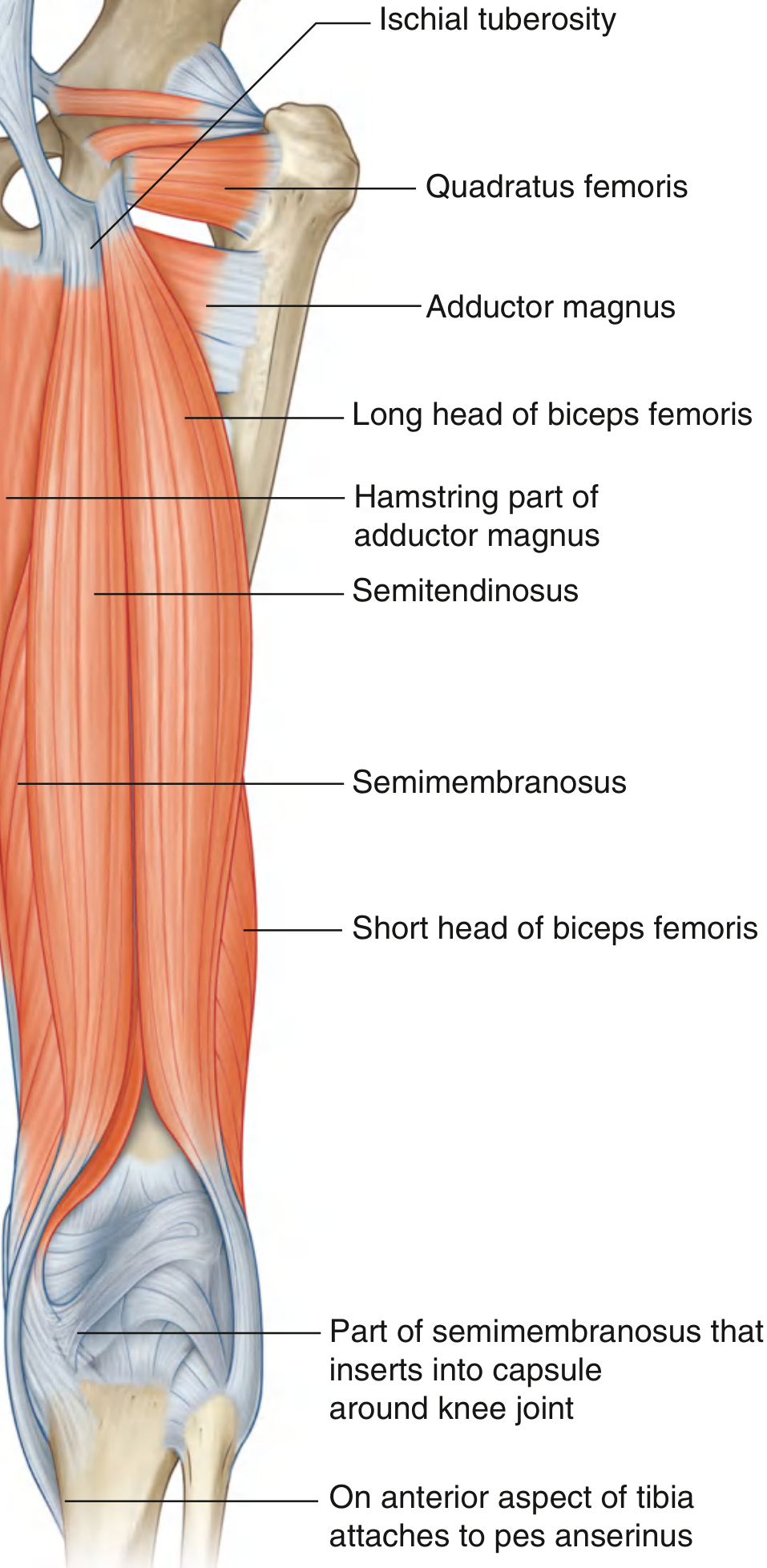
Fig. 6.63 - Muscles of the Posterior Compartment of the Thigh, Posterior View (Gray's Anatomy for Students)
1. Biceps Femoris
The biceps femoris is the most lateral muscle of the posterior compartment and has two heads:
| Head | Origin | Notes |
|---|---|---|
| Long head | Inferomedial part of the upper area of the ischial tuberosity (shared with semitendinosus) | Crosses both hip and knee joints |
| Short head | Lateral lip of the linea aspera on the shaft of the femur | Crosses knee joint only |
- Insertion: Both heads converge to form a palpable tendon that inserts into the lateral surface of the head of the fibula. Extensions blend with the fibular collateral ligament and lateral knee ligaments.
- Actions: Flexes the leg at the knee. The long head also extends and laterally rotates the thigh at the hip. With the knee partly flexed, the biceps femoris laterally rotates the leg at the knee.
- Innervation: Long head - tibial division of the sciatic nerve (L5, S1, S2); Short head - common fibular division of the sciatic nerve (L5, S1, S2).
The short head is unique among the hamstrings in having a different nerve supply (common fibular rather than tibial). This has clinical significance - in injuries to the common fibular nerve, isolated weakness of the short head of biceps can occur.
2. Semitendinosus
The semitendinosus lies medial to the biceps femoris.
- Origin: Inferomedial part of the upper area of the ischial tuberosity, shared with the long head of biceps femoris via a conjoined tendon.
- Morphology: The spindle-shaped muscle belly ends in the lower half of the thigh, giving way to a long cord-like tendon. In about 90% of individuals a tendinous inscription called the raphe divides it into two distinct parts, making it functionally a digastric muscle.
- Insertion: The tendon curves around the medial condyle of the tibia and inserts into the medial surface of the proximal tibia, posterior to the tendons of gracilis and sartorius, as part of the pes anserinus.
- Actions: Flexes the leg at the knee; extends the thigh at the hip; medially rotates both the thigh at the hip and the leg at the knee.
- Innervation: Tibial division of the sciatic nerve (L5, S1, S2) - via two distinct branches, the lower arising in common with the nerve to semimembranosus.
3. Semimembranosus
The semimembranosus lies deep to the semitendinosus and is the most medially placed of the three hamstrings.
- Origin: Superolateral impression on the ischial tuberosity. Notably, the semimembranosus tendon originates on the superolateral aspect of the ischial tuberosity and is conjoint with the BF-L/semitendinosus common tendon for only 2-5 cm before separating. The proximal tendon is elongated (mean length ~9 cm) and hemi-pennate in morphology.
- Insertion: Primarily into the groove and adjacent bone on the medial and posterior surfaces of the medial tibial condyle. Expansions from the tendon insert into:
- The oblique popliteal ligament (reinforces the posterior capsule of the knee)
- The posterior oblique ligament (provides medial knee stability)
- The medial meniscus (the semimembranosus tendon retracts the medial meniscus posteriorly during knee flexion)
- Actions: Flexes the leg at the knee; extends the thigh at the hip; medially rotates the thigh at the hip and the leg at the knee. In knee extension, the semimembranosus tendon resists valgus forces; in knee flexion, it resists external rotation.
- Innervation: Tibial division of the sciatic nerve (L5, S1, S2) - single branch from the tibial division.
Summary Table: Muscles of the Posterior Compartment
| Muscle | Origin | Insertion | Innervation | Key Actions |
|---|---|---|---|---|
| Biceps femoris (long head) | Ischial tuberosity (inferomedial) | Head of fibula | Sciatic - tibial div. (L5, S1, S2) | Flex knee; extend + lat. rotate hip |
| Biceps femoris (short head) | Linea aspera (lateral lip) | Head of fibula | Sciatic - common fibular div. (L5, S1, S2) | Flex knee; lat. rotate leg |
| Semitendinosus | Ischial tuberosity (inferomedial) | Medial surface, proximal tibia (pes anserinus) | Sciatic - tibial div. (L5, S1, S2) | Flex knee; extend hip; med. rotate |
| Semimembranosus | Ischial tuberosity (superolateral) | Medial tibial condyle (posterior groove) | Sciatic - tibial div. (L5, S1, S2) | Flex knee; extend hip; med. rotate |
Proximal Attachments: The Ischial Tuberosity
All three hamstrings (except the short head of biceps) attach proximally to the ischial tuberosity. The arrangement is important:
- The long head of biceps femoris and the semitendinosus share a conjoined tendon from the inferomedial part of the ischial tuberosity. This conjoined tendon divides into two separate tendons at a mean distance of 9-10 cm from the ischial tuberosity.
- The semimembranosus originates from the superolateral aspect of the ischial tuberosity, anterior and medial to the semitendinosus in the proximal thigh.
- The gluteus maximus covers the ischial tuberosity and 4-6 cm of the proximal hamstring muscles.
- A fibrotic retinaculum covers the proximal hamstring tendons, compartmentalizing the sciatic nerve and posterior femoral cutaneous nerve. This retinaculum can compress these structures, producing symptoms.
The short head of biceps femoris arises from the linea aspera and lateral supracondylar line of the femur - it is the only hamstring muscle that does NOT originate from the ischial tuberosity.
- Imaging Anatomy, Vol. 3, p. 281-283
Nerve Supply
The sciatic nerve (L4-S3), the largest nerve in the body, is the primary nerve of the posterior compartment. It descends from the gluteal region into the posterior thigh and provides the sole innervation to all muscles here.
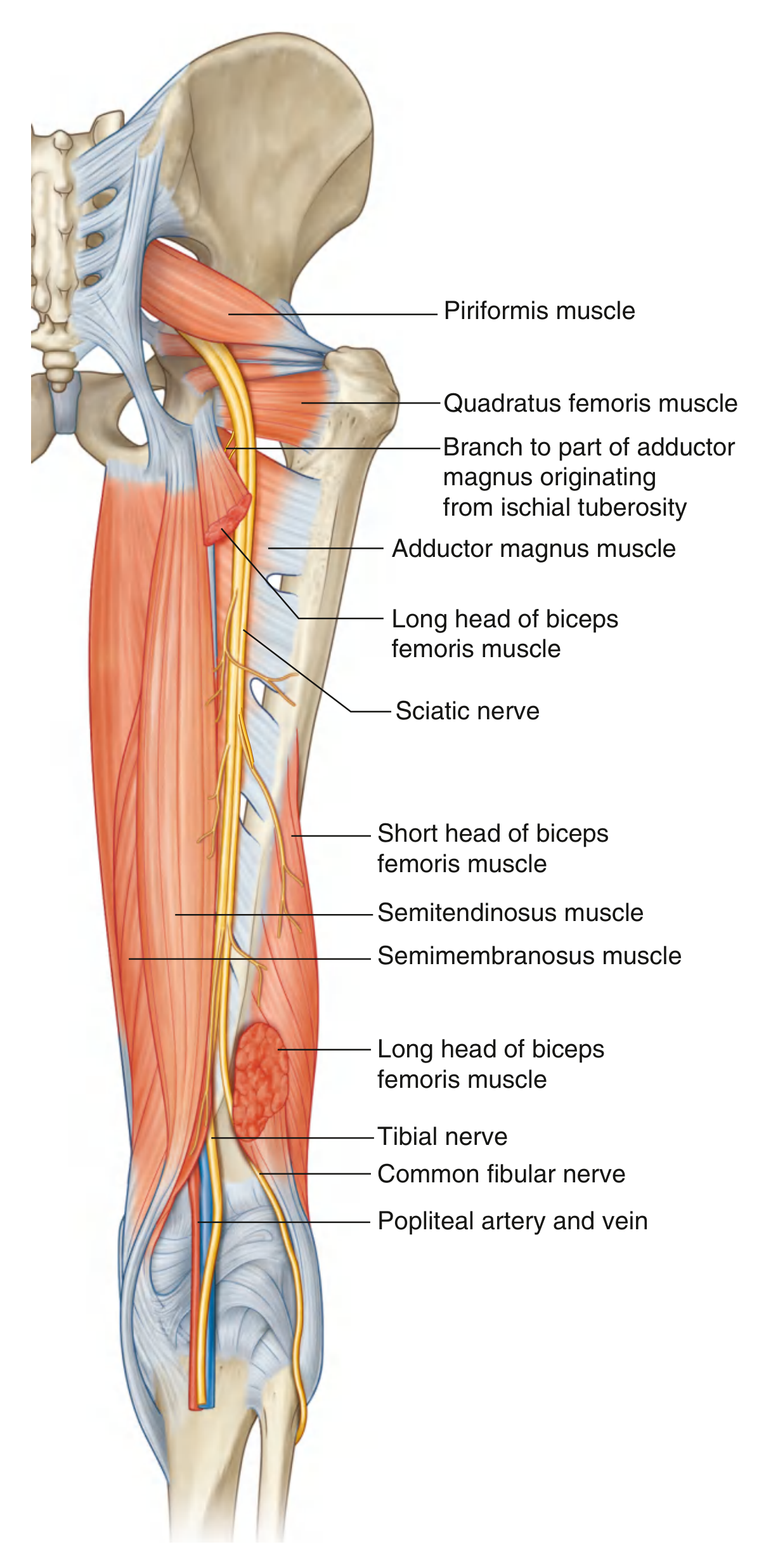
Fig. 6.72 - Sciatic Nerve (Gray's Anatomy for Students)
Course in the Posterior Thigh
- The sciatic nerve enters the thigh from the gluteal region, passing deep to the gluteus maximus.
- In the posterior compartment, it lies on the adductor magnus muscle and is crossed by the long head of the biceps femoris muscle.
- It descends vertically in the midline of the posterior thigh.
- Proximal to the knee (and sometimes already within the pelvis), it divides into its two terminal branches:
- Tibial nerve - continues through the popliteal fossa into the posterior compartment of the leg
- Common fibular nerve - winds around the neck of the fibula into the anterior and lateral compartments of the leg
Muscular Branches
- Tibial division supplies: long head of biceps femoris, semitendinosus, semimembranosus, and the hamstring portion of adductor magnus.
- Common fibular division supplies: short head of biceps femoris only (in the thigh).
The tibial division also gives a branch to the part of the adductor magnus that originates from the ischial tuberosity (the "hamstring part" of adductor magnus), which functionally acts as a hamstring muscle - this is why adductor magnus is sometimes considered to span the medial and posterior compartments.
Posterior Cutaneous Nerve of the Thigh
The posterior cutaneous nerve of the thigh (posterior femoral cutaneous nerve, S1-S3) runs with the sciatic nerve and provides cutaneous innervation to the posterior and medial skin of the thigh - it is not a motor nerve.
Blood Supply
The posterior compartment is supplied primarily by the perforating branches of the profunda femoris (deep artery of the thigh), supplemented by the inferior gluteal artery proximally.
Perforating Arteries
- Three perforating arteries branch from the profunda femoris as it descends anterior to the adductor brevis.
- All three perforate through the adductor magnus near its attachment to the linea aspera to enter the posterior compartment.
- Within the compartment, each vessel has ascending and descending branches that interconnect to form a longitudinal channel (cruciate anastomosis superiorly, anastomosis with popliteal artery branches inferiorly).
- This anastomotic chain provides the principal blood supply to the posterior thigh musculature and also contributes to collateral circulation around the hip and knee.
Additional Supply
-
The inferior gluteal artery (from the internal iliac) contributes to supply of the proximal hamstring muscles.
-
Venous drainage mirrors the arterial supply via perforating veins that drain into the profunda femoris vein.
-
Gray's Anatomy for Students, p. 703
Applied Anatomy: Hamstring Injuries
Hamstring injuries are among the most common injuries in athletes, especially those competing in sprinting, football, and track events.
Mechanisms and Patterns
- Injury most commonly occurs at the proximal musculotendinous junction or at the ischial tuberosity origin during eccentric contraction (hamstring lengthening while contracting, e.g., late swing phase of sprinting).
- Range of injury from minor muscle strain to complete avulsion of the conjoined proximal tendon.
- The semitendinosus and biceps femoris long head are most frequently injured at their common origin.
- A hamstring avulsion involves tearing of the proximal tendons from the ischial tuberosity, visualized on coronal MRI as tendon retraction with surrounding hemorrhage/edema.
Clinical Features
- Sudden posterior thigh pain ("pop") during sprinting or forced hip flexion with knee extension.
- Tenderness over the ischial tuberosity or along the posterior thigh.
- Weakness of knee flexion and hip extension.
- Bruising may track distally over days.
Imaging
- MRI is the modality of choice, demonstrating the grade of injury (partial vs. complete), degree of retraction, and involvement of specific tendons.
- A coronal MRI can clearly show hamstring avulsion injury and tendon retraction.
Pes Anserinus
The insertions of sartorius (femoral nerve), gracilis (obturator nerve), and semitendinosus (sciatic/tibial nerve) converge at the pes anserinus on the anteromedial proximal tibia. This is a common site of bursitis and is important as a donor site for ACL reconstruction (the semitendinosus and gracilis tendons are harvested together).
Relations and Clinical Relevance
| Structure | Relation |
|---|---|
| Sciatic nerve | Lies on adductor magnus, crossed by long head of biceps |
| Popliteal fossa | Formed superolaterally by biceps femoris and superomedially by semitendinosus and semimembranosus |
| Ischial bursa | Between ischial tuberosity and gluteus maximus; can cause "weaver's bottom" (ischial bursitis) |
| Posterior femoral cutaneous nerve | Runs with sciatic nerve; sensory to posterior thigh skin |
Popliteal Fossa Boundaries
The posterior compartment muscles form two boundaries of the popliteal fossa:
- Superomedial boundary: Semimembranosus and semitendinosus
- Superolateral boundary: Biceps femoris
The popliteal fossa is where the sciatic nerve divides into the tibial and common fibular nerves, and where the popliteal artery and vein are accessible.
Sciatic Nerve Injury
Compression or injury to the sciatic nerve in the posterior thigh results in:
- Weakness of all hamstrings (loss of knee flexion and hip extension)
- Loss of all sensation and motor function below the knee (supplied by tibial and common fibular nerves)
- Preserved medial thigh sensation (obturator nerve) and hip flexion/knee extension (femoral nerve)
Summary
The posterior compartment of the thigh is defined by the fascia lata and intermuscular septa. It contains the three hamstring muscles (biceps femoris with its long and short heads, semitendinosus, and semimembranosus), all attached proximally to the ischial tuberosity (except the short head of biceps) and distally to the tibia or fibula. They are innervated by the sciatic nerve (L4-S3) with the tibial division supplying all except the short head of biceps, which is supplied by the common fibular division. Blood supply comes from perforating branches of the profunda femoris artery forming a longitudinal anastomotic chain. The hamstrings are the key extensors of the hip and flexors of the knee, making them essential for walking, running, and rising from a seated position - and making them highly susceptible to injury in athletic activities.
Sources: Gray's Anatomy for Students (ISBN 9780323934237), pp. 686-709; Imaging Anatomy Text and Atlas Vol. 3 (ISBN 9781626239845), pp. 281-314
Video lectures of this content
Searching the Web
posterior compartment thigh anatomy video lecture hamstring muscles sciatic nerve
Searching the Web
posterior thigh anatomy YouTube lecture hamstrings biceps femoris semitendinosus semimembranosus
Here is a curated list of video lectures covering all the content from the posterior compartment of the thigh essay:
Video Lectures: Posterior Compartment of the Thigh
1. YouTube - Muscles of the Thigh (Posterior Compartment)
The Thigh | Muscles of the Posterior Compartment (Hamstrings)
Covers origins, insertions, actions, and innervation of the hamstring muscles. Good all-round lecture-style video for this exact topic.
Posterior Thigh - Hamstring Compartment - Anatomy Tutorial
A dedicated anatomy tutorial pitched at undergraduate/postgraduate level. Includes recap slides and exam-style questions as a bonus. Well suited to exam prep.
Muscles of the Thigh Part 3 - Posterior Compartment (AnatomyZone)
Uses 3D interactive anatomy (ZygoteBody) to walk through the posterior compartment visually. Excellent for spatial orientation of the muscles.
Posterior Compartment Thigh Muscles
Focused tutorial on the hamstring muscles specifically, straightforward and concise.
MSK Lab 2 Station 22 - Posterior Thigh Muscles (BlueLink Anatomy)
Cadaveric lab-based video by Dr. Kathleen Alsup. Extremely useful for seeing the real muscle layers and relationships.
2. Kenhub (Free/Paid)
Muscles of the Posterior Thigh and the Hamstrings (13:32)
Kenhub's dedicated video covering all three hamstrings with animated diagrams, origins, insertions, and innervation. Pairs perfectly with their written article and quizzes. Free preview; full access requires a subscription.
3. TeachMeAnatomy (Podcast/Audio version)
Muscles in the Posterior Compartment of the Thigh - Podcast Version
A podcast/audio lecture on the page if you prefer audio-based revision alongside reading. Free.
Suggested Viewing Order
| Step | Resource | Purpose |
|---|---|---|
| 1 | AnatomyZone 3D (YouTube) | Get spatial orientation first |
| 2 | Posterior Compartment Lecture (YouTube) | Core lecture covering O/I/A/N |
| 3 | BlueLink Cadaveric Lab (YouTube) | See real anatomy layers |
| 4 | Kenhub video (13 min) | Reinforcement + quizzes |
These videos together cover everything in the essay: muscle morphology, ischial tuberosity attachments, sciatic nerve divisions, perforating artery supply, pes anserinus, and clinical correlations like hamstring injuries.
This is a shared conversation. Sign in to Orris to start your own chat.