
What all constitutes skin to skin contact
Reading File
Skin-to-skin contact (SSC) refers to direct physical contact between the bare skin of two people, most commonly a newborn placed directly against a parent's chest. Let me search the medical library for comprehensive coverage.
Searching sources...
Finding Sources
Searching the Web
skin to skin contact definition components clinical practice newborn
Finding Sources
Reading Web Page
https://pmc.ncbi.nlm.nih.gov/articles/PMC6949952
Reading File
Reading File
Reading File
Here is a thorough breakdown of everything that constitutes skin-to-skin contact (SSC), drawing from medical textbooks and clinical sources:
What Constitutes Skin-to-Skin Contact
Core Definition
Skin-to-skin contact is the practice of placing a newborn baby's bare skin in direct contact with a caregiver's (usually the mother's) bare chest or abdomen, with no clothing or wrapping between the two bodies. The baby is typically naked (or wearing only a nappy and hat), placed prone (face down) on the parent's chest, and both are covered with a warm blanket. - UNICEF UK Baby Friendly Initiative
Physical Components
1. Direct bare skin apposition
The baby's front (chest, abdomen) is placed against the parent's bare chest. No fabric, clothing, or wrapping should lie between the two skin surfaces. This is the non-negotiable physical element - the skin surfaces must actually touch.
2. Positioning
- The baby is placed lengthwise on the mother's body, head on the mother's chest (ideally above the breasts)
- The mother is typically in a semi-reclined position, which supports the baby's breathing adaptation better than a horizontal one
- The baby's airway must remain clear and unobstructed - this is a safety requirement embedded in the practice
3. Covering (thermoregulation)
Both mother and baby are covered with a warm blanket. The baby may wear a hat to reduce heat loss from the head. The blanket is a component of SSC - it maintains warmth and allows the mother's body heat to regulate the baby's temperature.
4. Duration
- Ideally uninterrupted for at least one hour, or until after the first breastfeed
- For preterm/NICU babies (Kangaroo Mother Care), it may be practiced for extended and repeated periods
Sensory Dimensions of SSC
SSC is not just a physical position - it involves multiple simultaneous sensory inputs that together constitute its biological meaning:
| Sensory channel | What happens |
|---|---|
| Tactile (touch/warmth) | Baby experiences warmth and pressure from the parent's chest; mother's skin temperature rises in response to baby's presence |
| Olfactory (smell) | Baby is colonized with the mother's skin microbiome; baby can smell the mother's breast, guiding self-attachment |
| Auditory (voice/heartbeat) | Baby hears familiar heartbeat and voice from intrauterine life |
| Visual (eye contact) | Mother and infant engage visually at close range |
| Gustatory (taste) | Colostrum tasted during the crawling/self-attachment stage |
Voice contact and eye contact are also recognized as related forms of sensory bonding. The Kaplan & Sadock's Synopsis of Psychiatry notes: "the bonding of mother to infant occurs when there is skin-to-skin contact between the two or or when other types of contact, such as voice and eye contact, are made."
Who Can Provide SSC
- Mother: the primary and most studied partner; maternal hormones (oxytocin surge) are specifically activated
- Father / co-parent: also widely practiced and beneficial; often called "paternal kangaroo care"
- Other caregivers: grandparents, nurses, and others in NICU settings when parents are unavailable
Forms / Settings of SSC
Immediate SSC (birth SSC)
- Begins within seconds to minutes of birth, before cord clamping or after delayed cord clamping
- Baby is dried while on the mother's chest, but not removed
- Continues uninterrupted for at least the first hour ("the sacred hour")
Kangaroo Mother Care (KMC)
- Structured practice for preterm and low-birth-weight babies (<2000g)
- Involves early, continuous skin-to-skin contact + breastfeeding support + supportive care
- Can be practiced at home as well as in health facilities
- Park's Textbook of Preventive and Social Medicine: "KMC involves a package of early and continuous skin-to-skin contact, breast-feeding support, and supportive care in stable newborns weighing less than 2000g."
Comfort/Therapeutic SSC
- Can be used any time the baby needs calming or comforting after the birth period
- Used during painful procedures (e.g., heel pricks) - shown to reduce pain response
- Used to boost milk supply in breastfeeding mothers
What is NOT SSC
- Holding the baby while clothed (even skin-to-fabric)
- Holding the baby wrapped in a blanket between the two bodies
- Carrying in a sling without direct bare-skin contact
- Simply holding or cuddling with layers in between
Why the Physical Contact Itself Matters
From Kaplan & Sadock's Comprehensive Textbook of Psychiatry: "Newborn infants' first and most fundamental experience of pleasure and soothing is not suckling a breast or ingesting milk. It is skin-to-skin contact. This bodily contact supplies warmth, which relieves the first and most extreme distress of early extrauterine life. It also soothes somatic-affective discomfort and thereby provides a foundation for the subsequent development of affect-regulation. Skin precedes the mouth as the first erogenous zone."
Physiologically, SSC:
- Stabilizes the newborn's temperature, heart rate, respiratory rate, and blood glucose
- Initiates the 9 instinctive newborn stages (birth cry → relaxation → awakening → activity → rest → crawling → familiarization → suckling → sleep)
- Colonizes the baby with the mother's protective skin microbiome
- Triggers maternal oxytocin release and bonding behaviors
SSC Beyond the Newborn Period
In dermatology, "skin-to-skin contact" also refers to direct bodily contact as a route of disease transmission (e.g., ringworm, impetigo, warts, syphilis, MRSA in orthopedic/sports contexts). In that usage, any direct contact between two people's unclothed or exposed skin surfaces - handshakes, wrestling, sexual contact, shared use of shower facilities - constitutes skin-to-skin contact.
In summary, skin-to-skin contact is constituted by: (1) direct bare-skin apposition between two individuals, (2) correct positioning for safety and effect, (3) thermal cover, (4) sufficient uninterrupted duration, and (5) the accompanying sensory exchanges (warmth, smell, sound, sight) that together produce its biological and psychological effects.
Skin to skin contact in direct contact transmission of disease
Skin-to-skin contact is a major route of direct contact transmission for many pathogens - bacteria, fungi, viruses, and parasites can all transfer directly between touching skin surfaces. Let me pull comprehensive textbook coverage on this.
Searching sources...
Finding Sources
Finding Sources
Finding Sources
Finding Sources
Reading File
Reading File
Reading File
Reading File
Finding Sources
Reading File
Finding Sources
Finding Sources
Finding Sources
Reading File
Reading File
Reading File
Now I have comprehensive material from multiple authoritative textbooks. Here is the full answer:
Skin-to-Skin Contact in Direct Contact Transmission of Disease
What is Direct Contact Transmission via Skin?
Direct contact transmission means a pathogen passes from an infected host directly to a susceptible host through physical touching - no intermediate object or vehicle is required. When the skin is the portal of exit and/or portal of entry, skin-to-skin contact becomes the transmission route.
As Sherris & Ryan's Medical Microbiology states:
"Skin-to-skin transfer occurs with a variety of infections in which the skin is the portal of entry... In most cases, an unapparent break in the epithelium is involved in infection... Skin-to-skin transfer usually occurs through abrasions of the epidermis, which may be unnoticed."
This is a critical mechanistic point: intact, healthy skin is an effective barrier. Most skin-to-skin transmission requires microabrasions, breaks, or compromised skin integrity at the entry site.
Classification of Skin-to-Skin Contact Transmission
| Mechanism | How it works | Examples |
|---|---|---|
| Skin discharge → skin | Exudate, vesicle fluid, or crusts from infected lesion contact susceptible skin | Impetigo, herpes simplex, varicella |
| Intact skin surface contact | Organism colonizing surface skin transfers by touching | Dermatophytes (ringworm), MRSA |
| Skin → mucous membrane | Contact of colonized/infected skin with conjunctiva, oral, or genital mucosa | HSV, gonorrhea, syphilis |
| Ectoparasite transfer | Mite/louse crawls between skin surfaces during close contact | Scabies, pediculosis |
| Abrasion-facilitated | Micro-trauma during contact enables entry through epidermis | HPV, syphilis (Treponema pallidum) |
Diseases Transmitted by Skin-to-Skin Contact
1. Bacterial Infections
Impetigo (Group A Streptococcus / Staphylococcus aureus)
- Superficial skin infection spread by direct contact with infected lesions or colonized skin
- The crusting, weeping lesions carry high bacterial loads; touching them (or touching someone who has) is the main route
- Sherris & Ryan: "strains of group A streptococci that cause impetigo" are a classic example of skin-to-skin transfer
MRSA / Staphylococcus aureus
- Miller's Review of Orthopaedics lists frequent skin-to-skin contact with others, frequent sharing of personal items, and compromised skin integrity as key risk factors
- At-risk groups include athletes, military recruits, incarcerated individuals, and people experiencing homelessness - all settings of close physical contact
- S. aureus colonizes the skin surface and gains deeper access through skin appendages or trauma
Syphilis (Treponema pallidum)
- Primary chancre is highly infectious; direct contact of mucous membrane or abraded skin with the treponeme-laden chancre transmits infection
- Cited directly in Sherris & Ryan as a prototype of skin-to-skin transfer: "the spirochete of syphilis (Treponema pallidum)"
Group A Streptococcus - Wound/Surgical Infections
- Red Book 2021: "Infection of surgical wounds and postpartum (puerperal) sepsis usually result from transmission through direct contact. Health care workers who are pharyngeal, anal, or vaginal GAS carriers and those with skin [lesions]..." are vectors in healthcare settings
2. Viral Infections
Herpes Simplex Virus (HSV-1 and HSV-2)
- Transmitted by direct skin-to-skin or skin-to-mucosa contact with active or asymptomatically shedding lesions
- Harrison's Principles of Internal Medicine 22e: "When lesions are present, HSV infection may be transmitted by skin-to-skin contact despite the use of a condom."
- Herpetic whitlow - a specific occupational/contact form: HSV infection of the distal finger acquired through skin-to-skin contact (e.g., healthcare workers contacting oral/genital herpes lesions without gloves)
- Neonatal HSV: acquired at birth through contact with maternal genital secretions/lesions
Human Papillomavirus (HPV)
- Sherris & Ryan: "HPV causing common warts are transmitted through skin-to-skin contact and spreads through damaged, broken skin, fingernail biting... People can spread the virus to other parts of their body."
- Routes include: direct skin contact, public showers, swimming pools, sports/recreational equipment, and sexual contact
- Requires microabrasions for viral entry into the basal squamous epithelium
- Meat handlers and fish handlers are especially prone to cutaneous warts (occupational skin-to-skin contact with contaminated surfaces)
Molluscum Contagiosum
- Goldman-Cecil Medicine: "Other modes of transmission are associated with mild skin trauma such as abrasions, direct contact with a lesion, and fomites (e.g., shared towels)."
- Common in children via skin-to-skin play contact; in adults often sexually transmitted
Varicella (Chickenpox) / Herpes Zoster
- Varicella can spread skin-to-skin via contact with vesicle fluid (in addition to respiratory route)
- Listed in Sherris & Ryan's transmission table under "skin discharge → respiratory tract" but direct contact with vesicle fluid is also a documented route
Viral Warts (HPV non-genital)
- Scott-Brown's Otorhinolaryngology: HPV can be transmitted by direct contact of skin or mucosa in settings beyond sexual transmission
3. Fungal Infections (Dermatophytoses)
Tinea / Ringworm / Athlete's Foot (Dermatophytes - Trichophyton, Microsporum, Epidermophyton spp.)
- Dermatophytes invade keratinized tissue (skin, hair, nails) and spread by direct skin-to-skin contact or contact with shed infected scales
- Sherris & Ryan lists "dermatophyte fungi that cause ringworm and athlete's foot" as classic skin-to-skin transfer pathogens
- Indirect spread also occurs via fomites (shared towels, shower floors), which is an extension of the skin-to-skin principle
- Wrestling (tinea gladiatorum), gymnastics, and contact sports are recognized transmission settings
4. Parasitic Infections
Scabies (Sarcoptes scabiei)
- The mite burrows into the stratum corneum; transmitted by prolonged direct skin-to-skin contact - the longer and closer the contact, the higher the risk
- Red Book 2021: "Transmission usually occurs through prolonged close, personal contact. Even minimal contact with patients with crusted scabies [Norwegian scabies] or their immediate environment can result in transmission because of the large number of mites in exfoliating scales."
- Dermatology 5e: "Transmission typically occurs via direct close contact with an infested person; fomite transmission is also possible, especially with the crusted variant."
- Spread among household contacts, sexual partners, nursing home residents, and institutional settings
- Crusted (Norwegian) scabies - found in immunocompromised patients - is hyperinfective because of the enormous mite burden; even brief contact can transmit it
Pediculosis (Lice)
- Body lice and head lice transfer by direct head-to-head or body-to-body contact; pubic lice (Phthirus pubis) are almost exclusively sexually transmitted via skin-to-skin contact
- Miller's Anesthesia: "Parasitic skin diseases caused by lice and scabies are also spread via contact transmission."
Key Conditions That Facilitate Skin-to-Skin Transmission
- Broken or compromised skin - microabrasions, eczema, cuts, or macerated skin dramatically lower the infectious dose required for entry
- Volume and viability of organisms - weeping lesions, vesicles, and crusts carry far higher pathogen loads than colonized intact skin
- Duration of contact - prolonged contact (e.g., scabies, wrestling) increases probability of transfer
- Site of contact - contact with mucosal surfaces (eyes, mouth, genitalia) is typically more efficient than contact between intact skin surfaces
- Immunological status of the recipient - immunocompromised individuals are susceptible to pathogens (e.g., crusted scabies) that rarely cause disease in healthy hosts
Direct vs. Indirect Contact (Fomite) - The Distinction
Direct contact means the infected person's skin (or lesion) directly touches the recipient's skin. Several of the same organisms can also spread indirectly via contaminated objects (fomites):
| Organism | Direct skin-to-skin | Also via fomites |
|---|---|---|
| Dermatophytes | Yes | Yes (towels, shower floors) |
| Scabies | Yes (primary route) | Yes (especially crusted form) |
| Molluscum contagiosum | Yes | Yes (shared towels) |
| HPV | Yes | Yes (pools, equipment) |
| MRSA | Yes | Yes (surfaces, equipment) |
| HSV | Yes (primary route) | Rarely |
| Impetigo (GAS/Staph) | Yes | Possible |
Summary Table: Pathogens by Type
| Pathogen Type | Organism | Disease |
|---|---|---|
| Bacteria | Treponema pallidum | Syphilis |
| Group A Streptococcus | Impetigo, erysipelas | |
| S. aureus / MRSA | Impetigo, furuncles, cellulitis | |
| Viruses | HSV-1 / HSV-2 | Oral/genital herpes, herpetic whitlow |
| HPV | Warts, genital condyloma | |
| Molluscum contagiosum virus | Molluscum | |
| VZV | Varicella (contact with vesicles) | |
| Fungi | Trichophyton, Microsporum, Epidermophyton | Tinea corporis, pedis, capitis, gladiatorum |
| Parasites | Sarcoptes scabiei | Scabies |
| Pediculus, Phthirus | Lice (pediculosis) |
Sources: Sherris & Ryan's Medical Microbiology 8e | Harrison's Principles of Internal Medicine 22e | Miller's Anesthesia 10e | Red Book 2021 | Dermatology 5e | Goldman-Cecil Medicine | Miller's Review of Orthopaedics 9e | Tintinalli's Emergency Medicine
Does kissing, sexual intercourse comes under skin to skin contact
Great question - the short answer is: yes and no, depending on context. Both kissing and sexual intercourse involve skin-to-skin contact as a component, but they are classified as distinct transmission routes in microbiology because they involve more than just skin. Let me get the textbook breakdown.
Searching sources...
Finding Sources
Finding Sources
Reading File
Finding Sources
Reading File
Finding Sources
Finding Sources
Now I have everything needed for a thorough, textbook-grounded answer.
Do Kissing and Sexual Intercourse Count as Skin-to-Skin Contact?
The answer requires separating two things: casual/lay usage vs. epidemiological/microbiological classification. In everyday language, both kissing and sex obviously involve skin touching skin. In medical epidemiology, they are classified as separate, distinct transmission routes - because the primary infective mechanism involves more than skin contact.
The Official Transmission Route Classification
Sherris & Ryan's Medical Microbiology (8th ed.) lays this out explicitly in its Routes of Transmission table:
| Route of Exit | Route of Transmission | Examples |
|---|---|---|
| Skin | Skin-to-skin | HPV (warts), syphilis |
| Salivary | Direct salivary transfer (e.g., kissing) | Oral-labial herpes, EBV, CMV |
| Genital secretions | Urethral or cervical secretions (sexual intercourse) | Gonorrhea, herpes simplex, Chlamydia |
The textbook also notes: "An alternative classification is: airborne, food- or waterborne (fecal-oral), contact (skin, genital, eye, saliva), zoonotic or vector-borne, bloodborne, and perinatal."
So under the broader umbrella of "contact transmission", kissing (salivary contact) and sexual intercourse (genital/mucosal contact) are subcategories - not the same thing as skin-to-skin contact, but related to it.
Kissing - Is It Skin-to-Skin Contact?
Partially yes, but primarily classified as salivary/mucosal contact.
Kissing involves:
- Skin-to-skin contact - lips pressing against lips (lip skin is stratified epithelium, technically skin)
- Mucosal contact - oral mucosa to oral mucosa (the inner lining of lips and mouth is mucosa, not keratinized skin)
- Salivary transfer - the dominant infectious mechanism; pathogens are carried in saliva, not on the skin surface
Because the infectious agent is delivered via saliva, and the portal of entry is the oral mucosa (not the outer skin), kissing is classified under salivary transmission, not skin-to-skin.
| Disease spread by kissing | Primary mechanism | Is it "skin-to-skin"? |
|---|---|---|
| EBV (Infectious mononucleosis - "kissing disease") | Salivary transfer | No - saliva route |
| CMV | Salivary transfer | No - saliva route |
| HSV-1 (oral herpes) | Both - direct lesion contact + salivary shedding | Partly yes - when an active cold sore contacts lip skin/mucosa |
| Meningococcal meningitis | Respiratory secretions via close oral contact | No - droplet/secretion route |
| Syphilis (oral chancre) | Direct lesion contact | Yes - lesion-to-mucosa = skin/lesion contact |
HSV-1 is the clearest overlap case: when an active labial herpes lesion (cold sore) comes into direct contact with the other person's lip skin or oral mucosa during kissing, that is genuinely skin/lesion-to-skin contact. When transmission happens via asymptomatic oral shedding in saliva alone, it is salivary transmission.
Sexual Intercourse - Is It Skin-to-Skin Contact?
Yes in part, but primarily classified as genital/mucosal secretion transmission.
Sexual intercourse involves multiple simultaneous contact types:
- Skin-to-skin contact - thighs, abdomen, perineal skin touching (contributes to transmission of HSV-2, HPV, molluscum, pubic lice, scabies)
- Mucosal contact - genital mucosa to mucosa (the dominant route for most STIs)
- Secretion exchange - urethral/cervical/vaginal secretions carry organisms directly (gonorrhea, chlamydia, HIV, HBV)
- Bloodborne exposure - micro-trauma during intercourse can expose bloodborne pathogens
Sherris & Ryan classifies genital transmission separately: "Disease transmission through the genital tract has been and remains one of the most common infections worldwide. Spread can occur between sexual partners or from the mother to the infant at birth."
| STI | Primary route during sex | Skin-to-skin component? |
|---|---|---|
| Gonorrhea | Genital secretions (urethral/cervical) | Minimal - primarily mucosal secretion |
| Chlamydia | Genital secretions | Minimal - primarily mucosal secretion |
| HIV | Blood/secretions through mucosal microtrauma | Not skin-to-skin |
| Hepatitis B | Blood/secretions | Not skin-to-skin |
| Syphilis | Direct contact with chancre/lesion | Yes - skin/lesion contact |
| HSV-2 | Direct skin/mucosal contact + secretions | Yes - significant skin-to-skin component |
| HPV (genital warts) | Direct epithelial contact | Yes - direct skin/mucosal contact is the mechanism |
| Molluscum contagiosum | Direct skin contact | Yes - skin-to-skin |
| Pubic lice (Phthirus pubis) | Direct skin contact | Yes - lice crawl skin-to-skin |
| Scabies (genital) | Direct skin contact | Yes - prolonged skin contact |
| Herpes (asymptomatic shedding) | Genital secretions | Partial - secretion + skin |
The key insight: For HPV, HSV, molluscum, scabies, and pubic lice - the reason condoms do not fully protect against them is precisely because they are transmitted by skin-to-skin contact in areas not covered by the condom, not by secretions alone. Harrison's notes: "When lesions are present, HSV infection may be transmitted by skin-to-skin contact despite the use of a condom."
Summary Diagram
CONTACT TRANSMISSION (broad category)
│
├── Skin-to-skin contact
│     • Intact/abraded skin ↔ skin
│     • Examples: ringworm, impetigo, MRSA, HPV (cutaneous warts), syphilis chancre contact
│
├── Salivary/oral contact  ← KISSING fits here primarily
│     • Saliva ↔ oral mucosa
│     • Examples: EBV, CMV, HSV-1 (salivary shedding)
│     • HSV-1 cold sore contact = overlaps with skin-to-skin
│
├── Genital/mucosal contact  ← SEXUAL INTERCOURSE fits here primarily
│     • Mucosa ↔ mucosa, secretions ↔ mucosa
│     • Examples: gonorrhea, chlamydia, trichomoniasis
│     • HPV, HSV-2, syphilis, molluscum, scabies = overlaps with skin-to-skin
│
└── Conjunctival contact
      • Eye secretion ↔ mucosa
      • Examples: adenovirus, trachoma
Bottom Line
- Kissing involves skin contact (lip-to-lip) but is classified as salivary transmission because the infectious agent (saliva) is the vehicle, not the skin surface itself. The oral mucosa, not skin, is the dominant portal of entry.
- Sexual intercourse involves skin contact (genital/perineal skin) but is classified as genital/mucosal secretion transmission for most STIs. However, several STIs (HSV, HPV, syphilis, molluscum, scabies, pubic lice) genuinely use skin-to-skin contact as their primary or significant transmission mechanism during sex, which is why barrier methods do not always prevent them.
- All three - skin-to-skin, salivary, and genital contact - fall under the parent category of "direct contact transmission" in infectious disease epidemiology. The subcategory distinction matters because it determines which precautions (condoms, gloves, treatment of contacts) are actually protective.
Sources: Sherris & Ryan's Medical Microbiology 8e | Harrison's Principles of Internal Medicine 22e | Goldman-Cecil Medicine
Can TB spread through skin to skin contact
TB is primarily an airborne disease - skin-to-skin contact is not a standard route. However, there is a rare form called cutaneous TB where skin involvement does occur. Let me get the full textbook picture.
Searching sources...
Finding Sources
Finding Sources
Reading File
Finding Sources
Reading File
Reading File
Reading File
Reading File
Excellent textbook content. Now let me fetch the clinical images referenced - they are directly relevant here.
Loading Image
Loading Image
Loading Image
Here is the complete, textbook-grounded answer:
Can TB Spread Through Skin-to-Skin Contact?
The Short Answer
For ordinary pulmonary TB: No. TB is transmitted almost exclusively by the airborne route - inhaling droplet nuclei containing Mycobacterium tuberculosis. Skin-to-skin contact with a TB patient does not transmit the disease.
However, there is a separate entity - cutaneous tuberculosis - where M. tuberculosis does infect the skin, and in some of its forms, direct inoculation through physical contact is indeed the mechanism of infection.
Why TB Is NOT Spread by Skin-to-Skin Contact (Standard TB)
Fishman's Pulmonary Diseases and Disorders describes the landmark Riley experiments of the 1950s demonstrating that TB is "near exclusively transmitted by droplet nuclei." Guinea pigs in a ventilation chamber connected to a TB ward became infected only through air, not contact - definitively establishing the airborne route.
Factors that determine TB transmission are all airborne-related:
| Source Case Factors | Environmental Factors |
|---|---|
| Sputum-smear positivity for AFB | Air circulation, ventilation |
| Cough strength and frequency | Room volume |
| Presence of lung cavitation | Humidity, UV light |
| Laryngeal tuberculosis | Proximity to source case |
None of these involve skin contact. The risk of infection comes from breathing the same air, not from touching the person. Standard TB isolation requires airborne precautions (negative-pressure room, N95 respirator), not contact precautions.
Cutaneous Tuberculosis - When Skin IS the Portal of Entry
There are four major categories of cutaneous TB, classified by the mechanism of skin involvement. Two of them involve direct inoculation from an external source - which is the closest TB comes to "skin-to-skin contact" transmission:
Category 1: Inoculation from an Exogenous Source
This is the category where direct physical contact with infected material transmits TB to the skin.
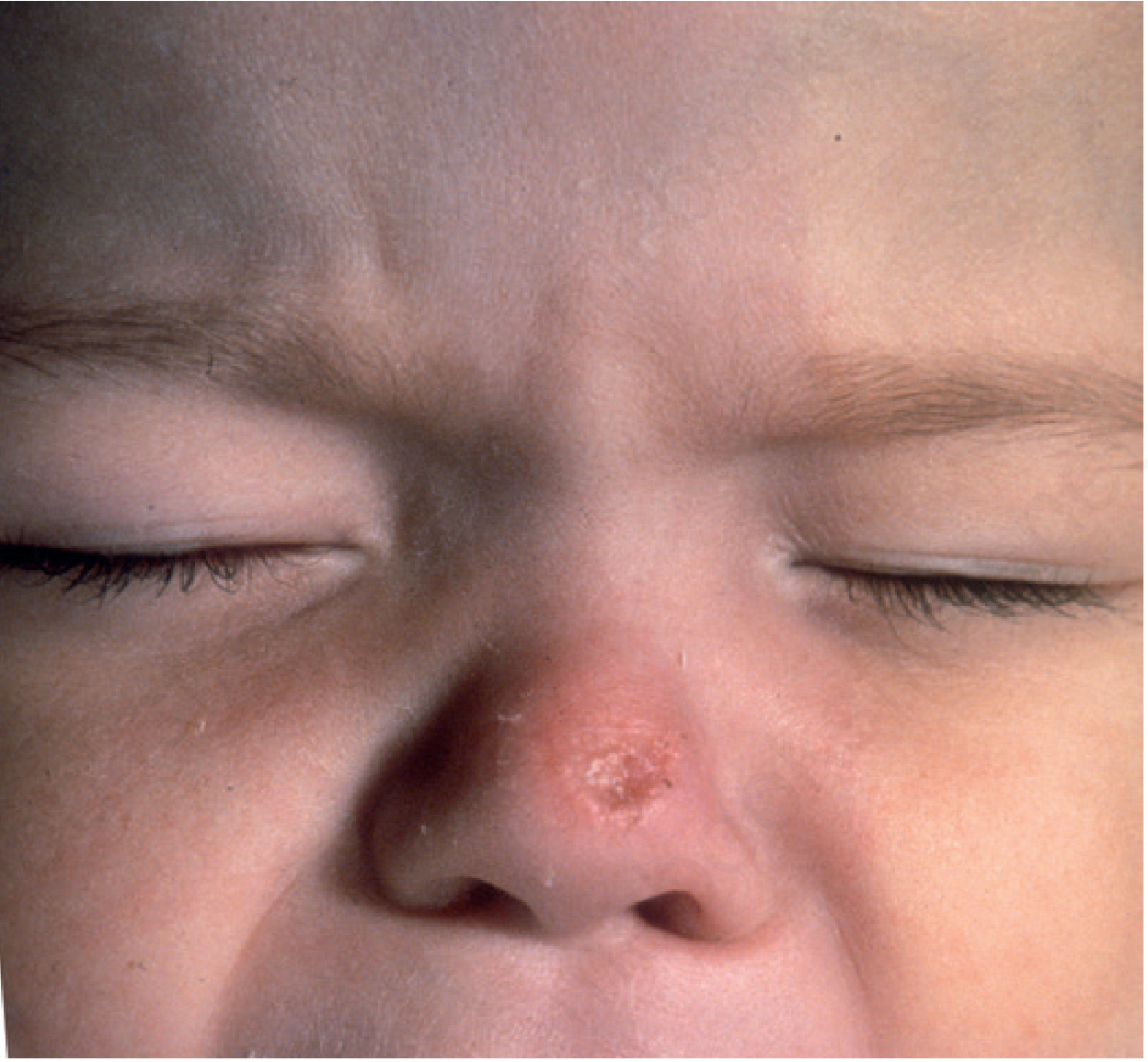
A. Primary Inoculation Tuberculosis (Tuberculous Chancre)
- Occurs when M. tuberculosis is inoculated directly into the skin of a TB-naïve individual (no prior immunity)
- The inoculation can occur during: tattooing, medical injections, nose piercing, or external physical trauma
- Affects chiefly children; lesions appear on the face or extremities
- The earliest lesion appears 2-4 weeks after inoculation: a painless brown-red papule → indurated nodule or plaque → may ulcerate (the tuberculous chancre)
- Regional lymphadenopathy follows 3-8 weeks later, completing the "primary complex"
B. Tuberculosis Verrucosa Cutis ("Warty TB" / "Prosector's Wart")
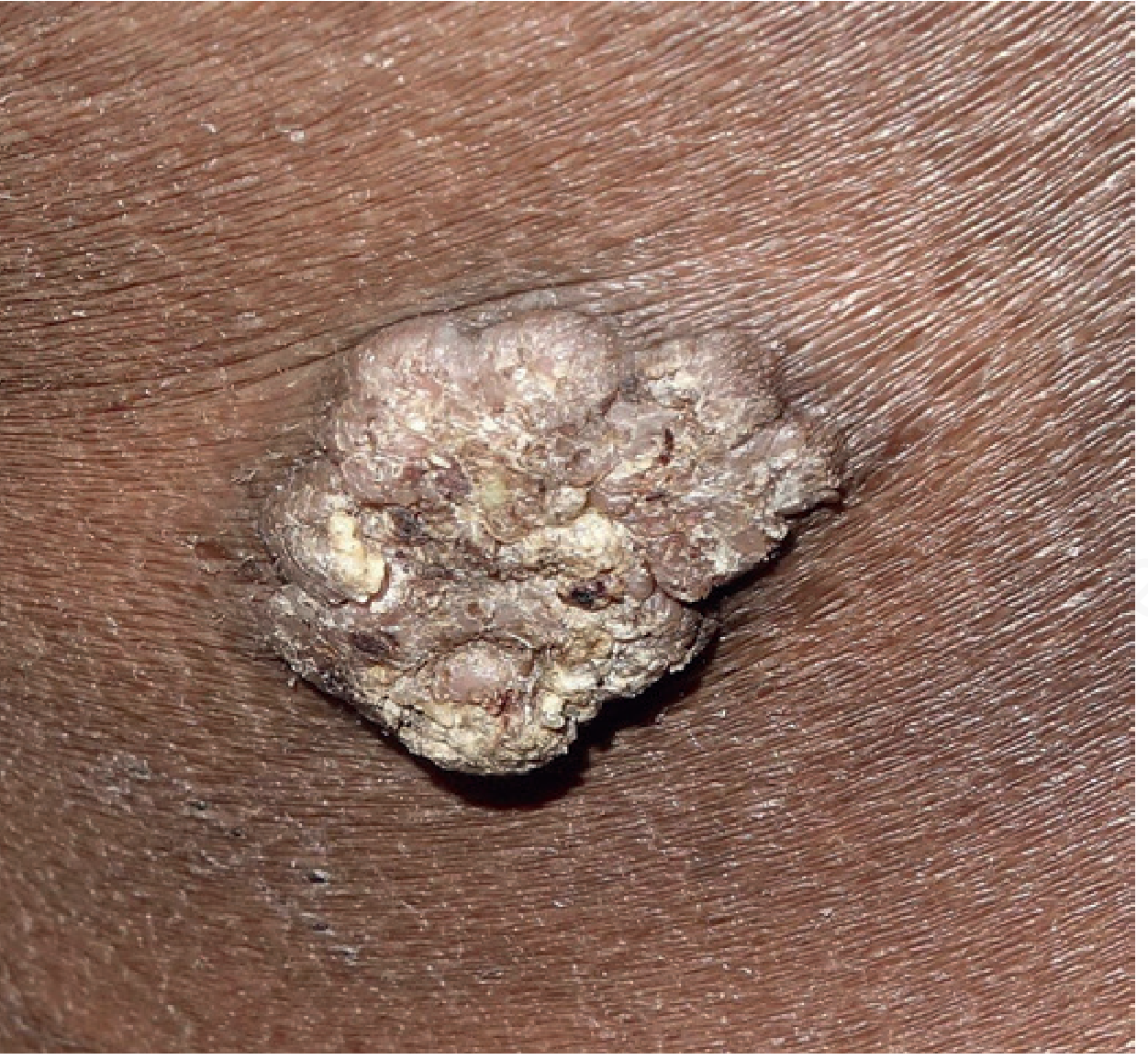
- Occurs from exogenous inoculation into skin of a previously sensitized person with strong immunity against TB
- The prototype is the "prosector's wart" - TB acquired by pathologists, mortuary workers, or medical students during autopsy procedures when infected material is inoculated into their skin through a cut or abrasion
- Also seen in farmers, slaughterhouse workers, and veterinarians handling infected animals
- Begins as a small papule, becomes hyperkeratotic and wart-like, enlarges by peripheral expansion
- Andrews' Diseases of the Skin: "TB verrucosa cutis occurs from exogenous inoculation of bacilli into the skin of a previously sensitized person with strong immunity against M. tuberculosis."
Category 2: Endogenous Spread (Not Skin-to-Skin)
These forms arise from TB already present elsewhere in the body - not from external skin contact:
Scrofuloderma
- Overlying skin breaks down from a diseased TB lymph node, bone, or joint below it
- The skin lesion is caused by TB spreading outward from inside, not inoculated from outside
- Results in ulceration and sinus tract formation
Lupus Vulgaris (LV)
- The most common form of cutaneous TB
- Results from hematogenous/lymphatic spread of TB from an internal focus to the skin
- Chronic, slowly progressive plaques typically on the face/neck
- Not acquired by skin contact
Orificial TB (TB Cutis Orificialis)
- Around body orifices (mouth, anus, genitalia) in patients with advanced internal TB
- Due to autoinoculation from draining secretions of lungs, GI tract, or genitourinary system
Miliary TB of the skin
- Hematogenous dissemination in severely immunocompromised patients (e.g., AIDS)
Category 3: Tuberculids (Immunological Reactions)
Erythema induratum (Bazin disease), papulonecrotic tuberculid, lichen scrofulosorum - these are hypersensitivity reactions of the skin to M. tuberculosis antigens. Not acquired by skin contact.
Summary Table
| TB Form | Route Involving Skin Contact? | Mechanism |
|---|---|---|
| Pulmonary TB (standard) | No | Airborne droplet nuclei - inhaled |
| Primary inoculation TB | Yes - direct inoculation | Infected material → skin break (trauma, tattoo, piercing) |
| TB verrucosa cutis | Yes - occupational/direct inoculation | Infected tissue/specimen → skin abrasion (autopsy, farm work) |
| Scrofuloderma | No | Endogenous - from lymph node/bone underneath |
| Lupus vulgaris | No | Hematogenous/lymphatic spread from internal focus |
| Orificial TB | No | Autoinoculation from own secretions |
| Miliary cutaneous TB | No | Hematogenous dissemination |
Key Takeaway
- Standard TB (pulmonary) does NOT spread by skin-to-skin contact. It requires inhaling airborne droplet nuclei. You cannot catch TB by touching, hugging, or shaking hands with a TB patient.
- Cutaneous TB via direct inoculation (primary inoculation TB and TB verrucosa cutis) does involve M. tuberculosis entering through the skin - but this requires the organism to be physically introduced into a skin wound or abrasion, not just surface-to-surface skin contact.
- The risk group for skin inoculation TB is healthcare workers, pathologists, laboratory workers, farmers, and slaughterhouse workers - people with occupational exposure to infected tissue or specimens.
Sources: Fishman's Pulmonary Diseases and Disorders 2-Vol Set | Andrews' Diseases of the Skin | Fitzpatrick's Dermatology 2-Vol Set | Dermatology 5e | Sherris & Ryan's Medical Microbiology 8e
This is a shared conversation. Sign in to Orris to start your own chat.