
Explain me typhoid fever
Reading File
Now let me search the medical library for typhoid fever content in parallel:
Finding Sources
Finding Sources
Searching PubMed
"typhoid fever"[MeSH Terms] AND treatment
Excellent results. Now let me read the most authoritative sections in parallel - Harrison's, Tintinalli's EM, Park's Preventive Medicine, and Robbins Pathology:
Reading File
Reading File
Reading File
Reading File
Now let me read the Harrison's section further for pathogenesis, clinical features, and treatment, and also the Park's section for control measures:
Reading File
Reading File
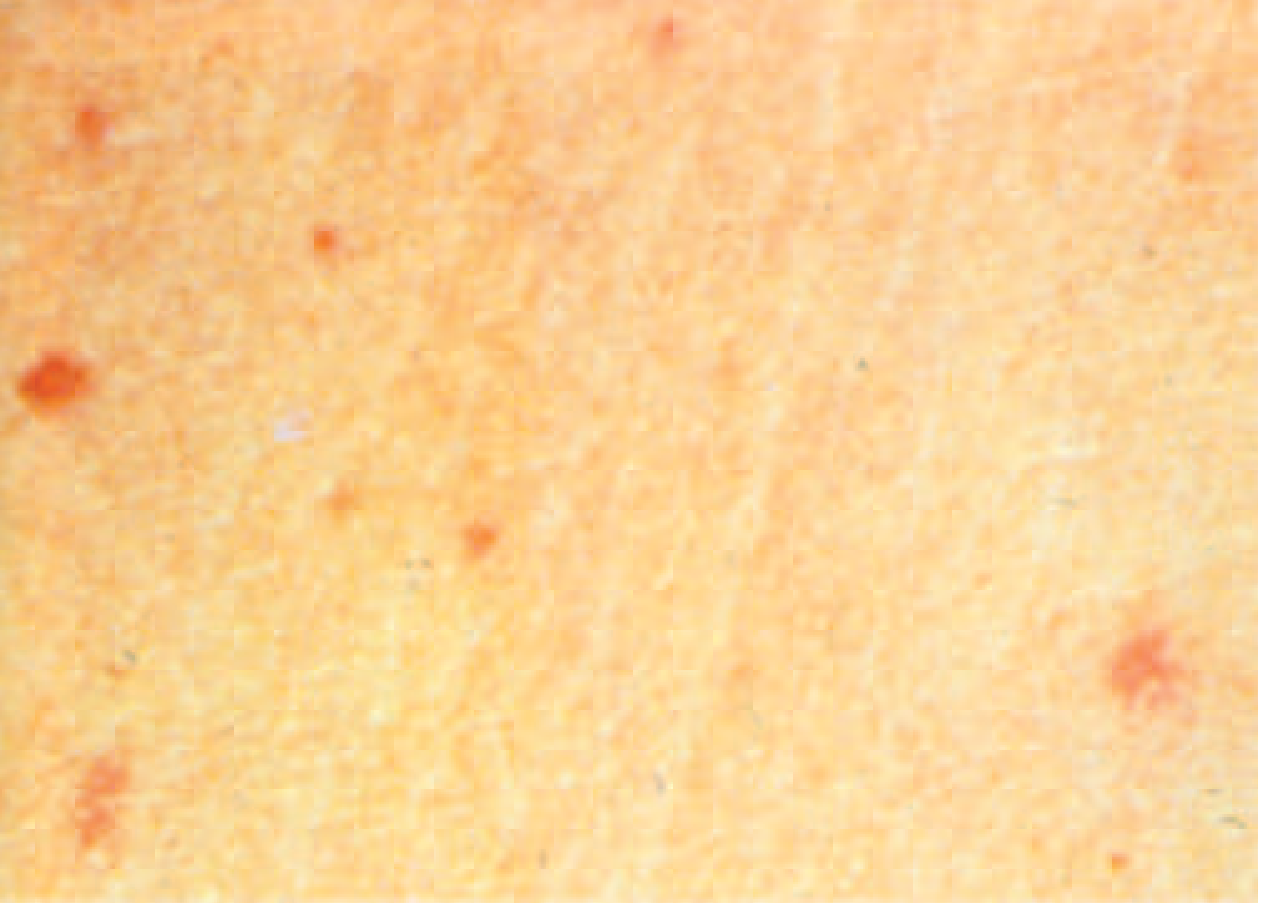
I now have rich content from multiple authoritative textbooks. Let me also fetch the rose spots image and the global incidence map since they are directly relevant visuals:
Loading Image
I now have comprehensive content from Harrison's (2025), Robbins Pathology, Tintinalli's EM, and Park's Preventive Medicine. Here is a thorough explanation:
Typhoid Fever (Enteric Fever)
Definition
Typhoid fever - also called enteric fever - is a systemic illness caused by Salmonella enterica serovar Typhi (S. Typhi). The related term "enteric fever" includes both typhoid fever and paratyphoid fever (caused by S. Paratyphi A, B, and C). The disease is characterized by prolonged fever, abdominal symptoms, and involvement of lymphoid tissues. The name "typhoid" arose from its clinical similarity to typhus in early 19th-century medicine; pathologically it was distinguished by enlarged Peyer's patches and mesenteric lymph nodes.
- Harrison's Principles of Internal Medicine 22E (2025)
Causative Organism
| Feature | Detail |
|---|---|
| Organism | Salmonella enterica serovar Typhi |
| Type | Gram-negative, facultative intracellular bacillus |
| Reservoir | Humans only (no animal reservoir) |
| Paratyphoid agents | S. Paratyphi A (most common), B, C |
S. Typhi and S. Paratyphi are exclusively human pathogens - there is no animal reservoir. Gallbladder colonization can lead to a chronic carrier state, often linked to gallstones.
Epidemiology
- 9.2 to 21 million cases of typhoid fever and ~5 million cases of paratyphoid fever occur globally each year, causing 110,000 to 280,000 deaths.
- Highest burden: Indian subcontinent (India, Pakistan, Bangladesh, Nepal), Eastern Mediterranean, and sub-Saharan Africa - with rates exceeding 1,000 cases per 100,000 children in some urban areas.
- In developed countries, cases are mostly travel-associated (visiting friends and family in endemic regions).
- Children and adolescents are disproportionately affected in endemic areas; incidence falls after age 20 due to acquired immunity.
- More cases reported in males (greater exposure), but carrier rate is higher in females.
- Peak season: July-September in endemic regions (rainy season, increased fly population).
Risk factors include contaminated drinking water, flooding, street food, raw produce grown with sewage water, prior H. pylori infection (which reduces gastric acidity), and lack of hand hygiene.
- Harrison's 2025, Park's Preventive Medicine
Pathogenesis
The sequence of events:
- Ingestion - Organism enters via fecally contaminated food or water. Gastric acidity is the first defense.
- Intestinal invasion - S. Typhi is taken up by M cells overlying Peyer's patches in the terminal ileum, then engulfed by mononuclear cells in the underlying lymphoid tissue.
- Peyer's patch enlargement - Peyer patches enlarge into plateau-like elevations up to 8 cm in diameter. Mucosal shedding creates oval ulcers oriented along the long axis of the ileum.
- Lymphatic and hematogenous spread - Unlike non-typhoidal Salmonella, S. Typhi disseminates via lymphatics and bloodstream, causing:
- Reactive hyperplasia of mesenteric lymph nodes
- Expansion of red pulp of the spleen (phagocyte hyperplasia)
- Typhoid nodules - small foci of parenchymal necrosis with macrophage aggregates in the liver, bone marrow, and lymph nodes
- Bacteremia phase - Organisms multiply in phagocytes and re-enter the bloodstream, producing the sustained febrile illness.
- Cell-mediated immunity is the primary defense (organism is intracellular); antibodies to somatic O antigen are elevated in disease, while antibodies to flagellar H antigen are elevated after vaccination.
- Robbins & Kumar Basic Pathology, Park's Preventive Medicine
Clinical Features
Incubation period: 10-14 days (range 5-21 days), depending on inoculum size and host immunity.
The Classic 4-Week Progression (if untreated)
| Week | Features |
|---|---|
| Week 1 | Gradual onset fever, headache, malaise, dry cough, relative bradycardia; positive blood culture |
| Week 2 | High sustained fever (38.8-40.5°C), "rose spots" appear, splenomegaly, hepatomegaly |
| Week 3 | Intestinal complications (hemorrhage, perforation); toxic state, delirium |
| Week 4 | Gradual defervescence or death in untreated cases |
Symptoms at Presentation (Harrison's prospective data, Kathmandu)
- Headache: 80%
- Fever: >75%
- Anorexia: 55%
- Chills: 35-45%
- Cough: 30%
- Abdominal pain: 30-40%
- Diarrhea: 22-28% (constipation in 13-30% - "classic" constipation is not universal)
- Nausea: 18-24%
- Vomiting: 18%
Key Physical Signs
- Rose spots - faint, salmon-colored, blanching maculopapular lesions on the trunk and chest, appearing in ~30% of patients (more visible in fair-skinned individuals)
- Relative bradycardia - pulse rate slower than expected for the degree of fever (Faget's sign); present in <50% of cases
- Coated tongue: 51-56%
- Hepatosplenomegaly: 3-6%
- Epistaxis
Complications
Severe or untreated typhoid fever can lead to:
| System | Complication |
|---|---|
| GI | Intestinal perforation, hemorrhage, cholecystitis |
| Cardiovascular | Myocarditis, endocarditis, mycotic aneurysm |
| Neurological | Encephalopathy, meningitis, seizures, psychosis, ataxia, deafness |
| Pulmonary | Pneumonia |
| Renal | Renal failure |
| Hematological | Anemia, DIC |
| Other | Septic arthritis |
Without treatment, mortality is 10-20%, mostly in young children.
Diagnosis
| Test | Notes |
|---|---|
| Blood culture | Positive in ~90% during the febrile phase (Week 1); highest yield early |
| Bone marrow culture | Most sensitive overall; positive even after antibiotics have been started |
| Stool/urine culture | Best in Week 2 onwards |
| Widal test | Rising titres of O and H agglutinins; limited specificity, used in endemic settings |
| Rapid antigen tests | Available but variable sensitivity |
| CBC | Leukopenia (relative), elevated liver enzymes; findings often nonspecific |
Clinical suspicion is key - fever + recent travel to an endemic area should prompt workup. Bone marrow culture is the test of choice when blood cultures are negative or after antibiotic use.
Treatment
Antibiotic Therapy
| Drug | Notes |
|---|---|
| Azithromycin | Preferred for uncomplicated typhoid; effective against DSC strains |
| Ceftriaxone (IV) | Preferred for severe or complicated cases |
| Cefixime (oral) | Alternative for uncomplicated cases |
| Ciprofloxacin | Increasing resistance, especially in South/Southeast Asia (DSC strains); use only if susceptibility confirmed |
| Chloramphenicol, ampicillin, TMP-SMX | Unreliable due to widespread resistance - no longer first-line |
Steroids: If severe typhoid encephalopathy/meningitis or septic shock is present, add dexamethasone to antibiotics.
Supportive care: IV rehydration, blood transfusion if significant GI blood loss.
Relapses can occur after apparent clinical recovery; treat the same as the initial illness.
Antimicrobial Resistance - A Growing Problem
- MDR strains (resistant to chloramphenicol, ampicillin, TMP-SMX) emerged in the 1980s in Asia and spread widely.
- Decreased susceptibility to ciprofloxacin (DSC) strains now predominate in the Indian subcontinent.
- Extensively drug-resistant (XDR) S. Typhi strains (resistant to all first- and second-line agents, plus fluoroquinolones and third-generation cephalosporins, leaving only azithromycin) emerged in Pakistan from 2016 onward.
A 2026 systematic review (PMID: 41990105) covering S. Typhi isolates in India from 1977-2024 confirmed the escalating burden of antimicrobial resistance.
Vaccination
Two typhoid vaccines are available:
| Vaccine | Type | Route | Efficacy | Notes |
|---|---|---|---|---|
| Ty21a (Vivotif) | Live attenuated oral | Oral (4 capsules) | ~70% | Booster every 5 years |
| Vi polysaccharide (Typhim Vi) | Inactivated parenteral | IM injection | ~70% | Booster every 2 years |
| Typhoid Conjugate Vaccine (TCV) | Vi conjugated to Hep B carrier | IM | ~80-85% | Suitable from 6 months; WHO-preferred for endemic areas |
A 2025 meta-analysis (PMID: 41125003) confirmed real-world effectiveness of typhoid conjugate vaccines in children and adolescents. Vaccination is recommended for travelers to endemic regions and is being introduced into national immunization programs in high-burden countries.
Prevention & Control
- Safe water supply - chlorination, boiling
- Sanitation - proper sewage disposal, elimination of open defecation
- Food hygiene - avoiding raw/street food in endemic areas, pasteurization of milk
- Identification and treatment of carriers - chronic carriers (especially those working in food handling) must be identified; treatment with fluoroquinolones or cholecystectomy (if linked to gallstones) may be needed
- Vaccination - especially for travelers and routine childhood programs in endemic areas
- Hand hygiene
Typhoid fever is considered an index of general sanitation in any country - its incidence directly reflects the quality of water and sewage infrastructure.
Carrier State
- About 1-4% of patients become chronic carriers after recovery, shedding S. Typhi in stool or urine for >1 year.
- Carrier rate is higher in females and increases with age.
- Gallbladder colonization (often with gallstones) is the usual site of persistence.
- Famous historical example: "Typhoid Mary" (Mary Mallon), an asymptomatic cook in the USA who infected dozens.
Sources: Harrison's Principles of Internal Medicine 22E (2025) | Robbins & Kumar Basic Pathology | Tintinalli's Emergency Medicine | Park's Textbook of Preventive and Social Medicine
This is a shared conversation. Sign in to Orris to start your own chat.