
Cbnaat functioning
Cbnaat mechanism
Reading File
Finding Sources
Finding Sources
Finding Sources
Finding Sources
Reading File
Reading File
Reading File
Reading File
Loading Image
Here is a comprehensive overview of CBNAAT (Cartridge-Based Nucleic Acid Amplification Test) — its mechanism, functioning, and clinical relevance.
CBNAAT (Xpert MTB/RIF) — Mechanism and Functioning
What Is CBNAAT?
CBNAAT stands for Cartridge-Based Nucleic Acid Amplification Test. It is the commercial name used in India's national TB program for the Xpert MTB/RIF assay (Cepheid), run on the GeneXpert platform.
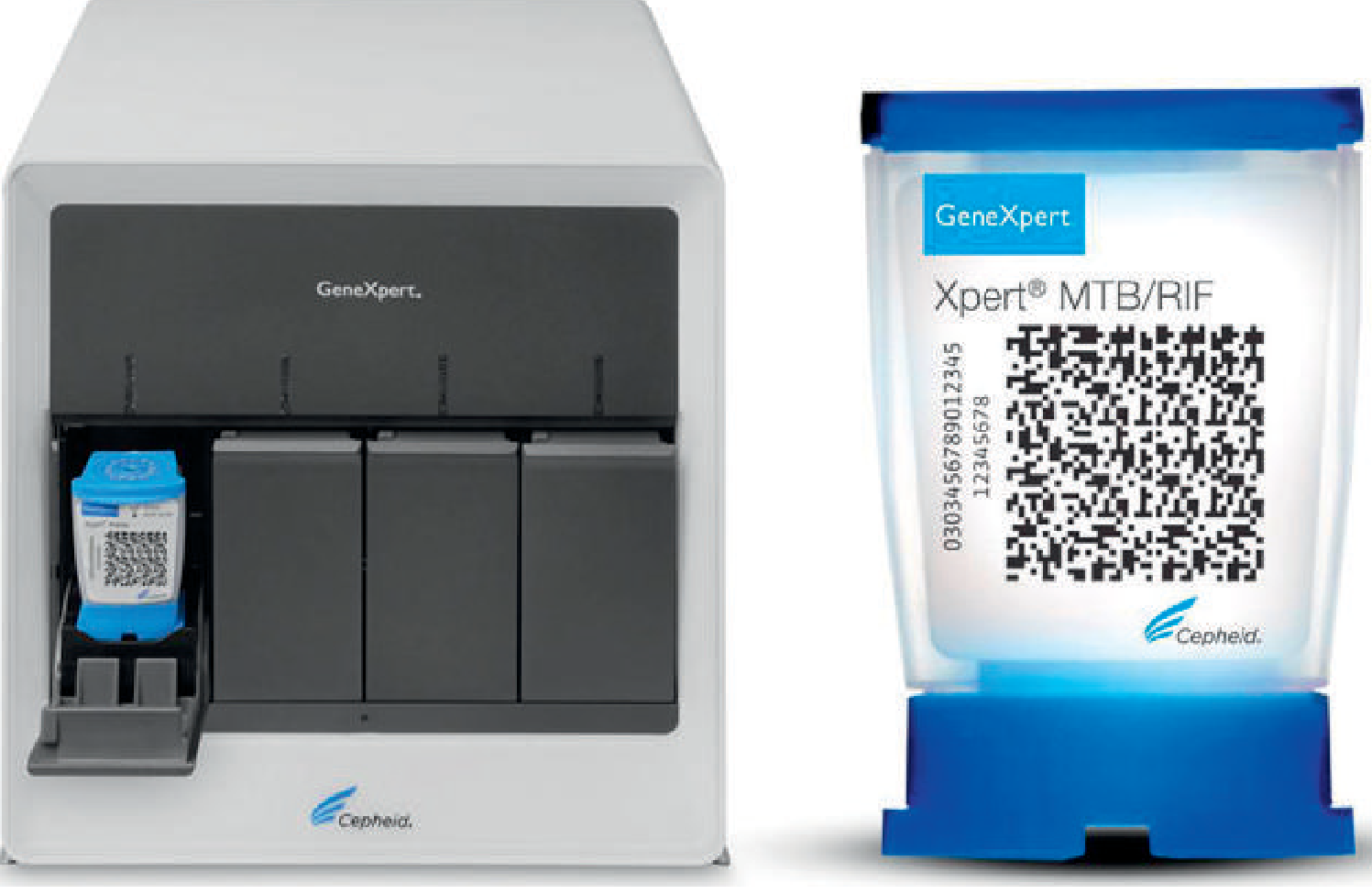
Core Technology: Real-Time PCR in a Closed Cartridge
CBNAAT uses real-time polymerase chain reaction (RT-PCR) — specifically targeting mycobacterial DNA sequences — performed entirely inside a single, sealed plastic cartridge. This "closed" amplification system is critical because it prevents cross-contamination between samples.
Step-by-Step Mechanism
| Step | What Happens |
|---|---|
| 1. Sample preparation | The clinical specimen (sputum, CSF, pus, tissue, etc.) is mixed with a sample reagent and added to the cartridge |
| 2. Cell lysis | The cartridge's internal reagents lyse mycobacterial cells (including thick mycobacterial walls), releasing DNA |
| 3. DNA extraction | Magnetic bead-based capture purifies mycobacterial DNA from the specimen within the sealed cartridge |
| 4. PCR amplification | The instrument runs real-time PCR targeting the rpoB gene of Mycobacterium tuberculosis complex (MTBC) |
| 5. Fluorescent detection | Multiple molecular beacon probes fluoresce when they bind to amplified rpoB sequences — detected simultaneously in real-time |
| 6. Rifampin resistance detection | Five overlapping molecular beacons span the 81-bp rifampin resistance-determining region (RRDR) of rpoB; mutations causing rifampin resistance alter probe binding patterns, signaling resistance |
| 7. Automated result | The GeneXpert software interprets fluorescence data and generates a result in <2 hours |
What It Detects
- Presence of M. tuberculosis complex (MTBC) — confirms active TB
- Rifampin (RIF) resistance — a surrogate marker for MDR-TB (>95% of RIF-resistant strains are also isoniazid-resistant)
Key Features
| Feature | Detail |
|---|---|
| Time to result | <2 hours (vs. days for smear, weeks for culture) |
| Biosafety requirement | Minimal — no advanced biosafety cabinet needed |
| Training | Simple; laboratory technician can perform it |
| Specimen types | Sputum, gastric aspirate, BAL, CSF, urine, pleural biopsy, lymph node biopsy, pus |
| Automation | Fully automated — specimen preparation to result |
Diagnostic Performance
| Parameter | Value |
|---|---|
| Sensitivity (smear-positive pulmonary TB) | 98% |
| Sensitivity (smear-negative pulmonary TB) | ~70% |
| Specificity | 98% |
| Sensitivity for RIF resistance detection | 96% |
| Specificity for RIF resistance detection | 98% |
The Xpert MTB/RIF Ultra (next-generation cartridge on the same GeneXpert platform) improves sensitivity to ~90% overall, with a +17% gain in smear-negative, culture-positive cases, due to larger amplification chambers and two detection targets (IS6110 and IS1081 in addition to rpoB).
Limitations
- Cannot differentiate viable vs. non-viable bacilli → cannot be used to monitor treatment response
- Lower sensitivity in pleural fluid (~50%) vs. pleural biopsy (~90–100%)
- Requires uninterrupted power supply
- Does not detect resistance to drugs other than rifampin (unlike the newer Xpert MTB/XDR)
- "Trace calls" (low-level DNA signals) may represent non-viable bacilli, especially in patients with a previous history of TB
WHO & RNTCP Recommendations
- WHO: Recommends Xpert MTB/RIF as the first-line diagnostic test for all adults and children with signs/symptoms of TB, and as the initial diagnostic in PLHIV in whom TB is suspected
- India (RNTCP/NTEP): CBNAAT is the standard point-of-care test deployed at district and sub-district levels under the National TB Elimination Programme
Sources: Harrison's Principles of Internal Medicine 22E, p. 1435 · Tietz Textbook of Laboratory Medicine, 7th Ed., p. 3328 · Murray & Nadel's Textbook of Respiratory Medicine
This is a shared conversation. Sign in to Orris to start your own chat.