
hydroquinone, betamethasone, and tretinoin combination for hyperpigmentation
hydroquinone betamethasone tretinoin combination hyperpigmentation melasma
triple combination cream melasma hydroquinone tretinoin corticosteroid
PMID: 37620285
Hydroquinone + Betamethasone + Tretinoin (Triple Combination) for Hyperpigmentation
What It Is - "Kligman's Formula"
- Hydroquinone 5% + tretinoin 0.1% + dexamethasone 0.1% in a hydrophilic ointment
- Hydroquinone 4% + tretinoin 0.05% + fluocinolone acetonide 0.01%
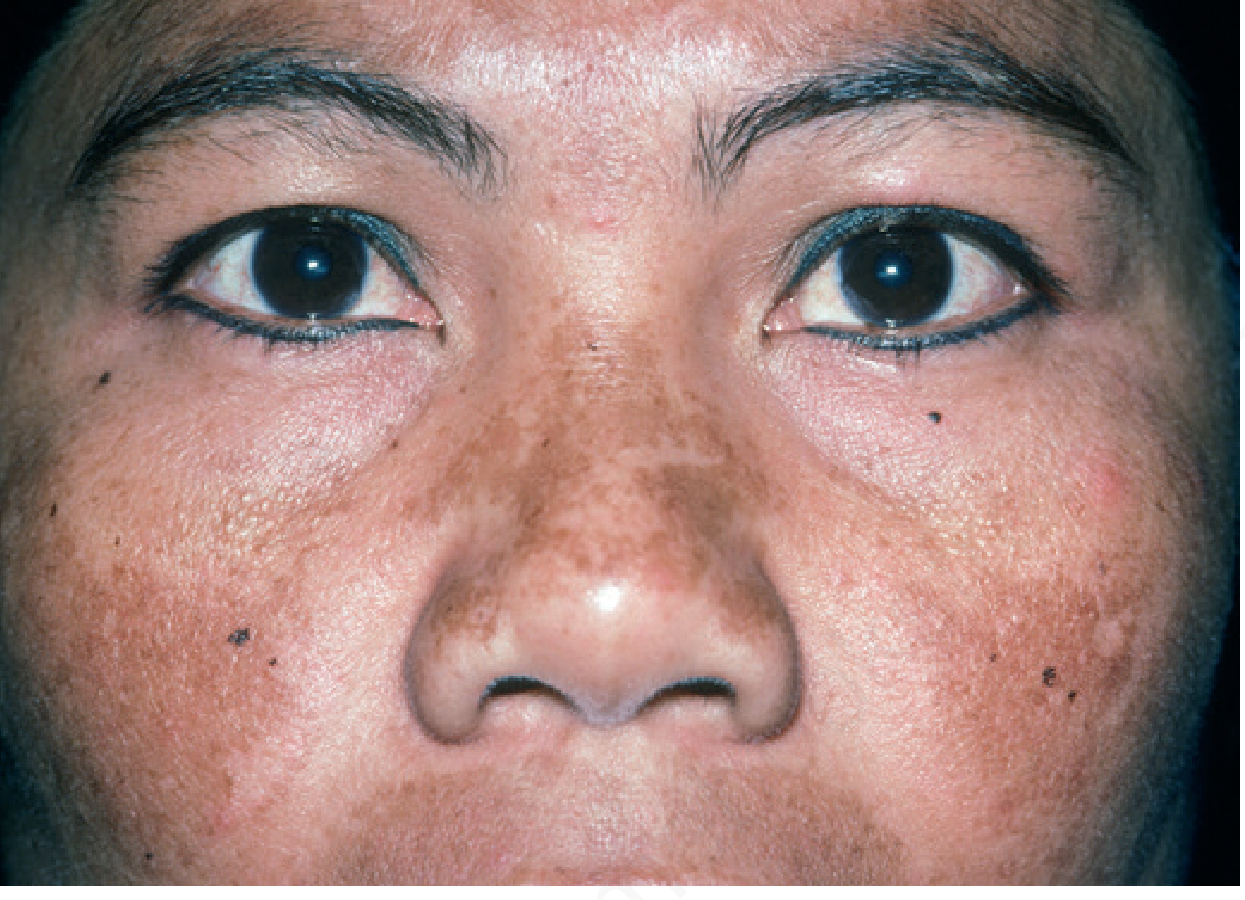
Mechanisms of Action of Each Component
1. Hydroquinone (4%)
- Tyrosinase inhibition - competes with tyrosine as a substrate for tyrosinase, the rate-limiting enzyme in melanin biosynthesis
- Melanosome degradation - direct cytotoxic damage to melanosomes
- Melanocyte destruction - via production of reactive oxygen radicals
2. Tretinoin (0.05-0.1%)
- Enhances hydroquinone penetration by its keratolytic effect on the stratum corneum
- Accelerates epidermal turnover, dispersing melanin-laden keratinocytes
- Has independent depigmenting activity, though less effective than hydroquinone alone
- Reduces tyrosinase expression in melanocytes
3. Betamethasone (or other topical corticosteroid)
- Anti-inflammatory - blunts the irritation/contact dermatitis caused by both hydroquinone and tretinoin (the "retinoid reaction"), which would otherwise trigger post-inflammatory hyperpigmentation (PIH) as a rebound
- Mild direct depigmenting effect by inhibiting melanocyte activity
- Reduces itching and erythema, improving tolerability and compliance
Indications
| Condition | Evidence |
|---|---|
| Melasma | Strongest - first-line recommendation |
| Post-inflammatory hyperpigmentation (PIH) | Effective for epidermal type (Wood's lamp enhanced) |
| Solar lentigines / photoaging pigmentation | Effective |
| Drug-induced hyperpigmentation | Limited effect |
| Dermal pigmentation | Poor response to all topical agents |
Clinical Use
Adverse Effects
| Adverse Effect | Component | Notes |
|---|---|---|
| Irritant/allergic contact dermatitis | Hydroquinone, tretinoin | Retinoid reaction (erythema, peeling, burning) |
| Exogenous ochronosis | Hydroquinone | Paradoxical blue-black discoloration from prolonged overuse; particularly at higher concentrations in darker skin |
| Satellite/perilesional hyperpigmentation | Hydroquinone | With higher-concentration preparations |
| Skin atrophy, telangiectasias, striae | Betamethasone | From corticosteroid overuse or prolonged use |
| Fixed erythema and telangiectasias | Corticosteroid | With chronic overuse |
| Acneiform eruptions, hypertrichosis | Corticosteroid | Overuse-related |
| HPA axis suppression | Betamethasone | Minimal with short-term facial use, but possible with widespread application |
Contraindications and Cautions
- Pregnancy: Hydroquinone has ~30-50% systemic absorption; avoid in pregnancy (FDA category C). Both tretinoin and corticosteroids also carry pregnancy concerns
- Darker skin types (Fitzpatrick IV-VI): Higher risk for rebound PIH from irritation and for ochronosis; use with extra caution
- Periorbital / mucosal areas: Avoid
- Children: Not established
- Dermal melasma: Responds poorly; do not expect significant benefit
Alternatives When Triple Combination Is Not Tolerated or Fails
- Azelaic acid 15-20%: Tyrosinase inhibitor; less effective than hydroquinone but safer profile, preferred in pregnancy
- Tranexamic acid (oral 250-325 mg twice daily or intradermal): Inhibits UV-induced plasminogen activation and melanogenesis; increasingly used for refractory melasma
- Kojic acid, arbutin, vitamin C, niacinamide: Act on different melanogenesis steps; can be combined
- Chemical peels (glycolic acid, TCA): For refractory cases, but carry PIH risk
- Lasers/IPL: Variable results; must be used cautiously in darker skin types
Recent Evidence
Summary
hydroquinone, betamethasone, and tretinoin for hyperpigmentation with minoxidil for beard growth.. Can this be used and if yes then how
minoxidil beard facial hair growth
PMID: 41778417
minoxidil topical facial hair hypertrichosis side effect
minoxidil beard growth + hydroquinone tretinoin combination same face regimen interaction
https://pmc.ncbi.nlm.nih.gov/articles/PMC10894539
Combining Kligman's Triple Cream (Hydroquinone + Betamethasone + Tretinoin) WITH Minoxidil for Beard Growth - on the Same Face
Short Answer: Yes, they can be used together - but with strict zone separation, timing, and precautions.
Understanding Each Drug's Role First
Triple Combination (for hyperpigmentation)
| Drug | Role |
|---|---|
| Hydroquinone 4% | Tyrosinase inhibitor - blocks melanin synthesis, destroys melanosomes |
| Tretinoin 0.05% | Increases skin turnover, enhances hydroquinone penetration, independent depigmentant |
| Betamethasone | Suppresses irritation/inflammation to prevent rebound post-inflammatory hyperpigmentation (PIH) |
Minoxidil (for beard growth)
- Conversion to its active form minoxidil sulfate by follicular sulfotransferase enzymes - this is the rate-limiting step
- Vasodilation increasing perifollicular blood flow and nutrient delivery
- Prolongation of the anagen (growth) phase and shortening of telogen (resting) phase
- Effects on prostaglandin synthesis, collagen synthesis, and VEGF expression
The Key Interaction: Tretinoin Enhances Minoxidil
Tretinoin upregulates follicular sulfotransferase enzymes, increasing the conversion of minoxidil to its active form, minoxidil sulfate. This enhances minoxidil's efficacy, particularly in "low responders." - PMC10894539, Sharma et al., Dermatol Ther 2019
The Problems to Watch For
1. Overlapping Application Zones
- Excessive tretinoin effect: tretinoin from the triple cream + tretinoin in any minoxidil combo = double retinoid load = severe irritation, peeling, barrier disruption
- Risk of increased systemic absorption: damaged skin barrier from dual irritants allows more minoxidil and hydroquinone to enter systemically
- Betamethasone on hair follicles: chronic corticosteroid application to beard follicles can paradoxically cause both hypertrichosis (initially) and later follicular atrophy with prolonged use
2. Corticosteroid (Betamethasone) and Hair Follicles
- Hypertrichosis with overuse - fine vellus hair growth (confuses the beard growth picture)
- Skin atrophy, telangiectasias on the face with prolonged use
- Suppression of local inflammation that is important for follicle cycling
3. Hyperpigmentation vs. Hair Growth Goals Are Partially Conflicting
- Hydroquinone lightens pigment in skin, including potentially in areas where you want pigmented (dark) terminal beard hair to grow. Its effects are on melanocytes in the epidermis, not the hair follicle bulb, so hair color is unlikely to be affected - but this is something to be aware of
- The triple cream's corticosteroid reduces inflammation - some degree of inflammatory signaling is part of normal hair follicle cycling
How to Use Both Safely - A Practical Protocol
Step 1: Zone Mapping (Most Important)
| Zone | Product |
|---|---|
| Forehead, cheeks, nose bridge (hyperpigmented areas, no beard growth desired) | Triple combination only |
| Jaw, chin, upper lip, sideburns (beard growth area) | Minoxidil only |
| Overlap zone (e.g., lower cheeks with both hyperpigmentation AND patchy beard) | Choose ONE priority at a time, or use sequenced application with time gap - see below |
Step 2: Timing - Separate by Several Hours
| Time | Product | Notes |
|---|---|---|
| After cleansing (7-8 PM) | Minoxidil 5% foam or solution | Apply to beard area, leave to absorb 30-60 min |
| After minoxidil absorbs (8-9 PM) | Triple combination cream | Apply strictly to hyperpigmented zones only, avoiding beard areas |
| Morning | Broad-spectrum SPF 30+ sunscreen | Mandatory - covers all facial zones |
Step 3: Suggested Concentrations and Frequency
- Minoxidil: 2-5% topical solution or foam; twice daily (morning + evening) to beard zones
- Triple combination: once nightly to hyperpigmented zones only; limit to 8-12 week courses with breaks
- Sunscreen: every morning, non-negotiable for hyperpigmentation treatment
Step 4: Expected Timeline
| Outcome | Timeframe |
|---|---|
| Noticeable beard density improvement (minoxidil) | 3-6 months (initial shedding at ~3 months is normal - telogen effluvium before regrowth) |
| Hyperpigmentation lightening (triple combo) | 4-8 weeks for onset, 12 weeks for full effect |
| Sunscreen protection ongoing | Continuous |
Specific Precautions for This Combined Use
-
Do not apply minoxidil to actively irritated, peeling, or inflamed skin (from the retinoid reaction of tretinoin) - this dramatically increases systemic absorption of minoxidil, raising the risk of cardiovascular effects (tachycardia, fluid retention)
-
Use minoxidil on dry skin only - applying to damp skin increases absorption and irritation
-
Darker skin types (Fitzpatrick IV-VI): already at higher risk for PIH from the triple combo; adding minoxidil-associated irritation raises this risk further. Use the lowest effective concentrations
-
Do not use the triple cream as a base for minoxidil - they should not be physically mixed or co-applied as a stack
-
Minoxidil discontinuation: if you stop minoxidil after achieving results, beard gains from vellus-to-terminal conversion may be maintained, but newly recruited vellus hairs will likely regress. Plan this in advance
-
Pregnancy: Both hydroquinone and minoxidil are contraindicated in pregnancy
Summary
| Question | Answer |
|---|---|
| Can they be used together? | Yes |
| On the same zone at the same time? | No - separate zones or separate timing |
| Do they interact pharmacologically? | Beneficially: tretinoin enhances minoxidil via sulfotransferase upregulation |
| Any dangerous interaction? | No direct toxicity, but combined irritation risks barrier disruption and increased systemic absorption |
| Best practice? | Zone separation + time-staggered application + daily sunscreen |
Which topical drug is best to use with minoxidil(for beard growth) for removing hyperpigmentation
tretinoin minoxidil sulfotransferase hair growth enhancement
best depigmenting agent to use with minoxidil beard zone compatible hyperpigmentation 2024 2025
azelaic acid niacinamide tranexamic acid hyperpigmentation efficacy comparison
topical depigmenting agents melasma comparison systematic review
Best Topical Depigmenting Agent to Use WITH Minoxidil (Beard Growth)
- Does not disrupt minoxidil's mechanism
- Ideally enhances it (or at least is neutral)
- Minimizes irritation (damaged skin barrier = more minoxidil absorbed systemically = cardiovascular risk)
- Is safe on the facial/beard zone
Ranking: Best to Worst Compatibility With Minoxidil
🥇 #1 - Tretinoin (0.025%-0.05%) - The Best Choice
- Tretinoin upregulates follicular sulfotransferase enzymes - the enzyme responsible for converting minoxidil into its active form, minoxidil sulfate. More sulfotransferase = more active minoxidil = better beard growth response
- Has independent depigmenting activity by accelerating keratinocyte turnover and dispersing melanin-laden cells
- Used in some compounded beard-growth serums deliberately combined with minoxidil for this synergy
- Well-studied for melasma and post-inflammatory hyperpigmentation (PIH)
- Use a low concentration (0.025%) to start
- Apply tretinoin at night, minoxidil in the morning (separate applications)
- Allow skin to fully heal from any retinoid reaction before applying minoxidil on top
- If irritation is significant, reduce tretinoin frequency to every other night
🥈 #2 - Azelaic Acid (15-20%) - Safest and Most Beard-Friendly
- Gentle anti-inflammatory tyrosinase inhibitor - does NOT cause the irritation/barrier disruption that tretinoin or hydroquinone can
- No interaction with minoxidil - completely different mechanism, zero pharmacological conflict
- Can be applied in the same general facial zone without the barrier disruption risk
- Safe for darker skin types (Fitzpatrick IV-VI) - lower PIH risk
- Also has mild antibacterial and comedolytic properties (useful if you get minoxidil-related acne)
- Does not cause ochronosis (unlike hydroquinone)
- Safe in pregnancy - the only prescription depigmenting agent that is
🥉 #3 - Niacinamide (4-5%) - Best OTC Option
- Inhibits melanosome transfer from melanocytes to keratinocytes (unique mechanism - different from tyrosinase inhibition)
- Very well tolerated, almost no irritation
- Available OTC in many moisturizers and serums
- No interaction with minoxidil at all
- Doubles as a skin-barrier strengthener, which actually protects against excessive minoxidil absorption
- Has mild anti-inflammatory properties
⚠️ #4 - Hydroquinone (4%) - Effective but Requires Zone Caution
- Hydroquinone can cause contact dermatitis and skin irritation - disrupts the barrier, increasing minoxidil absorption
- If combined with tretinoin (as in Kligman's formula) on top of minoxidil, there is triple irritant potential on the face
- Prolonged use over beard follicles carries a small theoretical risk of hypopigmented halo around follicles
- Exogenous ochronosis risk with overuse, particularly in darker skin
- Apply hydroquinone only to the hyperpigmented patch zone, keeping it away from active beard follicles where possible
- Do not apply both on the same skin area at the same time
- Keep courses to 8-12 weeks maximum
❌ #5 - Full Kligman's Triple Cream (Hydroquinone + Tretinoin + Betamethasone) - Least Compatible With Minoxidil in Beard Zone
- Triple irritant burden
- Corticosteroid effects on follicles (atrophy with long use)
- Increased systemic minoxidil absorption through compromised barrier
The Practical Answer: What Should You Actually Use?
| Your Situation | Best Choice |
|---|---|
| Want beard growth boost AND depigmentation from one agent | Tretinoin 0.025-0.05% alone (no corticosteroid needed at low dose) |
| Sensitive skin, darker skin type (IV-VI), want safety | Azelaic acid 15-20% |
| Want OTC option, mild hyperpigmentation | Niacinamide 4-5% serum |
| Moderate-severe hyperpigmentation, strict zone separation possible | Hydroquinone 4% on non-beard zones only |
| Refractory cases | Tranexamic acid (oral or topical) - no interaction with minoxidil |
The Optimal Combined Regimen
- Minoxidil 5% - apply to beard zone only, let absorb for 30-60 min
- Niacinamide 5% serum - apply over entire face (beard + pigmented zones) after minoxidil absorbs
- SPF 30+ broad-spectrum sunscreen (mandatory)
- Cleanse
- Tretinoin 0.025% - apply to pigmented zones + beard zone (this boosts both depigmentation and minoxidil's effect overnight)
- Moisturizer over tretinoin to reduce irritation
Important Notes
- Sunscreen every single morning is non-negotiable - without it, all depigmenting progress is undone by UV exposure
- Expect 3-6 months for visible beard density change and 4-8 weeks for pigmentation improvement
- Start tretinoin low (0.025%) and every other night before increasing frequency
- If significant irritation develops from tretinoin, switch to azelaic acid which gives 80% of the benefit with far less irritation
What's the best protocol for using tretinoin and other depigmentation agents in combination with minoxidil to avoid irritation?
tretinoin retinoid dermatitis tolerability strategy low dose initiation
tretinoin minoxidil combined protocol timing application irritation avoidance dermatology 2024
tretinoin minoxidil combination alopecia efficacy safety
https://jcadonline.com/outcomes-adherence-minoxidil-alopecia
Complete Protocol: Tretinoin + Depigmenting Agents + Minoxidil (Beard Growth) - Minimizing Irritation
The Core Principle: "Low and Slow" for Tretinoin
Phase 1: Skin Preparation (Weeks 1-2)
- Cleanser: Gentle, fragrance-free, non-foaming (e.g. ceramide-based or glycerin-based). Use once or twice daily. Avoid salicylic acid, benzoyl peroxide, or any exfoliant cleansers at this stage.
- Moisturizer: Apply a ceramide + niacinamide moisturizer twice daily. Niacinamide (4-5%) simultaneously begins mild depigmentation (melanosome transfer inhibition) while strengthening the skin barrier - a perfect preparatory agent.
- Sunscreen: SPF 30+ broad spectrum every single morning. Start this habit now - it is non-negotiable for the entire regimen.
- No minoxidil, no tretinoin yet. Let the barrier consolidate for 2 weeks.
Phase 2: Introduce Minoxidil First (Weeks 3-4)
| Step | Detail |
|---|---|
| Formulation | 5% minoxidil foam (preferred - propylene glycol-free, far less irritating than solution) OR a propylene glycol-free compounded solution |
| Frequency | Once daily (morning) to start |
| Application rule | Apply only to completely dry skin - wait 15-20 min after washing. Wet skin dramatically increases absorption and irritation |
| Amount | Half a capful of foam or 0.5 mL solution per session |
| Zone | Beard area only - chin, jaw, upper lip, sideburns |
| After application | Let it fully absorb (30-60 min) before touching or applying anything else |
Phase 3: Introduce Tretinoin - "The Buffer Method" (Weeks 5-8)
The Buffer (Sandwich) Technique - Most Important Technique
Step 1: Cleanse → pat completely dry → wait 15 min
Step 2: Apply thin layer of plain moisturizer (ceramide-based)
Step 3: Wait 5-10 min for moisturizer to partially absorb
Step 4: Apply pea-sized amount of tretinoin 0.025% over the moisturizer
Step 5: Wait 20-30 min → apply another thin layer of moisturizer on top
Tretinoin Frequency Ramp-Up Schedule
| Week | Tretinoin Frequency | Expected Skin Response |
|---|---|---|
| 5-6 | 2x/week (e.g. Tuesday + Friday nights) | Mild tightness, possible dryness |
| 7-8 | 3x/week | Possible mild peeling |
| 9-10 | Every other night | Skin starts adjusting ("retinization") |
| 11-12 | Nightly if tolerated | Skin normalized, full efficacy |
Tretinoin Concentration Ladder
- 0.025% cream - for beginners, sensitive skin, darker Fitzpatrick types (IV-VI)
- 0.05% cream - after 8-12 weeks of 0.025% tolerance established
- 0.1% cream - for experienced users only; rarely needed for hyperpigmentation
Phase 4: Full Combined Regimen (Week 9 onward)
Morning Routine
| Order | Product | Zone | Wait After |
|---|---|---|---|
| 1 | Gentle cleanser | Full face | Pat dry, wait 15 min |
| 2 | Niacinamide 5% serum | Full face | 2-3 min absorption |
| 3 | Plain moisturizer | Full face | 5 min |
| 4 | Minoxidil 5% foam | Beard zone only | 30-60 min to absorb fully |
| 5 | SPF 30+ sunscreen | Full face | Done |
Evening Routine
| Order | Product | Zone | Wait After |
|---|---|---|---|
| 1 | Gentle cleanser | Full face | Pat dry, wait 15 min |
| 2 | Thin moisturizer (buffer layer) | Full face | 5-10 min |
| 3 | Tretinoin 0.025% | Hyperpigmented zones + beard area | 20-30 min |
| 4 | Moisturizer (seal layer) | Full face | Done for night |
- Add azelaic acid 15% in the morning after niacinamide, or
- On non-tretinoin nights, apply tranexamic acid serum as the active step
What to Do When Irritation Occurs
| Symptom | Response |
|---|---|
| Mild redness/tightness | Increase moisturizer layers; do NOT stop tretinoin |
| Moderate peeling/flaking | Drop tretinoin to 2x/week; add heavier emollient at night |
| Burning on minoxidil application | Check skin is fully dry before applying; try foam over solution |
| Acne flare in beard zone | This is a known minoxidil side effect; apply azelaic acid to beard zone in morning (anti-inflammatory + antibacterial) |
| Severe irritation/weeping | Pause both tretinoin and minoxidil for 3-5 days; use plain ceramide moisturizer only; restart at lower frequency |
Skin Type Adjustments
| Fitzpatrick Type | Adjustment |
|---|---|
| I-II (fair) | Can tolerate 0.05% tretinoin sooner; less PIH risk |
| III (medium) | Standard protocol above |
| IV-VI (dark) | Always start 0.025%; use buffer method every time; prefer azelaic acid over hydroquinone if irritation prone; vigilance for rebound PIH from tretinoin irritation |
The "Three Alarm" System - When to Stop and Reassess
- Heart pounding, chest tightness, or leg swelling after minoxidil application (signs of excessive systemic absorption from damaged barrier)
- Skin darkens paradoxically over the hyperpigmented zone after 4-6 weeks (exogenous ochronosis if using hydroquinone, or rebound PIH)
- Persistent painful dermatitis that doesn't resolve in 5-7 days off the actives
Summary Quick-Reference Card
| What | Frequency | When | Zone |
|---|---|---|---|
| Gentle cleanser | Twice daily | AM + PM | Full face |
| Niacinamide 5% | Daily | AM | Full face |
| Moisturizer (ceramide) | Twice daily | AM + PM | Full face |
| Minoxidil 5% | Daily (AM preferred) | After moisturizer; skin fully dry | Beard only |
| SPF 30+ | Daily | After minoxidil absorbs | Full face |
| Tretinoin 0.025% | 2-3x/week → nightly (ramp over 8 wk) | PM only; sandwiched in moisturizer | Pigmented + beard zones |
| Azelaic acid 15% | Daily or alternate evenings | AM or on non-tretinoin nights | Pigmented zones |
- Retinization (skin adapts to tretinoin): ~6-8 weeks
- Visible hyperpigmentation improvement: 4-8 weeks
- Visible beard density improvement: 3-6 months
- Full beard growth assessment: 12+ months
What's the best protocol for using tretinoin and other depigmentation agents in combination with minoxidil to avoid irritation? minoxidil to be used twice daily
Full Protocol: Tretinoin + Depigmenting Agents + Minoxidil TWICE DAILY - Minimizing Irritation
Why Twice-Daily Minoxidil Changes the Protocol
- Both morning AND evening slots are partly occupied by minoxidil absorption time (30-60 min each)
- Tretinoin and other actives must be fitted around these windows carefully
- The evening slot becomes the most complex - minoxidil must fully absorb BEFORE tretinoin goes on
- Total active application windows per day increase, so moisturizer-barrier maintenance becomes even more critical
Phase 1: Barrier Prep (Weeks 1-2)
| Step | Product | Timing |
|---|---|---|
| Cleanse | Gentle, fragrance-free, non-foaming cleanser | AM + PM |
| Treat | Niacinamide 5% serum | AM + PM |
| Moisturize | Ceramide-rich moisturizer | AM + PM |
| Protect | SPF 30+ broad-spectrum | AM (mandatory for entire regimen) |
Phase 2: Introduce Minoxidil Twice Daily (Weeks 3-4)
- Skin must be completely dry before applying - wait 15-20 min after washing
- Apply to beard zone only (chin, jaw, upper lip, sideburns)
- Use half a capful foam or 0.5 mL solution per application
- Let absorb 30-60 min before applying anything else on top
- Wash hands immediately after - minoxidil on non-target facial areas causes unwanted hair growth
Phase 3: Full Daily Routine - Weeks 5 Onward
MORNING ROUTINE (approx. 45-60 min total)
~6:00 AM  │ CLEANSE
           │ Gentle, fragrance-free cleanser
           │ Pat completely dry
           │ ↓ Wait 15 min (skin must be bone dry)
           │
~6:15 AM  │ NIACINAMIDE 5% SERUM
           │ Apply to full face (pigmented zones + beard zone)
           │ ↓ 2-3 min to absorb
           │
~6:18 AM  │ LIGHT MOISTURIZER (thin layer)
           │ Ceramide-based - full face
           │ ↓ 5 min
           │
~6:23 AM  │ MINOXIDIL 5% FOAM — DOSE 1
           │ Beard zone only
           │ Massage in gently
           │ ↓ WAIT 30-60 MIN (non-negotiable - must fully dry/absorb)
           │
~7:00 AM  │ SPF 30+ BROAD-SPECTRUM SUNSCREEN
           │ Full face
           │ Done ✓
EVENING ROUTINE (approx. 60-90 min total)
~9:00 PM  │ CLEANSE
           │ Gentle cleanser - remove sunscreen, minoxidil residue, day buildup
           │ Pat completely dry
           │ ↓ Wait 15 min
           │
~9:15 PM  │ MINOXIDIL 5% FOAM — DOSE 2
           │ Beard zone only
           │ ↓ WAIT 30-60 MIN (minoxidil must fully absorb before tretinoin)
           │
~10:00 PM │ BUFFER MOISTURIZER (thin layer)
           │ Full face - this is the "sandwich" base for tretinoin
           │ ↓ Wait 5-10 min for partial absorption
           │
~10:10 PM │ TRETINOIN 0.025% (pea-sized amount)
           │ Pigmented zones + beard zone
           │ Spread thinly - do NOT apply on minoxidil that hasn't absorbed
           │ ↓ Wait 20-30 min
           │
~10:40 PM │ SEAL MOISTURIZER (slightly thicker layer)
           │ Full face - locks in tretinoin, prevents transepidermal water loss
           │ Done ✓
- Tretinoin temporarily increases skin permeability. If minoxidil goes on after tretinoin, it absorbs far more systemically than intended.
- Minoxidil going on first, fully absorbing, then tretinoin on top = safest sequence.
- The 30-60 min gap between them is the most important timing rule of the entire protocol.
Tretinoin Frequency Ramp-Up (Do NOT start nightly)
| Weeks | Tretinoin Nights Per Week | Notes |
|---|---|---|
| 5-6 | 2x (e.g. Mon + Thu) | Mild tightness expected |
| 7-8 | 3x (Mon + Wed + Fri) | Mild peeling possible |
| 9-10 | Every other night | Skin retinizing - adapting |
| 11-12 | 5-6x/week | Near-nightly |
| 13+ | Nightly if tolerated | Full efficacy mode |
| Option | What to Use | Why |
|---|---|---|
| Mild depigmentation boost | Azelaic acid 15% gel | Tyrosinase inhibitor, no irritation, safe every night |
| Maximum depigmentation | Tranexamic acid serum 5% | Plasmin inhibition pathway - different from tretinoin, complements it |
| Rest night | Plain moisturizer only | Give skin full recovery if any irritation appeared |
The Buffer (Sandwich) Technique - Diagram
Layer 1: Thin moisturizer (base buffer)
             ↓ 5-10 min
Layer 2: Tretinoin 0.025% (pea-sized, spread thin)
             ↓ 20-30 min
Layer 3: Moisturizer (seal layer)
Tretinoin Concentration Ladder
Start:   0.025% cream    ← Begin here, always
Step 2:  0.05% cream     ← After 8-10 weeks at 0.025%
Step 3:  0.1% cream      ← Rarely needed; expert use only
Adding Hydroquinone (If Needed for Severe Hyperpigmentation)
- Apply hydroquinone strictly to hyperpigmented patches only - NOT over the active beard follicle zone
- Use it in the morning - after niacinamide, before SPF (replaces or follows niacinamide step)
- Do NOT use on the same skin area as minoxidil the same day
- Maximum 8-12 week cycles with breaks in between
- Never use hydroquinone + tretinoin + minoxidil all in the same zone simultaneously - triple irritant
Irritation Management - Decision Tree
Mild redness/tightness?
    └── Increase both moisturizer layers. Continue regimen.

Moderate peeling/flaking?
    └── Drop tretinoin to 2x/week. Add richer emollient at night.
        Continue minoxidil normally.

Burning when applying minoxidil?
    └── Check skin is fully dry first.
        Switch solution → foam if not already.
        Ensure minoxidil not applied over unabsorbed tretinoin.

Acne/folliculitis in beard zone?
    └── Add azelaic acid 15% in morning (anti-inflammatory + antibacterial).
        Temporary issue, usually resolves in 2-3 weeks.

Skin obviously broken, weeping, raw?
    └── PAUSE tretinoin AND minoxidil entirely.
        Ceramide moisturizer only for 5-7 days.
        Restart at lowest frequency when healed.

Heart racing, palpitations, leg swelling after minoxidil?
    └── STOP minoxidil immediately.
        See a doctor before restarting.
        (Indicates excessive systemic absorption through damaged barrier)
Skin Type Adjustments
| Skin Type (Fitzpatrick) | Adjustments |
|---|---|
| I-II (very fair) | Standard protocol; can attempt 0.05% after 6 weeks |
| III (medium) | Standard protocol |
| IV (olive/brown) | Always start 0.025%; buffer technique every time; prefer azelaic acid as main depigmenting workhorse alongside tretinoin |
| V-VI (dark brown/deep) | 0.025% with buffer technique mandatory; increase frequency very slowly (2x/week for minimum 4 weeks before advancing); azelaic acid + tranexamic acid preferred over hydroquinone to minimize rebound PIH risk |
Complete Weekly Schedule - Visual Reference
| Day | AM | PM (Tretinoin nights marked) |
|---|---|---|
| Monday | Niacinamide → Minoxidil → SPF | Minoxidil → Tretinoin ✓ |
| Tuesday | Niacinamide → Minoxidil → SPF | Minoxidil → Azelaic acid |
| Wednesday | Niacinamide → Minoxidil → SPF | Minoxidil → Tretinoin ✓ |
| Thursday | Niacinamide → Minoxidil → SPF | Minoxidil → Rest (moisturizer only) |
| Friday | Niacinamide → Minoxidil → SPF | Minoxidil → Tretinoin ✓ |
| Saturday | Niacinamide → Minoxidil → SPF | Minoxidil → Azelaic acid |
| Sunday | Niacinamide → Minoxidil → SPF | Minoxidil → Rest |
Expected Timeline
| Milestone | Timeframe |
|---|---|
| Skin adapts to tretinoin (retinization complete) | 6-8 weeks |
| First hyperpigmentation lightening visible | 4-8 weeks |
| Significant hyperpigmentation improvement | 12-16 weeks |
| First minoxidil beard shedding phase | ~3 months (normal - telogen effluvium) |
| Visible new beard density increase | 3-6 months |
| Full beard growth assessment | 12+ months |
Non-Negotiables Summary
- Sunscreen every single morning - without it, UV undoes all depigmentation daily
- Skin must be bone dry before every minoxidil application
- Minoxidil fully absorbed (30-60 min) before tretinoin in the evening
- Buffer moisturizer under and over tretinoin every time
- Start tretinoin at 0.025%, 2x/week only - ramp slowly
- Never apply minoxidil to broken/irritated/peeling skin - systemic absorption risk
What's the best protocol for using tretinoin and other depigmentation agents in combination with minoxidil to avoid irritation? For neck hyperpigmentation too
neck hyperpigmentation topical treatment tretinoin melasma post-inflammatory
neck hyperpigmentation tretinoin minoxidil protocol skin differences face vs neck 2024 dermatology
https://mesodermrx.com/blogs/news/tretinoin-on-neck-before-a…
acanthosis nigricans neck topical tretinoin treatment RCT
types neck hyperpigmentation causes acanthosis nigricans post-inflammatory sun damage dermatology treatment approach
Complete Protocol: Tretinoin + Depigmenting Agents + Minoxidil (Twice Daily, Beard) + Neck Hyperpigmentation
Step 0 - Critical First: Identify Your Neck Hyperpigmentation Type
| Type | Appearance | Common Cause | Responds to Tretinoin? |
|---|---|---|---|
| Post-inflammatory hyperpigmentation (PIH) | Flat, brown/dark patches after irritation, acne, rash, razor burn | Friction, shaving, hair products, eczema | Yes - very well |
| Acanthosis nigricans (AN) | Velvety, thick, dark, often in neck folds/creases | Insulin resistance, obesity, PCOS, medications | Partially - tretinoin helps but underlying cause must be treated |
| Poikiloderma of Civatte | Reddish-brown mottled with telangiectasia on lateral neck | Chronic UV exposure + photosensitizers (perfume) | Modest response; laser better |
| Friction/pressure hyperpigmentation | Linear dark marks along collar lines | Clothing friction, posture | Yes, but friction must stop first |
| Sun damage/lentigines | Discrete flat dark spots | UV exposure | Yes |
Why the Neck Is Not Just "Extended Face"
| Feature | Face | Neck |
|---|---|---|
| Skin thickness | Thicker, more sebaceous | Thinner, drier, fewer sebaceous glands |
| Sebum production | Higher (natural barrier support) | Lower (less natural moisturization) |
| Tretinoin tolerance | Moderate | Lower - irritates faster |
| Folds and creases | Fewer | More - product pools here, concentrates, causes dermatitis |
| Sun exposure | Consistently high | Variable - often missed with sunscreen |
| Minoxidil relevance | Beard zone (lower face/jaw) | NOT applied to neck - minoxidil stays on beard area only |
| Friction | Low | High - collar, shirt, hair, head movement |
The Full Three-Zone System
| Zone | Goal | Key Products |
|---|---|---|
| Zone A - Beard (jaw/chin/upper lip) | Hair growth | Minoxidil x2/day + Tretinoin boost |
| Zone B - Face (cheeks/forehead/nose) | Depigmentation | Tretinoin + Niacinamide + optional Azelaic acid |
| Zone C - Neck | Depigmentation (slower protocol) | Tretinoin (lower freq.) + Azelaic acid/Niacinamide + SPF |
Phase 1: Barrier Prep - All Three Zones (Weeks 1-2)
| Step | Product | Zones | Time |
|---|---|---|---|
| Cleanse | Gentle, fragrance-free, non-foaming | Face + Neck | AM + PM |
| Treat | Niacinamide 5% serum | Face + Neck | AM + PM |
| Moisturize | Ceramide-rich moisturizer | Face + Neck | AM + PM |
| Protect | SPF 30+ (face AND neck) | Both | AM |
Phase 2: Introduce Minoxidil Twice Daily (Weeks 3-4)
Zone A (Beard) Only
- 5% minoxidil foam (propylene glycol-free), beard zone only
- Skin completely dry before application
- 30-60 min absorption time before next step
- AM + PM doses
Phase 3: Introduce Tretinoin - Separate Ramp for Face vs. Neck
Face (Zone B) Ramp - Standard Track
| Weeks | Frequency | Concentration |
|---|---|---|
| 5-6 | 2x/week | 0.025% cream |
| 7-8 | 3x/week | 0.025% cream |
| 9-10 | Every other night | 0.025% cream |
| 11-12 | 5-6x/week | 0.025% cream |
| 13+ nightly | 0.025% → advance to 0.05% after 10 weeks |
Neck (Zone C) Ramp - Slower Track, Starts 2 Weeks After Face
| Weeks | Frequency | Concentration | Notes |
|---|---|---|---|
| 7-8 | 1x/week | 0.025% cream only | Patch test first |
| 9-10 | 2x/week | 0.025% | Watch neck folds closely |
| 11-12 | 3x/week | 0.025% | Stop at 3x if any irritation |
| 13-16 | 4x/week | 0.025% | Slow advance |
| 17+ | Every other night max | 0.025% (stay here - do not advance to 0.05% on neck without dermatologist supervision) |
Phase 4: Full Daily Routine - Week 7 Onward
MORNING ROUTINE
STEP 1 │ CLEANSE (Face + Neck)
        │ Gentle, fragrance-free cleanser
        │ Pat dry - wait 15 min (skin must be completely dry)
        │
STEP 2 │ NIACINAMIDE 5% SERUM (Face + Neck)
        │ Full coverage - both zones
        │ 2-3 min to absorb
        │
STEP 3 │ CERAMIDE MOISTURIZER (Face + Neck)
        │ Thin layer - full coverage
        │ 5 min
        │
STEP 4 │ MINOXIDIL 5% FOAM — DOSE 1 (Beard zone only)
        │ Do NOT let it run onto neck
        │ ↓ WAIT 30-60 MIN
        │
STEP 5 │ SPF 30+ SUNSCREEN
        │ Face AND neck - cover neck fully including lateral + posterior
        │ Done ✓
EVENING ROUTINE
STEP 1 │ CLEANSE (Face + Neck)
        │ Remove sunscreen, minoxidil residue, sweat, friction debris
        │ Pat dry - wait 15 min
        │
STEP 2 │ MINOXIDIL 5% FOAM — DOSE 2 (Beard zone only)
        │ ↓ WAIT 30-60 MIN (must fully absorb before tretinoin)
        │
STEP 3 │ BUFFER MOISTURIZER — BASE LAYER (Face + Neck)
        │ Thin ceramide layer
        │ Wait 5-10 min
        │
STEP 4 │ TRETINOIN 0.025% (Application differs by zone - see below)
        │
        │   ZONE B (Face):        Pea-sized amount spread thinly
        │                         Hyperpigmented patches + beard zone
        │
        │   ZONE C (Neck):        HALF a pea-sized amount
        │                         Spread on flat neck surface only
        │                         AVOID applying into neck creases/folds initially
        │                         Thin film - do not rub
        │
        │ ↓ Wait 20-30 min
        │
STEP 5 │ SEAL MOISTURIZER (Face + Neck)
        │ Slightly richer layer than step 3
        │ For the neck: use a heavier, occlusive moisturizer
        │ (the neck loses water faster overnight due to fewer sebaceous glands)
        │ Done ✓
The Neck Fold Rule
- Product pools in folds and stays in prolonged contact with skin
- This causes the same amount of tretinoin to behave like a much higher dose
- The most common failure pattern: one irritated neck crease forces the entire protocol to stop
- For the first 4 weeks on the neck: apply tretinoin to the flat surfaces only - skip the crease interiors entirely
- After 4 weeks of tolerance: apply a very thin film to creases, using a fingertip only
- If one crease becomes red or irritated: skip that specific spot for 1 week, continue everywhere else
- Consider applying moisturizer thicker into the fold area than on flat neck surfaces
Non-Tretinoin Evenings - What to Use (Neck + Face)
| Option | Apply To | Why |
|---|---|---|
| Azelaic acid 15% gel | Face + Neck | Gentle tyrosinase inhibitor; anti-inflammatory; perfect for neck PIH and AN; tolerated nightly |
| Tranexamic acid serum 5% | Face + Neck | Plasmin inhibition pathway; excellent for deeper neck pigmentation; no irritation |
| Plain ceramide moisturizer only | Full face + Neck | Recovery night - especially if neck showed any irritation |
Weekly Schedule - Full Three-Zone Protocol
| Day | AM (All Zones) | PM - Face (Zone B) | PM - Neck (Zone C) | PM - Beard (Zone A) |
|---|---|---|---|---|
| Mon | Niacinamide + Minoxidil + SPF | Tretinoin ✓ | Azelaic acid | Minoxidil |
| Tue | Niacinamide + Minoxidil + SPF | Azelaic acid | Plain moisturizer | Minoxidil |
| Wed | Niacinamide + Minoxidil + SPF | Tretinoin ✓ | Tretinoin ✓ (neck) | Minoxidil |
| Thu | Niacinamide + Minoxidil + SPF | Rest (moisturizer) | Azelaic acid | Minoxidil |
| Fri | Niacinamide + Minoxidil + SPF | Tretinoin ✓ | Plain moisturizer | Minoxidil |
| Sat | Niacinamide + Minoxidil + SPF | Azelaic acid | Tretinoin ✓ (neck) | Minoxidil |
| Sun | Niacinamide + Minoxidil + SPF | Rest (moisturizer) | Rest (moisturizer) | Minoxidil |
Irritation Response Plan by Zone
| Zone | Symptom | Action |
|---|---|---|
| Beard (A) | Burning with minoxidil | Check skin is dry; switch to foam if using solution |
| Beard (A) | Acne/folliculitis | Add azelaic acid 15% AM to beard zone |
| Face (B) | Moderate peeling | Drop to 2x/week tretinoin; increase moisturizer |
| Neck (C) | Any redness/stinging | Drop neck tretinoin to 1x/week immediately |
| Neck (C) | Crease dermatitis | Skip all actives in crease zone for 7-10 days; ceramide only |
| Neck (C) | Persistent irritation | Switch neck to azelaic acid only for 4 weeks; reintroduce tretinoin at 1x/week after |
| Any zone | Heart racing/palpitations | Stop minoxidil; see doctor |
Sunscreen - The Neck-Specific Problem
- Apply SPF to the entire neck - front, sides, and back (as far down as the collar)
- Re-apply if neck is sun-exposed mid-day (outdoor activities, open collars)
- Consider a tinted sunscreen for the neck area - physical blockers (zinc oxide, titanium dioxide) offer better protection against visible light, which also drives some hyperpigmentation (especially in darker skin types)
- Do not apply perfume or fragranced body spray to any part of the neck being treated - photosensitizing chemicals in perfume are a major cause of neck PIH and poikiloderma
Expected Timeline - All Three Zones
| Zone | Milestone | Timeframe |
|---|---|---|
| Beard (minoxidil) | Telogen shedding phase | ~3 months |
| Beard (minoxidil) | Visible new density | 3-6 months |
| Face (tretinoin + niacinamide) | Lightening begins | 4-8 weeks |
| Face | Significant improvement | 12-16 weeks |
| Neck (PIH/sun damage) | First visible lightening | 8-12 weeks (slower than face) |
| Neck (AN pattern) | Cosmetic improvement | 3-6 months (highly dependent on treating underlying cause) |
| Neck texture improvement | Smoothing of rough/velvety skin | 3-4 months |
Summary: Key Rules That Differ for the Neck vs. Face
| Rule | Face | Neck |
|---|---|---|
| Starting tretinoin concentration | 0.025% | 0.025% (same, never higher to start) |
| Starting frequency | 2x/week | 1x/week |
| Max frequency target | Nightly | Every other night (maximum) |
| Advance to 0.05%? | Yes, after 8-10 weeks | Only with dermatologist guidance |
| Buffer technique | Always | Always + heavier seal layer |
| Neck fold application | N/A | Skip folds for first 4 weeks |
| Sunscreen | Full face | Full neck - front + sides |
| Perfume/fragrance on zone | Avoid | Absolutely must avoid |
| Minoxidil applied here? | Beard zone only | Never |
Generate a printable daily checklist for this 3-zone protocol (beard/face/neck)