
A 26 yr old female with no known infections, diabetes or hypertension, had compliants of small white patches (hypopignented)6-8 behind the neck
Reading File
Now let me search the medical library for hypopigmented patches on the neck in a young female.
Finding Sources
Finding Sources
Finding Sources
Good results. Let me now read the key sections from Fitzpatrick's dermatology (differential diagnosis of hypopigmentation) and the Family Medicine textbook (tinea versicolor), plus look up vitiligo and pityriasis alba sections simultaneously.
Reading File
Reading File
Finding Sources
Now let me get the full differential table from Fitzpatrick's and also read more about leprosy/pityriasis alba in the neck region:
Reading File
Finding Sources
I have excellent information. Let me fetch the tinea versicolor and leprosy images to include in the response:
Loading Image
Loading Image
I now have enough information for a thorough, well-illustrated clinical answer. Here is my full response:
Clinical Analysis: Multiple Small Hypopigmented Patches on the Neck in a 26-Year-Old Female
Most Likely Diagnosis: Pityriasis (Tinea) Versicolor
Given the patient's age (26), sex (female), no known systemic disease, and 6-8 small white (hypopigmented) patches behind the neck, pityriasis versicolor is the leading diagnosis. It is a superficial fungal infection caused by Malassezia spp. (previously Pityrosporum) - a lipophilic yeast that is part of normal cutaneous flora but becomes pathogenic under certain conditions (heat, humidity, oily skin, sweat).
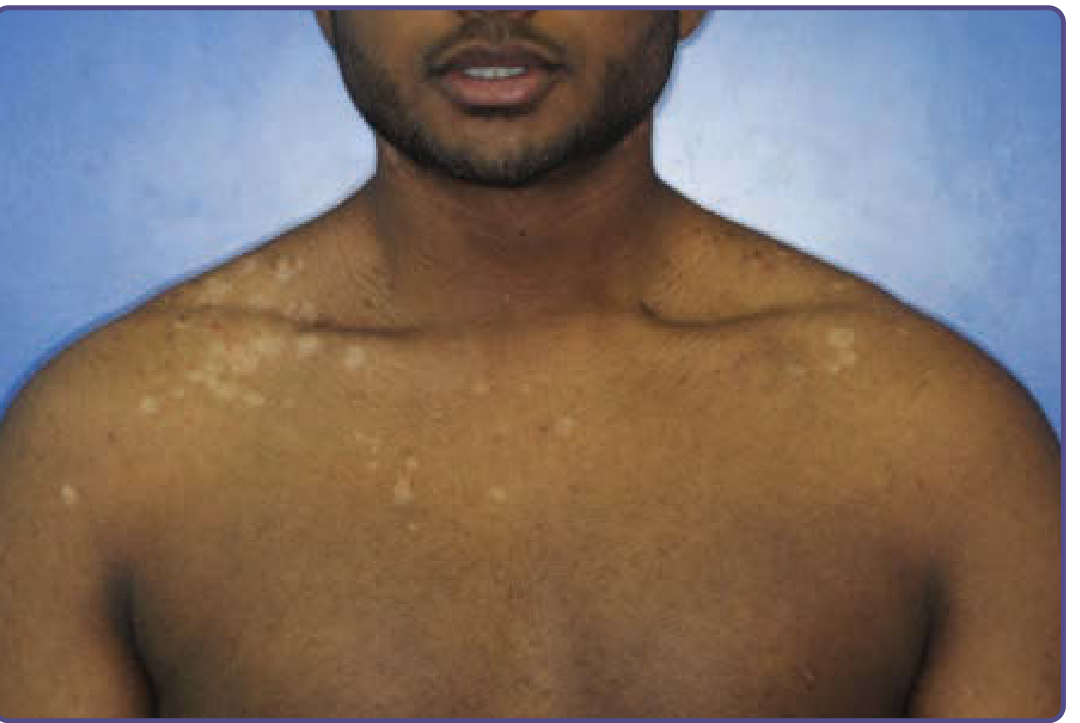
Key clinical features supporting this:
- Small, well-demarcated macules/patches with fine, bran-like scale
- Neck, back, chest, upper arms ("cape-like" distribution) are classic locations
- The yeast produces azelaic acid which inhibits melanin synthesis → hypopigmentation
- Patches may appear lighter or darker depending on skin tone and season
- Typically asymptomatic or mildly pruritic
- Yellow-green fluorescence under Wood's lamp
- KOH microscopy shows the classic "spaghetti and meatballs" pattern (short hyphae + round spores)
(Textbook of Family Medicine 9e, p. 942)
Differential Diagnoses to Consider
| Condition | Distinguishing Features |
|---|---|
| Pityriasis versicolor | Fine scale, sebaceous distribution, Wood lamp fluorescence (yellow-green), KOH positive |
| Vitiligo | Complete depigmentation (chalk-white), symmetric, enhances brightly on Wood lamp, NO scale |
| Leprosy (tuberculoid/borderline) | Hypopigmented with reduced/absent sensation (anesthesia) in the patch, thickened nerves; important in endemic areas |
| Pityriasis alba | Ill-defined, dry, slightly scaly patches mainly on face; common in children/young adults with atopic tendency |
| Nevus depigmentosus | Congenital or early-childhood onset, stable size, jagged border, NO scale |
| Post-inflammatory hypopigmentation | History of prior skin inflammation/injury at the site |
| Nevus anemicus | White macule that disappears on diascopy (blanching), present since birth |
(Fitzpatrick's Dermatology, pp. 1367-1368)
Important Clinical Clues to Help Narrow Down
- Check for sensation in the patches - if reduced, leprosy must be excluded (this is especially relevant in South Asian/tropical populations).
- Wood's lamp exam:
- Tinea versicolor → yellow-green/coppery fluorescence
- Vitiligo → brilliant white/chalk enhancement
- No enhancement → postinflammatory, pityriasis alba
- Fine scale on stretching (scraping sign) - positive in tinea versicolor
- KOH scraping - confirms tinea versicolor with spaghetti-and-meatballs pattern
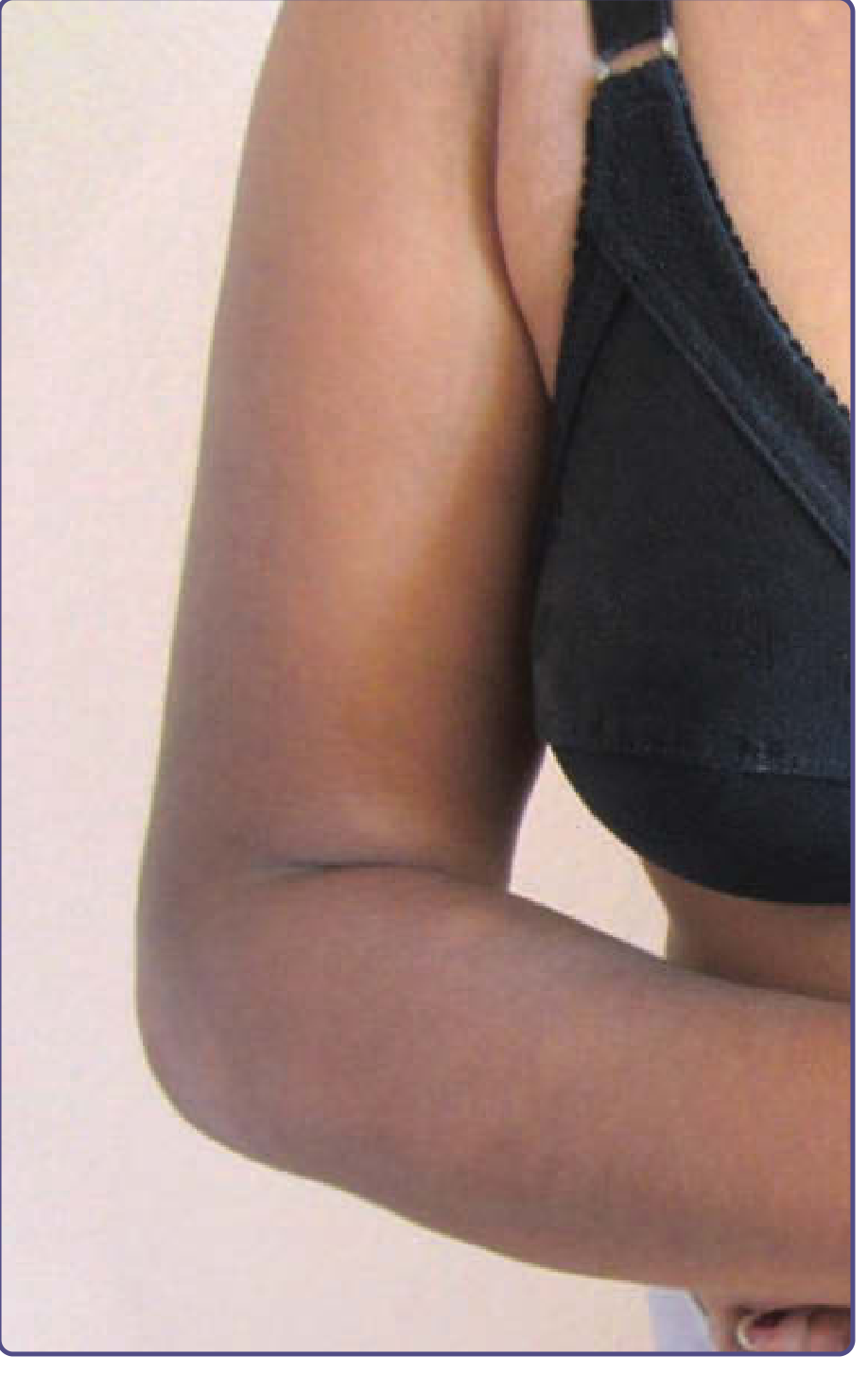
Management (if Tinea Versicolor confirmed)
Topical (first-line):
- Selenium sulfide 2.5% lotion/shampoo - apply daily for 10 minutes for 7 days (SOR: B)
- Ketoconazole 2% shampoo - apply for 3 days (SOR: B)
- Topical azoles (clotrimazole, miconazole) - applied twice daily for 2-4 weeks
Systemic (for extensive/recurrent disease):
- Oral fluconazole 400 mg single dose - best clinical and mycologic cure rate, no relapse at 12 months (SOR: B)
- Oral itraconazole 200 mg BD × 1 day/month - effective prophylaxis for recurrence (SOR: B)
Counseling points:
- Skin color may take weeks to months to normalize even after cure - this is NOT treatment failure
- Tends to recur, especially in warm/humid weather
- Antidandruff shampoos (containing selenium sulfide or zinc pyrithione) can help prevent recurrence
(Textbook of Family Medicine 9e, pp. 942-943)
Summary
The most probable diagnosis is pityriasis versicolor - a benign, superficial Malassezia infection presenting as multiple small hypopigmented patches in a young adult. A Wood's lamp exam and/or KOH scraping can confirm this quickly at the bedside. Leprosy must be actively excluded (especially in endemic regions) by testing for sensory loss in the patches. Vitiligo is less likely given the small size, neck-only distribution, and absence of complete depigmentation.

IMG-20260602-WA0005.jpg
Name this condition and give the management
Looking at the image carefully - I can see multiple small, round, well-defined hypopigmented (lighter than surrounding skin) macules/patches scattered over the posterior neck and upper back of a young Indian female. The patches appear non-scaly on gross inspection, distributed in the sebaceous/upper trunk area.
Searching sources...
Finding Sources
Finding Sources
You've run out of free credits. Sign up for a free account to continue using Orris.
This is a shared conversation. Sign in to Orris to start your own chat.