
Role of ai in Endodontics give 25m answer in university exam pattern
Reading File
Finding Sources
Finding Sources
Searching the Web
role of artificial intelligence in endodontics applications
Searching PubMed
"artificial intelligence" AND endodontics
Role of Artificial Intelligence (AI) in Endodontics
(University Exam Answer - 25 Marks)
Introduction
Artificial Intelligence (AI) refers to the branch of computer science that enables machines to simulate human intelligence - learning, reasoning, pattern recognition, and decision-making - through algorithms such as Artificial Neural Networks (ANN), Convolutional Neural Networks (CNN), and Machine Learning (ML)/Deep Learning (DL) models. In dentistry, AI has rapidly permeated diagnostic and clinical workflows, and Endodontics, being heavily dependent on radiographic interpretation, anatomical complexity, and prognostic judgement, has become one of the most fertile fields for AI application. AI models (mainly CNNs and ANNs) are now being used across nearly every stage of endodontic practice - from diagnosis to treatment planning, execution, and outcome prediction (Setzer et al., ScienceDirect Review, 2021; AAE, 2023).
Definition and Basic Concepts
- Artificial Intelligence (AI): Computer systems capable of performing tasks that normally require human intelligence.
- Machine Learning (ML): A subset of AI where algorithms learn patterns from data without explicit programming.
- Deep Learning (DL) / Convolutional Neural Networks (CNN): Multi-layered neural networks especially suited to image recognition tasks (e.g., interpreting periapical radiographs and CBCT scans).
- Artificial Neural Networks (ANN): Modeled loosely on the human brain, used for prediction and classification tasks (e.g., predicting postoperative pain or treatment success).
Applications of AI in Endodontics
1. Diagnosis of Periapical and Pulpal Disease
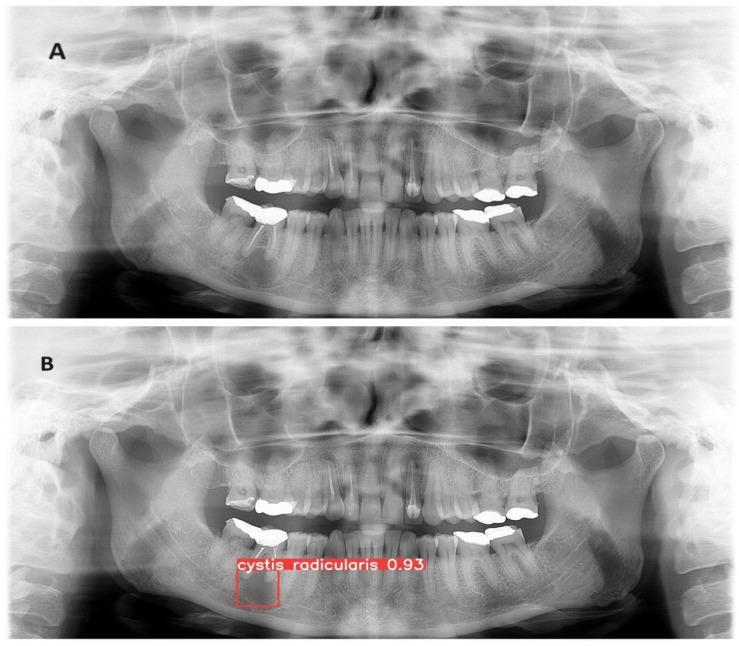
AI-based CNN models have shown high accuracy in detecting periapical radiolucencies, cysts, and granulomas on periapical radiographs, panoramic radiographs, and CBCT images, often matching or exceeding the diagnostic accuracy of experienced clinicians. Automated computer-aided detection systems can flag lesions with confidence scores, reducing observer fatigue and inter-observer variability.
2. Root Canal Anatomy and Morphology Study
AI algorithms trained on CBCT datasets can automatically segment the pulp space, identify accessory canals, isthmuses, C-shaped canals, and canal curvatures, assisting clinicians in anticipating anatomical complexity before treatment (Alfadley et al., J Endod, 2024 - systematic review on AI-driven automated pulp space segmentation on CBCT).
3. Working Length Determination
Neural network models have been trained to estimate root canal working length from radiographic images, offering a potential adjunct or cross-check to electronic apex locators and radiographic methods.
4. Detection of Vertical Root Fractures (VRF)
Deep learning models analyzing periapical and CBCT images have demonstrated good sensitivity in identifying vertical root fractures, which are otherwise difficult to diagnose clinically and radiographically due to overlapping structures.
5. Prediction of Treatment Outcome and Retreatment Decision-Making
AI/ML models can integrate multiple clinical and radiographic variables (lesion size, canal morphology, prior obturation quality) to predict the success or failure of primary root canal treatment and retreatment, helping in case selection and patient counselling regarding prognosis.
6. Prediction of Postoperative Pain
ANN-based predictive models have been used to estimate the likelihood and intensity of post-endodontic pain, allowing clinicians to pre-emptively counsel and manage patient expectations.
7. Pulp Vitality and Regenerative Endodontics
AI is being explored to predict the viability and differentiation potential of dental pulp stem cells, which has implications for regenerative endodontic procedures and revascularization protocols.
8. Robotics and Automation in Endodontic Treatment
Emerging robotic-assisted systems, guided by AI algorithms, are being investigated for automated access cavity preparation, canal negotiation, and guided endodontics using 3D-printed templates derived from AI-processed CBCT data.
9. Practice Management and Patient Communication
Beyond clinical tasks, AI supports appointment scheduling, patient record analysis, teleconsultation triage, and personalized patient education, streamlining overall practice efficiency (AAE, 2023).
10. Education and Training
AI-based simulators and virtual reality platforms assist in training dental students in canal negotiation, radiographic interpretation, and case-based decision-making.
Advantages of AI in Endodontics
- Improved diagnostic accuracy and reduced inter-observer variability.
- Faster interpretation of large radiographic/CBCT datasets.
- Objective, reproducible measurements (working length, canal curvature).
- Assists in early detection of subtle pathology (fractures, small lesions).
- Supports evidence-based prognosis and treatment planning.
- Reduces clinician workload and enhances efficiency in practice management.
- Valuable teaching and calibration tool for students and residents.
Limitations and Challenges
- "Black box" problem - many deep learning models lack explainability, making clinicians hesitant to trust AI output without understanding its reasoning (this has driven interest in Explainable AI, XAI).
- Data-dependency - accuracy depends heavily on the size, quality, and diversity of training datasets; models may not generalize across populations or imaging equipment.
- Lack of standardization - variability in study methodology, validation, and reporting makes cross-comparison of AI systems difficult.
- Ethical and legal concerns - patient data privacy, informed consent, and liability in case of AI-assisted misdiagnosis remain unresolved.
- No substitute for clinical judgement - AI cannot replace clinical examination, patient history, and tactile/clinical skill required in endodontic therapy.
- Cost and infrastructure - implementation requires investment in software, hardware, and training.
- Regulatory approval pathways for clinical AI tools in dentistry are still evolving.
Future Directions
- Integration of explainable AI (XAI) to improve clinician trust and transparency.
- Development of multimodal AI systems combining radiographic, clinical, and genomic data for holistic prognosis.
- AI-guided robotic endodontics for minimally invasive, precision-guided treatment.
- Larger, multicentric, standardized datasets to improve generalizability.
- Incorporation of AI into electronic health records for real-time clinical decision support.
Conclusion
Artificial Intelligence is progressively transforming endodontics by enhancing diagnostic precision, aiding in complex anatomical assessment, predicting treatment outcomes, and improving overall practice efficiency. While current evidence (multiple systematic reviews, e.g., Ramezanzade et al., Acta Odontol Scand, 2023; Alfadley et al., J Endod, 2024) supports promising diagnostic accuracy of AI models in tasks such as lesion detection and canal segmentation, challenges related to explainability, standardization, and clinical validation must be addressed before widespread adoption. AI should be viewed as a decision-support adjunct that augments, rather than replaces, clinical expertise - the endodontist's judgement, tactile skill, and patient-centered care remain irreplaceable.
Note on evidence currency: Recent systematic reviews (2023-2024), including one specifically in the Journal of Endodontics (PMID: 38821262) on AI-driven CBCT pulp space segmentation and another in Acta Odontologica Scandinavica (PMID: 36548872) on AI for radiographic features in endodontic treatments, support the applications described above and do not contradict this summary - they reinforce that AI shows good diagnostic performance but still requires further prospective clinical validation before routine independent clinical use.
This is a shared conversation. Sign in to Orris to start your own chat.