
Its 2 am at night . I have gas and full stomach
Here are some quick remedies for gas and bloating at 2 AM:
Immediate Relief
- Walk around - even 5 minutes of gentle movement helps move gas through your digestive tract
- Lie on your left side - this position follows the natural curve of your colon and helps gas pass
- Gentle abdominal massage - rub your abdomen clockwise (following the direction of the colon) with gentle pressure
- Knee-to-chest pose - lie on your back, pull both knees to your chest and hold for 30 seconds
If you have these at home
- Warm water or herbal tea (ginger, peppermint, or fennel) - helps relax the gut and move gas
- Simethicone (Gas-X or similar) - an OTC antacid/anti-gas tablet that works fast by breaking up gas bubbles
- Antacid (like Gelusil or Eno) - if there's also acidity/bloating involved
- Ajwain (carom seeds) with warm water - a classic home remedy, very effective for gas
Positions that help pass gas
- Child's pose (yoga) - kneel and stretch arms forward on the floor
- Happy baby pose - lie on back, grab your feet and gently rock side to side
What to avoid right now
- Don't drink carbonated water or soda
- Avoid lying flat on your back - it can trap gas
- Don't eat anything heavy
When to worry: If the pain is severe, localized to one spot (especially lower right abdomen), accompanied by fever, vomiting, or doesn't improve in an hour or two - that could signal something beyond simple gas and would need medical attention.
You should feel better within 20-30 minutes with the movement + warm tea combo. Try to sleep on your left side. Feel better! 🌙
I have it from last day
Gas and bloating lasting over 24 hours needs a bit more attention than a one-time episode. Let me check the medical library for you.
Searching sources...
Reading File
Finding Sources
Finding Sources
Finding Sources
Finding Sources
Finding Sources
Finding Sources
Reading File
Finding Sources
Reading File
Reading File
Loading Image
Reading File
Gas and bloating lasting more than 24 hours goes beyond a simple one-time episode and needs a more structured approach. Here's what the medical evidence says:
Why It's Lasting More Than a Day
Persistent gas and a full/bloated feeling (lasting 24+ hours) usually means one of these is going on:
Most common causes:
- Functional dyspepsia - impaired stomach emptying or accommodation after meals, causing postprandial fullness and distension
- Constipation / IBS - stool buildup slows transit, gas gets trapped
- Aerophagia - swallowing excess air (from eating fast, chewing gum, talking while eating)
- Dietary triggers - high-FODMAP foods (onions, garlic, beans, apples, dairy) fermenting in your gut
- GERD / acid reflux - can coexist with and mimic bloating
- Small intestinal bacterial overgrowth (SIBO) - bacteria ferment food producing excess gas
Here is a clinical diagnostic framework from Yamada's Textbook of Gastroenterology to narrow things down:
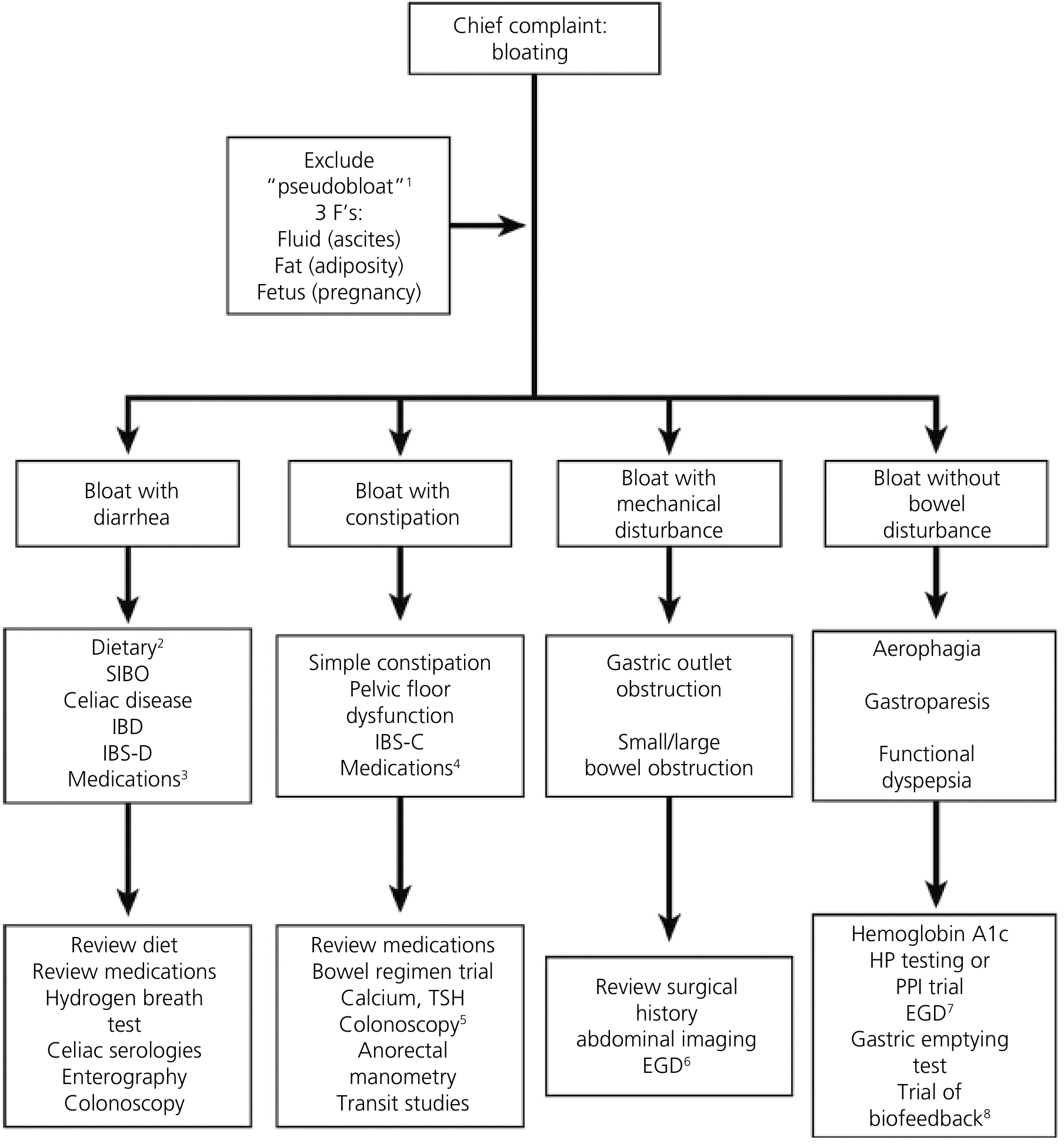
What You Should Do Right Now (Tonight)
- Have you had a bowel movement today? If not, constipation is a very likely culprit. Try warm water + a gentle walk.
- Avoid gas-producing foods - no beans, lentils, raw onion/garlic, cabbage, carbonated drinks, or dairy tonight.
- Simethicone (Gas-X/Meftal Spas/Colicaid) - breaks up gas bubbles; take one tablet if available.
- Warm water with a pinch of hing (asafoetida) or ajwain (carom seeds) - reliably effective for trapped gas.
- Sleep on your left side - promotes gastric emptying and gas movement.
What You Should Do Tomorrow
According to Harrison's Principles of Internal Medicine (2025):
- Eat slowly, avoid chewing gum and carbonated beverages
- Try a low-FODMAP diet for a few days - this has strong evidence for reducing gas and bloating. High-FODMAP foods to cut out: apples, pears, watermelon, onion, garlic, wheat, milk, and beans
- Light exercise (even a morning walk) helps gas clearance
- If bloating is accompanied by diarrhea after dairy, consider lactose intolerance
- If bloating is accompanied by diarrhea generally, consider a hydrogen breath test (done at a clinic) to rule out SIBO or food intolerances
When to See a Doctor Urgently
See a doctor if you have any of these alongside the gas/bloating:
- Fever or chills
- Vomiting that won't stop
- Sharp or worsening abdominal pain (especially localized - lower right, upper right)
- Blood in stool or black tarry stools
- Significant unintentional weight loss
- Symptoms lasting more than 3-4 days with no improvement
Persistent bloating without these red flags is almost always benign but worth a GP visit if it doesn't resolve in 2-3 days with dietary changes.
Sources: Harrison's Principles of Internal Medicine 22E (2025), Yamada's Textbook of Gastroenterology 7E
I also have excess pain at lambarund
By "lambarund" you likely mean the lumbar region - the lower back area. Pain in the lower back combined with gas and abdominal bloating for 24+ hours is an important combination to assess properly.
Searching sources...
Finding Sources
Finding Sources
Finding Sources
Finding Sources
Reading File
Reading File
This combination - gas + fullness + lower back pain for 24+ hours - needs careful attention. Here is a clear breakdown:
The Combination of Gas + Bloating + Lower Back Pain
Lower back pain alongside abdominal distension and gas can mean the pain is either:
A) Coming from your gut (referred pain to the back) - very common
B) Coming from your kidneys/urinary tract
C) A musculoskeletal issue coinciding with GI symptoms
D) Rarely, something more serious
Most Likely Causes (Common, Benign)
1. Trapped Gas Pressing on the Spine/Back Muscles
The most common reason. A very distended, gas-filled colon can press backward against the lumbar spine and cause a dull, aching lower back pain. This is especially true if you haven't had a proper bowel movement.
Signs that point to this: Back pain that came AFTER the gas/bloating started, dull aching rather than sharp, no burning urination, no fever.
2. Constipation
Hard stool packed in the colon can press against spinal nerves and lower back muscles. The combination of gas + fullness + lower back ache is a textbook presentation of significant constipation.
Signs that point to this: No bowel movement in 1-2+ days, feeling like you need to go but can't fully.
3. IBS (Irritable Bowel Syndrome)
IBS commonly causes lower back pain along with bloating and gas. The visceral (gut) pain gets referred to the lower back through shared nerve pathways.
Causes That Need Ruling Out
According to Bradley & Daroff's Neurology in Clinical Practice and Symptom to Diagnosis (4th Ed.), lower back pain + abdominal symptoms together can point to:
| Condition | Key Warning Signs |
|---|---|
| Kidney stone (urolithiasis) | Severe, colicky flank/back pain, burning urination, blood in urine |
| Urinary tract infection (UTI/pyelonephritis) | Burning urination, fever, frequent urination, pain on one side |
| Pancreatitis | Severe upper abdominal pain radiating to back, worse after eating, nausea/vomiting |
| Abdominal aortic aneurysm (AAA) | Sudden severe back + abdominal pain, dizziness - EMERGENCY |
| Kidney infection | Fever, chills, one-sided back pain, urinary symptoms |
Right Now - Ask Yourself These Questions
- Is there any burning or pain when you urinate? → Points to UTI/kidney
- Is there blood in your urine? → Kidney stone
- Do you have fever or chills? → Infection - needs urgent care
- Is the back pain on ONE side only, or both sides? → One-sided = more likely kidney; both sides = more likely gut/muscle
- Did the back pain start before or after the bloating? → After = likely gas-related
- Is the back pain constant or comes in waves? → Waves = colic (kidney stone or bowel spasm); Constant = muscular or pressure
What To Do Tonight
-
If you have no fever, no urinary symptoms, no vomiting, and the pain is dull and bilateral - this is most likely gas pressure or constipation. Try:
- Warm water bottle / heating pad on your lower back (relieves muscle tension and gut spasm)
- Gentle clockwise abdominal massage
- Try to have a bowel movement
- Buscopan (hyoscine) if available - relieves intestinal spasm and referred back pain together
-
If you have fever, one-sided severe pain, burning urination, or vomiting - do not wait, go to a doctor or emergency care now.
Bottom Line
Gas + full stomach + lower back pain for 24 hours most likely = gut gas pressure or constipation with referred back pain. But the 24-hour duration and back involvement means you should see a doctor tomorrow if there is no improvement, to rule out a kidney issue or other cause.
Sources: Bradley & Daroff's Neurology in Clinical Practice; Symptom to Diagnosis: An Evidence-Based Guide, 4th Ed.; Yamada's Textbook of Gastroenterology 7th Ed.
This is a shared conversation. Sign in to Orris to start your own chat.