
Medicine for headache
Medicines for Headache
1. Tension-Type Headache (Most Common)
| Drug | Notes |
|---|---|
| Paracetamol (Acetaminophen) | First choice; well-tolerated |
| Aspirin | Effective OTC option |
| Ibuprofen / Naproxen | NSAIDs; good for mild-to-moderate pain |
| Caffeine combinations | Caffeine aids absorption, helps vasoconstriction |
Warning: Avoid taking analgesics more than 10-15 days/month. Overuse of paracetamol, NSAIDs, opioids, or triptans can cause medication overuse (rebound) headache - a chronic daily headache pattern. - Bradley and Daroff's Neurology in Clinical Practice
2. Migraine Headache
Non-Specific (Mild-Moderate Attacks)
| Drug | Dose | Notes |
|---|---|---|
| Aspirin | Oral | Effective for mild attacks |
| Acetaminophen | Oral | With or without caffeine |
| Ibuprofen | Oral | Common first-line NSAID |
| Naproxen | Oral | Longer-acting NSAID |
| Ketorolac | 10-30 mg IV/IM | For ED/severe attacks |
Migraine-Specific (Moderate-Severe Attacks)
| Drug | Dose | Notes |
|---|---|---|
| Sumatriptan | 6 mg SC (or oral/intranasal) | First-line triptan; selective 5-HT1 agonist |
| Zolmitriptan | Oral/nasal | Alternative triptan |
| Dihydroergotamine (DHE) | 1 mg IV | Avoid in pregnancy; pretreat with antiemetic |
| Lasmiditan | Oral | Newer 5-HT1F agonist; no vasoconstrictive effects; comparable to triptans |
Triptans are more effective than simple analgesics, especially for disabling migraines. They work best taken early. - Bradley and Daroff's Neurology in Clinical Practice
Contraindications for triptans/DHE: ischemic heart disease, uncontrolled hypertension, basilar or hemiplegic migraine.
For Nausea/Vomiting (Adjuncts)
| Drug | Dose | Notes |
|---|---|---|
| Metoclopramide | 10 mg IV | Antiemetic; also speeds gastric absorption |
| Prochlorperazine | 5-10 mg IV/PR | Antiemetic; give diphenhydramine concurrently |
| Droperidol | 2.5 mg IV/IM | Monitor QT interval |
| Dexamethasone | 6-10 mg IV | Adjunct to reduce recurrence |
3. Cluster Headache (Severe, Unilateral, Periorbital)
| Drug | Notes |
|---|---|
| 100% Oxygen (inhaled) | 10-15 min via mask at attack onset; first choice |
| Sumatriptan SC | Aborts acute attack |
| Intranasal lidocaine | Acute abort |
| Ergotamine | 2 mg orally; anticipatory dosing at bedtime |
| Verapamil | Prevention; 80 mg QID up to 480 mg/day |
| Lithium | 600-900 mg/day; for chronic cluster |
| Prednisone | 75 mg/day tapering over days; short-term prevention |
| Anti-CGRP monoclonal antibodies | Newer agents; reduce episode frequency by ~50% |
Key Principle: Stratified vs. Step-Care
Medicines for half side headache in left side
Medicines for One-Sided (Migraine) Headache
What Is It?
PART 1 - Medicines to STOP an Attack (Acute/Abortive Treatment)
Step 1 - Mild to Moderate Pain: Simple Analgesics (OTC)
| Medicine | Dose | Notes |
|---|---|---|
| Ibuprofen | 200-400 mg | Most commonly used NSAID for migraine |
| Aspirin | 500-1000 mg | Good first-line choice |
| Paracetamol (Acetaminophen) | 1000 mg | Milder; combine with caffeine for better effect |
| Naproxen sodium | 550 mg | Longer-acting NSAID |
| Diclofenac potassium | 50-100 mg | Effective NSAID option |
| Paracetamol + Aspirin + Caffeine | 500/500/130 mg | Combination; caffeine boosts effect |
Step 2 - Moderate to Severe Pain: Triptans (Most Effective)
| Triptan | Route | Dose | Max per 24h |
|---|---|---|---|
| Sumatriptan | SC injection | 6 mg | 12 mg |
| Sumatriptan | Oral | 50-100 mg | 200 mg |
| Sumatriptan | Nasal spray | 10-20 mg | 40 mg |
| Almotriptan | Oral | 6.25-12.5 mg | 25 mg |
| Rizatriptan | Oral | 5-10 mg | 30 mg |
| Zolmitriptan | Oral/Nasal | 2.5-5 mg | 10 mg |
| Eletriptan | Oral | 20-40 mg | 80 mg |
| Naratriptan | Oral | 1-2.5 mg | 5 mg |
| Frovatriptan | Oral | 2.5 mg | 7.5 mg |
Subcutaneous sumatriptan gives the fastest and strongest relief. Oral forms are cheaper and more convenient.
Contraindications for triptans: ischemic heart disease, uncontrolled high blood pressure, history of stroke, basilar or hemiplegic migraine.
Step 3 - Newer Alternative: Lasmiditan
- Lasmiditan (oral) - a selective 5-HT1F agonist with NO vasoconstrictive properties
- Comparable efficacy to triptans
- Safer for patients with heart disease (unlike triptans)
- Can cause dizziness/drowsiness - do not drive for 8 hours after taking
Step 4 - If Nausea/Vomiting Present (Add These)
| Medicine | Dose | Notes |
|---|---|---|
| Metoclopramide | 10 mg IV | Antiemetic + speeds stomach absorption |
| Prochlorperazine | 5-10 mg IV/suppository | Strong antiemetic; give with diphenhydramine |
| Domperidone | Oral | Helps nausea and improves drug absorption |
| Dexamethasone | 6-10 mg IV | Adjunct to reduce headache recurrence |
Step 5 - Ergotamine (Older Alternative)
| Medicine | Notes |
|---|---|
| Dihydroergotamine (DHE) | 0.5-1 mg IV/IM/SC; very effective; pretreat with antiemetic |
| Ergotamine | Oral/suppository; less used now due to side effects |
Avoid if pregnant, heart disease, or used sumatriptan in the last 24 hours.
PART 2 - Medicines to PREVENT Attacks (Prophylaxis)
| Category | Drug | Dose |
|---|---|---|
| Beta-blockers (1st line) | Propranolol | 80-240 mg/day |
| Metoprolol, Timolol, Nadolol | Similar benefit | |
| Anticonvulsants (1st line) | Topiramate | Titrated up |
| Divalproex/Valproate | Titrated up | |
| Antidepressants | Amitriptyline | Low dose (independent of antidepressant effect) |
| Calcium channel blockers | Verapamil | 80-160 mg 3x/day (mainly migraine with aura) |
| Flunarizine | Effective in clinical trials | |
| Anti-CGRP antibodies (newest) | Erenumab, Fremanezumab, Galcanezumab | Monthly/quarterly injection; ~50% reduction in attack frequency |
Preventive treatment should be continued for at least 6-12 months after stabilization. Full benefit may take up to 6 months to appear. - Bradley and Daroff's Neurology in Clinical Practice
Important Warning: Medication Overuse Headache
Body shivering and breathlessness, why it happens
Body Shivering + Breathlessness - Why It Happens
Understanding Each Symptom
Shivering (Rigors/Chills)
- The brain's temperature "set point" is raised (as in fever/infection)
- The body is physically cold
- The nervous system is overwhelmed (shock, panic)
Breathlessness (Dyspnea)
- Lungs are infected or inflamed
- The heart is not pumping efficiently
- Blood oxygen drops
- The brain triggers rapid breathing (as in panic or fever)
Common Causes of Both Together
1. Pneumonia (Lung Infection) - Most Common Cause
- Symptoms: Fever + shaking chills (rigors) + cough + breathlessness + chest pain
- Cause: Streptococcus pneumoniae, viral pneumonia, COVID-19, etc.
- "The clinical presentation of pneumonia may include fever; sweats; rigors (chills); cough, sputum production, dyspnea, or pleurisy" - Fishman's Pulmonary Diseases
- "Characterized by abrupt onset of cough and dyspnea accompanied by fever, shaking chills" - Harrison's Principles of Internal Medicine
2. Sepsis (Severe Bloodstream Infection)
- Shivering from high fever or dangerously low temperature
- Breathlessness from lungs filling with fluid (ARDS) or low blood pressure
- Other signs: rapid heart rate, confusion, low blood pressure
- This is a medical emergency - requires urgent hospital treatment
3. Malaria
- The classic malaria attack: periodic shaking chills + high fever + sweating in cycles
- Dyspnea occurs as infection worsens (low red blood cells = less oxygen delivery)
- Caused by Plasmodium parasites transmitted by mosquitoes - Goldman-Cecil Medicine
4. Viral Infections (Flu, COVID-19, etc.)
- Influenza and COVID-19 commonly present with fever, chills/rigors, myalgia, cough, and dyspnea
- "Fever, chills, rigors, cough, dyspnea, tachypnea, pleuritic pain" are listed as typical presentations - Rosen's Emergency Medicine
- COVID-19 specifically can progress to severe breathlessness as it inflames lung tissue
5. Panic Attack / Severe Anxiety
- During intense fear or panic, the nervous system goes into overdrive
- Hyperventilation (rapid breathing) causes breathlessness sensation
- Muscle tremors and shivering occur from adrenaline surge
- Accompanied by: rapid heartbeat, chest tightness, dizziness, feeling of doom
- Usually resolves on its own; no fever
6. Anaphylaxis (Severe Allergic Reaction)
- Triggered by food, medicines, insect stings
- Causes: shivering, breathing difficulty, throat swelling, low blood pressure
- This is a life-threatening emergency - needs immediate adrenaline (epinephrine)
7. Pulmonary Embolism (Blood Clot in Lungs)
- A clot blocks blood flow in the lung arteries
- Causes sudden breathlessness, chest pain, and sometimes chills/fever
- Risk factors: long travel, surgery, immobility, cancer
- Urgent medical emergency
8. Heart Failure (Acute)
- The heart fails to pump properly - fluid backs up into the lungs
- Causes severe breathlessness, sometimes with chills from poor circulation
- Other signs: swollen ankles, pink frothy sputum, lying flat worsens breathing
9. Acute Hemolytic Transfusion Reaction (after blood transfusion)
- "Signs and symptoms include fever, chills/rigors, anxiety, chest and abdominal pain, dyspnea" - Goldman-Cecil Medicine
- Occurs when the body attacks transfused blood cells
Summary Table
| Cause | Shivering | Breathlessness | Key Extra Signs |
|---|---|---|---|
| Pneumonia | Yes (rigors) | Yes | Cough, chest pain, fever |
| Sepsis | Yes | Yes | Low BP, confusion, high heart rate |
| Malaria | Yes (periodic) | Mild-Moderate | Cyclic fever, sweating |
| Flu/COVID-19 | Yes | Yes | Muscle ache, fatigue |
| Panic Attack | Yes (tremors) | Yes (hyperventilation) | No fever, racing heart |
| Anaphylaxis | Yes | Yes (severe) | Rash, swelling, allergy history |
| Pulmonary Embolism | Mild | Sudden severe | Chest pain, leg swelling |
| Heart Failure | Mild | Yes (worse lying flat) | Ankle swelling, pink froth |
When to See a Doctor IMMEDIATELY
- High fever (above 39°C / 102°F)
- Chest pain
- Lips or fingernails turning blue
- Confusion or loss of consciousness
- Rapid worsening of symptoms
- Known heart or lung disease
Body shivering and breathlessness, why it happens and how to overcome from it?
Body Shivering + Breathlessness: Causes & How to Overcome
PART 1 - WHY IT HAPPENS
The Basic Mechanism
| Symptom | What's Happening in the Body |
|---|---|
| Shivering | The brain raises its temperature set-point (in fever) OR muscles tremble from adrenaline (in anxiety/shock). The body rapidly contracts muscles to generate heat or as a stress response. |
| Breathlessness | Lungs can't get enough oxygen in (infection, blockage, fluid), OR the brain triggers fast breathing (fever, panic, low oxygen, high CO2). |
PART 2 - MAIN CAUSES
1. Pneumonia (Lung Infection) - Most Common
- Infection in the lungs causes fever with shaking chills (rigors) and breathlessness from inflamed lung tissue
- Other signs: cough, chest pain, sputum
- "Pneumonia may include fever; sweats; rigors (chills); cough, dyspnea, pleurisy" - Fishman's Pulmonary Diseases
2. Sepsis (Severe Blood Infection)
- Bacteria in the bloodstream triggers a whole-body storm: fever/chills + rapid breathing + fast heart rate
- "Tachycardia, tachypnea, fever, and immune system activation are common manifestations. If the body is unable to overcome this insult, shock and multiorgan failure may ensue." - Rosen's Emergency Medicine
- This is a medical emergency
3. Flu / COVID-19 / Viral Infections
- Virus infects the airways causing fever, chills, body tremors, cough, breathlessness
- Usually self-limiting but can progress to severe pneumonia
4. Malaria
- Classic: periodic shaking chills + fever + sweating in cycles + breathlessness from low red blood cells
5. Panic Attack / Anxiety
- Adrenaline surge causes muscle tremors, hyperventilation (fast shallow breathing), chest tightness
- No fever; resolves without medicine in most cases
6. Asthma Attack
- Airways tighten, causing breathlessness + sometimes trembling from effort and fear
- Triggered by allergens, cold air, exercise, stress
7. Pulmonary Embolism (Blood Clot in Lung)
- Sudden severe breathlessness + chest pain + mild chills - a life-threatening emergency
PART 3 - HOW TO OVERCOME IT
Step 1 - First Aid at Home (Immediate Relief)
- Wrap yourself in a warm blanket
- Drink warm fluids (water, soup, herbal tea)
- Take paracetamol (500-1000 mg) or ibuprofen (400 mg) to bring down fever and reduce shivering
- Rest in a warm, comfortable environment
- Sit upright or lean slightly forward (tripod position) - this opens the airways
- Breathe slowly and deeply through the nose, out through the mouth
- Loosen any tight clothing around the chest
- Stay calm - anxiety worsens breathing difficulty
- Move to fresh air if indoors is stuffy
Step 2 - Treatment by Cause
Pneumonia / Bacterial Infection
| Treatment | Details |
|---|---|
| Antibiotics | Prescribed by doctor based on the organism (amoxicillin, azithromycin, etc.) |
| Paracetamol / Ibuprofen | Reduce fever and discomfort |
| Rest + fluids | Stay well hydrated |
| Supplemental oxygen | If oxygen level drops below 90% on pulse oximeter |
| Hospitalization | For severe cases with low oxygen or confusion |
"Prompt administration of antibiotics is essential and should be based on the suspected source of infection" - Rosen's Emergency Medicine
Sepsis (Hospital Treatment)
| Treatment | Details |
|---|---|
| IV Antibiotics | Started immediately |
| IV Fluids | Restore circulation |
| Oxygen / Ventilation | Improve tissue oxygenation |
| Vasopressors | If blood pressure drops dangerously low |
"Early treatment should focus on fluid resuscitation, oxygen, antibiotics, and early identification of infections requiring surgical management" - Rosen's Emergency Medicine
Panic Attack / Anxiety
| Treatment | Details |
|---|---|
| Controlled breathing | Breathe IN for 4 seconds, HOLD 4 seconds, OUT for 4 seconds (box breathing) |
| Slow breathing exercises | Slow, shallow breathing reduces hyperventilation |
| Ground yourself | Focus on 5 things you can see, 4 you can touch |
| SSRI / CBT | For recurrent panic attacks - "SSRI and cognitive behavioral training including slow and shallow breathing exercises to reduce hyperventilation" - Kaplan & Sadock's Psychiatry |
| Benzodiazepines | Short-term use for severe acute attacks (doctor prescribed) |
Asthma Attack
| Treatment | Details |
|---|---|
| Salbutamol (Albuterol) inhaler | 2-4 puffs via spacer; repeat every 20 minutes if needed |
| Sit upright | Helps lung expansion |
| Avoid triggers | Dust, smoke, cold air, allergens |
| Oral steroids | For moderate-severe attacks (prescribed) |
| Hospital | If no improvement after 3 doses of inhaler |
Malaria
| Treatment | Details |
|---|---|
| Artemisinin-based combination therapy (ACT) | First-line antimalarial |
| Paracetamol | For fever and chills |
| Fluids | Stay hydrated during fever cycles |
Step 3 - Supportive Care for Everyone
| Action | Why It Helps |
|---|---|
| Drink plenty of fluids | Prevents dehydration from fever/sweating |
| Rest | Allows the immune system to fight infection |
| Monitor temperature | If fever goes above 39.5°C (103°F), seek care |
| Pulse oximeter check | If oxygen saturation falls below 94%, seek urgent help |
| Eat light, nutritious food | Supports recovery |
When to Go to Hospital IMMEDIATELY
- 🔴 Oxygen level below 94% on pulse oximeter
- 🔴 Fever above 39.5°C (103°F) not coming down with medicine
- 🔴 Lips or fingertips turning blue or grey
- 🔴 Chest pain or pressure
- 🔴 Confusion, difficulty speaking, drowsiness
- 🔴 Symptoms worsening rapidly
- 🔴 Known heart or lung disease
Summary
| Cause | Home Care | Medical Treatment |
|---|---|---|
| Pneumonia | Paracetamol, rest, fluids | Antibiotics, oxygen |
| Sepsis | No home care - go to hospital | IV antibiotics, fluids, oxygen |
| Flu/Viral | Rest, fluids, paracetamol | Antivirals if severe |
| Panic Attack | Box breathing, calm environment | CBT, SSRI if recurring |
| Asthma | Salbutamol inhaler, sit upright | Steroids, hospital if severe |
| Malaria | Antipyretics, fluids | Antimalarials |
Medicines for instant relief from constipation
Medicines for Instant Relief from Constipation
FASTEST RELIEF (15 Minutes to 1 Hour) - Rectal Options
1. Glycerin Suppository
- How it works: Draws water into the rectum (osmotic effect) + mild stimulant
- Dose: 1 adult suppository inserted rectally
- Onset: 15-30 minutes
- Best for: Quick, gentle relief; safe for most people including elderly
- Available: Over the counter (OTC)
2. Bisacodyl Suppository (Dulcolax)
- How it works: Stimulates the rectal wall muscles directly, causing bowel contraction
- Dose: 1 suppository (10 mg) rectally
- Onset: 15-60 minutes
- Best for: Severe or stubborn constipation needing very fast relief
- Available: OTC
3. Enema (Sodium Phosphate / Fleet Enema)
- How it works: Liquid injected into the rectum softens and loosens stool instantly
- Dose: 1 adult enema rectally (118-133 mL)
- Onset: 2-15 minutes (fastest of all options)
- Caution: Avoid in kidney disease (risk of phosphate toxicity)
- Available: OTC
4. Soap Suds / Tap Water Enema
- Used in hospitals for immediate bowel clearance
- Works within minutes
FAST RELIEF (6-12 Hours) - Oral Stimulant Laxatives
5. Bisacodyl Oral (Dulcolax Tablet)
- How it works: Acts on the myenteric nerve plexus of the intestine - increases peristalsis (gut movement) and reduces water absorption from the colon
- Dose: 5-10 mg orally once daily
- Onset: 6-12 hours
- Grade of recommendation: A (strong evidence)
- Available: OTC
6. Senna (Senokot)
- How it works: Anthraquinone stimulant - increases intestinal peristalsis through nerve plexus stimulation
- Dose: 17.6-34.4 mg once daily (or 2 tablets twice daily)
- Onset: 6-12 hours
- Note: Less abdominal cramping compared to bisacodyl
- Available: OTC
7. Sodium Picosulfate
- How it works: Same as senna/bisacodyl - stimulant laxative
- Dose: 5-10 mg orally
- Onset: 6-12 hours
MODERATE RELIEF (1-3 Hours) - Osmotic Laxatives
8. Milk of Magnesia (Magnesium Hydroxide)
- How it works: Osmotic - pulls water into the gut; also stimulates gut hormones
- Dose: 15-30 mL once or twice daily
- Onset: 0.5-3 hours (one of the fastest oral options)
- Caution: Avoid in kidney disease (risk of high magnesium)
- Available: OTC
9. Magnesium Citrate
- Dose: 75-150 mL once daily
- Onset: 30 minutes to 3 hours
- Very effective for quick bowel clearance
- Available: OTC
10. Polyethylene Glycol / PEG (Miralax, Movicol)
- How it works: Osmotic - binds water in the colon, softens stool
- Dose: 17-34 g in water once or twice daily
- Onset: 1-3 days for regular use; 1-4 hours in high doses (bowel prep)
- Tasteless, odorless - mixes with any drink
- Causes less bloating and cramps than other agents
- Grade A evidence - first-line osmotic laxative
- Available: OTC
11. Lactulose
- Dose: 15-30 mL once or twice daily
- Onset: 2-3 days (slowest osmotic option - not ideal for instant relief)
- Side effects: gas and bloating from fermentation
PRESCRIPTION OPTIONS (When OTC Laxatives Fail)
| Medicine | Class | How It Works | Grade |
|---|---|---|---|
| Lubiprostone (Amitiza) | Chloride channel activator | Activates intestinal chloride channels - increases fluid secretion into bowel | Grade A |
| Linaclotide (Linzess) | GCC activator | Increases chloride/bicarbonate secretion; also reduces pain | Grade A |
| Plecanatide (Trulance) | GCC activator | Similar to linaclotide | Grade A |
| Prucalopride (Motegrity) | 5-HT4 agonist | Speeds up whole gut movement (prokinetic) | Grade A |
| Methylnaltrexone (Relistor) | Opioid antagonist | For opioid-induced constipation specifically | Grade A |
Quick Comparison: Speed of Action
| Medicine | Route | Onset Time |
|---|---|---|
| Tap water / Fleet Enema | Rectal | 2-15 minutes |
| Glycerin suppository | Rectal | 15-30 minutes |
| Bisacodyl suppository | Rectal | 15-60 minutes |
| Milk of Magnesia | Oral | 30 min - 3 hours |
| Magnesium Citrate | Oral | 30 min - 3 hours |
| Bisacodyl tablet | Oral | 6-12 hours |
| Senna | Oral | 6-12 hours |
| PEG (Miralax) | Oral | 1-3 days regular |
| Lactulose | Oral | 2-3 days |
Simple Home Tips Alongside Medicines
- Drink a full glass of warm water as soon as you wake up - stimulates the gastrocolic reflex
- Try squatting position on the toilet (feet raised on a small stool) - straightens the anorectal angle and makes passing stool much easier
- Gentle abdominal massage in a clockwise direction
- Light walking or movement
- Warm prune juice (prunes have both osmotic and fiber-based laxative effects - Grade B evidence)
Important Cautions
- Do not use stimulant laxatives (bisacodyl, senna) daily for more than 1-2 weeks without medical advice - can cause dependence and a "lazy bowel"
- Avoid sodium phosphate enemas in kidney disease, heart failure, or elderly patients
- Avoid magnesium-based laxatives in kidney disease
- If constipation is new, severe, or accompanied by blood in stool, weight loss, or abdominal pain - see a doctor to rule out a serious underlying cause
"Stimulant agents (bisacodyl, senna) should be reserved for patients who do not respond to fiber or osmotic laxatives" - Sleisenger & Fordtran's Gastrointestinal and Liver Disease
Hiw to get relief from varicose veins
varicose veins legs compression stockings treatment
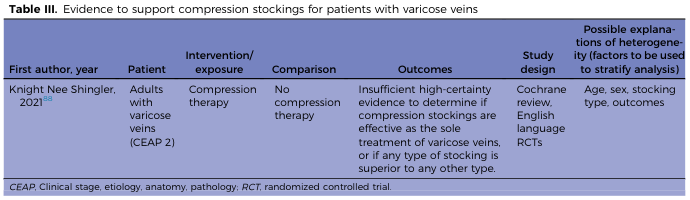
Table III. Evidence to support compression stockings for patients with varicose veins <table><thead><tr><th>First author, year</th><th>Patient</th><th>Intervention/exposure</th><th>Comparison</th><th>Outcomes</th><th>Study design</th><th>Possible explanations of heterogeneity (factors to be used to stratify analysis)</th></tr></thead><tbody><tr><td>Knight Nee Shingler, 2021<sup>88</sup></td><td>Adults with varicose veins (CEAP 2)</td><td>Compression therapy</td><td>No compression therapy</td><td>Insufficient high-certainty evidence to determine if compression stockings are effective as the sole treatment of varicose veins, or if any type of stocking is superior to any other type.</td><td>Cochrane review, English language RCTs</td><td>Age, sex, stocking type, outcomes</td></tr></tbody></table> CEAP, Clinical stage, etiology, anatomy, pathology; RCT, randomized controlled trial.
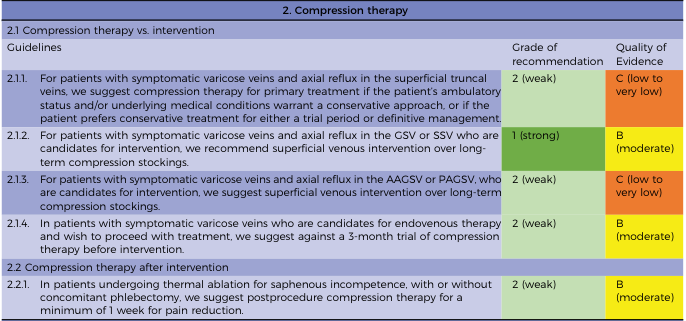
<table><thead><tr><th colspan="3">2. Compression therapy</th></tr><tr><th colspan="3">2.1 Compression therapy vs. intervention</th></tr><tr><th>Guidelines</th><th>Grade of recommendation</th><th>Quality of Evidence</th></tr></thead><tbody><tr><td>2.1.1.</td><td>For patients with symptomatic varicose veins and axial reflux in the superficial truncal veins, we suggest compression therapy for primary treatment if the patient's ambulatory status and/or underlying medical conditions warrant a conservative approach, or if the patient prefers conservative treatment for either a trial period or definitive management.</td><td>2 (weak)</td><td>C (low to very low)</td></tr><tr><td>2.1.2.</td><td>For patients with symptomatic varicose veins and axial reflux in the GSV or SSV who are candidates for intervention, we recommend superficial venous intervention over long-term compression stockings.</td><td>1 (strong)</td><td>B (moderate)</td></tr><tr><td>2.1.3.</td><td>For patients with symptomatic varicose veins and axial reflux in the AAGSV or PAGSV, who are candidates for intervention, we suggest superficial venous intervention over long-term compression stockings.</td><td>2 (weak)</td><td>C (low to very low)</td></tr><tr><td>2.1.4.</td><td>In patients with symptomatic varicose veins who are candidates for endovenous therapy and wish to proceed with treatment, we suggest against a 3-month trial of compression therapy before intervention.</td><td>2 (weak)</td><td>B (moderate)</td></tr><tr><td colspan="3">2.2 Compression therapy after intervention</td></tr><tr><td>2.2.1.</td><td>In patients undergoing thermal ablation for saphenous incompetence, with or without concomitant phlebectomy, we suggest postprocedure compression therapy for a minimum of 1 week for pain reduction.</td><td>2 (weak)</td><td>B (moderate)</td></tr></tbody></table>
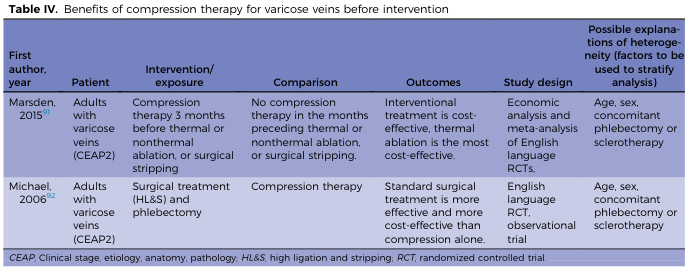
Table IV. Benefits of compression therapy for varicose veins before intervention <table><thead><tr><th>First author, year</th><th>Patient</th><th>Intervention/exposure</th><th>Comparison</th><th>Outcomes</th><th>Study design</th><th>Possible explanations of heterogeneity (factors to be used to stratify analysis)</th></tr></thead><tbody><tr><td>Marsden, 2015<sup>91</sup></td><td>Adults with varicose veins (CEAP2)</td><td>Compression therapy 3 months before thermal or nonthermal ablation, or surgical stripping</td><td>No compression therapy in the months preceding thermal or nonthermal ablation, or surgical stripping.</td><td>Interventional treatment is cost-effective, thermal ablation is the most cost-effective.</td><td>Economic analysis and meta-analysis of English language RCTs,</td><td>Age, sex, concomitant phlebectomy or sclerotherapy</td></tr><tr><td>Michael, 2006<sup>92</sup></td><td>Adults with varicose veins (CEAP2)</td><td>Surgical treatment (HL&S) and phlebectomy</td><td>Compression therapy</td><td>Standard surgical treatment is more effective and more cost-effective than compression alone.</td><td>English language RCT, observational trial</td><td>Age, sex, concomitant phlebectomy or sclerotherapy</td></tr></tbody></table> CEAP, Clinical stage, etiology, anatomy, pathology; HL&S, high ligation and stripping; RCT, randomized controlled trial.
How to Get Relief from Varicose Veins
What Are Varicose Veins?
STEP 1 - Conservative (Non-Surgical) Relief at Home
1. Compression Stockings (Most Important)
- Wear graduated elastic compression stockings - they squeeze the legs from ankle upward, pushing blood back up toward the heart
- Compression levels:
- 20-30 mmHg - mild varicose veins, daily wear
- 30-40 mmHg - moderate-severe varicose veins or swelling
- 40-50 mmHg - severe cases, venous ulcers
- Wear from morning (before getting up) to bedtime
- Choose knee-high or thigh-high depending on where the veins are
- "Elastic compression provides sufficient relief of symptoms in many symptomatic patients" - Schwartz's Principles of Surgery
- Guidelines recommend superficial venous intervention over long-term compression stockings for candidates who are fit for procedures (strong recommendation, moderate evidence)
2. Leg Elevation
- Elevate legs above heart level for 15-20 minutes, 3-4 times daily
- Sleep with a pillow under your legs
- This drains pooled blood and reduces swelling and aching immediately
3. Exercise and Movement
- Walking is the best exercise - activates the calf muscle pump which pushes blood upward
- Avoid prolonged standing or sitting in one position
- Take breaks every 30-60 minutes to walk or flex/point your feet
- Swimming and cycling are also excellent - reduce leg pressure while strengthening the pump
4. Weight Management
- Losing excess weight reduces pressure on leg veins significantly
5. Avoid Heat
- Hot baths, saunas, and direct heat cause veins to dilate further and worsen symptoms
- Cool water on the legs can provide temporary relief
6. Posture Changes
- When sitting, avoid crossing your legs - it restricts circulation
- Use a footrest to keep legs slightly elevated at your desk
STEP 2 - Medicines for Symptom Relief
| Medicine | Use | Notes |
|---|---|---|
| Ibuprofen / Naproxen (NSAIDs) | Pain and inflammation | Also used for superficial thrombophlebitis (a complication where a varicose vein becomes clotted and painful) |
| Horse chestnut extract (Aescin) | Reduces leg swelling and aching | Herbal; some clinical evidence supports it |
| Diosmin / Hesperidin (Venotonic agents) | Reduces heaviness, swelling | Widely used in Europe; improves venous tone |
| Analgesics (paracetamol) | General pain relief | For aching legs |
"Treatment of superficial thrombophlebitis consists of compression with a firm elastic support, pain relief with analgesics, and reduction of inflammation by non-steroidal anti-inflammatory agents for 7 days" - Pye's Surgical Handicraft
STEP 3 - Minimally Invasive Medical Procedures
1. Sclerotherapy (Injection Treatment)
- A sclerosant chemical (polidocanol, sodium tetradecyl sulfate, hypertonic saline) is injected directly into the vein
- The chemical destroys the vein's inner lining, causing it to scar shut and disappear
- The leg is firmly bandaged/compressed for 3-5 days after injection
- Foam sclerotherapy (sclerosant mixed with air) is used for larger veins - randomized trials show significant symptom relief and improved cosmetic appearance
- Best for: small-to-medium varicose veins and spider veins (telangiectasias)
- Complications: skin pigmentation, allergic reaction, rare skin necrosis, DVT
2. Endovenous Laser Ablation (EVLA)
- A thin laser fiber is inserted into the vein under ultrasound guidance
- Laser energy heats and closes the vein from inside
- No surgical cut needed; done under local anaesthetic
- Equally effective as surgery but with faster recovery
- Best for: great saphenous vein (GSV) or small saphenous vein (SSV) reflux
- Complications: bruising, DVT, nerve injury (rare)
3. Radiofrequency Ablation (RFA)
- Similar to laser but uses radiofrequency energy (heat) to close the vein
- The RFA catheter (e.g. ClosureFast system) is guided inside the vein by ultrasound and withdrawn as it treats
- "RFA and EVLA techniques have long track records of safety and efficacy" - Current Surgical Therapy
- Both RFA and EVLA are now preferred over open surgery for most patients
4. Cyanoacrylate Glue Injection (VenaSeal)
- A medical-grade adhesive is injected to seal the vein shut
- No heat, no tumescent anaesthetic needed
- Non-thermal, non-sclerosant - promising newer technique
- Very well tolerated; minimal downtime
STEP 4 - Surgical Treatment (For Severe Cases)
1. High Ligation and Stripping
- The great saphenous vein is tied off at the groin (saphenofemoral disconnection) and physically stripped/removed down to the knee
- Done under general or spinal anaesthesia
- "For long saphenous incompetence, a sapheno-femoral disconnection is essential. It is preferable to strip the long saphenous vein down to the knee to remove mid-thigh perforating veins" - Pye's Surgical Handicraft
- Visible surface varicose veins are removed through tiny incisions (avulsion technique)
2. Phlebectomy (Ambulatory/Micro-Phlebectomy)
- Tiny hook instruments remove varicose veins through very small punctures in the skin
- Can be done alongside laser/RFA or alone
- Fast recovery, minimal scarring
Summary: Which Treatment for Which Situation?
| Situation | Best Option |
|---|---|
| Mild symptoms, elderly/unfit | Compression stockings + leg elevation |
| Small spider veins / telangiectasias | Sclerotherapy |
| Moderate varicose veins, fit patient | Endovenous laser (EVLA) or RFA |
| Large truncal vein (GSV/SSV) reflux | EVLA / RFA / Surgical stripping |
| Superficial thrombophlebitis (painful clot) | Compression + NSAIDs |
| Venous leg ulcer | Compression + treat underlying reflux |
When to See a Doctor Urgently
- Leg suddenly becomes very painful, red, and swollen along a vein (thrombophlebitis)
- An open sore or ulcer develops on the leg (venous ulcer)
- A varicose vein bursts and bleeds (apply firm direct pressure and elevate the leg immediately, then go to hospital)
- Leg becomes severely swollen, hot, and tender (may indicate deep vein thrombosis - DVT)
Can patient take Naproxen and telmikind together
Naproxen + Telmikind (Telmisartan) - Can They Be Taken Together?
What Are These Drugs?
| Drug | Class | Used For |
|---|---|---|
| Naproxen | NSAID (Non-Steroidal Anti-Inflammatory Drug) | Pain, fever, inflammation, arthritis |
| Telmikind / Telmisartan | ARB (Angiotensin Receptor Blocker) | High blood pressure (hypertension), heart protection |
The Answer: Use With Caution - Significant Interaction Exists
Why the Interaction Happens - The Mechanism
Problem 1: NSAIDs Raise Blood Pressure and Reduce Telmisartan's Effect
- NSAIDs like naproxen inhibit prostaglandins (COX-1 and COX-2 enzymes)
- Prostaglandins cause sodium and water excretion from the kidneys
- When prostaglandins are blocked, the kidneys retain more sodium and water
- This raises blood volume and counteracts the blood pressure-lowering effect of Telmisartan
- "NSAIDs are associated with a relatively modest increase in mean blood pressure of 5 mmHg, but the increase can be more pronounced in patients with a history of hypertension controlled with antihypertensive medications" - Frameworks for Internal Medicine
Problem 2: The "Triple Whammy" - Risk of Acute Kidney Injury
- An ARB (Telmisartan) - blocks angiotensin II, which normally helps maintain kidney blood flow
- An NSAID (Naproxen) - reduces prostaglandins that also protect kidney blood flow
- Any diuretic (if also prescribed, e.g. hydrochlorothiazide in combination tablets like Telmikind-H)
- NSAIDs inhibit prostaglandin-mediated renin release, disrupting the renin-angiotensin-aldosterone system (RAAS)
- ARBs already block angiotensin II receptors in the kidney
- Together, both protective mechanisms are removed, leaving the kidney vulnerable
Problem 3: Hyperkalemia (High Potassium)
- NSAIDs inhibit prostaglandin-mediated renin release → less aldosterone → potassium builds up in the blood
- ARBs like Telmisartan also reduce aldosterone → further raise potassium
- Combined use significantly increases the risk of dangerous hyperkalemia (high potassium), especially in patients with kidney disease, diabetes, or older age
- "NSAIDs inhibit prostaglandin-mediated renin release. This effect can predispose to hyperkalemia, particularly in the presence of kidney disease" - Morgan & Mikhail's Clinical Anesthesiology
Summary of Risks
| Risk | Severity | Who Is Most Vulnerable |
|---|---|---|
| Reduced blood pressure control | Moderate | All patients on Telmisartan |
| Acute Kidney Injury (AKI) | Serious | Elderly, dehydrated, CKD, heart failure patients |
| Hyperkalemia (high potassium) | Serious | CKD, diabetes, elderly patients |
| GI bleeding | Moderate | Patients with peptic ulcer history, elderly |
When Is It Relatively Safe?
- Young, otherwise healthy patients with normal kidney function
- When naproxen is used only for a few days (e.g. for acute pain or fever)
- When blood pressure and kidney function are monitored during use
When Should It Be Avoided?
- Chronic kidney disease (CKD)
- Elderly patients (kidneys are more vulnerable)
- Patients also taking a diuretic (thiazide or furosemide) - the "triple whammy" risk
- Heart failure patients
- Dehydrated patients
- Patients with poorly controlled blood pressure
Safer Alternatives to Naproxen in a Telmisartan Patient
| Alternative | Why Safer |
|---|---|
| Paracetamol (Acetaminophen) | Does NOT interact with Telmisartan; does not affect blood pressure or kidneys at normal doses - preferred first choice |
| Topical NSAIDs (diclofenac gel) | Minimal systemic absorption; much lower interaction risk |
| Low-dose ibuprofen (short course) | Slightly lower interaction risk than naproxen, but still present |
| Tramadol (if severe pain) | No significant BP or kidney interaction (but has other side effects) |
What to Do If Both Are Prescribed
- Tell your doctor you are on both - ensure they are aware
- Take naproxen only as long as necessary - shortest dose, shortest duration
- Stay well hydrated - do not take NSAIDs when dehydrated or fasting
- Monitor blood pressure at home
- Watch for warning signs of kidney problems: reduced urine output, swelling of ankles, tiredness, dark urine - seek care immediately
- Avoid adding a diuretic unless closely supervised
Medicine for bloating in stomach and gas
Medicines for Bloating and Gas (Stomach)
Why Does It Happen?
- Excess gas accumulates in the stomach or intestines (from swallowed air, bacterial fermentation of food, or poor digestion)
- Slow gastric emptying - food stays in the stomach too long, producing gas
- Acid excess - too much stomach acid causes bloating and discomfort
- Gut sensitivity - the gut feels distended even with normal gas amounts (functional dyspepsia, IBS)
- Food intolerances - lactose or gluten causing fermentation and gas
CATEGORY 1 - Anti-Gas / Antiflatulent Medicines (Fastest Relief)
1. Simethicone (Gas-X, Gelusil Gas, Dimethicone)
- How it works: Breaks up large gas bubbles in the stomach and intestines into smaller ones, making them easier to pass
- Dose: 40-125 mg after meals and at bedtime
- Onset: Within 30 minutes
- Available: OTC - tablets, chewable tablets, drops
- Safety: Very safe - not absorbed into the bloodstream; safe for all ages including infants (infant drops)
- Best for: Immediate gas relief after meals, infant colic
2. Activated Charcoal
- How it works: Adsorbs (binds) gas-producing substances in the gut
- Dose: 500 mg capsules as directed
- Note: Less consistent evidence; may reduce other drug absorption if taken at same time
- Available: OTC
3. Alpha-Galactosidase (Beano)
- How it works: Enzyme that breaks down complex sugars (raffinose, stachyose) in beans, vegetables, and whole grains that bacteria would otherwise ferment into gas
- Dose: Take just before eating gas-producing foods
- Best for: Preventing gas from beans, lentils, broccoli, cabbage
CATEGORY 2 - Antacids (For Gas + Acidity Together)
| Medicine | Examples | Notes |
|---|---|---|
| Aluminum hydroxide + Magnesium hydroxide | Gelusil, Digene, Maalox | Neutralizes stomach acid; often combined with simethicone for gas |
| Calcium carbonate | Tums, Digene tablet | Fast-acting antacid; also provides calcium |
| Sodium bicarbonate | ENO fruit salt | Very fast; produces CO2 gas on neutralization - use sparingly |
| Magnesium trisilicate | Gelusil MPS | Antacid + anti-gas combination |
Many antacid products (like Gelusil MPS, Digene Gas) already contain simethicone combined with antacid - these cover both gas and acidity together and are very popular OTC choices.
CATEGORY 3 - Prokinetics (For Bloating from Slow Stomach Emptying)
1. Domperidone (Motilium, Domstal)
- How it works: Blocks dopamine D2 receptors in the gut, enhancing gastric contractions and speeding up gastric emptying; also reduces nausea
- Dose: 10 mg before meals (3 times daily)
- Best for: Post-meal bloating, fullness, nausea
- Note: Meta-analyses show significant benefit for postprandial fullness and early satiation over placebo - Yamada's Textbook of Gastroenterology
- Caution: Associated with QT interval prolongation - avoid in patients with heart rhythm problems; not available in the USA
2. Metoclopramide (Maxolon, Perinorm)
- How it works: Same as domperidone (D2 antagonist) + 5-HT4 agonist; speeds gastric emptying and reduces nausea
- Dose: 10 mg before meals
- Caution: Can cause neurological side effects (restlessness, drowsiness, dystonia) in 10-20% of patients; long-term use should be avoided - Katzung's Pharmacology; has a black box warning for neurological adverse events
- Best for: Short-term use for acute bloating with nausea
3. Acotiamide (Acogut - available in India and Japan)
- How it works: Newer prokinetic; enhances acetylcholine at gut nerve synapses, improving gastric accommodation and emptying
- Better tolerated than metoclopramide with fewer neurological side effects
- Approved for functional dyspepsia in India (2018) and Japan
- Yamada's Textbook of Gastroenterology
CATEGORY 4 - Acid Reducers (For Bloating from Excess Acid / GERD)
H2 Blockers (Moderate Acid Reduction)
| Medicine | Dose | Notes |
|---|---|---|
| Ranitidine | 150 mg twice daily | Reduces acid secretion; OTC available |
| Famotidine | 20-40 mg once/twice daily | Longer acting; preferred over ranitidine now |
Proton Pump Inhibitors - PPIs (Strongest Acid Reduction)
| Medicine | Dose | Notes |
|---|---|---|
| Omeprazole | 20 mg once daily before breakfast | Most commonly used |
| Pantoprazole | 40 mg once daily | |
| Rabeprazole | 20 mg once daily | |
| Esomeprazole | 20-40 mg once daily |
PPIs are best when bloating is associated with frequent acidity, GERD, or H. pylori infection.
CATEGORY 5 - Enzyme Supplements (For Bloating from Poor Digestion)
| Supplement | Best For |
|---|---|
| Lactase enzyme (LactAid) | Lactose intolerance - bloating after milk/dairy |
| Digestive enzyme blends (Creon, Pan-D) | Bloating from fat/protein maldigestion, pancreatic insufficiency |
| Pancreatin / Pancreatic enzymes | Poor digestion of complex meals |
CATEGORY 6 - Probiotics (For Chronic / Recurring Bloating)
| Product | Strains | Notes |
|---|---|---|
| Lactobacillus / Bifidobacterium combinations | Multiple | Widely available OTC |
| Saccharomyces boulardii | Yeast-based | Good for antibiotic-associated bloating |
CATEGORY 7 - Antispasmodics (For Bloating + Cramping, IBS)
| Medicine | Notes |
|---|---|
| Mebeverine (Duspatalin) | Relaxes intestinal smooth muscle; no anticholinergic side effects |
| Dicyclomine (Cyclopam) | Anticholinergic; reduces bowel spasm |
| Hyoscine butylbromide (Buscopan) | Fast-acting antispasmodic; OTC in many countries |
| Peppermint oil capsules | Natural antispasmodic; relaxes gut smooth muscle |
Quick Summary: Which Medicine for Which Situation?
| Symptom Pattern | Best Medicine |
|---|---|
| Simple gas / burping after meals | Simethicone (immediate) |
| Gas + acidity / heartburn | Antacid + simethicone combo (Gelusil MPS, Digene Gas) |
| Fullness + bloating + nausea after meals | Domperidone 10 mg before meals |
| Chronic acidity-related bloating | Omeprazole or Pantoprazole |
| Bloating after beans / vegetables | Alpha-galactosidase (Beano) before eating |
| Bloating after milk / dairy | Lactase enzyme |
| Bloating + crampy pain (IBS) | Mebeverine or Buscopan |
| Chronic recurring bloating | Probiotics + dietary changes |
Simple Home Measures Alongside Medicine
- Eat slowly and chew food thoroughly (less swallowed air)
- Avoid carbonated drinks, chewing gum, straws
- Reduce gas-producing foods: beans, lentils, broccoli, cabbage, onions, fizzy drinks
- Walk for 10-15 minutes after meals (speeds digestion)
- Warm water or ginger tea can help expel gas naturally
- Avoid lying down immediately after eating
Why there are Traces of protein in urine
proteinuria evaluation AND adults
NIDDK proteinuria urine albumin testing causes
Common temporary reasons
- Not drinking enough water, causing concentrated urine
- Fever or recent infection
- Heavy exercise
- Stress
- Standing for long periods
- Urinary tract infection, especially if burning urine, urgency, fever, or blood is present
- Vaginal discharge or menstrual blood contaminating the sample
When it may need attention
- Diabetes
- High blood pressure
- Kidney disease
- Pregnancy, particularly with high blood pressure, headache, visual symptoms, or swelling
- Autoimmune disease such as lupus
What to do next
- Repeat a clean-catch early-morning urine test in 1-2 weeks, when you are well hydrated and have not done strenuous exercise for 24-48 hours.
- If protein is still present, ask for:
- Urine albumin-to-creatinine ratio, called UACR
- Blood creatinine and eGFR kidney-function test
- Blood pressure and blood sugar check
- Urine microscopy, especially if there is blood or infection symptoms
A UACR of 30 mg/g or less is generally normal; repeated values above this may indicate kidney disease, per NIDDK CKD testing information.
Seek medical care promptly if
- Swelling of feet, face, or eyelids
- Foamy urine that persists
- Blood in urine
- Reduced urine output
- High blood pressure
- Fever with back pain or painful urination
- You are pregnant and have protein in urine, high BP, headache, visual changes, or upper abdominal pain
Patients pulse are 150 per minute, how to control
supraventricular tachycardia management guideline
American Heart Association adult tachycardia pulse algorithm unstable signs
- Chest pain or pressure
- Severe breathlessness
- Fainting, dizziness, confusion, marked weakness
- Cold sweating, pale/clammy skin
- Low blood pressure
- Known heart disease, pregnancy, or age over 60
- Have the patient sit or lie down and rest.
- Avoid caffeine, nicotine, alcohol, cold medicines/decongestants, and exertion.
- Check temperature, blood pressure, oxygen saturation, and blood sugar if equipment is available.
- If they are fully awake, not short of breath, and the fast pulse is regular and sudden in onset, a clinician may advise a Valsalva maneuver: bear down as if passing stool for 10-15 seconds, then relax. Do not do carotid-neck massage yourself.
- If the patient becomes unconscious or is not breathing normally, start CPR and call emergency services.
A female patient inhale phenyl solution by mistakenly, what to do
phenol exposure inhalation first aid poison control fresh air emergency
- Take her to fresh air right away. Open doors and windows. Do not let anyone stay in the room to clean it without ventilation.
- Keep her sitting upright, loosen tight clothing, and keep her calm.
- Do not give medicines, milk, lemon, or induce vomiting.
- If phenyl touched the skin, remove contaminated clothing and rinse skin under running water for at least 15 minutes.
If it went into the eyes, rinse continuously with clean water for 15-20 minutes. - Go to an emergency department now / call emergency services if she has any cough that persists, wheezing, throat or chest burning, shortness of breath, vomiting, dizziness, drowsiness, confusion, fainting, or if exposure occurred in a closed room or was more than a brief smell.
- Take the phenyl bottle/container or a photo of its label to the hospital. “Phenyl” products vary and may contain phenol, cresols, or other chemicals.
30 years old Female patient having broncho vascular markings in xray, which antibiotic is best for it's treatment
community acquired pneumonia antibiotic guideline adults
CDC acute bronchitis antibiotics not needed adult chest x ray pneumonia diagnosis guideline
- Fever, cough, sputum, shortness of breath, chest pain
- Oxygen saturation, pulse, breathing rate
- Chest examination for focal crackles/consolidation
- The full X-ray report, specifically whether there is an infiltrate, consolidation, pleural effusion, or collapse
- COVID/flu testing where appropriate
- Asthma history, wheeze, smoking/vaping, allergy, TB exposure
30 years old Female patient having broncho vascular markings in xray, also she having cough, cold and fever, which antibiotic is best for it's treatment
community acquired pneumonia antibiotic guideline adults
CDC outpatient adult acute bronchitis antibiotics not recommended pneumonia assessment
What she should do
- Temperature, pulse, breathing rate, oxygen saturation
- Chest examination
- Review of the full X-ray report
- COVID-19 and influenza testing if appropriate
- Pregnancy status and drug-allergy history before any prescription
- Rest and fluids
- Paracetamol for fever/body ache, if safe for her
- Warm fluids and steam for nasal congestion
- Avoid smoking, vaping, and unnecessary antibiotics
36 years old male patient having dengue positive and crp 36, which antibiotic is effective
dengue bacterial coinfection antibiotics
WHO dengue clinical management antibiotics not recommended warning signs paracetamol
What to do for dengue
- Drink frequent oral fluids or ORS, unless a doctor has restricted fluids.
- Use paracetamol/acetaminophen only for fever and pain, within the dose advised by the doctor.
- Avoid aspirin, ibuprofen, naproxen, diclofenac, and other NSAID painkillers because dengue can lower platelets and increase bleeding risk. The WHO dengue advice also recommends paracetamol and avoiding NSAIDs.
- Monitor daily or as advised: platelet count, hematocrit, urine output, blood pressure, and hydration. Falling fever around days 3-7 is sometimes when the critical phase begins, not necessarily recovery.
Go to hospital immediately if there is
- Severe or persistent abdominal pain
- Repeated vomiting or inability to drink
- Nose/gum bleeding, vomiting blood, black stool, or blood in urine
- Extreme weakness, restlessness, drowsiness, fainting
- Cold/clammy hands and feet, reduced urine, severe dizziness
- Breathing difficulty
- Rapidly falling platelets or rising hematocrit