

Marks appear on my thighs??
small flat brown pigmented spots freckles nevi skin thigh
small flat brown spots on thighs freckles moles lentigines causes treatment
Small Brown Spots on Your Thighs
Most Likely Causes
- Small, flat, light-to-medium brown spots
- Caused by genetics + UV sun exposure (even indirect sun on thighs through clothing)
- Extremely common, completely harmless
- May darken in summer and fade in winter
- Small flat moles that develop naturally
- Very common on the body, including the thighs
- Usually appear in childhood or early adulthood
- Benign unless changing
- Flat brown spots unrelated to sun exposure
- Can appear anywhere on the body, including the thighs
- Harmless
- A pigmented patch with hair overgrowth, typically on the torso/thighs of males
- Usually a larger patch rather than individual tiny spots
When to See a Doctor - The ABCDE Warning Signs
| Letter | Warning Sign |
|---|---|
| A - Asymmetry | One half doesn't match the other |
| B - Border | Irregular, ragged, or blurred edges |
| C - Color | Multiple shades (black, red, white, blue mixed in) |
| D - Diameter | Larger than 6 mm (pencil eraser size) |
| E - Evolving | Changing in size, shape, color, or starts to itch/bleed |
What You Can Do
- No action needed if spots are stable and have been there a while
- Consult a dermatologist if any spot is new, growing, itching, or bleeding
- Sun protection (SPF 50+ sunscreen) can prevent new spots from forming and stop existing ones from darkening
- For cosmetic removal if you dislike them: laser treatment, chemical peels, or cryotherapy (liquid nitrogen) are options a dermatologist can offer
Note: This is general information only - not a medical diagnosis. A photo cannot replace an in-person skin examination. If you are unsure about any spot, or if they appeared suddenly, book an appointment with a dermatologist for a proper dermoscopic evaluation.
My scalp and beard itches and flakes are coming out from there and becomes red and also flakes comes from outer ear, watery discharge comes from scalp? I have tried ketonazole shampoo, Clotrimazole and beclomethasone cream, salicylic acid and colbestrol cream but nothing happens symptoms remains same? Suggest medicine and treatment for this
seborrheic dermatitis scalp treatment refractory
seborrheic dermatitis scalp flaking redness
seborrheic dermatitis treatment failure ketoconazole refractory watery discharge scalp second line treatment
seborrheic dermatitis scalp treatment tacrolimus ciclopirox
https://www.mdpi.com/2227-9059/13/10/2458
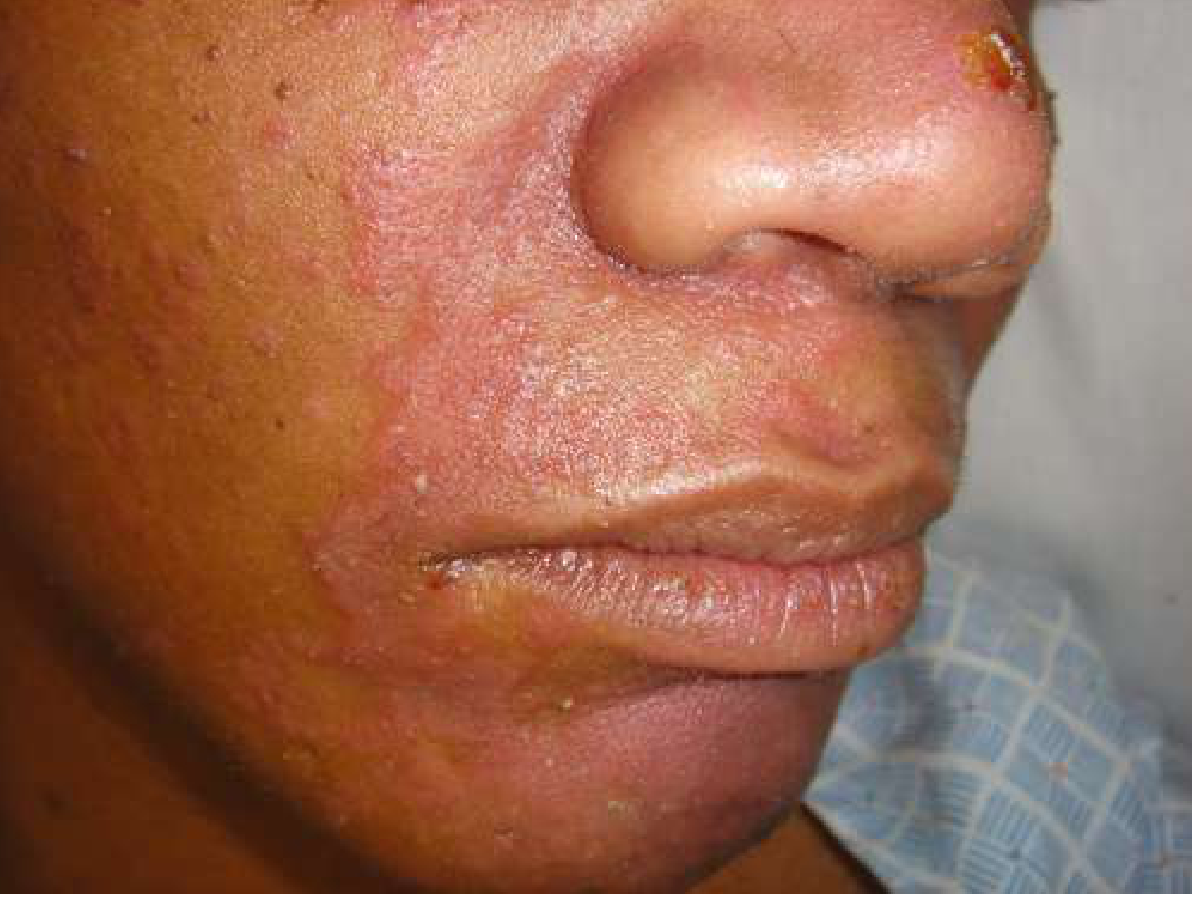
Your Diagnosis: Severe / Refractory Seborrheic Dermatitis
Why Your Current Treatments Failed
- Ketoconazole shampoo must be left on the scalp for 5-10 minutes before rinsing. Simply lathering and rinsing it off immediately doesn't work. It needs contact time.
- It should be used 2-3 times per week for at least 4 weeks - not just once or twice.
- Clotrimazole is NOT well-studied for seborrheic dermatitis. It targets Candida but is poor against Malassezia (the yeast that drives SD). Ketoconazole is far superior for SD.
- For scalp SD, you need a potent corticosteroid in the right vehicle (solution, foam, or lotion - NOT cream on hairy skin, because cream doesn't penetrate hair-bearing areas well).
- This is a very important red flag. Watery/oozing discharge from the scalp suggests bacterial superinfection (impetiginization) on top of SD, which needs antibiotic treatment. This is why antifungals alone are not working.
- Severe, treatment-refractory SD affecting multiple sites strongly warrants ruling out HIV infection - prevalence of SD in HIV is up to 83%, and it's often refractory to standard treatment. (Fitzpatrick's Dermatology, Vol 1-2)
- Other conditions to rule out: Parkinson's disease, nutritional deficiencies (zinc, B vitamins).
Recommended Treatment Plan (Step-by-Step)
Step 1 - Treat the Bacterial Superinfection First (for the watery discharge)
| Drug | Dose | Duration |
|---|---|---|
| Oral Doxycycline 100 mg | Twice daily | 7-10 days |
| OR Oral Flucloxacillin/Cloxacillin 500 mg | Four times/day | 7 days |
| OR Oral Cetirizine 10 mg (for itch relief) | Once daily | Alongside antibiotics |
Step 2 - Scalp: Antifungal + Steroid Combination
| Drug | How to Use |
|---|---|
| Ketoconazole 2% shampoo | Wet scalp, apply, leave on 5-10 minutes, rinse. Use 3x/week for 4 weeks, then 1x/week to maintain |
| Clobetasol propionate 0.05% scalp solution/lotion (NOT cream) | Apply to scalp at bedtime for first 2 weeks only (not longer - to avoid skin thinning) |
| OR Fluocinolone acetonide 0.01% solution | Twice daily to scalp for 3-4 weeks |
| Ciclopirox olamine 1.5% shampoo | Alternate with ketoconazole shampoo if available |
Step 3 - Beard Area
| Drug | How to Use |
|---|---|
| Ketoconazole 2% cream or gel | Twice daily until clear, then 2-3x/week to maintain |
| Sertaconazole 2% cream (if available) | Once or twice daily - good alternative |
| Avoid heavy steroid creams in beard area long-term |
Step 4 - Outer Ear (Otitis Externa Seborrheica)
| Drug | How to Use |
|---|---|
| Clotrimazole + Betamethasone ear drops OR | 3-4 drops in ear, twice daily for 1-2 weeks |
| Fluocinolone acetonide ear drops | Twice daily |
| Keep ears dry - avoid cotton swabs (push debris deeper) |
Step 5 - Oral Antifungal (if still not responding after 4 weeks)
| Drug | Dose | Notes |
|---|---|---|
| Oral Itraconazole 200 mg | Once daily for 1 week/month (pulse therapy) | For 2-3 months |
| OR Oral Fluconazole 300 mg | Once weekly | For 4-8 weeks |
Very Important Investigations to Get Done
- HIV test (ELISA) - Refractory multi-site SD is a known marker of HIV. This is not an accusation - it is standard medical workup.
- CBC (blood count) - Rule out immune deficiency
- Blood sugar (HbA1c) - Diabetes worsens fungal infections and delays healing
- Skin swab for culture - From the oozing area, to identify the bacteria and choose the right antibiotic
What NOT to Do
- Do NOT use Beclomethasone (inhaled corticosteroid) on skin - this is not the right drug for skin use
- Do NOT use clotrimazole as your primary antifungal for SD - it doesn't work well against Malassezia
- Do NOT apply cream formulations to hairy scalp - they can't penetrate. Use solutions, foams, or lotions
- Do NOT stop treatment when it starts improving - continue maintenance therapy (once weekly antifungal shampoo) indefinitely, as SD is a chronic relapsing condition with no permanent cure
Maintenance (Long-Term)
- Ketoconazole 2% shampoo once weekly as maintenance
- Zinc pyrithione shampoo (Head & Shoulders) on off-days
- Zinc + niacinamide-containing moisturizing scalp serum (helps restore skin barrier)
- Avoid harsh shampoos, excessive sweating, stress (all trigger flares)
Please see a dermatologist as soon as possible. The watery discharge from your scalp strongly suggests bacterial superinfection that needs to be swabbed and cultured. A dermatologist may also perform dermoscopy to confirm the diagnosis and rule out scalp psoriasis, which can look very similar and requires different treatment. Do not self-medicate oral antifungals without medical supervision.