
Upper gi bleeding management protocol
Reading File
Now let me search the library and PubMed in parallel for upper GI bleeding management.
Finding Sources
Finding Sources
Searching PubMed
"upper gastrointestinal bleeding" AND management
Searching the Web
upper GI bleeding management protocol guidelines 2024 2025
Excellent sources found. Now let me read the key sections in parallel - particularly Sleisenger & Fordtran (gold standard GI text), Tintinalli's (EM perspective), and Frameworks for Internal Medicine (protocol-style).
Reading File
Reading File
Reading File
Excellent material. Let me now read more from Sleisenger & Fordtran (the GI gold standard) and Tintinalli's for the management protocol details, plus the Yamada section.
Reading File
Reading File
Reading File
Excellent content. Let me get the critical management/treatment sections from Sleisenger and Tintinalli, particularly on resuscitation, scoring, and variceal vs. non-variceal management.
Reading File
Reading File
I now have comprehensive content from multiple authoritative sources. Let me also quickly check the Sleisenger section on initial resuscitation protocol and PPI therapy details.
Reading File
Finding Sources
Now let me get the variceal management details and the Sleisenger initial resuscitation section.
Reading File
Finding Sources
I now have all the information needed to write a comprehensive, well-structured protocol. Let me also fetch the GI bleeding flowchart image that appeared in Frameworks for Internal Medicine.
Loading Image
I now have comprehensive content from multiple authoritative sources. Here is the full protocol:
Upper GI Bleeding - Management Protocol
Upper GI bleeding (UGIB) is defined as hemorrhage originating proximal to the ligament of Treitz. It carries a mortality of 5-10% overall, rising to 30-40% in those with persistent or recurrent bleeding.
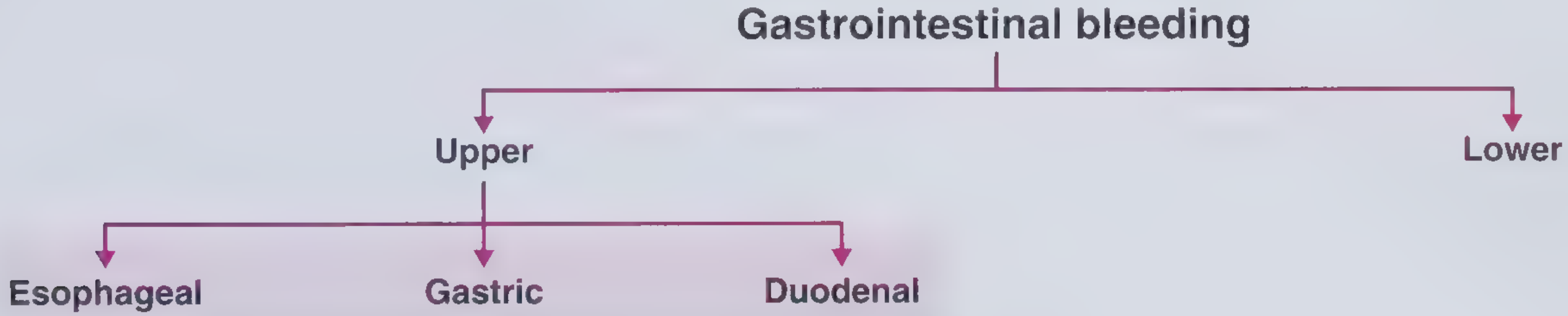
Causes (by frequency)
| Cause | Frequency |
|---|---|
| Peptic ulcer (gastric/duodenal) | ~35-40% |
| Esophageal/gastric varices | ~22% |
| Portal hypertension-related (non-variceal) | ~5% |
| Esophagitis | ~5% |
| Angioectasia/telangiectasia | ~4% |
| Mallory-Weiss tear | ~4% |
| Dieulafoy lesion | ~3% |
| UGI tract neoplasm | ~3% |
| Erosive gastritis/duodenitis | ~1-2% |
| Other/unidentified | ~7-8% |
- Sleisenger and Fordtran's GI and Liver Disease, UCLA CURE Database (n=968)
Key clue: Elevated BUN:creatinine ratio (>20:1) is a biochemical clue to UGIB, as digested blood is a nitrogen source.
Phase 1 - Immediate Resuscitation
Airway
- In hemodynamically unstable patients with active hematemesis, consider prophylactic endotracheal intubation before endoscopy to prevent aspiration. Use smaller doses of induction agents to minimize peri-intubation hypotension.
Access & Volume
- Two large-bore IV lines (at least 18G)
- IV crystalloid resuscitation
- Type and cross-match; consider massive transfusion protocol if large-volume blood products anticipated
- ICU or monitored bed for hemodynamically unstable patients
Transfusion Thresholds
- Restrictive strategy is recommended for most patients: transfuse when Hb < 7 g/dL
- In older patients or those with significant comorbidities: transfuse when Hb < 9 g/dL
- Liberally transfusing all patients (high threshold Hb < 9 g/dL for all) causes harm
- Tintinalli's Emergency Medicine; Sleisenger & Fordtran
Coagulopathy Correction
- Reverse coagulopathy if: INR elevated, platelets < 50,000/µL, or life-threatening bleeding
- Exception: caution with reversal in patients with cardiac/vascular stents or prosthetic valves
- INR ≥ 1.5 is a significant predictor of mortality in anticoagulated UGIB patients
- Newer oral anticoagulants (direct thrombin inhibitors, Xa inhibitors): manage per institutional protocol
- Reversal must not delay time to endoscopy
Nasogastric Lavage
- A positive aspirate (bloody, maroon, coffee-ground) confirms upper GI source
- A negative aspirate does not exclude UGIB (false negative due to intermittent bleeding, pyloric spasm)
- Only 23% of patients without hematemesis who have UGIB will have a positive aspirate
- If bright red blood or clots: gentle gastric lavage with room-temperature water on mild intermittent suction
Phase 2 - Risk Stratification
Pre-endoscopy Scoring Systems
Blatchford Score (range 0-23) - uses:
- Blood pressure, BUN, hemoglobin, heart rate, syncope, melena, liver disease, heart failure
- Score = 0: < 1% chance of requiring intervention → consider outpatient management
- Any score > 0 in the context of overt bleeding: hospital admission indicated
Clinical Rockall Score (pre-endoscopy) - uses age, shock, comorbidities:
| Variable | 0 | 1 | 2 | 3 |
|---|---|---|---|---|
| Age (yr) | < 60 | 60-79 | ≥ 80 | - |
| Pulse (bpm) | < 100 | ≥ 100 | - | - |
| SBP (mmHg) | ≥ 100 | - | < 100 | - |
| Comorbidity | None | - | IHD, CHF, any major | Renal/liver failure, malignancy |
- Rockall Score 0-2 after endoscopy → low risk, consider early discharge
- Full Rockall (post-endoscopic) adds findings/diagnosis/SRH - correlates better with mortality
AIMS65 Score - Albumin < 3g/dL, INR > 1.5, altered Mental status, SBP ≤ 90 mmHg, Age > 65
- Each = 1 point; higher scores predict in-hospital mortality
High-risk clinical features (any of these warrant admission):
- Advanced age, comorbidities, red hematemesis, hematochezia, positive NG aspirate, hemodynamic instability, abnormal labs, prior variceal banding/cauterization/TIPS procedure
Phase 3 - Medical Therapy
For Non-Variceal UGIB (especially peptic ulcer)
Proton Pump Inhibitor (PPI):
- 80 mg IV bolus followed by 8 mg/hour infusion (e.g., omeprazole, pantoprazole)
- Pre-endoscopic PPI reduces stigmata of recent hemorrhage (SRH) and need for endoscopic therapy
- Post-endoscopic high-dose PPI for 72 hours in high-risk stigmata (active bleeding, non-bleeding visible vessel, adherent clot)
Prokinetics:
- Erythromycin 250 mg IV (or metoclopramide) 30-90 minutes before endoscopy
- Clears blood from stomach, improves visualization, may reduce need for repeat endoscopy
For Suspected Variceal UGIB
Vasoactive drugs (start immediately when varices suspected, even before endoscopy):
- Octreotide: 50 µg IV bolus, then 25-50 µg/hour infusion (elderly: start at 25 µg bolus/infusion)
- Somatostatin or terlipressin (long-acting vasopressin analog) are equivalent alternatives
- Meta-analyses show vasoactive drugs are as effective as sclerotherapy for controlling variceal bleeding and cause fewer adverse events
Antibiotics (mandatory in cirrhosis with UGIB):
- Up to 50% of cirrhotic patients develop infection during hospitalization for GI bleeding
- Ceftriaxone 1 g IV every 24 hours for 7 days (preferred, esp. in high quinolone-resistance areas)
- Alternatives: Ciprofloxacin 400 mg IV every 12 hours, or levofloxacin 500 mg IV every 24 hours, or norfloxacin 400 mg PO BID (not available in USA)
- Antibiotics reduce mortality and bacterial infection rates in cirrhotic UGIB
- Sleisenger & Fordtran's GI and Liver Disease
Phase 4 - Endoscopy
Timing
- Within 24 hours for most patients with overt UGIB after adequate resuscitation (ACG/ESGE standard)
- Within 12 hours for high-risk patients (persistent hemodynamic instability, suspected variceal source)
- Urgent (< 6 hours): reserved for patients with ongoing massive hemorrhage
- Very low-risk patients (Blatchford 0): may be managed as outpatients
Preparation
- Use a therapeutic endoscope (large accessory channel, foot-pump jet irrigation)
- Administer prokinetic pre-procedure
- Consider intubation for aspiration protection in active bleeders
Forrest Classification (peptic ulcer SRH)
| Class | Finding | Rebleeding Risk |
|---|---|---|
| Ia | Active spurting | ~55% |
| Ib | Active oozing | ~55% |
| IIa | Non-bleeding visible vessel (NBVV) | ~43% |
| IIb | Adherent clot | ~22% |
| IIc | Flat pigmented spot | ~10% |
| III | Clean ulcer base | ~5% |
- Classes Ia, Ib, IIa (and IIb after clot removal): endoscopic hemostasis indicated
- Classes IIc and III: medical therapy only, safe for early discharge
Endoscopic Hemostasis Methods
Mechanical:
- Through-the-scope clips (TTSC) - first-line for many lesions
- Over-the-scope clips (OTSC) - recent meta-analyses show benefit for refractory/recurrent UGIB
- Band ligation - preferred for esophageal varices
Injection:
- Epinephrine 1:10,000 - always combine with another modality; monotherapy insufficient
- Tissue adhesives (cyanoacrylate - especially for gastric varices)
Thermal:
- Contact: electrocoagulation, thermocoagulation (bipolar/gold probe)
- Non-contact: argon plasma coagulation (APC), laser photocoagulation
Doppler Endoscopic Probe (DEP):
- Detects residual arterial blood flow after hemostasis
- UCLA CURE RCT: rebleeding significantly reduced with DEP-guided vs. standard visually guided hemostasis
Variceal-Specific Endoscopic Treatment
- Esophageal varices: Endoscopic band ligation (EBL) preferred over sclerotherapy (lower complication rate)
- Gastric varices: Cyanoacrylate injection or EBL; more technically challenging
- Sclerotherapy (sclerosants: ethanolamine oleate, sodium tetradecyl sulfate, sodium morrhuate): used when banding unavailable
Phase 5 - Rescue/Salvage Therapies
Balloon Tamponade (bridge therapy only)
- Sengstaken-Blakemore tube (gastric + esophageal balloons)
- Minnesota tube (adds esophageal aspiration port)
- Linton-Nachlas tube (single large gastric balloon)
- Controls bleeding initially in 85-98% of cases; rebleeding recurs in 21-60% after deflation
- 30% serious complication rate (aspiration pneumonia, esophageal rupture, airway obstruction)
- Always intubate before insertion
- Used only to bridge to definitive therapy (TIPS or repeat endoscopy)
TIPS (Transjugular Intrahepatic Portosystemic Shunt)
- For variceal bleeding uncontrolled by endoscopy
- Considered within 72 hours (early TIPS) in high-risk patients (Child-Pugh B with active bleeding, or Child-Pugh C < 14 points)
- Also used when endoscopy fails to localize or control variceal source
Angiography & Embolization
- When endoscopy fails to localize or control non-variceal bleeding
- Celiac and superior mesenteric angiograms obtained; CO2 contrast useful (lower viscosity, better sensitivity)
- Selective arterial embolization for peptic ulcer bleeding (gastric bleeds: left gastric artery; duodenal bleeds: gastroduodenal artery)
- Prophylactic embolization acceptable when massive bleeding has ceased at time of angiography
- Percutaneous transhepatic coronary vein embolization for varices when endoscopy unavailable or fails
Surgery
- Reserved for: failure of all endoscopic/angiographic therapy, massive ongoing hemorrhage, or specific lesions (aortoenteric fistula)
- Less frequently required given advances in endoscopic and IR therapies
Phase 6 - Post-Hemostasis & Secondary Prevention
- H. pylori testing and eradication in all peptic ulcer bleeders (reduces recurrence markedly)
- PPI maintenance in NSAID users; switch to COX-2 inhibitor + PPI if NSAID continuation required
- Beta-blocker prophylaxis (propranolol or nadolol) + repeat EBL sessions until variceal obliteration for secondary prevention of variceal bleeding
- Anticoagulation restart: individualize risk-benefit; most patients can safely resume anticoagulation within 7 days if indication is strong (e.g., prosthetic valve, AF)
- Aspirin/antiplatelet restart: for high CV risk patients, restart aspirin as soon as hemostasis confirmed (typically within 3-5 days)
Special Populations
| Population | Consideration |
|---|---|
| Cirrhosis | Mandatory antibiotics; early TIPS threshold lower; mortality doubles vs. non-cirrhotic |
| Anticoagulated | Reverse if INR ≥ 1.5 or life-threatening bleed; balance thrombotic risk |
| DOAC patients | Specific reversal agents (idarucizumab for dabigatran, andexanet alfa for Xa inhibitors); per institutional protocol |
| Elderly | Higher transfusion threshold (Hb < 9); adjust octreotide dosing (start 25 µg bolus/infusion) |
| Post-TIPS/prior banding | Higher-risk category; ICU admission preferred |
Recent Evidence Updates (PubMed 2024-2026)
- Over-the-scope clips (OTSC) for non-variceal UGIB: A 2025 systematic review and meta-analysis (Ni et al., PMID 39500365) supports OTSC as superior to standard therapy for refractory/recurrent non-variceal UGIB.
- Tranexamic acid (TXA): A 2025 meta-analysis (Calderon Martinez et al., PMID 40029534) - evidence remains mixed for TXA in UGIB; current ACG guidelines do not routinely recommend it (the HALT-IT trial showed no mortality benefit and possible harm).
- A 2025 CAG guideline specifically addresses non-variceal non-peptic ulcer bleeding (Dieulafoy lesions, GAVE, Mallory-Weiss tears, malignant lesions), with GRADE-based recommendations for each lesion type.
Sources: Sleisenger and Fordtran's GI and Liver Disease | Tintinalli's Emergency Medicine | Yamada's Textbook of Gastroenterology (7e) | Frameworks for Internal Medicine | Goldman-Cecil Medicine | CAG Clinical Practice Guideline 2025
This is a shared conversation. Sign in to Orris to start your own chat.