
renal angle tenderness
Reading File
Searching sources...
Finding Sources
Finding Sources
Reading File
Loading Image
Finding Sources
Renal Angle Tenderness
Also called costovertebral angle (CVA) tenderness or elicited via Murphy's Kidney Punch, this is a key clinical sign in the examination of the kidneys.
Anatomy of the Renal Angle
The renal angle (costovertebral angle) is the angle formed by:
- The lower border of the 12th rib
- The outer border of the erector spinae muscle
The kidneys lie in the retroperitoneum, and this angle overlies the renal area posteriorly.
How to Elicit It - Murphy's Kidney Punch
The test is performed with the patient sitting up, arms raised in front so the back is stretched:
The clinician presses the thumb firmly into the renal angle. A positive test (tenderness or pain on pressure or percussion) indicates renal pathology.
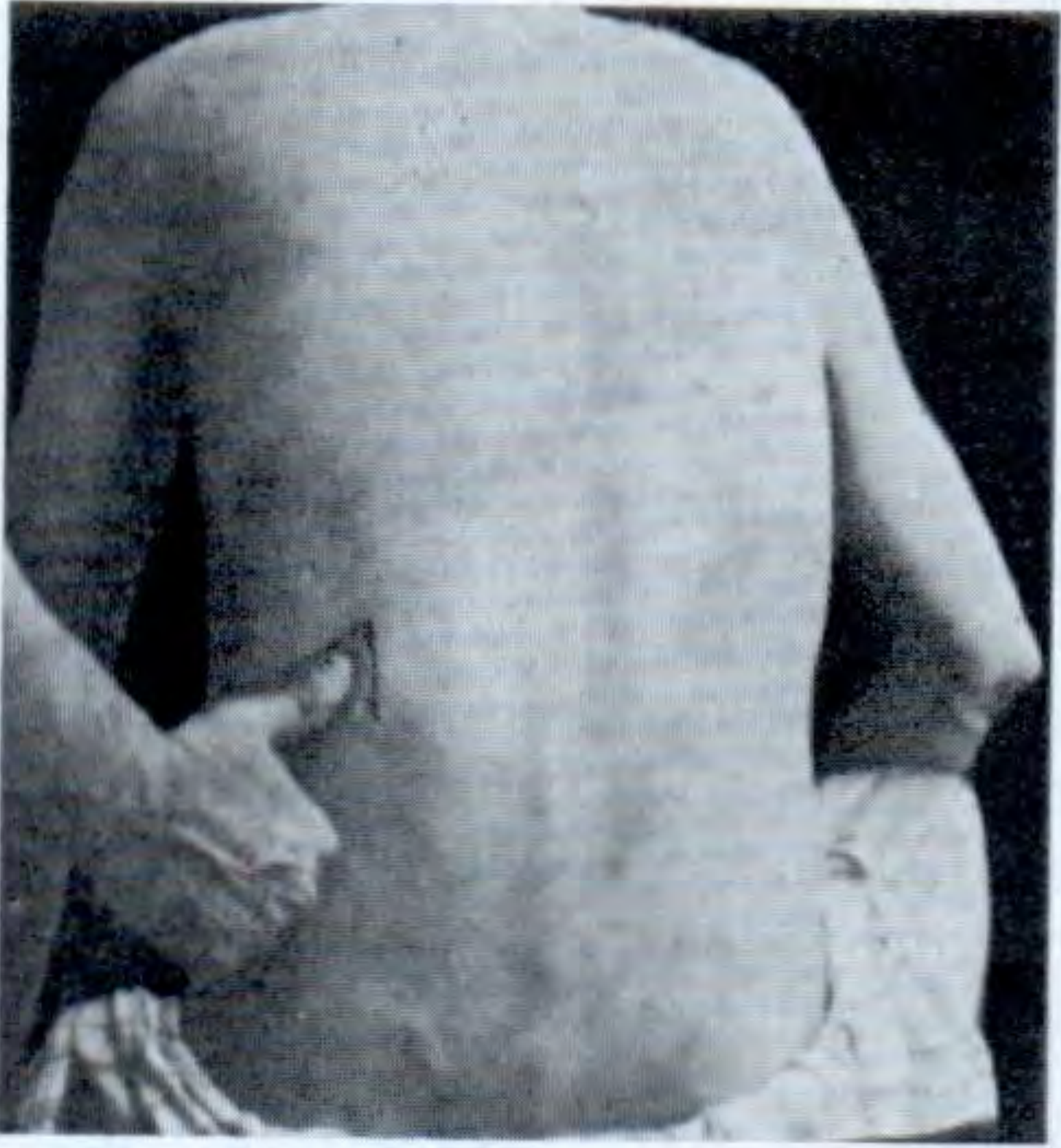
Eliciting tenderness by pressing at the renal angle (Murphy's Kidney Punch) - S Das Manual on Clinical Surgery
Clinical Significance - Causes of Renal Angle Tenderness
| Condition | Notes |
|---|---|
| Pyelonephritis | Fever, chills, flank pain + CVA tenderness = classic upper UTI presentation |
| Renal calculi (urolithiasis) | Tenderness at renal angle; may coexist with ureteric colic |
| Hydronephrosis | Renal angle will be very tender; anterior rigidity possible in severe cases |
| Perinephric abscess | Swelling + extreme tenderness |
| Renal trauma | Mild-to-moderate tenderness depending on severity of capsular involvement |
| Ureteral obstruction | Tenderness often accompanies obstructive symptoms |
Distinguishing Upper vs. Lower UTI
CVA tenderness is one of the key features that distinguishes pyelonephritis (upper UTI) from cystitis (lower UTI):
- Pyelonephritis: Fever ≥38.5°C, systemic symptoms, CVA tenderness, elevated CRP, leukocytosis
- Cystitis: Dysuria, frequency, urgency - typically no CVA tenderness, no fever, no nausea/vomiting
(The Harriet Lane Handbook, 23rd ed.; Washington Manual of Medical Therapeutics)
Important Points
- Renal pain is typified by location in the ipsilateral costovertebral angle, just lateral to the vertebral spine and inferior to the 12th rib. It arises from obstruction of the collecting system or inflammation. (Campbell-Walsh-Wein Urology)
- In ureteric colic, abdominal examination may also reveal renal angle tenderness alongside the colicky pain. (Bailey & Love's Surgery, 28th ed.)
- A normal kidney is impalpable - any tender mass or significant CVA tenderness is abnormal.
- In women with flank symptoms, pelvic examination is important to exclude tubo-ovarian pathology (ectopic pregnancy, twisted ovarian cyst) that can mimic renal angle tenderness.
Summary: Renal angle tenderness is elicited at the costovertebral angle and is positive in inflammatory, obstructive, or traumatic renal pathology. The most common cause encountered clinically is pyelonephritis. Its presence strongly suggests upper urinary tract disease rather than isolated lower UTI.
This is a shared conversation. Sign in to Orris to start your own chat.