
reason for acute otitis media in acute tonsisllitis
Reading File
Now let me search the medical library for relevant content on this topic.
Finding Sources
Finding Sources
Searching the Web
acute otitis media complication acute tonsillitis mechanism Eustachian tube
Good, I have useful snippets. Let me read the most relevant textbook sections for deeper content.
Reading File
Reading File
Finding Sources
Finding Sources
Finding Sources
There's a great pathogenesis diagram in Cummings. Let me read that section and fetch the image.
Reading File
Excellent - I now have very detailed and authoritative content from Cummings Otolaryngology. Let me fetch the pathogenesis diagram to include it in the answer.
Loading Image
Loading Image
I now have comprehensive, well-sourced information with excellent diagrams. Here is the complete answer:
Why Acute Otitis Media (AOM) Occurs in Acute Tonsillitis
The key link is the Eustachian tube - the anatomical bridge between the nasopharynx and the middle ear. Tonsillitis sets off a chain of events that disrupts this tube's function, allowing pathogens to reach the middle ear.
The Mechanism - Step by Step
1. Shared Anatomical Territory
The tonsils (especially the palatine tonsils and the pharyngeal tonsil/adenoid) lie in close proximity to the pharyngeal opening of the Eustachian tube. The tube opens into the nasopharynx just posterior to the inferior turbinate. Active inflammation in this region - as occurs in acute tonsillitis - directly affects the tubal orifice and the mucosal lining of the tube itself.
2. Eustachian Tube Dysfunction (ETD)
In acute tonsillitis (typically caused by Group A Streptococcus, adenovirus, or other respiratory pathogens), the infectious/inflammatory process causes:
- Mucosal edema and hyperemia of the nasopharynx, extending to the tubal mucosa
- Impaired mucociliary clearance - the cilia lining the Eustachian tube fail to clear secretions toward the nasopharynx
- Obstruction at the pharyngeal end of the tube, due to swelling of the peritonsillar and adenoidal tissue, as well as lymphoid tissue surrounding the tubal orifice (the torus tubarius)
This is confirmed by Cummings Otolaryngology: "These upper respiratory tract conditions can directly influence Eustachian tube function" - explicitly citing obstructive adenoids and recurrent tonsillitis as key predisposing factors.
3. Negative Middle Ear Pressure
Obstruction of the Eustachian tube prevents normal pressure equalization in the middle ear. The middle ear mucosa absorbs the trapped air, creating negative pressure (relative vacuum) within the middle ear cavity.
4. Bacterial Aspiration into the Middle Ear
The negative middle ear pressure acts as a suction force. As Cummings describes: "Negative middle ear pressure in turn facilitates an influx of respiratory viruses and/or bacteria into the middle ear." Bacteria that normally colonize the nasopharynx (such as S. pneumoniae, H. influenzae, and M. catarrhalis) are aspirated up the dysfunctional tube into the sterile middle ear.
5. Middle Ear Infection Established
Once bacteria reach the middle ear, they encounter the inflammatory milieu already present (cytokines, impaired immune surveillance from concurrent viral/bacterial infection) and multiply, producing suppurative AOM - with pus, otalgia, fever, and potential tympanic membrane bulging or perforation.
Additional Contributing Factors in Children
This complication is especially common in children because:
| Factor | Relevance |
|---|---|
| Short, horizontal Eustachian tube | More easily obstructed; bacteria pass upward more readily |
| Immature immune system | Poor local defense against ascending pathogens |
| Adenoid hypertrophy | Enlarged adenoids physically obstruct the tubal orifice AND serve as a bacterial reservoir (Junqueira's Basic Histology: "Chronic inflammation of the pharyngeal lymphoid tissue often produces hyperplasia... which can obstruct the Eustachian tube and lead to middle ear infections") |
| More frequent URTIs | Higher baseline nasopharyngeal colonization density |
Pathogenesis Diagram (Cummings Otolaryngology)
This diagram shows exactly how nasopharyngeal/tubal inflammation from infection leads to middle ear disease:
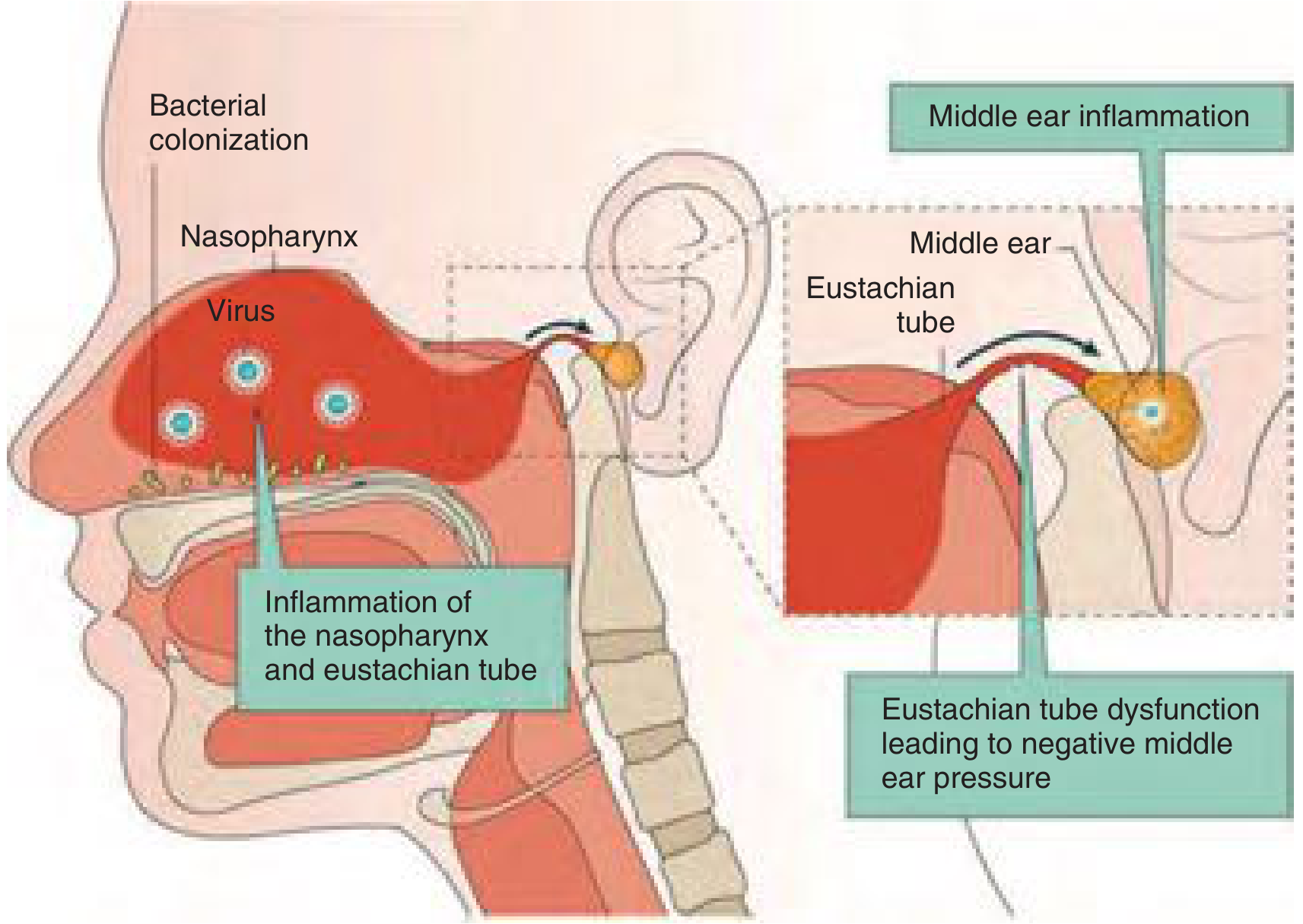
Fig. 199.5 - Pathogenesis of virus-induced AOM. Cummings Otolaryngology Head and Neck Surgery
And the broader multifactorial pathogenesis flowchart:
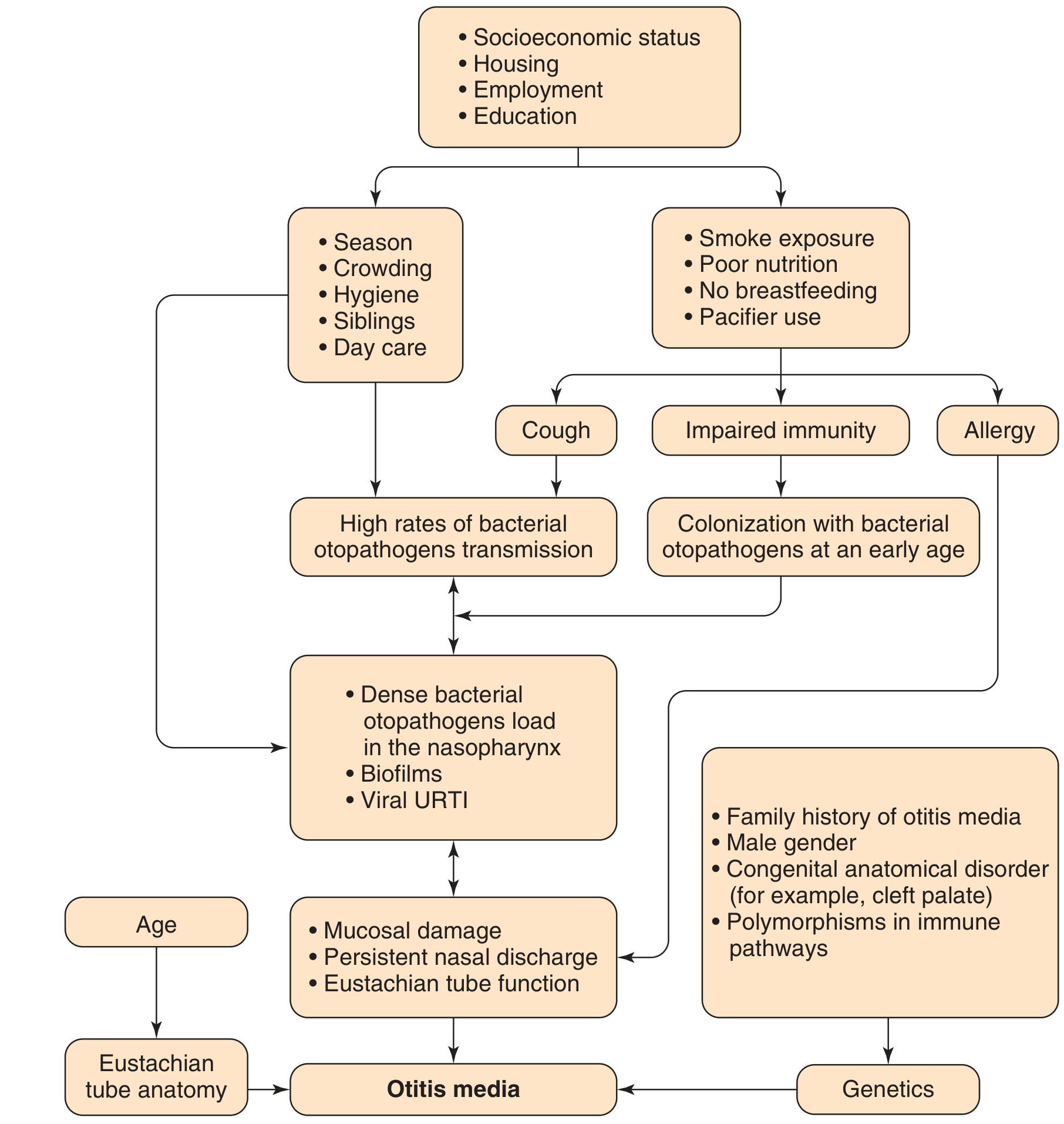
Fig. 199.4 - Pathogenesis pathways of otitis media. Cummings Otolaryngology
Summary in One Line
In acute tonsillitis, peritonsillar and pharyngeal inflammation obstructs the Eustachian tube → negative middle ear pressure develops → nasopharyngeal pathogens are aspirated into the middle ear → AOM results.
Sources: Cummings Otolaryngology Head and Neck Surgery, Ch. 199; Junqueira's Basic Histology, 17th ed.; Shambaugh Surgery of the Ear
This is a shared conversation. Sign in to Orris to start your own chat.