
Write a short note on hip join5
I'll look up the hip joint from the medical library for you.
Reading File
Finding Sources
Reading File
Reading File
Reading File
Reading File
Loading Image
Loading Image
Here is a short note on the Hip Joint, sourced from Gray's Anatomy for Students and S Das: A Manual on Clinical Surgery.
The Hip Joint
Type and Articulation
The hip joint is a synovial multiaxial ball-and-socket joint formed by the articulation of the spherical head of the femur with the acetabulum of the pelvic bone. It is designed primarily for stability and weight-bearing, trading some mobility for security.
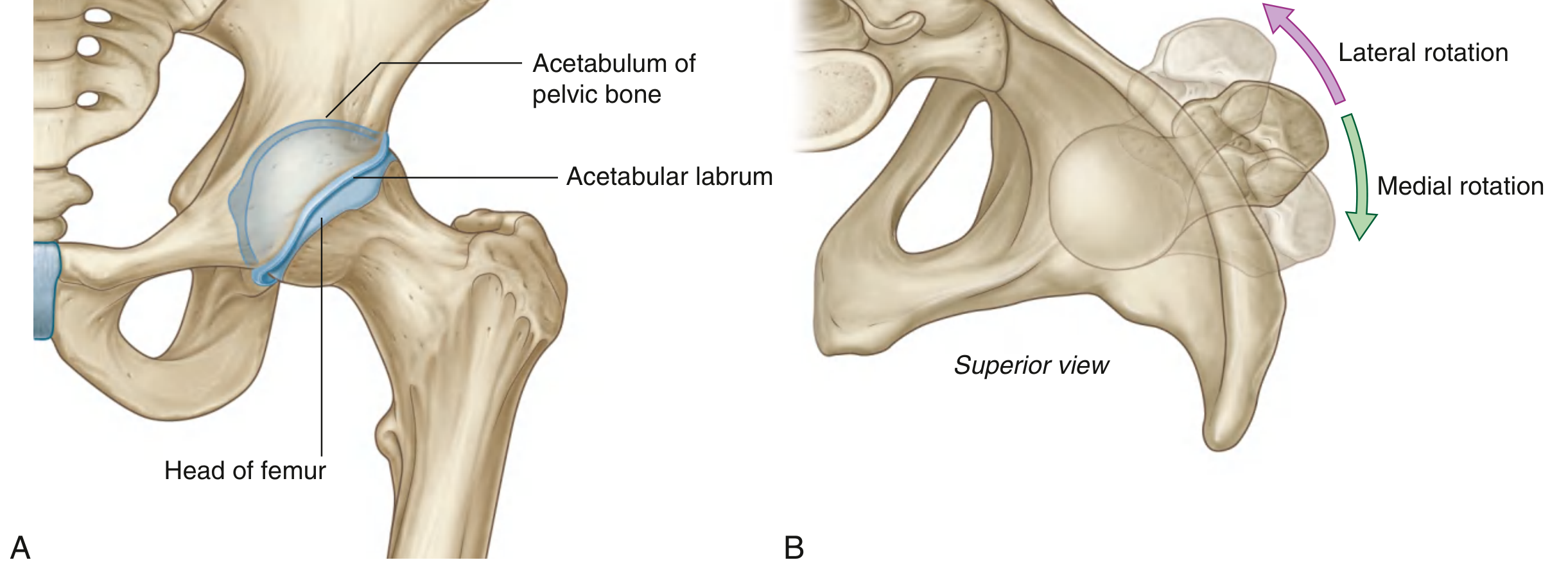
Articular Surfaces
- Head of the femur - spherical, covered by hyaline cartilage except at the fovea
- Lunate surface of the acetabulum - covered by hyaline cartilage; broadest superiorly
- The acetabular labrum (fibrocartilaginous collar) deepens the socket and increases stability; it bridges the acetabular notch inferiorly as the transverse acetabular ligament, converting the notch into a foramen
Ligaments
Three major extracapsular ligaments reinforce the fibrous capsule, all becoming taut in extension:
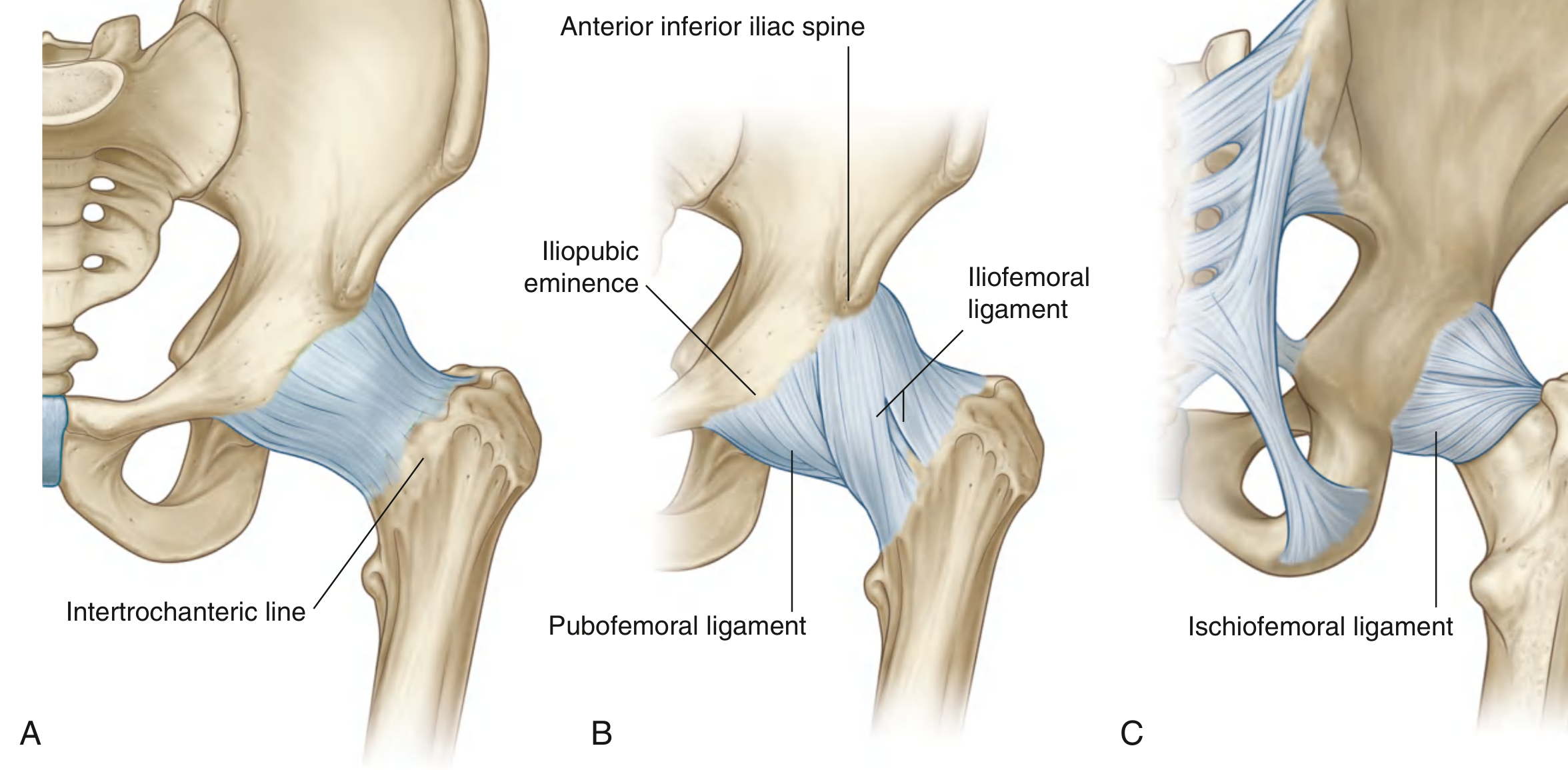
| Ligament | Position | Attachments |
|---|---|---|
| Iliofemoral (Y-ligament of Bigelow) | Anterior | AIIS/acetabular margin → intertrochanteric line |
| Pubofemoral | Anteroinferior | Iliopubic eminence → fibrous membrane/iliofemoral lig. |
| Ischiofemoral | Posterior | Ischium (posteroinferior to acetabulum) → greater trochanter |
An intracapsular ligament - the ligament of the head of the femur - runs from the fovea to the acetabular fossa. It carries a branch of the obturator artery contributing to blood supply of the femoral head.
Movements
The hip joint permits:
- Flexion and extension
- Abduction and adduction
- Medial and lateral rotation
- Circumduction
The long neck of the femur and its angulation on the shaft must be considered when assessing rotational movements - muscles move the greater trochanter forward (medial rotation) or backward (lateral rotation) relative to the acetabulum.
Blood Supply
Branches from multiple vessels form a periarticular network:
- Medial and lateral circumflex femoral arteries
- Obturator artery (via ligament of head)
- Superior and inferior gluteal arteries
- First perforating branch of the deep artery of the thigh
Nerve Supply
Articular branches from:
- Femoral nerve
- Obturator nerve
- Superior gluteal nerve
- Nerve to quadratus femoris
Clinical Points (from Das: Manual on Clinical Surgery)
- Pain from hip disease is classically felt anteriorly and often radiates to the knee (shared innervation via femoral, obturator, and sciatic nerves) - a common clinical trap
- Trendelenburg's test assesses the abductor mechanism; positive when abductors are weak or the fulcrum is lost (dislocation, coxa vara, fracture neck of femur)
- Age of onset guides diagnosis: congenital dislocation (birth-5 yrs), Perthes' disease (5-10 yrs), slipped epiphysis (10-15 yrs), idiopathic osteoarthritis (>40 yrs)
- Thomas' test detects fixed flexion deformity, which can be masked by compensatory lumbar lordosis
Sources: Gray's Anatomy for Students; S Das - A Manual on Clinical Surgery, 13th Ed.
This is a shared conversation. Sign in to Orris to start your own chat.