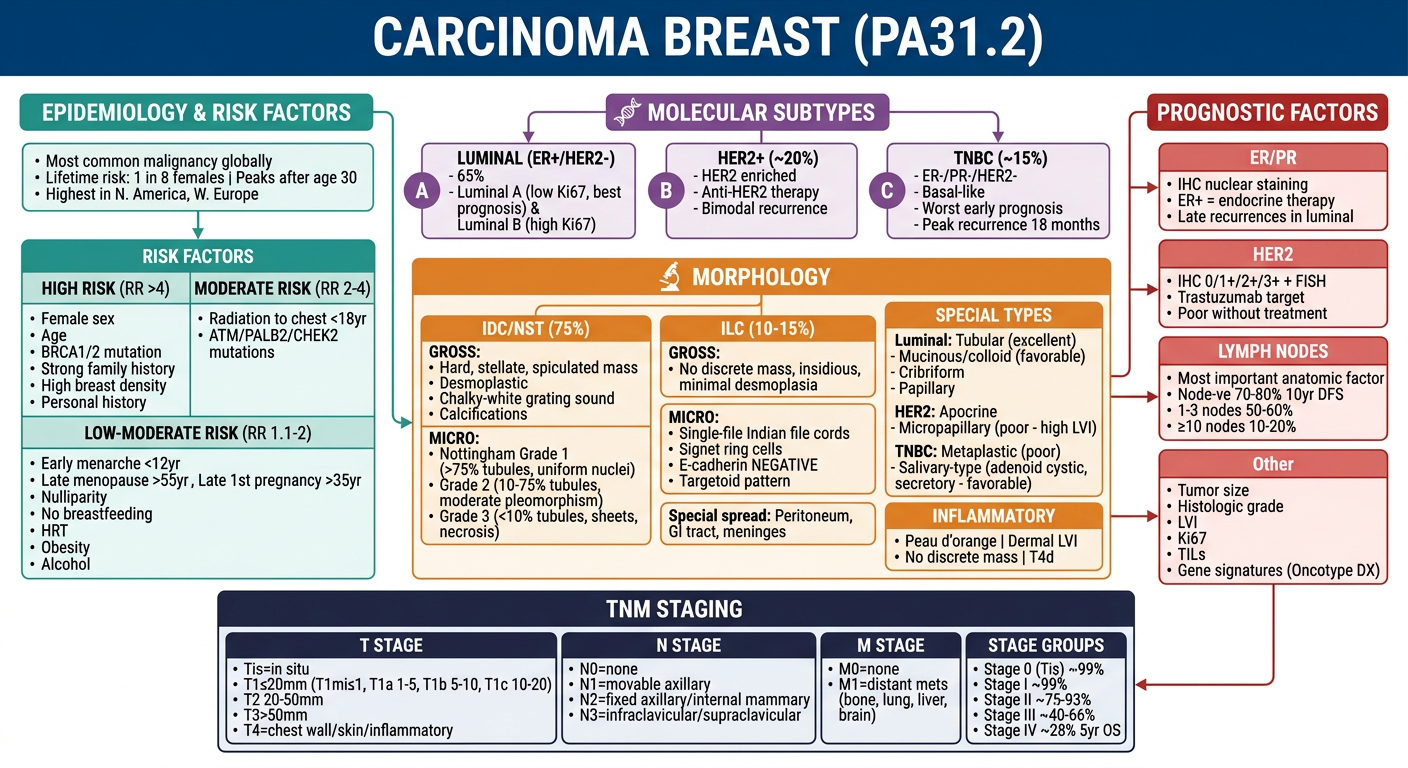
I now have all the content and images needed. Let me compile the comprehensive answer for PA31.2.
Carcinoma Breast (PA31.2)
Source: Robbins, Cotran & Kumar - Pathologic Basis of Disease
1. EPIDEMIOLOGY
Breast cancer is the most common malignancy globally and the leading cause of cancer death in females worldwide. Key facts:
- In 2020, it surpassed lung cancer as the most common cancer overall - ~2.3 million new cases (nearly 12% of all new cancer diagnoses worldwide)
- Lifetime risk: 1 in 8 females (living to age 90) in the United States
- Incidence is highest in North America, Northern/Western Europe, and Australia/New Zealand
- Rare below age 25; incidence rises steeply after age 30
- Incidence and mortality are increasing rapidly in low-resource countries (due to delayed childbearing, fewer pregnancies, reduced breastfeeding)
- Ethnicity: Highest incidence in females of European descent (avg. diagnosis age 63); females of African descent diagnosed earlier (avg. 59 years) with higher proportion of aggressive subtypes and higher mortality
- Overall risk of death once diagnosed: ~20% (declining ~1-2%/year due to earlier diagnosis and better adjuvant therapy)
2. RISK FACTORS
| Risk Factor | Relative Risk |
|---|
| Female sex | >4.0 |
| Increasing age | >4.0 |
| Germline mutations (high penetrance: BRCA1/2) | >4.0 |
| Strong family history (>1 first-degree relative, young age, multiple cancers) | >4.0 |
| Personal history of breast cancer | >4.0 |
| High breast density | >4.0 |
| Germline mutations (moderate penetrance: ATM, PALB2, CHEK2) | 2.1-4.0 |
| High-dose chest radiation at young age (<18 years) | 2.1-4.0 |
| Family history (1 first-degree relative) | 2.1-4.0 |
| Early menarche (<12 years) | 1.1-2.0 |
| Late menopause (>55 years) | 1.1-2.0 |
| Late first pregnancy (>35 years) | 1.1-2.0 |
| Nulliparity | 1.1-2.0 |
| Absence of breastfeeding | 1.1-2.0 |
| Exogenous hormone therapy | 1.1-2.0 |
| Postmenopausal obesity | 1.1-2.0 |
| Physical inactivity | 1.1-2.0 |
| High alcohol consumption | 1.1-2.0 |
Key points on risk:
- ~20% of breast cancers are attributable to modifiable factors (obesity, alcohol, inactivity)
- Estrogen exposure (endogenous and exogenous) is a major driver - estrogen promotes proliferation of luminal epithelial cells, increasing the chance of acquired mutations
- BRCA1 (chromosome 17q): lifetime risk up to 80%; associated with TNBC/basal-like subtype
- BRCA2 (chromosome 13q): lifetime risk up to 85%; associated with luminal/ER+ subtype; also increases male breast cancer risk
3. MOLECULAR SUBTYPES
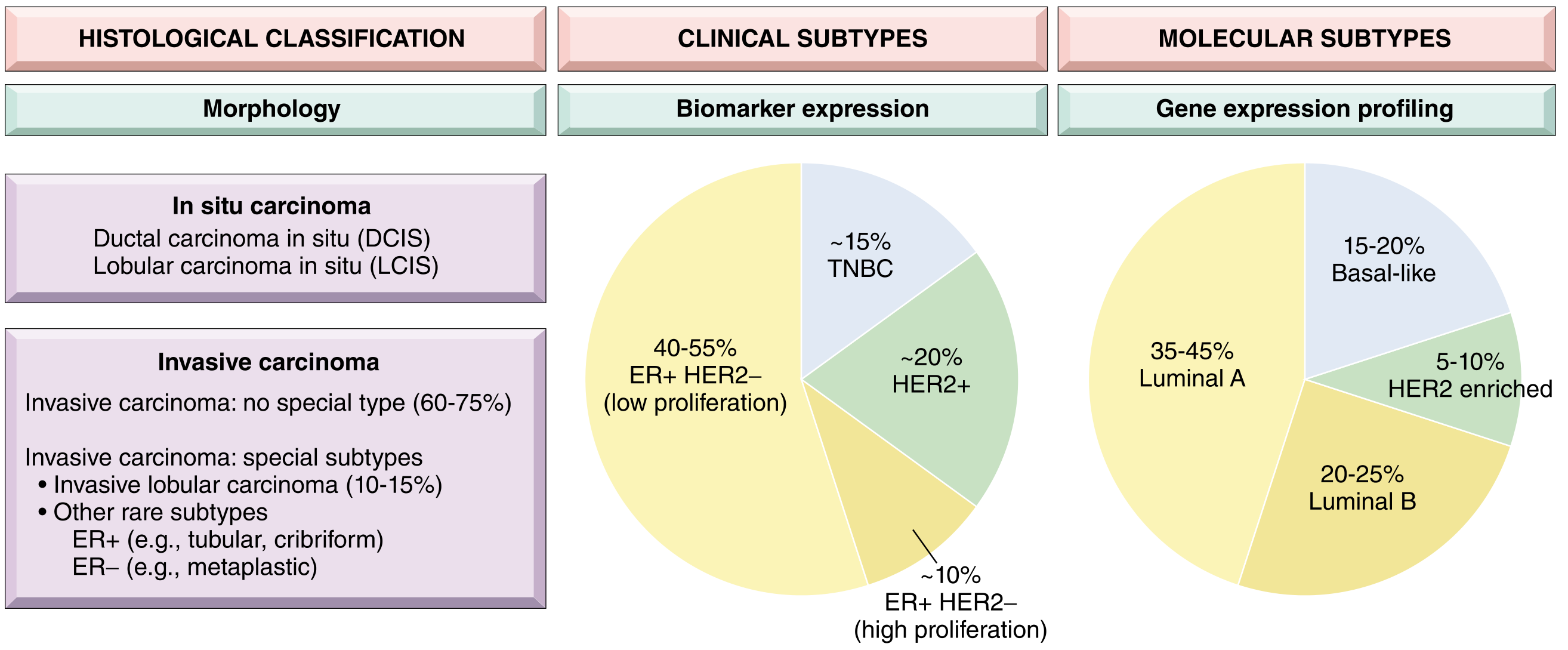
Fig. 23.15 - Breast cancer classification framework (Robbins PBD)
Three complementary classification systems exist:
A. Clinical Subtypes (Biomarker-based - routine practice)
| Clinical Subtype | Biomarker Profile | Frequency | Treatment |
|---|
| Luminal | ER+ / HER2- | ~65% | Endocrine therapy (tamoxifen/aromatase inhibitors) |
| HER2 | HER2 overexpressed (ER+ or ER-) | ~20% | Anti-HER2 (trastuzumab) |
| TNBC (Triple Negative) | ER-/PR-/HER2- | ~15% | Chemotherapy; immunotherapy |
B. Intrinsic Molecular Subtypes (Gene Expression Profiling)
| Molecular Subtype | % | Key Features | Prognosis |
|---|
| Luminal A | 35-45% | ER+/PR+/HER2-, low Ki67, low grade | Best; late recurrences continue |
| Luminal B | 20-25% | ER+, higher Ki67 (high proliferation), may be HER2+ | Intermediate |
| HER2 enriched | 5-10% | HER2 amplified, ER- | Poor without targeted therapy |
| Basal-like | 15-20% | ER-/PR-/HER2-, CK5/6+, EGFR+; overlaps TNBC | Poor; early recurrence |
| Normal-like | ~5% | Resembles normal breast tissue | Good |
| Claudin-low | ~5% | Low claudin expression, mesenchymal features | Poor |
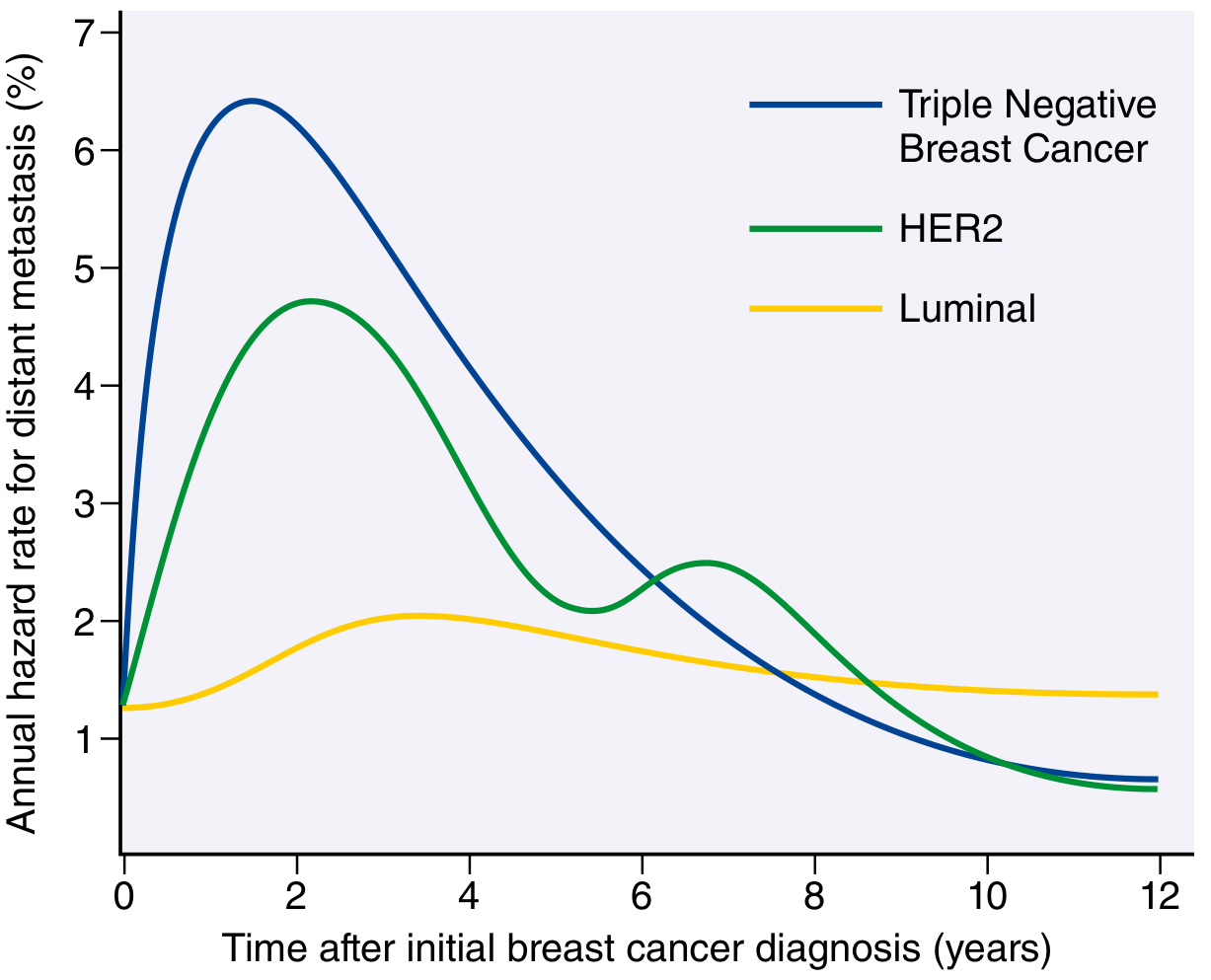
Key clinical insight: Luminal cancers have the lowest early recurrence rate but continue to recur late (>10 years). TNBC recurrences peak early (within 3 years) and almost all occur within 8 years. HER2+ shows a bimodal pattern.
Fig. 23.23 - Recurrence hazard rates by molecular subtype (Robbins PBD)
4. GROSS AND MICROSCOPIC PATHOLOGY
A. Invasive Ductal Carcinoma (IDC) / Invasive Carcinoma of No Special Type (NST)
- Most common invasive breast malignancy - ~75% of cases
- Heterogeneous group; lacks the defining features of special subtypes
Gross:
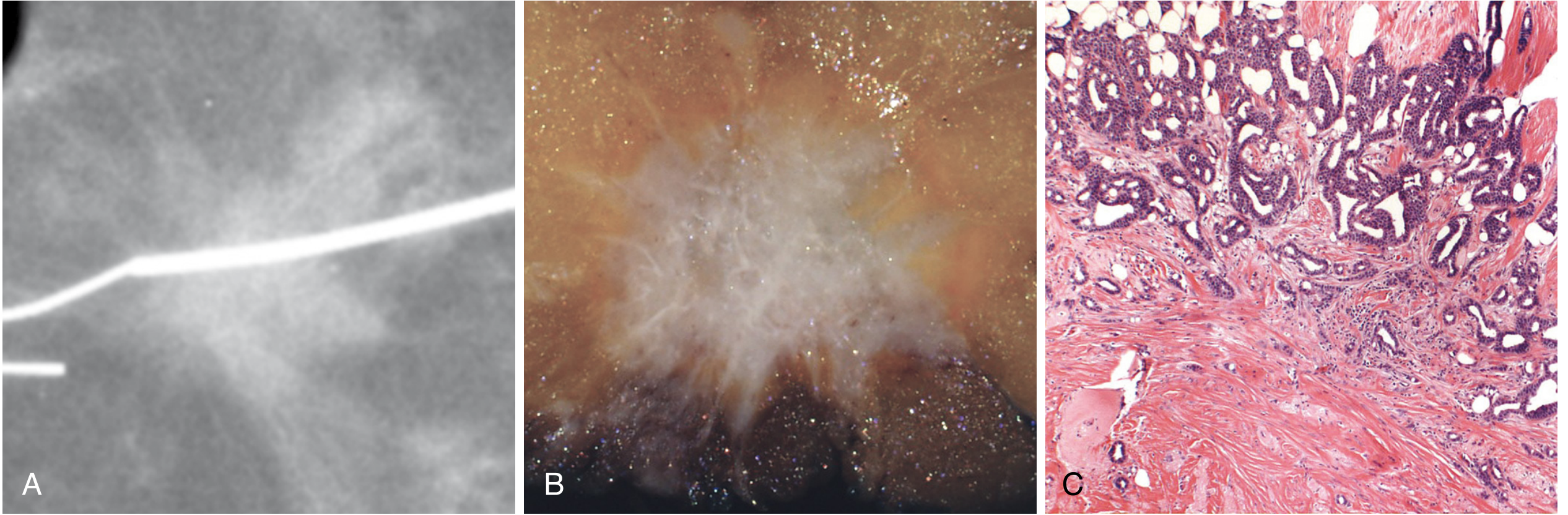
- Hard, irregular, stellate/spiculated mass with irregular margins
- Associated desmoplastic stromal reaction (scirrhous carcinoma)
- On cutting: grating/chalky-white sound due to desmoplastic stroma and calcification foci
- Mammography: radiodense, spiculated mass ± calcifications
Fig. 23.20 - IDC (NST): (A) mammographic stellate density, (B) gross spiculated grey-white mass, (C) exuberant desmoplastic stromal response on microscopy
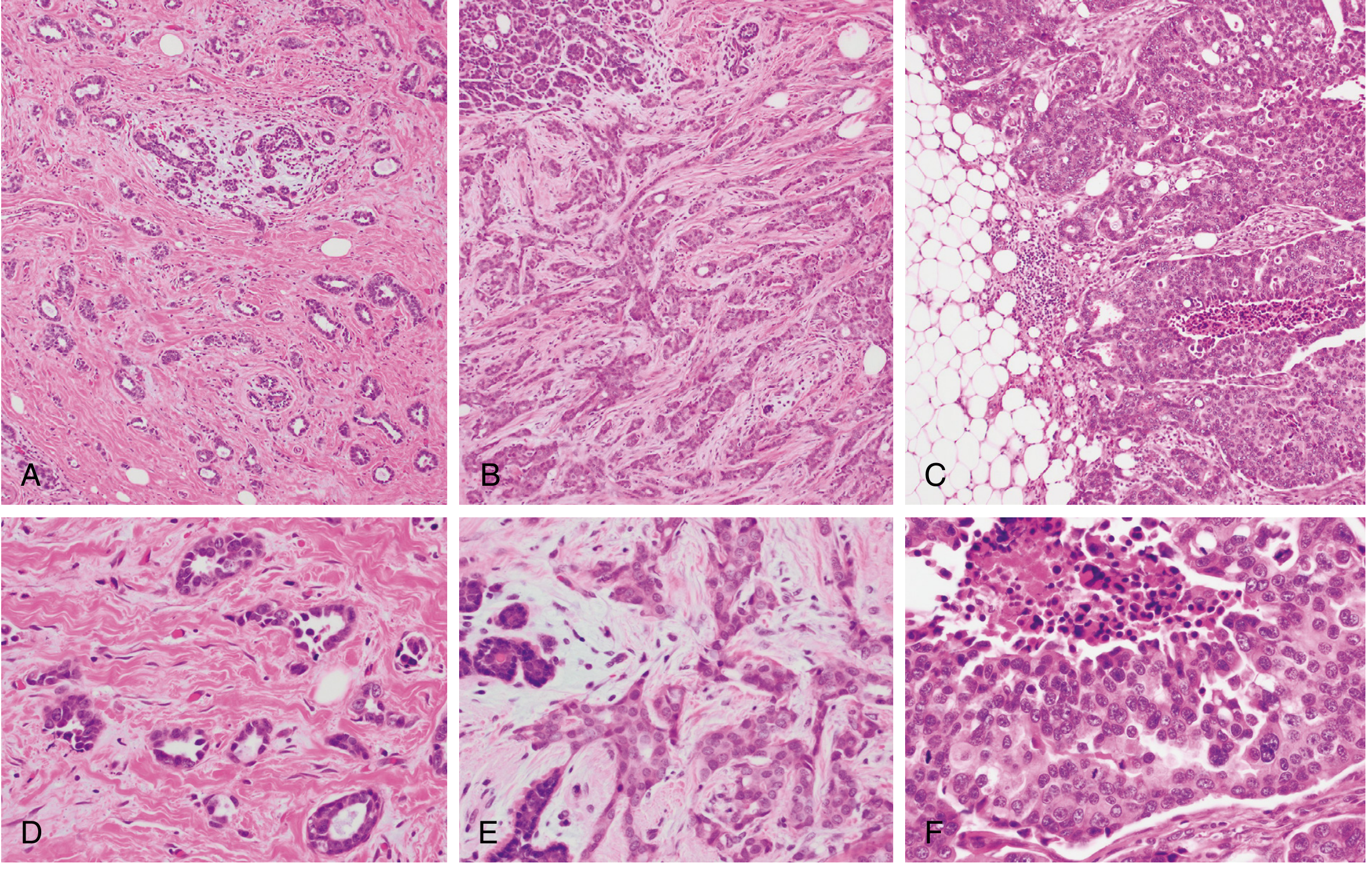
Microscopic (Nottingham Histologic Grading - 3 parameters):
| Grade | Tubule Formation | Nuclear Pleomorphism | Mitotic Rate | Score |
|---|
| Grade 1 (Well diff.) | >75% tubules | Small, uniform nuclei | Low | 3-5 |
| Grade 2 (Mod. diff.) | 10-75% tubules | Moderate pleomorphism | Moderate | 6-7 |
| Grade 3 (Poorly diff.) | <10% tubules | Marked pleomorphism, irregular nuclei | High | 8-9 |
Fig. 23.21 - Histologic grading: A,D = Grade 1 (tubular pattern, small nuclei); B,E = Grade 2 (solid nests, moderate pleomorphism); C,F = Grade 3 (ragged sheets, large nuclei, necrosis)
"Medullary pattern" IDC: High-grade tumor with prominent tumor-infiltrating lymphocytes (TILs) - previously called medullary carcinoma; now classified as IDC with medullary pattern.
B. Invasive Lobular Carcinoma (ILC)
- Second most common invasive breast carcinoma - up to 15% of cases
- Defined by loss of E-cadherin (CDH1 gene mutation/loss - hallmark)
- Associated with germline CDH1 mutations (also signet ring carcinoma of stomach)
Gross:
- Often insidious - produces minimal desmoplasia
- Difficult to detect on imaging; often imperceptible on mammography
- No discrete mass; diffuse infiltration of breast tissue
Microscopic:
- Classic pattern: dyscohesive infiltrating tumor cells in single-file "Indian file" cords
- Cells are small, round, with intracytoplasmic mucin vacuoles - may look like signet ring cells
- Cells often target/wrap around pre-existing normal ducts (targetoid pattern)
- E-cadherin immunostain: negative (vs. positive in IDC)
Spread pattern: Characteristic metastatic sites - peritoneum, retroperitoneum, leptomeninges, GI tract, ovaries, uterus.
C. Special Histologic Subtypes
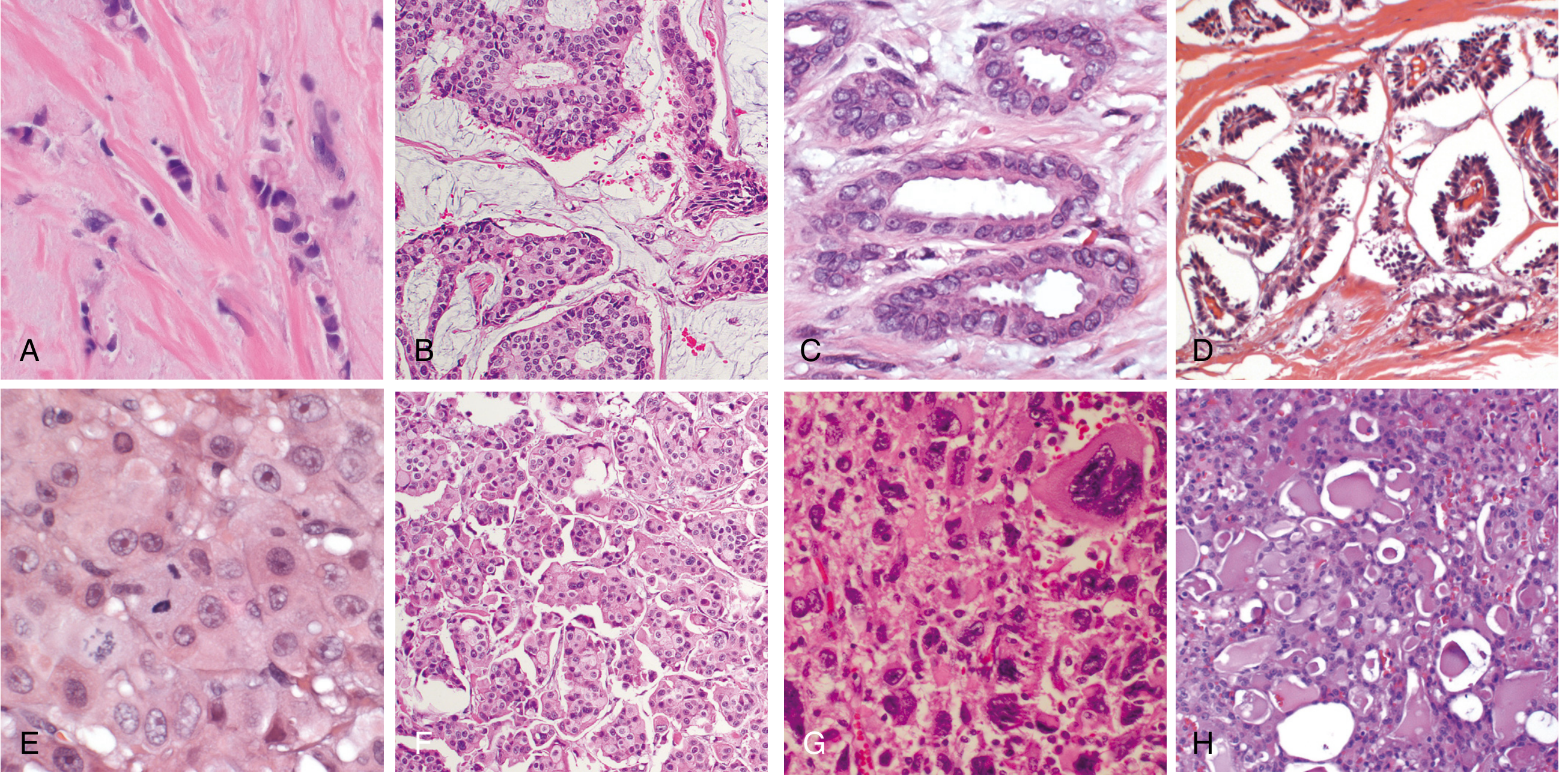
Fig. 23.22 - Special types: (A) ILC - single-file cords; (B) Mucinous - tumor cells in mucin lakes; (C) Tubular - well-formed tubules; (D) Papillary - true papillary fronds; (E) Apocrine - eosinophilic granular cytoplasm; (F) Micropapillary - hollow balls floating in fluid; (G) Metaplastic - squamous/mesenchymal differentiation; (H) Secretory/salivary-type
| Subtype | Molecular Class | Key Features | Prognosis |
|---|
| Mucinous (colloid) | Luminal (ER+) | Tumor cells in large lakes of extracellular mucin; soft, gelatinous, pushing borders | Favorable |
| Tubular | Luminal (ER+) | >90% well-formed tubules; single layer of cells; may mimic sclerosing adenosis | Excellent |
| Cribriform | Luminal (ER+) | Invasive nests with cribriform (sieve-like) morphology | Favorable |
| Papillary | Luminal (ER+) | True papillary fronds lined by tumor cells | Favorable |
| Apocrine | HER2 enriched | Enlarged nuclei + prominent nucleoli + eosinophilic granular cytoplasm | Variable |
| Micropapillary | HER2 enriched | Hollow balls of cells floating in fluid-filled spaces (NOT true papillae); high LVI | Poor (high LVI, lymph node mets) |
| Metaplastic | TNBC | Squamous or mesenchymal (spindle, chondroid, osseous) differentiation; myoepithelial gene profile | Generally poor |
| Adenoid cystic / Secretory / Mucoepidermoid | TNBC | "Salivary gland-like" carcinomas; rare, indolent | Relatively favorable |
Inflammatory Breast Carcinoma (not a histologic type but a clinical syndrome):
- Extensive plugging of dermal lymphovascular spaces by carcinoma cells
- Presents as diffuse breast erythema, swelling, skin thickening
- Peau d'orange: skin tethered by Cooper ligaments → orange-peel appearance
- No discrete palpable mass; usually high-grade, diffusely infiltrative
- Misnomer - NO actual inflammation present
- Very poor prognosis
5. PROGNOSTIC FACTORS
A. ER / PR (Estrogen Receptor / Progesterone Receptor)
- Assessed by immunohistochemistry (IHC) - nuclear staining
- ER+ tumors (Luminal):
- Better overall prognosis (lower early recurrence rates)
- Respond to endocrine therapy (tamoxifen in premenopausal; aromatase inhibitors in postmenopausal)
- But continue to recur late (10-20 years post-diagnosis)
- ER+/PR+ = best hormone response; ER+/PR- = less responsive
- ER-/PR- (TNBC):
- Aggressive; early recurrences; no endocrine therapy benefit
- Peak recurrence at ~18 months; most recurrences within 8 years
B. HER2 (Human Epidermal Growth Factor Receptor 2)
- Encoded by ERBB2 gene (chromosome 17q12)
- Assessed by IHC (score 0, 1+, 2+, 3+) ± FISH (for IHC 2+ equivocal cases)
- HER2 overexpression (IHC 3+ or FISH amplified) = ~20% of cancers
- HER2+ without targeted therapy: Poor prognosis
- HER2+ with trastuzumab (anti-HER2): Markedly improved outcomes
- Bimodal recurrence pattern (early and late peaks)
C. Lymph Node Status
- Most important anatomic/staging prognostic factor (for localized disease)
- Number of involved nodes correlates directly with prognosis:
| Lymph Node Status | 10-year DFS (approx.) |
|---|
| Node-negative | ~70-80% |
| 1-3 positive nodes | ~50-60% |
| 4-9 positive nodes | ~25-40% |
| ≥10 positive nodes | ~10-20% |
- Axillary lymph nodes (Level I, II, III) are the primary drainage; sentinel lymph node biopsy (SLNB) is the standard first step
D. Other Key Prognostic Factors
| Factor | Significance |
|---|
| Distant metastases | Most important overall; cure unlikely once present |
| Tumor size | Larger size = worse prognosis; strongly correlates with LN status |
| Histologic grade | Grade 3 > Grade 2 > Grade 1 (poorer outcome) |
| Histologic type | Tubular, mucinous, cribriform = better; metaplastic, micropapillary = worse |
| Proliferation (Ki67) | High Ki67 = high proliferation = poor prognosis (esp. in luminal B) |
| Lymphovascular invasion (LVI) | Positive LVI = higher risk of LN and distant metastases |
| Tumor-infiltrating lymphocytes (TILs) | High TILs = better response to therapy, better prognosis (esp. in TNBC, HER2+) |
| Gene expression signatures | Oncotype DX (21-gene), MammaPrint (70-gene): guide chemotherapy decisions in ER+/HER2- |
6. TNM STAGING (AJCC)
Primary Tumor (T)
| Stage | Description |
|---|
| TX | Primary tumor cannot be assessed |
| T0 | No evidence of primary tumor |
| Tis | Carcinoma in situ (DCIS; or Paget disease with no invasive tumor) |
| T1 | Tumor ≤20 mm in greatest dimension |
| - T1mi | Microinvasion ≤1 mm |
| - T1a | >1 mm to ≤5 mm |
| - T1b | >5 mm to ≤10 mm |
| - T1c | >10 mm to ≤20 mm |
| T2 | Tumor >20 mm to ≤50 mm |
| T3 | Tumor >50 mm |
| T4 | Any size with direct extension to: chest wall (T4a), skin (T4b), both (T4c), or inflammatory carcinoma (T4d) |
Regional Lymph Nodes (N)
| Stage | Description |
|---|
| N0 | No regional lymph node metastasis |
| N1 | Metastasis in movable ipsilateral Level I/II axillary lymph node(s) |
| N2 | Metastasis in ipsilateral Level I/II axillary nodes fixed/matted (N2a); or clinically detected internal mammary nodes without axillary involvement (N2b) |
| N3 | Metastasis in ipsilateral infraclavicular (Level III axillary) nodes (N3a); or clinically detected internal mammary + axillary (N3b); or ipsilateral supraclavicular nodes (N3c) |
Distant Metastases (M)
| Stage | Description |
|---|
| M0 | No distant metastasis |
| cM0(i+) | No distant metastasis but circulating tumor cells detected |
| M1 | Distant metastasis present (bone, lung, liver, brain most common) |
Anatomic Stage Groups
| Stage | T | N | M | 5-year OS (approx.) |
|---|
| Stage 0 | Tis | N0 | M0 | ~99% |
| Stage IA | T1 | N0 | M0 | ~99% |
| Stage IB | T0-T1 | N1mi | M0 | ~99% |
| Stage IIA | T0-T1/N1 or T2/N0 | | M0 | ~93% |
| Stage IIB | T2/N1 or T3/N0 | | M0 | ~75% |
| Stage IIIA | T0-T3/N2 or T3/N1 | | M0 | ~66% |
| Stage IIIB | T4/N0-N2 | | M0 | ~40% |
| Stage IIIC | Any T/N3 | | M0 | ~40% |
| Stage IV | Any T | Any N | M1 | ~28% |
Note: The AJCC 8th edition also incorporates biomarker-based prognostic stage (using ER, PR, HER2, grade, and Oncotype DX score) alongside anatomic stage, which can upgrade or downgrade the anatomic stage group.
Quick Summary Table
| Feature | IDC (NST) | ILC | TNBC |
|---|
| Frequency | 75% | 10-15% | 15% |
| E-cadherin | + | - (lost) | + |
| Gross | Stellate/hard, spiculated | No discrete mass, insidious | Circumscribed (sometimes) |
| Microscopy | Glands/nests + desmoplasia | Indian file cords, signet ring cells | Sheets, TILs, necrosis |
| ER/PR | Variable | Usually ER+ | Negative |
| HER2 | Variable | Usually negative | Negative |
| Special spread | Axillary LNs | Peritoneum, GI, meninges | Lung, brain |
Source: Robbins, Cotran & Kumar - Pathologic Basis of Disease (9780443264528)