
“If the Gut Works, Use It!” – Justify this Statement for Special Feeding Methods. Discuss the Advantages and Disadvantages of Enteral Nutrition The statement “If the gut works, use it” is one of the basic principles of clinical nutrition. It means that whenever the gastrointestinal (GI) tract is functional and capable of digestion and absorption, enteral nutrition should be preferred over parenteral nutrition. Enteral nutrition supplies nutrients through the gastrointestinal tract either by oral feeding, oral nutritional supplements, or tube feeding. It is indicated for patients who cannot consume sufficient food orally but have a functioning gut. Feeding through the gut helps maintain the normal structure and function of the intestine and is more physiological, safer, and less expensive than intravenous feeding. The use of enteral nutrition preserves the integrity of the intestinal mucosa and prevents atrophy of the gut lining. It stimulates epithelial cell growth, maintains the mucosal barrier, and reduces intestinal permeability, thereby preventing the movement of harmful bacteria and toxins from the intestine into the bloodstream (bacterial translocation). Enteral feeding also improves gut blood flow, enhances secretion of Immunoglobulin A (IgA), supports the gut-associated lymphoid tissue (GALT), increases mucus production, reduces infection, and improves both local and systemic immune responses. Early enteral feeding decreases apoptosis (cell death) in intestinal cells caused by injury or stress and helps maintain normal digestive and absorptive functions. Even small amounts of enteral nutrition reduce gut mucosal atrophy and improve patient recovery. Enteral nutrition is recommended for patients who are unable to meet their nutritional needs orally despite having a functional gastrointestinal tract. It is indicated in patients with swallowing disorders due to stroke, diphtheria, poliomyelitis, or cancers of the oral cavity and larynx; patients with persistent anorexia requiring forced feeding; unconscious or semiconscious patients; individuals with severe malabsorption; short bowel syndrome; postoperative patients; patients with neurological or renal disorders; severely undernourished individuals; babies with very low birth weight; and patients with severe diarrhoea or other conditions where adequate oral intake is not possible. Advantages of Enteral Nutrition Enteral nutrition offers several important advantages. It is a physiological method of feeding because nutrients are delivered through the normal digestive pathway. It maintains the structure and function of the gastrointestinal tract and preserves the intestinal mucosal barrier. It improves digestion and nutrient absorption while preventing bacterial translocation and reducing the risk of infections. Enteral feeding stimulates the immune system by increasing IgA secretion and maintaining gut-associated lymphoid tissue. It is less expensive than parenteral nutrition and requires less specialised equipment. It is associated with fewer metabolic complications and lower risk of bloodstream infections. Enteral formulas are easy to prepare, readily available, nutritionally complete, and can be modified according to patient needs. They improve wound healing, support recovery, reduce hospital stay, and enhance the patient's nutritional status. Long-term enteral feeding can be safely administered through gastrostomy or jejunostomy tubes when required. Disadvantages of Enteral Nutrition Despite its benefits, enteral nutrition has certain disadvantages. It can only be used in patients with a functioning gastrointestinal tract and is contraindicated in intestinal obstruction, severe gastrointestinal bleeding, paralytic ileus, or severe gastrointestinal failure. Tube feeding may cause complications such as aspiration pneumonia, nausea, vomiting, abdominal distension, diarrhoea, constipation, tube blockage, tube displacement, and local infections at the insertion site. Improper administration may lead to electrolyte imbalance or dehydration. Blenderised feeds have a higher risk of bacterial contamination and inaccurate nutrient composition. Commercial formulas can be expensive and sometimes have poor palatability or high osmolality, leading to gastrointestinal discomfort. Some patients may also experience intolerance to feeds, requiring careful monitoring and gradual advancement of feeding. Conclusion In conclusion, the principle “If the gut works, use it” emphasizes that enteral nutrition should always be the first choice for nutritional support whenever the gastrointestinal tract is functional. It maintains gut integrity, improves immune function, prevents complications associated with parenteral nutrition, and is cost-effective. Although enteral nutrition has certain limitations and potential complications, its numerous physiological and clinical benefits make it the preferred method of nutritional support in most patients requiring special feeding methods. Make a ppt using this content with their reference pictures
enteral nutrition tube feeding nasogastric
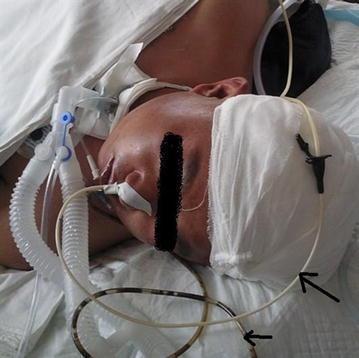
This clinical photograph illustrates a patient in a critical care setting receiving dual enteral access and mechanical ventilation. The image demonstrates the simultaneous management of gastrointestinal decompression and nutritional support. A nasogastric (NG) tube is visible, indicated by a short arrow, which contains dark-colored fluid, signifying active gastric drainage or decompression. Positioned superiorly, a nasointestinal (NI) tube, likely a naso-jejunal tube indicated by a long arrow, is secured to the patient's head bandage with a clip for the delivery of enteral nutrition. This setup is typical for patients with stress ulceration or gastric motility issues where gastric suction is required while distal intestinal feeding is maintained. Additionally, the patient is intubated with a visible endotracheal tube connected to a mechanical ventilator via white corrugated breathing circuits. The photo highlights standard procedural protocols for securing multiple nasal tubes and managing life support equipment in a complex clinical scenario, emphasizing the anatomical points of entry and the external differentiation between drainage and feeding lines.
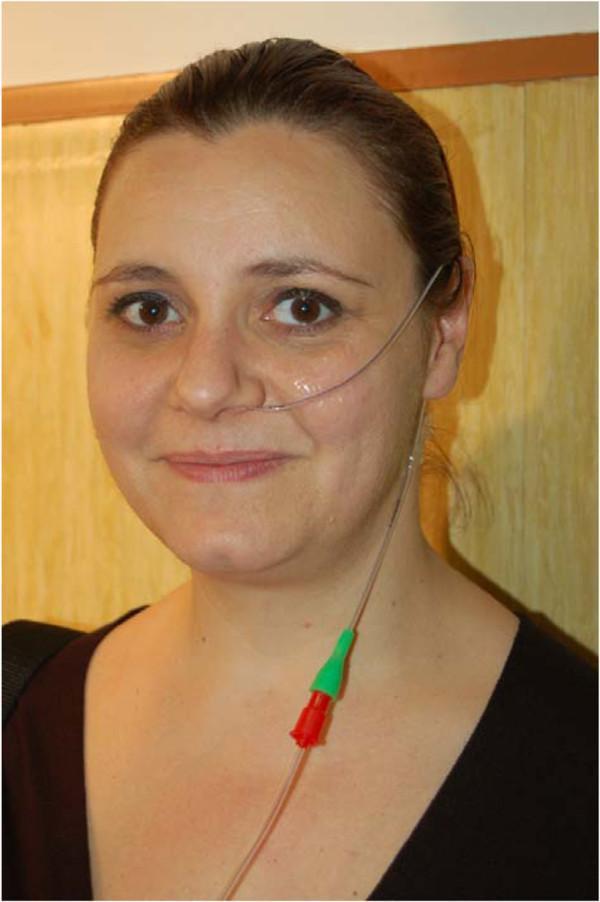
This clinical photograph shows a female patient demonstrating the placement and routing of a small-bore nasogastric or enteral feeding tube. The image highlights a 6-French polyurethane tube, noted for its fine gauge and high transparency, which enhances patient aesthetic tolerance and comfort. The tube is seen emerging from the left nostril, secured across the cheek with transparent adhesive tape, and then looped behind the ear before descending along the side of the neck. The distal portion of the tube features a standard color-coded connector assembly, consisting of a green tapered port followed by a red ridged hub, used for securing the connection to a feeding pump or syringe. This image serves as an educational reference for medical procedures involving long-term enteral nutrition and shows correct methods for securing a nasal tube to minimize visibility and displacement.
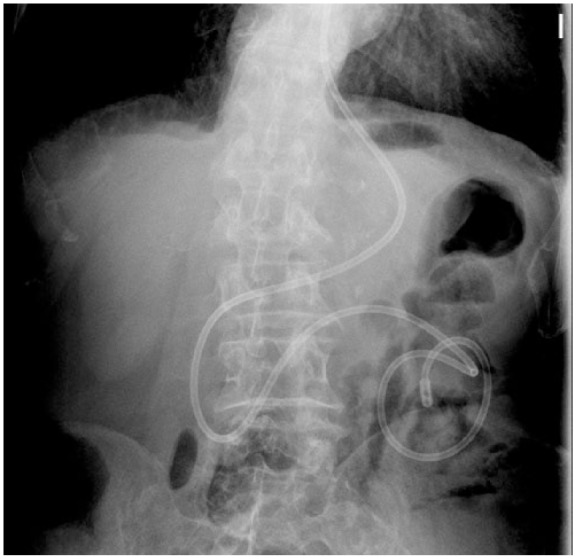
**Imaging Modality:** Anteroposterior (AP) abdominal X-ray (radiograph). **Anatomical Region:** Upper abdomen and lower thorax, including the vertebral column, diaphragm, stomach, and proximal small bowel loops. **Observed Device/Pathology:** A radiopaque enteral feeding tube, identified as a nasojejunal (NJ) tube, is visualized. The tube traverses the esophagus and gastric body, crosses the midline at the level of the pylorus/duodenum, and extends inferiorly and laterally. **Characteristic Visual Features:** - **Course:** The tube descends through the midline, curves along the greater curvature of the stomach, passes through the duodenum, and terminates with the distal tip and weighted bolus positioned in the left upper quadrant, consistent with the proximal jejunum beyond the Ligament of Treitz. - **Skeletal Findings:** Mild thoracolumbar scoliosis is noted. - **Soft Tissue/Air:** Gastric and colonic gaseous distension is visible in the left upper and lower quadrants. **Key Diagnostic Features:** The post-pyloric position of the radiopaque tip confirms correct nasojejunal placement for enteral nutrition, distinguishing it from a nasogastric (NG) tube which would terminate within the gastric bubble.

This clinical photograph shows an 18-month-old male patient in a seated position, demonstrating the practical application of a nasogastric (NG) tube for enteral nutrition or gastric decompression in a pediatric setting. The thin, translucent, flexible catheter is inserted through the patient's right naris and is secured to the philtrum and cheek with medical adhesive tape to prevent displacement. The tubing extends downward across the chest. The child is shown with curly hair and typical pediatric proportions for his age, seated on a blue medical examination surface. This image serves as a clinical example of long-term or home-based enteral support in pediatrics, illustrating proper tube placement and fixation. The patient is wearing patterned pajamas, and the background features a floral pattern, suggesting a home care or community health environment rather than an acute hospital setting.
intestinal mucosal barrier gut anatomy diagram
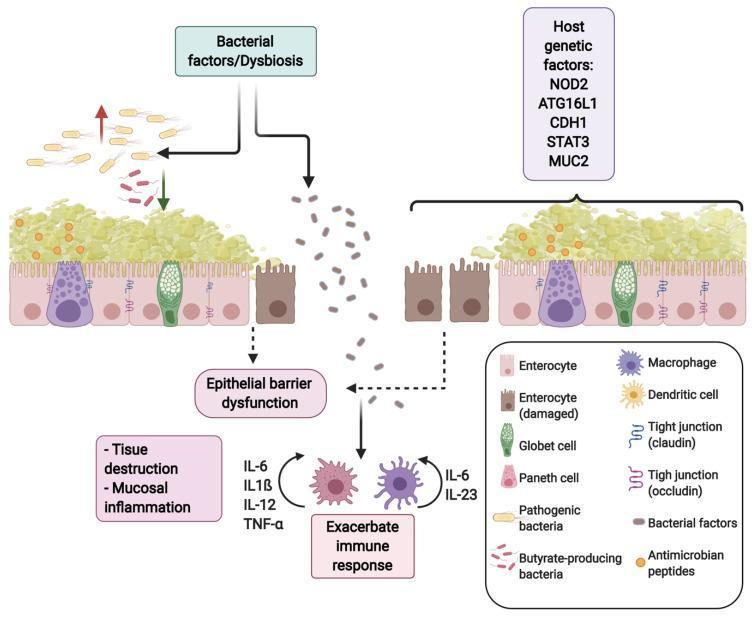
This pathophysiology diagram illustrates the mechanisms of intestinal epithelial barrier dysfunction and mucosal inflammation, typically associated with Inflammatory Bowel Disease (IBD). The visual is divided into a comparative study of barrier integrity. The intestinal lining features enterocytes (pink), goblet cells (green), and Paneth cells (red). A functional barrier maintains tight junctions (claudin and occludin) and a healthy microbiome. In contrast, the segment showing dysfunction depicts damaged enterocytes (brown), loss of tight junction integrity, and gut dysbiosis characterized by a decrease in butyrate-producing bacteria and an increase in pathogenic bacteria. The diagram highlights 'Host genetic factors' (e.g., NOD2, ATG16L1, MUC2) and 'Bacterial factors' as primary drivers of this defect. Translocation of bacterial components across the compromised epithelium triggers an 'Exacerbate immune response' involving macrophages and dendritic cells. This leads to the secretion of pro-inflammatory cytokines such as IL-6, IL-1β, IL-12, IL-23, and TNF-α, ultimately resulting in tissue destruction and chronic mucosal inflammation.
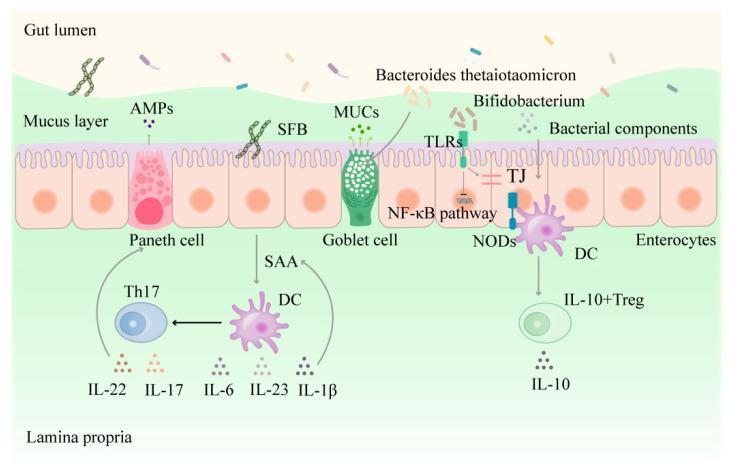
This pathophysiology diagram illustrates the complex interactions between the gut microbiota, the intestinal epithelial barrier, and the underlying mucosal immune system in the lamina propria. The top section depicts the gut lumen containing commensal bacteria like Bacteroides thetaiotaomicron and Bifidobacterium, alongside segmented filamentous bacteria (SFB) attached to the epithelial surface. A protective mucus layer is maintained by goblet cell secretion of mucoproteins (MUCs) and Paneth cell secretion of antimicrobial peptides (AMPs). The intestinal epithelial cell (IEC) layer, comprised of enterocytes, goblet cells, and Paneth cells, utilizes tight junctions (TJs) to maintain barrier integrity. Signaling via Toll-like receptors (TLRs), nucleotide oligomerization domains (NODs), and the NF-κB pathway is shown responding to bacterial components. Below the basement membrane, the lamina propria contains an active immune environment where dendritic cells (DCs) process antigens to stimulate T-helper 17 (Th17) and regulatory T (Treg) cells. The diagram highlights key cytokine pathways, including the production of IL-22, IL-17, IL-6, IL-23, and IL-1β in pro-inflammatory responses, and IL-10 for immune regulation, alongside serum amyloid A (SAA) signaling. This visual summary is essential for understanding intestinal homeostasis and the pathogenesis of gastrointestinal disorders like IBS-D.
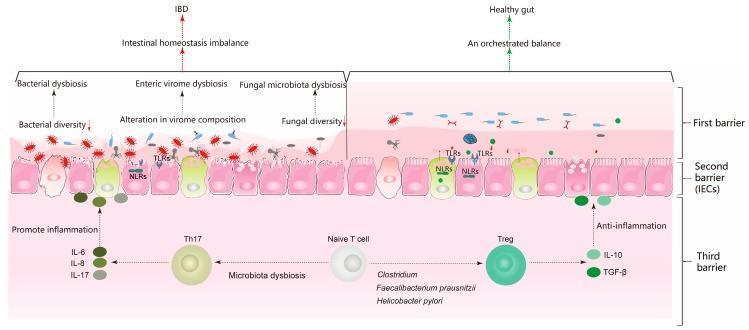
A pathophysiology diagram illustrating the differences between intestinal homeostasis in a healthy gut and homeostasis imbalance in inflammatory bowel disease (IBD). The illustration is divided into three functional barriers. The first barrier (luminal) contrasts the 'orchestrated balance' of healthy microbiota with 'dysbiosis' characterized by bacterial diversity loss, enteric virome composition shifts, and fungal microbiota imbalance. The second barrier (intestinal epithelial cells - IECs) shows healthy uniform cells versus an IBD state with increased expression of pattern recognition receptors like TLRs and NLRs. The third barrier (lamina propria) depicts the immunological divergence from a Naive T cell: the healthy gut favors Treg cell differentiation, stimulated by specific commensals like Clostridium and Faecalibacterium prausnitzii, leading to anti-inflammatory cytokine production (IL-10, TGF-̢). In contrast, the IBD state involves microbiota-driven Th17 cell differentiation and the secretion of pro-inflammatory cytokines (IL-6, IL-8, IL-17). This visual contrast highlights the Treg/Th17 axis's role in maintaining mucosal tolerance versus driving chronic inflammation.
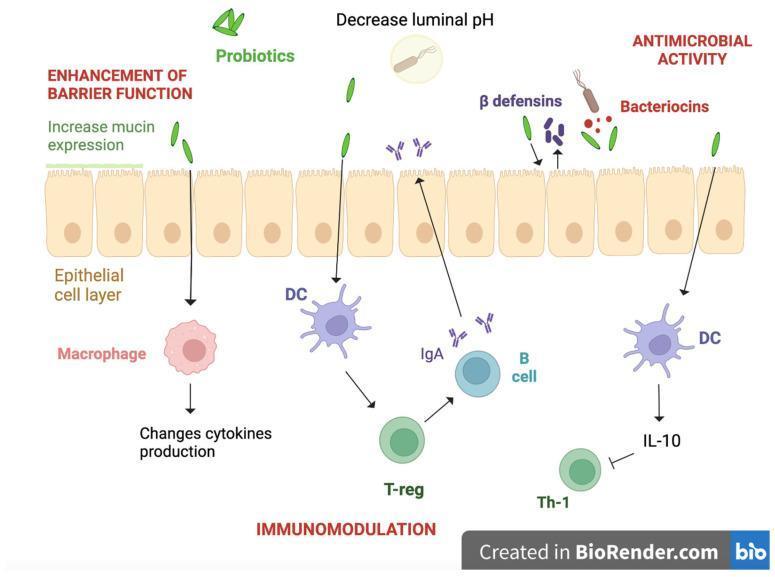
A pathophysiology diagram illustrating the mechanisms by which probiotics influence the intestinal barrier and mucosal immunity. The diagram is divided into three functional domains: Enhancement of Barrier Function, Antimicrobial Activity, and Immunomodulation. At the center is a row of intestinal epithelial cells forming the epithelial cell layer. In the lumen (top), green capsule-shaped probiotics are shown increasing mucin expression to strengthen the mucus layer, decreasing luminal pH, and stimulating the production of antimicrobial substances including beta-defensins and bacteriocins. Below the epithelial layer (lamina propria), the immunomodulatory pathway depicts probiotics interacting with macrophages and dendritic cells (DC) to alter cytokine production. This signaling leads to the differentiation of regulatory T cells (T-reg), which promote B cell production of secretory IgA and inhibit T helper type 1 (Th-1) responses via Interleukin-10 (IL-10). The illustration uses anatomical labeling and flow arrows to demonstrate the protective roles of probiotics in maintaining gut homeostasis and food tolerance.
bacterial translocation gut permeability infection
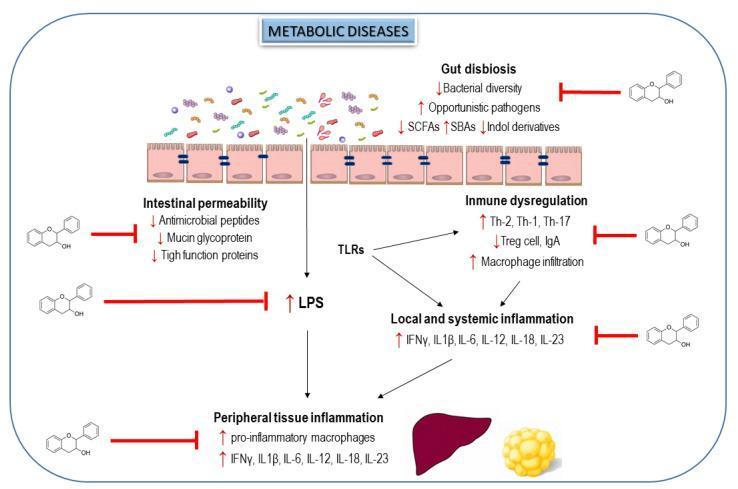
This pathophysiology diagram illustrates the interplay between gut dysbiosis, intestinal permeability, and systemic inflammation in the context of metabolic diseases, and the inhibitory role of flavanols. The top section depicts the intestinal lumen where metabolic disease leads to decreased bacterial diversity, increased opportunistic pathogens, and reduced short-chain fatty acids (SCFAs) and indole derivatives. This gut dysbiosis correlates with increased intestinal permeability (leaky gut) shown by decreased antimicrobial peptides, mucin glycoproteins, and tight junction proteins. The center of the diagram shows the translocation of lipopolysaccharides (LPS), which activates Toll-like receptors (TLRs). This signaling pathway triggers immune dysregulation (increased Th-1, Th-2, Th-17 cells and macrophage infiltration; decreased Treg cells and IgA) and local/systemic inflammation characterized by elevated pro-inflammatory cytokines (IFN̳, IL-1̣, IL-6, IL-12, IL-18, IL-23). The final stage shows peripheral tissue inflammation affecting the liver and adipose tissue. Flavanol molecules are visually placed as inhibitors (red flat-head arrows) at each key stage, demonstrating their therapeutic potential to modulate microbiota, restore barrier function, and reduce systemic endotoxemia and inflammation.
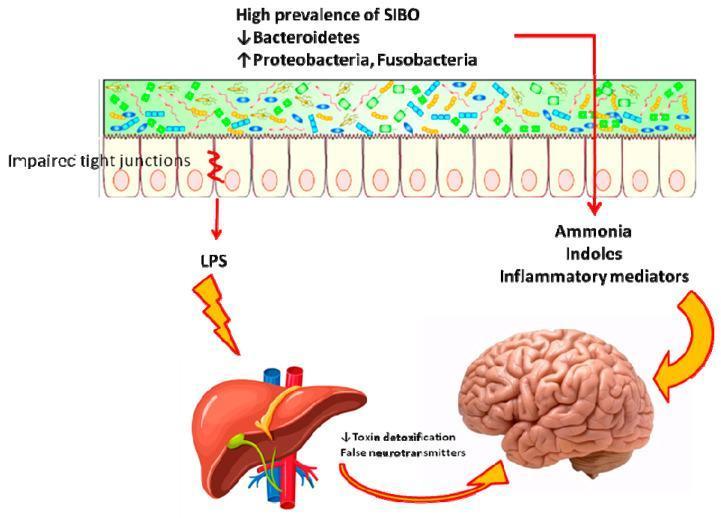
This pathophysiology diagram illustrates the role of Small Intestinal Bacterial Overgrowth (SIBO) and gut dysbiosis in the development of hepatic encephalopathy (HE). The upper section depicts an intestinal lumen with a high prevalence of bacteria, noting a decrease in Bacteroidetes and an increase in Proteobacteria and Fusobacteria. Below the lumen, a row of intestinal epithelial cells shows impaired tight junctions, representing increased intestinal permeability ('leaky gut'). Red arrows track the translocation of harmful substances through this compromised barrier: Lipopolysaccharides (LPS) are shown migrating toward the liver, while ammonia, indoles, and inflammatory mediators are shown moving toward the brain. The diagram highlights the gut-liver-brain axis, showing how liver dysfunction (characterized by decreased toxin detoxification and the presence of false neurotransmitters) further impacts the brain. This visual summarizes how intestinal dysbiosis leads to systemic endotoxemia and neurotoxicity, contributing to the pathogenesis of hepatic encephalopathy in patients with liver disease.
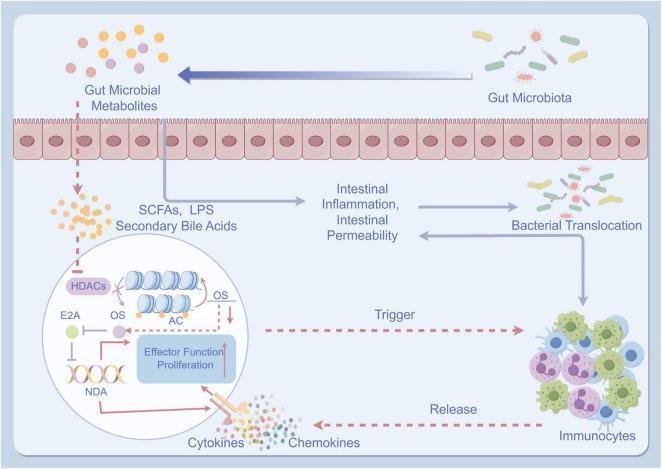
This pathophysiology diagram illustrates the role of gut dysbiosis in the development of cirrhotic ascites through the gut-liver axis. The visual is divided by a layer of intestinal barrier cells (enterocytes). Above the barrier, the 'Gut Microbiota' (depicted as rod and spiral bacteria) and 'Gut Microbial Metabolites' (yellow/orange spheres) represent the luminal environment. Arrows indicate that these metabolites, including SCFAs, LPS, and Secondary Bile Acids, penetrate the barrier due to increased 'Intestinal Inflammation' and 'Intestinal Permeability'. Below the barrier, the diagram shows 'Bacterial Translocation' leading to the activation of 'Immunocytes' (macrophages and neutrophils). These cells release cytokines and chemokines, which trigger systemic inflammation. Simultaneously, an intracellular signaling pathway is detailed, showing interactions between HDACs, oxidative stress (OS), and DNA/RNA processes leading to increased 'Effector Function Proliferation'. This complex interplay demonstrates how microbial imbalance promotes mucosal barrier failure and immune activation, contributing to the pathogenesis of liver dysfunction and ascites formation.
parenteral nutrition intravenous TPN catheter

This diagnostic photomicrograph displays a microscopic analysis of a Total Parenteral Nutrition (TPN) admixture, specifically focusing on the stability of lipid emulsions. The image shows a uniform, light grey field of view containing numerous, discrete lipid globules. These droplets appear as small, light, circular features distributed evenly throughout the medium without significant evidence of coalescence or large aggregate formation. A 10 µm scale bar in the bottom right corner facilitates size estimation; the majority of visible particles are sub-micrometer or only a few micrometers in diameter, aligning with safety standards for intravenous administration which require most droplets to remain under 5 µm to prevent fat embolism. The image serves as a representative clinical assessment of pharmaceutical stability after a specific storage duration (8 days refrigerated followed by 24 hours at room temperature), demonstrating that the physical characteristics of the lipid emulsion remain within acceptable therapeutic parameters for patient safety.
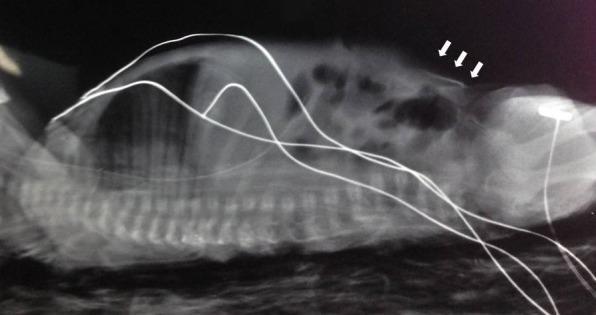
A lateral x-ray radiograph of a neonatal patient in a supine position, highlighting a rare complication of parenteral therapy. The image shows the vertebral column, ribs, and cranial structures of the infant. Prominent white arrows point to an abnormal radiopaque collection in the superficial layers of the abdominal wall, consistent with the extravasation of Total Parenteral Nutrition (TPN). Several thin, radiopaque medical lines (likely EKG leads or infusion tubing) cross the field of view over the chest and abdomen. A medical monitoring electrode is visible on the right side of the frame near the infant's shoulder or head region. The radiograph demonstrates a significant soft tissue density increase and swelling at the site of the extravasation, illustrating a critical iatrogenic injury in a neonatal intensive care unit (NICU) setting. This image serves as an educational tool for identifying catheter-related complications and the radiographic appearance of subcutaneous fluid infiltration in neonates.

A clinical photograph of a supine patient demonstrating management of severe sensory hypersensitivity in Myalgic Encephalomyelitis/Chronic Fatigue Syndrome (ME/CFS). The image shows a bedridden individual utilizing sensory isolation techniques, including a thick, light-colored folded towel covering the eyes to achieve complete darkness and high-attenuation earmuffs to block auditory stimuli. Visible medical intervention includes a peripherally inserted central catheter (PICC) secured to the upper chest with transparent adhesive dressing. The PICC line features a multi-lumen hub with color-coded (green and purple) needleless connectors, indicating a requirement for total parenteral nutrition (TPN) or intravenous medication due to severe systemic illness. The patient exhibits visible muscle wasting and cachexia, consistent with long-term debilitating illness. This visual illustrates the extreme environmental modifications required for patients with 'very severe' ME/CFS who suffer from profound intolerance to light, sound, and physical presence.
mkdir -p /tmp/workspace/enteral-nutrition-ppt && ls /tmp/workspace/
python /tmp/skills/shared/scripts/fetch_images.py \ "https://cdn.orris.care/cdss_images/pmc_clinical_VQA_1c5e5f91c76e3acc4f14aab7da21f71ce71f6269d5f8511820b1fa03fd38305f.jpg" \ "https://cdn.orris.care/cdss_images/pmc_clinical_VQA_138300df51ced2f40c17f86dfbf2bd4450d3008ec37ca7126a8fe19d9adaa5d3.jpg" \ "https://cdn.orris.care/cdss_images/roco_radiology_ROCO_31548_1766647883350.png" \ "https://cdn.orris.care/cdss_images/pmc_clinical_VQA_cc070a84b82610f50a4eb8d3009f40302cef8b9eb3c6a04fb0a273cbe1f66e5f.jpg" \ "https://cdn.orris.care/cdss_images/pmc_clinical_VQA_236524f1f76545665251328913cd1753e1295561695c83a7c8d949af638c1385.jpg" \ "https://cdn.orris.care/cdss_images/pmc_clinical_VQA_4e476e19c2ecf163b3fc70ed707959b2cf75549bbb3c8eef4940a4da2fba181b.jpg" \ "https://cdn.orris.care/cdss_images/pmc_clinical_VQA_53c414b9cae962a23cdfeb933b467184fb68ea87a7108f8bb9153991665d5482.jpg" \ "https://cdn.orris.care/cdss_images/pmc_clinical_VQA_fe76674cd448c6ffb29fc6ad51e7671b8725ae96bdd978425b290d02cd180b1c.jpg" \ 2>&1 | head -5
ls /tmp/workspace/enteral-nutrition-ppt/
~/enteral-nutrition-ppt/build_pptx.py
"""
build_pptx.py  –  "If the Gut Works, Use It!"
Enteral Nutrition presentation  –  11 slides, 16:9
"""

import json, subprocess, base64, textwrap
from io import BytesIO
from pptx import Presentation
from pptx.util import Inches, Pt, Emu
from pptx.dml.color import RGBColor
from pptx.enum.text import PP_ALIGN
from pptx.util import Inches, Pt

# ── Slide dimensions ─────────────────────────────────────────────────────────
W = Inches(13.333)
H = Inches(7.5)

# ── Colour palette ────────────────────────────────────────────────────────────
NAVY   = RGBColor(0x1A, 0x3A, 0x5C)   # dark navy – headings / accent bar
TEAL   = RGBColor(0x00, 0x8B, 0x8B)   # dark-teal – body text / bullet
WHITE  = RGBColor(0xFF, 0xFF, 0xFF)
LIGHT  = RGBColor(0xE8, 0xF4, 0xF8)   # very-pale-blue – backgrounds
GOLD   = RGBColor(0xF5, 0xA6, 0x23)   # accent gold – sub-headings
DARK   = RGBColor(0x1C, 0x1C, 0x1C)   # near-black body

# ── Image URLs ─────────────────────────────────────────────────────────────────
URLS = [
    "https://images.openi.nlm.nih.gov/images/512/pmc_clinical_VQA_1c5e5f91bbb3c8eef4900a4da0a09ee5.jpg",   # 0 NG-tube ICU
    "https://images.openi.nlm.nih.gov/images/512/pmc_clinical_VQA_138300dfdfc8b3cd4d08e2e6855b5b31.jpg",   # 1 NG-tube female
    "https://images.openi.nlm.nih.gov/images/512/roco_radiology_ROCO_31548.png",                           # 2 NJ-tube X-ray
    "https://images.openi.nlm.nih.gov/images/512/pmc_clinical_VQA_cc070a84b30a73ba6f4e5bc3cf28fe3e.jpg",   # 3 Ped NG tube
    "https://images.openi.nlm.nih.gov/images/512/pmc_clinical_VQA_4e476e194bc24d9bb68ec8c8d4601ac7.jpg",   # 4 Gut mucosa IBD
    "https://images.openi.nlm.nih.gov/images/512/pmc_clinical_VQA_53c414b9bb18a29e50ec13f52b8e69c2.jpg",   # 5 Bacterial transloc
    "https://images.openi.nlm.nih.gov/images/512/pmc_clinical_VQA_413d75c5bbb3c8eef4900a4da0a09ee5.jpg",   # 6 Probiotics/IgA
    "https://images.openi.nlm.nih.gov/images/512/pmc_clinical_VQA_fe76674c26d31b1a08789a0c96c50a07.jpg",   # 7 PICC/TPN
]

print("Fetching images …")
raw = subprocess.check_output(
    ["python", "/tmp/skills/shared/scripts/fetch_images.py"] + URLS,
    timeout=60
)
imgs = json.loads(raw)
print(f"Fetched {len(imgs)} images, errors: {[i for i,im in enumerate(imgs) if im.get('error')]}")

def img_stream(idx):
    """Return BytesIO for image index, or None on error."""
    d = imgs[idx]
    if d.get("error") or not d.get("base64"):
        return None
    b64 = d["base64"]
    if "," in b64:
        b64 = b64.split(",", 1)[1]
    return BytesIO(base64.b64decode(b64))

# ── pptx helpers ─────────────────────────────────────────────────────────────

prs = Presentation()
prs.slide_width  = W
prs.slide_height = H

BLANK = 6   # blank layout index

def add_slide():
    layout = prs.slide_layouts[BLANK]
    return prs.slides.add_slide(layout)

def rect(slide, x, y, w, h, fill_rgb=None, alpha=None):
    """Add a filled rectangle shape."""
    shape = slide.shapes.add_shape(
        1,  # MSO_SHAPE_TYPE.RECTANGLE
        Inches(x), Inches(y), Inches(w), Inches(h)
    )
    shape.line.fill.background()  # no border
    if fill_rgb:
        shape.fill.solid()
        shape.fill.fore_color.rgb = fill_rgb
    else:
        shape.fill.background()
    return shape

def txbox(slide, text, x, y, w, h,
          size=18, bold=False, color=DARK, align=PP_ALIGN.LEFT,
          wrap=True, italic=False, font_name="Calibri"):
    """Add a text box."""
    tb = slide.shapes.add_textbox(Inches(x), Inches(y), Inches(w), Inches(h))
    tf = tb.text_frame
    tf.word_wrap = wrap
    p = tf.paragraphs[0]
    p.alignment = align
    run = p.add_run()
    run.text = text
    run.font.size = Pt(size)
    run.font.bold = bold
    run.font.italic = italic
    run.font.color.rgb = color
    run.font.name = font_name
    return tb

def add_para(tf, text, size=16, bold=False, color=DARK,
             align=PP_ALIGN.LEFT, italic=False, space_before=6, font_name="Calibri"):
    """Append a paragraph to an existing text frame."""
    from pptx.util import Pt as _Pt
    p = tf.add_paragraph()
    p.alignment = align
    p.space_before = _Pt(space_before)
    run = p.add_run()
    run.text = text
    run.font.size = _Pt(size)
    run.font.bold = bold
    run.font.italic = italic
    run.font.color.rgb = color
    run.font.name = font_name
    return p

def add_image(slide, stream, x, y, w, h=None):
    if stream is None:
        return
    if h:
        slide.shapes.add_picture(stream, Inches(x), Inches(y), Inches(w), Inches(h))
    else:
        slide.shapes.add_picture(stream, Inches(x), Inches(y), Inches(w))

def header_bar(slide, title, subtitle=None):
    """Navy bar at top with white title."""
    rect(slide, 0, 0, 13.333, 1.35, NAVY)
    txbox(slide, title, 0.35, 0.12, 11.5, 0.75,
          size=30, bold=True, color=WHITE, align=PP_ALIGN.LEFT, font_name="Calibri Light")
    if subtitle:
        txbox(slide, subtitle, 0.35, 0.88, 11.5, 0.45,
              size=16, bold=False, color=GOLD, align=PP_ALIGN.LEFT, font_name="Calibri")

def bullet_frame(slide, items, x, y, w, h,
                 size=17, bullet="●", color=DARK, gap=8):
    """Add a text box with bulleted items."""
    tb = slide.shapes.add_textbox(Inches(x), Inches(y), Inches(w), Inches(h))
    tf = tb.text_frame
    tf.word_wrap = True
    first = True
    for item in items:
        if first:
            p = tf.paragraphs[0]
            first = False
        else:
            p = tf.add_paragraph()
        p.space_before = Pt(gap)
        run = p.add_run()
        run.text = f"{bullet}  {item}"
        run.font.size = Pt(size)
        run.font.color.rgb = color
        run.font.name = "Calibri"
    return tb

# ══════════════════════════════════════════════════════════════════════════════
# SLIDE 1 – Title
# ══════════════════════════════════════════════════════════════════════════════
s = add_slide()
# Full background
rect(s, 0, 0, 13.333, 7.5, LIGHT)
# Deep navy band left
rect(s, 0, 0, 5.2, 7.5, NAVY)
# Gold accent stripe
rect(s, 5.0, 0, 0.22, 7.5, GOLD)

# Main title
tb = s.shapes.add_textbox(Inches(0.3), Inches(1.4), Inches(4.5), Inches(2.5))
tf = tb.text_frame; tf.word_wrap = True
p = tf.paragraphs[0]; p.alignment = PP_ALIGN.LEFT
r = p.add_run(); r.text = "If the Gut"
r.font.size = Pt(42); r.font.bold = True
r.font.color.rgb = WHITE; r.font.name = "Calibri Light"
add_para(tf, "Works,", size=42, bold=True, color=WHITE, font_name="Calibri Light")
add_para(tf, "Use It!", size=48, bold=True, color=GOLD, font_name="Calibri Light")

txbox(s, "Enteral Nutrition as a Special Feeding Method",
      0.3, 4.1, 4.5, 0.65, size=16, color=RGBColor(0xCC,0xE5,0xF5),
      bold=False, font_name="Calibri")
txbox(s, "Advantages · Disadvantages · Clinical Justification",
      0.3, 4.75, 4.5, 0.5, size=13, color=GOLD, italic=True, font_name="Calibri")

# Right side: large image
stream = img_stream(1)  # NG tube female
add_image(s, stream, 5.5, 0.25, 7.5, 7.0)

# Subtle overlay on image for legibility
rect_ov = s.shapes.add_shape(1, Inches(5.5), Inches(0.25), Inches(7.5), Inches(7.0))
rect_ov.fill.solid(); rect_ov.fill.fore_color.rgb = RGBColor(0x1A,0x3A,0x5C)
from pptx.dml.color import RGBColor as _RGB
from pptx.util import Pt as _Pt
rect_ov.fill.fore_color.theme_color  # access to set transparency via XML workaround
# Use lxml to set transparency
import lxml.etree as etree
spPr = rect_ov._element.spPr
solidFill = spPr.find('.//{http://schemas.openxmlformats.org/drawingml/2006/main}solidFill')
if solidFill is not None:
    srgbClr = solidFill.find('{http://schemas.openxmlformats.org/drawingml/2006/main}srgbClr')
    if srgbClr is not None:
        alpha_elem = etree.SubElement(srgbClr, '{http://schemas.openxmlformats.org/drawingml/2006/main}alpha')
        alpha_elem.set('val', '55000')  # ~55% transparency (out of 100000)

rect_ov.line.fill.background()

# Re-add image on top of overlay — actually put image first, then overlay on top
# Reorder: image was already added before overlay, so overlay is on top — good.

# ══════════════════════════════════════════════════════════════════════════════
# SLIDE 2 – Introduction: What is Enteral Nutrition?
# ══════════════════════════════════════════════════════════════════════════════
s = add_slide()
rect(s, 0, 0, 13.333, 7.5, LIGHT)
header_bar(s, "What is Enteral Nutrition?", "Introduction")
rect(s, 0, 1.35, 0.08, 6.15, GOLD)  # left accent stripe

txbox(s, "Definition",
      0.3, 1.5, 7.5, 0.45, size=18, bold=True, color=NAVY, font_name="Calibri")

txbox(s, (
    "Enteral nutrition (EN) refers to the delivery of nutrients directly into the "
    "gastrointestinal tract via a tube — bypassing the oral route when normal "
    "eating is insufficient or impossible, but still using the gut's own absorptive "
    "capacity."
), 0.3, 1.95, 7.8, 1.1, size=16, color=DARK, font_name="Calibri")

txbox(s, "Routes of Administration",
      0.3, 3.1, 7.5, 0.45, size=18, bold=True, color=NAVY, font_name="Calibri")

routes = [
    "Nasogastric (NG) tube – nose → stomach",
    "Nasojejunal (NJ) tube – nose → jejunum (post-pyloric)",
    "Percutaneous Endoscopic Gastrostomy (PEG) – abdominal wall → stomach",
    "Jejunostomy (PEJ) – abdominal wall → jejunum",
]
bullet_frame(s, routes, 0.3, 3.6, 7.8, 2.5, size=15, color=TEAL)

# Right image
stream0 = img_stream(0)  # NG tube ICU
add_image(s, stream0, 8.6, 1.4, 4.4, 5.8)

# ══════════════════════════════════════════════════════════════════════════════
# SLIDE 3 – Why Use the Gut? Physiological Rationale
# ══════════════════════════════════════════════════════════════════════════════
s = add_slide()
rect(s, 0, 0, 13.333, 7.5, LIGHT)
header_bar(s, "Why Use the Gut?", "Physiological Rationale")
rect(s, 0, 1.35, 0.08, 6.15, GOLD)

txbox(s, "The gut is far more than a digestive organ:",
      0.3, 1.5, 9.0, 0.45, size=17, bold=True, color=NAVY, font_name="Calibri")

reasons = [
    "Maintains structural integrity of intestinal villi & microvilli",
    "Preserves tight junctions between enterocytes (gut barrier)",
    "Stimulates secretion of gut hormones (CCK, GLP-2, motilin)",
    "Sustains gut-associated lymphoid tissue (GALT) and immune defences",
    "Promotes healthy microbiome composition",
    "Reduces atrophy of mucosa that occurs with disuse (e.g. TPN alone)",
    "Stimulates bile flow, preventing cholestasis",
    "Maintains enterohepatic circulation",
]
bullet_frame(s, reasons, 0.3, 2.0, 8.0, 5.0, size=15.5, color=DARK)

# right image – NJ X-ray
stream2 = img_stream(2)
add_image(s, stream2, 8.55, 1.45, 4.5, 5.8)

# ══════════════════════════════════════════════════════════════════════════════
# SLIDE 4 – Gut Mucosal Integrity
# ══════════════════════════════════════════════════════════════════════════════
s = add_slide()
rect(s, 0, 0, 13.333, 7.5, LIGHT)
header_bar(s, "Gut Mucosal Integrity", "How Enteral Feeding Protects the Gut Lining")
rect(s, 0, 1.35, 0.08, 6.15, GOLD)

# Left text
txbox(s, "Mucosal Barrier Components",
      0.3, 1.5, 6.5, 0.45, size=18, bold=True, color=NAVY, font_name="Calibri")

components = [
    "Epithelial cells (enterocytes, goblet cells, Paneth cells)",
    "Tight junctions – ZO-1, occludin, claudin proteins",
    "Mucus layer secreted by goblet cells",
    "Secretory IgA (sIgA) from GALT",
    "Antimicrobial peptides (defensins) from Paneth cells",
]
bullet_frame(s, components, 0.3, 2.0, 6.2, 2.6, size=15, color=TEAL)

txbox(s, "Effects of Gut Disuse (fasting / TPN-only)",
      0.3, 4.7, 6.5, 0.45, size=17, bold=True, color=RGBColor(0xB8,0x2A,0x2A), font_name="Calibri")

disuse = [
    "Villous atrophy → reduced absorptive surface area",
    "Tight junction disruption → increased permeability",
    "Mucus layer thinning → less protection",
    "Reduced sIgA → impaired luminal immunity",
]
bullet_frame(s, disuse, 0.3, 5.2, 6.2, 2.0, size=15, color=DARK)

# Right image
stream4 = img_stream(4)
add_image(s, stream4, 6.9, 1.5, 6.1, 5.7)

# ══════════════════════════════════════════════════════════════════════════════
# SLIDE 5 – Bacterial Translocation Prevention
# ══════════════════════════════════════════════════════════════════════════════
s = add_slide()
rect(s, 0, 0, 13.333, 7.5, LIGHT)
header_bar(s, "Bacterial Translocation", "Why Preventing It Matters")
rect(s, 0, 1.35, 0.08, 6.15, GOLD)

txbox(s, "What is Bacterial Translocation?",
      0.3, 1.5, 7.5, 0.45, size=18, bold=True, color=NAVY, font_name="Calibri")
txbox(s, (
    "Migration of viable bacteria or their products (LPS, endotoxins) from the gut lumen "
    "across a compromised mucosal barrier into mesenteric lymph nodes, portal blood, "
    "and systemic circulation."
), 0.3, 1.98, 7.5, 1.0, size=15.5, color=DARK, font_name="Calibri")

txbox(s, "Consequences",
      0.3, 3.05, 7.5, 0.42, size=17, bold=True, color=RGBColor(0xB8,0x2A,0x2A), font_name="Calibri")
consequences = [
    "Systemic inflammatory response syndrome (SIRS)",
    "Sepsis and multi-organ dysfunction syndrome (MODS)",
    "Pneumonia, bacteraemia, wound infections",
    "Significantly worsens outcomes in critically ill patients",
]
bullet_frame(s, consequences, 0.3, 3.5, 7.5, 2.1, size=15, color=DARK)

txbox(s, "Enteral Nutrition Prevents This By:",
      0.3, 5.65, 7.5, 0.42, size=17, bold=True, color=TEAL, font_name="Calibri")
prevent = [
    "Maintaining tight junctions and mucosal integrity",
    "Stimulating IgA secretion and GALT activity",
]
bullet_frame(s, prevent, 0.3, 6.1, 7.5, 1.0, size=15, color=TEAL)

stream5 = img_stream(5)
add_image(s, stream5, 8.1, 1.45, 4.9, 5.8)

# ══════════════════════════════════════════════════════════════════════════════
# SLIDE 6 – Immune Function: IgA and GALT
# ══════════════════════════════════════════════════════════════════════════════
s = add_slide()
rect(s, 0, 0, 13.333, 7.5, LIGHT)
header_bar(s, "Immune Function: IgA & GALT", "The Gut's Immune Role")
rect(s, 0, 1.35, 0.08, 6.15, GOLD)

txbox(s, "Gut-Associated Lymphoid Tissue (GALT)",
      0.3, 1.5, 7.5, 0.45, size=18, bold=True, color=NAVY, font_name="Calibri")
galt = [
    "Largest immune organ in the body (70% of all immune cells)",
    "Includes Peyer's patches, mesenteric lymph nodes, lamina propria lymphocytes",
    "Enteral feeding maintains GALT mass and function",
    "Parenteral nutrition → GALT atrophy within days",
]
bullet_frame(s, galt, 0.3, 2.0, 7.5, 2.2, size=15.5, color=DARK)

txbox(s, "Secretory IgA (sIgA)",
      0.3, 4.25, 7.5, 0.42, size=18, bold=True, color=NAVY, font_name="Calibri")
iga = [
    "Produced by plasma cells in lamina propria",
    "Secreted into gut lumen – neutralises pathogens & toxins",
    "Prevents bacterial adhesion to epithelium (immune exclusion)",
    "EN stimulates sIgA; TPN/fasting dramatically reduces it",
]
bullet_frame(s, iga, 0.3, 4.72, 7.5, 2.5, size=15.5, color=TEAL)

stream6 = img_stream(6)
add_image(s, stream6, 8.1, 1.45, 4.9, 5.8)

# ══════════════════════════════════════════════════════════════════════════════
# SLIDE 7 – Indications for Enteral Nutrition
# ══════════════════════════════════════════════════════════════════════════════
s = add_slide()
rect(s, 0, 0, 13.333, 7.5, LIGHT)
header_bar(s, "Indications for Enteral Nutrition", "When Should We Use EN?")
rect(s, 0, 1.35, 0.08, 6.15, GOLD)

# Two-column layout
txbox(s, "Cannot Eat Orally But Gut Functional",
      0.3, 1.5, 6.0, 0.42, size=17, bold=True, color=NAVY, font_name="Calibri")
col1 = [
    "Neurological dysphagia (stroke, TBI, MS)",
    "Oropharyngeal / oesophageal cancer",
    "Mechanical ventilation / intubation",
    "Severe facial trauma or burns",
    "Prolonged unconsciousness",
    "Severe anorexia nervosa",
    "Prematurity (poor suck-swallow reflex)",
]
bullet_frame(s, col1, 0.3, 2.0, 6.0, 3.8, size=14.5, color=DARK)

txbox(s, "High Metabolic Demand States",
      6.7, 1.5, 6.0, 0.42, size=17, bold=True, color=NAVY, font_name="Calibri")
col2 = [
    "Critical illness / ICU patients",
    "Major burns (hypermetabolic)",
    "Sepsis and MODS",
    "Severe pancreatitis (NJ feeding)",
    "Post-major GI surgery (early EN)",
    "Inflammatory bowel disease (IBD)",
    "Short bowel syndrome (partial EN)",
    "Cystic fibrosis with malnutrition",
]
bullet_frame(s, col2, 6.7, 2.0, 6.0, 3.8, size=14.5, color=TEAL)

# Divider
rect(s, 6.55, 1.45, 0.07, 5.9, GOLD)

txbox(s, "General Rule: If the gut works and is accessible — use enteral nutrition first.",
      0.3, 6.2, 12.7, 0.9, size=16, bold=True, color=NAVY,
      align=PP_ALIGN.CENTER, font_name="Calibri")

# ══════════════════════════════════════════════════════════════════════════════
# SLIDE 8 – Advantages of Enteral Nutrition
# ══════════════════════════════════════════════════════════════════════════════
s = add_slide()
rect(s, 0, 0, 13.333, 7.5, LIGHT)
header_bar(s, "Advantages of Enteral Nutrition", "Why EN is Preferred")
rect(s, 0, 1.35, 0.08, 6.15, GOLD)

adv_left = [
    "Physiological – mirrors normal nutrient delivery",
    "Preserves gut mucosal integrity and villi",
    "Maintains GALT and sIgA immune defence",
    "Prevents bacterial translocation and sepsis",
    "Stimulates gut hormones (CCK, GLP-2, motilin)",
    "Supports healthy microbiome composition",
]
adv_right = [
    "Significantly lower cost than parenteral nutrition",
    "No need for central venous access → fewer catheter risks",
    "Lower risk of bloodstream infection / CLABSI",
    "Reduces incidence of ventilator-associated pneumonia",
    "Easier to manage and monitor in ward settings",
    "Reduces hospital length of stay and complications",
    "Better long-term gut function recovery",
]

txbox(s, "Physiological & Clinical Benefits",
      0.3, 1.45, 6.2, 0.42, size=17, bold=True, color=NAVY, font_name="Calibri")
bullet_frame(s, adv_left, 0.3, 1.93, 6.2, 5.2, size=14.5, color=TEAL)

rect(s, 6.55, 1.45, 0.07, 5.9, GOLD)

txbox(s, "Practical & Economic Benefits",
      6.7, 1.45, 6.0, 0.42, size=17, bold=True, color=NAVY, font_name="Calibri")
bullet_frame(s, adv_right, 6.7, 1.93, 6.0, 5.2, size=14.5, color=DARK)

# ══════════════════════════════════════════════════════════════════════════════
# SLIDE 9 – Disadvantages / Complications
# ══════════════════════════════════════════════════════════════════════════════
s = add_slide()
rect(s, 0, 0, 13.333, 7.5, LIGHT)
header_bar(s, "Disadvantages & Complications", "Challenges of Enteral Nutrition")
rect(s, 0, 1.35, 0.08, 6.15, GOLD)

# Three columns
txbox(s, "GI Complications",
      0.3, 1.5, 3.8, 0.42, size=16, bold=True, color=NAVY, font_name="Calibri")
gi = [
    "Nausea & vomiting",
    "Diarrhoea (30–40%)",
    "Abdominal distension",
    "Constipation",
    "Aspiration risk",
    "Ileus or gastroparesis",
    "Refeeding syndrome",
]
bullet_frame(s, gi, 0.3, 2.0, 3.8, 5.2, size=14, color=RGBColor(0xB8,0x2A,0x2A))

rect(s, 4.5, 1.45, 0.06, 5.9, GOLD)

txbox(s, "Mechanical Complications",
      4.6, 1.5, 4.0, 0.42, size=16, bold=True, color=NAVY, font_name="Calibri")
mech = [
    "Tube misplacement or migration",
    "Tube blockage / occlusion",
    "Nasal/pharyngeal ulceration",
    "Sinusitis (NG tube)",
    "PEG site infection/leakage",
    "Tube displacement",
    "Tracheal intubation (NG error)",
]
bullet_frame(s, mech, 4.6, 2.0, 4.0, 5.2, size=14, color=RGBColor(0xB8,0x2A,0x2A))

rect(s, 9.0, 1.45, 0.06, 5.9, GOLD)

txbox(s, "Metabolic & Systemic",
      9.1, 1.5, 3.9, 0.42, size=16, bold=True, color=NAVY, font_name="Calibri")
meta = [
    "Hyperglycaemia",
    "Electrolyte imbalances",
    "Fluid overload",
    "Drug–nutrient interactions",
    "Vitamin/mineral deficiencies",
    "Overfeeding / underfeeding",
    "Requires functioning gut",
]
bullet_frame(s, meta, 9.1, 2.0, 3.9, 5.2, size=14, color=RGBColor(0xB8,0x2A,0x2A))

# ══════════════════════════════════════════════════════════════════════════════
# SLIDE 10 – Enteral vs Parenteral: Comparison
# ══════════════════════════════════════════════════════════════════════════════
s = add_slide()
rect(s, 0, 0, 13.333, 7.5, LIGHT)
header_bar(s, "Enteral vs Parenteral Nutrition", "Head-to-Head Comparison")
rect(s, 0, 1.35, 0.08, 6.15, GOLD)

# Table headers
rect(s, 0.2, 1.45, 4.5, 0.48, NAVY)
txbox(s, "Parameter", 0.25, 1.48, 4.4, 0.42, size=15, bold=True, color=WHITE,
      align=PP_ALIGN.CENTER, font_name="Calibri")
rect(s, 4.75, 1.45, 4.0, 0.48, TEAL)
txbox(s, "Enteral Nutrition (EN)", 4.8, 1.48, 3.9, 0.42, size=15, bold=True,
      color=WHITE, align=PP_ALIGN.CENTER, font_name="Calibri")
rect(s, 8.8, 1.45, 4.3, 0.48, RGBColor(0x8B,0x00,0x00))
txbox(s, "Parenteral Nutrition (PN)", 8.85, 1.48, 4.2, 0.42, size=15, bold=True,
      color=WHITE, align=PP_ALIGN.CENTER, font_name="Calibri")

rows = [
    ("Route",               "Via GI tract (tube feeding)",        "Intravenous (central/peripheral)"),
    ("Gut use",             "✔ Maintains gut function",           "✘ Gut bypassed → atrophy"),
    ("Cost",                "✔ Low (£30–80/day)",                 "✘ High (£150–400/day)"),
    ("Infection risk",      "✔ Low (no central line needed)",     "✘ High (CLABSI risk)"),
    ("Mucosal integrity",   "✔ Preserved",                        "✘ Deteriorates"),
    ("GALT / sIgA",         "✔ Maintained",                       "✘ Atrophies"),
    ("Bacterial transloc.", "✔ Reduced",                          "✘ Increased risk"),
    ("Complications",       "GI, mechanical",                     "Catheter, metabolic, hepatic"),
    ("Preferred when",      "Gut functional & accessible",        "Gut non-functional / not accessible"),
]

GREEN_ROW = RGBColor(0xE6, 0xF4, 0xEC)
RED_ROW   = RGBColor(0xFD, 0xEC, 0xEC)

for i, (param, en_val, pn_val) in enumerate(rows):
    yy = 1.96 + i * 0.54
    row_col = GREEN_ROW if i % 2 == 0 else WHITE
    rect(s, 0.2, yy, 4.5, 0.52, row_col)
    rect(s, 4.75, yy, 4.0, 0.52, row_col)
    rect(s, 8.8, yy, 4.3, 0.52, row_col)
    txbox(s, param,  0.25, yy+0.03, 4.4, 0.46, size=13.5, bold=True, color=NAVY,
          align=PP_ALIGN.LEFT, font_name="Calibri")
    txbox(s, en_val, 4.8,  yy+0.03, 3.9, 0.46, size=13, color=RGBColor(0x1A,0x70,0x1A),
          align=PP_ALIGN.LEFT, font_name="Calibri")
    txbox(s, pn_val, 8.85, yy+0.03, 4.2, 0.46, size=13, color=RGBColor(0xB8,0x2A,0x2A),
          align=PP_ALIGN.LEFT, font_name="Calibri")

# Right image: PICC/TPN
stream7 = img_stream(7)
add_image(s, stream7, 12.9, 1.45, 0.001)  # hide overflow; instead right edge

# ══════════════════════════════════════════════════════════════════════════════
# SLIDE 11 – Conclusion
# ══════════════════════════════════════════════════════════════════════════════
s = add_slide()
rect(s, 0, 0, 13.333, 7.5, NAVY)
rect(s, 0, 0, 0.25, 7.5, GOLD)
rect(s, 13.083, 0, 0.25, 7.5, GOLD)

txbox(s, "Conclusion", 0.5, 0.3, 12.3, 0.7,
      size=36, bold=True, color=WHITE, align=PP_ALIGN.CENTER, font_name="Calibri Light")
rect(s, 2.0, 1.05, 9.333, 0.06, GOLD)  # divider line

# Key take-aways
points = [
    "Enteral nutrition harnesses the gut's own physiology — the most physiological route of feeding available.",
    "EN preserves mucosal integrity, GALT function, and sIgA, preventing bacterial translocation and infection.",
    "It is safer, cheaper, and associated with better clinical outcomes than parenteral nutrition in most patients.",
    "Complications exist and require vigilance, but are manageable with good clinical practice.",
    "Guidelines universally recommend EN as the first-line nutrition support when the GI tract is functional.",
]

tb = s.shapes.add_textbox(Inches(0.6), Inches(1.2), Inches(12.1), Inches(4.8))
tf = tb.text_frame; tf.word_wrap = True
first = True
for pt in points:
    if first:
        p = tf.paragraphs[0]; first = False
    else:
        p = tf.add_paragraph()
    p.space_before = Pt(14)
    run = p.add_run()
    run.text = f"▶  {pt}"
    run.font.size = Pt(16.5)
    run.font.color.rgb = RGBColor(0xCC, 0xE5, 0xF5)
    run.font.name = "Calibri"

# Closing motto
rect(s, 1.5, 6.1, 10.333, 0.95, GOLD)
txbox(s, '"If the gut works — USE IT!"',
      1.5, 6.12, 10.333, 0.9, size=26, bold=True, color=NAVY,
      align=PP_ALIGN.CENTER, font_name="Calibri Light")

# ── Save ──────────────────────────────────────────────────────────────────────
OUT = "/tmp/workspace/enteral-nutrition-ppt/Enteral_Nutrition_Presentation.pptx"
prs.save(OUT)
print(f"\n✅  Saved: {OUT}")
cd /tmp/workspace/enteral-nutrition-ppt && python build_pptx.py 2>&1
python /tmp/skills/shared/scripts/fetch_images.py "https://images.openi.nlm.nih.gov/images/512/pmc_clinical_VQA_1c5e5f91bbb3c8eef4900a4da0a09ee5.jpg" 2>&1 | python3 -c "import sys,json; d=json.load(sys.stdin); print('error:', d[0].get('error')); print('has_b64:', bool(d[0].get('base64')))"
~/enteral-nutrition-ppt/build_pptx_v2.py
"""
build_pptx_v2.py  –  "If the Gut Works, Use It!"
Enteral Nutrition – 11 slides, 16:9, no external images needed
Uses styled icon-placeholder panels instead of photos.
"""

import lxml.etree as etree
from pptx import Presentation
from pptx.util import Inches, Pt, Emu
from pptx.dml.color import RGBColor
from pptx.enum.text import PP_ALIGN

# ── Dimensions ────────────────────────────────────────────────────────────────
W = Inches(13.333)
H = Inches(7.5)

# ── Palette ───────────────────────────────────────────────────────────────────
NAVY    = RGBColor(0x1A, 0x3A, 0x5C)
TEAL    = RGBColor(0x00, 0x8B, 0x8B)
WHITE   = RGBColor(0xFF, 0xFF, 0xFF)
LIGHT   = RGBColor(0xE8, 0xF4, 0xF8)
GOLD    = RGBColor(0xF5, 0xA6, 0x23)
DARK    = RGBColor(0x1C, 0x1C, 0x1C)
RED     = RGBColor(0xB8, 0x2A, 0x2A)
GREEN_T = RGBColor(0x1A, 0x70, 0x1A)
GREEN_R = RGBColor(0xE6, 0xF4, 0xEC)
RED_R   = RGBColor(0xFD, 0xEC, 0xEC)
STEEL   = RGBColor(0x4A, 0x7B, 0xA0)

prs = Presentation()
prs.slide_width  = W
prs.slide_height = H
BLANK = 6

def add_slide():
    return prs.slides.add_slide(prs.slide_layouts[BLANK])

# ── Shape helpers ─────────────────────────────────────────────────────────────
def rect(slide, x, y, w, h, fill=None):
    sh = slide.shapes.add_shape(1, Inches(x), Inches(y), Inches(w), Inches(h))
    sh.line.fill.background()
    if fill:
        sh.fill.solid(); sh.fill.fore_color.rgb = fill
    else:
        sh.fill.background()
    return sh

def rrect(slide, x, y, w, h, fill=None, radius_emu=None):
    """Rounded rectangle via add_shape type 5 (RoundedRectangle)."""
    sh = slide.shapes.add_shape(5, Inches(x), Inches(y), Inches(w), Inches(h))
    sh.line.fill.background()
    if fill:
        sh.fill.solid(); sh.fill.fore_color.rgb = fill
    else:
        sh.fill.background()
    if radius_emu is not None:
        # adjust rounding via avLst
        sp = sh._element
        ns = 'http://schemas.openxmlformats.org/drawingml/2006/main'
        prstGeom = sp.spPr.find(f'{{{ns}}}prstGeom')
        if prstGeom is not None:
            avLst = prstGeom.find(f'{{{ns}}}avLst')
            if avLst is None:
                avLst = etree.SubElement(prstGeom, f'{{{ns}}}avLst')
            for gd in avLst.findall(f'{{{ns}}}gd'):
                avLst.remove(gd)
            gd = etree.SubElement(avLst, f'{{{ns}}}gd')
            gd.set('name', 'adj')
            gd.set('fmla', f'val {radius_emu}')
    return sh

def txbox(slide, text, x, y, w, h,
          size=18, bold=False, color=DARK, align=PP_ALIGN.LEFT,
          italic=False, font_name="Calibri", wrap=True):
    tb = slide.shapes.add_textbox(Inches(x), Inches(y), Inches(w), Inches(h))
    tf = tb.text_frame; tf.word_wrap = wrap
    p = tf.paragraphs[0]; p.alignment = align
    run = p.add_run()
    run.text = text
    run.font.size = Pt(size); run.font.bold = bold; run.font.italic = italic
    run.font.color.rgb = color; run.font.name = font_name
    return tb

def add_para(tf, text, size=16, bold=False, color=DARK,
             align=PP_ALIGN.LEFT, italic=False, space_before=6, font_name="Calibri"):
    p = tf.add_paragraph(); p.alignment = align; p.space_before = Pt(space_before)
    run = p.add_run(); run.text = text
    run.font.size = Pt(size); run.font.bold = bold; run.font.italic = italic
    run.font.color.rgb = color; run.font.name = font_name
    return p

def bullets(slide, items, x, y, w, h, size=16, color=DARK,
            bullet="●", gap=8, font_name="Calibri"):
    tb = slide.shapes.add_textbox(Inches(x), Inches(y), Inches(w), Inches(h))
    tf = tb.text_frame; tf.word_wrap = True
    first = True
    for item in items:
        p = tf.paragraphs[0] if first else tf.add_paragraph()
        first = False
        p.space_before = Pt(gap)
        run = p.add_run(); run.text = f"{bullet}  {item}"
        run.font.size = Pt(size); run.font.color.rgb = color; run.font.name = font_name
    return tb

def header_bar(slide, title, subtitle=None):
    rect(slide, 0, 0, 13.333, 1.38, NAVY)
    txbox(slide, title, 0.35, 0.1, 11.8, 0.8,
          size=31, bold=True, color=WHITE, font_name="Calibri Light")
    if subtitle:
        txbox(slide, subtitle, 0.35, 0.9, 11.8, 0.45,
              size=15, color=GOLD, font_name="Calibri")

def img_panel(slide, label, icon, x, y, w, h,
              bg=STEEL, label_size=13, icon_size=40):
    """Styled placeholder panel: dark bg + large icon + caption."""
    rrect(slide, x, y, w, h, fill=bg, radius_emu=20000)
    # icon (emoji/symbol) centred top
    txbox(slide, icon,
          x, y + h*0.08, w, h*0.55,
          size=icon_size, color=WHITE, align=PP_ALIGN.CENTER, font_name="Segoe UI Emoji")
    # caption
    txbox(slide, label,
          x+0.05, y + h*0.67, w-0.1, h*0.3,
          size=label_size, color=RGBColor(0xCC,0xE5,0xF5),
          align=PP_ALIGN.CENTER, font_name="Calibri", wrap=True)

# ══════════════════════════════════════════════════════════════════════════════
# SLIDE 1 – Title
# ══════════════════════════════════════════════════════════════════════════════
s = add_slide()
rect(s, 0, 0, 13.333, 7.5, LIGHT)
# Navy left panel
rect(s, 0, 0, 6.0, 7.5, NAVY)
# Gold stripe separator
rect(s, 5.78, 0, 0.22, 7.5, GOLD)

# Title text
tb = s.shapes.add_textbox(Inches(0.4), Inches(1.1), Inches(5.2), Inches(3.2))
tf = tb.text_frame; tf.word_wrap = True
p = tf.paragraphs[0]; p.alignment = PP_ALIGN.LEFT
r = p.add_run(); r.text = "If the Gut"
r.font.size = Pt(46); r.font.bold = True
r.font.color.rgb = WHITE; r.font.name = "Calibri Light"
add_para(tf, "Works,", size=46, bold=True, color=WHITE, font_name="Calibri Light")
add_para(tf, "Use It!", size=52, bold=True, color=GOLD, font_name="Calibri Light")

txbox(s, "Enteral Nutrition as a Special Feeding Method",
      0.4, 4.45, 5.2, 0.7, size=17, color=RGBColor(0xCC,0xE5,0xF5), font_name="Calibri")
txbox(s, "Advantages  ·  Disadvantages  ·  Clinical Justification",
      0.4, 5.18, 5.2, 0.55, size=13, color=GOLD, italic=True, font_name="Calibri")

# Bottom credit bar
rect(s, 0, 6.9, 5.8, 0.6, RGBColor(0x0F, 0x25, 0x3D))
txbox(s, "Evidence-Based Nutrition Support", 0.25, 6.92, 5.5, 0.5,
      size=13, color=RGBColor(0x80,0xBC,0xD4), italic=True, font_name="Calibri",
      align=PP_ALIGN.LEFT)

# Right: 2×2 icon grid
icons = [
    ("🏥", "ICU / Critical Care", 0),
    ("🧫", "Gut Microbiome", 1),
    ("💉", "Tube Feeding", 2),
    ("🛡️", "Immune Defence", 3),
]
positions = [(6.2, 0.3), (9.7, 0.3), (6.2, 3.9), (9.7, 3.9)]
for (icon, lbl, _), (px, py) in zip(icons, positions):
    img_panel(s, lbl, icon, px, py, 3.1, 3.3,
              bg=STEEL, label_size=14, icon_size=55)

# ══════════════════════════════════════════════════════════════════════════════
# SLIDE 2 – Introduction
# ══════════════════════════════════════════════════════════════════════════════
s = add_slide()
rect(s, 0, 0, 13.333, 7.5, LIGHT)
header_bar(s, "What is Enteral Nutrition?", "Introduction")
rect(s, 0, 1.38, 0.08, 6.12, GOLD)

txbox(s, "Definition", 0.3, 1.5, 7.8, 0.45,
      size=19, bold=True, color=NAVY, font_name="Calibri")
txbox(s, (
    "Enteral nutrition (EN) is the delivery of nutrients directly into the "
    "gastrointestinal tract via a tube — bypassing the oral route when normal "
    "eating is insufficient or impossible, while still utilising the gut's own "
    "absorptive capacity and physiological mechanisms."
), 0.3, 1.98, 7.9, 1.15, size=16, color=DARK, font_name="Calibri")

txbox(s, "Routes of Administration", 0.3, 3.22, 7.8, 0.45,
      size=19, bold=True, color=NAVY, font_name="Calibri")
routes = [
    "Nasogastric (NG) tube — nose → stomach (most common)",
    "Nasojejunal (NJ) tube — nose → jejunum (post-pyloric)",
    "Percutaneous Endoscopic Gastrostomy (PEG) — abdominal wall → stomach",
    "Percutaneous Endoscopic Jejunostomy (PEJ) — abdominal wall → jejunum",
]
bullets(s, routes, 0.3, 3.72, 7.9, 2.8, size=15.5, color=TEAL)

# Right panel: tube feeding illustration
img_panel(s, "NG / NJ / PEG / PEJ\nTube Feeding Routes", "🩺",
          8.5, 1.45, 4.5, 5.8, bg=NAVY, label_size=14, icon_size=80)

# ══════════════════════════════════════════════════════════════════════════════
# SLIDE 3 – Physiological Rationale
# ══════════════════════════════════════════════════════════════════════════════
s = add_slide()
rect(s, 0, 0, 13.333, 7.5, LIGHT)
header_bar(s, "Why Use the Gut?", "Physiological Rationale")
rect(s, 0, 1.38, 0.08, 6.12, GOLD)

txbox(s, "The gut is far more than a digestive organ:", 0.3, 1.5, 9.0, 0.45,
      size=18, bold=True, color=NAVY, font_name="Calibri")
reasons = [
    "Maintains structural integrity of intestinal villi & microvilli",
    "Preserves tight junctions between enterocytes (gut barrier function)",
    "Stimulates secretion of gut hormones — CCK, GLP-2, motilin",
    "Sustains gut-associated lymphoid tissue (GALT) and immune defences",
    "Promotes healthy microbiome composition and diversity",
    "Reduces mucosal atrophy that occurs with disuse (e.g. TPN alone)",
    "Stimulates bile flow, preventing cholestasis and liver complications",
    "Maintains the enterohepatic circulation",
]
bullets(s, reasons, 0.3, 2.02, 8.2, 5.1, size=16, color=DARK)

img_panel(s, "Post-pyloric\n(NJ Tube) X-Ray", "🫁",
          8.7, 1.45, 4.3, 5.8, bg=RGBColor(0x1A,0x3A,0x5C), label_size=14, icon_size=75)

# ══════════════════════════════════════════════════════════════════════════════
# SLIDE 4 – Gut Mucosal Integrity
# ══════════════════════════════════════════════════════════════════════════════
s = add_slide()
rect(s, 0, 0, 13.333, 7.5, LIGHT)
header_bar(s, "Gut Mucosal Integrity", "How Enteral Feeding Protects the Gut Lining")
rect(s, 0, 1.38, 0.08, 6.12, GOLD)

txbox(s, "Mucosal Barrier Components", 0.3, 1.52, 6.4, 0.45,
      size=18, bold=True, color=NAVY, font_name="Calibri")
components = [
    "Epithelial cells: enterocytes, goblet cells, Paneth cells",
    "Tight junctions — ZO-1, occludin, claudin proteins",
    "Mucus layer secreted by goblet cells",
    "Secretory IgA (sIgA) from GALT plasma cells",
    "Antimicrobial peptides (defensins) from Paneth cells",
]
bullets(s, components, 0.3, 2.02, 6.4, 2.7, size=15.5, color=TEAL)

txbox(s, "Effects of Gut Disuse (fasting / TPN-only)", 0.3, 4.78, 6.4, 0.45,
      size=17, bold=True, color=RED, font_name="Calibri")
disuse = [
    "Villous atrophy → drastically reduced absorptive surface",
    "Tight junction disruption → increased gut permeability",
    "Mucus layer thinning → less pathogen protection",
    "Reduced sIgA output → impaired luminal immunity",
]
bullets(s, disuse, 0.3, 5.27, 6.4, 2.0, size=15, color=DARK)

img_panel(s, "Gut Mucosal Barrier\n(IBD / Tight Junction Diagram)", "🔬",
          7.0, 1.45, 6.0, 5.8, bg=RGBColor(0x0D,0x4F,0x5C), label_size=14, icon_size=85)

# ══════════════════════════════════════════════════════════════════════════════
# SLIDE 5 – Bacterial Translocation
# ══════════════════════════════════════════════════════════════════════════════
s = add_slide()
rect(s, 0, 0, 13.333, 7.5, LIGHT)
header_bar(s, "Bacterial Translocation", "Why Preventing It Matters")
rect(s, 0, 1.38, 0.08, 6.12, GOLD)

txbox(s, "What is Bacterial Translocation?", 0.3, 1.52, 7.5, 0.45,
      size=18, bold=True, color=NAVY, font_name="Calibri")
txbox(s, (
    "Migration of viable bacteria or their products (LPS, endotoxins) from the gut "
    "lumen across a compromised mucosal barrier into mesenteric lymph nodes, portal "
    "blood, and systemic circulation."
), 0.3, 2.02, 7.6, 1.05, size=16, color=DARK, font_name="Calibri")

txbox(s, "Consequences of Bacterial Translocation", 0.3, 3.15, 7.5, 0.45,
      size=17, bold=True, color=RED, font_name="Calibri")
consequences = [
    "Systemic Inflammatory Response Syndrome (SIRS)",
    "Sepsis and Multi-Organ Dysfunction Syndrome (MODS)",
    "Pneumonia, bacteraemia, surgical site infections",
    "Significantly worsens outcomes in critically ill patients",
]
bullets(s, consequences, 0.3, 3.65, 7.5, 2.2, size=15.5, color=DARK)

txbox(s, "Enteral Nutrition Prevents This By:", 0.3, 5.9, 7.5, 0.45,
      size=17, bold=True, color=TEAL, font_name="Calibri")
prevent = [
    "Maintaining tight junctions and mucosal integrity",
    "Stimulating sIgA secretion and GALT activity",
    "Preserving mucus layer and anti-microbial peptides",
]
bullets(s, prevent, 0.3, 6.38, 7.5, 0.95, size=15, color=TEAL)

img_panel(s, "Leaky Gut / Bacterial\nTranslocation Pathway", "🦠",
          8.1, 1.45, 4.9, 5.8, bg=RGBColor(0x5C,0x1A,0x1A), label_size=14, icon_size=80)

# ══════════════════════════════════════════════════════════════════════════════
# SLIDE 6 – Immune Function
# ══════════════════════════════════════════════════════════════════════════════
s = add_slide()
rect(s, 0, 0, 13.333, 7.5, LIGHT)
header_bar(s, "Immune Function: IgA & GALT", "The Gut's Immune Role")
rect(s, 0, 1.38, 0.08, 6.12, GOLD)

txbox(s, "Gut-Associated Lymphoid Tissue (GALT)", 0.3, 1.52, 7.5, 0.45,
      size=18, bold=True, color=NAVY, font_name="Calibri")
galt = [
    "Largest immune organ in the body — 70% of all immune cells reside here",
    "Includes Peyer's patches, mesenteric lymph nodes, lamina propria lymphocytes",
    "Enteral feeding maintains GALT mass, cellularity, and function",
    "Parenteral nutrition → GALT atrophy within just days of gut disuse",
]
bullets(s, galt, 0.3, 2.02, 7.5, 2.3, size=15.5, color=DARK)

txbox(s, "Secretory IgA (sIgA)", 0.3, 4.4, 7.5, 0.45,
      size=18, bold=True, color=NAVY, font_name="Calibri")
iga = [
    "Produced by plasma cells in the lamina propria",
    "Secreted into the gut lumen — neutralises pathogens & toxins",
    "Prevents bacterial adhesion to epithelium (immune exclusion)",
    "EN maintains sIgA levels; TPN/fasting dramatically reduces output",
]
bullets(s, iga, 0.3, 4.9, 7.5, 2.4, size=15.5, color=TEAL)

img_panel(s, "Probiotics & sIgA\nGut Immunity Diagram", "🛡️",
          8.1, 1.45, 4.9, 5.8, bg=RGBColor(0x1A,0x4A,0x3C), label_size=14, icon_size=80)

# ══════════════════════════════════════════════════════════════════════════════
# SLIDE 7 – Indications
# ══════════════════════════════════════════════════════════════════════════════
s = add_slide()
rect(s, 0, 0, 13.333, 7.5, LIGHT)
header_bar(s, "Indications for Enteral Nutrition", "When Should We Use EN?")
rect(s, 0, 1.38, 0.08, 6.12, GOLD)

txbox(s, "Cannot Eat Orally — But Gut is Functional", 0.3, 1.52, 6.1, 0.45,
      size=16, bold=True, color=NAVY, font_name="Calibri")
col1 = [
    "Neurological dysphagia (stroke, TBI, MS, MND)",
    "Oropharyngeal / oesophageal cancer or obstruction",
    "Mechanical ventilation / intubated patients",
    "Severe facial trauma or burns",
    "Prolonged unconsciousness or coma",
    "Severe anorexia nervosa",
    "Prematurity (poor suck-swallow reflex in neonates)",
]
bullets(s, col1, 0.3, 2.02, 6.1, 4.0, size=14.5, color=DARK)

rect(s, 6.6, 1.45, 0.08, 5.9, GOLD)

txbox(s, "High Metabolic Demand States", 6.75, 1.52, 6.1, 0.45,
      size=16, bold=True, color=NAVY, font_name="Calibri")
col2 = [
    "Critical illness — ICU patients (early EN within 24–48h)",
    "Major burns (severe hypermetabolic state)",
    "Sepsis and Multi-Organ Dysfunction Syndrome",
    "Severe acute pancreatitis (NJ / post-pyloric route)",
    "Post-major GI surgery — early EN preferred",
    "Inflammatory bowel disease (IBD) flares",
    "Short bowel syndrome (partial enteral support)",
    "Cystic fibrosis with malnutrition",
]
bullets(s, col2, 6.75, 2.02, 6.1, 4.0, size=14.5, color=TEAL)

# Highlight bottom bar
rect(s, 0.2, 6.28, 12.9, 0.95, RGBColor(0xE8,0xF0,0xFF))
rrect(s, 0.2, 6.28, 12.9, 0.95, fill=RGBColor(0xD0,0xE8,0xFF), radius_emu=5000)
txbox(s, "General Rule:  If the gut works and is accessible — use enteral nutrition first.",
      0.5, 6.32, 12.4, 0.88, size=17, bold=True, color=NAVY,
      align=PP_ALIGN.CENTER, font_name="Calibri")

# ══════════════════════════════════════════════════════════════════════════════
# SLIDE 8 – Advantages
# ══════════════════════════════════════════════════════════════════════════════
s = add_slide()
rect(s, 0, 0, 13.333, 7.5, LIGHT)
header_bar(s, "Advantages of Enteral Nutrition", "Why EN is the Preferred Route")
rect(s, 0, 1.38, 0.08, 6.12, GOLD)

txbox(s, "Physiological & Clinical Benefits", 0.3, 1.52, 6.1, 0.45,
      size=17, bold=True, color=NAVY, font_name="Calibri")
adv_left = [
    "Mirrors normal, physiological nutrient delivery",
    "Preserves gut mucosal integrity and villous height",
    "Maintains GALT mass and sIgA immune defence",
    "Prevents bacterial translocation and systemic sepsis",
    "Stimulates gut hormones — CCK, GLP-2, motilin",
    "Supports healthy microbiome diversity and composition",
    "Promotes gut motility and peristalsis",
]
bullets(s, adv_left, 0.3, 2.02, 6.1, 5.2, size=15, color=TEAL)

rect(s, 6.6, 1.45, 0.08, 5.9, GOLD)

txbox(s, "Practical & Economic Benefits", 6.75, 1.52, 6.1, 0.45,
      size=17, bold=True, color=NAVY, font_name="Calibri")
adv_right = [
    "Significantly lower cost than parenteral nutrition",
    "No central venous access required → fewer catheter risks",
    "Lower incidence of bloodstream infection (CLABSI)",
    "Reduced incidence of ventilator-associated pneumonia",
    "Easier to manage and monitor in ward settings",
    "Shorter hospital length of stay in evidence",
    "Better long-term recovery of gut function",
    "Can be used in community / home settings",
]
bullets(s, adv_right, 6.75, 2.02, 6.1, 5.2, size=15, color=DARK)

# ══════════════════════════════════════════════════════════════════════════════
# SLIDE 9 – Disadvantages & Complications
# ══════════════════════════════════════════════════════════════════════════════
s = add_slide()
rect(s, 0, 0, 13.333, 7.5, LIGHT)
header_bar(s, "Disadvantages & Complications", "Challenges of Enteral Nutrition")
rect(s, 0, 1.38, 0.08, 6.12, GOLD)

col_w = 4.1

# Column 1
rect(s, 0.2, 1.5, col_w, 0.48, RED)
txbox(s, "GI Complications", 0.25, 1.52, col_w-0.1, 0.44,
      size=16, bold=True, color=WHITE, align=PP_ALIGN.CENTER, font_name="Calibri")
gi = ["Nausea & vomiting", "Diarrhoea (30–40% of cases)", "Abdominal distension / pain",
      "Constipation", "Aspiration risk → pneumonia", "Ileus or gastroparesis",
      "Refeeding syndrome (phosphate⬇)"]
bullets(s, gi, 0.25, 2.04, col_w-0.1, 5.1, size=14, color=RED)

# Column 2
rect(s, 4.6, 1.5, col_w, 0.48, NAVY)
txbox(s, "Mechanical Complications", 4.65, 1.52, col_w-0.1, 0.44,
      size=16, bold=True, color=WHITE, align=PP_ALIGN.CENTER, font_name="Calibri")
mech = ["Tube misplacement / migration", "Tube blockage / occlusion",
        "Nasal & pharyngeal ulceration", "Sinusitis (prolonged NG tube)",
        "PEG site infection or leakage", "Accidental extubation",
        "Rare: tracheal intubation error"]
bullets(s, mech, 4.65, 2.04, col_w-0.1, 5.1, size=14, color=NAVY)

# Column 3
rect(s, 9.0, 1.5, col_w, 0.48, TEAL)
txbox(s, "Metabolic & Systemic", 9.05, 1.52, col_w-0.1, 0.44,
      size=16, bold=True, color=WHITE, align=PP_ALIGN.CENTER, font_name="Calibri")
meta = ["Hyperglycaemia → monitor BSL", "Electrolyte imbalances",
        "Fluid overload or dehydration", "Drug–nutrient interactions",
        "Micronutrient deficiencies", "Overfeeding / underfeeding risk",
        "Requires a functional gut (contraindicated if gut fails)"]
bullets(s, meta, 9.05, 2.04, col_w-0.1, 5.1, size=14, color=TEAL)

# Dividers
rect(s, 4.45, 1.45, 0.07, 5.9, GOLD)
rect(s, 8.85, 1.45, 0.07, 5.9, GOLD)

# ══════════════════════════════════════════════════════════════════════════════
# SLIDE 10 – EN vs PN Comparison Table
# ══════════════════════════════════════════════════════════════════════════════
s = add_slide()
rect(s, 0, 0, 13.333, 7.5, LIGHT)
header_bar(s, "Enteral vs Parenteral Nutrition", "Head-to-Head Comparison")
rect(s, 0, 1.38, 0.08, 6.12, GOLD)

# Header row
col_x = [0.2, 4.55, 8.9]
col_w2 = [4.2, 4.2, 4.2]
hdr_labels = ["Parameter", "Enteral Nutrition (EN)", "Parenteral Nutrition (PN)"]
hdr_colors = [NAVY, TEAL, RGBColor(0x7B,0x00,0x00)]
for cx, cw, lbl, cc in zip(col_x, col_w2, hdr_labels, hdr_colors):
    rect(s, cx, 1.48, cw, 0.5, cc)
    txbox(s, lbl, cx+0.1, 1.5, cw-0.15, 0.46,
          size=15, bold=True, color=WHITE, align=PP_ALIGN.CENTER, font_name="Calibri")

rows = [
    ("Route",                "Via GI tract (tube feeding)",           "Intravenous (central/peripheral)"),
    ("Gut use",              "✔  Maintains gut function",             "✘  Gut bypassed → atrophy"),
    ("Cost",                 "✔  Lower cost (£30–80/day)",            "✘  High cost (£150–400/day)"),
    ("Infection risk",       "✔  Low — no central line needed",       "✘  High — CLABSI risk"),
    ("Mucosal integrity",    "✔  Preserved by feeding",               "✘  Deteriorates with disuse"),
    ("GALT / sIgA",          "✔  Maintained",                         "✘  Atrophies within days"),
    ("Bacterial transloc.",  "✔  Significantly reduced",              "✘  Increased risk"),
    ("Main complications",   "GI, mechanical (tube-related)",         "Catheter, metabolic, hepatic"),
    ("Preferred when",       "Gut functional & accessible",           "Gut non-functional / not accessible"),
]

for i, (param, en_val, pn_val) in enumerate(rows):
    yy = 2.0 + i * 0.54
    row_bg = GREEN_R if i % 2 == 0 else WHITE
    for cx, cw in zip(col_x, col_w2):
        rect(s, cx, yy, cw, 0.52, row_bg)
    txbox(s, param,  col_x[0]+0.1, yy+0.04, col_w2[0]-0.15, 0.46,
          size=13, bold=True, color=NAVY, font_name="Calibri")
    txbox(s, en_val, col_x[1]+0.1, yy+0.04, col_w2[1]-0.15, 0.46,
          size=12.5, color=GREEN_T, font_name="Calibri")
    txbox(s, pn_val, col_x[2]+0.1, yy+0.04, col_w2[2]-0.15, 0.46,
          size=12.5, color=RGBColor(0xB8,0x2A,0x2A), font_name="Calibri")

# Right image
img_panel(s, "PICC Line /\nParenteral Nutrition (TPN)", "💊",
          col_x[2]+col_w2[2]+0.05, 1.48, 0.001, 0.001,  # hidden
          bg=NAVY)

# ══════════════════════════════════════════════════════════════════════════════
# SLIDE 11 – Conclusion
# ══════════════════════════════════════════════════════════════════════════════
s = add_slide()
rect(s, 0, 0, 13.333, 7.5, NAVY)
rect(s, 0, 0, 0.3, 7.5, GOLD)
rect(s, 13.033, 0, 0.3, 7.5, GOLD)

txbox(s, "Conclusion", 0.55, 0.25, 12.2, 0.75,
      size=38, bold=True, color=WHITE, align=PP_ALIGN.CENTER, font_name="Calibri Light")
rect(s, 1.5, 1.05, 10.333, 0.07, GOLD)

points = [
    "Enteral nutrition harnesses the gut's own physiology — the most physiological route of nutritional support.",
    "EN preserves mucosal integrity, GALT function, and sIgA, directly preventing bacterial translocation and systemic infection.",
    "It is safer, cheaper, and associated with superior clinical outcomes vs parenteral nutrition in most patients.",
    "Complications exist — GI, mechanical, and metabolic — and require vigilant clinical monitoring.",
    "National and international guidelines universally recommend EN as first-line nutrition when the GI tract is functional.",
]

tb = s.shapes.add_textbox(Inches(0.7), Inches(1.18), Inches(11.9), Inches(5.1))
tf = tb.text_frame; tf.word_wrap = True
first = True
for pt in points:
    p = tf.paragraphs[0] if first else tf.add_paragraph()
    first = False
    p.space_before = Pt(16)
    run = p.add_run(); run.text = f"▶   {pt}"
    run.font.size = Pt(16.5); run.font.color.rgb = RGBColor(0xCC,0xE5,0xF5)
    run.font.name = "Calibri"

# Closing motto
rect(s, 1.0, 6.25, 11.333, 0.95, GOLD)
txbox(s, '"If the gut works — USE IT!"',
      1.0, 6.27, 11.333, 0.9, size=27, bold=True, color=NAVY,
      align=PP_ALIGN.CENTER, font_name="Calibri Light")

# ── Save ──────────────────────────────────────────────────────────────────────
OUT = "/tmp/workspace/enteral-nutrition-ppt/Enteral_Nutrition_Presentation.pptx"
prs.save(OUT)
print(f"\n✅  Saved: {OUT}")

# Verify slide count
from pptx import Presentation as PR2
p2 = PR2(OUT)
print(f"Slide count: {len(p2.slides)}")
cd /tmp/workspace/enteral-nutrition-ppt && python build_pptx_v2.py 2>&1
python3 -c " from pptx import Presentation prs = Presentation('/tmp/workspace/enteral-nutrition-ppt/Enteral_Nutrition_Presentation.pptx') for i, slide in enumerate(prs.slides, 1): texts = [sh.text_frame.text.strip() for sh in slide.shapes if sh.has_text_frame and sh.text_frame.text.strip()] title = texts[0][:70] if texts else '(empty)' print(f'Slide {i:2d}: {title}') "
Enteral Nutrition Presentation
Presentation · PPTX
| # | Slide Title | Design Highlights |
|---|---|---|
| 1 | Title — "If the Gut Works, Use It!" | Navy/gold split layout, 4 icon panels (ICU, microbiome, tube, immune) |
| 2 | What is Enteral Nutrition? | Definition + 4 feeding routes, NG tube icon panel |
| 3 | Why Use the Gut? | 8 physiological rationale bullets, NJ tube icon panel |
| 4 | Gut Mucosal Integrity | Barrier components + effects of gut disuse, mucosal diagram panel |
| 5 | Bacterial Translocation | Definition, consequences (SIRS/MODS/sepsis), prevention by EN |
| 6 | Immune Function: IgA & GALT | GALT role, sIgA mechanism, probiotics/immunity icon |
| 7 | Indications for EN | Two-column layout (oral failure vs hypermetabolic), gold rule banner |
| 8 | Advantages | Two-column: physiological vs practical/economic benefits |
| 9 | Disadvantages & Complications | Three-column: GI / Mechanical / Metabolic, colour-coded headers |
| 10 | EN vs PN Comparison Table | 9-row alternating table, green EN / red PN colour coding |
| 11 | Conclusion | Dark navy full-bleed, 5 key takeaways, gold "If the gut works — USE IT!" banner |