
Acute on chronic kidney disease detail, take reference from standard textbook
Reading File
Now let me search the medical library for acute on chronic kidney disease content.
Finding Sources
Finding Sources
Good results. Now let me read the key sections from Comprehensive Clinical Nephrology and Brenner & Rector's The Kidney in parallel.
Reading File
Reading File
Excellent content from both books. Now let me get more specific details on AoCKD - epidemiology, diagnosis criteria, management - from the key nephrology references.
Finding Sources
Finding Sources
Finding Sources
Finding Sources
Finding Sources
Reading File
Now let me get the section on AKI-on-CKD management, KDIGO criteria, and prognosis in parallel.
Finding Sources
Finding Sources
Reading File
Reading File
Searching PubMed
acute on chronic kidney disease AKI CKD outcomes management
I now have rich content from the major nephrology textbooks (Comprehensive Clinical Nephrology 7th ed. and Brenner & Rector's The Kidney). Let me compile a comprehensive response.
Acute on Chronic Kidney Disease (AoCKD)
Reference sources: Comprehensive Clinical Nephrology, 7th Edition (Paine, Jefferson & Velez) | Brenner and Rector's The Kidney, 2-Volume Set | National Kidney Foundation Primer on Kidney Diseases, 8e
1. Definition and Terminology
Acute on Chronic Kidney Disease (AoCKD) - also called acute-on-chronic kidney injury (AoCKI) - refers to an episode of acute kidney injury (AKI) superimposed on pre-existing chronic kidney disease (CKD).
"AKI can develop de novo in the setting of intact kidney function or can be superimposed on underlying chronic kidney disease (acute on chronic kidney injury), and the presence of underlying impaired kidney function has been shown to be one of the most important risk factors for the development of AKI."
- Brenner and Rector's The Kidney, 2-Volume Set
Key definitions to distinguish:
- AKI: Rapid (hours to days) decline in GFR - serum creatinine rise ≥0.3 mg/dL within 48 hours, or ≥50% rise within 7 days, or urine output <0.5 mL/kg/h for >6 hours
- CKD: Impaired kidney function or structural damage present for >3 months
- Acute Kidney Disease (AKD): A KDIGO concept - kidney disease lasting <3 months but >7 days (a bridge between AKI and CKD)
- AoCKD: AKI criteria met in a patient with known underlying CKD
2. KDIGO Staging Criteria (Applied in AoCKD)
| Stage | Serum Creatinine Criteria | Urine Output Criteria |
|---|---|---|
| Stage 1 | ≥0.3 mg/dL rise, or ≥50% above baseline | <0.5 mL/kg/h for >6 hours |
| Stage 2 | ≥100% rise above baseline (2x) | <0.5 mL/kg/h for >12 hours |
| Stage 3 | ≥200% rise (3x) or initiation of RRT | <0.3 mL/kg/h for >24 hours, or anuria >12 hours |
From: Brenner and Rector's The Kidney - RIFLE/AKIN/KDIGO comparative table
Important caveat for AoCKD: The staging relies on a referent baseline creatinine which is often unavailable. In CKD patients, the baseline creatinine is already elevated, so relative changes (percentage rise) are more useful than absolute thresholds. Time-dependent kinetics also mean that in severe AKI on CKD, a patient may stage higher over time even as GFR improves.
3. Epidemiology
- CKD is one of the most important risk factors for AKI development
- Among inpatients, prerenal azotemia and acute tubular injury (ATI) account for most AKI/AoCKD cases
- Patients with CKD have diminished renal functional reserve, making them especially vulnerable to acute insults
- Geographic variation exists - tropical countries have a different AKI spectrum (e.g., infectious, toxin-related causes)
4. Why CKD Predisposes to Acute Injury - Pathophysiology
Brenner and Rector's The Kidney identifies multiple mechanisms:
- Diminished renal functional reserve - fewer functioning nephrons mean less capacity to compensate for acute insults
- Impaired salt and water conservation - predisposes to intravascular volume contraction (pre-renal component)
- Decreased detoxification mechanisms - reduced clearance of nephrotoxins, prolonging toxic exposure
- Increased susceptibility to cytotoxic injury - from uremic milieu and oxidative stress
- Macrovascular and microvascular disease - atherosclerosis, arteriosclerosis increase risk of ischemic injury
- Chronic inflammation - ongoing low-grade inflammation lowers the threshold for acute tubular injury
5. Etiology - Causes of the Acute Component
The acute insult in AoCKD follows the same prerenal / intrinsic / postrenal framework:
Prerenal Causes
- Hypovolemia: hemorrhage, GI losses (diarrhea, vomiting), diuretic overuse, burns
- Reduced cardiac output: heart failure, cardiogenic shock, pericardial disease
- Sepsis (systemic vasodilation + renal vasoconstriction)
- Medications: NSAIDs (reduce prostaglandin-mediated afferent dilation), ACE inhibitors/ARBs (block efferent vasoconstriction), calcineurin inhibitors, iodinated contrast agents
- Abdominal compartment syndrome
Intrinsic Renal Causes
- Acute Tubular Injury (ATI/ATN) - most common in critically ill CKD patients
- Acute glomerulonephritis (crescentic GN, IgA nephropathy flare)
- Acute interstitial nephritis (drug-induced, autoimmune, infectious)
- Vascular: thrombotic microangiopathy, renal artery stenosis ("flash" pulmonary edema + AoCKD is a classic clue - Comprehensive Clinical Nephrology, 7th Ed.)
- Malignant hypertension, vasculitis, scleroderma renal crisis
Postrenal Causes
- Urinary obstruction - more impactful in solitary kidney or bilateral obstruction (BPH, stones, malignancy)
6. Diagnosis
History and Clinical Clues
- Known CKD with abrupt worsening of renal function beyond expected trajectory
- Symptoms of uremia: nausea, vomiting, encephalopathy, pericarditis
- Oliguria/anuria - though nonoliguric AoCKD also occurs
- Identify precipitants: recent medications (NSAIDs, contrast, antibiotics), infections, dehydration, cardiac events
Laboratory Features
| Test | Finding |
|---|---|
| Serum creatinine | Rise above known CKD baseline |
| BUN/Creatinine ratio | >20:1 suggests prerenal component |
| Urine sodium | <20 mmol/L (prerenal); >40 mmol/L (intrinsic) |
| Fractional excretion of sodium (FENa) | <1% (prerenal); >2% (ATN) - less reliable in CKD |
| Urine osmolality | >500 mOsm/kg (prerenal); ~300 (isosthenuria in ATN) |
| Urine sediment | Granular/muddy brown casts (ATN), RBC casts (GN), WBC casts (AIN) |
| Serum potassium | Hyperkalemia common and dangerous |
| Bicarbonate | Metabolic acidosis (worsened in AoCKD) |
Note: FENa can be unreliable in CKD patients because tubular reabsorptive capacity is already impaired. Fractional excretion of urea (FEurea) is preferred when diuretics have been given.
Imaging
- Renal ultrasound: First-line - assess kidney size (small echogenic kidneys = CKD), cortical thickness, exclude obstruction (hydronephrosis). Doppler can assess renal artery stenosis.
- CT scan: Useful for obstruction, stone disease, or infarction (avoid contrast if possible)
- Renal biopsy: Consider if intrinsic cause is suspected and unclear - especially in rapidly progressive GN, suspected AIN, or unexplained AoCKD. Higher risk in CKD (smaller kidneys, fragile parenchyma).
Distinguishing Acute from Chronic Component
| Feature | Favors CKD (Chronic) | Favors AoCKD (Acute component) |
|---|---|---|
| Kidney size on USS | Small (<9 cm) | Normal or large |
| Prior creatinine records | Elevated for >3 months | Normal or lower |
| Anemia | Normochromic normocytic, EPO-deficient | Acute change |
| Phosphate/PTH | Elevated (secondary hyperparathyroidism) | Acute rise |
| Bone changes on X-ray | Renal osteodystrophy | Not present acutely |
7. Complications
Acute on chronic patients face compounded complications compared to pure AKI or CKD:
- Fluid overload / pulmonary edema - already impaired ability to excrete volume
- Severe hyperkalemia - reduced tubular potassium secretion + acidosis
- Metabolic acidosis - worsened by acute tubular dysfunction on a background of reduced acid excretion
- Uremic pericarditis / encephalopathy - uremic toxin accumulation faster due to reduced baseline clearance
- Anemia - EPO deficiency compounded by acute blood loss or hemolysis
- Cardiovascular events - high risk given CKD-related vascular disease
- Increased susceptibility to infections - uremic immunosuppression
8. Management
Management targets both treating the acute precipitant and protecting residual kidney function.
General Principles
- Identify and remove the precipitant (stop nephrotoxins, treat sepsis, relieve obstruction, treat heart failure)
- Fluid resuscitation - carefully titrated; avoid both under- and over-resuscitation (CKD patients are less forgiving of fluid overload)
- Electrolyte correction - urgent treatment of hyperkalemia (calcium gluconate, insulin-dextrose, salbutamol, sodium bicarbonate, kayexalate, emergency dialysis)
- Acid-base management - bicarbonate supplementation in severe acidosis
- Blood pressure control - avoid hypotension (worsens ischemia); avoid hypertension (accelerates CKD progression)
Medication Management
- Hold ACE inhibitors/ARBs during the acute phase (worsen GFR in hypoperfused state)
- Avoid/stop NSAIDs, aminoglycosides, contrast agents
- Adjust doses of all renally cleared drugs to current GFR (not CKD baseline)
- Diuretics: Loop diuretics for volume overload, but use cautiously - they do not improve outcomes or accelerate recovery, only manage fluid status
Renal Replacement Therapy (RRT)
Indications (the "AEIOU" mnemonics):
- Acidosis - refractory metabolic acidosis (pH <7.1)
- Electrolytes - refractory hyperkalemia
- Intoxication - dialyzable toxins
- Overload - fluid overload refractory to diuretics
- Uremia - uremic pericarditis, encephalopathy, bleeding
Options include intermittent hemodialysis (IHD) or continuous RRT (CRRT - preferred in hemodynamically unstable patients).
Nutrition
- Protein restriction: 0.6-0.8 g/kg/day in non-dialyzed patients; increase to 1.2-1.5 g/kg/day if on dialysis
- High-caloric intake (30-35 kcal/kg/day) to prevent catabolism
9. Prognosis
AoCKD carries a significantly worse prognosis than AKI alone:
- Higher in-hospital mortality compared to AKI on normal kidney function
- Non-recovery of kidney function is more common - patients often progress to end-stage kidney disease (ESKD) requiring permanent dialysis
- Each episode of AKI accelerates CKD progression through additional nephron loss, fibrosis, and proteinuria
- Underlying CKD stage at the time of the acute event is the strongest predictor of non-recovery:
- CKD Stage 3-5 patients have significantly higher rates of progression to ESKD after AKI
- Cardiovascular mortality is a leading cause of death in survivors
"Nonrecovery of kidney function and death after acute on chronic renal failure" is cited as a major outcomes study in Brenner and Rector's The Kidney (Clin J Am Soc Nephrol. 2009;4:891-898).
10. Prevention
- Regular monitoring of CKD patients for acute deteriorations (baseline creatinine trends)
- Avoid nephrotoxic medications where possible; if unavoidable, closely monitor renal function
- Pre-hydration before iodinated contrast or surgery in high-risk CKD patients
- Optimize CKD management: blood pressure control (target <130/80 mmHg), ACE inhibitor/ARB use (reduce proteinuria and progression when hemodynamically stable), glycemic control in diabetic CKD
- Prompt treatment of urinary tract infections and obstruction
- Volume status optimization during hospitalizations and acute illnesses
Summary Table
| Aspect | Key Points |
|---|---|
| Definition | AKI (KDIGO criteria) superimposed on established CKD (>3 months) |
| Most common causes | Prerenal (volume depletion, heart failure, sepsis) + ATI; NSAID/ACEI use |
| Distinguishing feature | Rise above known CKD baseline creatinine; small kidneys on US suggest chronicity |
| Hallmark complication | Hyperkalemia, severe acidosis, fluid overload, rapid uremia |
| Management priority | Remove precipitant, fluid balance, electrolytes, avoid nephrotoxins |
| RRT indication | Refractory AEIOU criteria |
| Prognosis | Worse than AKI alone; higher ESKD progression, higher mortality |
References:
- Comprehensive Clinical Nephrology, 7th Edition - Paine, Jefferson & Velez, Chapter 70: Pathophysiology and Etiology of Acute Kidney Injury
- Brenner and Rector's The Kidney, 2-Volume Set - Chapter 29: Definition of Acute Kidney Injury, Staging Criteria
- National Kidney Foundation Primer on Kidney Diseases, 8e
Creatine metabolism and why serum creatine is important and what are possible better marker than serum creatine
Creatinine (not creatine) metabolism is a core nephrology topic - let me pull this from the medical textbooks right away.
Searching sources...
Finding Sources
Finding Sources
Reading File
Reading File
Finding Sources
Reading File
Reading File
Reading File
Finding Sources
Finding Sources
Reading File
Reading File
Finding Sources
Excellent - now I have very rich content from multiple standard textbooks. Let me fetch the key diagram showing biomarkers vs creatinine timeline, and get the Tietz lab medicine content on creatinine measurement.
Loading Image
Loading Image
Finding Sources
I now have all the key content needed. Let me compile the comprehensive response.
Creatinine Metabolism, Its Importance as a Serum Marker, and Better Alternatives
References: Brenner and Rector's The Kidney, 2-Vol Set | Comprehensive Clinical Nephrology, 7th Ed. | Tietz Textbook of Laboratory Medicine, 7th Ed.
1. Creatinine Metabolism
Biochemical Origin
"Creatinine is a product of normal muscle metabolism. Phosphocreatine is a source for replenishment of phosphate when adenosine triphosphate is used by muscle cells. Creatine and phosphocreatine are nonenzymatically converted at an almost steady rate (approximately 2% of total creatine per day) to creatinine."
- Brenner and Rector's The Kidney
The pathway in steps:
Arginine + Glycine
        ↓ (in kidney/liver - transamidination)
    Guanidinoacetate
        ↓ (methylation by SAM in liver)
      Creatine
        ↓ (transported to muscle)
  Phosphocreatine (energy store in muscle)
        ↓ (nonenzymatic, spontaneous ~2%/day)
    CREATININE (waste product)
- Creatine is synthesized primarily in the liver and kidney, then transported via the bloodstream to skeletal muscle and brain
- In muscle, creatine is phosphorylated to phosphocreatine by creatine kinase - this serves as a rapid ATP buffer
- Phosphocreatine and creatine cyclize nonenzymatically and irreversibly to form creatinine
- Creatinine production rate is therefore directly proportional to total muscle mass
Renal Handling
- Creatinine is not protein-bound - freely filtered at the glomerulus
- It is not reabsorbed by tubules
- However, it is actively secreted by proximal tubular cells (via organic cation transporters)
- This secretion means creatinine clearance overestimates true GFR by ~10-20%
- As renal function declines, each nephron secretes a higher proportion of creatinine; this secretion becomes saturated when serum creatinine exceeds ~1.5-2.0 mg/dL
- In advanced CKD, extrarenal gut degradation of creatinine rises due to bacterial creatininease activity and may account for up to two-thirds of daily creatinine disposal
2. Why Serum Creatinine Is Used - Importance as a Marker
Serum creatinine is the most widely used clinical marker of kidney function because:
- It is endogenously produced at a relatively constant rate (no infusion needed)
- It is cheap, universally available, and measurable in all clinical labs
- It varies inversely with GFR - a doubling of serum creatinine implies ~50% fall in GFR
- It serves as the basis for all major GFR estimating equations (Cockcroft-Gault, MDRD, CKD-EPI)
- It is the cornerstone of AKI definitions (KDIGO criteria: rise ≥0.3 mg/dL or ≥50% above baseline)
The Nonlinear Creatinine-GFR Relationship
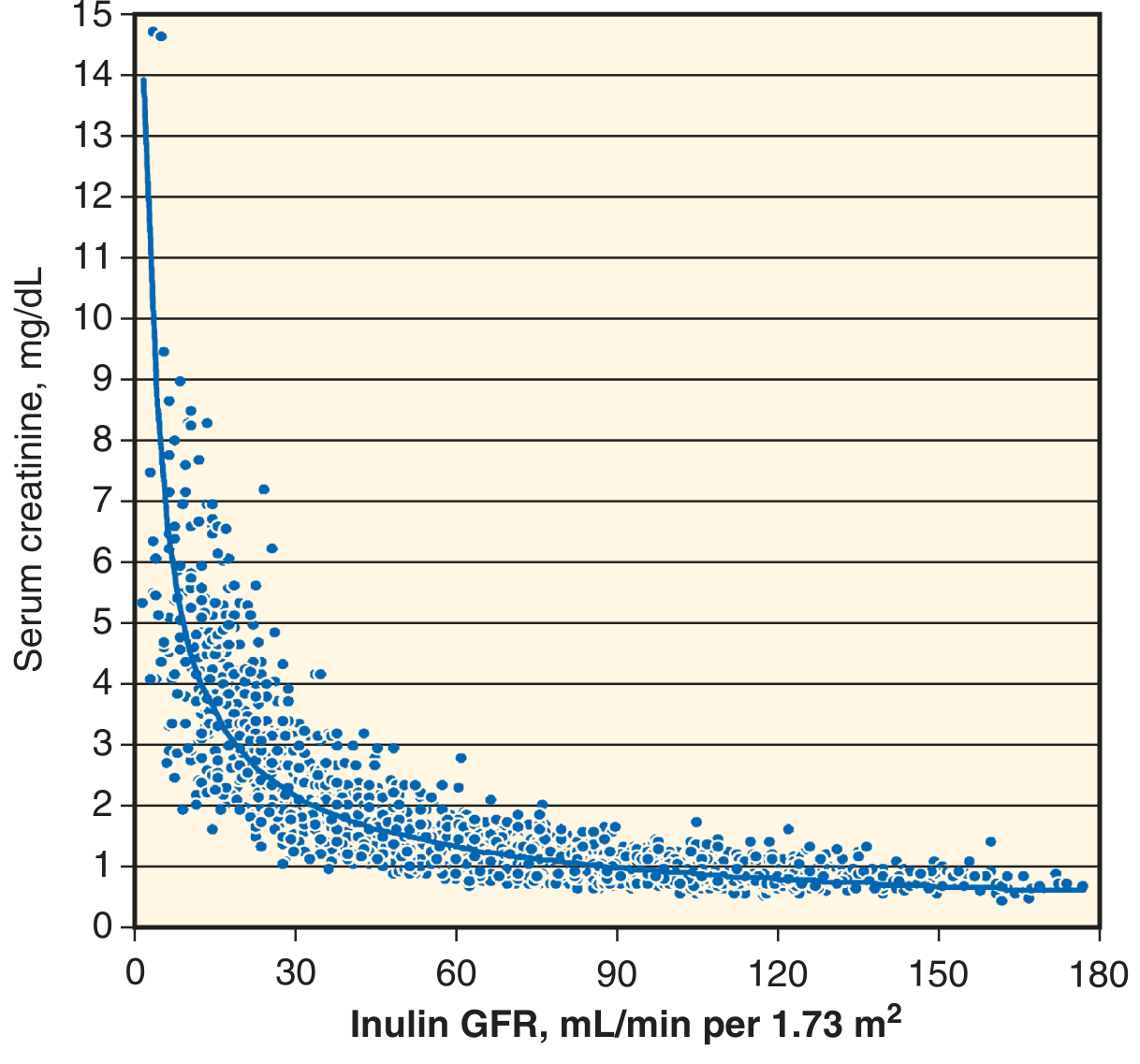
Fig. 23.1 from Brenner and Rector's The Kidney - Relationship between plasma creatinine and GFR (inulin clearance). Note the hyperbolic curve: at high GFR, large changes in GFR cause tiny creatinine changes; at low GFR, small changes in GFR cause large creatinine rises.
This hyperbolic (inverse) relationship is clinically critical:
- GFR can fall from 120 → 60 mL/min (50% loss!) with creatinine rising only from 0.9 to ~1.8 mg/dL
- This means a "normal" creatinine does NOT mean normal GFR - up to 50% of kidney function can be lost silently
- Conversely, in severe CKD, small further drops in GFR cause disproportionately large creatinine rises
3. Limitations of Serum Creatinine
A. Non-GFR Determinants (False Elevations or Reductions)
| Factor | Effect on Creatinine | Mechanism |
|---|---|---|
| High muscle mass (athletes, males) | Falsely elevated | More creatine → more creatinine production |
| Low muscle mass (elderly, females, malnutrition, amputation) | Falsely low | Less creatinine generated |
| High meat/creatine supplement intake | Elevated | Dietary creatine → creatinine |
| Rhabdomyolysis | Disproportionate rise | Mass release of preformed creatine/phosphocreatine |
| Liver disease | Falsely low | Impaired creatine synthesis |
| Pregnancy | Falsely low | Increased GFR + dilution |
| Sepsis | Reduced production | Muscle hypoperfusion reduces creatinine generation |
| Corticosteroids | Elevated | Catabolism + increased muscle breakdown |
B. Tubular Secretion Interference
Drugs that block tubular secretion of creatinine will raise serum creatinine without any change in GFR:
- Trimethoprim
- Cimetidine
- Pyrimethamine
- Dapsone
C. Insensitivity at Early GFR Decline (The "Creatinine Blind Spot")
"Although an increased serum creatinine concentration generally equates with impaired kidney function, a normal serum creatinine does not necessarily equate with normal kidney function."
- Tietz Textbook of Laboratory Medicine, 7th Ed.
Serum creatinine remains in the "normal range" until approximately GFR <45-50 mL/min/1.73 m² - meaning the entire Stage 1 and much of Stage 2 CKD can be missed if creatinine alone is used.
D. Late Detection in AKI
"Kidney injury will initially remain undetected until serum creatinine concentrations rise (8-48 hours) after the initial insult."
- Comprehensive Clinical Nephrology, 7th Ed.
This delay is because:
- Creatinine only rises after it accumulates in the volume of distribution
- In sepsis/ICU, muscle production is reduced, further masking GFR decline
- Steady-state creatinine requires 5-7 days to fully reflect a new (lower) GFR
E. Measurement Errors
Laboratory methods include:
- Jaffe (alkaline picrate) method: Colorimetric - prone to false elevation from glucose, proteins, bilirubin; older but still used
- Enzymatic method: More specific - now recommended by KDIGO
- IDMS (Isotope Dilution Mass Spectrometry): Gold standard for standardization
- HPLC: Research standard
The College of American Pathologists survey (5,624 labs) found a bias of -7% to +34% across laboratories before IDMS standardization was implemented.
4. Novel and Better Biomarkers
The key principle: biomarkers are classified as either functional markers (reflect GFR/filtration) or damage/injury markers (reflect tubular cell injury):
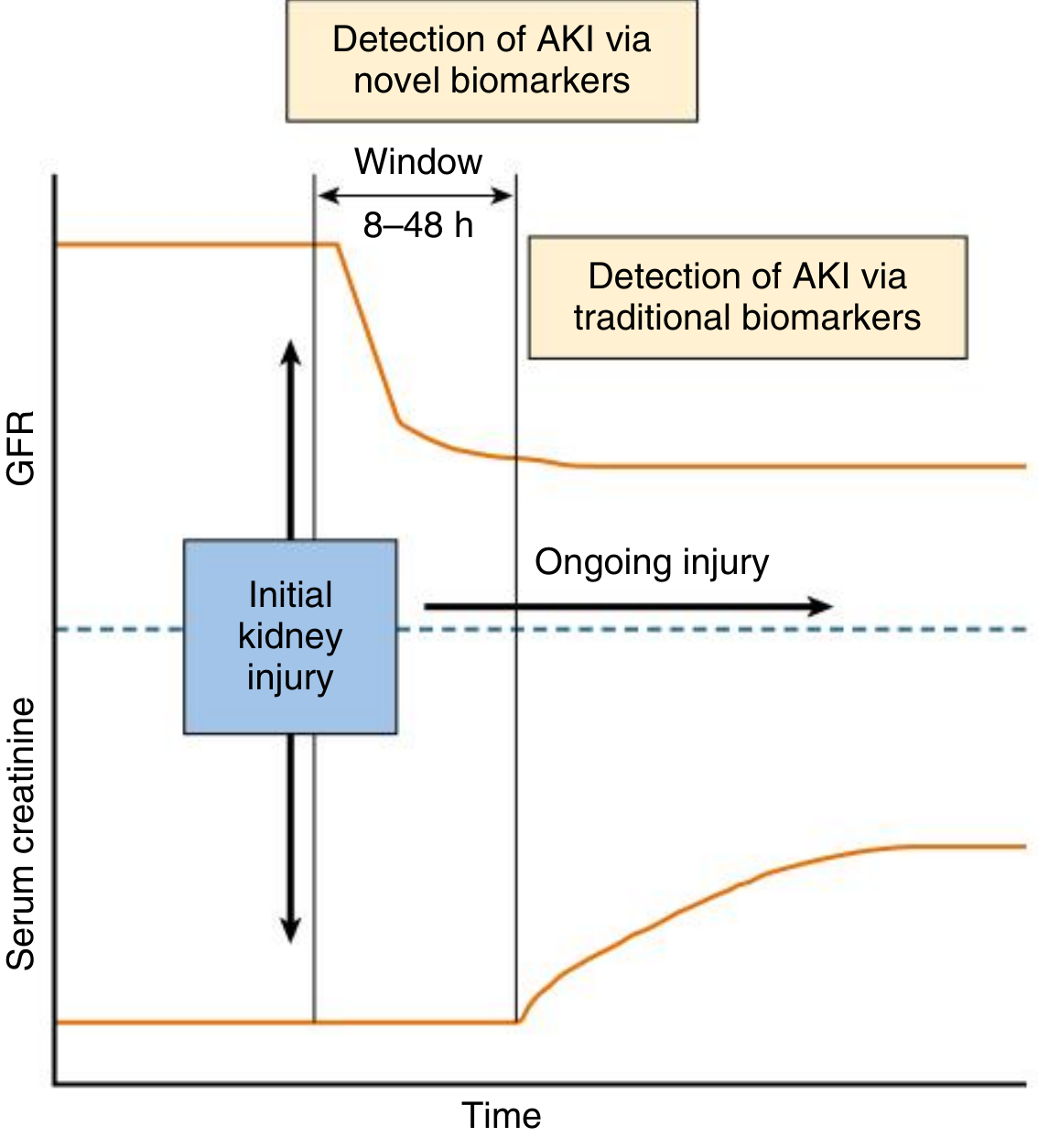
Fig. 72.1 from Comprehensive Clinical Nephrology, 7th Ed. Novel biomarkers detect kidney injury within the 8-48 hour "window" before serum creatinine rises.
A. Cystatin C - Best Alternative Functional Marker
"Cystatin C is a low-molecular-weight (13-kDa) basic protein that is produced at a constant rate by all nucleated cells. It is freely filtered by the glomerulus and is not secreted; proximal tubule cells reabsorb and catabolize it."
- Brenner and Rector's The Kidney
Advantages over creatinine:
- Production is independent of muscle mass - useful in extremes of body composition (elderly, malnourished, amputees, bodybuilders)
- Not affected by age (after 1 year) or sex
- More sensitive for detecting mild GFR reduction (GFR 45-75 range) where creatinine often appears normal
- Detected earlier in AKI - serum cystatin C rises before creatinine
- Combination eGFR (creatinine + cystatin C = eGFRcr-cys) is more accurate than either alone
- KDIGO recommends eGFRcr-cys as a confirmatory test when eGFRcr alone may be inaccurate
Limitations:
- Affected by corticosteroids (increase production), thyroid dysfunction (hypo = raised, hyper = decreased), obesity, diabetes, smoking, high CRP
- More expensive and less universally available
- Within-person variability ~6.8% (vs 8% for creatinine)
- Cannot be used as a urinary excretory marker (it is fully reabsorbed and catabolized by tubules)
B. Damage/Injury Biomarkers for AKI
"The definition of AKI has been expanded to include biomarker status, including a subclinical stage (1S) where biomarkers are positive without significant changes in serum creatinine or urine output."
- Comprehensive Clinical Nephrology, 7th Ed.
NGAL (Neutrophil Gelatinase-Associated Lipocalin)
- A protein produced by neutrophils that binds and traffics free iron
- Mediates the tubular response to epidermal growth factor
- Urinary NGAL rises with tubular stress or injury - but NOT in pure prerenal disease
- Useful for distinguishing transient (prerenal) from intrinsic AKI
- Categorized as a damage biomarker
- Detects AKI 2-6 hours after the insult
KIM-1 (Kidney Injury Molecule-1)
- A cell membrane glycoprotein upregulated specifically in injured proximal tubular cells
- The ectodomain is shed into the urine of injured kidneys only - not from healthy kidneys
- KIM-1 mRNA levels "may rise more than any other gene after kidney injury"
- Highly specific for ischemia or toxin-induced AKI
- Transforms injured tubular epithelial cells into "semiprofessional phagocytes" (phagocytose cell debris)
- Categorized as a damage biomarker
[TIMP-2] × [IGFBP-7] - Best Early Predictor (Commercially: NephroCheck®)
"The combination of urinary levels of IGFBP7 and TIMP outperforms all other biomarkers in the early detection of AKI in critically ill patients."
- Comprehensive Clinical Nephrology, 7th Ed.
- TIMP-2 (Tissue Inhibitor of Metalloproteinase-2) and IGFBP-7 (Insulin-like Growth Factor Binding Protein-7) are expressed in tubular cells
- They induce G1 cell cycle arrest - a protective response to tubular injury
- The product [TIMP-2] × [IGFBP-7] measured in urine within 12 hours predicts Stage 2-3 AKI better than KDIGO criteria alone
- FDA-approved (NephroCheck) for use in ICU patients at risk for AKI
IL-18 (Interleukin-18)
- A pro-inflammatory cytokine released from injured proximal tubular cells
- Sensitive for ischemic ATN - distinguishes it from prerenal azotemia and UTI
- Elevated in severe AKI and predicts poor outcomes
Proenkephalin A (PenKid)
- A novel functional GFR marker (like creatinine/cystatin C but responds faster)
- Blood and urine levels reflect GFR changes within hours of AKI onset
- Useful for real-time GFR monitoring in critically ill patients
L-FABP (Liver Fatty Acid Binding Protein)
- Urinary L-FABP is a marker of tubular oxidative stress
- Approved in Japan as an AKI biomarker
- Elevated with both ischemic and contrast-induced AKI
C. Biomarker Performance Table
From Brenner and Rector's The Kidney, Table 27.5 - Performance in Detecting AKI:
| Biomarker | Early Post-op AKI | AKI Progression | Need for RRT | Transient vs Intrinsic AKI |
|---|---|---|---|---|
| Urine NGAL | ✓ | - | ✓ | ✓ |
| Blood NGAL | ✓ | ✓ | - | ? |
| Blood Cystatin C | ✓ | - | ✓ | ✓ |
| Urine Cystatin C | - | - | ✓ | ✓ |
| Urine IL-18 | ✓ | ✓ | ✓ | ✓ |
| Urine KIM-1 | ✓ | - | - | - |
| TIMP-2 × IGFBP-7 | ✓ | ✓ | ✓ | ? |
| Urine protein/albumin | ✓ | ✓ | ✓ | ? |
(+ = supportive data from multicenter studies; - = data shows inability; ? = insufficient multicenter data)
D. Exogenous Gold-Standard GFR Markers
For research or situations requiring precise GFR measurement, exogenous filtration markers are used:
| Marker | Method | Advantage | Limitation |
|---|---|---|---|
| Inulin clearance | IV infusion + urine collection | True gold standard | Cumbersome, not clinically available |
| Iohexol (contrast) | Single injection plasma clearance | Accurate, practical | Contrast exposure |
| Cr-51 EDTA | Radioisotope clearance | Accurate | Radiation |
| Tc-99m DTPA | Scintigraphy | Imaging + GFR | Radiation |
| Iothalamate | IV/subcutaneous infusion | Well-validated | Requires timed collection |
E. Furosemide Stress Test - Functional Assessment
"In patients with early AKI in the ICU, urinary responses to IV furosemide predicted the need for dialysis better than biomarker measurement alone. Failure to produce >200 mL of urine within 2 hours of IV furosemide (1-1.5 mg/kg) strongly predicted both the need for dialysis and progression to AKI Stage 3."
- Comprehensive Clinical Nephrology, 7th Ed.
This is a simple bedside test requiring no special laboratory equipment.
5. Summary: Comparing Creatinine to Better Markers
| Feature | Serum Creatinine | Cystatin C | NGAL | TIMP-2/IGFBP-7 | KIM-1 |
|---|---|---|---|---|---|
| What it measures | Functional (GFR) | Functional (GFR) | Damage | Damage (G1 arrest) | Damage |
| Time to rise in AKI | 8-48 hours | 4-12 hours | 2-6 hours | 2-6 hours | 6-12 hours |
| Muscle mass effect | Major | Minimal | None | None | None |
| Affected by drugs | Yes (trimethoprim etc.) | Steroids, thyroid | No | No | No |
| Distinguishes prerenal vs intrinsic | No | Partial | Yes (urine) | Partial | No |
| Current clinical use | Universal | Confirmatory eGFR | Emerging | ICU (NephroCheck) | Research/limited |
| Cost | Very low | Moderate | Moderate-high | High | High |
Key Takeaway: Serum creatinine remains indispensable for its universality and cost, but it is a lagging, insensitive, and non-specific indicator of kidney function. The future of AKI detection lies in combining functional markers (cystatin C) with damage markers (NGAL, TIMP-2/IGFBP-7, KIM-1) to identify kidney injury earlier, stage it accurately, and guide targeted intervention during the critical window before irreversible damage occurs.
References:
- Brenner and Rector's The Kidney, 2-Volume Set - Chapter 23: Endogenous Glomerular Filtration Markers; Chapter 27: AKI Biomarkers
- Comprehensive Clinical Nephrology, 7th Ed. - Chapter 3: Clinical Application of eGFR; Chapter 72: Early Detection of AKI
- Tietz Textbook of Laboratory Medicine, 7th Ed. - Chapter: Creatinine
This is a shared conversation. Sign in to Orris to start your own chat.