
Aluminium Phosphide Poisoning: clinical features, post mortem appearance and medico legal importantance
I'll read the medical library skill first, then research this topic thoroughly.
Reading File
Now let me search the library in parallel for this forensic/toxicology topic:
Finding Sources
Finding Sources
Excellent - two dedicated textbook sections found. Let me read both in parallel:
Reading File
Reading File
The Dikshit textbook has excellent coverage. Let me read the rest of the Dikshit section (post mortem, management, medicolegal) which was truncated:
Reading File
Finding Sources
Reading File
Finding Sources
I now have comprehensive content from the Dikshit textbook. Let me also search for the medicolegal importance and zinc phosphide (referenced as similar in Parikh's) for supplementary detail:
Finding Sources
Finding Sources
Searching PubMed
"aluminium phosphide" poisoning clinical
I have all the key information needed. Let me search for the medicolegal importance section which was in the truncated part of Dikshit's textbook:
Finding Sources
Reading File
Reading File
Reading File
I now have comprehensive information from both textbooks. Let me compile the complete answer:
Aluminium Phosphide (ALP) Poisoning
Introduction
Aluminium phosphide (AlP) tablets are marketed under the trade names Celphos, Alphos, Fumigran, Phostoxin, and Sulphas. It is widely known as the "agent of sure death." Each grayish-green tablet weighs 3 gm (mixed with urea and ammonium carbonate) and contains 56% active ingredient, with each tablet releasing 1 gm of phosphine gas (PH3).
- Fatal dose: 4-5 gm (1-3 tablets)
- Fatal period: 12-36 hours
Mechanism of Action
On exposure to air, moisture, or gastric acid, AlP reacts to release phosphine gas:
AlP + 3H₂O → Al(OH)₃ + PH₃ (Phosphine)
Phosphine is a highly toxic gas that causes severe oxidative stress, inhibits cytochrome oxidase (similar to cyanide), and disrupts mitochondrial function, leading to multi-organ failure. Inhaled phosphine causes acute pulmonary oedema; ingested tablets release phosphine in the stomach from contact with gastric juice, causing gastrointestinal irritation and cardiovascular collapse.
Clinical Features (Signs and Symptoms)
Gastrointestinal:
- Nausea, vomiting
- Burning pain in the epigastrium
- Intense thirst and diarrhoea
Respiratory:
- Tightness in the chest
- Dyspnoea
- Pulmonary oedema (especially from inhalation)
- Cold, clammy skin with respiratory distress in terminal stages
Cardiovascular:
- Hypotension and shock
- ECG abnormalities - sinus tachycardia, bradycardia, heart block
- Arrhythmias
- Myocardial damage
- Rarely: pericarditis, congestive cardiac failure
Neurological:
- Excitement and agitation
- Hypocalcaemia-induced tetany
- Convulsions
- Coma
Other features:
- Garlicky (fishy) odour from the breath - a characteristic diagnostic clue
- Oliguria
- Rarely: muscular wasting, bleeding diathesis
- Death occurs due to cardiac failure
Chemical Bedside Test:
The patient is asked to breathe on a piece of filter paper impregnated with 0.1 N silver nitrate solution for 5-10 minutes. Blackening of the paper indicates phosphine in the breath, as silver nitrate is reduced to silver on exposure to phosphine.
Post Mortem (Autopsy) Findings
- Cyanosis is present
- Frothy discharge over the mouth and nostrils (in some cases)
- On opening the body, a characteristic fishy or garlicky smell of phosphine gas is present - this is a key autopsy finding
- All internal organs show congestion and petechial haemorrhages
- Lungs are congested and oedematous - pulmonary oedema is a well-established finding (reported in up to 30 autopsy cases from phosphine gas irritation)
- The stomach may show evidence of mucosal erosion and inflammation from direct phosphine irritant effect
- The odour persists even in putrefied bodies - phosphine can be detected in putrefied tissues, aiding forensic chemical analysis
Management
- No specific antidote exists for AlP poisoning
- Early gastric lavage with 3-5% sodium bicarbonate, 1% copper sulphate, 1% potassium permanganate, or mineral oil - these convert remaining AlP to phosphate within 30 minutes
- Note: Recent studies advise against gastric wash because residual AlP in the stomach converts to phosphine on contact with added moisture
- Magnesium sulphate IV/IM - 3 gm bolus then 6 gm infusion over 24 hours for 5-7 days (corrects arrhythmias)
- Calcium salts IV (for hypocalcaemia)
- Steroids to combat pulmonary oedema
- Low-dose dopamine infusion
- Sodium bicarbonate 50 mEq every 15 minutes until arterial bicarbonate exceeds 15 mmol/L (corrects metabolic acidosis)
- Oxygen inhalation and artificial respiration
- Antibiotics for secondary infection
Medicolegal Importance
1. Mode of Poisoning:
- Suicidal: The most common mode; AlP is the leading suicidal agent in northern Indian states (Haryana, Punjab, Uttar Pradesh, Rajasthan) due to its easy availability, low cost, and high lethality
- Homicidal: Particularly important in dowry death cases in rural India; only a part of a Celphos tablet is sufficient to kill. The tablet resembles a medicinal preparation, making disguised administration easy
- Accidental: Occurs from improper handling during grain fumigation or occupational exposure
2. Incidence Statistics (Dikshit):
- 1989: 14 cases (4 accidental, 10 suicidal)
- 1990: 9 cases (6 suicidal, 3 accidental)
- 1991: 12 cases (6 accidental, 4 suicidal, 2 homicidal)
- Drastic increase in deaths especially in north India over the last 20-25 years
3. Dowry Deaths Connection:
- AlP/Celphos tablets are frequently misused in dowry death cases in rural areas (IPC Section 304B)
- The tablet's resemblance to a medicine facilitates covert homicidal use
- Related criminal charges may be brought under IPC 304B (dowry death), IPC 498A (cruelty to a married woman), and IPC 34 (common intent)
4. Forensic Detection:
- Phosphine can be detected even in putrefied bodies, ensuring that delayed autopsy does not obliterate forensic evidence
- The characteristic garlicky odor at autopsy is a significant medicolegal clue
- Silver nitrate test on exhaled breath is a rapid bedside diagnostic tool
5. High Mortality:
- Its extremely high case fatality rate makes it legally significant - even partial ingestion can be fatal, which is relevant in establishing dose and intent in court
6. Availability and Control Issues:
- Sold as an agricultural fumigant without adequate controls, contributing to its abuse as a suicidal and homicidal agent
- Trade names (Celphos, Alphos) are well-known in medico-legal practice
Sources:
- P C Dikshit Textbook of Forensic Medicine and Toxicology, Chapter on Aluminium Phosphide (pp. 573-575)
- Parikh's Textbook of Medical Jurisprudence, Forensic Medicine and Toxicology, Chapter 53 - Agrichemical Poisons (p. 679) and Dowry Deaths section (p. 591)
Why does phenol produces buff leathery white stomach but other acids produce fragile stomach
Quick answer: Phenol causes coagulative necrosis of the gastric mucosa - it denatures and precipitates surface proteins into a tough, leathery eschar that acts as a barrier, preventing deeper penetration. Strong mineral acids (H₂SO₄, HCl, HNO₃) cause a more destructive corrosive action that softens and destroys tissue layers, making the stomach wall fragile and easily torn.
Searching sources...
Reading File
Finding Sources
Finding Sources
Two great sources found. Let me read both simultaneously, plus search for mineral acids stomach findings:
Reading File
Reading File
Finding Sources
Excellent - the Rosen's Emergency Medicine snippet is very useful. Let me read both the Rosen's passage and the mineral acids post mortem section in parallel:
Reading File
Reading File
Finding Sources
Now let me get the mineral acids (sulphuric, hydrochloric, nitric) post mortem stomach descriptions from the forensic textbook:
Finding Sources
Finding Sources
Reading File
Reading File
Now let me get the autopsy findings for the sulphuric acid section from the beginning to check if there's more:
Reading File
Loading Image
Loading Image
I now have comprehensive, textbook-verified data from multiple authoritative sources to give a detailed, mechanistic explanation. Here is the full answer:
Why Phenol Produces a Buff/Leathery White Stomach While Mineral Acids Produce a Fragile Stomach
This is one of the most conceptually important distinctions in forensic toxicology. The difference lies not simply in what the poisons do, but in how deeply and completely they destroy tissue - and that comes down to the nature of the protein precipitation each agent causes.
The Core Mechanism - Phenol
Phenol (carbolic acid, C₆H₄OH) is an aromatic acidic alcohol, and its action on tissue is unique:
1. Concentration-dependent coagulation of keratin and surface proteins
Rosen's Emergency Medicine states it directly:
"Highly concentrated solutions result in coagulation of the keratin, thereby preventing deeper penetration. Histologic studies have demonstrated that 100% concentrations of phenol produce 35% to 50% less penetration than a 50% solution."
This is a paradox worth understanding: more concentrated phenol is actually less destructive in depth because it immediately precipitates the surface proteins into a thick, firm coagulum before it can penetrate further.
2. What this coagulum looks like
Phenol denatures and precipitates proteins on the mucosal surface into a tough, cross-linked, coagulated eschar. This is a firm structural barrier, not a dissolved or liquefied one. The result is:
- The mucosa becomes thickened, opaque, firm and leathery (buff-white to gray-brown)
- The mucosal folds are swollen and covered with opaque, coagulated gray or brown mucous membrane with a leathery feel
- The intervening furrows (rugal valleys) are less damaged, remaining dark-red
- The overall stomach wall retains structural integrity - it does not tear or fall apart on handling
3. The eschar is self-limiting
This protein coagulum creates a physical barrier that slows phenol's own penetration. The liver and spleen may show a white, hardened patch only where the stomach directly contacted them - again reflecting localized, shallow coagulation rather than deep destruction.
The Core Mechanism - Mineral Acids (H₂SO₄, HCl, HNO₃)
Mineral acids also cause coagulative necrosis by precipitation of proteins - but the similarity ends there. Their destruction goes far deeper and more completely for the following reasons:
1. Powerful dehydration and oxidation
Sulphuric acid (oil of vitriol) violently extracts water from tissues and generates intense heat on contact with moisture (exothermic reaction). This physical dehydration destroys tissue architecture at all layers simultaneously, not just the surface. There is no shallow eschar; the destruction proceeds right through the wall.
2. Haematin formation
Mineral acids convert haemoglobin to haematin - this is why the stomach turns black (not white). Sulphuric acid produces a characteristic black, soft, boggy mass.
3. The stomach becomes a disintegrating mass
From the Dikshit textbook:
"The greater part of the stomach is converted into a soft, boggy, black mass that readily disintegrates on touching. The mucosal ridges are more damaged than intervening furrows. The perforated stomach has softened walls and edges of rupture looking black and irregular."
The stomach mucosa is described as inflamed, oedematous, blackened with a peppery feel - essentially structurally destroyed. The acid continues to work through the wall, causing perforation, and the peritoneal cavity fills with black grumous fluid.
4. Why eschar doesn't protect here
Rosen's notes that with acids in general, an eschar theoretically limits penetration - but in practice, "profound chemical burns can occur following exposure to an acid" despite eschar formation. The reason: mineral acids are far more corrosive and energetically reactive than phenol; they overwhelm any surface protein precipitation almost instantly, especially at the concentrations typically ingested.
Side-by-Side Comparison
| Feature | Phenol (Carbolic Acid) | Mineral Acids (H₂SO₄, HCl, HNO₃) |
|---|---|---|
| Primary action | Protein coagulation + cell wall disruption | Protein coagulation + dehydration + oxidation + haematin formation |
| Depth of action | Superficial (eschar limits penetration) | Deep, transmural destruction |
| Stomach colour | White, buff, gray-brown | Black (H₂SO₄), yellow-brown (HNO₃), gray (HCl) |
| Stomach texture | Tough, leathery, thickened - firm | Soft, boggy, disintegrates on touch - fragile |
| Wall integrity | Preserved (may not perforate) | Often perforated, softened, ragged edges |
| Mucosal pattern | Folds swollen and coagulated; furrows relatively spared | Folds more damaged, widespread blackening |
| Mechanism of colour | Protein coagulum (white-gray) | Haematin formation (black) + carbonization |
| Feel at autopsy | Leathery, corrugated | Peppery, slimy, disintegrates |
Postmortem Appearances - Illustrated
Carbolic acid (phenol) stomach:
The mucosa is tough, white/gray, corrugated and arranged in longitudinal folds. Mucosal folds are swollen and covered with opaque, coagulated, gray or brown mucous membrane. The mucous membrane is thickened and looks leathery. Often there is partial separation of necrotic mucosa with severe congestion of underlying tissue.
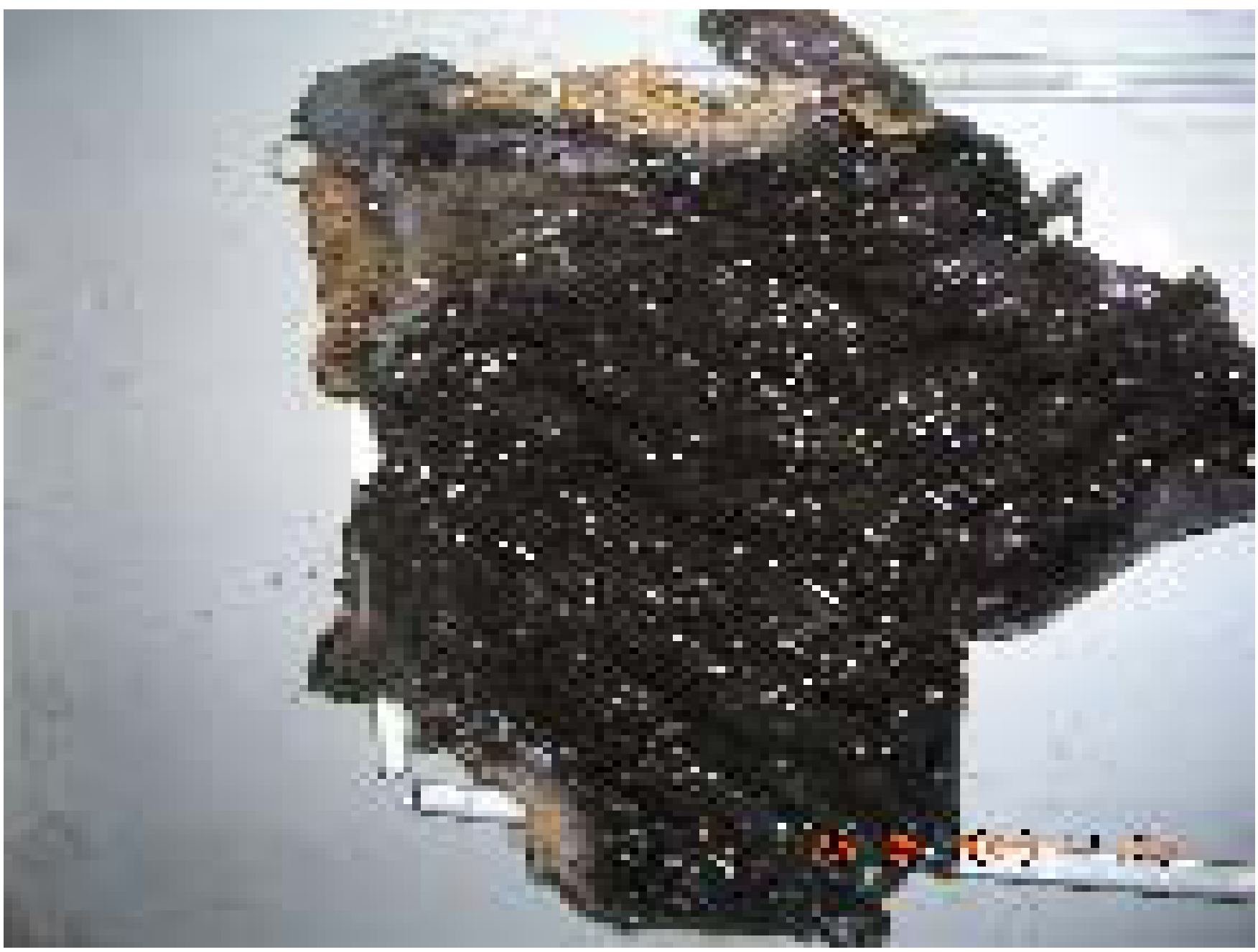
Stomach mucosa in carbolic acid (phenol) poisoning - note the opaque, leathery, corrugated appearance
Sulphuric acid stomach:
The mucous membrane is inflamed, oedematous, blackened with a peppery feel. The greater part of the stomach is converted into a soft, boggy, black mass that readily disintegrates on touching.
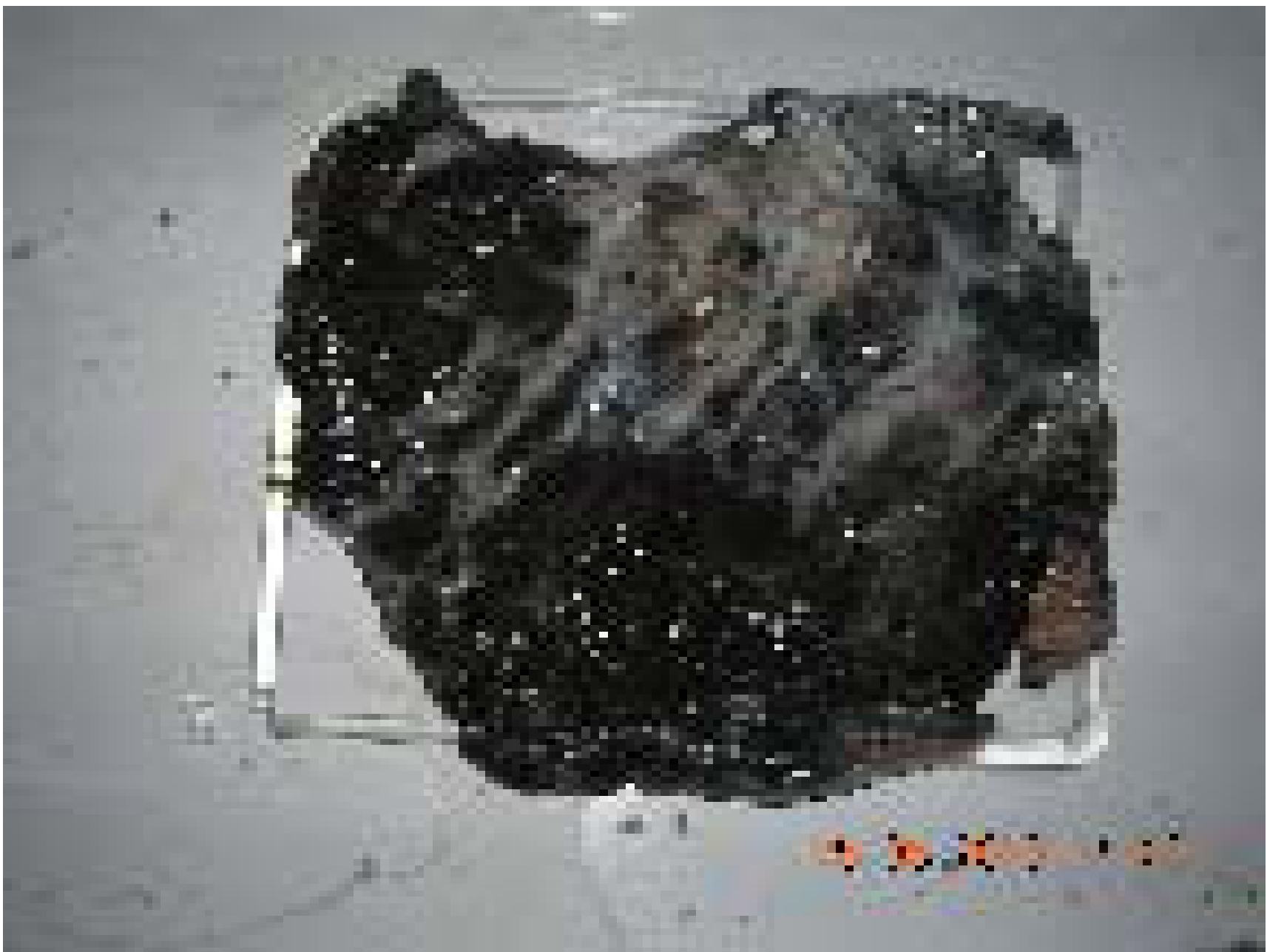
Stomach mucosa in sulphuric acid poisoning - soft, black, readily disintegrates
Practical Forensic Significance
- The leathery white stomach of phenol poisoning is a pathognomonic feature that should prompt the pathologist to smell for the characteristic carbolic (phenol) odour
- The fragile, black, disintegrating stomach of mineral acid poisoning means the pathologist must handle it with extreme care to avoid artefactual perforations being mistaken for antemortem perforations
- Stomach wash (gastric lavage) is absolutely contraindicated in mineral acid poisoning due to the risk of perforating the already-thinned stomach wall - a point with direct clinical and medicolegal relevance
Sources:
- P C Dikshit Textbook of Forensic Medicine and Toxicology, Mode of Action and Autopsy Findings - Sulphuric Acid (pp. 450-452); Carbolic Acid Autopsy Findings (p. 453)
- The Essentials of Forensic Medicine and Toxicology, 36th ed. (2026), Carbolic Acid (Phenol) - Postmortem Appearances (p. 848); Caustic Acids - Eschar formation
- Rosen's Emergency Medicine, Phenol: Anatomy, Physiology and Pathophysiology; Chemical Burns - Clinical Features
This is a shared conversation. Sign in to Orris to start your own chat.