I now have enough material from the authoritative forensic textbooks. Let me compile the comprehensive answers.Here are comprehensive model answers for all 10 questions. Sources: The Essentials of Forensic Medicine and Toxicology (36th ed., 2026), Parikh's Textbook of Medical Jurisprudence, and P.C. Dikshit's Textbook of Forensic Medicine.
GROUP A - LAQ (15 Marks Each) - MODEL ANSWERS
Q.1 (SMCH) - 16-year-old girl, alleged forceful sexual intercourse by unknown man
(i) Prerequisites for Examination (3 marks)
Before conducting a medicolegal examination in a rape case, the following must be ensured:
- Written requisition from police with the FIR number, date, and time of alleged offence
- Proper consent - documented in writing (see below)
- Presence of a female nurse/chaperone throughout the examination - mandatory
- Examination by a female doctor preferably; if unavailable, a male doctor may examine in the presence of a female attendant
- Preservation of privacy and dignity - examination in a private room
- Availability of a SAFE Kit (Sexual Assault Forensic Evidence Kit) or equivalent evidence collection materials
- Documentation readiness - MLC register, pre-formatted proforma, camera for photographic evidence
- Chain of custody established before sample collection
- The examination should be done at the earliest possible time to prevent loss of evidence
(ii) Consent Before Examination (2 marks)
- As the victim is 16 years old (a minor under 18), consent must be obtained from her legal guardian/parent in writing.
- Simultaneously, her own assent (willingness) should also be taken, as she is old enough to understand the procedure.
- Under the POCSO Act, 2012 (Protection of Children from Sexual Offences), the age of consent for sexual activity is 18 years; therefore the guardian's consent is legally required.
- If she is brought by police without a guardian, the police officer-in-charge/magistrate may give consent for examination.
- Consent must be free, informed, and voluntary, explaining the nature, purpose, and procedure of examination.
- Refusal to undergo examination cannot be held against the victim (Supreme Court ruling).
(iii) Possible Genital and Extra-Genital Findings to Prove Forcible Sexual Intercourse (6 marks)
Extra-genital findings:
- Contusions, abrasions, lacerations on face, neck, shoulders, wrists, upper arms, thighs - from forcible restraint
- Nail scratch marks on neck, face, breasts, thighs
- Bite marks on breasts, neck, shoulders
- Fingertip bruises (ovoid) on inner thighs from forcible separation of legs
- Petechiae on conjunctiva/face if there was smothering or pressure on neck
- Defense injuries - on palms, forearms (if she tried to fight back)
- Torn, displaced, or disheveled clothing
Genital findings:
- Hymenal tears - fresh lacerations with everted, bleeding edges; most commonly at 5 and 7 o'clock positions posteriorly; extending to the base of hymen
- Hymenal bruising without complete tear
- Redness, congestion, and swelling of the vulva, labia, vaginal walls
- Abrasions and lacerations of the fourchette, posterior commissure, perineum
- Vaginal tears extending into perineum (especially in young girls)
- Perianal injuries if anal intercourse occurred
- Seminal fluid in vagina/vulva - motile spermatozoa on high vaginal swab
(iv) Samples and Materials to be Collected (4 marks)
| Sample | Purpose |
|---|
| High vaginal swab (x2) | Detection of spermatozoa (1 wet, 1 dry smear); DNA of assailant |
| Low vaginal/vulvar swab | Semen detection, DNA |
| Cervical swab | STD screening (gonorrhea, Chlamydia) |
| Blood sample (5 mL EDTA) | DNA profiling of victim; STD serology; drug/alcohol levels |
| Urine sample (50 mL) | Pregnancy test; drug/alcohol screening |
| Pubic hair combing + pulled pubic hair (10 strands with roots) | Foreign hair/fibers from assailant; DNA comparison |
| Nail clippings/scrapings | Assailant's skin tissue/DNA (if she scratched him) |
| Clothing (especially undergarments) | Seminal stains, blood, fibers, hair from assailant |
| Oral/buccal swab | If oral penetration alleged |
| Anal swab | If anal penetration alleged |
All samples must be labeled, sealed, and handed over with proper chain of custody documentation.
Q.2 (MCK) - 24-year-old woman found dead, ligature mark, nail scratch abrasions, genital bleeding, rave party
Cause of Death (2 marks)
Based on the findings:
- Continuous ligature mark low down the neck = ligature strangulation
- Nail scratch abrasions above the ligature = victim's own nails attempting to remove the ligature
- Multiple scratch abrasions around the mouth = smothering/gagging attempted
- Evidence of genital bleeding = sexual assault (rape)
Probable cause of death: Asphyxia due to ligature strangulation, following sexual assault. This is a case of homicidal strangulation with associated rape (Rape-Homicide scenario). The combination of smothering and strangulation with rape at a rave party is consistent with drug-facilitated sexual assault followed by murder.
Expected Findings on Dissection: Inner Aspect of Lips and Neck (4 marks)
Inner aspect of lips:
- Lacerations, contusions of mucous membrane of inner lips (from pressure against teeth - if smothered)
- Petechial hemorrhages on inner surfaces of lips and buccal mucosa
- Abrasions on inner surface of cheeks
Neck dissection findings:
- Subcutaneous hemorrhage along the track of the ligature
- Bruising and hemorrhage into neck muscles (sternomastoid, infrahyoid muscles)
- Petechiae on visceral pleura, epicardium, conjunctiva, brain surface (Tardieu spots - classic in asphyxial deaths)
- Laryngeal/tracheal mucosal congestion and petechiae
- Fracture of hyoid bone (less common in ligature strangulation, more in manual strangulation)
- Fracture of superior cornu of thyroid cartilage (possible)
- Engorgement and congestion of neck veins above the ligature
- Edema and congestion of face above the ligature level
- Lungs: congested, voluminous, with petechiae (Tardieu spots)
- Brain: congested
Expected Genital Findings (3 marks)
- Lacerations of posterior fourchette and hymen with hemorrhage
- Bruising and swelling of labia majora and minora
- Lacerations/abrasions of vaginal walls, especially lower third
- Seminal fluid in vagina, perineum, pubic area
- Perianal abrasions if anal intercourse also occurred
- Hemorrhage in vaginal walls on dissection
Evidence to be Preserved at Autopsy (4 marks)
- High vaginal swab and anal swab for semen/DNA
- Pubic hair combings and fingernail clippings/scrapings
- Blood (EDTA + fluoride for alcohol/drugs; serum for grouping)
- Urine (for drug screening - especially GHB, benzodiazepines, ketamine, MDMA)
- Ligature if present (or photograph + dimensions of mark)
- Vitreous humor (for alcohol/drug estimation if blood is hemolyzed)
- Stomach contents (sealed, for toxicology)
- Skin swabs from bite marks (for saliva DNA)
- Clothing (sealed in separate paper bags)
- Photographs of all injuries before dissection
Commonly Abused Drugs at Rave Parties (2 marks)
- MDMA (Ecstasy/Molly) - most common
- GHB (gamma-hydroxybutyrate) - "liquid ecstasy"
- Ketamine ("Special K")
- Rohypnol (flunitrazepam) - "roofies," classic date rape drug
- LSD (lysergic acid diethylamide)
- Alcohol (the most common base)
- Cocaine, methamphetamine
Q.3 (RPHGMCH) - 13-year-old girl, penetrative sexual assault 2 days ago, accused was neighbor
(a) From Whom to Take Consent (1 mark)
As the girl is 13 years old (a minor), consent must be obtained from her parents/legal guardian. Both parents are present, so either parent can give consent in writing. Additionally, the girl's own assent should be noted.
(b) Which Law Will This Case Be Registered Under (1 mark)
The case will be registered under:
- POCSO Act, 2012 (Protection of Children from Sexual Offences Act) - Section 3 (Penetrative Sexual Assault) since the victim is below 18 years.
- Specifically Section 4 POCSO (punishment for penetrative sexual assault) - minimum 10 years rigorous imprisonment, may extend to life.
- Also under Section 64, BNS (formerly Section 376 IPC) - Punishment for rape.
- Since she is 13 years (under 16), it would attract enhanced punishment.
(c) Age of Nail Scratch Abrasions (3 marks)
Age estimation of abrasions on the thoracic region:
| Age of Abrasion | Appearance |
|---|
| Fresh (recent, within 1-2 hours) | Reddish-brown scab, oozing serum/blood, edges still slightly bleeding, no crusting |
| 6-12 hours | Drying begins, scab forming, reddish-brown color |
| 24-48 hours | Hard, dry, dark brown/reddish-brown scab forms; surrounding redness/erythema (inflammatory zone around the scab) |
| 3-5 days | Scab begins to lift at edges; surrounding skin healthy; no more inflammation; brownish-yellow color |
| 5-7 days | Scab falling off; regenerating epithelium visible underneath (pinkish) |
| >7 days | Scab absent; healed epithelium, may leave temporary pigmentation |
Since the alleged assault was 2 days ago, the scratch abrasions on the thorax should show: dry, firmly adherent, dark reddish-brown scab with inflammatory zone (redness) around it - consistent with a 48-hour-old abrasion. This is consistent with the history.
Histologically (if biopsy taken): At 24-48 hours, infiltration of polymorphonuclear leucocytes is seen at the wound margins.
(d) SAFE Kit (3 marks)
SAFE = Sexual Assault Forensic Evidence Kit (also called Rape Kit or Evidence Collection Kit)
It is a standardized, pre-packaged kit used for collection, preservation, and documentation of forensic evidence in sexual assault cases.
Contents of a SAFE Kit typically include:
- Instructions for the examiner
- Evidence collection bags (paper - for clothing)
- Swabs (vaginal, anal, oral - individually labeled)
- Glass slides for smear preparation
- Blood collection tubes (EDTA, plain, fluoride-oxalate)
- Urine collection container
- Comb for pubic hair collection
- Envelopes for hair samples
- Nail clipping/scraping tools
- Labels and sealing tape
- Chain of custody forms
- Body diagram forms for injury documentation
- Bags for swabs drying
Importance: Ensures standardized collection, prevents contamination, maintains chain of custody for admissibility in court.
(e) Medical Examination Procedure and Samples (2+5 = combined)
Procedure of examination:
- Obtain written consent from guardian
- History taking - date, time, place of assault; nature of assault; any post-assault activities (washing, urination, defecation); last consensual intercourse; menstrual history; medical history
- General physical examination:
- Build, nutrition, mental state
- Signs of intoxication/injury
- Note all injuries with site, size, shape, color, tenderness
- Bite marks, bruises, scratches (especially thoracic - examine abrasions as per above)
- Height, weight, secondary sexual characteristics (for age assessment if required)
- Genital examination (in lithotomy position, with chaperone):
- External genitalia - labia, fourchette, perineum
- Hymen - type, any tears, position of tears, bleeding, edema
- Vaginal examination (bimanual if needed)
- Perianal region
- Colposcopy if available (magnified documentation of injuries)
- Anal examination if indicated
- Oral examination if oral assault alleged
Samples to collect and their purpose:
| Sample | Purpose |
|---|
| High vaginal swab (wet + dry) | Spermatozoa detection; DNA profiling of assailant |
| Low vaginal/vulvar swab | Semen detection |
| Cervical swab | STD (gonorrhea, Chlamydia) |
| Anal swab | If anal assault; semen/DNA |
| Blood (EDTA) | Victim DNA; serology (HIV, syphilis); toxicology |
| Urine | Pregnancy test; drug screening |
| Pulled pubic hair (10) + combings | DNA comparison with any foreign hair |
| Nail scrapings | Assailant's DNA (she tried to resist/fight back) |
| Clothing/undergarments | Seminal stains, assailant trace evidence |
| Skin swabs from bite marks | Assailant's saliva DNA |
Q.4 (JMNMCH) - 30-year-old woman, abrasions on neck, evidence of sexual assault
(i) Possible Cause of Death (2 marks)
Given multiple abrasions over both sides and front of neck with sexual assault:
- Manual strangulation (throttling) - most likely, given bilateral and frontal neck abrasions (from assailant's fingers)
- Traumatic asphyxia
- Combined smothering and strangulation
- Shock from sexual assault injuries and blood loss
(ii) How to Confirm Nature and Manner of Death During Autopsy (4 marks)
External examination:
- Document all neck abrasions - fingertip crescentic abrasions/bruises consistent with manual strangulation
- Petechiae on conjunctivae, face, skin above neck
- Cyanosis of face/lips
- Evidence of sexual assault on genitalia
Internal neck dissection:
- Subcutaneous hemorrhage in neck tissues
- Hemorrhage into sternomastoid and other neck muscles
- Fracture of hyoid bone (more common in manual strangulation - inward compression type)
- Fracture of thyroid cartilage
- Petechiae on laryngeal mucosa
Thoracic/abdominal dissection:
- Lungs: congested, Tardieu spots (petechiae on visceral pleura)
- Heart: right side overdistended with dark fluid blood; Tardieu spots on epicardium
- Brain: congested with petechiae
Genital dissection:
- Lacerations, bruising, hemorrhage in vaginal walls
- Vaginal swabs for semen
Manner: Confirmed Homicide by:
- Nature, distribution and direction of neck abrasions (bilateral - from another person's hands)
- Associated sexual assault
- Scene evidence
(iii) Extra Precautions at Autopsy (4 marks)
- Chain of custody must be maintained from receipt to sample dispatch
- Photograph all injuries before touching/cleaning the body
- Paper bags over hands before transport to preserve trace evidence under fingernails
- Use clean instruments for each sample to prevent cross-contamination
- Examine clothing separately before undressing the body
- All swabs taken before washing the body
- Ensure a second doctor (witness) is present throughout
- Prepare detailed MLC documentation with body diagram
- Preserve vaginal swabs, blood, urine, gastric contents in labeled sealed containers
- Do not use embalming fluid until all samples are taken
- Bite mark swabs for salivary DNA before cleaning
- Maintain temperature control of preserved biological samples (refrigerate immediately)
(iv) Materials to Preserve and How (3 marks)
| Material | How to Preserve |
|---|
| Vaginal/anal swabs | Air dry, then in labeled paper envelope; refrigerate |
| Blood (10 mL EDTA) | In sealed tube, refrigerate (4°C); for DNA, grouping |
| Blood (fluoride-oxalate, 5 mL) | For alcohol/drug estimation |
| Urine (50 mL) | In clean container; refrigerate |
| Stomach contents (all) | In clean container, sealed; refrigerate |
| Vitreous humor | In plain tube; refrigerate |
| Pubic hair + nail clippings | In paper envelope, labeled, sealed |
| Clothing + undergarments | Each item in separate paper bag (NOT plastic - prevents mold) |
| Vaginal swab smears | Fix with alcohol within seconds of preparation; label |
| Tissue samples (if histology needed) | 10% formal saline |
(v) Biological Evidence Detectable to Identify the Accused (2 marks)
- Semen/Spermatozoa - DNA profiling (STR typing)
- Y-STR analysis - to identify number and identity of semen donors
- Blood stains - DNA profiling from accused's blood
- Saliva from bite marks - DNA
- Pubic/body hair with root - DNA + morphological comparison
- Fingernail scrapings from victim - accused's skin cells/DNA
- Skin cells/epithelial DNA from clothing fibers
Q.5 (JHARGRAM) - 16-year-old girl, sexually assaulted at 9 PM by teacher (32 years), complaint at 7 AM
(i) Act Under Which the Case Will Be Booked (1 mark)
- POCSO Act, 2012 - Section 3 (Penetrative Sexual Assault) - victim is under 18
- Section 64, BNS (formerly S. 376 IPC) - Rape
- Additionally, Section 68, BNS (formerly S. 376C IPC) - Sexual intercourse by a person in position of authority/fiduciary relationship (teacher-student relationship is a fiduciary relationship)
- Punishment under POCSO for victim under 16: minimum 20 years RI to life imprisonment
(ii) Consent for Examination (2 marks)
- The victim is 16 years (minor under 18) - consent from parent/legal guardian is mandatory in writing.
- Her mother (who lodged the complaint) can give consent.
- The victim's own assent should also be documented.
- If no guardian available, a magistrate can authorize examination.
- The examining doctor must explain the purpose, nature, and procedure before obtaining consent.
- Consent to examine does NOT equal consent to have had intercourse.
(iii) Prerequisites for Examination (4 marks)
Same as Q.1(i) - see above. Additional points:
- Written police requisition with FIR number
- Female doctor / male doctor with female chaperone
- Private examination room
- SAFE kit or equivalent
- Proper documentation forms/MLC register
- Confidentiality maintained
- Examination at earliest opportunity (10 hours have elapsed - sperms may still be present in vagina for up to 72-96 hours)
- No prior bathing/washing ideal; if washed, still examine
(iv) Possible Genital and Extra-Genital Findings (4 marks)
Genital findings:
- Fresh/recent hymenal tears at 5 and 7 o'clock position
- Redness, swelling of labia and fourchette
- Abrasions/lacerations of posterior commissure
- Seminal fluid in vagina on swab
Extra-genital findings:
- Bruising/abrasions on inner thighs (fingertip pressure)
- Abrasions/scratch marks on neck, face, arms
- Bite marks on breasts/shoulders
- Defense injuries on palms, forearms
- Bruising on wrists (if restrained)
(v) Medicolegal Evidences to be Preserved (3 marks)
Same as Q.1(iv). For this case specifically emphasize:
- Time gap is ~10 hours, so vaginal swabs should still yield spermatozoa
- Blood and urine for toxicology (alleged intoxication Q.8 - here if applicable)
- Clothing worn at time of assault
(vi) Who Can Examine the Victim Girl (1 mark)
As per amended law and MCI/NMC guidelines:
- Any registered medical practitioner can conduct the examination
- Preferably a female doctor
- If female doctor unavailable, a male doctor may examine in the presence of a female attendant/nurse
- Under Section 164A CrPC (now Section 184 BNSS) - examination to be done by registered medical practitioner in a government hospital
- Under POCSO Act - a female doctor is preferred for child victims
Q.6 (GDIMSH) - 24-year-old woman, cut throat, meat chopper, sexual assault
(i) Confirmatory Tests for Blood Stains + Principle of Absorption-Elution (4+1 = 5 marks)
Preliminary (presumptive) tests for blood:
- Benzidine test (Adler's test) - blue-green color with H₂O₂; not specific
- Leucomalachite green test - green color
- Phenolphthalein test (Kastle-Meyer) - pink/red color
- Luminol test - chemiluminescence (for trace/washed-out stains)
- Orthotoluidine test
- Hemastix (Combur test)
Confirmatory (specific) tests for human blood:
-
Precipitin Test (Uhlenhuth Test) - Most important. Anti-human serum is added to the stain extract. A white precipitin ring at the junction of two fluids confirms human origin. Principle: antigen-antibody reaction.
-
Teichmann's (Hemin crystal) test - Dried blood on slide heated with glacial acetic acid and NaCl - brown rhomboid hemin crystals form. Confirms blood even in old/burnt stains.
-
Takayama's (Haemochromogen crystal) test - Blood treated with pyridine + NaOH + glucose - salmon-pink crystals of haemochromogen confirm blood.
-
Spectroscopic examination - Detection of oxyhemoglobin, methemoglobin, carboxyhemoglobin bands.
-
DNA analysis - Definitive identification.
Principle of Absorption-Elution Technique:
Blood group antigens (A, B) on cells or stained cloth absorb corresponding antibodies (anti-A or anti-B) at low temperature (4°C). The antibodies bound to the antigen are then eluted (released) by heating to 56°C. The eluted antibody is then tested against known red blood cells of known blood groups. Agglutination of indicator red cells confirms the blood group. The clumps are seen on the walls of the test tube (unlike mixed agglutination where they are on fibers). This test can be used even on old dried stains and body tissues.
(ii) Stains to Detect Spermatozoa (3 marks)
| Stain | Observation |
|---|
| Christmas tree stain (Kernechtrot + Fast Green) | Head: red/pink; tail: green. Most commonly used. |
| Hematoxylin and Eosin (H&E) | Head: blue-purple (hematoxylin); tail: pink (eosin) |
| Papanicolaou stain | Head: dark blue/purple |
| Baecchi's stain | Head: red; tail: unstained |
| Methylene blue | Head: blue |
| Gram stain | Head: blue (Gram positive) |
On a wet preparation (saline mount): motile spermatozoa visible if examined within 12-24 hours. On a dry smear: non-motile sperms identifiable by their characteristic pear-shaped head with long flagellum.
(iii) Lust Murder (1 mark)
Lust murder is an extreme form of sexual sadism in which murder itself serves as a stimulus for the sexual act and becomes the psychological equivalent of coitus, accompanied by erection, ejaculation, and orgasm. It is characterized by:
- Periodic outbreaks (recurring compulsion)
- Cutting/stabbing of breasts, genitalia, lower abdomen; sucking/licking of wounds; biting
- Sexual intercourse with the dying or injured victim
- Normal behavior between outbreaks
Not every murder during a sexual act is a lust murder - anger, jealousy, or revenge may also cause it.
(iv) Differences Between Homicidal and Suicidal Cut Throat Wounds (4 marks)
| Feature | Suicidal Cut Throat | Homicidal Cut Throat |
|---|
| Number of wounds | Usually one deep wound with multiple superficial hesitation marks | One or more deep wounds; no hesitation marks |
| Site | Across the front of neck; extends from left to right (right-handed person) | Any level; often extends around the neck; sometimes from behind |
| Direction | Slanting downward from left to right (right-handed); oblique | More horizontal; may be from behind |
| Depth | Deeper on one side (starting side) and shallower at the end | Usually uniform depth; may be very deep throughout |
| Hesitation marks | Present - multiple superficial cuts near the main wound | Absent |
| Defense injuries | Absent (no one to defend against) | Present on hands, forearms of victim |
| Tailing | Present - wound tapers off at the ending side | May be present or absent |
| Condition of hands | Bloodstained right hand (usually) | Hands may be clean or restrained |
| Weapon | Usually found nearby (cadaveric spasm) | Often absent from scene (taken by assailant) |
| Associated injuries | Usually none | Often multiple other injuries (defense, struggle) |
| Scene | Consistent with suicide; blood pattern confined | Signs of struggle, disturbance |
| History | Depression, suicidal ideation, previous attempts | Alleged assault, missing valuables, etc. |
(v) Probable Immediate Causes of Death (2 marks)
From a deep cut-throat wound:
- Hemorrhage - severance of carotid arteries (external/internal/common) or jugular veins causing massive blood loss
- Air embolism - partial severance of jugular veins allows air entry; fatal
- Asphyxia - blood aspiration into the trachea/bronchi causing drowning in blood
- Vagal inhibition - stimulation of carotid sinus causing reflex cardiac arrest
Q.7 (CNMCH) - 16-year-old girl found in jungle, rape followed by murder; accused apprehended
1. Evidence/Exhibits to Collect
(a) From the Scene of Occurrence (5 marks):
- Clothing and footwear found at scene (each in separate paper bags)
- Any weapon found (bagged, labeled)
- Blood stains on soil, vegetation, stones - collect soil/swabs
- Seminal stains on ground/vegetation - swab and soil samples
- Footprints/tyre marks - cast or photograph
- Hair and fibers found at scene
- Cigarette butts, condoms, drug paraphernalia
- Any personal belongings of victim or assailant
- Photographs of entire scene before disturbing
- Sketch/map of crime scene
(b) From the Body of Deceased Girl at Post Mortem (3+5 = 8 marks given in Q7 as part 1 allocation):
- High vaginal swabs (x2) - for semen/DNA
- Anal swabs - if anal assault evident
- Blood from femoral vein (EDTA) - victim DNA; toxicology
- Urine/vitreous humor - toxicology
- Pubic hair with roots (10 strands) + combings
- Nail clippings/scrapings - assailant skin/DNA
- Skin swabs from bite marks
- Photographs of all injuries before dissection
- Clothing (if not already collected)
- Stomach contents - sealed
2. Specimens from the Accused Person (3 marks)
- Blood sample (EDTA, 10 mL) - DNA profiling; blood grouping; comparison with stains
- Buccal swab / oral swab - DNA reference standard
- Pubic hair (10 strands, with roots) - morphological comparison + DNA
- Head hair - same
- Nail clippings/scrapings - victim's skin/tissue
- Penile swabs - victim's vaginal cells/DNA
- Clothing (especially undergarments) - victim's blood/vaginal cells/hair
- Blood grouping - comparison with scene/victim stains
- Potency examination - ability to perform intercourse
3. Role of Forensic Medical Expert (5 marks)
The forensic medical expert (FME) plays the following roles in alleged rape-cum-murder:
- Examination of the deceased - determination of cause and manner of death; documentation of all injuries; description of genital injuries consistent with sexual assault
- Sample collection and chain of custody - proper collection, labeling, sealing of all biological samples; ensuring admissibility in court
- Age estimation - of the deceased (dental, radiological methods) if unknown
- Time since death estimation - PM changes, rigor, lividity, entomology
- Scene liaison - advising police on what to collect, preservation techniques
- Evidence interpretation - interpreting lab reports (DNA, serology, toxicology)
- Expert witness - giving deposition in court; explaining medical findings in layman's terms to judge/jury
- Rape confirmation - opining whether injuries are consistent with forcible sexual intercourse
- Cause of death certification on post mortem report
- Coordination with forensic science laboratory (FSL) for sample analysis
4. Important Sections Under BNS Related to Rape, Gang Rape, and Sexual Assault (2 marks)
| Section (BNS) | Former IPC Section | Provision |
|---|
| Section 63 | S. 375 | Definition of Rape |
| Section 64 | S. 376(1) | Punishment for rape - min 10 years RI to life |
| Section 64(2) | S. 376(2) | Aggravated rape (by police, fiduciary, gang, on minor) - min 10 years to life |
| Section 65 | S. 376AB | Rape on woman under 12 years - min 20 years to life or death |
| Section 66 | S. 376A | Rape causing death/persistent vegetative state - min 20 years to life or death |
| Section 67 | S. 376B | Marital rape (separated wife) - 2-7 years |
| Section 68 | S. 376C | Rape by person in authority/fiduciary - 5-10 years |
| Section 70 | S. 376D | Gang rape - 20 years RI to life |
| Section 71 | S. 376DA | Gang rape on woman under 16 - life imprisonment (remainder of natural life) |
| Section 72 | S. 376E | Repeat offenders - life imprisonment or death |
POCSO Act, 2012: Section 3/4 (Penetrative Sexual Assault), Section 5/6 (Aggravated), Section 7/8 (Sexual Assault), Section 9/10 (Aggravated Sexual Assault).
Q.8 (CMSDH) - 17-year-old girl, alleged forceful intercourse by boyfriend 12 hours ago, intoxicated
(a) Prerequisites for Examination (3 marks)
(Same as Q.1(i) - see above)
Additional note for this case: Since intoxication is alleged, blood and urine must be preserved urgently for drug/alcohol screening - the 12-hour window is critical as many date rape drugs (GHB, flunitrazepam) have short elimination half-lives.
(b) Who Can Give Consent (1 mark)
The victim is 17 years (minor under 18) - consent must be obtained from her parent/legal guardian in writing. As she was allegedly intoxicated and may still be under influence, if she is still drowsy/unconscious, guardian consent is essential. She may give her own assent once lucid.
(c) Possible Genital and Extra-Genital Findings (6 marks)
Extra-genital:
- Signs of intoxication - slurred speech, drowsiness, incoordination (if still present)
- Nail scratch abrasions on neck, face, arms (her own or from assailant)
- Bite marks on breasts, neck, shoulders
- Fingertip bruises on inner thighs (from forced leg separation)
- Bruising/abrasions on wrists/arms (if restrained)
- Hair pulling - patchy alopecia
- Petechiae on face if smothered
- Defense injuries on palms/forearms (if she was only partially incapacitated)
- Disheveled clothing with stains
Genital findings:
- Hymenal tears - fresh, at 5 and 7 o'clock, extending to base (if previously intact)
- Redness, edema of labia majora and minora
- Abrasions/lacerations of posterior fourchette
- Abrasions of vaginal walls
- Seminal stains on vulva/pubic hair/inner thighs
- Motile spermatozoa on vaginal swab at 12 hours (still likely present)
Note: Since intoxicated - may show minimal genital/extra-genital injuries (reduced resistance = less struggle) despite definite penetration. This is an important medicolegal point.
(d) Rape Trauma Syndrome (5 marks)
Definition: Rape Trauma Syndrome (RTS) consists of behavioral, somatic, and psychological reactions that occur as a result of forcible rape or attempted forcible rape. It is generally regarded as a form of Post-Traumatic Stress Disorder (PTSD).
Described by Burgess and Holmstrom (1974).
Two Stages:
Stage 1: Acute Phase (Disorganization Phase)
- Immediate aftermath; lasts days to weeks
- Expressed style: Crying, screaming, agitation, anger, fear, anxiety
- Controlled style: Calm, composed, "frozen affect" - may appear unaffected (often misinterpreted)
- Physical symptoms: soreness, pain in injured areas, sleep disturbances, nausea
- Emotional reactions: fear (of death/reinjury), guilt, shame, humiliation, helplessness, self-blame
Stage 2: Long-term Reorganization Phase
- Victim attempts to reorganize her life
- Nightmares and sleep disturbances (dreaming of the assault)
- Phobias - fear of men, fear of crowds, fear of being alone, sexual problems
- Flashbacks of the assault
- Depression, social withdrawal
- Changed living arrangements (moves away from scene)
- Seeking support from friends/family
Long-term complications:
- Chronic PTSD
- Substance abuse
- Suicidal ideation
- Sexual dysfunction
- Relationship difficulties
Medicolegal importance: RTS explains why victims may delay reporting, appear calm, or give inconsistent accounts - these should NOT be interpreted as signs of false allegations.
Q.9 (BSMCH) - 16-year-old deaf, dumb, mentally retarded girl, unconscious, suspected sexual assault
(i) Procedure of Examination (5 marks)
This is a special population requiring modified approach:
- Consent: From her parent/guardian (mandatory as she is a minor with disability and unconscious). Police must be informed.
- History from accompanying person (police, whoever found her)
- Assessment of consciousness level (GCS) - rule out head injury, poisoning, shock
- General physical examination:
- Vital signs, level of consciousness
- Signs of struggle/trauma - abrasions, lacerations, bruising
- Disheveled/torn clothing - document and preserve
- Signs of sexual assault
- Communication adaptation: If she regains consciousness, use sign language interpreter, picture cards, simple gestures for communication
- Genital examination (as in standard protocol) - document all findings
- Neurological examination - to assess baseline mental status and mental retardation severity
- Swab collection from vagina, anus, oral cavity
- Sample collection - blood, urine, nail scrapings, hair
- Psychological/psychiatric assessment later for mental retardation documentation (for court purposes)
- Detailed documentation - particularly important as victim cannot give verbal testimony
Legal note: Under POCSO, disability is an aggravating factor (Section 5) making it Aggravated Penetrative Sexual Assault with enhanced punishment.
(ii) Greek Love (1 mark)
Greek Love refers to pederasty or sodomy - specifically anal intercourse between a man and a boy, named after the ancient Greek practice. In forensic medicine, it describes anal intercourse/buggery regardless of age. The term is used for homosexual anal intercourse.
(iii) Paederasty (1 mark)
Paederasty (also spelled pederasty) refers to sexual activity between a man and a boy (prepubertal or adolescent male). It is a form of sodomy involving an adult male and a minor male. It constitutes sexual abuse of children/minors and is punishable under IPC/BNS and POCSO Act.
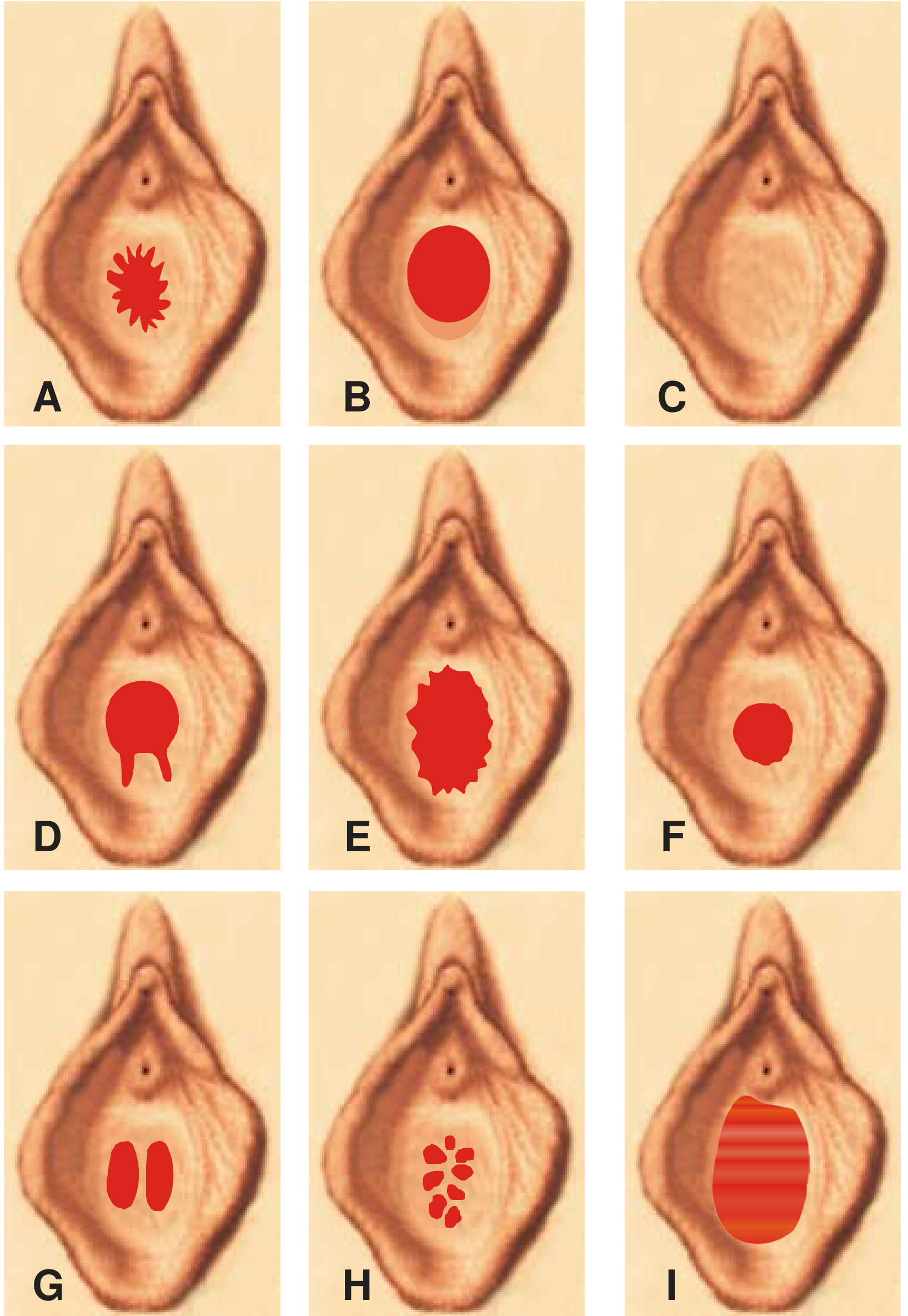
(iv) Different Types of Hymen with Diagram (5 marks)
The hymen is a thin fold of mucous membrane at the junction of the vestibule and vagina.
Types:
-
Semilunar (Crescentic): Most common type. The hymenal opening is placed anteriorly; hymenal tissue is present at the lateral and posterior margins of the vaginal opening.
-
Annular: Hymenal opening is oval/round situated in the center, encircling the vaginal opening.
-
Infantile: Small linear opening in the midline.
-
Cribriform (Sieve-like): Several small hymenal openings.
-
Vertical: A vertical hymenal slit.
-
Septate: Two lateral openings side by side separated by a septum.
-
Imperforate: No hymenal opening; causes cryptomenorrhea at menarche.
-
Fimbriated (Notched/Frilly-edged): Free margin has natural notches - must be differentiated from rupture.
-
Parous introitus (Carunculae myrtiformes): Remnants of hymen after childbirth - irregular tags/nodules.
(Figure: A=Fimbriated, B=Semilunar, C=Imperforate, D=Hymenal tears, E=Carunculae myrtiformes, F=Annular, G=Septate, H=Cribriform, I=Parous introitus)
Differentiation of Fimbriated vs. Ruptured Hymen:
| Feature | Fimbriated | Ruptured |
|---|
| Site of notches | Anterior; don't reach base | Posterior (5 & 7 o'clock); extend to base |
| Shape | Bilaterally symmetrical | Asymmetrical |
| Mucosa over notches | Intact | Not intact |
| Cause | Natural | Sexual intercourse or foreign body |
(v) Differences Between Superfecundation and Superfoetation (3 marks)
| Feature | Superfecundation | Superfoetation |
|---|
| Definition | Fertilization of two separate ova shed at same period of ovulation by two separate acts of coitus | Fertilization of two separate ova shed at different periods of ovulation (different menstrual cycles) |
| Timing of acts | Two coital acts during the same fertile period | Two coital acts in different menstrual cycles during an existing pregnancy |
| Possibility | Quite possible (well documented) | Very rare; theoretically possible in first 2-3 months of pregnancy when menstruation can still occur |
| Development | Both infants equally developed | Two infants in different stages of development |
| Condition for occurrence | Polyovulation | Double uterus (uterus didelphys) or rarely normal uterus |
| Medicolegal importance | Disputed paternity - twins may have different fathers (proven by DNA/blood groups) | Disputed duration of pregnancy; apparent prematurity |
| Classic example | Woman has coitus with two different men; twins born of different racial appearance | Rare; theoretical |
Q.10 (TGMCH) - 14-year-old girl, penetrative sexual assault, per-vaginal bleeding, model medical report
MODEL MEDICO-LEGAL EXAMINATION REPORT
(Sexual Assault Survivor)
MEDICO-LEGAL CASE REPORT
MLC No: ____________ Date: ____________ Time: ____________
Hospital: ____________ (Government Hospital)
Examined by Dr: ____________ (Designation, Registration No.)
Chaperone present: Yes - Name/Designation: ____________
CONSENT (2 marks)
Written informed consent was obtained from the mother (legal guardian) of the survivor, Mrs. ____________, as the patient is a 14-year-old minor. The mother was explained the nature, purpose, and procedure of examination. She signed the consent form voluntarily. The patient's own assent was also noted. Examination conducted in the presence of a female chaperone.
PREAMBLE / POLICE REQUISITION (1 mark)
This examination is conducted on the requisition of ____________ (Police Station, Officer name/Badge No.), vide FIR No. ____________ dated ____________. The patient was brought to the hospital on ____________ at ____________ hours by police with the alleged history of penetrative sexual assault by her neighbor.
HISTORY (1 mark)
As narrated by the mother and patient:
- Name: ____________ Age: 14 years Sex: Female
- Date/Time of alleged assault: ____________ (approximately ____________ hours before presentation)
- Place of assault: Complainant's residence
- Alleged assailant: Neighbor (known person)
- Nature of alleged assault: Forcible penetrative vaginal intercourse
- Patient's account: Victim alleges she was forcibly held down; she tried to resist; assailant covered her mouth
- Post-assault activities: Mother states the victim bathed once after the assault
- Per vaginal bleeding: Yes, noticed since the alleged assault
- Menstrual history: Last menstrual period ____________; cycle regular
- Past medical/surgical history: No significant history
- Prior sexual history: None (as per mother)
- Contraception/STD prophylaxis given previously: None
GENERAL PHYSICAL EXAMINATION (2 marks)
- General condition: Conscious, oriented, cooperative, moderately distressed, tearful
- Built & nutrition: Average
- Height: ____________ cm; Weight: ____________ kg
- Vital signs: BP ____________ mmHg; Pulse ____________/min; Temperature ____________°C
- Puberty assessment: Tanner Stage ____________ (breast development, pubic hair)
- Mental state: Anxious, withdrawn, appropriate affect
- Signs of intoxication: None
Injury chart (extra-genital):
- Multiple reddish-brown, ovoid abrasions (nail scratch marks), approximately 0.5 x 0.3 cm each, arranged in clusters on the right side of the neck, at level ____________
- A reddish-blue contusion (fingertip bruise), approximately 2 x 1.5 cm, on the right inner thigh, ____________ cm above knee
- Linear abrasion, approximately 1.5 x 0.2 cm, on the right forearm (possible defense injury)
- No bite marks, no ligature marks, no fractures detected clinically
GENITAL EXAMINATION (4 marks)
(Examination performed in lithotomy position, with female chaperone present)
External genitalia:
- Labia majora: Swollen, congested, tender on palpation
- Labia minora: Reddened, small abrasion at the left posterior margin
- Clitoris: Normal
- Fourchette (posterior commissure): Fresh laceration approximately 1.5 cm in length, with everted edges and active oozing of blood
- Perineum: Intact
Hymen:
- Type: Annular
- Fresh hymenal laceration at 5 o'clock and 7 o'clock positions extending to the base of attachment; edges everted, congested, bleeding; consistent with recent penetrative trauma
- Old hymenal tears: None (this appears to be the first such injury)
Vagina:
- Redness of vaginal walls in lower third
- Small abrasion on posterior vaginal wall
- Per vaginal bleeding: Yes, active
Cervix: Not fully visualized (age-appropriate examination)
Anal region: No injuries
MATERIALS PRESERVED (3 marks)
All samples collected with proper chain of custody and sealed with wax/adhesive; labeled with patient name, MLC number, date/time, and examining doctor's signature.
| S.No. | Sample | Container | Labeled As |
|---|
| 1 | High vaginal swab (wet preparation on slide) | Glass slide, alcohol-fixed | HVS-1 (wet) |
| 2 | High vaginal swab (dry, for DNA) | Paper envelope, sealed | HVS-2 (dry) |
| 3 | Low vaginal/vulvar swab | Paper envelope | LVS |
| 4 | Blood (EDTA, 5 mL) | Purple-top tube | Blood-DNA |
| 5 | Blood (plain, 5 mL) | Red-top tube | Blood-serology |
| 6 | Urine (50 mL) | Sterile container | Urine |
| 7 | Pubic hair (combing + 10 pulled) | Paper envelope | Pubic hair |
| 8 | Nail clippings + scrapings | Paper envelope | Nail clippings |
| 9 | Undergarments (blood-stained) | Paper bag (sealed) | Clothing-1 |
| 10 | Outer garments | Paper bag (sealed) | Clothing-2 |
| 11 | Anal swab | Paper envelope | Anal swab |
Samples handed over to: Constable ____________ Badge No. ____________ vide receipt.
OPINION (2 marks)
Based on the history, clinical examination, and findings:
- The patient is a 14-year-old female in the pubertal age group.
- Fresh hymenal lacerations at 5 and 7 o'clock positions extending to the base, with bleeding and edema, are consistent with recent forceful penetrative sexual intercourse within the last ____________ hours.
- Extra-genital injuries (scratch abrasions on neck, bruise on inner thigh, forearm abrasion) are consistent with a history of struggle and forcible restraint.
- Per-vaginal bleeding is attributable to the hymenal and posterior commissure lacerations.
- The injuries are not self-inflicted and are consistent with the alleged history of forcible sexual assault.
- Definitive confirmation of sexual assault and identification of the assailant will depend on laboratory analysis of the preserved samples (DNA, semen detection).
- The case has been registered under POCSO Act Section 3/4 and Section 64 BNS.
Signature: ________________
Designation & Registration No.: ________________
Date & Time: ________________
Sources: The Essentials of Forensic Medicine and Toxicology (36th ed., 2026), Parikh's Textbook of Medical Jurisprudence Forensic Medicine & Toxicology, P.C. Dikshit's Textbook of Forensic Medicine & Toxicology