
Balance diet according to marwa
Asking for Preferences
It's a book
Searching the Web
balanced diet book "Marwa" nutrition diet plan
Searching the Web
Marwa book balanced diet food groups recommendations
Asking for Preferences
Asking for Preferences
Balances diet in pedo
Reading File
Finding Sources
Finding Sources
Finding Sources
Reading File
Finding Sources
Finding Sources
Reading File
Finding Sources
Reading File
Finding Sources
Reading File
Reading File
Loading Image
I now have comprehensive information. Here is a thorough answer on Balanced Diet in Pediatrics (Pedo):
Balanced Diet in Pediatrics
Definition
A balanced diet is one that contains a variety of foods in such quantities and proportions that the need for energy, amino acids, vitamins, minerals, fats, carbohydrates, and other nutrients is adequately met - for maintaining health, vitality, and general well-being, and also makes a small provision for extra nutrients to withstand short durations of leanness. - Park's Textbook of Preventive and Social Medicine
Principles of a Balanced Diet
When constructing a balanced diet, the following principles must be kept in mind:
| Nutrient | Recommended Proportion |
|---|---|
| Protein | 10-15% of daily energy intake |
| Fat | 15-30% of daily energy intake |
| Carbohydrates | Remaining energy (rich in natural fibre) |
| Salt | No more than 5 g/day |
| Junk foods | Minimized (empty calories) |
The Food Guide Pyramid
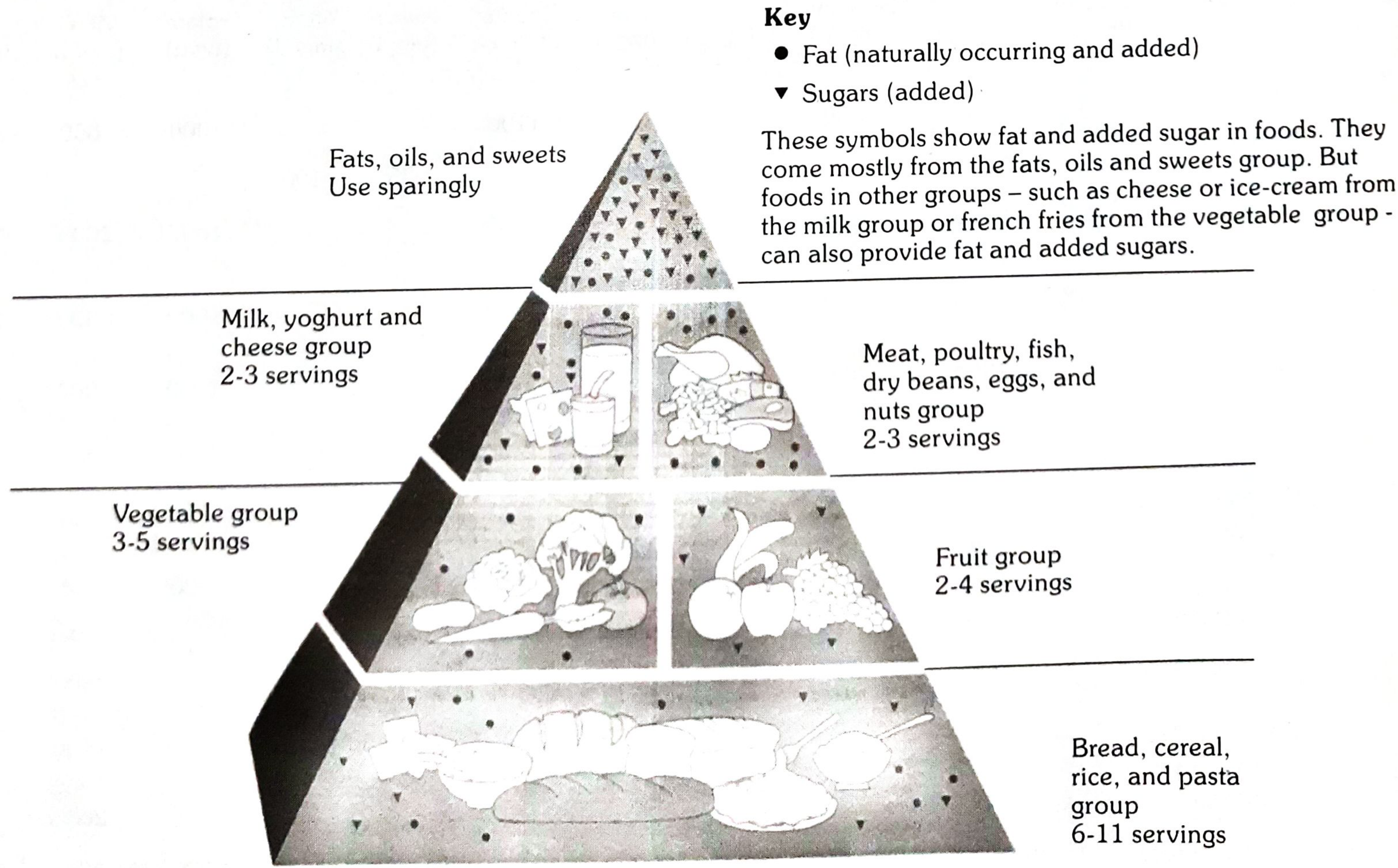
The pyramid shows daily serving recommendations:
- Bread, cereal, rice & pasta: 6-11 servings (base - largest intake)
- Vegetables: 3-5 servings
- Fruits: 2-4 servings
- Milk, yoghurt & cheese: 2-3 servings
- Meat, poultry, fish, eggs, dry beans & nuts: 2-3 servings
- Fats, oils & sweets: Use sparingly (top of pyramid)
Balanced Diet in Children - Age-Specific Guidelines
Infants (0-6 months)
- Exclusive breastfeeding for the first 6 months is recommended by both the WHO and the AAP
- Breast milk from a mother with a balanced diet satisfies all of the infant's nutritional requirements during this period - Medical Physiology
- Iron: Breastfed full-term infants need 1 mg/kg/day of elemental iron from iron-fortified cereals or meats from 4-6 months
- Vitamin D: All breastfed infants should receive 400 IU/day of supplemental vitamin D from within the first few days of life
- Fluoride: Infants 6 months - 3 years not on fluoridated water may receive 0.25 mg/day of supplemental fluoride
Infants (6-12 months) - Solid Food Introduction
- Single-ingredient foods should be introduced one at a time, for 1 week each, to observe for allergic reactions
- Single-grain cereals (e.g., rice) are usually well tolerated and provide iron
- Avoid honey in infants under 1 year (risk of botulism)
- Avoid popcorn, nuts, and rounded candies due to choking risk
- Wean from bottle to cup by 12-15 months; avoid bedtime bottles (associated with dental caries)
Toddlers & Preschool Children (1-5 years)
- Because young children cannot choose a well-balanced diet, parents must provide nutritious, safe, developmentally appropriate foods at regular meals and snacks - Textbook of Family Medicine
- Recommended dietary fibre: 19 g/day (ages 1-3 years); 25 g/day (ages 4-8 years)
- Small portions should be offered, allowing the child to determine how much to eat
- Children following strict vegetarian diets are at risk for deficiencies of Vitamin B12, Vitamin D, iron, calcium, and zinc
- Healthy children eating a varied diet usually do not require a multivitamin supplement
- Television and distractions should be avoided during mealtimes
Adolescents
Adolescents are at greater nutritional risk due to meal skipping, fast food, and fad diets. Key concerns:
- Energy needs: Sedentary girls: 1600-1800 kcal/day; sedentary boys: 1800-2200 kcal/day (add 200-400 kcal for active teens)
- Calcium: 1300 mg/day recommended (most teenagers fall short)
- Iron: Increased needs due to rapid lean body mass gain + menstrual losses in girls
- Zinc: Required for growth and sexual maturation
- Replacing milk with soft drinks, coffee, and tea lowers intake of calcium, vitamins A and C
Special Considerations
| Condition | Dietary Adaptation |
|---|---|
| Growth | Increased protein, calcium, iron, zinc |
| Pregnancy (teens) | +300 kcal/day in 2nd & 3rd trimester; iron ~30 mg/day; folic acid 400-600 μg/day; calcium 1300 mg/day |
| Vegetarian children | Supplement B12, vitamin D, iron, calcium, zinc |
| Malabsorption/hemolytic anemia | Additional folic acid |
| Diabetes, medical disorders | Diet adapted to the specific condition |
Key Takeaway
A balanced diet for children must be:
- Age-appropriate in food texture, portion size, and nutrient density
- Varied across all food groups
- Supervised by parents/caregivers since young children cannot make dietary decisions independently
- Supplemented where dietary gaps exist (especially vitamin D, iron, fluoride in infancy)
- Adapted to special conditions (growth spurts, illness, vegetarian diet)
Sources: Park's Textbook of Preventive and Social Medicine; Textbook of Family Medicine 9e; Medical Physiology (Guyton & Hall)
This is a shared conversation. Sign in to Orris to start your own chat.