
Sturm’s conoid
Sturm's conoid optics astigmatism focal lines
https://www.aao.org/Assets/86407d70-b8b4-4a03-92ae-057473a79…
Sturm's Conoid
What it is
The Optics of Astigmatism
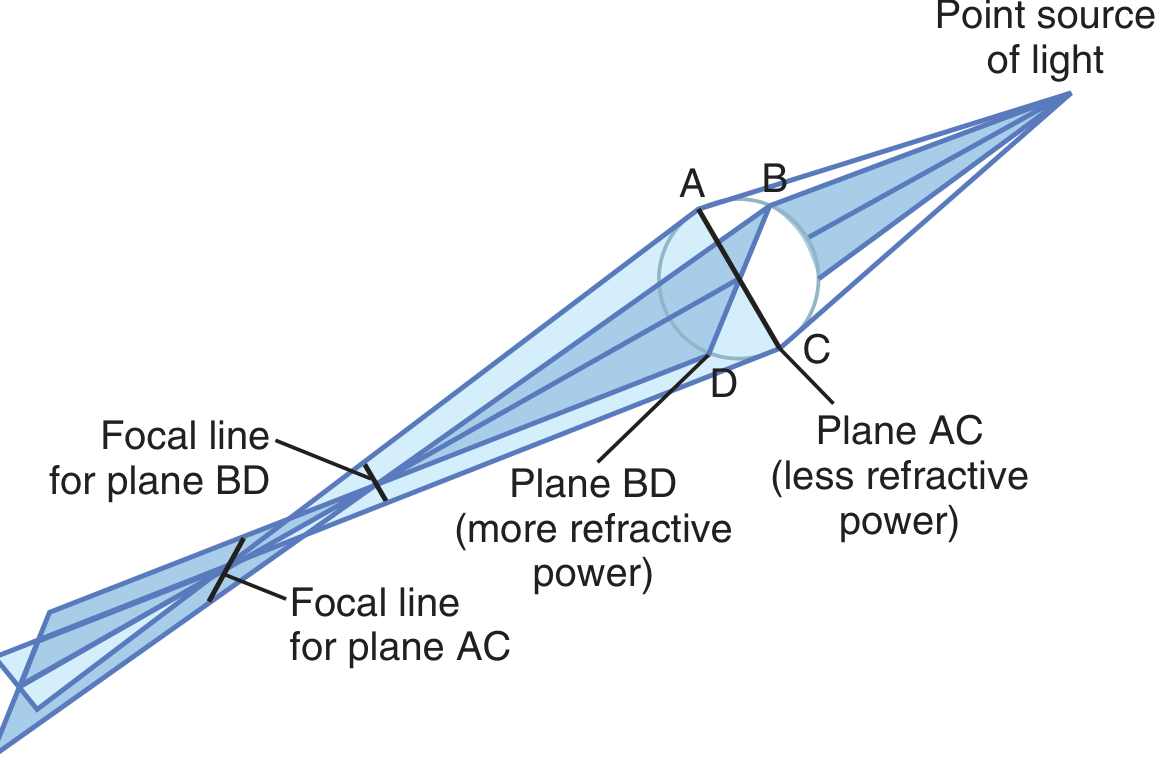
Components of the Conoid of Sturm
| Structure | Description |
|---|---|
| First focal line | A line focus formed by the more powerful (more curved) meridian - this line lies perpendicular to that meridian |
| Circle of Least Confusion (CoLC) | A circular cross-section midway between the two focal lines; the point where the beam is most "point-like" |
| Second focal line | A line focus formed by the less powerful (flatter) meridian - perpendicular to the first focal line |
| Focal interval | The axial distance between the two focal lines; its length is proportional to the degree of astigmatism |
The Circle of Least Confusion (CoLC)
- SE = (Sphere) + (Cylinder / 2)
- A spherical lens equal in power to the SE will move the entire conoid so the CoLC falls on the retina, giving the "best blur" - but not sharp vision
- The smaller the CoLC, the better the residual uncorrected vision
- To achieve true clear vision, the conoid must be collapsed to a single point on the retina - which requires a cylindrical (or toric) corrective lens
Types of Astigmatism by Position of the Conoid Relative to the Retina
| Type | Focal lines position |
|---|---|
| Simple myopic astigmatism | One focal line on retina, the other in front |
| Simple hyperopic astigmatism | One focal line on retina, the other behind |
| Compound myopic astigmatism | Both focal lines in front of the retina |
| Compound hyperopic astigmatism | Both focal lines behind the retina |
| Mixed astigmatism | One focal line in front, one behind the retina (retina passes through the conoid) |
Clinical Relevance
- Astigmatism is not correctable by accommodation - because accommodation changes lens curvature approximately equally in both meridians, it cannot selectively power up one meridian over the other
- Correction requires a cylindrical lens (or toric lens/implant) aligned to the axis of the flat meridian
- Surgical options (per Kanski's Clinical Ophthalmology) include limbal relaxing incisions/arcuate keratotomy, PRK/LASEK (up to 3D), LASIK (up to 5D), and toric intraocular lens implants
- The Maddox rod test, fan chart (clock dial), and Jackson cross-cylinder are clinical tools used to locate the axis of the conoid and determine the cylindrical correction needed
I have to write in exam internal ophthalmology final year MBBS. SHORT NOTE 5 marker type
Sturm's Conoid
Definition
Formation
- The more curved (more powerful) meridian focuses light nearer to the lens → forms first focal line (perpendicular to this meridian)
- The flatter (less powerful) meridian focuses light farther from the lens → forms second focal line (perpendicular to the first)
- The spindle-shaped figure traced between these two focal lines is the conoid of Sturm
Components (Label these if drawing a diagram)
First focal     Circle of      Second focal
    line      Least Confusion      line
     |               |               |
     ●━━━━━━━━━━━━━●━━━━━━━━━━━━━●
  (more powerful               (less powerful
    meridian)                    meridian)
        ←——— Focal Interval ———→
| Component | Description |
|---|---|
| First focal line | Line focus of the stronger meridian |
| Second focal line | Line focus of the weaker meridian; perpendicular to first |
| Focal interval | Axial distance between the two focal lines; proportional to degree of astigmatism |
| Circle of Least Confusion (CoLC) | Circular cross-section at the midpoint of the focal interval; smallest and most point-like section of the conoid |
Circle of Least Confusion
- Located midway between the two focal lines
- Corresponds to the spherical equivalent (SE) of the astigmatic error:
SE = Sphere + (Cylinder ÷ 2)
- A spherical corrective lens equal to the SE moves the CoLC onto the retina → gives "best blur" (best uncorrected vision possible with a sphere alone)
- Not true sharp vision - the conoid must be fully collapsed to a point for that
Clinical Significance
- Astigmatism cannot be corrected by accommodation - accommodation increases lens power equally in all meridians
- A cylindrical lens aligned to the flat meridian collapses the conoid to a single point on the retina
- In mixed astigmatism, the retina lies within the focal interval (one focal line in front, one behind)
- The CoLC concept explains why the spherical equivalent gives the "best sphere" prescription when full cylindrical correction is not given
Types of Astigmatism (based on position of conoid relative to retina)
- Simple myopic - one focal line on retina, one in front
- Simple hyperopic - one focal line on retina, one behind
- Compound myopic - both focal lines in front of retina
- Compound hyperopic - both focal lines behind retina
- Mixed - one in front, one behind (retina cuts through the conoid)
Acute Pancreatitis final year MBBS SURGERY
Acute Pancreatitis
Final Year MBBS Surgery - Long Answer / Short Note
Definition
Etiology (Causes) - Mnemonic: "I GET SMASHED"
| Category | Examples |
|---|---|
| I - Idiopathic | 10-20% of cases |
| G - Gallstones | Most common cause (accounts for ~40-50%) |
| E - Ethanol (alcohol) | Second most common |
| T - Trauma | Blunt abdominal trauma, post-ERCP |
| S - Steroids | Corticosteroids |
| M - Mumps / infections | Coxsackievirus, ascariasis |
| A - Autoimmune | Autoimmune pancreatitis |
| S - Scorpion sting / hypertriglyceridemia (>1000 mg/dL) | |
| H - Hypercalcemia / Hyperlipidemia | Hyperparathyroidism |
| E - ERCP (post-procedural) | Iatrogenic |
| D - Drugs | Azathioprine, thiazides, estrogens, anticonvulsants |
Gallstones + alcohol = nearly 80% of all cases.
Pathogenesis
-
Ductal obstruction (gallstone/biliary sludge impacting ampulla of Vater) → increased intraductal pressure → enzyme-rich interstitial fluid accumulation → fat necrosis → inflammatory cytokine release → edema and ischemia
-
Primary acinar cell injury (alcohol, hypertriglyceridemia, ischemia, drugs) → direct toxic effect → intracellular activation of enzymes
-
Defective intracellular transport → proenzymes co-packaged with lysosomal hydrolases → trypsin activation → lysosomal rupture
- Activates prekallikrein → kinin cascade
- Activates Factor XII (Hageman factor) → clotting + complement cascade
- Damages blood vessels → hemorrhage within pancreas
Clinical Features
- Epigastric pain - sudden onset, severe, constant, radiating to the back (band-like/boring) - cardinal symptom
- Nausea and vomiting (does not relieve the pain - important!)
- Anorexia
- Tachycardia, hypotension (from third-spacing and hypovolemia)
- Fever
- Abdominal tenderness + guarding in the epigastrium
- Abdominal distension (paralytic ileus)
- Jaundice - if common bile duct compressed by gallstone or edematous pancreatic head
- Grey Turner's sign - ecchymosis (bluish discoloration) of the flanks (retroperitoneal hemorrhage tracking to flank)
- Cullen's sign - periumbilical ecchymosis (hemorrhage tracking along falciform ligament)
Investigations
Blood Tests
| Test | Finding / Significance |
|---|---|
| Serum amylase | >3x normal is diagnostic; peaks within hours, normalizes by 48-72h; less specific |
| Serum lipase | More specific than amylase; remains elevated longer (8-14 days); preferred |
| WBC | Leukocytosis |
| Blood glucose | Hyperglycemia (islet cell damage) |
| Serum calcium | Hypocalcemia (saponification - fat necrosis binds calcium) |
| Serum LDH, AST | Elevated |
| Hematocrit | Raised (hemoconcentration from third-spacing) |
| S. Bilirubin / LFTs | Elevated in biliary pancreatitis |
| ABG | PaO2 may fall (acute lung injury / ARDS) |
| CRP | >150 mg/L at 48h defines severe disease |
Imaging
| Modality | Findings |
|---|---|
| X-ray abdomen | "Sentinel loop" (gas-distended proximal jejunum), "colon cut-off" sign |
| CXR | Left-sided pleural effusion (indicates severity) |
| USG abdomen | First-line: detects gallstones, CBD dilatation, pancreatic edema, peripancreatic fluid; sensitivity limited by bowel gas |
| CECT abdomen | Gold standard for severity assessment - shows necrosis, fluid collections, abscess; done at 48-72h |
| MRCP | For biliary anatomy, suspected pancreas divisum, recurrent pancreatitis |
Severity Assessment
Revised Atlanta Classification (2012)
| Grade | Criteria |
|---|---|
| Mild | No organ failure, no local/systemic complications |
| Moderately severe | Transient organ failure (<48h) and/or local/systemic complications |
| Severe | Persistent organ failure (>48h) |
Ranson's Criteria (most common exam question)
- Age >55 years
- WBC >16,000/mm³
- Blood glucose >200 mg/dL
- Serum LDH >350 IU/L
- AST >250 IU/L
- Hematocrit fall >10%
- BUN rise >5 mg/dL
- Serum Ca²⁺ <8 mg/dL
- PaO₂ <60 mmHg
- Base deficit >4 mEq/L
- Fluid sequestration >6 L
Score <3 = mild (mortality <1%) | Score ≥3 = severe | Score >6 = mortality ~50%
CT Severity Index (Balthazar score)
- Combines pancreatic inflammation score (0-4 points) + necrosis score (0-6 points)
- CTSI 0-3: mortality 3% | CTSI 4-6: mortality 6% | CTSI 7-10: mortality 17%
Complications
- Pancreatic necrosis (sterile or infected)
- Pseudocyst (fluid collection enclosed by fibrous wall; develops after 4+ weeks)
- Pancreatic abscess
- Pancreatic fistula
- ARDS (most common pulmonary complication)
- Acute kidney injury
- Septic shock
- DIC
- Hypocalcemia / hypoglycemia
- Ileus
Treatment
Conservative (cornerstone of management)
- NPO (nil by mouth) - rests the pancreas
- Aggressive IV fluid resuscitation - isotonic crystalloid (Ringer's lactate preferred); shock is the principal cause of death in the first 48h
- Analgesia - Pethidine (meperidine) is the drug of choice; morphine is contraindicated (increases sphincter of Oddi tone)
- NG tube - for persistent vomiting and to suppress pancreatic stimulation by removing gastric acid from the duodenum
- Oxygen supplementation if PaO₂ <70 mmHg
- Electrolyte correction - especially calcium, potassium
- Monitoring - pulse, BP, urine output, CVP, ABG
Nutrition
- Mild AP: oral feeding restarted when pain subsides
- Severe AP: enteral nutrition via nasojejunal tube is preferred over TPN - maintains gut barrier, reduces infections
Antibiotics
- NOT routine; only for confirmed infected necrosis or sepsis (imipenem/meropenem)
ERCP
- Indicated within 24-72h in acute biliary pancreatitis with cholangitis or persistent biliary obstruction (not for uncomplicated gallstone pancreatitis)
Surgery / Intervention
- Cholecystectomy - done in the same admission (when recovered) for gallstone pancreatitis to prevent recurrence
- Necrosectomy (open or minimally invasive step-up approach) - for infected pancreatic necrosis not responding to antibiotics
- Drainage of pseudocyst if symptomatic/infected (endoscopic, radiological, or surgical)
Key Exam Points to Remember
| Point | Detail |
|---|---|
| Most common cause | Gallstones (India: alcohol is close second) |
| Cardinal symptom | Epigastric pain radiating to back |
| Drug of choice for pain | Pethidine (morphine contraindicated) |
| Best diagnostic test | Serum lipase (more specific + prolonged elevation) |
| Gold standard imaging | CECT abdomen |
| Severity scoring | Ranson's criteria (≥3 = severe) |
| Grey Turner's sign | Flank ecchymosis = hemorrhagic pancreatitis |
| Cullen's sign | Periumbilical ecchymosis = hemorrhagic pancreatitis |
| Preferred nutrition in severe AP | Enteral (nasojejunal) feeding |
| Surgery timing for gallstones | Cholecystectomy in same admission after recovery |
Pseudocyst
Pancreatic Pseudocyst
Final Year MBBS Surgery - Short Note / Long Answer
Definition
Key distinguishing feature: No epithelial lining (true cysts have epithelial lining)
Etiology / Causes
- Acute pancreatitis - most common; arises from an acute peripancreatic fluid collection (APFC) that fails to resolve
- Chronic pancreatitis - especially alcoholic chronic pancreatitis (~25% develop pseudocysts)
- Pancreatic trauma - duct disruption from blunt abdominal injury
Pathogenesis
- Disruption or leakage from the main pancreatic duct or a side branch releases enzyme-rich pancreatic juice
- This fluid accumulates in the lesser sac or peripancreatic tissue
- Over 4-8 weeks, a fibrous/granulation tissue capsule forms around it
- More than 50-70% communicate with the main pancreatic duct
- The fibrotic reaction requires at least 4 weeks - a collection seen before 4 weeks is NOT yet a pseudocyst (it is an acute peripancreatic fluid collection / APFC)
Incidence
- Occurs in 5-15% of patients with acute pancreatitis
- ~25% of patients with chronic pancreatitis
- Most common in the lesser sac (behind the stomach)
- Usually single; occasionally multiple
Clinical Features
Symptoms
- Persistent epigastric pain - most common symptom (constant or colicky)
- Nausea and vomiting (gastric compression)
- Early satiety, weight loss
- Persistent elevation of serum amylase/lipase after an attack of pancreatitis should raise suspicion
Signs
- Palpable epigastric mass - rounded, smooth, non-tender (if uncomplicated); may be fluctuant
- Jaundice - if bile duct is compressed by a pseudocyst in the head of the pancreas
- Features of the underlying pancreatitis
Investigations
Blood Tests
| Test | Finding |
|---|---|
| Serum amylase / lipase | Persistently elevated after pancreatitis |
| WBC | Elevated if infected |
| LFTs / bilirubin | Elevated if biliary compression |
Imaging (KEY)
| Modality | Findings |
|---|---|
| USG abdomen | First-line; shows anechoic (fluid-filled) rounded mass; detects size, location |
| CECT abdomen | Gold standard - shows cyst wall, contents (fluid vs solid material), relation to stomach/duodenum, extent of necrosis; helps plan drainage |
| MRI / MRCP | Best for characterizing contents (fluid vs solid/debris); shows ductal communication and anatomy non-invasively |
| EUS (Endoscopic USG) | Used when cystic neoplasm cannot be excluded; allows FNA of cyst fluid |
| Barium meal (old) | Widening of the C-loop of duodenum; stomach displaced anteriorly |
Cyst Fluid Analysis (to distinguish from cystic neoplasm)
| Parameter | Pseudocyst | Mucinous Neoplasm |
|---|---|---|
| Amylase | Very HIGH | Variable |
| CEA | LOW (<5 ng/mL) | HIGH (>400 ng/mL) |
| Cytology | Inflammatory cells, no mucin | Mucinous/malignant cells |
Natural History
- Up to 70% resolve spontaneously, particularly if:
- Small (<4 cm)
- Located in the tail
- No ductal communication or obstruction
- Large (>6 cm), thick-walled, long-standing (>12 weeks), or those arising in chronic pancreatitis are less likely to resolve spontaneously
- Complications develop in 20-40% of cases
Complications
| Complication | Notes |
|---|---|
| Infection / Abscess | Fever, pain, leukocytosis; requires urgent drainage |
| Haemorrhage | Erosion into a vessel (splenic artery most common) → pseudoaneurysm → rupture into cyst → "haemosuccus pancreaticus" (blood in pancreatic duct/GI tract); mortality >40% |
| Rupture | Into peritoneum → peritonitis; into gut → GI bleeding / internal fistula; into pleural space → pancreatic pleural effusion |
| Obstructive jaundice | Compression of CBD |
| Bowel obstruction | Gastric outlet / duodenal compression |
| Pancreatic ascites | Rupture into peritoneum with chronic leak |
| Splenic vein thrombosis | → Portal hypertension, gastric varices |
Treatment
Indications for Intervention
- Symptomatic (pain, mass, vomiting, jaundice)
- Complications develop (infection, hemorrhage, rupture)
- Rapidly enlarging pseudocyst
- Cannot be differentiated from a cystic neoplasm
Asymptomatic pseudocysts - observe conservatively; most will resolve
Wait for Maturation
- Intervene only after ≥4-6 weeks (wall must mature into firm fibrous tissue for safe anastomosis; earlier drainage leads to higher leak rates)
Drainage Options
1. Endoscopic Drainage (First-line, preferred)
- EUS-guided transmural drainage (cystogastrostomy or cystoduodenostomy):
- Puncture through posterior gastric or duodenal wall into cyst under EUS guidance
- Double pigtail stent placed (one end in cyst, other in stomach lumen)
- Success rate: 80-90%
- For pseudocysts within 1 cm of stomach or duodenum
- Transpapillary drainage (via ERCP): for pseudocysts communicating with the main pancreatic duct in the head
2. Surgical Drainage (Gold standard, recurrence rate <5%)
- Cystogastrostomy - posterior wall of stomach sutured to anterior wall of cyst (for cysts adherent to posterior stomach wall) - most common surgical procedure
- Roux-en-Y Cystojejunostomy - most versatile; for cysts penetrating transverse mesocolon, paracolic gutters, or lesser sac
- Cystoduodenostomy - for cysts in the head adherent to the duodenum
- Can be open or laparoscopic
Internal drainage is always preferred over external drainage
3. Percutaneous Drainage - Generally AVOIDED
- High recurrence rate
- Risk of pancreaticocutaneous fistula (if duct communication present)
- Reserved only for infected pseudocyst causing sepsis (as a temporizing measure)
Summary Table: Drainage Methods
| Method | Route | Best For | Success | Drawback |
|---|---|---|---|---|
| Endoscopic (EUS) | Transgastric/transduodenal | Cysts near stomach/duodenum | 80-90% | Operator skill needed |
| Surgical (cystogastrostomy) | Open/laparoscopic | All locations; failed endoscopy | >95% | Invasive |
| Percutaneous | Skin → cyst | Infected cyst, septic patient | Low | Fistula risk |
Exam High-Yield Points
| Point | Fact |
|---|---|
| Definition | Fluid collection with NO epithelial lining, wall of fibrous/granulation tissue |
| Minimum time to form | 4 weeks after acute pancreatitis |
| Most common cause | Acute pancreatitis (gallstones/alcohol) |
| Most common site | Lesser sac (behind stomach) |
| % that communicate with PD | 50-70% |
| % resolve spontaneously | Up to 70% |
| Distinguishing from cyst neoplasm | Low CEA + high amylase in fluid |
| Most dangerous complication | Haemorrhage (>50% of pseudocyst mortality) |
| First-line drainage | Endoscopic (EUS-guided) |
| Surgical procedure of choice | Cystogastrostomy |
| Percutaneous drainage - why avoided? | Risk of pancreaticocutaneous fistula |
I want to explain Cystogastrostomy in short if possible with a small diagram
Simple clean medical illustration diagram of surgical cystogastrostomy for pancreatic pseudocyst. Cross-sectional schematic view showing: the stomach in the upper portion with its anterior wall and posterior wall clearly labelled, a large oval pseudocyst sitting behind the stomach in the lesser sac labelled "Pancreatic Pseudocyst", the pancreas labelled below/behind the pseudocyst. A clear opening shown between the posterior wall of the stomach and the anterior wall of the pseudocyst, labelled "Cystogastrostomy anastomosis (6-8 cm opening)". Arrows showing direction of fluid drainage from the pseudocyst into the stomach lumen. The gastric lumen labelled. Step annotations: Step 1 - anterior gastrotomy, Step 2 - posterior gastric wall incised into pseudocyst, Step 3 - anastomosis sutured. Clean black and white line drawing style with clear labels, suitable for a medical exam note or textbook.
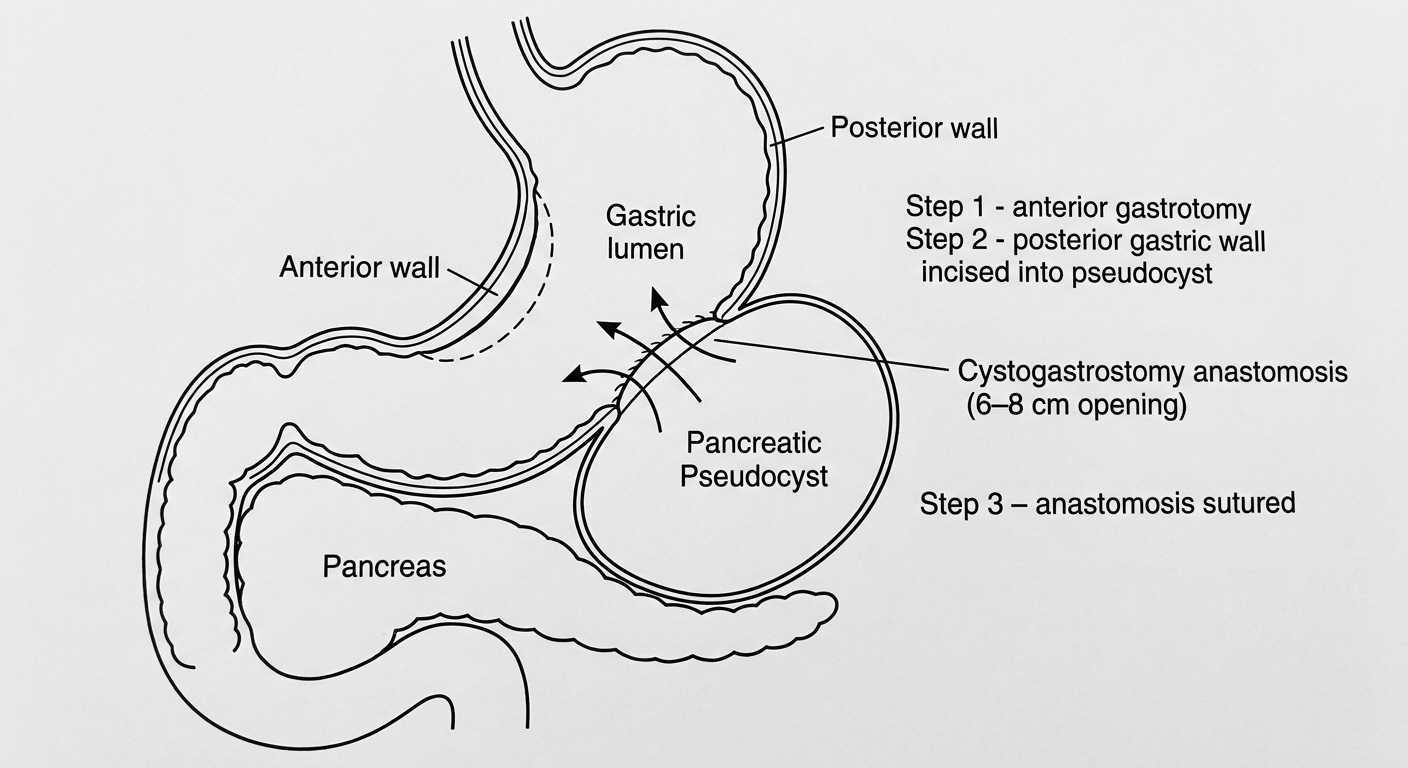
Cystogastrostomy - Short Note
What and Why
Works because: ~35% of pseudocysts lie in the lesser sac, directly fused against the posterior gastric wall - making the stomach the nearest and most natural drainage route.
Steps of the Operation (Open Surgical)
STEP 1 — ANTERIOR GASTROTOMY
         ↓
STEP 2 — IDENTIFY BULGE in posterior gastric wall
         (confirm by needle aspiration → amylase-rich fluid)
         ↓
STEP 3 — INCISE POSTERIOR GASTRIC WALL + PSEUDOCYST WALL
         (electrocautery, 6-8 cm opening)
         ↓
STEP 4 — EVACUATE cyst contents + debris + send for cytology/biopsy
         ↓
STEP 5 — SUTURE anastomosis
         (locking running stitch, 2-0 absorbable monofilament,
          full thickness of posterior gastric wall + cyst wall)
         ↓
STEP 6 — CLOSE anterior gastrotomy in two layers
Key Technical Points
| Point | Detail |
|---|---|
| Incision | Midline epigastric (~12 cm) |
| Anterior gastrotomy | 6-8 cm transverse cut between stay sutures |
| Confirming pseudocyst | Visible bulge in posterior wall + needle aspiration of amylase-rich fluid |
| Size of anastomosis | 6-8 cm (wide enough to prevent re-accumulation) |
| Suture | Locking running stitch - prevents bleeding from gastric submucosal vascular plexus |
| Biopsy | Always take a full-thickness biopsy of the cyst wall to exclude cystic neoplasm |
| Close anterior gastrotomy | Two layers - inner absorbable running + outer silk |
Endoscopic Cystogastrostomy (EUS-guided) - Modern Approach
EUS probe identifies pseudocyst through posterior gastric wall
        ↓
EUS-guided needle puncture through posterior gastric wall into cyst
        ↓
Guidewire coiled inside cyst cavity
        ↓
Tract dilated (balloon dilatation)
        ↓
Double-pigtail stent placed
  (one end in cyst, other end in stomach lumen)
        ↓
Cyst drains continuously into stomach → collapses over weeks
- Success rate: 80-90%
- No surgical incision needed
- Now considered first-line where available and cyst is within 1 cm of stomach wall
Comparison: Open vs Endoscopic Cystogastrostomy
| Feature | Open Surgical | Endoscopic (EUS) |
|---|---|---|
| Recurrence rate | <5% (gold standard) | ~10-15% |
| Hospital stay | Longer | Shorter |
| Invasiveness | Open laparotomy | Minimally invasive |
| Cost | Higher | Lower |
| Availability | Universal | Needs expert endoscopist |
| Preferred when | Endoscopy fails; large debris; neoplasm excluded | First-line in most centres |
One-Line Summary for Exam
Cystogastrostomy = surgical (or endoscopic) creation of a permanent opening between the posterior wall of the stomach and the anterior wall of an adherent pseudocyst, allowing the cyst to drain internally into the stomach lumen.
Discuss signs and symptoms, treatment of CBD stone. Refer SRB
Common Bile Duct (CBD) Stones - Choledocholithiasis
Final Year MBBS Surgery | SRB-style Answer
Note: SRB's Manual of Surgery is not available in this library. This answer follows the same structure and style as SRB, drawing from Sabiston, Bailey & Love, Schwartz, and Mulholland & Greenfield - all of which SRB references extensively.
Definition
Types of CBD Stones
| Type | Description |
|---|---|
| Secondary (most common) | Cholesterol or pigmented stones that form in the gallbladder and migrate into the CBD |
| Primary | Brown pigment stones forming de novo in the CBD; associated with bacterial infection (biliary stasis + Escherichia coli/Klebsiella); more common in Asian populations |
| Retained stones | Secondary stones found in CBD within 2 years of cholecystectomy (incidence 1-2%) |
| Recurrent stones | Found >2 years after cholecystectomy |
Signs and Symptoms
Asymptomatic
- Many stones are incidental findings on USG or intraoperative cholangiogram
Symptomatic - Clinical Features
1. Pain
- Right upper quadrant / epigastric biliary colic - colicky, radiating to back or right shoulder
- Pain is important distinguishing feature from malignant obstruction (which is usually painless)
- Onset is acute due to sudden ductal distension
2. Obstructive Jaundice
- Yellow discolouration of sclera and skin
- Dark urine (bilirubinuria - "tea-coloured")
- Pale/clay-coloured stools (absent bile pigments in stool)
- Pruritus (bile salt deposition in skin)
- Jaundice in CBD stone is typically painful, fluctuating (stone may intermittently shift) - distinguishes it from malignant obstruction (painless, progressive)
3. Fever / Rigors
- Suggests superimposed ascending cholangitis (bacterial infection of bile ducts)
- Fever with chills - due to bacteraemia
4. Charcot's Triad (Ascending Cholangitis)
Fever + Jaundice + Right upper quadrant pain
- Present in <50% of cholangitis cases
- Classic triad described by Jean Martin Charcot (1877)
5. Reynolds' Pentad (Severe/Suppurative Cholangitis)
Charcot's Triad + Hypotension + Altered mental status
- Indicates septic shock - ominous sign
- Mortality approaches 100% without immediate treatment
6. Other Features
- Nausea and vomiting
- Hepatomegaly (enlarged, tender liver due to back-pressure)
- Palpable gallbladder - usually NOT present with CBD stones (Courvoisier's Law: palpable gallbladder + jaundice = malignant obstruction, NOT stone; stone causes fibrosis/shrinkage of GB)
- Complications: acute pancreatitis (stone at ampulla), liver abscess
Investigations
Blood Tests
| Test | Finding | Significance |
|---|---|---|
| Serum bilirubin | Elevated (conjugated/direct dominant) | Obstructive jaundice; >4 mg/dL = very high risk for CBD stone |
| ALP (Alkaline Phosphatase) | Markedly elevated | Best marker of biliary obstruction |
| GGT | Elevated | Confirms biliary origin |
| AST / ALT | Mildly elevated | Hepatocellular damage from back-pressure |
| PT/INR | Prolonged | Vitamin K malabsorption (fat-soluble vitamin) |
| WBC | Leukocytosis | Suggests cholangitis |
| Serum amylase/lipase | Elevated | Suggests gallstone pancreatitis |
| Urine | Bilirubin +ve, urobilinogen absent | Obstructive pattern |
Imaging
| Modality | Findings | Notes |
|---|---|---|
| USG abdomen | Dilated CBD (>6 mm normal, >8 mm in elderly/post-cholecystectomy); stone may be seen with acoustic shadow | First-line; sensitivity ~80%, specificity ~90%; poor for distal CBD stones (gas shadow) |
| MRCP | "Filling defect" in dilated CBD; convex intraluminal shadow | Best non-invasive test; sensitivity >90%, specificity >99%; preferred when ERCP not immediately planned |
| ERCP | Direct visualisation of stone as filling defect; also therapeutic | Gold standard - diagnostic AND therapeutic in same sitting; complication rate ~10% |
| CT abdomen | Dilated CBD; stone (hyperdense); rules out other causes | Sensitivity ~90%; good for anatomy; not routine |
| EUS (Endoscopic USG) | Highly sensitive for small stones and distal CBD | Used when MRCP inconclusive; can guide ERCP |
| PTC (Percutaneous transhepatic cholangiogram) | Used when ERCP fails or altered anatomy | Also therapeutic |
| Intraoperative cholangiogram (IOC) | Confirms CBD clearance at time of cholecystectomy | Detects unsuspected stones in 1-2% |
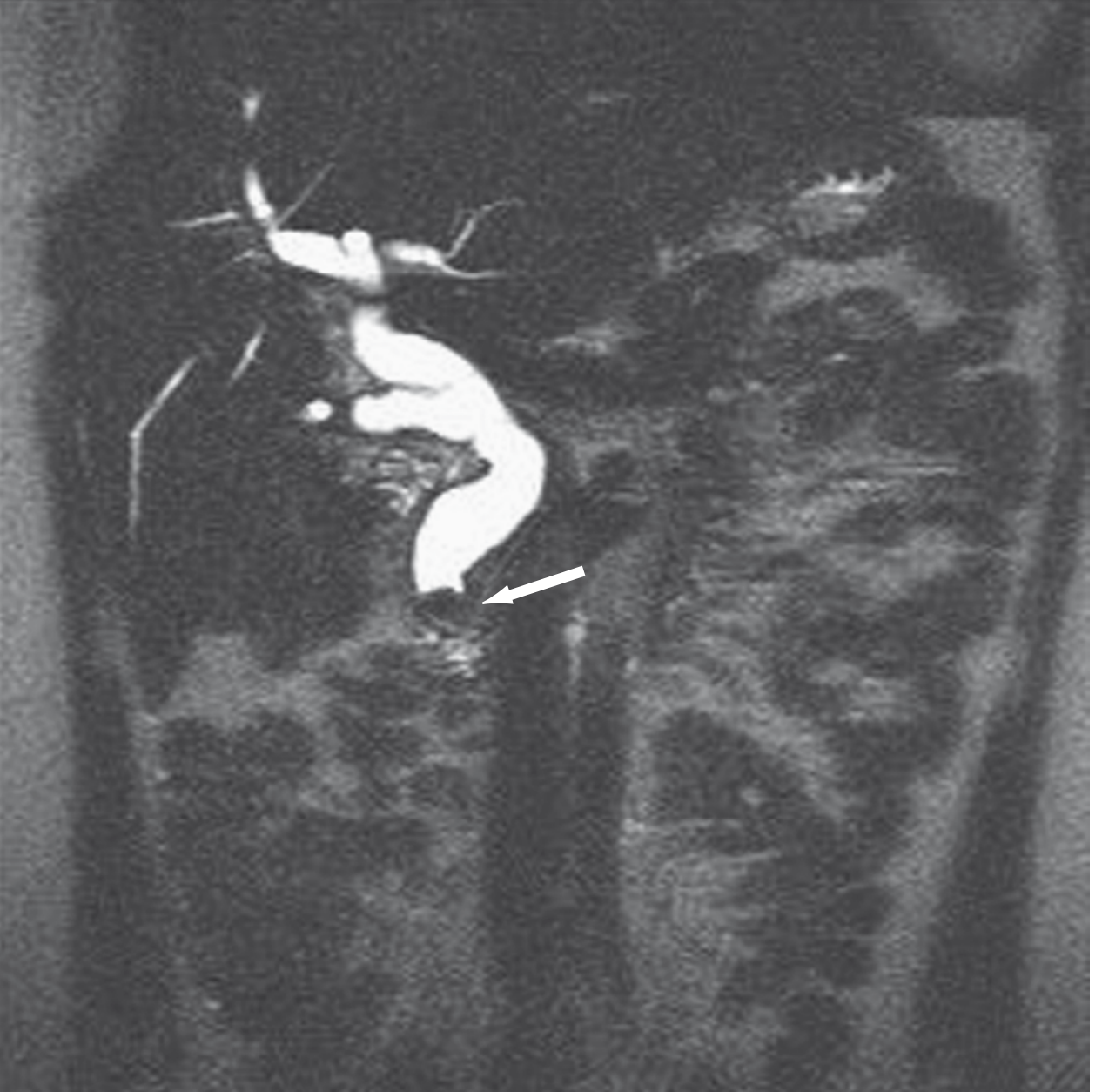
ASGE Risk Stratification for CBD Stone
| Risk Category | Predictors | Action |
|---|---|---|
| Very High | CBD stone on USG, OR cholangitis, OR bilirubin >4 mg/dL | Proceed directly to ERCP |
| High | Dilated CBD (>6mm) + bilirubin 1.8-4 mg/dL | EUS or MRCP, then ERCP |
| Low | Normal LFTs, no dilation, no stone | Cholecystectomy alone; no pre-op ERCP |
| Moderate | Any other abnormal LFT, age >55, gallstone pancreatitis | MRCP or EUS first |
Treatment
Principles
- Clear the CBD of all stones
- Treat/prevent cholangitis
- Remove the gallbladder (cholecystectomy) to prevent recurrence
A. Endoscopic Treatment - ERCP + Sphincterotomy (First-line)
- ERCP performed under fluoroscopy
- Endoscopic sphincterotomy (EST) - incision of the sphincter of Oddi
- Stone extraction with Dormia basket or balloon catheter sweep
- For large stones: mechanical lithotripsy (crushing within basket), or laser / electrohydraulic lithotripsy (EHL)
- If duct cannot be cleared completely: biliary stent placed temporarily
- Clears duct in >75% in first attempt, >90% with repeat
- Followed by laparoscopic cholecystectomy in the same admission
- Cholangitis
- Ongoing biliary pancreatitis
- High operative risk patients
- Post-ERCP pancreatitis (most common)
- Haemorrhage (post-sphincterotomy)
- Perforation
- Cholangitis
B. Surgical Treatment
1. Laparoscopic Common Bile Duct Exploration (LCBDE) + Cholecystectomy
- Performed at the same time as laparoscopic cholecystectomy
- Transcystic approach (for stones <8 mm): scope passed through cystic duct
- Choledochotomy approach (for stones >1 cm or CBD >1 cm diameter):
- Longitudinal incision on anterior CBD (choledochotomy)
- Stones extracted with Fogarty catheter, Dormia basket, or choledochoscope
- CBD closed primarily if all stones cleared
- Closed over a T-tube if concern for retained/recurrent stones
2. Open CBD Exploration
- ERCP fails
- Altered anatomy (previous Roux-en-Y bypass, duodenal diverticula)
- Large impacted stones / Mirizzi syndrome
- Biliary-enteric fistula
- Kocher manoeuvre to expose CBD
- Supraduodenal longitudinal choledochotomy between two stay sutures
- Stone extraction with Fogarty catheter balloon, forceps, or rigid choledochoscope
- T-tube placed if concern for residual stone / small duct
T-Tube (after choledochotomy)
T-tube placed in CBD after exploration
         ↓
Short limb in CBD lumen
Long limb exits through abdominal wall
         ↓
Postop Day 4-5: T-tube cholangiogram
(confirms duct clearance before capping tube)
         ↓
Retained stone found on cholangiogram?
→ Percutaneous extraction via T-tube tract (after 6 weeks)
         ↓
All clear: T-tube removed at 2-4 weeks
3. Biliary-Enteric Bypass (for recurrent/unresectable stones or distal stricture)
- Choledochoduodenostomy - anastomosis of CBD to duodenum
- Roux-en-Y hepaticojejunostomy - CBD to jejunum (when duodenum not accessible)
- Indicated for: multiple stones, recurrent stones with distal stricture, failed ERCP
C. Management of Cholangitis (Complication)
| Severity | Management |
|---|---|
| Mild | IV antibiotics alone (E. coli, Klebsiella coverage - e.g. piperacillin-tazobactam) |
| Moderate | Early biliary drainage (ERCP preferred) + IV antibiotics |
| Severe (Reynolds Pentad) | ICU, aggressive resuscitation → emergency biliary decompression (ERCP / PTC) → definitive treatment deferred until stable |
Summary of Treatment Algorithm
CBD Stone Suspected
        ↓
USG: Dilated CBD / stone seen?
        ↓
Risk Stratify (ASGE)
   ↓              ↓              ↓
High Risk      Moderate      Low Risk
ERCP first    MRCP/EUS       Lap Chole
                 ↓              + IOC
          CBD stone? → ERCP
                         ↓
               Stone cleared?
          YES → Lap Chole (same admission)
          NO  → Open CBDE / T-tube / Biliary bypass
Key Exam Points
| Point | Fact |
|---|---|
| Stone in CBD = jaundice character | Painful, fluctuating (vs malignant = painless, progressive) |
| Charcot's Triad | Fever + Jaundice + RUQ pain = cholangitis |
| Reynolds' Pentad | Charcot's Triad + Hypotension + Altered sensorium = suppurative cholangitis |
| Courvoisier's Law | Palpable GB + painless jaundice = NOT stone (malignancy) |
| First-line treatment | ERCP + sphincterotomy + stone extraction |
| Surgical treatment | LCBDE (laparoscopic) or open choledochotomy ± T-tube |
| T-tube cholangiogram timing | Day 4-5 post-op; removed at 2-4 weeks if clear |
| Organisms in cholangitis | E. coli, Klebsiella, Enterobacter |
| Best non-invasive imaging | MRCP (sensitivity >90%, specificity >99%) |
| Best diagnostic + therapeutic | ERCP |
Obstructive Jaundice Final Year MBBS. SURGERY exam
Obstructive Jaundice
Final Year MBBS Surgery - Long Answer
Definition
Classification of Jaundice (Surgical Context)
| Type | Mechanism | Example |
|---|---|---|
| Pre-hepatic | Excess bilirubin production | Haemolysis |
| Hepatic (intrahepatic) | Hepatocyte damage/dysfunction | Hepatitis, cirrhosis |
| Post-hepatic (Obstructive) | Mechanical block to bile flow | Gallstone, carcinoma |
Surgery deals primarily with post-hepatic (obstructive) jaundice
Pathophysiology
Bile cannot enter duodenum
        ↓
Conjugated bilirubin regurgitates into blood
        ↓
Bilirubinaemia (conjugated/direct type)
        ↓
Filtered by kidney → Bilirubinuria (dark urine - "Coca-Cola urine")
        ↓
No bile pigments reach gut → Pale/clay-coloured stools
                              No urobilinogen in urine
        ↓
Bile salts accumulate in blood → Pruritus (bile salt skin deposits)
                                  Bradycardia (bile salt vagal effect)
        ↓
Absence of bile in gut → Malabsorption of fat-soluble vitamins (A, D, E, K)
                          ↓
                   Vitamin K deficiency → Impaired clotting (↑PT/INR) → Bleeding tendency
        ↓
Prolonged obstruction → Hepatocellular damage → Secondary biliary cirrhosis
Causes of Obstructive Jaundice
Luminal (Within the Duct)
- CBD stones (choledocholithiasis) - most common benign cause
- Parasites (Ascaris, Clonorchis)
- Blood clots (haemobilia)
Mural (In the Wall of the Duct)
- Cholangiocarcinoma (bile duct cancer)
- Carcinoma of the ampulla of Vater (ampullary carcinoma)
- Benign biliary strictures (post-traumatic, post-cholecystectomy injury)
- Primary sclerosing cholangitis (PSC)
- Choledochal cyst
- Biliary atresia (in neonates)
Extrinsic Compression (Outside the Duct)
- Carcinoma of head of pancreas (most common malignant cause)
- Chronic pancreatitis / pseudocyst
- Enlarged lymph nodes (porta hepatis) - lymphoma, metastases
- Mirizzi syndrome (stone in Hartmann's pouch compressing CBD)
- Duodenal diverticulum
Mnemonic for Causes: "Stones, Strictures, Carcinomas"
Clinical Features
Symptoms
1. Jaundice
- Yellow discolouration of skin, sclera, mucous membranes
- Fluctuating jaundice = CBD stone (stone may move)
- Progressive, deepening jaundice = malignancy (pancreatic/cholangiocarcinoma)
2. Dark Urine
- "Coca-Cola" or "tea-coloured" - conjugated bilirubin excreted by kidney
- Positive urine bilirubin test
3. Pale / Clay-Coloured Stools
- Absent bile pigments in stool (no stercobilinogen)
4. Pruritus (Itching)
- Due to bile salt deposition in skin; often severe and generalised
- May precede visible jaundice
- Scratch marks visible on skin
5. Pain
- Biliary colic / RUQ pain → suggests stone (painful obstructive jaundice)
- Painless, progressive jaundice → strongly suggests malignancy (pancreatic ca, cholangiocarcinoma)
6. Fever / Rigors
- Suggests ascending cholangitis (infection superimposed on obstruction)
- Charcot's Triad: Fever + Jaundice + RUQ pain = cholangitis
7. Weight Loss / Anorexia / Cachexia
- Suggests underlying malignancy
8. Nausea, Vomiting
Signs
| Sign | Significance |
|---|---|
| Icterus (yellow sclera) | Bilirubin >2-3 mg/dL |
| Scratch marks on skin | Pruritus from bile salts |
| Palpable, non-tender gallbladder | Courvoisier's sign - malignant obstruction |
| Hepatomegaly (smooth, tender) | Back-pressure from obstruction |
| Splenomegaly | Secondary biliary cirrhosis / portal hypertension |
| Charcot's Triad | Cholangitis (fever + RUQ pain + jaundice) |
| Reynolds' Pentad | Charcot's triad + hypotension + altered mental status = septic/suppurative cholangitis |
| Bradycardia | Bile salts (vagal effect) |
| Prolonged bleeding time | Vitamin K deficiency |
Courvoisier's Law (High-Yield Exam Point)
"If the gallbladder is palpably enlarged in the presence of jaundice, the jaundice is unlikely to be due to a stone"
- Stone → chronic inflammation → fibrosed, shrunken, non-distensible gallbladder → NOT palpable
- Malignancy (Ca head pancreas) → slow progressive obstruction → distensible gallbladder → palpably enlarged, non-tender
Investigations
Blood Tests
| Test | Finding in Obstructive Jaundice |
|---|---|
| Serum Bilirubin | Elevated - conjugated (direct) fraction >50% |
| Alkaline Phosphatase (ALP) | Markedly elevated (3-4x normal) - best marker of cholestasis |
| GGT (Gamma-GT) | Elevated - confirms hepatobiliary origin (not bone) |
| AST / ALT | Mildly elevated (unlike viral hepatitis where these are very high) |
| Prothrombin Time (PT/INR) | Prolonged (Vit K deficiency); responds to IV Vitamin K = obstructive; no response = hepatocellular |
| Serum Albumin | Low in prolonged obstruction or malignancy |
| CA 19-9 | Tumour marker for pancreatic cancer |
| CEA | Elevated in GI malignancies |
| Urine | Bilirubin +ve; urobilinogen absent (complete obstruction) |
| Stool | Pale, clay-coloured; no stercobilinogen |
Key LFT Pattern in Obstructive Jaundice: High bilirubin (conjugated) + Markedly high ALP + Mildly raised AST/ALT
Imaging
| Modality | Findings | Notes |
|---|---|---|
| USG Abdomen | Dilated biliary tree (CBD >6mm); gallstones; gallbladder size; pancreatic head mass | First-line investigation |
| CECT Abdomen | Level and cause of obstruction; vascular invasion; lymph nodes; liver metastases | Best for malignant causes; staging |
| MRCP | Non-invasive cholangiogram; shows entire biliary and pancreatic duct anatomy; filling defects | Best non-invasive test; sensitivity 95% |
| ERCP | Direct visualisation of biliary tree; also therapeutic (stenting, sphincterotomy, stone removal) | Gold standard; used when intervention planned |
| PTC (Percutaneous Transhepatic Cholangiogram) | Percutaneous access to biliary tree via liver; used when ERCP fails or hilar tumours | Also therapeutic - internal/external drainage |
| EUS | Evaluates distal CBD, ampulla, pancreatic head; FNA for tissue diagnosis | Useful when MRCP inconclusive |
| Liver Biopsy | Rules out hepatic causes | Rarely needed |
USG (first-line: dilated ducts? cause visible?)
        ↓
CECT (staging, vascular anatomy, resectability)
        ↓
MRCP (non-invasive biliary mapping)
        ↓
ERCP (if therapeutic intervention needed)
or PTC (if hilar block / ERCP failed)
Treatment
A. Preoperative Preparation (Critical in Jaundice)
| Problem | Preparation |
|---|---|
| Coagulopathy (Vit K deficiency) | Vitamin K1 10-20mg IV/IM daily; check PT before surgery; FFP if no response |
| Renal impairment (risk of hepatorenal syndrome) | IV fluids (keep well hydrated); mannitol 50g/day (osmotic diuretic); avoid nephrotoxic drugs |
| Cholangitis | IV antibiotics (piperacillin-tazobactam / cefoperazone-sulbactam); biliary drainage urgently |
| Malnutrition | Nutritional support - enteral preferred |
| Anaemia | Correct with blood transfusion pre-op |
Surgery in jaundiced patients carries ~20% mortality - proper pre-op preparation is essential
B. Definitive Treatment - Based on Cause
1. CBD Stones (Benign, most common)
- ERCP + Endoscopic Sphincterotomy + Stone extraction (first-line)
- Followed by laparoscopic cholecystectomy in the same admission
- If ERCP fails: Laparoscopic or Open CBD exploration (Choledochotomy ± T-tube)
2. Carcinoma Head of Pancreas (Malignant)
- Resectable: Whipple's operation (Pancreaticoduodenectomy)
- En bloc removal of: head of pancreas + duodenum + distal CBD + gallbladder + part of stomach
- Unresectable / Palliative:
- Endoscopic stenting (ERCP - plastic or metallic self-expanding stent) - biliary bypass
- Surgical bypass: Choledochojejunostomy (CBD → jejunum) + Gastrojejunostomy
- PTC with external or internal drain
3. Cholangiocarcinoma (Bile Duct Cancer)
- Hilar (Klatskin tumour): Resection of bile duct confluence + hepaticojejunostomy ± liver resection
- Distal CBD: Whipple's operation
- Palliative: Biliary stenting (ERCP or PTC); Photodynamic therapy
4. Ampullary Carcinoma
- Whipple's operation (best prognosis of periampullary cancers)
5. Benign Strictures (Post-op bile duct injury)
- Endoscopic balloon dilatation + stenting
- Surgical: Roux-en-Y hepaticojejunostomy (definitive)
6. Mirizzi Syndrome
- Cholecystectomy ± CBD repair
C. Endoscopic / Percutaneous Palliation
- Plastic stent: cheaper, blocks after 3-4 months
- Self-expanding metal stent (SEMS): lasts longer (6-12 months); preferred for malignant obstruction with limited prognosis
- Used when ERCP not accessible (hilar block, altered anatomy)
- External drain or internal-external stent placed
Complications of Untreated Obstructive Jaundice
| Complication | Mechanism |
|---|---|
| Ascending cholangitis | Bacteria colonise obstructed biliary system |
| Hepatorenal syndrome | Bile salt + endotoxin renal tubular damage |
| Coagulopathy / Bleeding | Vitamin K malabsorption → ↓ clotting factors II, VII, IX, X |
| Secondary biliary cirrhosis | Prolonged back-pressure → hepatocyte damage |
| Septicaemia / septic shock | Untreated cholangitis |
| Malnutrition | Fat and fat-soluble vitamin malabsorption |
| Acute pancreatitis | Impacted stone at ampulla |
Differentiating Stone vs. Malignancy (Exam Favourite)
| Feature | CBD Stone | Carcinoma (Ca Pancreas) |
|---|---|---|
| Pain | Present (biliary colic) | Absent (painless jaundice) |
| Onset of jaundice | Sudden, fluctuating | Gradual, progressive, deepening |
| Fever | Often present (cholangitis) | Usually absent (unless late) |
| Gallbladder | Not palpable (fibrosed) | Palpably enlarged, non-tender (Courvoisier's sign) |
| Weight loss | Absent | Present (cachexia) |
| Stool | Pale (intermittently) | Persistently pale |
| ALP | Elevated | Very markedly elevated |
| USG | CBD stone, dilated CBD | Pancreatic head mass, dilated CBD + PD |
| CA 19-9 | Normal | Elevated |
| Treatment | ERCP + cholecystectomy | Whipple's / palliative stenting |
Summary Box for Quick Revision
OBSTRUCTIVE JAUNDICE
        ↓
Conjugated bilirubin ↑ | ALP ↑↑↑ | GGT ↑ | AST/ALT mildly ↑
Dark urine | Pale stools | Pruritus | Coagulopathy
        ↓
Causes: Stones (painful, fluctuating)  vs  Malignancy (painless, progressive)
        ↓
Courvoisier's sign = palpable GB = malignancy
Charcot's triad = fever+jaundice+pain = cholangitis
Reynolds' pentad = Charcot's + shock + altered GCS = suppurative cholangitis
        ↓
Ix: USG → CECT → MRCP → ERCP/PTC
        ↓
Rx: Preop prep (Vit K, IV fluids, antibiotics)
    Stones → ERCP + Lap Chole
    Ca Pancreas resectable → Whipple's
    Ca Pancreas unresectable → Stenting / Bypass