
Defense wounds FMT
Reading File
Reading File
Finding Sources
Searching the Web
defence wounds forensic medicine features hands forearms authoritative
Searching PubMed
"defense wounds" AND forensic
Reading File
Reading File
Defence wounds
Definition: Injuries sustained by a victim while attempting to ward off or resist an assault.
Mechanism
- Grasping the weapon can produce cuts or stab wounds on the hand.
- Raising the arms to shield the head, face, or trunk produces injuries on the forearms and upper limbs.
- Their type depends on the weapon: sharp weapons cause incised/stab wounds; blunt weapons cause abrasions, bruises, or fractures.
Typical sites
- Palmar or grasping surfaces of hands, especially fingers and thumb
- Ulnar border of forearm
- Dorsum of hand/palm when protecting the face
- Raised arms and shoulders
- Occasionally legs or back, depending on body position and method of resistance
Medico-legal importance
- Strongly supports an assault, commonly a homicidal attack.
- Indicates the victim was conscious, aware of danger, and capable of resistance.
- May help infer the direction/nature of assault and weapon used.
- Absence does not exclude homicide: wounds may be absent if the victim was asleep, unconscious, intoxicated, restrained, hands tied, suddenly attacked, or physically unable to resist.
- Examine wrists and arms carefully for restraint bruises; hand wounds may be obscured after rigor mortis if the fingers are flexed.
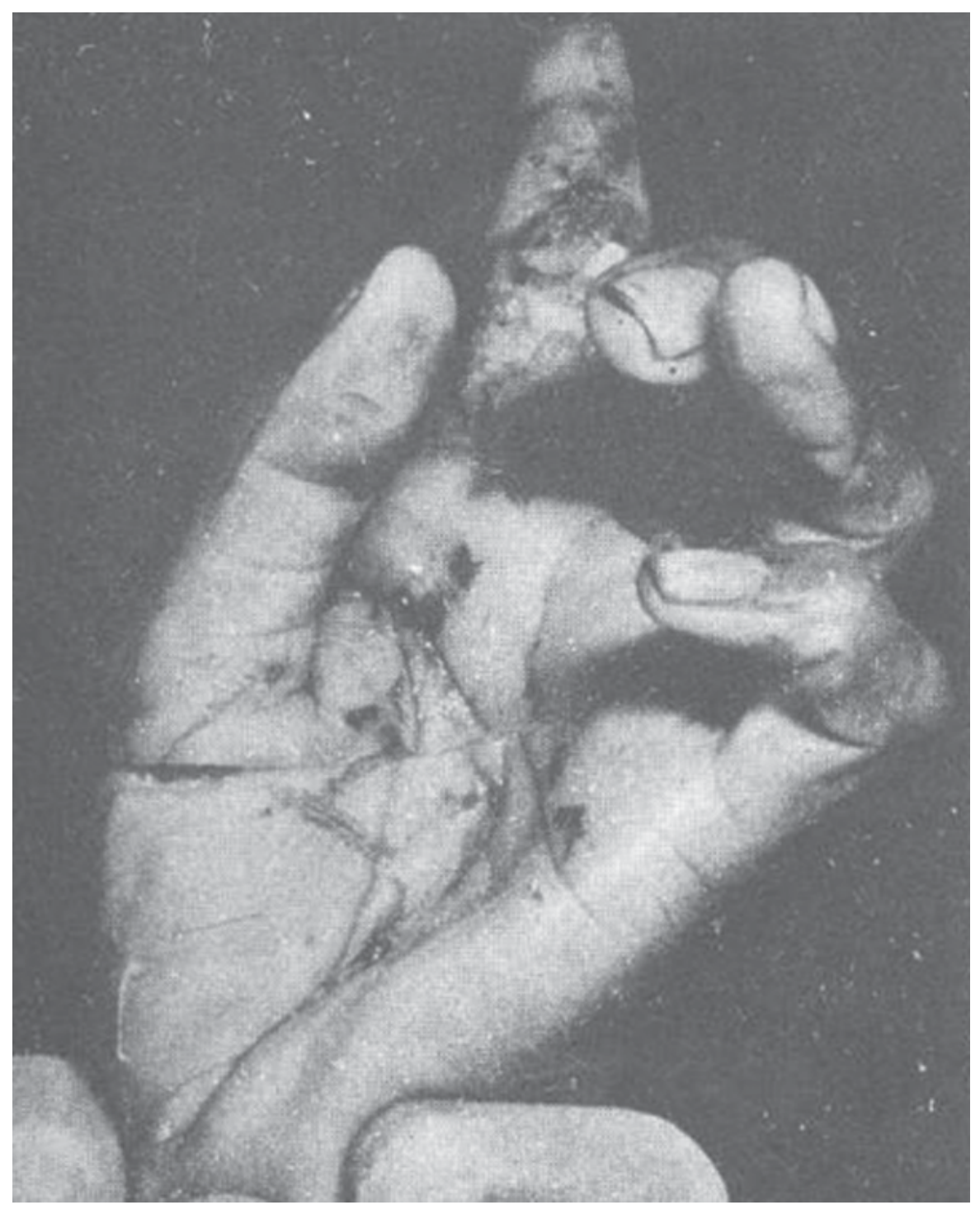
Source: Parikh's Textbook of Medical Jurisprudence, Forensic Medicine and Toxicology, p. 263.
This is a shared conversation. Sign in to Orris to start your own chat.