

IMG-20260520-WA0001.jpg
This condition is done for excessive use of surgical galves, it is used mandatary because i am a physical therapist, please diagonosis this causes why this rasees comes, and prepare medical treatment and prevention of precautions
Reading File
The image shows a hand with small whitish/hypopigmented papules and dry, slightly thickened skin on the dorsum — consistent with occupational contact dermatitis or latex/rubber glove-related allergic/irritant reaction. Let me search the medical library and literature in parallel.
Finding Sources
Finding Sources
Searching PubMed
latex glove contact dermatitis healthcare workers
Searching the Web
occupational contact dermatitis surgical gloves physical therapist treatment 2024
Now let me get the detailed textbook content on latex allergy and contact dermatitis:
Reading File
Finding Sources
Searching PubMed
occupational hand dermatitis treatment prevention healthcare
Now let me get the treatment details from Andrews' Dermatology and search for an image of glove contact dermatitis:
Reading File
Searching Images
glove contact dermatitis hand occupational rash
I have comprehensive information. Let me fetch the most relevant reference image:
Loading Image
I now have everything needed for a comprehensive answer. Here is a full clinical analysis:
Diagnosis: Occupational Contact Dermatitis (Glove-Related)
⚠️ Disclaimer: This is clinical educational information. Please consult a dermatologist for formal diagnosis and prescription treatment.
What the Image Shows
Your hand shows small whitish/hypopigmented papules, dry skin, fine scaling, and mild skin thickening on the dorsum — a classic presentation of subacute to chronic glove-associated contact dermatitis. The distribution (dorsal hand, sparing the palm) is characteristic of glove contact. Compare with a typical reference case from DermNet:
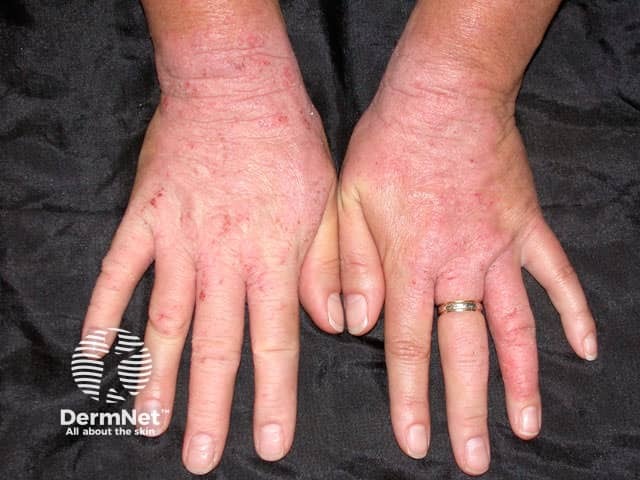
Your presentation appears milder/earlier stage, showing predominantly dry, hypopigmented papules rather than full erythema — consistent with chronic irritant contact dermatitis (ICD) with possible Type IV allergic component.
Diagnosis: Two Possible Types
1. Irritant Contact Dermatitis (ICD) — Most Likely
- Mechanism: Non-immunologic physical/chemical damage to the skin barrier from repeated glove use
- Causes in your case:
- Prolonged occlusion and sweating inside gloves → skin maceration
- Friction from glove material
- Repetitive donning/doffing
- Chemical irritants: powders (cornstarch), residual disinfectants on hands before gloving, latex proteins
- "Wet work" effect — moisture trapped under gloves dissolves natural skin lipids
2. Allergic Contact Dermatitis (ACD) — Type IV Delayed Hypersensitivity
- Mechanism: T-cell mediated delayed reaction (6–48 hours after exposure)
- Common allergens in surgical/examination gloves:
- Thiuram mix (most common rubber accelerator)
- Carba mix (carbamates)
- Mercaptobenzothiazole (MBT)
- Natural rubber latex proteins (can also cause Type I IgE-mediated reaction)
"6–17% of health care workers suffer from a latex allergy, with rubber gloves being the most common cause. The most common reaction, irritant contact dermatitis, presents as dry, itchy skin — typically on the hand." — Tietz Textbook of Laboratory Medicine, 7th Ed.
Why Does This Rash Occur?
| Factor | Effect |
|---|---|
| Prolonged glove wear | Occlusion → moisture buildup → skin barrier breakdown |
| Sweating inside gloves | Sweat acts as irritant; dilutes natural moisturizing factors |
| Chemical accelerators (thiurams, carbamates) | Cause Type IV sensitization → eczematous reaction |
| Latex proteins | Type I (IgE-mediated) or Type IV reactions |
| Frequent hand washing/sanitizer use | Strips skin oils → impaired barrier |
| Friction | Mechanical damage to stratum corneum |
Medical Treatment
Step 1 — Topical Corticosteroids (Acute Phase)
- Mild–moderate: Hydrocortisone 1% cream or triamcinolone 0.1% ointment
- Technique for dry/fissured hands: Soak hands in water 20 minutes at night → immediately apply triamcinolone 0.1% ointment without drying → cover with cotton gloves overnight
- Use twice daily for 2–4 weeks, then taper
Step 2 — Calcineurin Inhibitors (Maintenance)
- Tacrolimus 0.1% ointment or Pimecrolimus 1% cream — ideal for long-term maintenance without steroid side effects
- Particularly useful for hands since topical steroids cause skin thinning with prolonged use
Step 3 — Emollients / Barrier Repair Creams
- Apply high-lipid content moisturizers (e.g., CeraVe, Eucerin, Aveeno) after every glove removal
- Look for creams containing ceramides, glycerin, urea to restore skin barrier
- Apply before sleep — these are the most important part of treatment
Step 4 — Antihistamines (if pruritic/allergic)
- Oral cetirizine 10 mg or loratadine 10 mg once daily for itch relief
Step 5 — Patch Testing (if ACD suspected)
- Refer to dermatology for standard patch testing (TRUE test / European baseline series)
- Tests for thiuram mix, carba mix, MBT, latex-specific IgE serology
- Identifies the exact allergen so you can switch to non-reactive gloves
"Treatment of the dermatitis follows closely that recommended for Toxicodendron dermatitis. Topical corticosteroid preparations are especially helpful in the acute phase." — Andrews' Diseases of the Skin, Clinical Dermatology
Prevention & Precautions
Glove Selection
| ✅ Recommended | ❌ Avoid |
|---|---|
| Nitrile gloves (accelerator-free) | Natural rubber latex gloves |
| Vinyl/PVC gloves for low-risk tasks | Powdered gloves (cornstarch carries allergens) |
| Gloves certified "accelerator-free" | Gloves with thiuram/carbamate accelerators |
Work Practice Modifications
- Wear cotton liner gloves underneath examination gloves to absorb sweat and reduce friction
- Limit continuous glove wear — remove and air hands every 30–45 minutes when safe to do so
- Ensure hands are completely dry before donning gloves — wet hands accelerate irritation
- Remove gloves gently (peel from wrist inward) — avoid snapping
- Change gloves if they become sweaty or wet inside
- Use mild, fragrance-free hand soap — avoid antimicrobial scrubs with chloroxylenol or triclosan when not clinically required
Hand Care Routine
- After removing gloves → rinse with lukewarm water (not hot) → pat dry gently
- Apply emollient cream immediately while skin is slightly damp
- Before sleep → apply thick barrier cream/ointment
- Avoid hand sanitizer directly on broken/irritated skin — use soap and water instead
Environmental Controls
- Keep a tube of emollient at your workstation
- Avoid jewelry under gloves (traps moisture, causes pressure points)
- Report occupational skin disease to your employer/occupational health — you are entitled to safer glove options as a mandated glove user
When to Seek Urgent Medical Attention
- Blistering, weeping, or rapidly spreading rash → may need oral corticosteroids
- Symptoms of throat tightening, urticaria, or breathing difficulty after glove exposure → Type I latex anaphylaxis — medical emergency
- No improvement after 4 weeks of topical treatment
Summary Table
| Feature | ICD | ACD (Type IV) |
|---|---|---|
| Onset | Gradual, chronic | 6–48 hrs after re-exposure |
| Appearance | Dryness, scaling, fissures | Papules, vesicles, oozing |
| Distribution | Glove contact area | Glove contact area + can spread |
| Mechanism | Barrier damage (non-immune) | T-cell hypersensitivity |
| Diagnosis | Clinical | Patch test |
| Treatment | Emollients + mild steroids | Moderate steroids + allergen avoidance |
Key Takeaway for a Physical Therapist: Your mandated glove use puts you at high occupational risk. Switch to accelerator-free nitrile gloves, use cotton liners, apply barrier emollients after every session, and consult a dermatologist for patch testing to confirm whether an allergic component is present. Prevention and barrier repair are the mainstay — there is no cure for sensitization once it occurs.
— Sources: Andrews' Diseases of the Skin (Clinical Dermatology); Tietz Textbook of Laboratory Medicine, 7th Ed.; Rosen's Emergency Medicine; EADV Contact Dermatitis Task Force (PMID: 41020637)
This is a shared conversation. Sign in to Orris to start your own chat.