
Give me a 100 marks essay on Management of badly broken tooth in conservative dentistry and endodontics
Post graduate level
post and core restoration dental diagram
Management of Badly Broken Tooth in Conservative Dentistry and Endodontics
Introduction
Definition
Etiology
- Dental caries - most common cause; rampant/gross caries, especially proximal-occlusal or cervical caries undermining cusps.
- Trauma - crown fracture (complicated/uncomplicated), crown-root fracture.
- Attrition, abrasion, erosion, abfraction - especially in bruxers and in cervical non-carious lesions.
- Iatrogenic causes - over-extended cavity preparations, repeated replacement of failed restorations, post-space perforation.
- Developmental defects - amelogenesis/dentinogenesis imperfecta, hypoplasia.
- Endodontic access - excessive removal of dentine during access cavity preparation and canal instrumentation, further weakening an already compromised tooth.
Classification
- Class I: Loss of incisal/occlusal structure only
- Class II: Loss involving proximal surfaces with sound axial walls
- Class III: Loss of most of the coronal structure with less than 2 sound walls
- Class IV: Loss of entire coronal structure, only root stump remains
- Vital badly broken tooth (reversible/irreversible pulpitis)
- Non-vital badly broken tooth (necrotic pulp, previously root-treated)
Diagnosis and Treatment Planning - Key Considerations
- Amount of remaining tooth structure - clinical + radiographic (crown-to-root ratio).
- Pulpal status - vitality tests, history of pain, radiographic periapical status.
- Periodontal status - probing depth, mobility, biologic width, crown-to-root ratio (ideally ≥1:1, minimum 1:2 acceptable).
- Root morphology - length, curvature, canal configuration, presence of previous post/obturation, root fractures.
- Occlusal factors - parafunctional habits, opposing arch, occlusal load, position in the arch (anterior vs posterior - anterior teeth bear more lateral/shear load, posterior teeth bear more axial/occlusal load).
- Esthetic demand of the patient.
- Strategic importance of the tooth in the overall treatment plan (abutment for FPD/RPD, key occluding tooth).
- Patient factors - oral hygiene, motivation, financial constraints, systemic health.
- Restorability assessment - Can adequate ferrule, retention, and resistance form be achieved after adjunctive procedures? If not, extraction with implant/prosthetic replacement should be considered rather than "heroic" endodontics.
Sequence of Management (Overall Treatment Protocol)
Step 1: Emergency and Pulpal Management
- Pain relief, removal of gross caries/infected dentine, temporary restoration (IRM/GIC/Cavit) to seal the pulp and re-establish a "seal" before definitive treatment.
- Vital tooth with reversible pulpitis and adequate remaining dentine → indirect/direct pulp capping or pulpotomy (especially in young permanent teeth with open apices - to allow apexogenesis).
- Vital tooth with irreversible pulpitis, or non-vital/necrotic pulp → Root Canal Treatment (RCT) is indicated.
Step 2: Endodontic Management
- Access cavity preparation should be conservative, guided by pulp chamber anatomy on pre-operative radiograph/CBCT to avoid further weakening of an already compromised tooth (concept of "minimally invasive endodontics" / "conservative access cavities" - Clark and Khademi).
- Thorough biomechanical preparation, disinfection (sodium hypochlorite irrigation, EDTA, intracanal medicaments like calcium hydroxide), and three-dimensional obturation (lateral/vertical condensation, thermoplasticized gutta-percha) with an adequate apical seal.
- In cases with periapical pathology, adequate time should be allowed for healing before definitive coronal restoration, though studies now support immediate post-space preparation and restoration to prevent coronal leakage and to reduce the risk of missed post space after obturation setting.
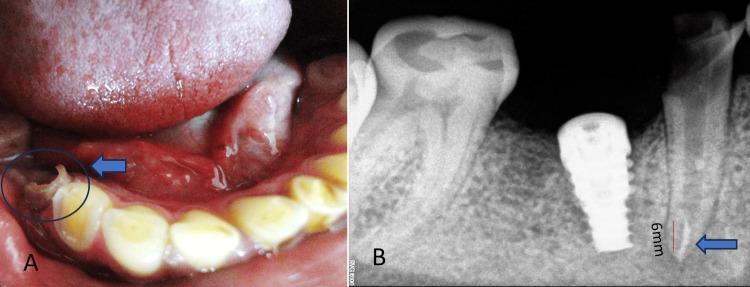
- Critical rule: post-space preparation should leave at least 4-5 mm of apical gutta-percha intact for the apical seal (as illustrated below).
Step 3: Pre-Restorative (Adjunctive) Procedures to Gain Tooth Structure
Quick answer
Management of Badly Broken Tooth in Conservative Dentistry and Endodontics
Introduction
Definition
Etiology
- Dental caries - the commonest cause; rampant, proximal-occlusal, or cervical caries undermining cusps.
- Trauma - complicated/uncomplicated crown fracture, crown-root fracture.
- Attrition, abrasion, erosion, abfraction - bruxism, faulty brushing, acid erosion, cervical non-carious lesions.
- Iatrogenic causes - over-extended cavity preparations, repeated replacement of failed restorations, post-space perforation, excessive endodontic access.
- Developmental defects - amelogenesis imperfecta, dentinogenesis imperfecta, enamel hypoplasia.
- Endodontic treatment itself - removal of dentine during access and canal preparation further weakens an already compromised tooth.
Classification
- Class I: loss of incisal/occlusal structure only
- Class II: proximal surface loss with sound axial walls remaining
- Class III: loss of most coronal structure, fewer than 2 sound walls
- Class IV: entire coronal structure lost, only a root stump remains
- Vital badly broken tooth (reversible or irreversible pulpitis)
- Non-vital badly broken tooth (necrotic pulp or previously root-treated)
Diagnosis and Treatment Planning
- Amount of remaining tooth structure - clinical inspection plus radiographs; assess crown-to-root ratio (ideally ≥1:1, minimum acceptable 1:2).
- Pulpal status - vitality tests, pain history, periapical radiolucency.
- Periodontal status - probing depth, mobility, biologic width, need for crown lengthening.
- Root morphology - length, curvature, canal configuration, presence of prior post, risk of perforation or vertical root fracture.
- Occlusal load and position in arch - anterior teeth face more lateral/shear forces; posterior teeth bear heavier axial/occlusal loads and need cuspal protection.
- Esthetic demand, patient's oral hygiene, motivation, and financial considerations.
- Strategic value of the tooth - abutment role in a larger prosthetic plan.
- Restorability - if adequate ferrule, retention, and resistance cannot be achieved even with adjunctive procedures, extraction and prosthetic/implant replacement is a more predictable option than "heroic" endodontic-restorative salvage.
Overall Treatment Sequence
Step 1: Emergency and Pulpal Management
- Vital tooth, reversible pulpitis, adequate remaining dentine → indirect/direct pulp capping or pulpotomy (apexogenesis in young permanent teeth with open apices).
- Vital tooth with irreversible pulpitis, or non-vital/necrotic pulp → Root Canal Treatment (RCT).
Step 2: Endodontic Management
- Conservative, radiograph/CBCT-guided access cavity design to avoid further weakening (minimally invasive/"conservative access cavity" concept - Clark and Khademi).
- Thorough cleaning and shaping with sodium hypochlorite irrigation, EDTA smear layer removal, intracanal calcium hydroxide medication where indicated, and three-dimensional obturation (lateral or vertical condensation, thermoplasticized gutta-percha).
- Adequate apical seal is mandatory before post-space preparation; at least 4-5 mm of apical gutta-percha must be preserved.
- Immediate post-endodontic restoration (post space preparation and provisionalization at the same visit or soon after) is preferred over delay, since coronal microleakage is a major cause of endodontic failure.
Step 3: Pre-Restorative (Adjunctive) Procedures to Gain Retention/Resistance Form
Step 4: Restoration of the Endodontically Treated, Badly Broken Tooth
- If ≥2 walls remain with adequate ferrule → direct bonded core (composite resin or reinforced glass-ionomer) may suffice without a post.
- If pulp chamber alone provides retention (e.g., posterior teeth with a large, retentive pulp chamber) → pulp chamber and canal orifice retained composite core (no post required, since post is retentive not strengthening).
- Custom cast post and core - metal alloy, cast to fit the prepared canal exactly; excellent adaptation, good for wide/oval/flared canals, but requires two visits, is rigid (higher risk of root fracture under load), and is metallic (poor esthetics under all-ceramic crowns).
- Prefabricated posts
- Metallic: stainless steel, titanium - passive (cemented) or active (threaded, higher stress, higher risk of fracture).
- Non-metallic/esthetic: zirconia posts (high strength but very rigid, difficult to retrieve, brittle); fiber posts (carbon fiber, glass fiber, quartz fiber) - modulus of elasticity close to dentine, bonded with resin cement, distribute stress favorably, easier retrievability, and are esthetic; currently the most widely recommended in the anterior/esthetic zone and in many posterior situations.
- Core materials: composite resin (most common with fiber posts), amalgam, glass ionomer/resin-modified GIC (weaker, used when moisture control is difficult), or cast metal (with cast post-core).
- Defined as a band of at least 1.5-2 mm of vertical sound coronal dentine, encircled by the crown margin, extending apical to the core/post-core junction.
- The single most important factor influencing the fracture resistance and long-term survival of an endodontically treated, post-restored tooth - more important than the post material or design itself.
- Absence of ferrule dramatically increases the incidence of root fracture, especially under lateral occlusal loading.
- Adequate ferrule may require crown lengthening or orthodontic/surgical extrusion when natural tooth structure is insufficient.
- Full-coverage crown is generally mandatory on posterior endodontically treated badly broken teeth (loss of marginal ridges and pulp chamber roof significantly reduces cuspal rigidity and fracture resistance - classic studies by Reeh, Messer and Douglas).
- In anterior teeth with conservative access and adequate remaining structure, a direct composite restoration or minimal-preparation restoration (e.g., partial-coverage veneer/onlay) may sometimes suffice; otherwise a full crown or laminate veneer is used.
- Material selection (PFM, all-ceramic, zirconia) is based on esthetic zone, occlusal load, and remaining tooth structure.
- Endocrowns - a bonded monoblock ceramic/composite restoration extending into the pulp chamber, anchoring on chamber walls and floor instead of a post; a conservative alternative to post-core-crown in posterior teeth with short roots, calcified canals, or reduced crown height, gaining increasing evidence support.
Special Considerations
- Grossly decayed deciduous teeth: stainless steel crowns after pulpotomy/pulpectomy rather than post-core-crown sequences.
- Immature permanent teeth with open apices: apexification (calcium hydroxide/MTA apical plug) or regenerative endodontic procedures before any post placement; posts are contraindicated until the apex is closed and canal walls are thick enough.
- Extensive loss with poor crown-root ratio or root fracture: extraction followed by implant-supported crown or fixed/removable prosthesis is often more predictable than salvage.
- Bruxers/parafunction: occlusal guard after rehabilitation; avoid rigid, over-tapered posts.
Recent Advances
- Minimally invasive/conservative endodontic access cavities preserving pericervical dentine.
- Fiber-reinforced composite posts and bonded restorations following biomimetic dentistry principles (restoring the tooth as a bonded monoblock rather than relying on mechanical retention alone).
- CAD-CAM fabricated endocrowns and post-core-crown units.
- Regenerative endodontic procedures for immature teeth.
- Use of bioceramic sealers/MTA for improved apical seal, indirectly benefiting long-term restorability.
Prognosis
Conclusion
Give pdf
mkdir -p /tmp/workspace/badly-broken-tooth-essay && ls -la /tmp/workspace/
cd /tmp/workspace/badly-broken-tooth-essay && curl -s -o post_space.jpg "https://cdn.orris.care/cdss_images/pmc_clinical_VQA_6574e9b48f94a5ec1eb339e62ab8e73e056057ad735f8adb547eeab8c83cd84b.jpg" && ls -la
~/badly-broken-tooth-essay/generate_pdf.py
# -*- coding: utf-8 -*-
from reportlab.lib.pagesizes import A4
from reportlab.lib.units import inch, mm
from reportlab.lib import colors
from reportlab.platypus import (SimpleDocTemplate, Paragraph, Spacer, Image,
                                 ListFlowable, ListItem, PageBreak, Table, TableStyle,
                                 HRFlowable)
from reportlab.lib.styles import getSampleStyleSheet, ParagraphStyle
from reportlab.lib.enums import TA_CENTER, TA_JUSTIFY

styles = getSampleStyleSheet()

title_style = ParagraphStyle('TitleStyle', parent=styles['Title'], fontSize=17,
                              leading=21, spaceAfter=4, textColor=colors.HexColor('#1a3c5e'))
subtitle_style = ParagraphStyle('SubTitle', parent=styles['Normal'], fontSize=11,
                                 leading=14, alignment=TA_CENTER, textColor=colors.HexColor('#555555'),
                                 spaceAfter=14, fontName='Helvetica-Oblique')
h1_style = ParagraphStyle('H1', parent=styles['Heading1'], fontSize=14, leading=18,
                           spaceBefore=14, spaceAfter=6, textColor=colors.HexColor('#1a3c5e'))
h2_style = ParagraphStyle('H2', parent=styles['Heading2'], fontSize=12, leading=15,
                           spaceBefore=10, spaceAfter=5, textColor=colors.HexColor('#2a5c8e'))
body_style = ParagraphStyle('Body', parent=styles['Normal'], fontSize=10.3, leading=14.5,
                             alignment=TA_JUSTIFY, spaceAfter=6)
bullet_style = ParagraphStyle('Bullet', parent=body_style, leftIndent=14, spaceAfter=3)
caption_style = ParagraphStyle('Caption', parent=styles['Normal'], fontSize=8.7, leading=11,
                                alignment=TA_CENTER, textColor=colors.HexColor('#444444'),
                                fontName='Helvetica-Oblique', spaceAfter=10, spaceBefore=3)

def P(text):
    return Paragraph(text, body_style)

def H1(text):
    return Paragraph(text, h1_style)

def H2(text):
    return Paragraph(text, h2_style)

def B(items):
    return ListFlowable(
        [ListItem(Paragraph(it, bullet_style), leftIndent=10, value='bullet') for it in items],
        bulletType='bullet', start='•', leftIndent=16, spaceBefore=2, spaceAfter=6
    )

story = []

story.append(Paragraph("Management of Badly Broken Tooth in", title_style))
story.append(Paragraph("Conservative Dentistry and Endodontics", title_style))
story.append(Paragraph("Postgraduate Essay  |  100 Marks", subtitle_style))
story.append(HRFlowable(width="100%", thickness=1, color=colors.HexColor('#1a3c5e'), spaceAfter=12))

story.append(H1("Introduction"))
story.append(P("A \u201cbadly broken down tooth\u201d (also termed grossly decayed, grossly destructed, or structurally "
    "compromised tooth) is one that has lost a substantial part of its coronal tooth structure due to caries, trauma, "
    "attrition, abrasion, erosion, or previous restorative failure, such that conventional direct restoration is no "
    "longer feasible or predictable. Its management is one of the most comprehensive topics in Conservative Dentistry "
    "and Endodontics because it integrates diagnosis, endodontics, periodontics, restorative dentistry, and "
    "prosthodontics into a single, sequenced treatment plan. The objective is to restore form, function, esthetics, "
    "and long-term biomechanical survival while preserving pulp/periapical and periodontal health."))

story.append(H1("Definition"))
story.append(P("A badly broken tooth may be defined as \u201ca tooth in which loss of coronal tooth structure, from "
    "caries, trauma, or previous restorations, is so extensive that retention and resistance form for a conventional "
    "restoration cannot be achieved without additional adjunctive procedures.\u201d"))

story.append(H1("Etiology"))
story.append(B([
    "<b>Dental caries</b> - the commonest cause; rampant, proximal-occlusal, or cervical caries undermining cusps.",
    "<b>Trauma</b> - complicated/uncomplicated crown fracture, crown-root fracture.",
    "<b>Attrition, abrasion, erosion, abfraction</b> - bruxism, faulty brushing, acid erosion, cervical non-carious lesions.",
    "<b>Iatrogenic causes</b> - over-extended cavity preparations, repeated replacement of failed restorations, "
    "post-space perforation, excessive endodontic access.",
    "<b>Developmental defects</b> - amelogenesis imperfecta, dentinogenesis imperfecta, enamel hypoplasia.",
    "<b>Endodontic treatment itself</b> - removal of dentine during access and canal preparation further weakens an "
    "already compromised tooth.",
]))

story.append(H1("Classification"))
story.append(H2("1. Grossman's Classification (based on remaining coronal structure)"))
story.append(B([
    "Class I: Loss of incisal/occlusal structure only",
    "Class II: Proximal surface loss with sound axial walls remaining",
    "Class III: Loss of most coronal structure, fewer than 2 sound walls",
    "Class IV: Entire coronal structure lost, only a root stump remains",
]))
story.append(H2("2. Amsterdam and Fuller's Classification"))
story.append(P("Based on the number of remaining walls and residual coronal structure; guides the choice between a "
    "bonded composite/amalgam core, a cast core, or a post-retained core."))
story.append(H2("3. Pulp-Status Based Classification"))
story.append(B([
    "Vital badly broken tooth (reversible or irreversible pulpitis)",
    "Non-vital badly broken tooth (necrotic pulp or previously root-treated)",
]))
story.append(P("This determines whether vital pulp therapy, primary root canal treatment (RCT), or purely restorative "
    "rehabilitation of an already treated tooth is required."))

story.append(H1("Diagnosis and Treatment Planning"))
story.append(B([
    "<b>Amount of remaining tooth structure</b> - clinical inspection plus radiographs; assess crown-to-root ratio "
    "(ideally \u2265 1:1, minimum acceptable 1:2).",
    "<b>Pulpal status</b> - vitality tests, pain history, periapical radiolucency.",
    "<b>Periodontal status</b> - probing depth, mobility, biologic width, need for crown lengthening.",
    "<b>Root morphology</b> - length, curvature, canal configuration, presence of prior post, risk of perforation "
    "or vertical root fracture.",
    "<b>Occlusal load and position in arch</b> - anterior teeth face more lateral/shear forces; posterior teeth "
    "bear heavier axial/occlusal loads and need cuspal protection.",
    "<b>Esthetic demand</b>, patient's oral hygiene, motivation, and financial considerations.",
    "<b>Strategic value of the tooth</b> - abutment role in a larger prosthetic plan.",
    "<b>Restorability</b> - if adequate ferrule, retention, and resistance cannot be achieved even with adjunctive "
    "procedures, extraction and prosthetic/implant replacement is more predictable than \u201cheroic\u201d "
    "endodontic-restorative salvage.",
]))

story.append(PageBreak())

story.append(H1("Overall Treatment Sequence"))

story.append(H2("Step 1: Emergency and Pulpal Management"))
story.append(P("Pain relief, removal of gross/infected caries, and a temporary seal (IRM, GIC, Cavit) to protect the "
    "pulp before definitive treatment."))
story.append(B([
    "Vital tooth, reversible pulpitis, adequate remaining dentine \u2192 indirect/direct pulp capping or pulpotomy "
    "(apexogenesis in young permanent teeth with open apices).",
    "Vital tooth with irreversible pulpitis, or non-vital/necrotic pulp \u2192 Root Canal Treatment (RCT).",
]))

story.append(H2("Step 2: Endodontic Management"))
story.append(B([
    "Conservative, radiograph/CBCT-guided access cavity design to avoid further weakening (minimally invasive / "
    "\u201cconservative access cavity\u201d concept - Clark and Khademi).",
    "Thorough cleaning and shaping with sodium hypochlorite irrigation, EDTA smear layer removal, intracanal "
    "calcium hydroxide medication where indicated, and three-dimensional obturation (lateral or vertical "
    "condensation, thermoplasticized gutta-percha).",
    "Adequate apical seal is mandatory before post-space preparation; at least 4-5 mm of apical gutta-percha "
    "must be preserved.",
    "Immediate post-endodontic restoration (post-space preparation and provisionalization soon after obturation) "
    "is preferred over delay, since coronal microleakage is a major cause of endodontic failure.",
]))

story.append(Image("post_space.jpg", width=3.3*inch, height=2.0*inch))
story.append(Paragraph(
    "Clinical photograph and periapical radiograph of a mandibular premolar after caries removal and ferrule "
    "preparation: post-space prepared to 16 mm while retaining a 6 mm apical gutta-percha seal.", caption_style))

story.append(H2("Step 3: Pre-Restorative (Adjunctive) Procedures to Gain Retention/Resistance Form"))
story.append(P("When remaining tooth structure is insufficient even after endodontics, one or more of the following "
    "are used to expose sound tooth structure above the alveolar crest and improve the biomechanical prognosis:"))
story.append(B([
    "<b>Coronoradicular stabilization</b> - pins, amalgam, or composite bonded to remaining dentine to splint "
    "weakened cusps/walls together before full-coverage restoration, converting a multi-walled defect into a "
    "stable core.",
    "<b>Crown lengthening (surgical)</b> - apically repositioning the gingiva and, if needed, osseous "
    "recontouring to expose sound tooth structure and re-establish biologic width (minimum 3 mm between the "
    "restoration margin and the alveolar crest: ~1 mm sulcus depth + 1 mm connective tissue attachment + 1 mm "
    "epithelial attachment). Indicated when the fracture/caries margin is subgingival but adequate root length "
    "and a favorable crown-root ratio remain after the procedure.",
    "<b>Orthodontic (forced) extrusion</b> - slow orthodontic traction to bring the fracture line/root "
    "supragingivally, often combined with fiberotomy to prevent excessive coronal bone migration. Preserves "
    "crown-root ratio better than surgical crown lengthening in isolated single-tooth defects, useful in "
    "anterior esthetic zones.",
    "<b>Surgical extrusion (rapid, atraumatic tooth repositioning)</b> - the root is atraumatically luxated, "
    "rotated if needed, and repositioned/splinted at a more coronal level so a sound length of root becomes "
    "supragingival. Useful when orthodontic extrusion is not feasible, and root anatomy is favorable (single, "
    "straight, non-fused root).",
    "<b>Root reinforcement / internal reinforcement</b> - adhesive resin/composite buildup within the pulp "
    "chamber and canal orifice (\u201cinternal splinting\u201d) to strengthen a thin-walled, endodontically "
    "treated root before post placement, especially with immature/wide canals or over-instrumented canals.",
    "<b>Intentional replantation</b> - as a last resort: extraction, extraoral endodontic completion/repair, "
    "and replantation with splinting when nothing else is feasible and extraction/implant is not preferred.",
]))

story.append(H2("Step 4: Restoration of the Endodontically Treated, Badly Broken Tooth"))

story.append(Paragraph("<b>A. Core Buildup</b>", body_style))
story.append(B([
    "If \u2265 2 walls remain with adequate ferrule \u2192 direct bonded core (composite resin or reinforced "
    "glass-ionomer) may suffice without a post.",
    "If the pulp chamber alone provides retention (e.g., posterior teeth with a large, retentive pulp chamber) "
    "\u2192 pulp-chamber and canal-orifice retained composite core (no post required, since a post is retentive, "
    "not strengthening).",
]))

story.append(Paragraph("<b>B. Post and Core</b> - indicated when insufficient coronal dentine remains to retain a core directly.", body_style))
story.append(P("<i>Rationale:</i> A post does <b>not</b> strengthen the root (in fact it removes dentine and can "
    "weaken it); its sole function is to retain the core and final restoration in a tooth that lacks adequate "
    "coronal structure."))
story.append(Paragraph("<i>Types of posts:</i>", body_style))
story.append(B([
    "<b>Custom cast post and core</b> - metal alloy cast to fit the prepared canal exactly; excellent adaptation, "
    "good for wide/oval/flared canals, but requires two visits, is rigid (higher risk of root fracture under "
    "load), and metallic (poor esthetics under all-ceramic crowns).",
    "<b>Prefabricated metallic posts</b> - stainless steel, titanium; passive (cemented) or active (threaded, "
    "higher stress, higher fracture risk).",
    "<b>Prefabricated non-metallic/esthetic posts</b> - zirconia posts (high strength but very rigid, difficult "
    "to retrieve, brittle); <b>fiber posts</b> (carbon fiber, glass fiber, quartz fiber) with a modulus of "
    "elasticity close to dentine, bonded with resin cement, favorable stress distribution, easier retrievability, "
    "and esthetic - currently the most widely recommended option in the anterior/esthetic zone and in many "
    "posterior situations.",
    "<b>Core materials</b> - composite resin (most common with fiber posts), amalgam, glass ionomer/resin-"
    "modified GIC (weaker, used when moisture control is difficult), or cast metal (with cast post-core).",
]))

story.append(Paragraph("<b>C. Ferrule Effect</b>", body_style))
story.append(B([
    "Defined as a band of at least 1.5-2 mm of vertical sound coronal dentine, encircled by the crown margin, "
    "extending apical to the core/post-core junction.",
    "The single most important factor influencing fracture resistance and long-term survival of an "
    "endodontically treated, post-restored tooth - more important than post material or design.",
    "Absence of ferrule dramatically increases the incidence of root fracture, especially under lateral "
    "occlusal loading.",
    "Adequate ferrule may require crown lengthening or orthodontic/surgical extrusion when natural tooth "
    "structure is insufficient.",
]))

story.append(Paragraph("<b>D. Final Restoration</b>", body_style))
story.append(B([
    "Full-coverage crown is generally mandatory on posterior endodontically treated badly broken teeth (loss of "
    "marginal ridges and pulp-chamber roof significantly reduces cuspal rigidity and fracture resistance - "
    "classic studies by Reeh, Messer and Douglas).",
    "In anterior teeth with conservative access and adequate remaining structure, a direct composite restoration "
    "or minimal-preparation restoration (e.g., partial-coverage veneer/onlay) may sometimes suffice; otherwise a "
    "full crown or laminate veneer is used.",
    "Material selection (PFM, all-ceramic, zirconia) is based on esthetic zone, occlusal load, and remaining "
    "tooth structure.",
    "<b>Endocrowns</b> - a bonded monoblock ceramic/composite restoration extending into the pulp chamber, "
    "anchoring on chamber walls and floor instead of a post; a conservative alternative to post-core-crown in "
    "posterior teeth with short roots, calcified canals, or reduced crown height, with growing evidence support.",
]))

story.append(H1("Special Considerations"))
story.append(B([
    "<b>Grossly decayed deciduous teeth</b> - stainless steel crowns after pulpotomy/pulpectomy rather than "
    "post-core-crown sequences.",
    "<b>Immature permanent teeth with open apices</b> - apexification (calcium hydroxide/MTA apical plug) or "
    "regenerative endodontic procedures before any post placement; posts are contraindicated until the apex is "
    "closed and canal walls are sufficiently thick.",
    "<b>Extensive loss with poor crown-root ratio or root fracture</b> - extraction followed by an implant-"
    "supported crown or fixed/removable prosthesis is often more predictable than salvage.",
    "<b>Bruxers/parafunction</b> - occlusal guard after rehabilitation; avoid rigid, over-tapered posts.",
]))

story.append(H1("Recent Advances"))
story.append(B([
    "Minimally invasive/conservative endodontic access cavities preserving pericervical dentine.",
    "Fiber-reinforced composite posts and bonded restorations following biomimetic dentistry principles "
    "(restoring the tooth as a bonded monoblock rather than relying on mechanical retention alone).",
    "CAD-CAM fabricated endocrowns and post-core-crown units.",
    "Regenerative endodontic procedures for immature teeth.",
    "Bioceramic sealers/MTA for improved apical seal, indirectly benefiting long-term restorability.",
]))

story.append(H1("Prognosis"))
story.append(P("Prognosis depends on the amount of remaining tooth structure, presence/absence of ferrule, quality "
    "of the endodontic seal, occlusal load, and patient compliance. Teeth restored with adequate ferrule and a "
    "properly bonded post-core-crown have survival rates comparable to vital teeth with full crowns; teeth "
    "without ferrule show significantly higher rates of root fracture and restoration failure regardless of the "
    "post system used."))

story.append(H1("Conclusion"))
story.append(P("Management of a badly broken tooth in Conservative Dentistry and Endodontics is a "
    "multidisciplinary sequence rather than a single procedure: accurate diagnosis and classification, pulpal "
    "management or root canal treatment, adjunctive periodontal/orthodontic/surgical procedures to gain sound "
    "tooth structure and ferrule, a rational post-and-core system when needed, and a protective final "
    "restoration. The clinician's judgment on restorability, biologic cost, and long-term prognosis - weighed "
    "against extraction and prosthetic alternatives - ultimately determines success. The guiding principle "
    "throughout is conservation of tooth structure and periodontal health while ensuring a biomechanically "
    "sound, esthetically acceptable, and functionally durable outcome."))

def add_page_number(canvas, doc):
    canvas.saveState()
    canvas.setFont('Helvetica', 8)
    canvas.setFillColor(colors.HexColor('#888888'))
    canvas.drawCentredString(A4[0]/2, 15*mm, f"Page {doc.page}")
    canvas.restoreState()

doc = SimpleDocTemplate("Management_of_Badly_Broken_Tooth.pdf", pagesize=A4,
                         topMargin=20*mm, bottomMargin=20*mm, leftMargin=20*mm, rightMargin=20*mm,
                         title="Management of Badly Broken Tooth in Conservative Dentistry and Endodontics")
doc.build(story, onFirstPage=add_page_number, onLaterPages=add_page_number)
print("PDF generated successfully")
cd /tmp/workspace/badly-broken-tooth-essay && python3 generate_pdf.py
ls -la /tmp/workspace/badly-broken-tooth-essay/Management_of_Badly_Broken_Tooth.pdf
Management of Badly Broken Tooth
PDF Document · PDF
Management of badly broken tooth in vital pulp give me 50 marks pdf
direct pulp capping vital pulp therapy diagram
partial pulpotomy MTA calcium hydroxide clinical
"vital pulp therapy" AND "mature permanent teeth"
~/badly-broken-tooth-essay/generate_pdf_vital.py
# -*- coding: utf-8 -*-
from reportlab.lib.pagesizes import A4
from reportlab.lib.units import inch, mm
from reportlab.lib import colors
from reportlab.platypus import (SimpleDocTemplate, Paragraph, Spacer, Image,
ListFlowable, ListItem, PageBreak, HRFlowable)
from reportlab.lib.styles import getSampleStyleSheet, ParagraphStyle
from reportlab.lib.enums import TA_CENTER, TA_JUSTIFY
styles = getSampleStyleSheet()
title_style = ParagraphStyle('TitleStyle', parent=styles['Title'], fontSize=16,
leading=20, spaceAfter=4, textColor=colors.HexColor('#1a3c5e'))
subtitle_style = ParagraphStyle('SubTitle', parent=styles['Normal'], fontSize=11,
leading=14, alignment=TA_CENTER, textColor=colors.HexColor('#555555'),
spaceAfter=14, fontName='Helvetica-Oblique')
h1_style = ParagraphStyle('H1', parent=styles['Heading1'], fontSize=13.5, leading=17,
spaceBefore=13, spaceAfter=6, textColor=colors.HexColor('#1a3c5e'))
h2_style = ParagraphStyle('H2', parent=styles['Heading2'], fontSize=11.5, leading=15,
spaceBefore=9, spaceAfter=5, textColor=colors.HexColor('#2a5c8e'))
body_style = ParagraphStyle('Body', parent=styles['Normal'], fontSize=10.2, leading=14.3,
alignment=TA_JUSTIFY, spaceAfter=6)
bullet_style = ParagraphStyle('Bullet', parent=body_style, leftIndent=14, spaceAfter=3)
note_style = ParagraphStyle('Note', parent=body_style, fontSize=9.3, textColor=colors.HexColor('#555555'),
borderColor=colors.HexColor('#cccccc'), borderWidth=0.6, borderPadding=6,
backColor=colors.HexColor('#f4f7fa'))
def P(text):
return Paragraph(text, body_style)
def H1(text):
return Paragraph(text, h1_style)
def H2(text):
return Paragraph(text, h2_style)
def B(items):
return ListFlowable(
[ListItem(Paragraph(it, bullet_style), leftIndent=10, value='bullet') for it in items],
bulletType='bullet', start='\u2022', leftIndent=16, spaceBefore=2, spaceAfter=6
)
story = []
story.append(Paragraph("Management of Badly Broken Tooth", title_style))
story.append(Paragraph("with a Vital Pulp", title_style))
story.append(Paragraph("Postgraduate Essay | 50 Marks", subtitle_style))
story.append(HRFlowable(width="100%", thickness=1, color=colors.HexColor('#1a3c5e'), spaceAfter=12))
story.append(H1("Introduction"))
story.append(P("A badly broken tooth with a clinically and radiographically <b>vital pulp</b> represents a "
"biologically favourable but technically demanding situation. Unlike a non-vital, endodontically treated "
"tooth, here the primary goal shifts from root canal therapy to <b>preservation of pulp vitality</b> "
"whenever possible, while still rehabilitating the extensively lost coronal tooth structure. Preserving a "
"healthy, functioning pulp maintains proprioception, continued dentine deposition, tooth colour, and root "
"strength (particularly important in young permanent teeth with incomplete root formation), and avoids the "
"biological and financial cost of root canal treatment. Contemporary evidence on bioceramic materials "
"(MTA, Biodentine) has considerably expanded the indications for vital pulp therapy (VPT), even in mature "
"teeth with deep exposures."))
story.append(H1("Clinical Scenario"))
story.append(P("A badly broken tooth with vital pulp typically presents as gross coronal destruction from caries, "
"trauma, or fracture, with retained pulp vitality confirmed by a combination of history, clinical, and "
"radiographic findings:"))
story.append(B([
"No spontaneous, lingering, or nocturnal pain (features of irreversible pulpitis)",
"Normal or mildly exaggerated but non-lingering response to thermal/electric pulp testing",
"Absence of periapical radiolucency, sinus tract, swelling, or tenderness to percussion/palpation",
"Pulp exposure, if present, shows healthy red bleeding on exposure with good haemostasis achieved within "
"a few minutes",
]))
story.append(H1("Diagnostic Assessment"))
story.append(B([
"<b>Subjective</b> - nature, duration, and character of pain (reversible vs irreversible pulpitis symptoms)",
"<b>Vitality tests</b> - thermal (cold/EPT), electric pulp test; corroborate with clinical picture as false "
"readings are common in multi-rooted/traumatised teeth",
"<b>Radiographic</b> - depth of caries/fracture in relation to pulp chamber, periapical/furcation status, "
"root maturity (open vs closed apex)",
"<b>Intraoperative assessment</b> - size of exposure, colour and character of bleeding, ability to achieve "
"haemostasis (the single most important intraoperative predictor of VPT success)",
]))
story.append(H1("Treatment Objectives"))
story.append(B([
"Preserve pulp vitality and function wherever biologically and restoratively feasible",
"Arrest the disease process and promote a reparative dentine bridge/hard-tissue barrier",
"Achieve a bacteria-tight coronal seal to prevent microleakage and re-infection",
"Rehabilitate lost coronal tooth structure with a restoration that protects remaining cusps and pulp",
"Maintain the tooth under periodic clinical and radiographic review",
]))
story.append(PageBreak())
story.append(H1("Vital Pulp Therapy (VPT) - Treatment Options"))
story.append(H2("1. Indirect Pulp Treatment (IPT)"))
story.append(P("Used when caries is deep but no frank pulp exposure occurs. A thin layer of caries-affected "
"(not caries-infected) dentine is deliberately left over the pulp to avoid exposure, capped with a "
"bioactive liner (calcium hydroxide, MTA, or Biodentine), and sealed with a well-bonded restoration. "
"Re-entry to remove residual caries is optional with modern selective/stepwise caries removal protocols, "
"as the sealed lesion becomes arrested."))
story.append(H2("2. Direct Pulp Capping (DPC)"))
story.append(P("Indicated for a small, mechanical or carious pulp exposure (<1-1.5 mm) in a tooth with no "
"symptoms of irreversible pulpitis, where haemostasis is achieved promptly. The exposure site is capped "
"directly with a biocompatible material without removing any pulp tissue."))
story.append(B([
"<b>Materials:</b> Calcium hydroxide (traditional, but forms a porous bridge with tunnel defects), MTA "
"(superior long-term seal and bridge formation), Biodentine/calcium silicate cements (faster setting, "
"good handling, now often preferred)",
"<b>Technique:</b> Haemorrhage control with sterile saline-moistened cotton or sodium hypochlorite, "
"placement of capping material directly over the exposure, followed immediately by a well-sealed, bonded "
"restoration",
]))
story.append(H2("3. Partial Pulpotomy (Cvek Pulpotomy)"))
story.append(P("Indicated for larger or contaminated exposures, or exposures present for several hours, "
"including in mature teeth with signs of reversible/early irreversible pulpitis limited to the coronal "
"pulp. Involves removal of a small amount (2-3 mm) of the superficially inflamed pulp tissue with a "
"sterile diamond bur under copious irrigation, followed by haemostasis and capping of the remaining vital "
"pulp with MTA/Biodentine/calcium hydroxide."))
story.append(H2("4. Full (Coronal) Pulpotomy"))
story.append(P("Indicated when inflammation extends through the entire coronal pulp but the radicular pulp is "
"still healthy and vital, especially in immature permanent teeth (to allow continued apexogenesis/root "
"development) or in mature teeth as an emergency/interim measure. The entire coronal pulp is amputated at "
"the level of the canal orifices, haemostasis achieved, and the radicular pulp stumps are capped with a "
"bioceramic material before final restoration."))
story.append(H2("5. Apexogenesis (special situation in immature teeth)"))
story.append(P("In young permanent teeth with an open apex, partial or full pulpotomy is deliberately used to "
"preserve the healthy radicular/apical pulp so that continued physiological root development (dentine wall "
"thickening and apical closure) proceeds naturally, improving the long-term crown-root ratio and fracture "
"resistance of the root."))
story.append(Paragraph(
"<b>Key intraoperative principle:</b> Amputate pulp tissue only until haemostasis is achieved within "
"2-5 minutes with saline or dilute NaOCl-soaked cotton pellets. Persistent bleeding beyond this time, or "
"dark/uncontrolled haemorrhage, indicates deeper (irreversible) inflammation and mandates conversion to "
"root canal treatment rather than continuing VPT.", note_style))
story.append(H1("Factors Influencing the VPT Decision"))
story.append(B([
"Size and cause of pulp exposure (mechanical/traumatic exposures have a better prognosis than long-standing "
"carious exposures)",
"Time elapsed since exposure and degree of bacterial contamination",
"Ability to achieve haemostasis intraoperatively",
"Patient age - younger patients have more cellular, better-vascularised pulps with greater healing "
"capacity; recent meta-analyses confirm age is a significant prognostic factor for VPT outcome",
"Presence/absence of symptoms of irreversible pulpitis (spontaneous, lingering, nocturnal pain)",
"Restorability of the remaining tooth structure and ability to achieve an immediate, durable coronal seal",
"Availability of bioceramic materials (MTA/Biodentine) and clinician's technical proficiency under "
"magnification/rubber dam isolation",
]))
story.append(H1("Restorative Management After Vital Pulp Therapy"))
story.append(P("Once pulp vitality is preserved, the badly broken tooth still requires careful restorative "
"rehabilitation, since the coronal destruction that led to the exposure remains:"))
story.append(B([
"<b>Immediate, definitive bonded seal</b> is critical - coronal microleakage is the single most common "
"cause of VPT failure, more important even than the capping material chosen",
"<b>Cuspal coverage</b> - onlay or full-coverage crown for posterior teeth with loss of marginal ridges, "
"similar to non-vital badly broken teeth, since pulp vitality alone does not restore lost structural rigidity",
"<b>Coronoradicular/composite core buildup</b> where multiple walls are lost, bonded to remaining sound "
"dentine, without impinging on the pulp chamber floor over the capped area",
"<b>Adjunctive procedures</b> (crown lengthening, orthodontic extrusion) may still be required if the "
"fracture/caries margin is subgingival, exactly as in the non-vital scenario, to obtain ferrule and sound "
"margins",
"<b>No post is required</b> in a vital tooth, since the pulp chamber and canal space must not be violated; "
"retention is obtained purely from remaining coronal dentine and bonding",
]))
story.append(H1("Follow-up and Monitoring"))
story.append(B([
"Clinical review at 3, 6, and 12 months and annually thereafter: absence of pain, normal vitality response, "
"no sinus tract or swelling",
"Radiographic review for periapical health, continued root development (in immature teeth), and evidence of "
"a calcified dentine bridge; watch for pulp canal obliteration or internal resorption",
"Any onset of spontaneous pain, sinus tract, tenderness to percussion, or periapical radiolucency indicates "
"VPT failure and mandates conversion to conventional root canal treatment",
]))
story.append(H1("Recent Evidence"))
story.append(P("Systematic reviews and meta-analyses over the last two years support an expanding role for VPT: "
"a 2025 meta-analysis (Moretto et al., <i>Int Endod J</i>, PMID 40133774) confirms patient age significantly "
"influences VPT outcome, with younger patients showing better success. A 2025 systematic review and "
"meta-analysis in <i>Pediatric Dentistry</i> (Coll et al., PMID 40533920) reports favourable success rates "
"for pulpotomy and pulp capping using calcium silicate materials in permanent teeth. A 2024 systematic "
"review (Alfaisal et al., <i>Int Endod J</i>, PMID 38326290) outlines the key factors guiding VPT "
"decision-making even in mature teeth presenting with signs of irreversible pulpitis, reflecting a shift "
"away from the traditional dogma that irreversible pulpitis mandates root canal treatment in all cases."))
story.append(H1("Conclusion"))
story.append(P("Management of a badly broken tooth with a vital pulp centres on a careful, evidence-based "
"decision between pulp-preserving vital pulp therapy and conventional root canal treatment, guided chiefly "
"by exposure size, contamination, haemostatic control, and patient age. Modern bioceramic materials such as "
"MTA and Biodentine have significantly improved the predictability of direct pulp capping and pulpotomy, "
"even in mature teeth. Regardless of the pulpal treatment chosen, the long-term success of the tooth "
"ultimately depends on an immediate, well-bonded coronal seal and a definitive cuspal-coverage restoration "
"that protects the remaining, often fragile, tooth structure - supplemented where necessary by the same "
"adjunctive periodontal or orthodontic procedures used for non-vital badly broken teeth."))
def add_page_number(canvas, doc):
canvas.saveState()
canvas.setFont('Helvetica', 8)
canvas.setFillColor(colors.HexColor('#888888'))
canvas.drawCentredString(A4[0]/2, 15*mm, f"Page {doc.page}")
canvas.restoreState()
doc = SimpleDocTemplate("Management_of_Badly_Broken_Tooth_Vital_Pulp.pdf", pagesize=A4,
topMargin=20*mm, bottomMargin=20*mm, leftMargin=20*mm, rightMargin=20*mm,
title="Management of Badly Broken Tooth with Vital Pulp")
doc.build(story, onFirstPage=add_page_number, onLaterPages=add_page_number)
print("PDF generated successfully")
cd /tmp/workspace/badly-broken-tooth-essay && python3 generate_pdf_vital.py && ls -la Management_of_Badly_Broken_Tooth_Vital_Pulp.pdf
Management of Badly Broken Tooth Vital Pulp
PDF Document · PDF
- Introduction and the clinical scenario of a badly broken tooth with a vital pulp
- Diagnostic assessment (subjective, vitality tests, radiographic, intraoperative)
- Treatment objectives
- Vital Pulp Therapy options: indirect pulp treatment, direct pulp capping, partial (Cvek) pulpotomy, full coronal pulpotomy, and apexogenesis in immature teeth
- Factors influencing the VPT decision (exposure size, contamination, haemostasis, age, restorability)
- Restorative management after VPT (immediate bonded seal, cuspal coverage, core buildup, adjunctive procedures, no post required)
- Follow-up/monitoring criteria and signs of failure
- Recent evidence (2024-2025 systematic reviews/meta-analyses on VPT outcomes - PMIDs 40133774, 40533920, 38326290)
- Conclusion