create a pictoral diagram MOA of chlorpromazine
chlorpromazine AND mechanism
chlorpromazine mechanism of action dopamine D2 receptor antagonism authoritative
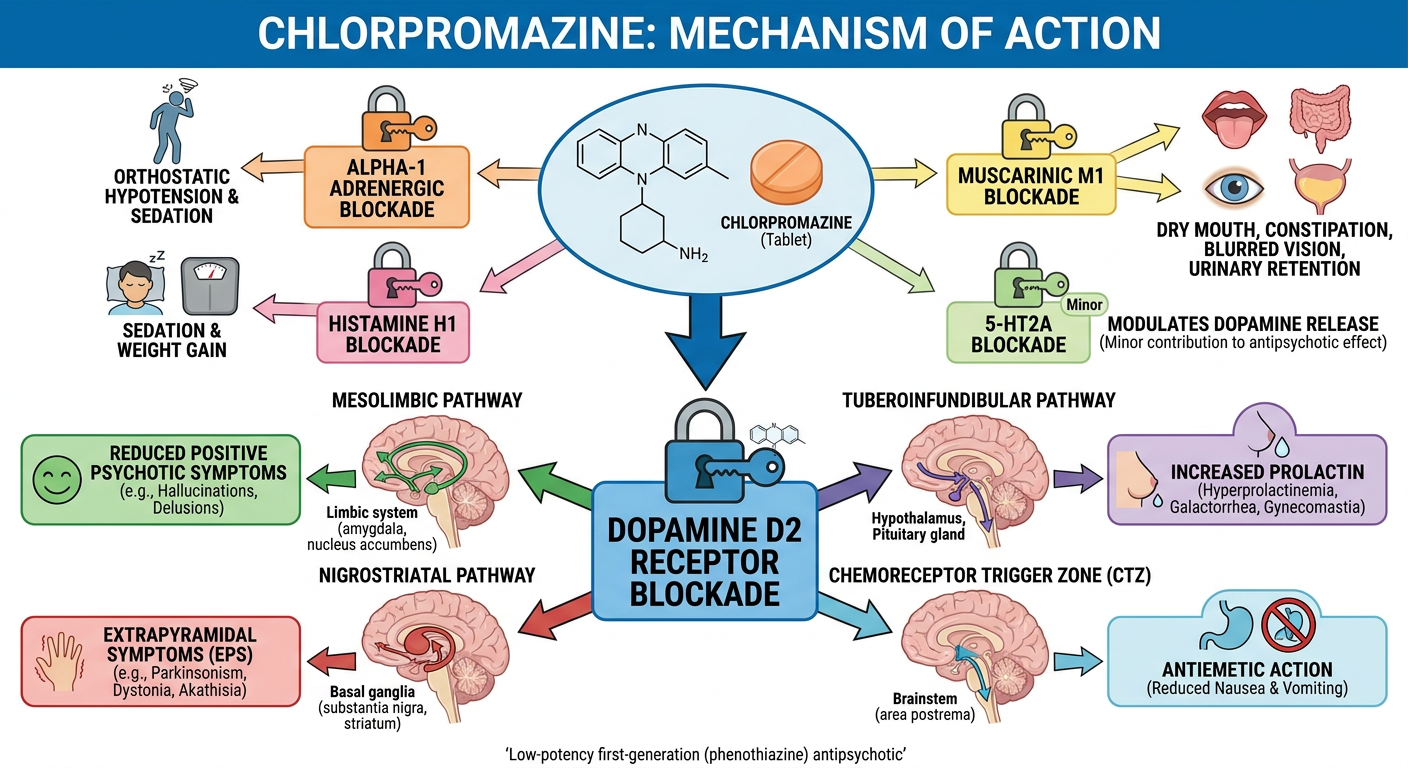
Create a clear educational pictorial mechanism-of-action diagram for chlorpromazine, suitable for medical students. Show a central chlorpromazine molecule/tablet leading to receptor blockade icons: dopamine D2 blockade as the main pathway, with four labelled dopamine pathways. Mesolimbic D2 blockade leads to reduced positive psychotic symptoms. Nigrostriatal D2 blockade leads to extrapyramidal symptoms. Tuberoinfundibular D2 blockade leads to increased prolactin. Chemoreceptor trigger zone D2 blockade leads to antiemetic action. Include secondary receptor blockades: alpha-1 adrenergic blockade leading to orthostatic hypotension and sedation, muscarinic M1 blockade leading to dry mouth constipation blurred vision urinary retention, histamine H1 blockade leading to sedation and weight gain, and 5-HT2A blockade with a minor label. Use anatomically inspired brain pathway illustrations, simple receptor lock icons, directional arrows, and accurate concise labels. Include a small footer: 'Low-potency first-generation (phenothiazine) antipsychotic'. Ensure labels are highly legible and the mechanism hierarchy emphasizes D2 antagonism.