

Tech me in simple and deeply of the modern view of vega
modern view of Vegas vagus nerve physiology neuroendocrine drives urges
modern view vagus nerve neuroendocrine drives urges cerebrum cerebellum
vagus nerve modern view neuroendocrine brain-body
"vagus nerve" anatomy physiology brain
vagus nerve anatomy diagram brain body organs parasympathetic
The Modern View of the Vagus Nerve (Vegas)
1. What is the Vagus Nerve? (Basic Identity)
| Fiber Type | Direction | Function |
|---|---|---|
| ~80–90% Afferent (sensory) | Body → Brain | Carry information FROM organs TO the brain |
| ~10–20% Efferent (motor) | Brain → Body | Carry commands FROM brain TO organs |
This is the key modern insight: the vagus nerve is primarily a sensory nerve, not just a command cable — it constantly reports the state of your internal organs back to the brain. — Yamada's Textbook of Gastroenterology
2. The Old View vs. The Modern View
| Old View | Modern View |
|---|---|
| Vagus = simple parasympathetic motor nerve | Vagus = a bidirectional superhighway linking the brain, gut, immune system, and endocrine system |
| Controls only heart, lungs, gut | Controls inflammation, hunger, emotion, cognition, immunity |
| Passive regulator | Active initiator of drives (Vegas/urges) |
3. Where Do Vegas (Drives/Urges) Come From? — The Neuro-Endocranial System
"Vegas are initiations brought by the neuro-endocranial system, parts of the brain like cerebrum, cerebellum, pons, medulla and hormonal secretions of the endocrine system..."
A. Brain Centers That Initiate Vegas
| Brain Region | Role in Vegas |
|---|---|
| Cerebrum (cortex) | Conscious perception, interpretation, and decision-making about urges |
| Cerebellum | Coordination of motor responses to drives |
| Pons | Relays signals; involved in arousal and sleep-related drives |
| Medulla oblongata | Contains the Nucleus Tractus Solitarius (NTS) — the main receiving station for all vagal afferent signals; and the Dorsal Motor Nucleus of the Vagus — the main output center |
B. Hormonal/Endocrine Contributions
| Hormone | Organ | Drive it Controls |
|---|---|---|
| Leptin | Fat tissue (adipocytes) | Long-term satiety; signals fat stores to the brain |
| Ghrelin | Stomach | Hunger drive — rises before meals |
| CCK (Cholecystokinin) | Duodenum | Short-term satiety — acts via vagal afferents to stop eating |
| GLP-1, PYY | Small intestine | Reduces hunger signals after eating |
| Glucocorticoids (cortisol) | Adrenal glands | Stress drives, energy mobilization |
| Catecholamines (adrenaline) | Adrenal medulla | Fight-or-flight drives |
Vagal sensory neurons innervate the entire GI tract and convey signals about CCK, GLP-1, and other peptides back to the NTS in the medulla, which then modulates appetite drives. — Yamada's Textbook of Gastroenterology
4. Continuous Negative Feedback — The Control Mechanism
"Continuous, forcible suppression or alteration of urges may lead to many diseases because of negative feedback mechanism."
How Negative Feedback Works in the Vegas System
Organ/Gut senses signal (e.g., food → CCK released)
        ↓
Vagal afferents carry signal → NTS in medulla
        ↓
NTS sends signal → Hypothalamus + Limbic system
        ↓
Brain generates SATIETY DRIVE (suppresses hunger)
        ↓
Efferent vagal signals → slow gut motility, stop eating
        ↓
FEEDBACK: Blood glucose rises → leptin rises → confirms satiation → loop complete
Why Suppressing Urges Causes Disease
- Chronic suppression of hunger → eating disorders, metabolic disorders
- Chronic suppression of the inflammatory reflex → chronic inflammation, autoimmune disease
- Chronic vagal tone disruption → anxiety, depression, cardiovascular disease
Vagal stimulation activates anti-inflammatory pathways ("the inflammatory reflex") — blocking NF-κB in macrophages via the α7 nicotinic acetylcholine receptor. Chronic disruption of this reflex leads to persistent inflammation. — Schwartz's Principles of Surgery
5. The Inflammatory Reflex — A Revolutionary Modern Discovery
- Brain detects inflammation via vagal afferents
- Efferent vagus → activates celiac ganglion → splenic nerves release norepinephrine
- Norepinephrine stimulates ACh-producing T-cells in the spleen
- ACh binds α7-nicotinic receptors on macrophages
- Macrophages STOP producing pro-inflammatory cytokines (TNF-α, IL-1β, IL-6)
6. The Gut-Brain Axis — Vegas as the Information Highway

- Vagal afferents from the gut → Nodose ganglion (cell bodies) → NTS in medulla
- From NTS: signals project to → Hypothalamus (hunger/thirst/temperature) → Limbic system (emotion/drives) → Cortex (conscious awareness)
- The gut microbiome communicates with the brain largely through the vagus nerve
7. Vagus Nerve and Higher Brain Connections
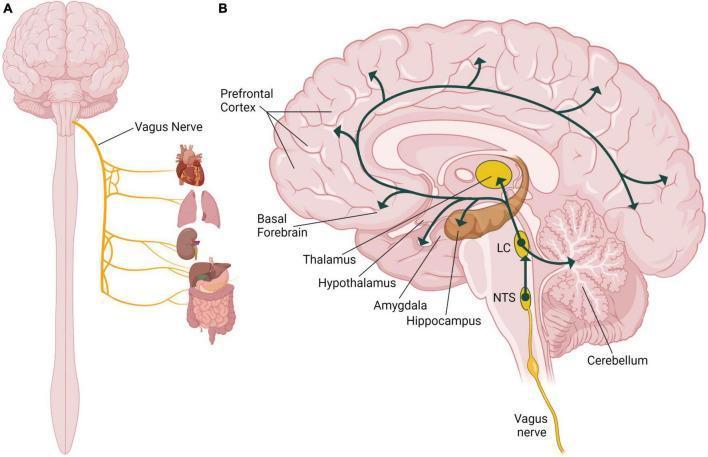
- Prefrontal cortex — decision-making, impulse control
- Amygdala — fear, emotional drives
- Hippocampus — memory, learning
- Hypothalamus — all basic biological drives (hunger, thirst, sex, sleep)
- Thalamus — sensory relay
8. Summary Table: The Modern Vagus Nerve at a Glance
| Feature | Modern Understanding |
|---|---|
| Direction | 80% afferent (body→brain), 20% efferent (brain→body) |
| Key brain nuclei | NTS, Dorsal Motor Nucleus, Locus Coeruleus |
| Drives initiated | Hunger, satiety, nausea, inflammation, fear response |
| Hormones coordinated | Leptin, CCK, GLP-1, ghrelin, cortisol, catecholamines |
| Feedback type | Continuous negative feedback — prevents overdrive of any urge |
| Disease link | Disrupted vagal tone → metabolic disease, depression, chronic inflammation |
| Therapeutic use | Vagus Nerve Stimulation (VNS) for epilepsy, depression, IBD, obesity |
Key Takeaway
It's the topic of ayurveda the name is veg dharna
Veg Dharana Ayurveda Vegas suppression of natural urges modern view
आयुर्वेद वेग धारणा Vegas Dharna natural urges suppression diseases
Vega Dharana modern view 13 natural urges suppression diseases treatment Ayurveda
Vega Dharana modern view neuroendocrine diseases Ayurveda etiopathogenesis
Vega Dharana modern view neuroendocrine science Charaka Ashtanga Hridaya 13 vegas suppression disease mechanism
- Topic: Endocrine system → factors of initiation of Vegas (urges)
- Vegas are initiations brought by the neuro-endocranial system (cerebrum, cerebellum, pons, medulla + hormonal secretions)
- 13 Vegas described
- Continuous, forcible suppression or alteration of urges may lead to many diseases because of negative feedback mechanism
- Number references: Ch. Su. 13, AS. Su. 13, Cha. Su. 7 ka. 5/22, 5/26, 55/3, 7/5, 55/7
वेग धारणा (Vega Dharana) — The Modern View
1. What is Vega Dharana? (Definition)
- Charaka Samhita — Sutrasthana Chapter 7 & 13
- Ashtanga Hridaya — Sutrasthana Chapter 4 (Roganutpadaniya — prevention of disease)
- Sushruta Samhita — Sutrasthana Chapter 13
2. What is a Vega? The Modern Scientific Explanation
| Ayurvedic concept | Modern science equivalent |
|---|---|
| Vega (उत्पत्ति) | A reflex/drive generated by neuroendocrine signals |
| Brain centers (cerebrum, cerebellum, pons, medulla) | CNS integration centers that process visceral signals |
| Hormonal secretions of endocrine system | Gut-brain hormones: CCK, ghrelin, leptin, ADH, etc. |
| Apana Vayu derangement | Autonomic nervous system dysregulation |
| Negative feedback on suppression | Allostatic load — chronic physiological stress from overriding normal reflexes |
The body integrates synchronized muscular and hormonal movements when an urge emerges. Constant suppression interrupts these automatically orchestrated responses over time, leading to disease.
3. Two Categories of Vegas
A. Adharaniya Vegas — 13 Urges You Must NEVER Suppress
| # | Vegas (Urge) | Modern Physiology |
|---|---|---|
| 1 | Mutra (urination) | Micturition reflex — stretch receptors in bladder → spinal cord → brain → voiding |
| 2 | Purisha (defecation) | Defecation reflex — rectal distension → parasympathetic → internal sphincter relaxation |
| 3 | Vata/Apana (flatus/passing gas) | Colonic peristalsis → pressure buildup → rectal valve → expulsion |
| 4 | Chhardi (vomiting) | Chemoreceptor trigger zone (CTZ) in medulla → vagal efferents → retching/vomiting |
| 5 | Kshavatu (sneezing) | Trigeminal nerve irritation → sneezing center in medulla → explosive expulsion |
| 6 | Udgara (belching) | Gastric gas → lower esophageal sphincter relaxation → upward expulsion |
| 7 | Jrimbha (yawning) | Arousal system (brainstem) → hypoxia/boredom signal → jaw stretch + deep breath |
| 8 | Kshudha (hunger) | Ghrelin rises → hypothalamus (lateral nucleus) → hunger drive |
| 9 | Pipasa (thirst) | Osmoreceptors in hypothalamus → ADH (vasopressin) → thirst urge |
| 10 | Ashru (tears/crying) | Limbic system (amygdala) → lacrimal gland via CN VII → emotional release |
| 11 | Nidra (sleep) | Adenosine buildup → VLPO nucleus → sleep pressure |
| 12 | Shrama Shwasa (breathlessness after exertion) | Muscle CO₂ buildup → carotid chemoreceptors → vagus → medulla → deep breathing |
| 13 | Shukra (ejaculation/seminal urge) | Sexual arousal → spinal ejaculation center (L1-L2) → sympathetic efferents |
B. Dharaniya Vegas — 5 Urges You MUST Suppress
| Urge | Meaning |
|---|---|
| Lobha | Greed |
| Irshya | Envy |
| Dwesha | Hatred |
| Matsarya | Jealousy |
| Raga | Possessive attachment |
4. The Modern View of How Vegas Are Generated (As in Your Notes)
STIMULUS (internal organ signal)
         ↓
Sensory nerves → Spinal cord / Vagus nerve
         ↓
MEDULLA OBLONGATA (reflex centers — vomiting, sneezing, breathing)
PONS (arousal, yawning, sleep)
HYPOTHALAMUS (hunger, thirst, temperature)
LIMBIC SYSTEM / CEREBRUM (emotional urges, tears, sexual urge)
CEREBELLUM (coordinates motor response)
         ↓
HORMONAL AMPLIFICATION
(Ghrelin → hunger | ADH → thirst | Leptin → satiety | Oxytocin → social/sexual)
         ↓
URGE (VEGA) IS GENERATED
         ↓
Body acts → NEGATIVE FEEDBACK → Urge disappears → Balance restored
5. The Negative Feedback Mechanism — Why Suppression Causes Disease
"Continuous, forcible suppression or alteration of urges may lead to many diseases because of negative feedback mechanism."
How Negative Feedback Gets Disrupted
- The reflex arc is activated but blocked mid-way
- The triggering signal (hormone, nerve impulse) keeps accumulating
- The negative feedback (which would normally "switch off" the signal after expression) never activates
- The system stays in a chronic state of activation → Vata (autonomic) derangement
6. Diseases Caused by Each Vega Dharana
| Vega Suppressed | Diseases Caused | Modern Parallel |
|---|---|---|
| Mutra (urine) | Dysuria, bladder pain, headache, lower abdominal distension | UTI, bladder dysfunction, renal stones |
| Purisha (stool) | Colic pain, headache, constipation, calf cramps | IBS, constipation, colorectal dysfunction |
| Vata (flatus) | Abdominal distension, retention of stool and gas, colic | Gaseous distension, colonic dysmotility |
| Chhardi (vomiting) | Skin diseases, rashes, fever, nausea, oedema, anaemia | Aspiration, persistent nausea, metabolic disturbance |
| Kshavatu (sneeze) | Headache, stiff neck, facial palsy, sensory dullness | Raised intracranial pressure, barotrauma |
| Udgara (belch) | Tremors, Parkinson-like symptoms, abdominal fullness | GERD, esophageal dysfunction |
| Ashru (tears) | Giddiness, anorexia, abdominal bloating | Somatized grief, functional GI disorders, depression |
| Kshudha (hunger) | Emaciation, body pain, anorexia, weakness | Hypoglycemia, eating disorders, metabolic syndrome |
| Pipasa (thirst) | Dryness, deafness, fatigue, heart disease | Dehydration, hypovolemia, cardiac stress |
| Nidra (sleep) | Yawning, heaviness, depression, loss of perception | Sleep deprivation, metabolic disease, cognitive decline |
| Shrama Shwasa (exertion breath) | Abdominal tumors, cardiac disorders, fainting | Cardiac ischemia, hypoxia, pulmonary hypertension |
| Shukra (ejaculation) | Pain in genitals, urinary stones, hernia, impotence | Epididymal congestion, prostatitis, urinary stones |
| Jrimbha (yawn) | Same as sneeze suppression symptoms | Hypoxia, cervical tension |
7. Treatment Principles (Chikitsa)
- Basti (medicated enemas) — the king of Vata treatments
- Abhyanga (oil massage) — calms the nervous system
- Avagaha (immersion bath in herbal oils)
- Snehapana (internal oleation — ghee therapy)
- Swedana (sudation/steam therapy)
- Vishrama (rest)
8. Summary — The Complete Picture
VEGA DHARANA = Suppression of Natural Urges
        ↓
Neuroendocrine system keeps generating the signal
(Cerebrum + Cerebellum + Pons + Medulla + Endocrine hormones)
        ↓
Negative feedback loop FAILS to complete
        ↓
Chronic Vata aggravation (autonomic dysfunction)
        ↓
Organ-specific disease manifestation
        ↓
Treatment: Vata pacification + restore natural reflex expression
Create a detailed comparison: Ayurvedic Vega Dharana vs. modern autonomic nervous system dysfunction
Vega Dharana Ayurveda autonomic nervous system comparison modern science dysautonomia
"autonomic dysfunction" suppression reflex disease pathogenesis
Vega Dharana Ayurveda autonomic nervous system modern comparison Vata dysautonomia
"autonomic nervous system" allostatic load chronic disease
Vata dosha autonomic nervous system comparison Vega Dharana dysautonomia allostatic load modern medicine