
Provide me very good and complete history taking and examination of PROLAPSE for MBBS student from all standard books which will cover all aspects of negative history and all so that I can score full out of full in viva exam
Reading File
Now let me search the library for prolapse content from multiple angles simultaneously.
Finding Sources
Finding Sources
Finding Sources
Finding Sources
Finding Sources
Excellent - found key sources. Let me now read the most comprehensive sections simultaneously.
Reading File
Reading File
Reading File
Let me read the dedicated prolapse sections from Bailey & Love and Berek & Novak more thoroughly.
Reading File
Finding Sources
Finding Sources
Now let me read the key prolapse sections from Berek & Novak and Campbell-Walsh for the physical examination and symptoms sections:
Reading File
Reading File
Reading File
Excellent content gathered. Now let me read the physical examination section in detail from Berek & Novak, and also check for the symptoms section:
Reading File
Reading File
I now have very comprehensive material. Let me fetch the anatomical diagram image and also get one more important section on symptoms and physical examination:
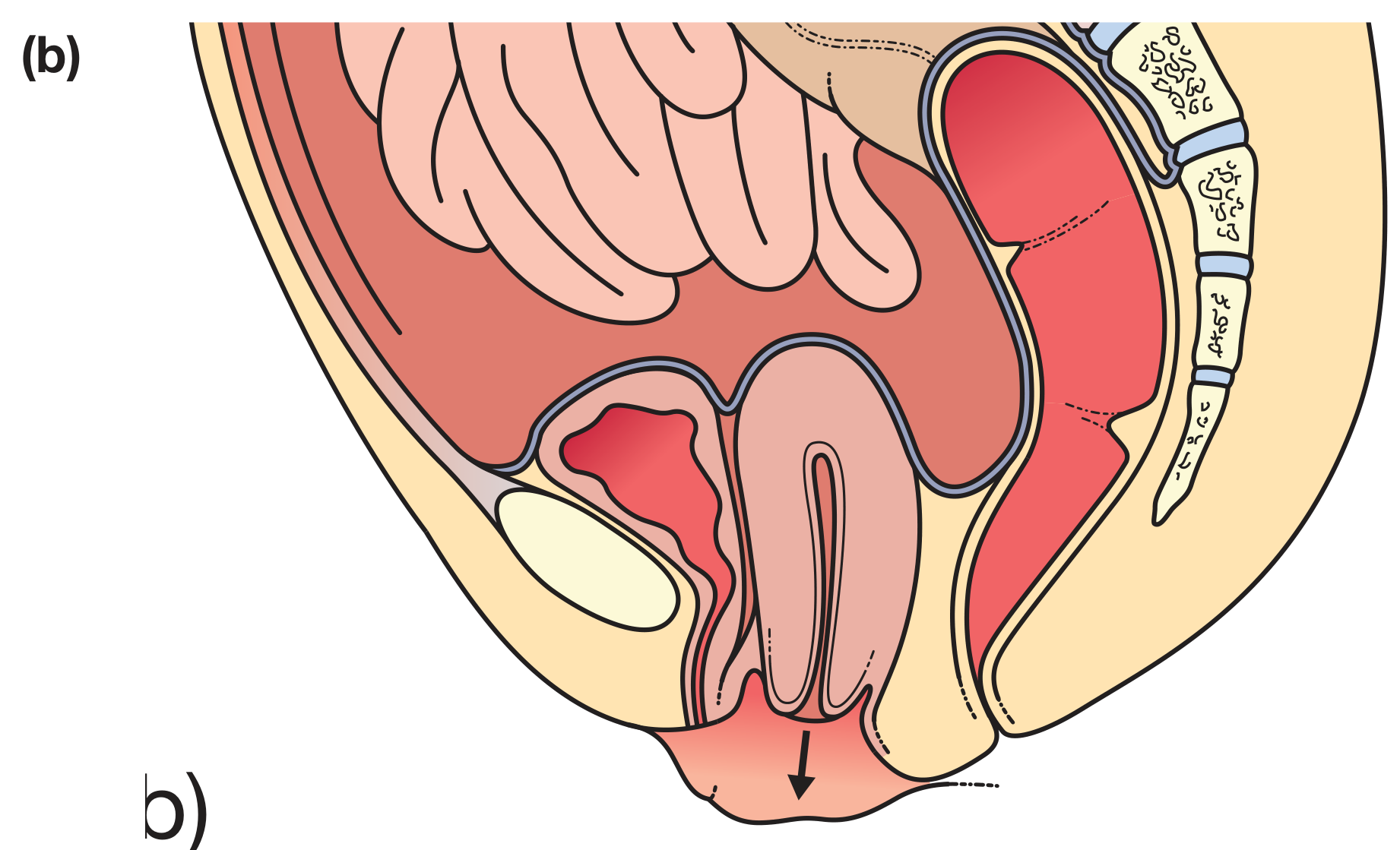
Loading Image
Reading File
I now have all the comprehensive information needed. Let me compile the complete, viva-ready guide:
Complete History Taking & Examination: Uterovaginal Prolapse
For MBBS Viva - Compiled from Bailey & Love, Berek & Novak's Gynecology, Campbell-Walsh Urology, Shaw's Textbook of Gynaecology
PART 1: DEFINITION & CLASSIFICATION (Know Before History)
Definition: Pelvic organ prolapse (POP) is the descent of one or more of the anterior vaginal wall, posterior vaginal wall, the uterus (cervix), or the vaginal vault (cuff) after hysterectomy. It refers to protrusion or displacement of pelvic organs from their normal anatomical position into or through the vagina.
- Bailey & Love, 28th Ed. | Berek & Novak's Gynecology
Types of prolapse (by compartment):
| Type | Structure Prolapsing | Compartment |
|---|---|---|
| Urethrocele | Urethra | Anterior |
| Cystocele | Bladder | Anterior |
| Cystourethrocele | Bladder + urethra | Anterior |
| Uterine prolapse | Uterus/cervix | Apical |
| Vaginal vault prolapse | Vaginal cuff (post-hysterectomy) | Apical |
| Enterocele | Peritoneum/small bowel | Posterior/apical |
| Rectocele | Rectum | Posterior |
PART 2: HISTORY TAKING
A. PRESENTING COMPLAINT
Ask the patient to describe her main complaint in her own words. Common presentations:
- "Something coming down" / "a lump in the vagina"
- Dragging sensation in the pelvis
- Low backache / pelvic heaviness
- Urinary complaints
- Bowel complaints
- Sexual dysfunction
Viva tip: The most specific symptom for POP is a vaginal bulge that the patient can see or feel. - Campbell-Walsh Urology, Vol. 3
B. HISTORY OF PRESENTING ILLNESS (HPI)
1. The "Something Coming Down" (LUMP) - Vaginal Bulge
- Onset: Since when? Sudden or gradual?
- Progression: Is it getting bigger/worse over time?
- Relationship to posture: Does it increase on standing, straining, coughing, lifting? Does it reduce on lying down?
- Reducibility: Does it go back in on its own (when lying down) or does the patient have to push it back in manually?
- Size: Pea-sized, egg-sized, came out completely?
- Complete prolapse (procidentia): Has the whole uterus come out through the vulva? Is it always out even when lying down?
2. Pelvic/Dragging Symptoms
- Is there a dragging sensation in the lower abdomen or perineum?
- Pelvic pressure or heaviness - worse toward the end of the day?
- Low backache - is it related to standing and relieved by lying down? (Musculoskeletal back pain is not relieved by recumbency - important differential)
3. URINARY SYMPTOMS (very important - ask systematically)
| Symptom | What to Ask |
|---|---|
| Frequency | How often do you pass urine in the day? (Normal: up to 7 times) |
| Nocturia | Do you wake up at night to pass urine? How many times? |
| Urgency | Do you get a sudden desire to pass urine that is hard to defer? |
| Urge incontinence | Do you leak before reaching the toilet? |
| Stress urinary incontinence (SUI) | Do you leak with coughing, sneezing, laughing, lifting? |
| Voiding difficulty | Do you have to strain to pass urine? |
| Poor stream / incomplete emptying | Feeling that the bladder is not empty after voiding? |
| Splinting to void | Do you need to push the vaginal lump back in to urinate? (This is highly specific for cystocele/cystourethrocele) |
| Recurrent UTIs | Repeated burning/frequency episodes? |
| Urinary retention | Inability to pass urine at all? |
Viva tip: SUI actually decreases in prevalence and severity as prolapse extends beyond the hymen - this is because the prolapsing bladder kinks the urethra, creating "occult/masked SUI." Always ask about SUI and warn the patient it may be unmasked after surgery. - Campbell-Walsh Urology
4. BOWEL SYMPTOMS
| Symptom | Ask About |
|---|---|
| Constipation | Is it hard to open bowels? Need to strain? |
| Feeling of incomplete emptying | Sensation that stool remains after defecation? |
| Splinting to defecate | Do you need to push on the back wall of the vagina or perineum to help pass stool? (Classic of rectocele) |
| Fecal incontinence | Any leakage of stool or flatus? |
| Obstructed defecation | Stool "gets caught in a pocket"? - Specific for rectocele defect |
| Mucus/blood per rectum | (Rule out colorectal pathology) |
Viva tip: Poor correlation exists between bowel symptoms and severity/site of prolapse. Constipation alone, without vaginal bulge, should NOT prompt surgery for posterior compartment prolapse. - Campbell-Walsh Urology
5. SEXUAL HISTORY (ask sensitively)
- Any difficulty/discomfort during intercourse (dyspareunia)?
- Is sexual activity currently possible?
- Is the bulge a problem during intercourse?
- Does the patient wish to resume sexual activity? (Impacts surgical planning)
- Body image concerns?
Viva tip: POP negatively affects body image and sexual function. Treatment can improve sexual function. - Campbell-Walsh Urology
6. VAGINAL DISCHARGE / BLEEDING
- Any vaginal discharge? Character? (Ulceration of exposed vaginal mucosa in procidentia causes discharge)
- Any vaginal bleeding? (Ulceration of procidentia can cause bleeding)
- Any postmenopausal bleeding? NEVER attribute to prolapse alone - must investigate for malignancy. - Campbell-Walsh Urology
C. OBSTETRIC HISTORY (MOST IMPORTANT RISK FACTORS)
- Parity: Total number of pregnancies (G_P_) - increased parity = increased risk
- Mode of delivery: Vaginal vs caesarean section
- Instrumental delivery: Forceps/vacuum (increases risk)
- Birth weights: Large babies?
- Prolonged labours: Especially prolonged second stage (damages pelvic floor)
- Tears/episiotomies: 3rd/4th degree perineal tears?
- Interval between pregnancies
- Postpartum period: Was there difficulty with urination or defecation after delivery?
Viva tip: The most important acquired risk factor is vaginal delivery. Prolonged labour and instrumental delivery cause direct damage to the levator ani muscles and pudendal nerve. - Bailey & Love
D. MENSTRUAL / GYNAECOLOGICAL HISTORY
- Menstrual status: Pre-menopausal or post-menopausal?
- Menopausal symptoms: Hot flushes, vaginal dryness? (Estrogen deficiency weakens connective tissue and is a risk factor)
- Age at menopause
- HRT use: Current or past use?
- Previous gynaecological surgeries: Hysterectomy (vaginal vault prolapse risk), previous prolapse repair (recurrence), colposuspension/incontinence procedures
- Abnormal uterine bleeding / cervical smear history
- Intrauterine device (IUD)
E. PAST MEDICAL HISTORY
- Chronic cough: COPD, asthma, chronic bronchitis (chronically raised intra-abdominal pressure)
- Constipation: Chronic straining - important risk factor
- Connective tissue disorders: Ehlers-Danlos syndrome, Marfan syndrome (weakened collagen/fascia)
- Diabetes mellitus (impairs wound healing, associated with neuropathy)
- Neurological conditions: Multiple sclerosis, spinal cord injury (affects pelvic floor nerve supply)
- Previous pelvic/abdominal surgery: Can affect support structures
F. OCCUPATIONAL / SOCIAL HISTORY
- Occupation: Heavy manual labour, heavy lifting (chronically increases intra-abdominal pressure)
- BMI/Obesity: (Increases intra-abdominal pressure chronically)
- Smoking: Causes chronic cough
- Exercise: High-impact activities
- Social support: Who helps at home?
- Quality of life impact: How much does it limit daily activities, social life, going out?
G. FAMILY HISTORY
- Prolapse in mother or sisters? (Genetic predisposition - connective tissue weakness)
- Connective tissue disorders in family?
Viva tip: Genetic/connective tissue factors are increasingly recognized. Bailey & Love specifically lists family history and genetic risk as an independent risk factor.
H. DRUG HISTORY / ALLERGIES
- Any current medications?
- Anticoagulants (relevant to surgical planning)
- Alpha-blockers or other drugs affecting bladder/bowel function
- Allergies
I. NEGATIVE HISTORY (Equally Important in Viva)
This is what separates a good candidate from an average one. Specifically ask and document:
| System | Negative Points to Elicit |
|---|---|
| Urinary | No dysuria, no hematuria, no UTIs (rules out infection mimicking symptoms); No urinary retention |
| Bowel | No rectal bleeding, no altered bowel habit not explained by prolapse, no mucus per rectum, no weight loss (rules out colorectal malignancy) |
| Menstrual | No intermenstrual bleeding, no postmenopausal bleeding NOT attributable to ulceration (must exclude endometrial carcinoma) |
| Constitutional | No weight loss, no fatigue, no anorexia (rules out malignancy) |
| Urological | No flank pain, no hydronephrosis symptoms (large procidentia can kink ureters) |
| Neurological | No numbness, no weakness of legs (rules out neurogenic cause of pelvic floor dysfunction) |
| Back pain | No radiation to legs, no morning stiffness, not worse at rest (rules out spinal/musculoskeletal back pathology causing pain rather than prolapse) |
| Surgical | No previous pelvic/abdominal surgery unless already mentioned |
PART 3: PHYSICAL EXAMINATION
A. GENERAL EXAMINATION
- General appearance: Well/ill, cachexia (malignancy?)
- BMI/Obesity: Note if obese (risk factor + operative difficulty)
- Vital signs: Pulse, BP, temperature
- Systemic examination: Chest (chronic cough - COPD?), Abdomen
B. ABDOMINAL EXAMINATION
- Inspection: Any distension, scars (previous surgery)
- Palpation: Any pelvic/abdominal mass? Uterus palpable?
- Pelvic mass: Could suggest fibroids or ovarian mass which may be contributing to prolapse by increasing weight/pressure
- Renal angles: Any tenderness? (Hydronephrosis with procidentia)
C. PELVIC EXAMINATION
Position: Dorsal lithotomy position (left lateral / Sim's position is preferred for examining posterior vaginal wall)
Equipment needed: Good light, cusco's speculum (bivalve), Sim's speculum, sponge forceps/Breisky's retractor
Step 1 - INSPECTION OF EXTERNAL GENITALIA
- Inspect the vulva and perineum
- Note: Skin atrophy / thinning? (Estrogen deficiency)
- Trophic changes: Leukoplakia?
- Ulceration: Decubitus ulcer on exposed cervix/vaginal walls in procidentia
- Gaping introitus: Lax perineum
- Prolapse visible at rest? (Grade 3/4)
- Cough test (stress test): Ask patient to cough vigorously - does urine leak? Is a bulge extruded?
Step 2 - VALSALVA / STRAINING
- Ask the patient to bear down / strain (Valsalva)
- Assess maximum extent of prolapse - prolapse may only be apparent on straining
- Note which compartment prolapses first and most
Step 3 - SPECULUM EXAMINATION
With Sim's speculum (L-shaped retractor):
- The patient is in left lateral position
- Sim's speculum is placed posteriorly to depress the posterior vaginal wall
- Ask patient to strain - assess anterior wall prolapse (cystocele/urethrocele)
- The speculum is then reversed to depress the anterior wall - assess posterior wall (rectocele/enterocele)
Key findings:
| Finding | Diagnosis |
|---|---|
| Anterior wall bulge | Cystocele/Urethrocele |
| Cervix at or beyond introitus | Uterine prolapse (Grade 2-3) |
| Cervix + uterus completely outside vulva | Procidentia (Grade 4) |
| Posterior wall bulge below cervix | Rectocele |
| Posterior wall bulge above cervix | Enterocele (small bowel can be felt as impulse within) |
| Vaginal cuff descent (post-hysterectomy) | Vault prolapse |
Differentiating rectocele from enterocele:
- Enterocele is above the level of the cervix (in the posterior fornix area)
- Rectocele is below
- On rectal examination: finger in rectum will NOT enter the enterocele sac (it is separate)
- Enterocele may have a gurgling sensation if bowel is within it
Examination of cervix:
- Note surface of the cervix: any ulceration, hypertrophy, elongation?
- Is the cervix alone prolapsing while the uterine body remains up? (Cervical hypertrophy/elongation)
- Perform Pap smear if indicated
Step 4 - BIMANUAL EXAMINATION
- Assess uterine size, position, mobility
- Any adnexal masses (ovarian)?
- Tenderness (infection/endometriosis)?
- Uterosacral ligaments: Thickened? (Endometriosis)
- Bladder neck mobility: Assess during coughing
Step 5 - RECTAL EXAMINATION
- Assess rectocele: Anterior rectal wall bulge palpated during Valsalva
- Assess anal sphincter tone: Especially if patient has fecal incontinence
- Rule out rectal mass
- Rectovaginal exam: With one finger in the vagina and one in the rectum - assess the rectovaginal septum for defects
D. GRADING OF PROLAPSE
1. Baden-Walker Halfway Scoring System (Older, simpler)
| Grade | Description |
|---|---|
| Grade 0 | Normal, no prolapse |
| Grade 1 | Descent halfway to hymen |
| Grade 2 | Descent to the hymen |
| Grade 3 | Descent halfway past hymen |
| Grade 4 | Maximum descent (procidentia) |
Assessment at: urethral, vesical, uterine, cul-de-sac, rectal, and perineal sites.
2. POP-Q System (Pelvic Organ Prolapse Quantification) - Gold Standard
Developed by Bump et al. (1996), endorsed by ICS. Uses the hymenal ring as fixed reference point. Measurements in centimeters: negative = above hymen (inside), positive = below/outside hymen.
Reference points:
| Point | Location | Normal Value |
|---|---|---|
| Aa | 3 cm proximal to hymen on anterior wall (≈ urethrovesical junction) | -3 to +3 |
| Ba | Most distal point of anterior wall prolapse between Aa and apex | -3 in no prolapse |
| C | Most distal edge of cervix (or vaginal cuff after hysterectomy) | Variable |
| D | Posterior fornix (uterosacral attachment); omitted after hysterectomy | Variable |
| Ap | 3 cm proximal to hymen on posterior wall | -3 |
| Bp | Most distal point of posterior wall prolapse | -3 in no prolapse |
| gh | Genital hiatus | cm |
| pb | Perineal body | cm |
| tvl | Total vaginal length | cm |
POP-Q Stages:
| Stage | Criteria |
|---|---|
| Stage 0 | No prolapse demonstrated |
| Stage 1 | Most distal portion >1 cm above hymen (< -1) |
| Stage 2 | Most distal portion between -1 cm and +1 cm (at or near hymen) |
| Stage 3 | Most distal portion >1 cm below hymen but ≤ (tvl - 2) cm |
| Stage 4 | Complete eversion; most distal portion ≥ (tvl - 2) cm |
Viva tip: POP-Q is now the gold-standard, recommended by ICS and IUGA. Symptoms are typically absent until prolapse reaches the hymenal ring (Stage 2 reaching the hymen). - Campbell-Walsh Urology
E. SPECIAL TESTS IN EXAMINATION
- Cough stress test: Patient coughs with full bladder - watch for urinary leakage at the meatus (SUI)
- Q-tip test: Angle of Q-tip changes >30° from horizontal with Valsalva - indicates urethrovesical junction hypermobility
- Bonney's test (Marshall's test): Elevating the bladder neck with two fingers stops SUI - predicts success of continence surgery (but largely superseded)
- Reduction of prolapse: Reduce prolapse with ring forceps or pessary - does this unmask stress incontinence? (Occult/masked SUI)
- Valsalva leak point pressure (VLPP): Urodynamic test
F. PELVIC FLOOR MUSCLE ASSESSMENT
- Oxford scale / Modified Oxford scale: 0 (no contraction) to 5 (strong contraction)
- Ask patient to contract pelvic floor as if stopping urination
- Assess contraction against resistance of fingers
- Note duration of hold, number of repetitions
G. ADDITIONAL INVESTIGATIONS TO MENTION
| Investigation | Purpose |
|---|---|
| Urinalysis + urine culture | Rule out UTI (can mimic/worsen urinary symptoms) |
| Post-void residual urine (PVR) | Bladder emptying - >150 mL is abnormal |
| Urodynamic studies | Before surgery for SUI/urge incontinence |
| Pap smear / cervical cytology | If not recent |
| Endometrial sampling | If postmenopausal bleeding |
| Renal function / Ultrasound KUB | If suspect hydronephrosis with procidentia |
| MRI pelvis | Complex cases, enterocele evaluation |
| Defecography | Assess posterior compartment defects |
PART 4: RISK FACTORS SUMMARY (for Viva)
Predisposing factors (Bailey & Love + Berek & Novak):
- Older age (post-menopausal, estrogen deficiency)
- Multiparity / prolonged labours / vaginal deliveries / instrumental deliveries
- Obesity (chronically raised intra-abdominal pressure)
- Chronic constipation / straining
- Chronic cough (COPD, bronchitis)
- Heavy occupational lifting
- Estrogen deficiency (menopause - weakens collagen)
- Family history / genetic risk (inheritable connective tissue weakness)
- Connective tissue disorders - Ehlers-Danlos, Marfan syndrome
- Previous hysterectomy (vault prolapse risk)
- Previous incontinence surgery (Burch colposuspension - aggravates posterior compartment weakness in 38%)
PART 5: VIVA HIGH-YIELD POINTS
| Question | Answer |
|---|---|
| Most specific symptom of POP | Vaginal bulge seen or felt by patient |
| Most common compartment affected | Anterior (cystocele) |
| Why does SUI improve as prolapse worsens? | Urethral kinking from prolapsing bladder - occult SUI |
| What must never be attributed to prolapse? | Postmenopausal bleeding - always investigate for malignancy |
| Differentiating rectocele from enterocele | Enterocele is above the cervix (high in posterior fornix), contains bowel; Rectocele is below the cervix |
| Grading system currently recommended | POP-Q (ICS/IUGA endorsed) |
| Stage at which symptoms appear | Stage 2 when prolapse reaches the hymen |
| When is SUI worst? | Stage 1-2 prolapse (improves paradoxically with severe prolapse) |
| Connective tissue disorders with POP risk | Ehlers-Danlos, Marfan syndrome |
| Classic symptom of rectocele | Need to splint/digitally compress posterior vaginal wall to defecate |
| Classic symptom of cystocele | Need to splint/digitally compress anterior wall or elevate lump to urinate |
| Procidentia complications | Ulceration, bleeding, discharge, ureteric kinking, hydronephrosis |
| Position for examination | Left lateral (Sim's) for posterior wall; Dorsal lithotomy for overall |
PART 6: SYMPTOMS BY TYPE OF PROLAPSE (Summary Table)
| Prolapse Type | Key Symptoms |
|---|---|
| Cystocele | Lump in vagina, urinary urgency/OAB, frequency, recurrent UTIs, incomplete emptying, splinting to void |
| Urethrocele / Cystourethrocele | Stress urinary incontinence (SUI), dribbling |
| Uterine prolapse | Lump/dragging, backache (relieved by lying down), discharge |
| Procidentia (Grade 4) | All above + ulceration, bleeding, urinary retention, hydronephrosis |
| Rectocele | Difficulty defecating, incomplete emptying, splinting to defecate |
| Enterocele | Pelvic pressure, vaginal bulge (especially post-hysterectomy), constipation |
| Vault prolapse | As per cystocele/rectocele combined, in post-hysterectomy patient |
Sources:
- Bailey and Love's Short Practice of Surgery, 28th Ed. - Ch. 87 (Uterovaginal Prolapse)
- Berek & Novak's Gynecology - Ch. 115 (Pelvic Organ Prolapse)
- Campbell-Walsh-Wein Urology, 12th Ed. - Vol. 3, Sections on POP (Symptoms, Physical Examination, Epidemiology, Pathophysiology)
- Schwartz's Principles of Surgery, 11th Ed.
Give history taking for Prolapse case in sentence format so that I can directly copy in exam
Here is the complete history in ready-to-copy sentence format, structured exactly as you would write it in an exam answer sheet.
HISTORY TAKING: A CASE OF UTEROVAGINAL PROLAPSE
PATIENT PROFILE
Mrs. X, a 48-year-old multiparous housewife from a rural area, presented to the gynaecology OPD with complaints of something coming down per vaginum for the past 2 years, dragging pain in the lower abdomen for 1 year, and difficulty in passing urine for 6 months.
HISTORY OF PRESENTING ILLNESS
Chief Complaint 1 - Something Coming Down (Vaginal Lump)
The patient noticed a lump coming out of her vagina 2 years ago, which was initially small and appeared only on straining, prolonged standing, or heavy lifting, and used to disappear on its own on lying down. Over the past 6 months, however, the lump has progressively increased in size and now remains permanently outside even at rest, and the patient has to manually push it back inside. There is no pain in the lump itself, but the exposed surface has developed ulceration, causing a whitish foul-smelling vaginal discharge and occasional contact bleeding when the surface rubs against her clothing. The patient denies any history of spontaneous reduction of the lump on lying down in recent months.
Chief Complaint 2 - Dragging Pain / Pelvic Heaviness
She complains of a dragging, aching sensation in the lower abdomen and perineum for the past 1 year, which is worse towards the end of the day, on prolonged standing, straining, and physical activity, and is relieved by lying down. She also complains of a low backache that is similarly relieved on lying down and is not associated with morning stiffness, radiation to the legs, or any neurological symptoms.
Chief Complaint 3 - Urinary Symptoms
She has been experiencing increased urinary frequency, passing urine 12-15 times a day. She has urgency with occasional urge incontinence - leakage of urine before she can reach the toilet. She also complains of incomplete emptying of the bladder after micturition and a feeling that urine does not come out freely unless she pushes the vaginal lump back inside manually (splinting to void). She denies any history of stress urinary incontinence (leakage on coughing, sneezing, or laughing) at present, but on direct questioning admits to having had such leakage earlier when the lump was smaller. She has had two episodes of burning micturition with cloudy urine in the past year, for which she took antibiotics. There is no hematuria, no dysuria at present, and no history of urinary retention requiring catheterisation.
Chief Complaint 4 - Bowel Symptoms
She complains of constipation for the past 1 year with difficulty in defecation and a feeling of incomplete evacuation of bowel. She admits that she has to press on the back wall of the vagina with her fingers (splinting/digitating) to be able to pass stools completely. She denies any history of frank rectal bleeding, mucus in stools, or significant alteration in bowel habit beyond constipation. There is no history of fecal incontinence or leakage of flatus.
Chief Complaint 5 - Sexual History
On sensitive enquiry, the patient reports that she has avoided sexual intercourse for the past 1 year due to discomfort and embarrassment related to the prolapse. She reports that she would like to resume normal sexual activity after treatment. There is no history of postcoital bleeding beyond the contact bleeding from the ulcerated lump.
Chief Complaint 6 - Vaginal Discharge / Bleeding
As mentioned, there is a whitish, foul-smelling vaginal discharge for the past 3 months, attributed to ulceration of the exposed vaginal/cervical mucosa. There is occasional contact bleeding when the lump rubs against clothing. She denies any intermenstrual bleeding or postmenopausal bleeding unrelated to the ulceration.
MENSTRUAL HISTORY
The patient attained menarche at 13 years of age. Her cycles were regular, occurring every 28-30 days, lasting 4-5 days, with normal flow requiring 3-4 pads per day, and were not associated with dysmenorrhea. She attained menopause 3 years ago at the age of 45 years. Since menopause, she has been experiencing symptoms of estrogen deficiency including vaginal dryness and occasional hot flushes. She denies any postmenopausal bleeding except for the contact bleeding from the ulcerated lump described above. Her last Pap smear was 5 years ago and was reported as normal. She is not on any hormone replacement therapy.
OBSTETRIC HISTORY
The patient is gravida 4, para 4, with 4 living children and no abortions (G4P4L4A0). All 4 deliveries were full-term, normal vaginal deliveries conducted at home by a traditional birth attendant. The birth weights of the babies were reportedly large (the largest was approximately 4 kg). She had prolonged labours with all deliveries - the second stage was reportedly prolonged in 2 of the deliveries. She did not receive episiotomy in any delivery. She sustained perineal tears in 2 deliveries which were reportedly not sutured. She did not practise any pelvic floor exercises post-delivery. The youngest child is 10 years old. There is no history of any pregnancy-related complications.
PAST MEDICAL HISTORY
She has a history of chronic constipation requiring regular straining at stools for the past 10 years, which predates her prolapse. She is a known case of chronic obstructive pulmonary disease (COPD) with chronic productive cough for the past 5 years, for which she uses an inhaler. She has no history of diabetes mellitus, hypertension, connective tissue disorders, or any neurological illness. She has no history of any previous pelvic, abdominal, or gynaecological surgery. There is no history of previous prolapse repair, hysterectomy, or anti-incontinence procedure.
PAST SURGICAL HISTORY
She has not undergone any previous surgery. She has no history of blood transfusion. She has no known drug allergies.
DRUG HISTORY
She is currently using a bronchodilator inhaler for COPD. She is not on any hormonal treatment, anticoagulants, or medications that affect bladder or bowel function.
FAMILY HISTORY
Her mother and elder sister also had a similar complaint of "something coming down" per vaginum, suggesting a possible familial/genetic predisposition to connective tissue weakness. There is no family history of connective tissue disorders such as Ehlers-Danlos syndrome or Marfan syndrome. There is no family history of pelvic or gynaecological malignancy.
PERSONAL / SOCIAL HISTORY
She is a non-smoker and a non-alcoholic. She is a housewife who also works on the family farm and regularly engages in heavy lifting and prolonged standing. Her BMI is 29 kg/m² (overweight). She has an adequate diet. She lives with her husband and children in a rural area. The condition significantly impacts her quality of life - she is unable to perform daily household activities, avoids going to public places due to fear of leakage, and has curtailed all physical and social activity.
REVIEW OF SYSTEMS / NEGATIVE HISTORY
On systematic review, the following are specifically absent and must be mentioned:
Urinary: No dysuria at present, no hematuria, no acute urinary retention, no flank pain or swelling suggestive of hydronephrosis (although this must be investigated given the procidentia).
Bowel: No frank rectal bleeding, no mucus in stools beyond normal, no significant unintentional weight loss, no alternating diarrhoea and constipation that would suggest colorectal malignancy.
Gynaecological: No postmenopausal bleeding unrelated to surface ulceration, no intermenstrual bleeding, no abnormal vaginal bleeding that could suggest cervical or endometrial malignancy - these have been directly asked and excluded.
Neurological: No limb weakness, no paraesthesia, no saddle anaesthesia, no bowel or bladder dysfunction of a neurological nature that would suggest a spinal cord lesion.
Musculoskeletal: The low backache is specifically relieved by lying down, is not associated with morning stiffness, radiation, or rest pain - making primary musculoskeletal or disc pathology less likely.
Constitutional: No fever, no significant weight loss, no night sweats, no anorexia - making systemic or malignant causes unlikely.
Cardiovascular/Respiratory: No chest pain, no palpitations. Chronic cough from COPD is already noted as a contributing risk factor.
SUMMARY OF HISTORY
In summary, Mrs. X is a 48-year-old postmenopausal multiparous woman presenting with a 2-year history of progressive uterovaginal prolapse (currently Grade 3-4/procidentia with the lump permanently outside requiring manual reduction), associated with symptoms of anterior compartment prolapse (urinary urgency, frequency, incomplete emptying, splinting to void, recurrent UTIs, and a history of earlier stress urinary incontinence now masked by the degree of prolapse), posterior compartment prolapse (constipation, incomplete evacuation, splinting to defecate), and complications of procidentia (ulceration, discharge, contact bleeding). Significant risk factors in this case include grand multiparity with vaginal deliveries, prolonged labours, large babies, non-repair of perineal tears, postmenopausal estrogen deficiency, chronic constipation, chronic cough from COPD, heavy manual work, overweight, and a positive family history of prolapse.
Exam tip: Always end your history with a one-paragraph summary. Examiners specifically look for recognition of masked/occult SUI, the negative history excluding malignancy, and acknowledgment of risk factors.
This is a shared conversation. Sign in to Orris to start your own chat.