
may i have complete treatment guideline for chronic diarrea and weakness as GP
Reading File
Now let me search the library for comprehensive content on chronic diarrhea and weakness management:
Finding Sources
Finding Sources
Searching PubMed
"chronic diarrhea"[MeSH Terms] AND "diagnosis"[MeSH Terms]
Excellent sources found. Let me read comprehensively from both Harrison's and Sleisenger & Fordtran:
Reading File
Reading File
Good content gathered. Let me read more from both sources on treatment and the weakness/fatigue management:
Reading File
Reading File
Finding Sources
Excellent data. Let me get the treatment algorithm image and fetch more on specific treatments + weakness/malabsorption management:
Loading Image
Finding Sources
Finding Sources
Good. Let me now get the specific treatment sections and Washington Manual approach for GP context:
Reading File
Reading File
Finding Sources
I now have comprehensive data from the most authoritative textbooks. Let me compile a complete GP-focused treatment guideline.
Complete GP Treatment Guideline: Chronic Diarrhea with Weakness
Based on Harrison's Principles of Internal Medicine 22E (2025), Sleisenger & Fordtran's GI & Liver Disease, and The Washington Manual of Medical Therapeutics
1. DEFINITION & RED FLAGS
Chronic diarrhea = diarrhea lasting >4 weeks (loose/watery stools >3/day or >200 g/day).
🚨 Alarm Features — Refer/Investigate Urgently
| Feature | Concern |
|---|---|
| Blood per rectum | Colorectal cancer, IBD, ischemia |
| Weight loss >5 kg | Malignancy, malabsorption, IBD |
| Nocturnal diarrhea (wakes patient) | Organic disease (not functional) |
| Age >50, new onset | Colorectal cancer |
| Fever | Infection, IBD |
| Progressive weakness + edema | Protein-losing enteropathy, malabsorption |
| Family history of IBD/celiac | IBD, celiac disease |
| Palpable abdominal mass | Malignancy |
2. DIAGNOSTIC FRAMEWORK (Management Algorithm)
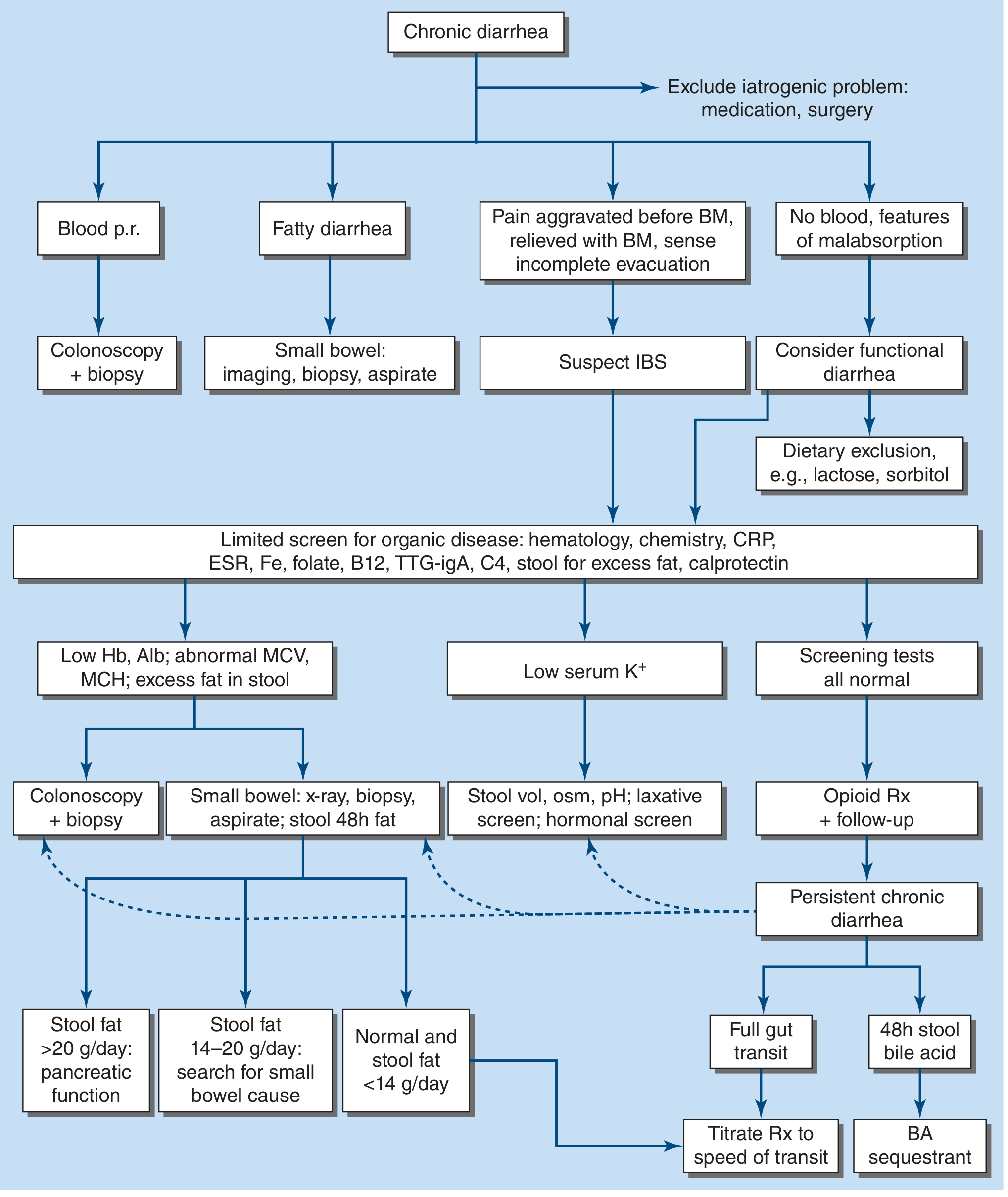
Step 1 — Classify by Symptom Pattern
| Pattern | Consider |
|---|---|
| Blood PR | Colonoscopy + biopsy |
| Fatty/greasy stools, weight loss, steatorrhea | Malabsorption workup (small bowel imaging, biopsy, aspirate) |
| Pain before BM, relieved by BM, bloating | IBS with diarrhea |
| Watery, no blood, no fat | Secretory or functional |
| Weakness, edema, anemia | Malabsorption/protein-losing/IBD |
Step 2 — First-Line Investigations (GP Level)
Blood Tests:
- CBC (anemia → blood loss or nutritional deficiency; eosinophilia → parasites)
- CMP (electrolytes — hypokalemia in secretory diarrhea; albumin — protein loss)
- CRP/ESR (inflammation screen)
- IgA tissue transglutaminase (TTG-IgA) + total IgA → celiac disease
- Thyroid function (hyperthyroidism can cause diarrhea + weakness)
- Iron, folate, B12, vitamin D (malabsorption markers)
- Blood glucose (diabetic diarrhea/autonomic neuropathy)
Stool Tests:
- Fecal occult blood
- Fecal calprotectin or lactoferrin (sensitivity ~92%/specificity ~82% for inflammatory diarrhea)
- Stool culture, ova & parasites, Giardia and Cryptosporidium antigen (or multiplex PCR)
- Stool fat (Sudan stain — sensitivity 76–94% for steatorrhea)
3. CAUSES BY MECHANISM (Major Categories)
Secretory Diarrhea
Watery, large-volume, painless, persists with fasting; no osmotic gap
- Stimulant laxatives, chronic ethanol, drugs (olmesartan, metformin, SSRIs, colchicine)
- Hormone-producing tumors (VIPoma, carcinoid, gastrinoma, medullary thyroid cancer)
- Addison's disease, bile acid diarrhea, congenital electrolyte defects
Osmotic Diarrhea
Stops with fasting; osmotic gap present
- Lactase deficiency, sorbitol/fructose/FODMAPs, osmotic laxatives (Mg²⁺, PO₄³⁻)
Steatorrheal / Malabsorptive Diarrhea (major cause of weakness)
Fatty, foul-smelling, floating stools; weight loss, weakness, nutritional deficiencies
- Celiac disease (most common in adults — screen all!)
- Pancreatic exocrine insufficiency (stool fat >20 g/day → pancreatic function test)
- Bacterial overgrowth (SIBO), Whipple's disease, Crohn's disease
- Stool fat 14–20 g/day → search for small bowel cause
- Stool fat >20 g/day → assess pancreatic function
Inflammatory Diarrhea (IBD)
Bloody/mucousy, fever, cramps, elevated calprotectin/CRP
- Crohn's disease, ulcerative colitis, microscopic colitis (lymphocytic/collagenous)
- Infectious: Giardia, Entamoeba, C. difficile, tuberculosis
Functional / IBS-D
Meets Rome IV criteria; no alarm features; normal investigations
- Pain aggravated before BM, relieved by BM, urgency, bloating
- Diagnosis of exclusion
4. TREATMENT BY CAUSE
A. Specific / Curative Treatments
| Condition | Treatment |
|---|---|
| Celiac disease | Strict gluten-free diet (lifelong) |
| Lactase deficiency | Lactose-free diet; lactase enzyme supplements |
| Giardiasis | Tinidazole 2 g PO single dose OR metronidazole 500 mg q8h × 7 days OR nitazoxanide 500 mg q12h × 3 days |
| Amebiasis | Metronidazole 500 mg q8h × 7–10 days → then iodoquinol or paromomycin (cyst eradication) |
| SIBO | Rifaximin 550 mg TID × 14 days (non-absorbed antibiotic) |
| C. difficile | Vancomycin PO 125 mg QID × 10–14 days (preferred) OR fidaxomicin |
| IBD (UC/Crohn's) | 5-ASA (mesalamine), corticosteroids for flares; refer to gastroenterology |
| Microscopic colitis | Budesonide 9 mg/day × 8 weeks; stop offending drugs (NSAIDs, SSRIs, PPIs) |
| Pancreatic insufficiency | Pancreatic enzyme replacement therapy (PERT) with meals |
| Bile acid malabsorption | Cholestyramine 4 g 1–3×/day; colesevelam |
| Whipple's disease | Ceftriaxone IV × 2 weeks → TMP-SMX × 1–2 years |
| Drug-induced | Discontinue offending drug (metformin, olmesartan, colchicine, laxatives) |
| Hyperthyroidism | Treat thyroid disease (methimazole, propylthiouracil) |
| Carcinoid/VIPoma | Octreotide (somatostatin analogue); refer to oncology |
| Gastrinoma | PPI (high dose); refer for surgical evaluation |
| Addison's disease | Hydrocortisone + fludrocortisone replacement |
| Colorectal cancer | Surgical referral |
B. Symptomatic / Empirical Treatments (When Cause Not Identified or as Adjunct)
Antidiarrheal / Antimotility Agents
| Drug | Dose | Notes |
|---|---|---|
| Loperamide | 2–4 mg after each loose stool; max 16 mg/day | First-line; OTC; no CNS effects |
| Diphenoxylate/atropine | 5 mg PO QID → taper | Mild-moderate diarrhea |
| Codeine | 15–60 mg PO q4–6h | For severe diarrhea refractory to loperamide |
| Cholestyramine | 4 g PO 1–4×/day | Bile acid diarrhea; also empirical trial |
| Octreotide | 50–200 µg SC TID | Secretory diarrhea, carcinoid, VIPoma, dumping syndrome |
| Clonidine | 0.1–0.3 mg PO BID | Diabetic autonomic diarrhea (monitor BP — hypotension risk) |
| Alosetron / Ondansetron | Alosetron 0.5 mg BID; Ondansetron 4 mg TID | 5-HT3 antagonists for IBS-D |
| Eluxadoline | 100 mg PO BID with food | IBS-D; avoid if no gallbladder (pancreatitis risk) |
| Rifaximin | 550 mg TID × 14 days | IBS-D, SIBO |
Stool-Modifying / Adjunctive
- Psyllium (bulk-forming): improves stool consistency; useful with fecal incontinence
- Calcium 1–2 g/day: may reduce stool frequency via unknown mechanism
- Pectin: delays proximal transit; adjunctive
- Probiotics: modest evidence; may help antibiotic-associated and travelers' diarrhea
5. MANAGEMENT OF WEAKNESS (Complication of Chronic Diarrhea)
Weakness accompanying chronic diarrhea usually reflects one or more of:
A. Fluid & Electrolyte Depletion
- Oral rehydration solution (ORS) — central to management; isotonic solutions preferred
- For sport drinks: adequate for mild cases; WHO-ORS or Pedialyte preferred for moderate
- Potassium replacement: low K⁺ is a hallmark of chronic secretory diarrhea → oral KCl supplements; dietary potassium (bananas, potatoes)
- IV fluids (Ringer's lactate or NS) if oral intake inadequate or severe dehydration
B. Nutritional Deficiencies (Malabsorption)
| Deficiency | Clinical Features | Replacement |
|---|---|---|
| Iron | Microcytic anemia, fatigue | Ferrous sulfate 325 mg TID; IV iron if severe |
| Folate | Macrocytic anemia, fatigue, neuropathy | Folic acid 5 mg/day × 4 months |
| Vitamin B12 | Macrocytic anemia, neurological symptoms | IM hydroxocobalamin 1 mg × 6 doses, then monthly |
| Vitamin D | Bone pain, muscle weakness, fatigue | Cholecalciferol 1000–4000 IU/day |
| Vitamin A, E, K | Night blindness, neuropathy, bleeding | Fat-soluble vitamin supplementation |
| Zinc | Dermatitis, immune dysfunction, weakness | Zinc sulfate 220 mg/day |
| Magnesium | Muscle cramps, weakness | Oral magnesium glycinate (IV if severe) |
| Protein/Albumin | Edema, muscle wasting | High-protein diet; nutritional support |
C. Underlying Disease Causing Weakness
- Celiac disease → GFD corrects all deficiencies
- IBD → treat inflammation; nutritional support
- Adrenal insufficiency → hydrocortisone dramatically reverses weakness
- Hyperthyroidism → antithyroid treatment restores weight and strength
- Malignancy → oncology referral
6. WHEN TO REFER (Red Line for GP)
Refer to Gastroenterology if:
- Any alarm feature present
- Diagnosis unclear after initial workup
- Positive fecal calprotectin (>200 µg/g) → IBD workup
- Suspected malabsorption (steatorrhea, weight loss, hypoalbuminemia)
- Persistent diarrhea >4–6 weeks despite empirical treatment
- Colonoscopy/small bowel imaging indicated
Refer to Endocrinology: suspected Addison's, VIPoma, carcinoid, gastrinoma, hyperthyroidism
7. GP APPROACH — PRACTICAL FLOWCHART
CHRONIC DIARRHEA (>4 weeks) + WEAKNESS
             │
             ▼
  STEP 1: Alarm features? ──YES──► Urgent colonoscopy / refer GI
             │ NO
             ▼
  STEP 2: Drug review → Stop offending drugs
             │
             ▼
  STEP 3: Exclude infection → Stool cultures, O&P, Giardia Ag, PCR
             │
             ▼
  STEP 4: Blood screen → CBC, CMP, CRP, TTG-IgA, TFTs, B12/folate/Fe, Vit D
          Stool screen → Calprotectin, stool fat, FOBT
             │
             ▼
  STEP 5: Pattern-based diagnosis:
    - IBS-D criteria met, normal bloods → Dietary trial (low-FODMAP), loperamide, rifaximin
    - Celiac suspected → GFD + refer GI
    - Malabsorption signs → Small bowel workup + nutritional replacement
    - Inflammatory signs (high calprotectin/CRP) → Colonoscopy + biopsy
    - Infectious → Targeted antibiotic therapy
             │
             ▼
  STEP 6: Correct Weakness
    - ORS / electrolyte replacement
    - Treat nutritional deficiencies (Fe, B12, folate, Vit D, Mg, Zn)
    - High-protein, low-irritant diet
             │
             ▼
  STEP 7: Empirical antidiarrheal if no diagnosis
    - Loperamide first-line
    - Cholestyramine trial (bile acid diarrhea)
    - Rifaximin trial (SIBO/IBS)
    - Refer if no response in 4–6 weeks
8. DIETARY ADVICE FOR PATIENTS
- Avoid lactose (dairy) initially as a trial — if improvement, confirm lactase deficiency
- Trial low-FODMAP diet for IBS-D
- Avoid sorbitol (sugar-free gum, candies), fructose (excess fruit juice), alcohol, caffeine
- Gluten-free trial only after celiac serology — do NOT start before blood test
- Small, frequent meals; avoid high-fat meals if steatorrhea suspected
- Maintain adequate fluid intake (minimum 2 L/day); use ORS if significant ongoing losses
9. MONITORING
- Review in 2–4 weeks after initial treatment
- Repeat CBC, electrolytes, albumin at 6–8 weeks if malabsorption or significant weakness
- Track weight, stool frequency (Bristol Stool Scale), and energy levels
- If persistent: escalate investigations (colonoscopy, CT enterography, hydrogen breath test)
Sources: Harrison's Principles of Internal Medicine 22E (2025), p. 351–355 | Sleisenger & Fordtran's GI & Liver Disease, p. 233–239 | The Washington Manual of Medical Therapeutics
May i have complete treatment guideline for all skin disease at GP level
Reading File
Finding Sources
Finding Sources
Finding Sources
Finding Sources
Finding Sources
Now let me read multiple key sections in parallel from the dermatology textbooks:
Reading File
Reading File
Finding Sources
Finding Sources
Finding Sources
Finding Sources
Finding Sources
I've reached the DB query limit. Let me now read additional key sections from the dermatology texts and look up images in parallel:
Reading File
Reading File
Searching Images
atopic dermatitis eczema treatment skin rash
Now I have sufficient data from authoritative dermatology textbooks. Let me compile the comprehensive GP guideline:
Complete GP Treatment Guideline: Common Skin Diseases
Based on Andrews' Clinical Dermatology, Dermatology 2-Volume Set 5e (Bolognia), Fitzpatrick's Dermatology, and Harrison's Principles of Internal Medicine 22E (2025)
PART 1 — ECZEMA / DERMATITIS
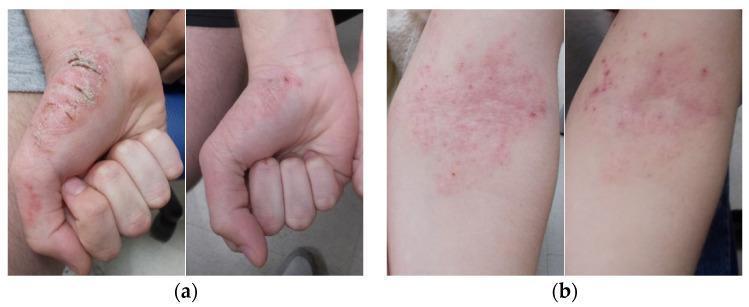
1.1 Atopic Dermatitis (Eczema)
Chronic relapsing inflammatory skin disease; associated with asthma, allergic rhinitis, food allergy (atopic march).
Clinical Features
- Infants: face, scalp, extensor surfaces
- Children/adults: flexural surfaces (antecubital/popliteal fossae), neck, wrists
- Intense pruritus, xerosis, lichenification in chronic disease
Treatment — Stepwise Approach
Step 1 — Emollients & Skin Care (ALL patients, always)
- Apply emollient (aqueous cream, petroleum jelly, ceramide-based moisturizer) generously, at least twice daily, especially after bathing
- Lukewarm (not hot) baths; pat dry — do not rub
- Avoid soaps, detergents, wool, synthetic fabrics
- Cotton clothing; trim fingernails short
Step 2 — Topical Corticosteroids (TCS)
| Potency | Agent | Site |
|---|---|---|
| Mild (Gr VI–VII) | Hydrocortisone 1% cream | Face, eyelids, groin, axillae, infants |
| Moderate (Gr IV–V) | Betamethasone valerate 0.025%, Clobetasone butyrate 0.05% | Trunk, limbs |
| Potent (Gr II–III) | Betamethasone dipropionate 0.05%, Mometasone furoate 0.1% | Lichenified/thick plaques, palms, soles |
| Very potent (Gr I) | Clobetasol propionate 0.05% | Short courses only; refer if needed |
Apply once or twice daily during flares. Use lowest effective potency. "Weekend therapy" (twice weekly) maintains remission. Never stop abruptly on potent steroids.
Step 3 — Topical Calcineurin Inhibitors (TCIs) (Steroid-sparing)
- Tacrolimus 0.03% / 0.1% ointment — moderate-to-severe AD, face/eyelids, skin folds
- Pimecrolimus 1% cream — mild-moderate AD
- Apply twice daily; may cause initial burning/stinging (improves in 1 week)
- Preferred for long-term maintenance on sensitive areas
Step 4 — Topical PDE4 Inhibitor
- Crisaborole 2% ointment — mild-moderate AD; twice daily; minimal side effects
Step 5 — Systemic Therapy (Moderate-severe; refer to Dermatology or initiate at GP)
- Dupilumab (IL-4/IL-13 inhibitor) — 300 mg SC every 2 weeks; first-line biologic; safe long-term
- Cyclosporine 2.5–5 mg/kg/day — rapid effect; short-term use (3–12 months); monitor BP/renal function
- Methotrexate 7.5–25 mg/week — folate supplementation required; LFT monitoring
- Azathioprine 1–3 mg/kg/day — TPMT test before starting
- Oral corticosteroids — short courses only (1–2 weeks) for severe flares; avoid long-term use
- JAK inhibitors (upadacitinib, abrocitinib) — newer; specialist-initiated
Antihistamines: Non-sedating (cetirizine, loratadine) for daytime use; sedating (hydroxyzine, chlorphenamine) for nocturnal pruritus
Infection control: Staph aureus colonization worsens AD:
- Short courses of topical mupirocin or fusidic acid for localised infection
- Oral flucloxacillin 500 mg QID × 7 days for infected eczema
- Bleach baths (0.005% sodium hypochlorite) twice weekly may reduce colonization
1.2 Contact Dermatitis
Allergic (ACD) — IgE-independent, type IV hypersensitivity (nickel, latex, fragrances, preservatives, rubber)
Irritant (ICD) — direct chemical damage (detergents, acids, solvents); most common occupational
Treatment
- Identify and remove trigger — patch testing for ACD
- Emollients and barrier creams (especially for ICD)
- TCS (as above) for active dermatitis — moderate-to-potent based on site
- Tacrolimus for facial/eyelid ACD
- Avoid relevant allergens lifelong (ACD)
- Protective gloves (vinyl preferred over rubber for latex allergy)
- Refer for patch testing if source unclear
1.3 Seborrhoeic Dermatitis
Yeast-driven (Malassezia) inflammatory condition; affects scalp, face (nasolabial folds, eyebrows), chest
| Site | Treatment |
|---|---|
| Scalp | Ketoconazole 2% shampoo or selenium sulfide 2.5%; leave 3–5 min, 2×/week. Zinc pyrithione shampoo for maintenance |
| Face/body | Ketoconazole 2% cream or ciclopirox 1% cream once daily × 2–4 weeks |
| Inflamed lesions | Low-potency TCS (hydrocortisone 1%) + antifungal combination; short course only |
| Blepharitis | Lid hygiene with warm compress; ketoconazole cream at lid margins |
| Severe/refractory | Oral itraconazole 200 mg/day × 1 week/month; or fluconazole 150 mg/week |
PART 2 — PSORIASIS
Chronic immune-mediated papulosquamous disease; 2% prevalence; associated with psoriatic arthritis, cardiovascular risk, metabolic syndrome.
Clinical Features
- Well-demarcated, silvery-scaly erythematous plaques
- Sites: scalp, extensor surfaces (elbows, knees), lower back, nails
- Auspitz sign (pinpoint bleeding on scale removal)
- Nail changes: pitting, onycholysis, oil-drop sign
Treatment — by Severity
Mild Psoriasis (<10% BSA, no joints, no quality-of-life impact)
| Agent | Dose/Use |
|---|---|
| TCS (potent) | Betamethasone dipropionate 0.05%, mometasone 0.1% — once daily × 4 weeks; then weekend maintenance |
| Vitamin D3 analogues | Calcipotriol 0.005% ointment/cream — twice daily; avoid face/folds; max 100 g/week |
| Combination | Calcipotriol + betamethasone (Dovobet®/Enstilar®) — once daily; highly effective; reduces tachyphylaxis |
| Calcineurin inhibitors | Tacrolimus for face/intertriginous psoriasis |
| Coal tar | 1–5% ointment; malodorous; useful in scalp psoriasis |
| Salicylic acid 2–10% | Keratolytic for thick plaques; used before TCS to improve penetration |
| Scalp psoriasis | Calcipotriol + betamethasone scalp solution/foam; selenium sulfide; tar-based shampoos |
Moderate-Severe Psoriasis (>10% BSA or functionally impairing) — refer to Dermatology
| Agent | Dose | Monitoring |
|---|---|---|
| Methotrexate | 7.5–25 mg/week PO/SC + folic acid 5 mg/week | LFT, CBC, renal function; hepatotoxicity risk |
| Ciclosporin | 2.5–5 mg/kg/day | BP, creatinine; short-term (≤2 years) |
| Acitretin (retinoid) | 25–50 mg/day | Teratogenic — REMS programme; lipids, LFT |
| Phototherapy (NB-UVB) | 3× weekly in dermatology | Preferred if widespread, not pregnant |
| Biologics (TNF-α/IL-17/IL-23 inhibitors) | Various SC regimens | Specialist-initiated; screen for TB, hep B/C |
Biologics in GP: GP role is to screen for contraindications (TB, active infection, demyelinating disease, CHF), manage comorbidities, and monitor for side effects.
PART 3 — ACNE VULGARIS
Multifactorial; excess sebum, Cutibacterium acnes, follicular occlusion, inflammation.
Classification & Treatment
(Based on Dermatology 5e, Table 36.4)
| Severity | Features | First-Line Treatment | Escalation |
|---|---|---|---|
| Mild | Few papules, pustules, comedones; no nodules | Topical retinoid (tretinoin 0.025–0.1%, adapalene 0.1–0.3%) ± BPO 2.5–5% | Increase retinoid strength; add topical antibiotic |
| Moderate | Multiple papules/pustules; few nodules | Topical retinoid + BPO ± topical antibiotic; ± oral antibiotic | Add oral antibiotic; hormonal therapy (females) |
| Severe | Numerous papules/pustules; multiple nodules | Topical retinoid + BPO + oral antibiotic ± hormonal therapy | Isotretinoin |
| Very severe | Nodulo-cystic; ± systemic symptoms (acne fulminans) | Prednisolone ± low-dose isotretinoin | Isotretinoin (slow escalation) |
Key Agents
Topical:
- Retinoids: Tretinoin 0.025–0.1% cream/gel; adapalene 0.1–0.3% gel; tazarotene 0.1% — normalize follicular keratinization; apply nightly; photosensitizing — use sunscreen
- Benzoyl peroxide (BPO) 2.5–10%: antibacterial; reduces antibiotic resistance; leave-on or wash-off; can bleach fabrics
- Topical antibiotics: Clindamycin 1% or erythromycin 2% — always combine with BPO to prevent resistance; do not use as monotherapy
- Dapsone 5–7.5% gel: useful especially in adult females; anti-inflammatory
- Azelaic acid 15–20%: anti-inflammatory, comedolytic, hyperpigmentation; safe in pregnancy
- Clascoterone 1% cream: androgen receptor antagonist; safe in males
Oral antibiotics (max 3–6 months; always with topical retinoid + BPO):
- Doxycycline 50–100 mg BD (first-line) or 40 mg MR (subantimicrobial)
- Minocycline 50–100 mg BD — avoid in pregnancy; autoimmune risk with long use
- Lymecycline 408 mg/day (UK common)
- Trimethoprim 300 mg BD — second-line
Hormonal therapy (females only):
- Combined oral contraceptive pill (ethinyloestradiol + norgestimate/drospirenone/cyproterone acetate) — effective for hormonal acne; 3–6 months for effect
- Spironolactone 50–150 mg/day — off-label; anti-androgen; monitor K⁺
Isotretinoin (refer to Dermatology):
- 0.5–1 mg/kg/day × 4–6 months (cumulative dose ~120–150 mg/kg)
- Highly teratogenic — REMS programme (iPLEDGE); two forms of contraception
- Monitor LFTs, lipids, CBC monthly
- Side effects: xerosis, cheilitis, myalgia, mood changes (monitor)
Patient Advice
- Do not squeeze or pick lesions
- Sunscreen daily (non-comedogenic, SPF 30+)
- Diary of diet if hormonal pattern suspected
- Expect 6–8 weeks before visible improvement
PART 4 — BACTERIAL SKIN INFECTIONS
4.1 Impetigo
S. aureus or S. pyogenes; honey-coloured crusts; children most common
| Form | Treatment |
|---|---|
| Localised (<5 lesions) | Topical mupirocin 2% TID × 5–7 days OR fusidic acid 2% TID × 5–7 days |
| Extensive/widespread | Oral flucloxacillin 500 mg QID × 7 days (or cefalexin if pen allergic) |
| MRSA suspected | Oral trimethoprim 300 mg BD + rifampicin 300 mg BD; or doxycycline 100 mg BD |
| Bullous impetigo | As for extensive; oral antibiotic |
4.2 Cellulitis / Erysipelas
Streptococcal (most common) or S. aureus
| Severity | Treatment |
|---|---|
| Mild (Class I) — no systemic features, small area | Oral phenoxymethylpenicillin 500 mg QID × 5–7 days OR amoxicillin-clavulanate 875/125 mg BD × 5–7 days |
| Moderate (Class II) — systemic features but stable | Oral flucloxacillin 500 mg QID OR cefalexin 500 mg QID × 7–14 days |
| Severe / spreading rapidly | IV flucloxacillin 2 g QID; admit to hospital |
| Penicillin allergy | Clarithromycin 500 mg BD OR clindamycin 450 mg TID |
| MRSA suspected | Doxycycline 100 mg BD OR trimethoprim-sulfamethoxazole |
- Elevate affected limb; mark margin with pen to monitor spread
- Treat underlying entry point (tinea pedis, eczema)
- Recurrent cellulitis (≥2/year): prophylactic penicillin V 250 mg BD long-term
4.3 Folliculitis
S. aureus, gram-negatives (hot tub folliculitis — Pseudomonas), or fungal
- Mild/superficial: antiseptic wash (chlorhexidine 4%); topical mupirocin or fusidic acid
- Moderate: oral flucloxacillin 500 mg QID × 7 days
- Hot tub folliculitis: usually self-limiting; oral ciprofloxacin if severe
- Decolonisation for recurrent: nasal mupirocin + chlorhexidine washes × 5 days
4.4 Furuncle (Boil) / Carbuncle
- Incision and drainage — primary treatment; send pus for culture
- Oral antibiotics if surrounding cellulitis: flucloxacillin 500 mg QID × 7 days
- Carbuncle / multiple boils: consider MRSA; screen household contacts
- Decolonisation protocol if recurrent
PART 5 — FUNGAL SKIN INFECTIONS
5.1 Dermatophytosis (Tinea)
| Type | Presentation | Treatment |
|---|---|---|
| Tinea pedis (athlete's foot) | White maceration between toes; scaling | Terbinafine 1% cream BD × 1–2 weeks; OR clotrimazole 1% BD × 4 weeks |
| Tinea cruris (jock itch) | Scaly erythematous plaques, groin/thighs | Terbinafine 1% cream BD × 1–2 weeks; keep area dry |
| Tinea corporis (ringworm) | Annular scaly plaque with central clearing | Terbinafine 1% or clotrimazole BD × 2–4 weeks |
| Tinea unguium (onychomycosis) | Thickened, discoloured, crumbling nails | Oral terbinafine 250 mg/day × 6 weeks (fingernails), 12 weeks (toenails); amorolfine 5% nail lacquer weekly |
| Tinea capitis (scalp) | Scaling, hair loss, kerion | Oral griseofulvin 10 mg/kg/day × 6–8 weeks; or oral terbinafine; topical antifungal shampoo as adjunct |
| Tinea versicolor | Hypo-/hyperpigmented macules, trunk | Selenium sulfide 2.5% or ketoconazole 2% shampoo (leave 5 min, weekly × 4 weeks); or oral fluconazole 150 mg × 1–2 doses |
Confirm with KOH preparation if diagnosis uncertain before starting oral antifungals.
5.2 Candidiasis
| Site | Treatment |
|---|---|
| Oral thrush | Nystatin suspension 100,000 units/mL QID × 7–14 days; or fluconazole 150 mg single dose |
| Vulvovaginal | Clotrimazole vaginal pessary 500 mg single dose or 200 mg × 3 nights; oral fluconazole 150 mg single dose |
| Skin folds/nappy rash | Nystatin cream or clotrimazole 1% + hydrocortisone 1% (if inflamed); keep dry |
| Angular cheilitis | Nystatin or miconazole; correct dentures/nutritional deficiency |
| Recurrent (≥4/year) | Fluconazole 150 mg weekly × 6 months; exclude diabetes, immunosuppression |
PART 6 — VIRAL SKIN INFECTIONS
6.1 Herpes Simplex (HSV-1 / HSV-2)
| Scenario | Treatment |
|---|---|
| Primary orolabial herpes | Aciclovir 200 mg 5×/day × 5 days; or valaciclovir 500 mg BD × 5 days |
| Recurrent cold sores | Topical aciclovir 5% cream 5×/day × 5 days; or start systemic at prodrome |
| Primary genital herpes | Aciclovir 200 mg 5×/day × 5 days OR valaciclovir 500 mg BD × 5–10 days |
| Recurrent genital herpes | Aciclovir 800 mg TID × 2 days; or valaciclovir 500 mg BD × 3 days |
| Suppression (>6 recurrences/year) | Valaciclovir 500 mg/day; or aciclovir 400 mg BD — continuous |
| Eczema herpeticum | Urgent IV aciclovir 5–10 mg/kg TID; admit; dermatology referral |
6.2 Herpes Zoster (Shingles)
- Antivirals (start within 72 hours of rash onset — or at any time if new vesicles forming):
- Valaciclovir 1 g TID × 7 days (preferred)
- Aciclovir 800 mg 5×/day × 7 days
- Famciclovir 250 mg TID × 7 days
- Indications to always treat: age >50, ophthalmic zoster, ear involvement (Ramsay Hunt), moderate-severe pain, immunosuppressed
- Pain management: paracetamol ± ibuprofen; amitriptyline 10–25 mg nocte early (prevents post-herpetic neuralgia); gabapentin 300 mg TID for PHN
- Ophthalmic zoster: urgent ophthalmology referral + oral valaciclovir
- Vaccination: recombinant zoster vaccine (Shingrix®) — two doses; age ≥50
6.3 Warts (Human Papillomavirus)
| Type | Treatment |
|---|---|
| Common/plantar warts | Salicylic acid 16–26% (Bazuka®, Occlusal®) — daily application after filing; 3–4 months |
| Flat warts | Salicylic acid 5%; retinoid cream; imiquimod |
| Genital warts | Podophyllotoxin 0.5% solution BD × 3 days/week × 4 weeks; OR imiquimod 5% cream 3×/week × up to 16 weeks; OR cryotherapy |
| Resistant/persistent | Cryotherapy (liquid nitrogen, every 2–4 weeks × 3–4 treatments); electrocautery; laser |
6.4 Molluscum Contagiosum
- Usually self-limiting in immunocompetent children (6–18 months)
- Active treatment (for adults, immunosuppressed, or extensive):
- Cryotherapy; podophyllotoxin 0.5%; potassium hydroxide 5–10% solution
- Imiquimod 5% cream (off-label)
- Curettage under EMLA cream
PART 7 — INFESTATIONS
7.1 Scabies (Sarcoptes scabiei)
Characteristic features: intense nocturnal itch; burrows in finger web spaces, wrists, genitalia; spares face/scalp in adults
| Treatment | Application |
|---|---|
| Permethrin 5% cream (first-line) | Apply to entire body neck-to-toe; leave 8–12 hours; repeat in 7 days |
| Malathion 0.5% lotion (second-line) | Apply to entire body; leave 24 hours; repeat in 7 days |
| Ivermectin 200 µg/kg PO | × 2 doses, 7–14 days apart — for crusted/Norwegian scabies, mass treatment, immunosuppressed; not licensed in pregnancy/children <15 kg |
- Treat all household/close contacts simultaneously
- Wash clothing/bedding on 60°C on day of treatment; bag items that can't be washed for 72 hours
- Post-scabetic itch (immune reaction) can persist 4–6 weeks — treat with crotamiton or mild TCS; does not mean treatment failure
- Crusted scabies: combined oral ivermectin + topical permethrin; contact isolation
7.2 Head Lice (Pediculus capitis)
- Dimeticone 4% lotion (Hedrin®) — physical insecticide; apply 8 hours or overnight; repeat in 7 days (first-line in UK)
- Malathion 0.5% — leave 12 hours; repeat in 7 days (if dimeticone fails)
- Wet combing (Bug Buster method) — every 3–4 days for 2 weeks; alternative to insecticides
- Permethrin 1% rinse — alternative
- Treat all household members simultaneously
PART 8 — URTICARIA & ANGIOEDEMA
Urticaria: wheals (hives) ± angioedema; acute (<6 weeks) vs chronic (>6 weeks)
| Scenario | Treatment |
|---|---|
| Acute urticaria | Non-sedating antihistamine (cetirizine 10 mg/day or loratadine 10 mg/day) × 7–14 days; identify and avoid trigger |
| Severe acute | Chlorphenamine 4–8 mg ± prednisolone 30–40 mg × 3–5 days |
| Anaphylaxis | IM adrenaline 0.5 mg (1:1000) immediately; IV chlorphenamine; hydrocortisone 200 mg IV; IV fluids; call 999 |
| Chronic spontaneous urticaria (CSU) | Non-sedating H1 antihistamine (cetirizine/loratadine/fexofenadine) at up-to-4× licensed dose; add H2 antihistamine (ranitidine/famotidine) |
| Refractory CSU | Omalizumab (anti-IgE) 300 mg SC monthly — refer to specialist; or ciclosporin |
| Angioedema (no urticaria) | Consider hereditary angioedema (HAE) — C4, C1-inhibitor; refer for specialist workup; icatibant or C1-inhibitor concentrate for acute HAE attacks |
Identify and avoid triggers: NSAIDs, ACE inhibitors, infection, food allergens (peanuts, shellfish, tree nuts), latex, physical triggers (cold, pressure, heat, exercise)
PART 9 — ROSACEA
Chronic facial inflammatory disease; fair-skinned middle-aged adults
| Subtype | Features | Treatment |
|---|---|---|
| Erythematotelangiectatic (Subtype 1) | Flushing, redness, telangiectasia | Topical brimonidine 0.33% gel (Mirvaso®) for acute redness; topical oxymetazoline 1%; avoid triggers |
| Papulopustular (Subtype 2) | Papules, pustules, no comedones | Topical metronidazole 0.75% BD; topical ivermectin 1% cream OD (Soolantra® — superior); azelaic acid 15% BD |
| Phymatous (Subtype 3) — bulbous nose | Rhinophyma | Oral isotretinoin; surgical/laser — refer |
| Ocular (Subtype 4) | Blepharitis, conjunctivitis, keratitis | Warm compresses; lid hygiene; topical azithromycin; refer ophthalmology if corneal involvement |
Oral antibiotics (for moderate-severe papulopustular):
- Doxycycline 40 mg MR/day (subantimicrobial dose; Oracea®) × 12–16 weeks — preferred
- Doxycycline 50–100 mg BD × 8–12 weeks
Triggers to avoid: hot drinks, spicy food, alcohol, sunlight, extreme temperatures, topical steroids (cause steroid rosacea)
Sunscreen SPF 50+ daily; mineral-based formulations better tolerated
PART 10 — PSORIASIFORM & PAPULOSQUAMOUS CONDITIONS
10.1 Pityriasis Rosea
- Self-limiting viral exanthem; herald patch → widespread fir-tree rash
- Reassure; emollients; mild TCS for itch; usually resolves in 6–8 weeks
- Oral aciclovir (800 mg 5×/day × 7 days) if very severe or immunosuppressed (HHV-6/7 linked)
10.2 Lichen Planus
- Pruritic, purple, polygonal papules; Wickham's striae; oral/genital involvement
- Topical: potent TCS (clobetasol) for skin; triamcinolone in Orabase® for oral LP
- Systemic: prednisolone 30 mg/day × 2 weeks taper for widespread/erosive disease
- Acitretin for severe/recalcitrant; refer if oral erosive or nail LP
PART 11 — HYPERPIGMENTATION & HYPOPIGMENTATION
11.1 Melasma
- Facial hyperpigmentation; triggered by sun, OCP, pregnancy
- First-line: triple combination — hydroquinone 4% + tretinoin 0.025% + hydrocortisone 1% (Tri-Luma®) nightly × 8 weeks
- SPF 50+ sunscreen every morning (non-negotiable)
- Azelaic acid 20% or kojic acid as alternatives
- Stop OCP if causative; treat after delivery in pregnancy-related
11.2 Vitiligo
- Autoimmune depigmentation; depressed psychological impact
- Narrow-band UVB phototherapy (most effective; 3×/week × 6 months)
- Topical tacrolimus 0.1% BD for face/sensitive areas
- Potent TCS on non-facial/non-flexural areas
- Ruxolitinib 1.5% cream (JAK1/2 inhibitor) — recently approved; twice daily
- Cosmetic camouflage (Dermablend®, Covermark®); sunscreen to prevent burns in depigmented areas
PART 12 — SKIN CANCERS — RED FLAGS FOR GP
12.1 Basal Cell Carcinoma (BCC)
- Pearlescent/rolled-edge nodule; telangiectasia; central ulceration ("rodent ulcer")
- Refer to dermatology — surgical excision (1st line); Mohs micrographic surgery for high-risk sites
- Superficial BCC: imiquimod 5% cream 5×/week × 6 weeks; photodynamic therapy (PDT)
12.2 Squamous Cell Carcinoma (SCC)
- Ulcerated keratotic papule/plaque; crusted; friable; sun-exposed sites
- Urgent 2-week wait referral — surgical excision ± radiotherapy; immunosuppressed patients at very high risk
12.3 Melanoma — ABCDE Rule
- Asymmetry, Border irregularity, Colour variation, Diameter >6mm, Evolving
- Urgent 2-week wait referral — any suspicious lesion
- GP role: do NOT attempt biopsy; photograph and refer promptly
- Dermoscopy if trained; apply Rule of Ugly Duckling
12.4 Actinic Keratosis (Pre-malignant)
- Rough, scaly, red lesions on sun-exposed skin; potential SCC precursor
- Cryotherapy (liquid nitrogen): 5–10 seconds per lesion; 2–4 week interval
- Fluorouracil 5% cream (Efudix®): BD × 3–4 weeks; expected brisk inflammatory reaction
- Imiquimod 5%: 3×/week × 4 weeks; field treatment
- Diclofenac 3% gel (Solaraze®): BD × 90 days; milder reaction; for large fields
- Photodynamic therapy (PDT): 1–2 sessions; for widespread field disease
PART 13 — WOUND CARE & ULCERS AT GP LEVEL
Venous Leg Ulcers
- ABPI (ankle-brachial pressure index) before compression — exclude arterial disease
- Compression therapy (4-layer bandaging; 40 mmHg) — cornerstone of treatment
- Wound cleansing: saline or potable water
- Dressings: non-adherent, moisture-retaining — hydrocolloid, foam, alginate based on exudate
- Treat infection: topical cadexomer iodine; oral antibiotics only if systemic signs
- Pentoxifylline 400 mg TID (adjunct); aspirin 300 mg/day (adjunct)
Pressure Ulcers
- Staging I–IV; Grade III/IV refer to tissue viability / specialist nursing
- Relieve pressure (reposition q2h; specialist mattress)
- Debridement; appropriate dressings; nutritional support (protein, vitamin C, zinc)
Diabetic Foot Ulcers
- Refer to multidisciplinary diabetic foot team
- Debridement; off-loading (total contact cast)
- Antibiotics guided by depth and culture; empirical amoxicillin-clavulanate for mild infection
PART 14 — WHEN TO REFER FROM GP
| Condition | When to Refer |
|---|---|
| Eczema | Severe/refractory; needed dupilumab/systemic therapy; contact dermatitis needing patch testing |
| Psoriasis | Moderate-severe (BSA >10%); psoriatic arthritis; biologic therapy |
| Acne | Severe nodulo-cystic; isotretinoin candidate; scarring |
| Skin cancer | Any suspected melanoma (urgent); BCC/SCC for excision |
| Actinic keratosis | Widespread field disease for PDT; any suspicious lesion |
| Rosacea | Rhinophyma; ocular involvement; refractory |
| Vitiligo | NB-UVB phototherapy needed; systemic treatment |
| Urticaria | Chronic spontaneous urticaria (CSU) >6 weeks; angioedema; omalizumab |
| Leg ulcers | Complex or non-healing at 12 weeks; arterial disease; vasculitic ulcers |
| Suspected autoimmune | Bullous pemphigoid, pemphigus, lupus — urgent specialist referral |
PART 15 — TOPICAL CORTICOSTEROID POTENCY GUIDE (Quick Reference)
| Potency | Example Agent | Common Use |
|---|---|---|
| Very potent (Class I) | Clobetasol propionate 0.05% | Psoriasis, lichen planus — palms/soles; max 50 g/week, short courses |
| Potent (Class II–III) | Betamethasone dipropionate 0.05%, fluocinonide 0.05%, mometasone 0.1% | Psoriasis, eczema — trunk/limbs |
| Moderate (Class IV–V) | Betamethasone valerate 0.025%, clobetasone butyrate 0.05% | Eczema — trunk/limbs; children |
| Mild (Class VI–VII) | Hydrocortisone 0.5–2.5% | Face, groin, axillae, infants; long-term maintenance |
Side effects of TCS: skin atrophy, striae, telangiectasia, hypopigmentation, tachyphylaxis, adrenal suppression (with very potent/extensive use), perioral dermatitis (face). Use minimum effective potency.
Sources: Andrews' Clinical Dermatology (9780323547536) | Dermatology 2-Volume Set 5e — Bolognia (9780702082252) | Fitzpatrick's Dermatology (9780071837781) | Harrison's Principles of Internal Medicine 22E (2025) | Washington Manual of Medical Therapeutics
Disclaimer: This is a clinical reference for GP-level management. Always individualise treatment, check current BNF/local formulary for dosing, and follow local guidelines for antimicrobial stewardship.Your credits are exhausted. Your daily credits reset tomorrow, or you can purchase a top-up for more.
This is a shared conversation. Sign in to Orris to start your own chat.