
Teach me everything about Lvad
Reading File
Finding Sources
Finding Sources
Reading File
Reading File
Reading File
Reading File
Reading File
Reading File
Reading File
Reading File
Reading File
Reading File
Reading File
Finding Sources
Finding Sources
Searching Images
left ventricular assist device implanted diagram inflow outflow cannula
Searching PubMed
"left ventricular assist device" outcomes
Searching the Web
HeartMate 3 LVAD latest guidelines 2024 2025 heart failure
Reading File
Reading File
Reading File
LVAD (Left Ventricular Assist Device): A Complete Guide
1. What It Is
An LVAD is a surgically implanted mechanical pump that takes over the work of a failing left ventricle. It draws blood from the LV apex through an inflow cannula, accelerates it through a motor-driven pump, and delivers it through an outflow graft into the ascending aorta - augmenting cardiac output and lowering intracardiac filling pressures (Washington Manual of Medical Therapeutics, p. 6567).
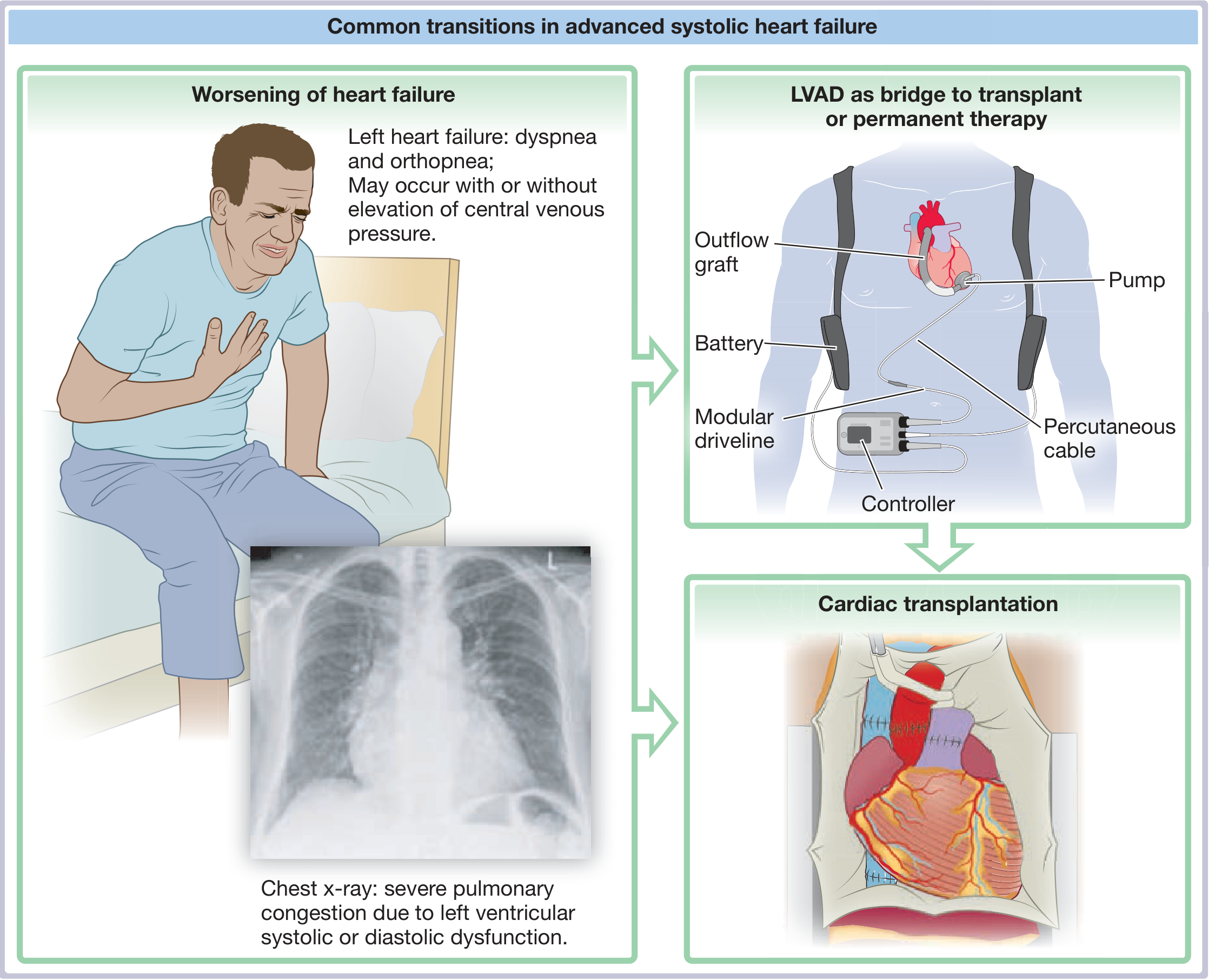
2. Why It's Used - Indications
LVADs are used in advanced/end-stage heart failure (typically INTERMACS profiles 1-4, sometimes 5-7) that has failed guideline-directed medical therapy. The clinical "intent" categories are:
- Bridge to Transplant (BTT) - keeps a transplant candidate alive/functional while awaiting a donor heart
- Bridge to Candidacy (BTC) - supports a patient whose transplant eligibility is still being determined (e.g., reversible renal/pulmonary issues)
- Destination Therapy (DT) - permanent support for patients ineligible for transplant with an expected HF-related life expectancy under 2 years without it
- Bridge to Recovery (BTR) - temporary support (short-term devices) while the native heart recovers
Per INTERMACS registry data, the majority of contemporary implants (~78%) are now destination therapy, reflecting an aging patient population and improving device durability (Miller's Anesthesia, 10e, p. 1110).
INTERMACS Patient Profiles (used to time intervention)
| Profile | Nickname | Description |
|---|---|---|
| 1 | "Crashing and burning" | Life-threatening hypotension, escalating inotropes/pressors, worsening acidosis/lactate |
| 2 | "Inotrope dependent and worsening" | Ongoing deterioration despite inotropes |
| 3 | "Stable on inotropes" | Clinically stable on inotropes after failed weaning attempts |
| 4 | "Frequent flyer/resting symptoms" | Home on oral therapy but recurrent congestion |
| 5 | "Exercise intolerant" | Comfortable at rest, housebound |
| 6 | "Walking wounded" | Comfortable, mild activity tolerated, fatigues quickly |
| 7 | "Advanced NYHA III" | Stable, ambulatory, no recent decompensation |
(Fuster and Hurst's The Heart, 15th ed., Table 59.5)
3. Device Generations and Current Technology
- 1st generation - pulsatile, volume-displacement pumps (HeartMate XVE, Novacor) - now obsolete, higher infection rates.
- 2nd generation - continuous-flow axial pumps (HeartMate II) - smaller, more durable, but higher pump thrombosis/stroke risk.
- 3rd generation - continuous-flow centrifugal, fully magnetically levitated pumps (HeartMate 3) - the current standard. Its frictionless maglev rotor with an artificial intrinsic pulse (speed modulation every 2 seconds) reduces shear stress on von Willebrand factor, nearly eliminating pump thrombosis and cutting stroke and bleeding rates (Harrison's Principles of Internal Medicine, 22e).
- HeartWare (HVAD) - a centrifugal device - was voluntarily withdrawn from the market in June 2021 after data showed roughly 3.5x higher mortality at 1 year versus HeartMate 3; previously implanted patients continue on it but it's not prophylactically replaced (Braunwald's Heart Disease).
HeartMate 3 is currently the only durable LVAD commercially available in the US.
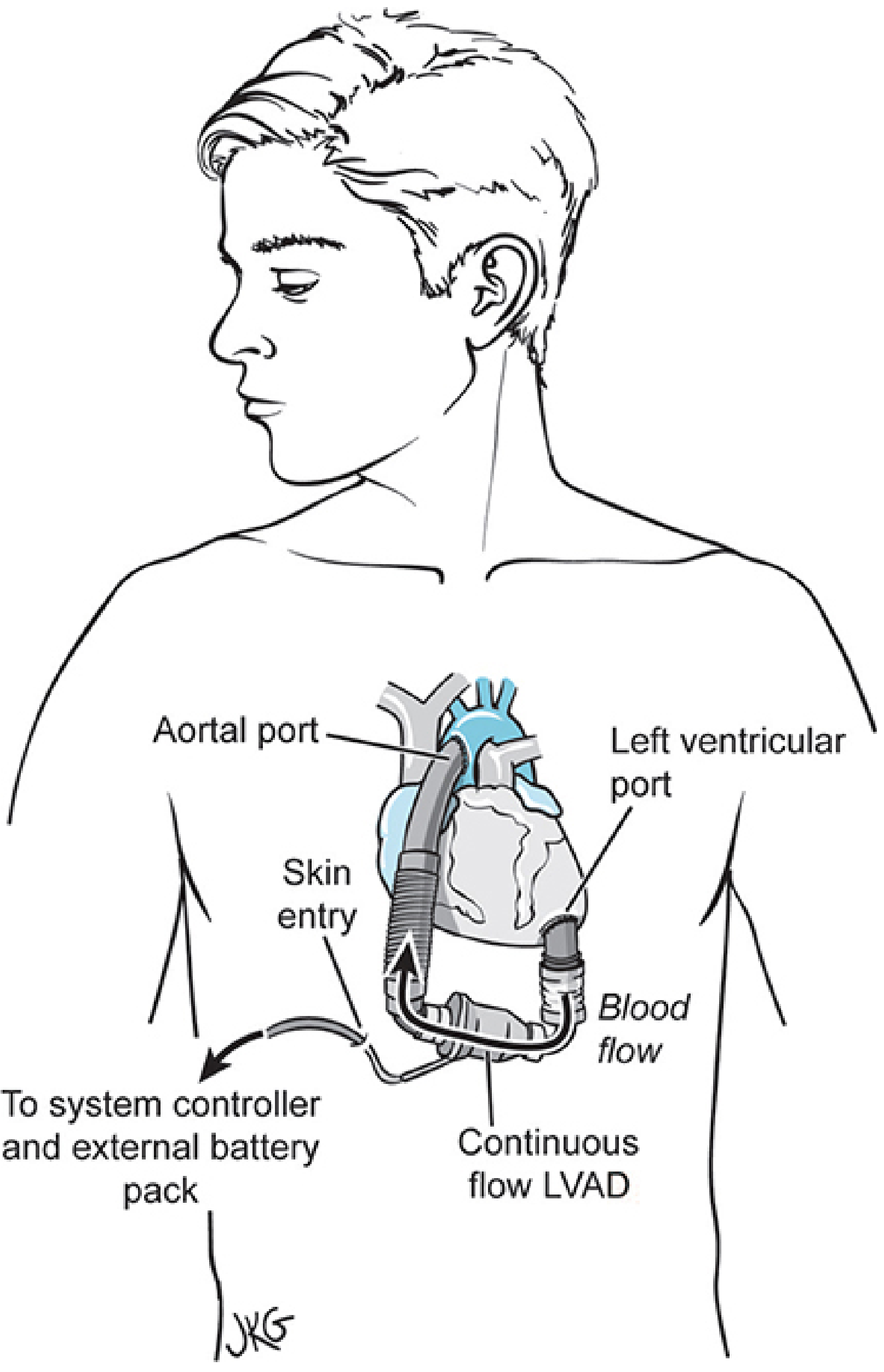
Outcomes (MOMENTUM 3 trial, HeartMate 3 vs HeartMate II)
- 2-year survival free of disabling stroke or reoperation: 76.9% (HM3) vs 64.8% (HMII)
- Pump replacement: 2.3% (HM3) vs 11.3% (HMII)
- Lower rates of stroke, major bleeding, and GI hemorrhage with HM3
Contemporary INTERMACS/real-world data (2024-2025 ACC review): survival with HeartMate 3 is ~88% at 1 year, 83% at 2 years, 58% at 5 years, with median survival now exceeding 5-7 years - approaching transplant-level survival in younger, uncomplicated patients.
4. Physiology You Need to Understand
- Continuous-flow devices produce little to no palpable pulse - blood pressure must be measured by Doppler (listening for the return of flow) rather than standard auscultation, and is reported as a mean arterial pressure (MAP), not systolic/diastolic.
- The aortic valve may stay closed throughout the cycle, open intermittently, or open only partially, since blood bypasses the valve entirely (Textbook of Clinical Echocardiography, p. 291-292).
- LVAD output is preload- and afterload-dependent: hypovolemia, arrhythmias, tamponade, or a low device speed can cause "suck-down" events (ventricular septum collapsing onto the inflow cannula); severe hypertension or aortic insufficiency increases afterload and reduces effective flow.
- RV function is the single most important determinant of adequate LVAD filling - the device can only pump blood the right ventricle successfully delivers to the LV.
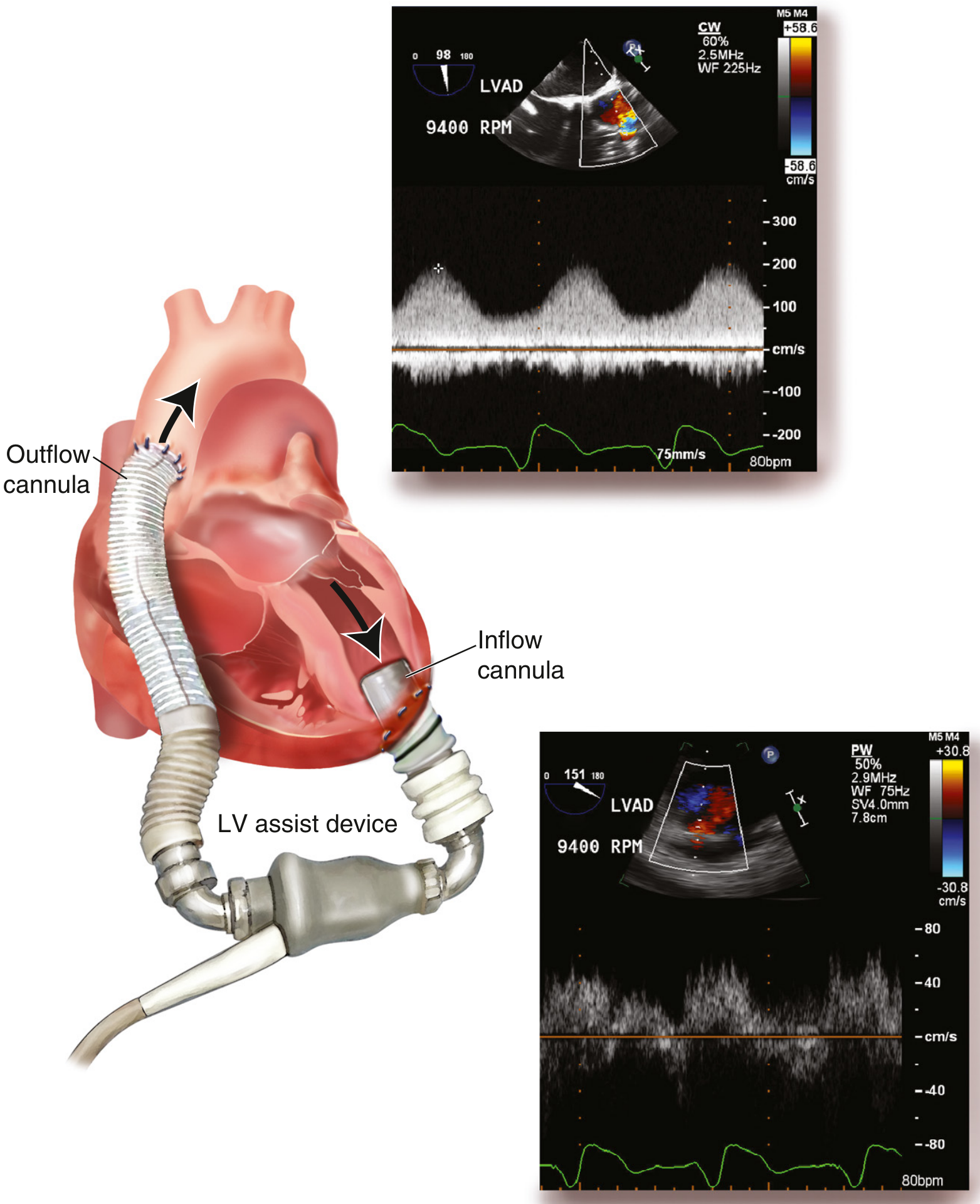
5. Echocardiographic Evaluation
Key parameters assessed: LVAD type/mode/pump speed, LV dimensions/volumes, aortic valve opening frequency (M-mode), and inflow/outflow cannula velocities via color and pulsed Doppler. Underfilling causes low flow and a small, "sucked-down" ventricle; overfilling can cause cannula obstruction. Echo also screens for pericardial tamponade, RV failure, and thrombus (Textbook of Clinical Echocardiography, p. 291).
6. Complications (High-Yield)
| Complication | Notes |
|---|---|
| RV failure | Most common cause of early post-implant mortality; can require temporary RVAD |
| Bleeding | GI bleeding is common, partly from acquired von Willebrand syndrome + arteriovenous malformations from non-pulsatile flow; also intracranial/subarachnoid bleeding from anticoagulation |
| Pump thrombosis | Presents with hemolysis (elevated LDH, low haptoglobin), power spikes; markedly reduced with HeartMate 3's maglev design |
| Stroke (ischemic/hemorrhagic) | Related to anticoagulation intensity and pump thrombosis |
| Driveline infection | Most common LVAD infection - erythema/drainage at exit site; can progress to pump-pocket infection or LVAD-associated infective endocarditis. Staphylococcus species predominate |
| Aortic insufficiency | Develops over time from a chronically closed aortic valve |
| Arrhythmias | Ventricular tachyarrhythmias are common and usually hemodynamically tolerated short-term (device maintains flow) but still concerning for RV function |
Driveline Infection Management
Blood cultures should be drawn in every suspected LVAD infection. Management is difficult because complete device removal (curative) carries high morbidity, so prolonged, often recurrent antimicrobial therapy is the mainstay, guided by the specific site (driveline, pump pocket, or endocarditis). Prevention relies on perioperative prophylaxis and meticulous, sterile daily driveline exit-site care, with patient/caregiver education being critical (Braunwald's Heart Disease, p. 848-849).
7. Anticoagulation & Device Management
- Nearly all durable LVAD patients require anticoagulation (typically warfarin) plus antiplatelet therapy to prevent pump thrombosis - this is the tradeoff driving the bleeding/stroke complication profile.
- Device speed is titrated using echo and hemodynamic data to balance adequate flow against ventricular collapse or cannula obstruction.
- Hypertension management is important because elevated afterload reduces LVAD flow and raises stroke risk.
8. Emergency/Perioperative Considerations
- In the ED or perioperative setting, absence of a palpable pulse is expected - assess perfusion via Doppler MAP, mental status, and device parameters (power, flow, speed, pulsatility index) rather than a manual pulse check.
- LVAD patients presenting for noncardiac surgery need a coordinated anesthesia plan: maintain volume status, avoid excessive vasodilation/hypotension, ensure RV support, and coordinate with the VAD team on anticoagulation bridging (Barash's Clinical Anesthesia, 9e).
9. Recent Evidence (PubMed, last 2 years)
Recent systematic reviews reinforce and extend the textbook picture:
- Optimizing pump speed remains an active area of individualized titration research (PMID: 40988576, 2025).
- Outcomes after noncardiac surgery in LVAD patients have been systematically reviewed, generally showing feasibility with careful perioperative planning (PMID: 39355351, 2024).
- A meta-analysis of ventricular tachycardia ablation in LVAD patients (PMID: 41078026, 2025) and reviews of efficacy/complication profiles (PMID: 37802165, 2024) and psychosocial/caregiver factors affecting outcomes (PMID: 39180882, 2024) round out the current literature - nothing here contradicts the textbook-level information above; they largely refine management nuances.
Bottom Line
LVADs have transformed advanced heart failure care - shifting from a bridge-only tool to a genuine destination therapy rivaling transplant survival in ideal candidates. The core clinical skill set revolves around understanding continuous, non-pulsatile flow physiology, protecting RV function, balancing anticoagulation against bleeding/thrombosis risk, and vigilant driveline infection prevention.
This is a shared conversation. Sign in to Orris to start your own chat.