
Why o negative is universal donor according to guyton 10 marks for bfuhs
ABO blood groups O A B AB agglutinogens agglutinins table transfusion
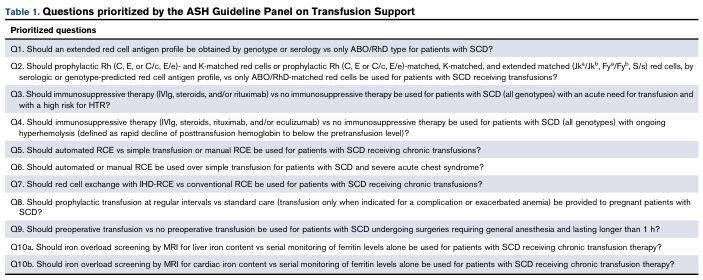
<table> <tr> <td colspan="2"><b>Table 1. Questions prioritized by the ASH Guideline Panel on Transfusion Support</b></td> </tr> <tr> <th>Prioritized questions</th> </tr> <tr> <td>Q1. Should an extended red cell antigen profile be obtained by genotype or serology vs only ABO/RhD type for patients with SCD?</td> </tr> <tr> <td>Q2. Should prophylactic Rh (C, E, or C/c, E/e)– and K-matched red cells or prophylactic Rh (C, E or C/c, E/e)-matched, K-matched, and extended matched (Jk<sup>a</sup>/Jk<sup>b</sup>, Fy<sup>a</sup>/Fy<sup>b</sup>, S/s) red cells, by serologic or genotype-predicted red cell antigen profile, vs only ABO/RhD-matched red cells be used for patients with SCD receiving transfusions?</td> </tr> <tr> <td>Q3. Should immunosuppressive therapy (IVIg, steroids, and/or rituximab) vs no immunosuppressive therapy be used for patients with SCD (all genotypes) with an acute need for transfusion and with a high risk for HTR?</td> </tr> <tr> <td>Q4. Should immunosuppressive therapy (IVIg, steroids, rituximab, and/or eculizumab) vs no immunosuppressive therapy be used for patients with SCD (all genotypes) with ongoing hyperhemolysis (defined as rapid decline of posttransfusion hemoglobin to below the pretransfusion level)?</td> </tr> <tr> <td>Q5. Should automated RCE vs simple transfusion or manual RCE be used for patients with SCD receiving chronic transfusions?</td> </tr> <tr> <td>Q6. Should automated or manual RCE be used over simple transfusion for patients with SCD and severe acute chest syndrome?</td> </tr> <tr> <td>Q7. Should red cell exchange with IHD-RCE vs conventional RCE be used for patients with SCD receiving chronic transfusions?</td> </tr> <tr> <td>Q8. Should prophylactic transfusion at regular intervals vs standard care (transfusion only when indicated for a complication or exacerbated anemia) be provided to pregnant patients with SCD?</td> </tr> <tr> <td>Q9. Should preoperative transfusion vs no preoperative transfusion be used for patients with SCD undergoing surgeries requiring general anesthesia and lasting longer than 1 h?</td> </tr> <tr> <td>Q10a. Should iron overload screening by MRI for liver iron content vs serial monitoring of ferritin levels alone be used for patients with SCD receiving chronic transfusion therapy?</td> </tr> <tr> <td>Q10b. Should iron overload screening by MRI for cardiac iron content vs serial monitoring of ferritin levels alone be used for patients with SCD receiving chronic transfusion therapy?</td> </tr> </table>
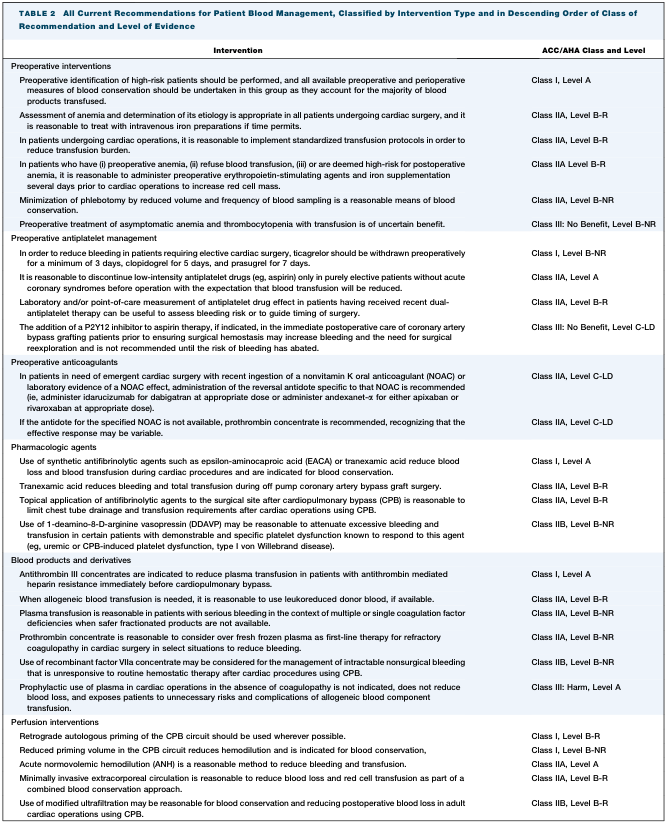
TABLE 2: All Current Recommendations for Patient Blood Management, Classified by Intervention Type and in Descending Order of Class of Recommendation and Level of Evidence <table><thead><tr><th>Intervention</th><th>ACC/AHA Class and Level</th></tr></thead><tbody><tr><td>Preoperative interventions</td><td></td></tr><tr><td>Preoperative identification of high-risk patients should be performed, and all available preoperative and perioperative measures of blood conservation should be undertaken in this group as they account for the majority of blood products transfused.</td><td>Class I, Level A</td></tr><tr><td>Assessment of anemia and determination of its etiology is appropriate in all patients undergoing cardiac surgery, and it is reasonable to treat with intravenous iron preparations if time permits.</td><td>Class IIA, Level B-R</td></tr><tr><td>In patients undergoing cardiac operations, it is reasonable to implement standardized transfusion protocols in order to reduce transfusion burden.</td><td>Class IIA, Level B-R</td></tr><tr><td>In patients who have (i) preoperative anemia, (ii) refuse blood transfusion, (iii) or are deemed high-risk for postoperative anemia, it is reasonable to administer preoperative erythropoietin-stimulating agents and iron supplementation several days prior to cardiac operations to increase red cell mass.</td><td>Class IIA Level B-R</td></tr><tr><td>Minimization of phlebotomy by reduced volume and frequency of blood sampling is a reasonable means of blood conservation.</td><td>Class IIA, Level B-NR</td></tr><tr><td>Preoperative treatment of asymptomatic anemia and thrombocytopenia with transfusion is of uncertain benefit.</td><td>Class III: No Benefit, Level B-NR</td></tr><tr><td>Preoperative antiplatelet management</td><td></td></tr><tr><td>In order to reduce bleeding in patients requiring elective cardiac surgery, P2Y12 inhibitor should be withdrawn preoperatively for a minimum of 3 days, clopidogrel for 5 days, and prasugrel for 7 days.</td><td>Class I, Level B-NR</td></tr><tr><td>It is reasonable to discontinue low-intensity antiplatelet drugs (eg, aspirin) only in purely elective patients without acute coronary syndromes before operation with the expectation that blood transfusion will be reduced.</td><td>Class IIA, Level A</td></tr><tr><td>Laboratory and/or point-of-care measurement of antiplatelet drug effect in patients having received recent dual-antiplatelet therapy can be useful to assess bleeding risk or to guide timing of surgery.</td><td>Class IIA, Level B-R</td></tr><tr><td>The addition of a P2Y12 inhibitor to aspirin therapy if initiated in the immediate postoperative care of coronary artery bypass grafting patients prior to ensuring surgical hemostasis may increase bleeding and the need for surgical reexploration and is not recommended until the risk of bleeding has abated.</td><td>Class III: No Benefit, Level C-LD</td></tr><tr><td>Preoperative anticoagulants</td><td></td></tr><tr><td>In patients in need of emergent cardiac surgery with recent ingestion of a nonvitamin K oral anticoagulant (NOAC) or laboratory evidence of a NOAC effect, administration of the reversal antidote specific to that NOAC is recommended (ie, idarucizumab for dabigatran at appropriate dose or administer andexanet-α for either apixaban or rivaroxaban at appropriate dose).</td><td>Class IIA, Level C-LD</td></tr><tr><td>If the antidote for the specified NOAC is not available, prothrombin concentrate is recommended, recognizing that the effective response may be variable.</td><td>Class IIA, Level C-LD</td></tr><tr><td>Pharmacologic agents</td><td></td></tr><tr><td>Use of synthetic antifibrinolytic agents such as epsilon-aminocaproic acid (EACA) or tranexamic acid reduce blood loss and blood transfusion during cardiac procedures and are indicated for blood conservation.</td><td>Class I, Level A</td></tr><tr><td>Tranexamic acid reduces bleeding and total transfusion during off pump coronary artery bypass graft surgery.</td><td>Class IIA, Level B-R</td></tr><tr><td>Topical application of antifibrinolytic agents to the surgical site after cardiopulmonary bypass (CPB) is reasonable to limit chest tube drainage and transfusion requirements after cardiac operations using CPB.</td><td>Class IIA, Level B-R</td></tr><tr><td>Use of 1-deamino-8-D-arginine vasopressin (DDAVP) may be reasonable to attenuate excessive bleeding and transfusion in cardiac operations with demonstrable and specific platelet dysfunction known to respond to this agent (eg, uremic or CPB-induced platelet dysfunction, type I von Willebrand disease).</td><td>Class IIB, Level B-NR</td></tr><tr><td>Blood products and derivatives</td><td></td></tr><tr><td>Antithrombin III concentrates are indicated to reduce plasma transfusion in patients with antithrombin mediated heparin resistance immediately before cardiopulmonary bypass.</td><td>Class I, Level A</td></tr><tr><td>When allogeneic blood transfusion is needed, it is reasonable to use leukoreduced donor blood, if available.</td><td>Class IIA, Level B-R</td></tr><tr><td>Plasma transfusion is reasonable in patients with serious bleeding in the context of multiple or single coagulation factor deficiencies when safer fractionated products are not available.</td><td>Class IIA, Level B-NR</td></tr><tr><td>Prothrombin concentrate is reasonable to consider over fresh frozen plasma as first-line therapy for refractory coagulopathy in cardiac surgery in select situations to reduce bleeding.</td><td>Class IIA, Level B-NR</td></tr><tr><td>Use of recombinant factor VIIa concentrate may be considered for the management of intractable nonsurgical bleeding that is unresponsive to routine hemostatic therapy after cardiac procedures using CPB.</td><td>Class IIB, Level B-NR</td></tr><tr><td>Prophylactic use of plasma in cardiac operations in the absence of coagulopathy is not indicated, does not reduce blood loss, and exposes patients to unnecessary risks and complications of allogeneic blood component transfusion.</td><td>Class III: Harm, Level A</td></tr><tr><td>Perfusion interventions</td><td></td></tr><tr><td>Retrograde autologous priming of the CPB circuit should be used wherever possible.</td><td>Class I, Level B-R</td></tr><tr><td>Reduced priming volume in the CPB circuit reduces hemodilution and is indicated for blood conservation.</td><td>Class I, Level B-NR</td></tr><tr><td>Acute normovolemic hemodilution (ANH) is a reasonable method to reduce bleeding and transfusion.</td><td>Class IIA, Level A</td></tr><tr><td>Minimally invasive extracorporeal circulation is reasonable to reduce blood loss and red cell transfusion as part of a combined blood conservation approach.</td><td>Class IIA, Level B-R</td></tr><tr><td>Use of modified ultrafiltration may be reasonable for blood conservation and reducing postoperative blood loss in adult cardiac operations using CPB.</td><td>Class IIB, Level B-R</td></tr></tbody></table>
![Recommendation Table 45. Recommendations for transfusion management during cardiopulmonary bypass
<table><thead><tr><th>Recommendations</th><th>Class<sup>a</sup></th><th>Level<sup>b</sup></th><th>Ref<sup>c</sup></th></tr></thead><tbody><tr><th colspan="4">Packed red blood cell transfusions</th></tr><tr><td>It is recommended that PRBCs be transfused during CPB if the HCT value is <18% (Hb 6.0 g/dL).</td><td>I</td><td>C</td><td>-</td></tr><tr><td>For HCT values between 18% and 24%, PRBCs may be considered based on an assessment of the adequacy of tissue oxygenation.<sup>d</sup></td><td>IIb</td><td>B</td><td>[592]</td></tr><tr><td>PRBCs are not recommended to be transfused during CPB if the HCT is >24% and DO<sub>2</sub> and extraction are acceptable.</td><td>III</td><td>C</td><td>[108, 587]</td></tr><tr><th colspan="4">Fresh frozen plasma transfusions</th></tr><tr><td>It is recommended that antithrombin concentrate be used as the primary treatment of antithrombin deficiency to improve heparin sensitivity.</td><td>I</td><td>B</td><td>[596-598]</td></tr><tr><td>If antithrombin concentrate is unavailable, FFP should be considered to treat antithrombin deficiency to improve heparin sensitivity.</td><td>IIa</td><td>C</td><td>-</td></tr><tr><td>FFP should not be used prophylactically during CPB to reduce perioperative blood loss.</td><td>III</td><td>B</td><td>[599, 600]</td></tr></tbody></table>](https://cdn.orris.care/cdss_images/GLGCA_4542999_1766781074813_ef3dd78f-5e15-412e-b0d3-15f36e57805c_0d0b45c1-7e6f-40f9-8716-7d5ccf45986a.png)
Recommendation Table 45. Recommendations for transfusion management during cardiopulmonary bypass <table><thead><tr><th>Recommendations</th><th>Class<sup>a</sup></th><th>Level<sup>b</sup></th><th>Ref<sup>c</sup></th></tr></thead><tbody><tr><th colspan="4">Packed red blood cell transfusions</th></tr><tr><td>It is recommended that PRBCs be transfused during CPB if the HCT value is <18% (Hb 6.0 g/dL).</td><td>I</td><td>C</td><td>-</td></tr><tr><td>For HCT values between 18% and 24%, PRBCs may be considered based on an assessment of the adequacy of tissue oxygenation.<sup>d</sup></td><td>IIb</td><td>B</td><td>[592]</td></tr><tr><td>PRBCs are not recommended to be transfused during CPB if the HCT is >24% and DO<sub>2</sub> and extraction are acceptable.</td><td>III</td><td>C</td><td>[108, 587]</td></tr><tr><th colspan="4">Fresh frozen plasma transfusions</th></tr><tr><td>It is recommended that antithrombin concentrate be used as the primary treatment of antithrombin deficiency to improve heparin sensitivity.</td><td>I</td><td>B</td><td>[596-598]</td></tr><tr><td>If antithrombin concentrate is unavailable, FFP should be considered to treat antithrombin deficiency to improve heparin sensitivity.</td><td>IIa</td><td>C</td><td>-</td></tr><tr><td>FFP should not be used prophylactically during CPB to reduce perioperative blood loss.</td><td>III</td><td>B</td><td>[599, 600]</td></tr></tbody></table>
O Negative as Universal Donor - Guyton and Hall (10 Marks - BFUHS)
Introduction
1. The ABO Blood Group System (Guyton and Hall, p. 474)
A and B Antigens - Agglutinogens
| Blood Type | Agglutinogens on RBC | Agglutinins in Plasma |
|---|---|---|
| O | None | Anti-A and Anti-B |
| A | A | Anti-B |
| B | B | Anti-A |
| AB | A and B | None |
Genetic Basis
2. Agglutinins (Antibodies) in Plasma
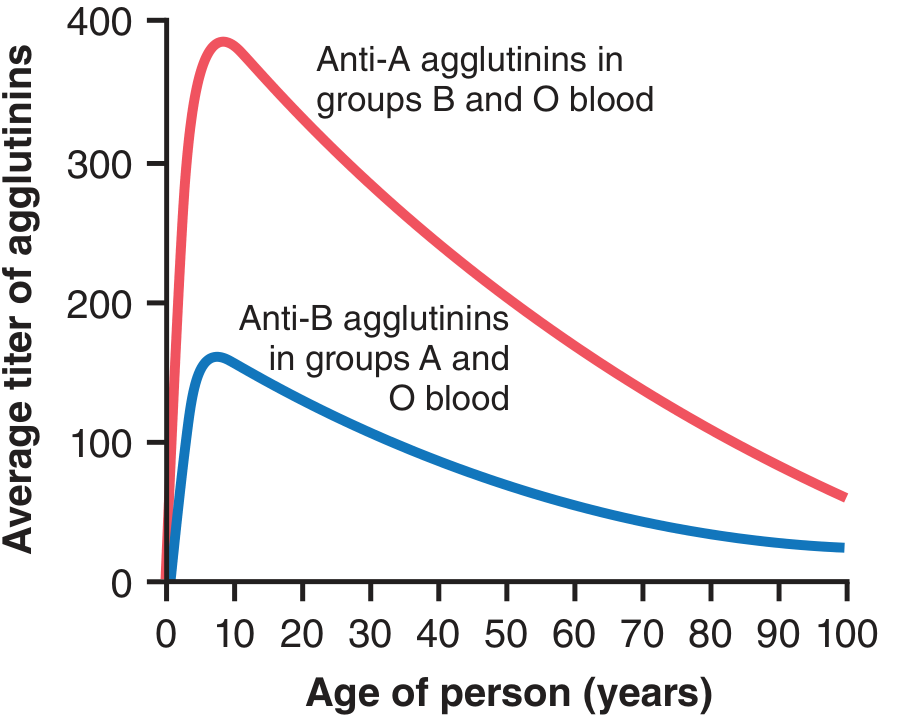
3. Why O Negative is the Universal Donor - Two Reasons
Reason 1: No ABO Agglutinogens on RBCs (ABO System)
- A recipient's anti-A agglutinins find no A antigen to attack
- A recipient's anti-B agglutinins find no B antigen to attack
- No agglutination (clumping) or hemolysis occurs
Reason 2: No Rh Antigen (Rh System - Negative Status)
- Rh positive (Rh+): Has the D antigen on RBC surface (approximately 85% of people)
- Rh negative (Rh-): Lacks the D antigen (approximately 15% of people)
- If an Rh-negative recipient receives Rh-positive blood, they develop anti-Rh agglutinins
- A second transfusion of Rh-positive blood then causes a transfusion reaction
- In Rh-negative females, exposure to Rh+ blood can cause erythroblastosis fetalis in subsequent pregnancies
- No A agglutinogen
- No B agglutinogen
- No Rh (D) antigen
4. Mechanism of Transfusion Reaction (When Mismatched)
Agglutination
Hemolysis
- Physically distorted and destroyed
- Attacked by phagocytic white blood cells
- Lysed by complement activation (membrane attack complex), releasing hemoglobin into plasma - called hemolysis
Acute Hemolytic Reaction
- High titer IgM antibodies
- Complement activation
- Membrane pores - osmotic lysis
5. Blood Typing and Cross-Matching
- Separate RBCs from plasma, dilute with saline
- Mix one portion with anti-A agglutinin and another with anti-B agglutinin
- Observe under microscope for agglutination
6. Limitations of the Term "Universal Donor"
- O-type plasma cannot be given universally - it contains high titers of both anti-A and anti-B antibodies, which could attack the recipient's RBCs
- There are over 30 other minor blood group antigens (e.g., Kell, Duffy, Kidd systems) that can rarely cause reactions
- For this reason, proper cross-matching remains the gold standard whenever time permits
Summary Table
| Feature | Type O Negative |
|---|---|
| A agglutinogen | Absent |
| B agglutinogen | Absent |
| Rh (D) antigen | Absent |
| Anti-A agglutinin in plasma | Present |
| Anti-B agglutinin in plasma | Present |
| Can donate RBCs to | All blood groups (O, A, B, AB, Rh+ and Rh-) |
| Can receive blood from | Only O negative |
Conclusion
- Guyton and Hall Textbook of Medical Physiology, Chapter 36, pp. 474-479