
Betamethasone pharamcology in detail
betamethasone pharmacology glucocorticoid
glucocorticoid receptor mechanism of action anti-inflammatory NF-kB
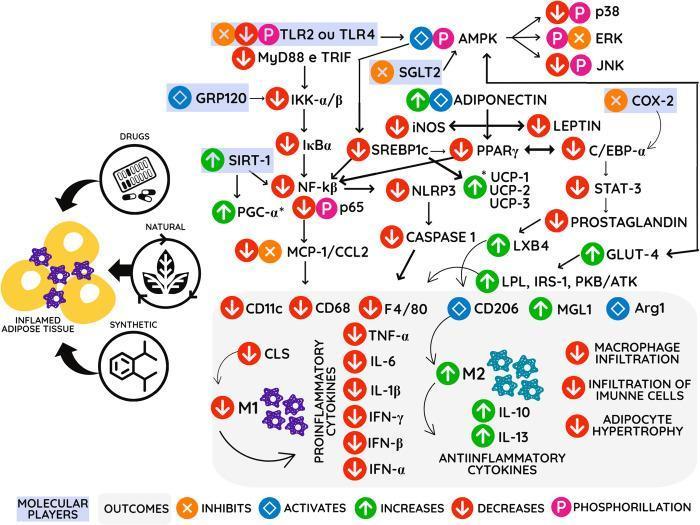
A complex pathophysiology diagram and signaling pathway illustrating the mechanism of action for anti-inflammatory agents (drugs, natural, and synthetic compounds) on inflamed adipose tissue. The visual maps a cascade of intracellular and extracellular molecular players within a hypothetical adipocyte and surrounding immune environment. Key signaling nodes include the inhibition of TLR2/4, MyD88, and TRIF, alongside the activation of AMPK, GRP120, and SIRT-1. The diagram details the downregulation of pro-inflammatory pathways, specifically the NF-kβ complex and its downstream chemokines like MCP-1/CCL2. It also highlights the modulation of metabolic regulators such as PPAR-γ, SREBP1c, and UCP-1/2/3. In the lower section, the diagram shows the transition from a pro-inflammatory M1 macrophage phenotype (characterized by TNF-α, IL-6, and IL-1β) toward an anti-inflammatory M2 phenotype (indicated by IL-10, IL-13, and Arg1). The overall clinical outcomes depicted include reduced macrophage infiltration, decreased adipocyte hypertrophy, and improved insulin sensitivity markers such as GLUT-4 and IRS-1. Symbol legends indicate activation, inhibition, and phosphorylation states for each molecular player.
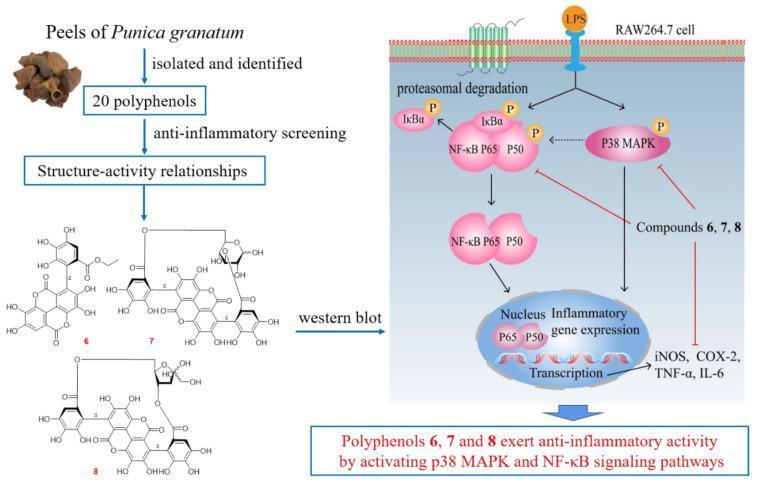
This medical illustration depicts a pharmacological investigation into the anti-inflammatory properties of polyphenols derived from Punica granatum (pomegranate) peels. The left side outlines the experimental workflow: isolation of 20 polyphenols, anti-inflammatory screening, and structure-activity relationship (SAR) analysis of specific compounds (labeled 6, 7, and 8). The right side presents a pathophysiology diagram of an LPS-induced inflammatory response in a RAW264.7 macrophage cell. It shows Lipopolysaccharide (LPS) binding to a surface receptor, triggering two primary signaling cascades: the NF-κB pathway (involving IκBα phosphorylation and proteasomal degradation, followed by NF-κB P65/P50 translocation) and the p38 MAPK pathway. The diagram demonstrates that compounds 6, 7, and 8 exert anti-inflammatory effects by inhibiting the phosphorylation of these pathways. This inhibition results in reduced nuclear transcription of inflammatory gene markers, specifically iNOS, COX-2, TNF-α, and IL-6. This visual is designed for advanced pharmacology or immunology education, focusing on therapeutic mechanism of action and cell signaling modulation.
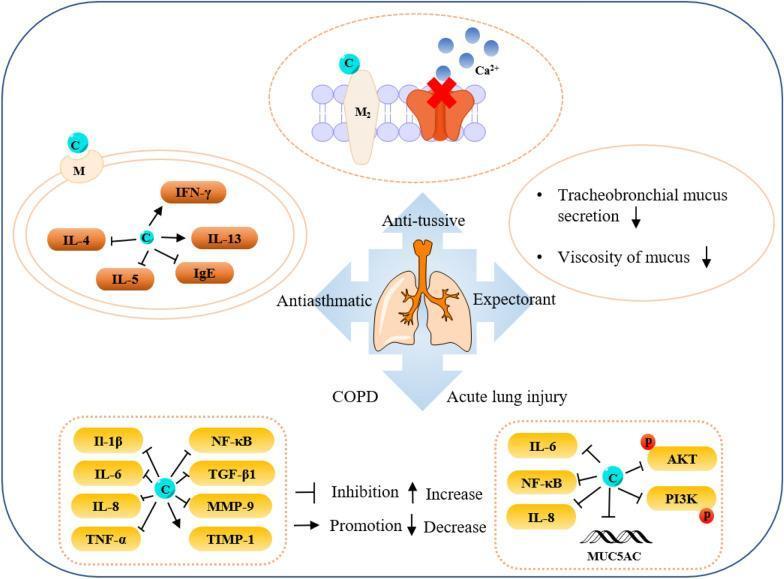
A pathophysiology diagram illustrating the multi-targeted action mechanism of chemical components (represented by 'C') from Fritillaria species on respiratory diseases. The central graphic features a lung illustration surrounded by four therapeutic objectives: anti-tussive, antiasthmatic, expectorant, and treatment of COPD/Acute Lung Injury. At the top, 'C' is shown interacting with the M2 receptor and blocking calcium ion (Ca2+) channels on a cell membrane. To the right, the diagram indicates clinical effects including decreased tracheobronchial mucus secretion and decreased mucus viscosity. The left section depicts cytokine modulation where 'C' inhibits IL-4, IL-5, and IgE while promoting IFN-γ and IL-13. The bottom sections focus on anti-inflammatory pathways: in COPD, 'C' inhibits pro-inflammatory markers IL-1β, IL-6, IL-8, TNF-α, NF-κB, TGF-β1, and MMP-9, while promoting the protease inhibitor TIMP-1. In Acute Lung Injury, 'C' inhibits IL-6, NF-κB, IL-8, and the phosphorylation of AKT and PI3K, leading to decreased MUC5AC expression. The diagram utilizes standard symbols for inhibition (T-bar) and promotion (arrowhead).
Betamethasone - Detailed Pharmacology
1. Drug Classification and Chemistry
- Molecular formula: C₂₂H₂₉FO₅
- It is a C16-methylated, halogenated steroid (Group 2 in dermatological classification)
- Available as multiple esters with different physicochemical and pharmacokinetic profiles
2. Available Formulations
| Salt/Ester | Route | Notes |
|---|---|---|
| Betamethasone sodium phosphate | IM, IV, intra-articular | Water-soluble; rapid onset |
| Betamethasone acetate | IM (depot), intra-articular | Sparingly soluble; slow/sustained release |
| Betamethasone dipropionate | Topical | Super-potent (Class 1-3 depending on vehicle) |
| Betamethasone valerate | Topical | High-to-mid potency (Class 3-5) |
| Betamethasone dipropionate augmented | Topical | Super-potent (Diprolene); enhanced penetration |
- The Harriet Lane Handbook (23rd ed.) notes the injectable IM form is not for IV use and is used in premature labor to stimulate fetal lung maturation.
3. Mechanism of Action
Genomic (Classical) Pathway
- Betamethasone enters the cell by passive diffusion (lipophilic).
- It binds the cytoplasmic GR-alpha, displacing heat-shock proteins (HSP90, HSP70).
- The activated GR complex translocates to the nucleus.
- The GR homodimer binds glucocorticoid response elements (GREs) in gene promoters - this is transactivation.
- The GR can also form heterodimers with proinflammatory transcription factors such as NF-κB and AP-1, blocking their activity - this is transrepression, the major mechanism of anti-inflammatory action.
- Cortisol-bound GR transrepression of NF-κB is described as "a mechanism of major importance for the anti-inflammatory action of glucocorticoids." (Harrison's Principles, 22E)
Key Molecular Anti-inflammatory Effects
- Downregulation of COX-2 - suppression of prostaglandin synthesis (COX-2 suppression is now considered a primary mechanism)
- Induction of lipocortin-1 (annexin-1) - inhibits phospholipase A₂, reducing arachidonic acid release
- Inhibition of NF-κB - reduces transcription of TNF-α, IL-1β, IL-6, IL-8
- Recruitment of HDAC2 - histone deacetylase-2 switches off activated inflammatory genes; this is enhanced by theophylline (Goodman & Gilman's)
- Induction of MKP-1 (MAP kinase phosphatase-1) - inactivates p38 MAPK and JNK pathways
- Reduced expression of adhesion molecules (ICAM-1, E-selectin) - reduces leukocyte trafficking
Non-genomic Effects (Rapid)
- Direct physicochemical interaction with cell membranes
- Activation of membrane-bound GR coupled to second-messenger systems
- Rapid inhibition of arachidonic acid release
4. Relative Potency
| Glucocorticoid | Equiv. Dose (mg) | GC Activity vs. Cortisol | Mineralocorticoid Activity | Duration (biologic t½) |
|---|---|---|---|---|
| Cortisone | 25 | 0.8 | 0.8 | 8-12 hr |
| Hydrocortisone | 20 | 1 | 1 | 8-12 hr |
| Prednisone/Prednisolone | 5 | 4 | 0.8 | 12-36 hr |
| Methylprednisolone | 4 | 5 | 0.5 | 12-36 hr |
| Dexamethasone | 0.75 | 30 | Minimal | 36-72 hr |
| Betamethasone | 0.6 | 30 | Minimal | 36-72 hr |
- Betamethasone is 30x more potent than cortisol as a glucocorticoid
- It has minimal to no mineralocorticoid activity - inadequate as monotherapy for adrenocortical insufficiency (Harriet Lane)
- It has the longest biologic half-life among commonly used agents (36-72 hours)
- Equivalent dose of 0.6 mg betamethasone ≈ 20 mg hydrocortisone (systemically)
5. Pharmacokinetics
- Absorption: Rapid and complete after IM injection of sodium phosphate salt; delayed with acetate ester (depot effect). Topical absorption varies widely based on vehicle, body site, skin integrity, and occlusion.
- Distribution: Highly lipophilic; widely distributed. Crosses the placenta (this is exploited therapeutically). Penetrates the blood-brain barrier.
- Protein binding: ~64% bound to transcortin (corticosteroid-binding globulin) and albumin
- Metabolism: Hepatic, primarily via CYP3A4. Like all glucocorticoids, betamethasone is NOT a prodrug - it is active as-is (unlike cortisone/prednisone which require hepatic 11β-HSD1 conversion)
- Elimination half-life: Plasma t½ ~35-54 hours; biologic t½ 36-72 hours (reflecting nuclear receptor occupancy after plasma levels fall)
- Drug interactions: Betamethasone is a CYP3A4 substrate. Strong inhibitors (ketoconazole, itraconazole, ritonavir) increase exposure. Strong inducers (rifampin, phenytoin, carbamazepine) decrease efficacy.
6. Pharmacological Effects by System
Anti-inflammatory and Immunosuppressive
- Suppresses migration of polymorphonuclear leukocytes and reversal of increased capillary permeability
- Reduces macrophage activation, antigen processing, and cytokine production
- Decreases eosinophil and lymphocyte counts (lympholysis, redistribution)
- Promotes neutrophilia (demargination from vascular endothelium)
Metabolic Effects
- Gluconeogenesis: Stimulates hepatic glucose production; increases blood glucose (diabetogenic)
- Protein catabolism: Muscle wasting, negative nitrogen balance
- Fat redistribution: Lipolysis in periphery; lipogenesis centrally (truncal obesity, buffalo hump, moon face)
- Bone: Decreases osteoblast activity, increases osteoclast-mediated resorption → osteoporosis
Fluid and Electrolyte (Minimal with Betamethasone)
- Negligible sodium retention and potassium excretion due to absent mineralocorticoid effect
- However, at very high systemic doses, some cross-reactivity with mineralocorticoid receptors can occur
HPA Axis Suppression
- Exogenous betamethasone suppresses the hypothalamic-pituitary-adrenal (HPA) axis via negative feedback on CRH (hypothalamus) and ACTH (pituitary)
- Even topical betamethasone causes HPA suppression at high doses or with prolonged use; dipropionate augmented is contraindicated in children ≤12 years due to this risk
- Abrupt withdrawal after prolonged use risks adrenal crisis
Pulmonary (Fetal)
- Induces surfactant synthesis in type II pneumocytes
- Upregulates surfactant proteins SP-A, SP-B, SP-C and D via GRE-mediated transcription
- Structural maturation of alveoli
7. Clinical Indications
Systemic (IM/IV)
- Inflammatory conditions (rheumatic, allergic, dermatologic, gastrointestinal, hematologic)
- Cerebral edema (vasogenic)
- Acute spinal cord injury (controversial)
- Intra-articular, intrasynovial, intralesional injection
Topical
- Inflammatory dermatoses: psoriasis, atopic dermatitis, contact dermatitis, lichen planus
- Available as cream, ointment, lotion, foam, gel (vehicle determines penetration and potency class)
- Potency classification (Goldman-Cecil / Fitzpatrick's):
- Betamethasone dipropionate augmented ointment/gel (Diprolene) = Class 1 (Super-potent)
- Betamethasone dipropionate 0.05% cream = Class 3 (Potent, Upper Mid)
- Betamethasone valerate 0.1% = Class 3-5 depending on vehicle
Antenatal (Most Clinically Significant Use)
- Dose: Two doses of 12 mg IM, 24 hours apart (each dose = 6 mg betamethasone acetate + 6 mg betamethasone sodium phosphate)
- Indication: Threatened preterm labor at <34 weeks (standard); a single rescue course may be given if initial treatment was >7 days prior and GA <32 6/7 weeks
- Late preterm use: Also beneficial between 34-36 6/7 weeks (SMFM ALPS trial): significant reduction in need for neonatal respiratory support, transient tachypnea, bronchopulmonary dysplasia
- Why betamethasone over other corticosteroids? It crosses the placenta without significant maternal hepatic inactivation, has minimal mineralocorticoid activity, and has the strongest RCT evidence
- Risks in late preterm: Neonatal hypoglycemia increased (24% vs 14.9%)
- Regular repeat courses or more than two courses are not recommended
8. Adverse Effects
Short-term
- Hyperglycemia / diabetic decompensation
- Hypertension
- Euphoria, insomnia, mood disturbance, psychosis
- Increased appetite, weight gain
- GI bleeding (especially with concomitant NSAIDs)
- Increased susceptibility to infection
Long-term
- Cushing syndrome (iatrogenic)
- HPA axis suppression / adrenal insufficiency
- Osteoporosis and avascular necrosis (femoral head)
- Cataracts (posterior subcapsular), glaucoma
- Myopathy (proximal)
- Growth suppression in children
- Pseudotumor cerebri (benign intracranial hypertension)
Topical-specific
- Skin atrophy, telangiectasia, striae
- Perioral dermatitis, rosacea exacerbation
- Tinea incognito (masked fungal infection)
- HPA suppression (especially under occlusion, on thin skin, in children)
9. Contraindications and Cautions
- Absolute: Active untreated serious infections, live virus vaccines during therapy
- Relative: Hypothyroidism (enhanced effect), cirrhosis, active peptic ulcer disease, history of psychosis, glaucoma, osteoporosis, diabetes mellitus
- Drug interactions:
- CYP3A4 inhibitors (azole antifungals, macrolides) → increased betamethasone exposure
- CYP3A4 inducers (rifampin, phenytoin) → reduced efficacy
- NSAIDs → additive GI toxicity
- Diabetes medications → reduced glycemic control
10. Key Comparisons: Betamethasone vs. Dexamethasone
| Feature | Betamethasone | Dexamethasone |
|---|---|---|
| 16-methyl position | 16β | 16α |
| Placental transfer | High (preferred antenatally) | High |
| Antenatal dose | 12 mg IM x2 (24 hr apart) | 6 mg IM x4 (Q12h) |
| Parenteral salt | Phosphate + acetate (Soluspan) | Phosphate only |
| Intrathecal use | Not recommended | Used in some protocols |
| Available topical | Yes (multiple potencies) | Limited |
- Goodman & Gilman's Pharmacological Basis of Therapeutics, Ch. 44 & 50
- Firestein & Kelley's Textbook of Rheumatology, 2022 - glucocorticoid pharmacodynamics table
- Creasy & Resnik's Maternal-Fetal Medicine: Principles and Practice - antenatal corticosteroids
- The Harriet Lane Handbook, 23rd ed. - betamethasone monograph
- Fitzpatrick's Dermatology, 9th ed. - topical steroid potency classification
- Harrison's Principles of Internal Medicine, 22E - GR transrepression mechanism
- Recent PK meta-analysis: PMID 41250930 (Zhang & Jusko, Biopharm Drug Dispos, 2025)
Dexmethasone pharamcology in detail
dexamethasone pharmacology clinical use
Dexamethasone - Detailed Pharmacology
1. Drug Classification and Chemistry
"Dexamethasone is identical to betamethasone except for the configuration of the methyl group at C16: in betamethasone it is beta (projecting up from the plane of the rings); in dexamethasone it is alpha."
- 9α-fluoro group: dramatically increases glucocorticoid potency and resistance to metabolism
- 16α-methyl group: abolishes virtually all mineralocorticoid activity
- Δ1-2 unsaturation in ring A: increases glucocorticoid selectivity and prolongs half-life by >50%
- These modifications collectively produce a potency 30x cortisol with zero salt-retaining effect
2. Glucocorticoid Receptor Mechanism of Action
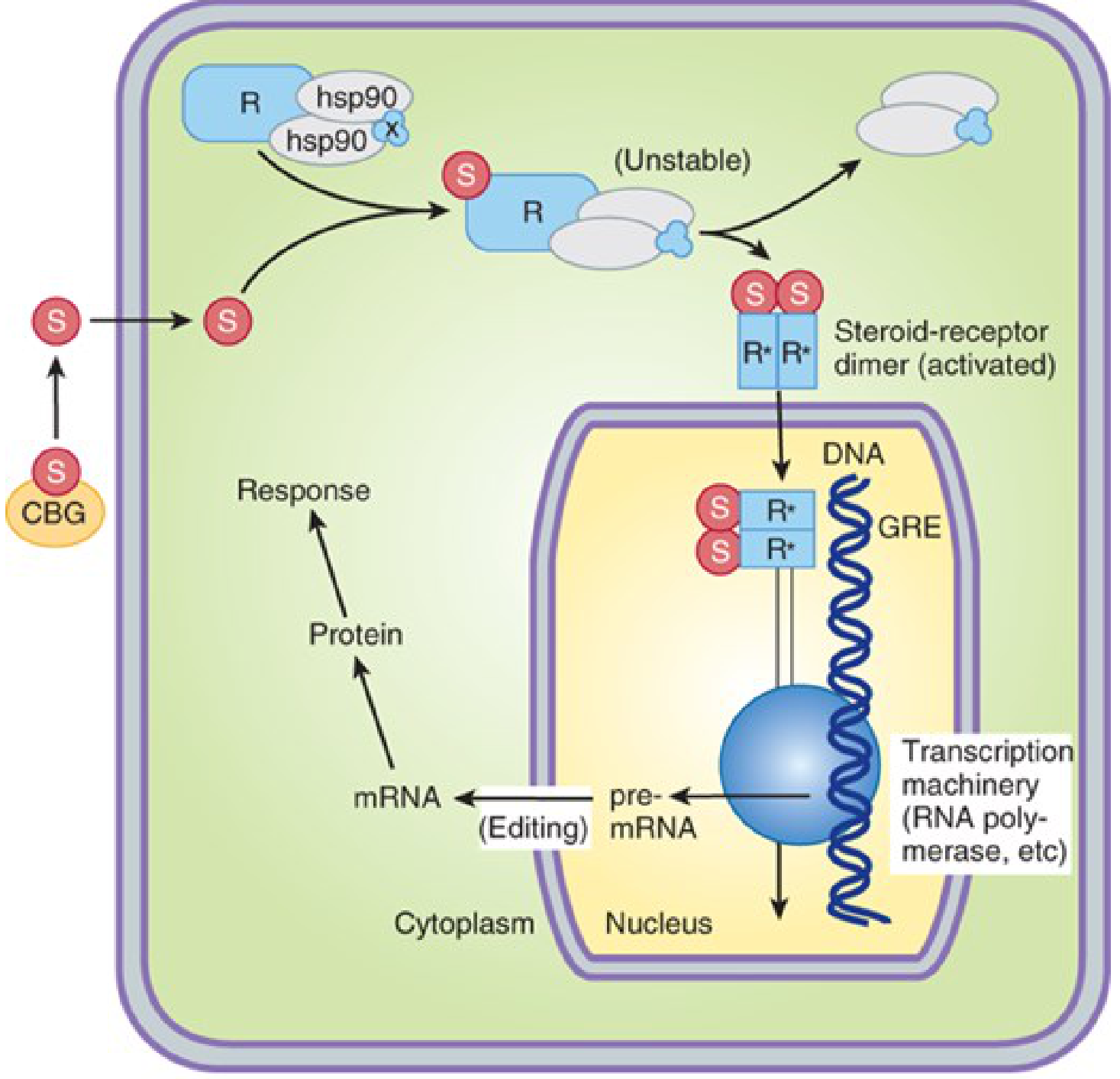
Genomic Pathway (Primary)
- Dexamethasone diffuses freely across the cell membrane (lipophilic)
- Binds the cytoplasmic glucocorticoid receptor (GR-alpha), displacing hsp90, hsp40, and FKBP5
- The conformational change allows the GR to dimerize
- The ligand-GR dimer is actively transported to the nucleus
- Transactivation: Homodimer binds glucocorticoid response elements (GREs) - palindromic sequences in gene promoters - to upregulate anti-inflammatory genes (e.g., IκBα, lipocortin-1, IL-10)
- Transrepression: GR forms heterodimers with NF-κB and AP-1, blocking their binding to DNA and suppressing proinflammatory gene transcription (TNF-α, IL-1β, IL-6, IL-8, COX-2, iNOS)
"The ligand-bound receptor also forms complexes with and influences the function of other transcription factors, such as AP1 and NF-κB, which act on non-GRE-containing promoters, to contribute to the regulation of transcription of their responsive genes. These transcription factors... to a great extent mediate the anti-growth, anti-inflammatory, and immunosuppressive effects of glucocorticoids."
Key Molecular Anti-inflammatory Effects
| Mechanism | Result |
|---|---|
| NF-κB transrepression | Reduced TNF-α, IL-1β, IL-6, IL-8, COX-2 |
| Induction of IκBα | Retains NF-κB in cytoplasm, blocking nuclear translocation |
| Induction of lipocortin-1 (annexin-1) | Inhibits phospholipase A₂ → reduced arachidonic acid → reduced prostaglandins/leukotrienes |
| COX-2 suppression | Reduced prostaglandin synthesis (primary anti-inflammatory mechanism) |
| HDAC2 recruitment | Switches off activated inflammatory genes |
| MKP-1 induction | Inactivates p38 MAPK and JNK signaling |
| Decreased ICAM-1 / E-selectin expression | Reduces leukocyte adhesion and migration |
Non-genomic Effects (Rapid, high doses)
- Direct effects on cell membranes
- Rapid suppression of prostaglandin synthesis independent of gene transcription
- Inhibition of lymphocyte activation through second messengers
3. Comparative Potency Table
| Corticosteroid | Anti-inflammatory Activity | Topical Activity | Salt-Retaining Activity | Equivalent Oral Dose |
|---|---|---|---|---|
| Hydrocortisone | 1 | 1 | 1 | 20 mg |
| Cortisone | 0.8 | 0 | 0.8 | 25 mg |
| Prednisone | 4 | 0 | 0.3 | 5 mg |
| Prednisolone | 5 | 4 | 0.3 | 5 mg |
| Methylprednisolone | 5 | 5 | 0.25 | 4 mg |
| Triamcinolone | 5 | 5 | 0 | 4 mg |
| Betamethasone | 25-40 | 10 | 0 | 0.6 mg |
| Dexamethasone | 30 | 10 | 0 | 0.75 mg |
| Fludrocortisone | 10 | 0 | 250 | - |
- Dexamethasone = 30x cortisol in anti-inflammatory potency (some sources cite 25-30x)
- Zero mineralocorticoid activity - cannot be used alone for adrenal replacement
- Biologic t½ = 36-72 hours - the longest among common glucocorticoids
- Equivalent dose: 0.75 mg dexamethasone ≈ 20 mg hydrocortisone (systemic)
4. Pharmacokinetics
| Parameter | Detail |
|---|---|
| Bioavailability (oral) | ~80%; peak levels 1-2 hr after oral dosing |
| IM absorption | Peak within 8 hr (sodium phosphate salt) |
| Protein binding | ~68-77% (to albumin and transcortin/CBG); lower CBG affinity than cortisol |
| Volume of distribution | ~0.6-1.1 L/kg; widely distributed, crosses BBB, placenta |
| Plasma t½ | ~3-4.5 hours (aminoglutethimide reduces it to ~2 hr) |
| Biologic t½ | 36-72 hours (reflects prolonged nuclear receptor occupancy) |
| Metabolism | Hepatic, primarily CYP3A4 (substrate); also P-glycoprotein substrate |
| CYP induction | Moderate inducer of CYP3A4 - important drug interaction |
| Elimination | Renal; urine as conjugated metabolites |
- CYP3A4 inhibitors (ketoconazole, itraconazole, ritonavir): increased dexamethasone levels and toxicity
- CYP3A4 inducers (rifampin, phenytoin, carbamazepine, aminoglutethimide): accelerated dexamethasone clearance - aminoglutethimide reduces t½ from 4-5 hr to ~2 hr
- Dexamethasone as CYP3A4 inducer: reduces levels of cyclosporine, warfarin, certain antiretrovirals
- P-glycoprotein substrate: potential interactions with P-gp inhibitors
Betamethasone is preferred over dexamethasone for antenatal fetal lung maturation because it has less maternal protein binding and less placental metabolism, allowing greater transplacental passage to the fetus.
5. Pharmacological Effects by System
Immune/Inflammatory
- Profound reduction in circulating lymphocytes, monocytes, eosinophils (redistribution + apoptosis)
- Neutrophilia (demargination from vessel walls)
- Inhibition of macrophage activation, antigen processing, and MHC II expression
- Suppression of T-cell cytokine production (IL-2, IFN-γ)
- Stabilization of lysosomal membranes, reducing release of proteolytic enzymes
Metabolic
- Gluconeogenesis: Stimulates hepatic glucose production; peripheral insulin resistance → hyperglycemia
- Protein catabolism: Increased amino acid mobilization from muscle → wasting, thin skin, poor wound healing
- Fat redistribution: Peripheral lipolysis + central lipogenesis → characteristic Cushingoid fat redistribution (truncal obesity, moon face, buffalo hump)
- Bone: Decreased intestinal Ca²⁺ absorption + increased urinary excretion → secondary hyperparathyroidism; decreased osteoblast activity, increased osteoclast activity → osteoporosis
Fluid and Electrolyte (Minimal)
- Essentially no mineralocorticoid activity - no sodium retention or potassium wasting at therapeutic doses
- High-dose/prolonged use may cause some fluid retention via GR-mediated effects on renal tubule
HPA Axis Suppression
- Potent negative feedback on hypothalamic CRH and pituitary ACTH production
- Even short courses (≥5 days) can suppress the axis for weeks
- Abrupt withdrawal after prolonged use risks adrenal crisis
- Single evening dose (11 PM) suppresses morning cortisol - basis of the dexamethasone suppression test
CNS Effects
- Reduces vasogenic cerebral edema (decreases blood-brain barrier permeability and reduces tumor-associated edema)
- Can cause mood changes, euphoria, insomnia, and at high doses: psychosis
- Increases appetite
6. Clinical Indications and Doses
Inflammatory / Immunosuppressive (from Harriet Lane, 23rd ed.)
| Indication | Dose |
|---|---|
| Anti-inflammatory (child) | 0.08-0.3 mg/kg/24 hr PO/IV/IM ÷ Q6-12h |
| Anti-inflammatory (adult) | 0.75-9 mg/24 hr PO/IV/IM ÷ Q6-12h |
| Cerebral edema (pediatric) | Loading: 1-2 mg/kg IV x1; Maintenance: 1-2 mg/kg/24h ÷ Q4-6h (max 16 mg/day) |
| Croup (laryngotracheobronchitis) | 0.6 mg/kg PO/IV/IM x1 (max 16 mg) |
| Asthma exacerbation | 0.6 mg/kg/dose Q24h x1-2 doses (max 16 mg) |
| Airway edema/extubation | 0.5 mg/kg Q6h x6 doses starting 6-12 hr before extubation |
| Antiemetic (chemo-induced) | Initial 10 mg/m² IV; subsequent 5 mg/m²/dose Q6h |
Cerebral Edema
"Dexamethasone or an equivalent corticosteroid may be given to produce a more sustained reduction in intracranial pressure. Corticosteroids are particularly useful in situations in which the increased intracranial pressure is caused by vasogenic cerebral edema (e.g., tumor-associated edema)."
Bacterial Meningitis
"Dexamethasone is an adjunctive treatment for meningitis in adults, especially for infections caused by S. pneumoniae, but is not recommended for Listeria meningitis. It must be given before or with the first dose of antibiotics; otherwise, it is unlikely to improve outcomes."
PONV (Postoperative Nausea and Vomiting)
"If three or more risk factors are present, patients are recommended to receive at least two prophylactic pharmacologic antiemetic agents of different classes, selected among ondansetron, dexamethasone, or aprepitant."
Chemotherapy-Induced Nausea and Vomiting (CINV)
COVID-19
"A good example of this is the therapy of patients with severe COVID-19, in whom high doses of a synthetic glucocorticoid decreased mortality by approximately 30%."
Oncology / Hematology
- Multiple myeloma: part of VAD, VRd (bortezomib/lenalidomide/dexamethasone), DRd regimens
- Lymphoma, leukemia: lympholytic effect exploited therapeutically
- Spinal cord compression from metastases: high-dose dexamethasone (16-100 mg/day IV)
- Prevention of tumor lysis syndrome-associated reactions
Endocrinology
- Congenital adrenal hyperplasia (CAH): Suppresses excess ACTH and adrenal androgens; used especially in adults (replaces prednisone/prednisolone for overnight adrenal suppression)
- Cushing syndrome work-up: See Section 7
- Thyroid storm adjunct: Blocks peripheral T4→T3 conversion
- Altitude sickness (high-altitude cerebral edema): 8 mg stat then 4 mg Q6h
Antenatal Fetal Lung Maturation (Alternative to Betamethasone)
- Four doses of 6 mg IM Q12h (24 total mg) when betamethasone not available
- Less preferred than betamethasone due to greater placental metabolism and weaker evidence base
Ophthalmology
- Anterior uveitis, allergic conjunctivitis, post-surgical inflammation
- Ophthalmic drops (0.1%) Q1-4h; avoid in herpes simplex, fungal, and mycobacterial keratitis
7. Dexamethasone Suppression Test (DST) - Diagnostic Use
Overnight Low-Dose DST (Screening for Cushing Syndrome)
"Patients are given 1 mg of dexamethasone orally at 11 PM, and cortisol is measured at 8 AM the following morning. Suppression of cortisol to less than 1.8 μg/dL suggests strongly that the patient does not have Cushing syndrome."
Two-Day Low-Dose DST (Confirmation)
- 0.5 mg Q6h for 48 hours (8 doses)
- Normal response: cortisol suppressed to <1.8 μg/dL
- Cushing syndrome: failure to suppress
High-Dose DST (Differential Diagnosis)
"2 mg every 6 hours for 48 hours (or 8 mg overnight) - In many, but not all, patients with a pituitary source of ACTH excess (Cushing disease), cortisol will be suppressed. Conversely, in patients with most ectopic ACTH sources or with adrenocortical tumors, cortisol levels fail to be suppressed."
| Test | Normal | Pituitary Cushing's | Ectopic ACTH |
|---|---|---|---|
| Low-dose DST | Suppression of cortisol | No suppression | No suppression |
| High-dose DST | - | Suppression | No suppression |
8. Adverse Effects
Short-term
- Hyperglycemia (can precipitate diabetic ketoacidosis; Harriet Lane recommends considering alternative for hyperglycemic patients)
- Hypertension (high doses)
- Insomnia, mood changes, euphoria, psychosis
- Increased appetite and weight gain
- GI irritation (risk of peptic ulceration, especially with NSAIDs)
- Increased infection risk (especially opportunistic fungi, TB reactivation)
- Immunosuppression (reduced vaccine efficacy; live vaccines contraindicated)
Long-term (Chronic use)
- Iatrogenic Cushing syndrome (moon face, buffalo hump, truncal obesity, striae, thin skin)
- HPA axis suppression / adrenal insufficiency on withdrawal
- Osteoporosis and pathological fractures (vertebral collapse)
- Avascular necrosis (femoral head most common)
- Cataracts (posterior subcapsular)
- Glaucoma (increased intraocular pressure)
- Myopathy (proximal muscle weakness)
- Growth suppression in children
- Electrolyte imbalance (mild)
- Pseudotumor cerebri (idiopathic intracranial hypertension)
Important Note on VLBW Neonates
"Not recommended for systemic therapy in the prevention or treatment of chronic lung disease in infants with very low birth weight because of increased risk for adverse events."
9. Contraindications and Key Cautions
- Absolute: Active untreated systemic infections; fungal, viral, mycobacterial ocular infections (ophthalmic form)
- Relative: Hypothyroidism (enhanced steroid effect), cirrhosis (reduced prednisone → prednisolone conversion - less relevant for dexamethasone as it is already active), peptic ulcer, diabetes, psychosis, osteoporosis, glaucoma
10. Dexamethasone vs. Betamethasone - Key Differences
| Feature | Dexamethasone | Betamethasone |
|---|---|---|
| C16 methyl configuration | 16α (alpha - below plane) | 16β (beta - above plane) |
| Anti-inflammatory potency | 30x cortisol | 25-40x cortisol |
| Mineralocorticoid activity | 0 | 0 |
| Biologic t½ | 36-72 hr | 36-72 hr |
| Equivalent dose | 0.75 mg | 0.6 mg |
| CYP450 | Substrate AND moderate inducer of CYP3A4 | Substrate only (no induction) |
| P-glycoprotein | Substrate | Not noted |
| Antenatal use | 6 mg IM Q12h x4 doses | Preferred: 12 mg IM x2 (24h apart) |
| Placental transfer | Less (more maternal metabolism) | More (preferred antenatally) |
| Dexamethasone suppression test | Yes - unique diagnostic role | Not used |
| Intrathecal use | Used in some protocols | Generally avoided |
| Injectable form | Sodium phosphate only (soluble) | Phosphate + acetate (Celestone Soluspan) |
| Intravenous use | Yes (sodium phosphate) | Not for IV (Celestone Soluspan) |
- Katzung's Basic and Clinical Pharmacology, 16th ed. - Ch. 39 (full pharmacodynamics, potency table, dosing, adverse effects)
- Goodman & Gilman's Pharmacological Basis of Therapeutics - Dexamethasone suppression test, therapeutic uses
- The Harriet Lane Handbook, 23rd ed. - Dexamethasone monograph (dosing across indications)
- Harrison's Principles of Internal Medicine, 22E (2025) - Meningitis, HPA axis, GR mechanism
- Adams and Victor's Principles of Neurology, 12th ed. - Cerebral edema
- Goldman-Cecil Medicine - PONV prophylaxis
- Recent systematic reviews: dexamethasone in nerve blocks (PMID 39023476) and postoperative recovery after hysterectomy (PMID 41130702)
Triamcilone pharamcology in detail
triamcinolone acetonide pharmacology clinical use
Triamcinlone pharamcology indetail
Generate a comprehensive PDF on triamcinolone pharmacology
Triamcinlone pharamcology indetail